Why the Top Hem Fold Release Record Matters
The top hem fold on a drawstring backpack looks like a small sewing detail, but it controls the opening, cord movement, finished height, and the visual position of the logo. When the fold depth changes by only 5 mm, the bag can look shorter, the print may sit too high, and the cord channel may become tight. For a buyer importing 5,000 or 50,000 pieces, this is not a cosmetic footnote. It is a measurable production setting that should be released before bulk cutting and sewing.
A top hem fold release record is the factory document that confirms the approved fold depth, channel width, stitching method, finished measurement, and photo evidence. It should connect the approved sample to the purchase order, artwork file, material sheet, and inspection standard. Without this record, procurement teams often argue about whether the problem is a sewing mistake, a measurement misunderstanding, or an approved sample variance.
- Use the release record before bulk cutting, not after final inspection.
- Tie the record to one sample version number and one artwork version.
- Record finished size after fold, because cut size can mislead both buyer and factory.
- Include the top fold tolerance in the QC checklist and pre-shipment inspection plan.
The Buying Problem: Small Fold Changes Create Big Claim Disputes
Most disputes start when the buyer measures the received bag from top edge to bottom seam and finds it shorter than the catalog size or approved sample. The factory may reply that the cut panel size is correct, while the buyer is checking finished bag size. Both sides may be using different measurement points. A release record prevents this by defining whether the size in the quote means cut size, sewn size, pressed size, or packed size.
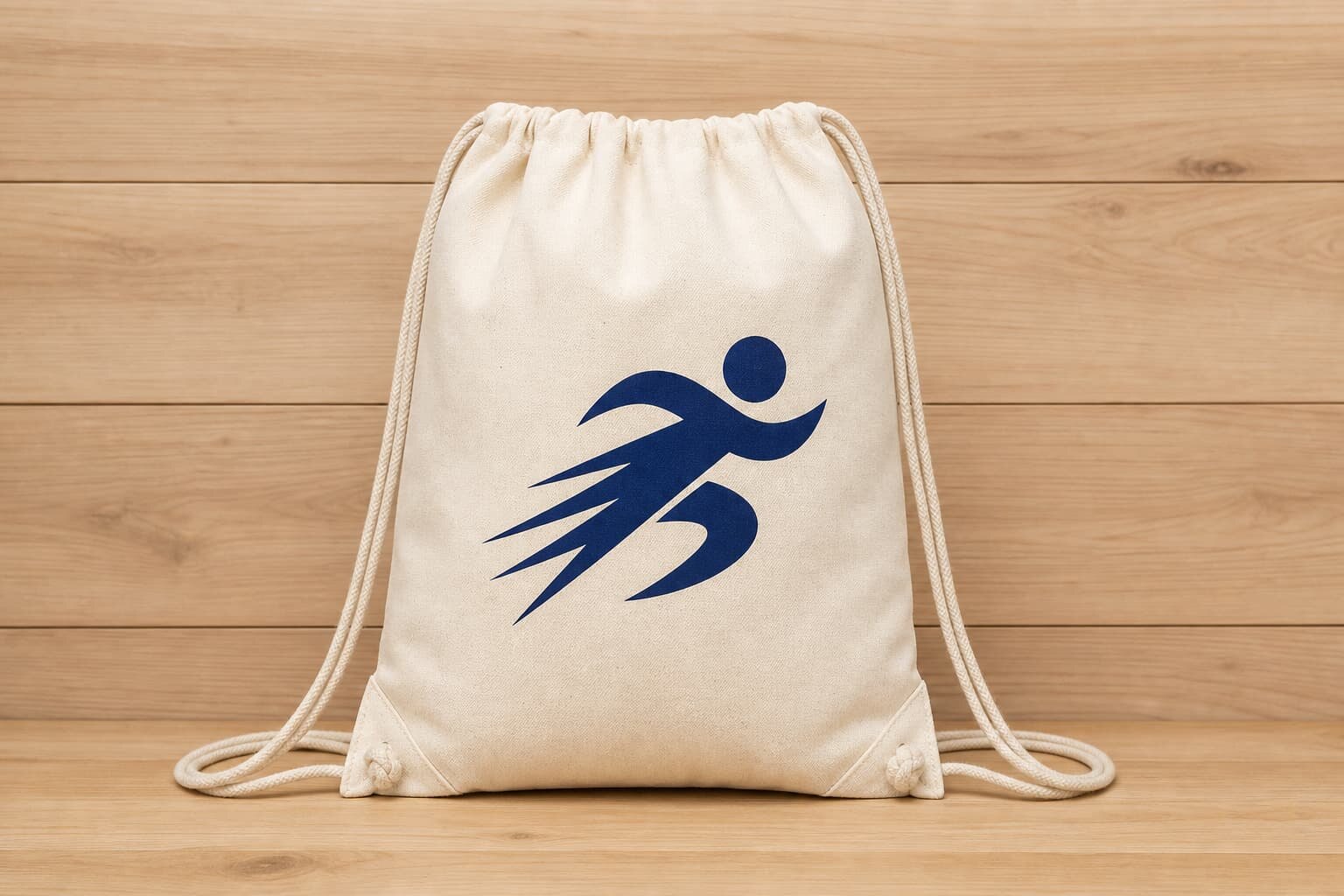
The second common dispute is logo position. On drawstring backpacks, buyers often place the logo high on the front panel to keep it visible when the bag is worn. If the print department prints according to the flat cut panel and the sewing team later folds a deeper top hem, the logo shifts visually toward the top edge. This can make a retail program look inconsistent across colorways even if the print itself is accurate.
- Define finished height from the top folded edge to the bottom seam.
- Define logo distance from the finished top edge, not from the raw fabric edge.
- Define acceptable difference between left and right top fold depth.
- Keep one approved sample unwashed and unpacked for comparison.
What to Include in the Release Record
A useful release record is not just a photo with the word approved. It should include the bag style code, fabric type, fabric weight, colorway, cord type, cord diameter, fold depth, channel opening, stitch type, stitch density, finished bag dimensions, logo placement, and approval date. If the order includes several fabrics, such as 6 oz cotton and 8 oz canvas, each fabric needs its own check because the fold behaves differently under the needle and after pressing.
The record should also state who approved it and what the approval covers. A sample approved for natural cotton cannot automatically release black dyed canvas, because dyed fabric can feel stiffer and may not fold as cleanly. A nylon or polyester backpack may require heat setting or different pressing control, while cotton and canvas rely more on seam construction and thread tension.
- Product code, PO number, sample version, and artwork version.
- Fabric composition, GSM or ounce weight, color, and finishing treatment.
- Top fold depth, channel height, stitch line distance, and tolerance.
- Cord material, diameter, length, end finish, and knot method.
- Photos with ruler at front, back, inside channel, and side seam.
Fabric Weight and Fold Behavior
Fabric weight changes the top hem fold more than many buyers expect. A 140-160 gsm cotton bag folds easily but may look soft at the top opening. A 6 oz cotton or 8 oz canvas drawstring backpack gives better structure, but the side seam stack becomes thicker where the folded top meets the side seam. For 10 oz canvas, the factory may need stronger needles, adjusted stitch tension, and sometimes a slightly wider fold to avoid bulk at the channel.
Polyester drawstring backpacks, often made in 210D, 300D, or 600D, behave differently. The fabric does not relax like cotton, and the edge may need careful heat control to avoid puckering or shine marks. If the buyer requests a cotton look but chooses polyester for cost or water resistance, the release record should show actual folded samples rather than relying on the same setting used for cotton canvas.
- 140-160 gsm cotton: economical, soft fold, suitable for light promotional use.
- 6 oz cotton: balanced option for giveaways, schools, and simple retail programs.
- 8 oz canvas: stronger hand feel, better shape, higher sewing bulk at the top channel.
- 210D/300D polyester: lightweight and smooth, needs attention to heat and seam puckering.
- 600D polyester: durable but thicker, often needs reinforced stitching and wider tolerances.
Print Method Must Be Checked After Folding
The print method affects how much clearance you need from the top fold. Screen printing is common for cotton and canvas drawstring backpacks because it handles solid logos well and is economical at quantity. Heat transfer can work for detailed logos or polyester fabric, but it needs pressure and temperature control. Embroidery is possible on heavier canvas, but the stitch area should not sit too close to the top channel because it can stiffen the panel and distort the fold.
The release record should include a finished sample photo after printing and folding. Do not approve print placement from a flat artwork layout only. The sewing operation changes the visible field. If the bag has a large front logo, ask the factory to mark the finished top edge and bottom seam on the print positioning template. This helps prevent a quote that looks correct on paper but fails when production panels are sewn.
- Screen print: confirm ink curing before folding and packing to avoid transfer marks.
- Heat transfer: confirm the press mark does not cross the folded top channel area.
- Embroidery: keep enough distance from the cord channel to prevent stiffness.
- Woven label: check whether side seam insertion affects top fold thickness.
- Digital print: approve color and placement on the same fabric weight used for bulk.
MOQ Logic and Cost Impact
The top hem fold itself rarely changes MOQ, but the related choices can. Custom dyed fabric, custom cord color, special cord tips, heavy canvas, contrast stitching, or reinforced top corners may push the order into a higher MOQ. A buyer should separate standard factory settings from custom settings in the RFQ. This makes supplier quotes easier to compare and avoids a situation where one factory quotes a standard fold while another includes reinforcement and a custom cord.
Cost impact usually comes from handling time and risk, not from the folded fabric area alone. A deeper fold may consume more fabric and reduce yield. A narrow fold may slow sewing because operators must control the channel more carefully. Heavy fabric may need slower sewing speed at the side seam. If a factory quote is unusually low, ask whether the price assumes a standard 30 mm fold, thinner cord, or less strict measurement tolerance.
- Ask for separate pricing for standard cord and custom dyed cord.
- Ask whether heavier GSM changes cutting yield or sewing labor.
- Ask whether reinforced top corners are included or optional.
- Ask whether the same MOQ applies across all colorways.
- Ask whether pre-production sample cost is credited after bulk order approval.
Sample Approval Workflow That Prevents Rework
A strong workflow starts with a technical sample, not a sales sample. The technical sample should be made with bulk-intended fabric weight, actual cord diameter, actual stitch type, and the planned print method. If the first sample uses available stock fabric only, label it clearly as a construction reference and do not release bulk measurements from it. Many production mistakes happen when a quick sample becomes the hidden standard.
After the sample is approved, the factory should prepare the top hem fold release record before bulk cutting. The buyer should review measured photos and confirm the tolerances in writing. For repeat orders, do not assume the previous release record still applies if fabric mills, dye lots, cord suppliers, or printing methods change. A repeat order can still fail if the sewing team uses a different fold gauge or if the new fabric has more shrinkage.
- Approve construction sample with measured top fold and cord channel.
- Approve print sample after folding, not before sewing.
- Approve one golden sample per fabric type or material family.
- Release bulk only after measurement photos match the written tolerance.
- Keep the record accessible to cutting, sewing, printing, and QC teams.
Acceptance Criteria for Top Hem and Cord Channel
Acceptance criteria should be simple enough for factory QC and third-party inspectors to use on the sewing floor. For many drawstring backpacks, a practical tolerance may be plus or minus 2 mm for fold depth and plus or minus 3 mm for finished height, but the exact tolerance depends on fabric, bag size, and retail requirement. The key is to define the tolerance before production, not during a claim.
Cord movement is just as important as measurement. A channel that measures correctly but grips the cord too tightly will feel defective to the end user. Inspectors should pull both cords several times, check whether the opening gathers evenly, and confirm that the side seam does not block the channel. For heavier canvas bags, the side seam thickness may need trimming, grading, or stronger stitching to keep the cord path clean.
- Fold depth measured at left, center, and right positions.
- Top edge straightness checked against the approved sample.
- Cord pulls smoothly without catching or twisting inside the channel.
- Stitch line is even, with no skipped stitches at side seams.
- Logo distance from finished top edge remains within approved tolerance.
Packing and Lead Time Considerations
Packing can change how the top fold looks when the buyer opens the carton. If drawstring backpacks are compressed too tightly, the top edge may hold a hard crease or the cords may create pressure marks on printed areas. For cotton and canvas bags, bulk packing is economical, but retail orders may need individual polybags, folded presentation, hangtags, or carton dividers. Each packing method should be reviewed against the top fold and printed logo.
Lead time should include sample making, artwork approval, material booking, cutting, printing, sewing, final inspection, and packing. A top hem fold release record adds a small approval step, but it can save much more time by preventing rework. If the order has multiple colorways or fabric weights, plan extra time for sample checks. A factory may produce faster when all colorways share the same material and cord specification.
- Check whether folded packing creates permanent creases at the top hem.
- Keep cords away from wet ink, heat transfer surfaces, or light-colored panels.
- Confirm carton quantity and compression level before final packing approval.
- Allow extra sample time for custom fabric, custom cord, or heavy canvas.
- Request packed sample photos if the goods will ship directly to distributors.
Quote Data Buyers Should Compare
When comparing supplier quotes, do not only compare unit price and lead time. A complete quote should state finished size, fabric GSM, fabric composition, top hem fold depth, cord material, print method, packing method, MOQ, sample time, bulk lead time, and inspection standard. If one quote omits the fold record and another includes it, the cheaper quote may simply be carrying more quality risk.
Ask factories to show their assumptions. A quote for a 34 x 42 cm drawstring backpack can mean different things if one supplier measures after folding and another measures the cut panel. A quote with 8 oz canvas may not be equal if the actual bulk fabric tolerance ranges widely. The release record gives procurement a way to align the technical basis of each offer before awarding the order.
- Finished bag size and measurement method.
- Fabric weight with tolerance, such as 8 oz canvas or 220 gsm cotton.
- Top hem fold depth and channel width.
- Cord diameter, material, length, and color source.
- Logo method, print size, print position, and curing requirement.
- Packing details, carton quantity, sample timing, and bulk lead time.
Specification comparison for buyers
| Spec decision | Recommended option | When it fits | Buyer risk to check |
|---|---|---|---|
| Top hem fold depth | 35-45 mm finished fold with matched left and right channel height | Most cotton, canvas, and polyester drawstring backpacks using 5-7 mm cords | Too narrow causes cord drag; too deep reduces usable bag height and can change print position |
| Fabric weight | 6 oz cotton, 8 oz canvas, or 210D/300D polyester based on load requirement | Promotional bags, retail gift bags, sports events, school kits, and lightweight merchandise | Heavier GSM needs stronger needle, wider seam allowance, and may require longer drying time after printing |
| Cord channel stitching | Two parallel lockstitch lines or one reinforced lower channel seam depending on design | Bulk orders where cord movement and top edge appearance must stay consistent | Skipped stitches at side seam thickness can trap the cord or open after packing compression |
| Print placement relative to top fold | Confirm print area after final folded height, not from cut panel height | Any front logo, event artwork, or retail design that sits close to the upper third of the bag | Logo may appear too high after folding if the release record uses pre-fold measurements |
| Release record format | Signed sample photo packet plus measured fold table and approved tolerance | Importers comparing factories or placing repeat orders with multiple colorways | Verbal approval leaves no evidence when top opening, bag height, or cord tension varies in production |
Buyer checklist before sampling
- State whether top hem fold measurement is taken before stitching, after stitching, or after final pressing.
- Confirm finished bag size after top fold, not only cut panel size.
- Specify fabric weight, shrinkage expectation, and whether pre-shrunk fabric is required.
- Approve cord diameter, cord material, cord length, and knot or metal tip method together with the fold depth.
- Require photos of the approved top hem fold from front, back, inside channel, and side seam.
- Set tolerance for fold depth, channel opening, finished height, and logo distance from top edge.
- Ask the factory to keep a signed golden sample and attach the release record to the production order.
- Check whether packing compression may crease the top fold or pull cords unevenly.
- Require inline inspection before all panels are closed if the fold is difficult to access later.
- Record who approved the release, approval date, sample version, and colorway coverage.
Factory quote questions to send
- What finished top hem fold depth do you recommend for this fabric weight and cord diameter?
- Will the quoted bag height be measured after the top hem fold is sewn and pressed?
- What is your normal tolerance for top fold depth, channel width, and finished bag height?
- Can you provide a release record with measured photos before bulk cutting starts?
- Will all colorways use the same fabric GSM, shrinkage rate, cord diameter, and fold setting?
- How will you prevent cord channel narrowing at side seams and reinforced corners?
- Does the print position in your quote reference cut panel size or finished bag size?
- What MOQ change applies if we need a custom cord color, thicker canvas, or reinforced top fold?
- At which production stage can we still change the top fold without wasting cut fabric?
- What inspection data will be included in the pre-shipment report for the top hem and cord channel?
Quality-control points to confirm
- Measure finished top hem fold depth on left, center, and right positions on both front and back panels.
- Check that cord moves smoothly through the full channel without catching at side seams.
- Confirm the finished bag height matches the purchase order after sewing and pressing.
- Compare logo distance from top edge against the approved sample after the fold is completed.
- Inspect stitch density, skipped stitches, seam puckering, and loose thread inside the channel.
- Pull test the cord exits and knots to confirm the top hem does not distort under normal use.
- Verify colorway samples because fabric thickness and dye finishing can change fold behavior.
- Check packed samples after 24 hours to see whether compression creates permanent fold marks.