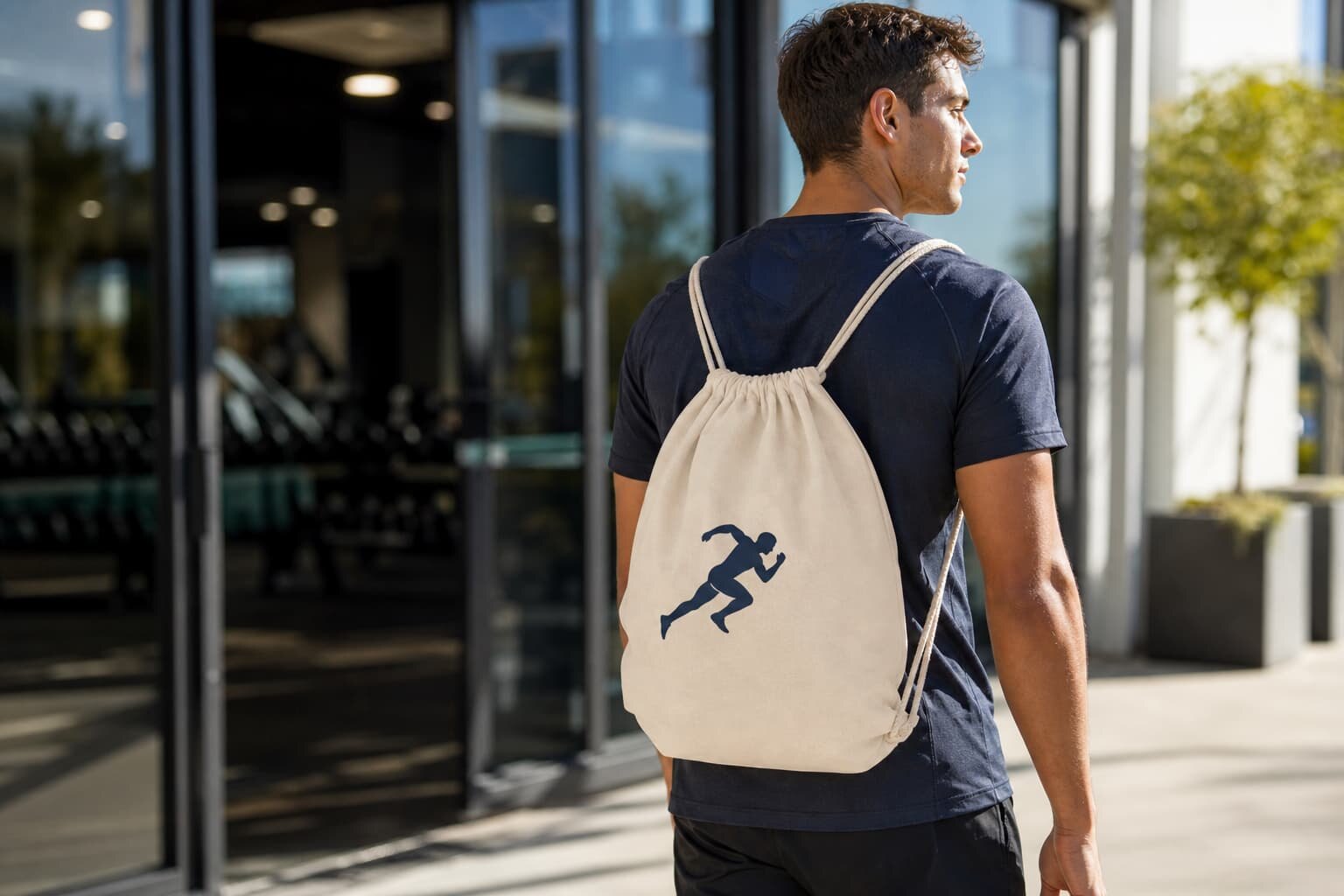
Why the Top Hem Fold Deserves Its Own Inspection
On a drawstring backpack, the top hem fold is not just a neat finishing detail. It creates the cord channel, controls how smoothly the bag opens and closes, and carries repeated pulling force during normal use. If the fold is too shallow, uneven, or poorly reinforced at the side opening, the bag may pass a quick visual check but fail when the user pulls the cord several times. For procurement teams, this is exactly the type of defect that creates distributor complaints after shipment, because it is functional and visible.
Many RFQs describe drawstring backpacks only by body size, fabric, logo, and quantity. That is not enough. Two factories may both quote a 34 x 42 cm cotton drawstring backpack, but one may use a 20 mm narrow channel with a rough raw edge while another uses a 30 mm clean double fold with reinforced openings. The quote difference may look small, but the production result is different. Your inspection checklist should convert the top hem fold from an assumed detail into a measurable requirement.
- Top hem fold affects drawcord movement, mouth opening, finished bag height, and appearance.
- Cord channel defects are often missed when inspectors only check front logo and carton count.
- The approved sample must show actual fold construction, not only a flat panel measurement.
- The RFQ should state finished dimensions, fold depth, cord diameter, and reinforcement method together.
Define the Construction Before Comparing Quotes
The first buying mistake is asking suppliers for a price before defining the top hem construction. A factory can make the channel with a simple single fold, a double fold that hides the raw edge, or an overlocked edge folded down and stitched. For low-cost polyester event bags, a simple method may be acceptable if the edge is stable. For cotton, canvas, or retail bags, buyers normally expect a cleaner fold because loose fibers are easier to see inside the channel opening.
When reviewing quotes, ask suppliers to describe the construction in production language. A good answer should mention finished top hem height, seam allowance, stitch type, cord diameter, and side opening treatment. If the supplier only replies with a total unit price and says the bag is standard, you still do not know what you are buying. Standard construction varies by factory, by machine setup, and by the worker handling the operation.
- For 140-170 GSM cotton, a 25-30 mm finished channel is usually practical for common 4-5 mm cords.
- For 240-340 GSM canvas, allow enough channel width to avoid bulky folds and stiff cord movement.
- For 210D polyester, heat cutting or edge control matters because fraying can appear at openings.
- For drawcord backpacks with thick rope cord, confirm the channel width after sewing, not before folding.
- If the bag includes a top binding or contrast band, separate that construction from a normal folded hem.
Inspection Measurements That Should Be on the QC Sheet
A useful inspection checklist should tell the inspector where to measure, what tolerance is allowed, and what defect requires sorting. For the top hem fold, measuring only one point at the center is weak control. The operator can sew straight in the middle but drift near the side seam, which is where the cord exits and where the user applies force. Measure the front and back panels at left, center, and right positions, then compare the finished channel width against the approved sample.
The tolerance should reflect product level. A promotional bag may allow a wider visual tolerance than a premium retail canvas backpack. However, function should not be compromised. If the cord drags, catches on raw fabric, or cannot close the bag evenly, the part should be treated as a functional defect even if the fold width is technically within tolerance. Buyers should define this clearly before production, because factories and third-party inspectors may otherwise classify it as a minor appearance issue.
- Measure finished fold depth from the top edge to the lower stitch line.
- Measure channel opening height where the cord enters and exits at both side seams.
- Check variation between front and back panels; unequal folds can twist the bag mouth.
- Use the approved cord for movement testing, not a sample room substitute.
- Record defects with close-up photos including a ruler, not only written comments.
- Set separate limits for appearance variation and functional cord movement.
Fabric GSM and Shrinkage Change the Top Hem Result
Fabric weight has a direct effect on top hem sewing quality. A 120 GSM cotton promotional bag is easy to fold but may pucker if stitch tension is too tight. A 280 GSM canvas drawstring backpack looks stronger, but the folded channel becomes thick at the side seams and needs proper needle size, presser foot pressure, and slower sewing control. If the factory quotes the same sewing method for very different GSM levels, ask for a sample before approving bulk.
Cotton and canvas also have shrinkage behavior that can change the final opening and fold appearance. If the fabric is washed, dyed, or steamed after cutting, the top hem may not remain as planned unless the pattern includes allowance. For natural cotton bags, buyers should ask whether fabric is pre-shrunk or whether the finished size tolerance includes normal fabric relaxation. For polyester, shrinkage is less of a concern, but heat cutting, coating, and print curing can affect the stiffness of the top channel.
- 120-140 GSM cotton is suitable for light giveaways but needs careful tension control to avoid puckering.
- 150-220 GSM cotton is a common middle range for branded event and merchandise drawstring backpacks.
- 240-340 GSM canvas supports retail positioning but requires stronger top hem sewing control.
- 210D polyester is cost-efficient but should be checked for edge fraying and heat marks.
- Dyed cotton lots should be checked for shade, GSM, and shrinkage before sewing the top hem.
- Heavy fabric plus thick cord can make the channel too stiff if the fold depth is not adjusted.
Cord Channel Function Is More Important Than a Neat Photo
A drawstring backpack can look acceptable in a flat product photo while still having a poor cord channel. The real test is whether the user can pull both cords evenly, close the mouth without jerking, and reopen the bag without the cord snagging. Rough raw edges, narrow channels, twisted cord, uneven side openings, and excessive seam bulk all create resistance. During inspection, the cord should be pulled several times, not just displayed.
Procurement teams should also confirm the cord type used in production. Cotton cord, polyester cord, PP cord, and braided rope have different friction and thickness. A sample made with a 4 mm smooth polyester cord does not prove that the same channel will work with a 6 mm cotton rope. If your brand wants a premium cord, the channel spec must follow the cord choice. Otherwise, the factory may keep the original fold size and create a stiff opening.
- Check whether both left and right cords move with similar resistance.
- Reject cord channels where knots or cord ends catch inside the folded hem.
- Confirm the cord is not sewn into the top hem by mistake during line sewing.
- Check that the side opening is large enough for the cord but not so large that the fold looks open.
- For children's or school promotions, review safety and market-specific cord requirements separately.
- If cord color is custom dyed, confirm colorfastness and shade match before bulk assembly.
Logo Printing Near the Top Hem Needs Extra Control
Logo placement and top hem construction should be reviewed together. If the artwork sits too close to the top, the fold and stitch line may reduce the visible print area or make the logo look off-center after sewing. Heat transfer and screen print also behave differently near folded bulk. A heat press may leave marks on thick canvas folds, while screen printing over uneven fabric can create weak ink coverage.
A practical RFQ should state the print method, print size, print position from the finished top edge, and minimum clearance from the lower stitch line. For most drawstring backpacks, keeping the design at least 40-60 mm below the lower top hem stitch line is safer, especially for large logos. If the buyer wants a high logo position for retail presentation, the supplier should provide a real sewn sample, not only a digital artwork proof.
- Screen print is common for cotton and canvas but needs flat printable area away from bulky folds.
- Heat transfer works for detailed designs but requires pressure and temperature checks near seams.
- Reflective print can crack if placed too close to repeated folding or cord pressure.
- Woven labels near the side seam should not interfere with cord exit or top hem back tack.
- Embroidery near the upper panel can add stiffness and should be tested before confirming placement.
- Print approval should happen on the same fabric GSM and color as the production order.
MOQ and Cost Logic Behind a Better Top Hem
A stronger top hem fold does not always create a large material cost increase, but it can affect labor time, setup, and inspection. A double fold may require more accurate pressing or folding guidance. Reinforced side openings add sewing operations. Heavy canvas requires slower handling. When buyers compare prices, they should ask which of these operations are included instead of assuming all quotes cover the same quality level.
MOQ logic also changes when the bag includes custom fabric GSM, dyed cord, special printing, or private label packing. A factory may accept a low MOQ if using stock 140 GSM natural cotton and standard cord, but require a higher MOQ for dyed 220 GSM cotton with matched drawcord and woven label. The top hem checklist helps here because it separates standard construction from buyer-specific upgrades. That makes quotes easier to compare and reduces the risk of surprise changes after sampling.
- Base cost drivers include fabric GSM, body size, cord type, sewing complexity, print method, and packing.
- Top hem upgrades usually affect labor more than raw material, especially when reinforcement is added.
- Custom dyed cord may carry its own MOQ even when bag fabric is available from stock.
- Large print area can slow production if curing time or print registration is difficult.
- Individual polybagging and retail folding increase packing labor and should be quoted separately.
- Ask for optional pricing lines so you can compare standard hem, reinforced hem, and premium cord versions.
Sample Approval Workflow for Top Hem Fold Control
The approved sample is your most important reference, but only if it is checked correctly. A nice sample from the sample room may not represent bulk line production. Before approval, measure the finished top hem fold, photograph the side opening, pull the cord repeatedly, and check the print clearance. Mark these details on a sample approval sheet. If the sample has a defect that you accept temporarily, write whether it must be corrected in bulk. Do not rely on verbal promises.
For higher-volume orders, request a pre-production sample made with production fabric, production cord, production print, and the intended sewing method. This is especially important when fabric GSM changes from the development sample. If the order uses natural cotton, dyed canvas, or a heavy rope cord, a sample made from substitute material gives limited value. The goal is not to slow the order; the goal is to catch channel problems before thousands of panels are sewn.
- Approve one sealed physical sample and one digital photo set with measurement points.
- Require close-ups of top edge, lower stitch line, inside fold, and both side openings.
- Check the bag after opening and closing at least ten times during sample review.
- Confirm final bag height after the top hem is folded, because fold depth reduces usable body height.
- If the logo position is critical, approve print placement after sewing, not only before sewing.
- For repeat orders, keep the same top hem sample reference and note any supplier changes.
Inline and Final Inspection Acceptance Criteria
Top hem defects should be caught during inline inspection, not only during final carton inspection. Once the cord is inserted and bags are packed, sorting becomes slower and more expensive. At inline stage, supervisors can still adjust folding guides, stitch tension, operator method, and back tack position. Procurement teams should ask the factory what they check after the first bulk pieces, after each operator starts, and before packing begins.
Final inspection should combine measurement, function, and appearance. AQL tables can help classify defects, but the buyer should define which top hem issues are critical for the product. A missing reinforcement at the cord opening, cord sewn into the channel, or channel too narrow for normal closing should not be treated like a small loose thread. For branded retail or distributor orders, uneven top hems across a carton can also create a poor shelf impression, even if the bags technically function.
- Critical defects include cord trapped by stitching, missing cord, wrong cord type, and unusable channel.
- Major defects include unreinforced torn openings, severe uneven fold, open seam, or repeated cord snagging.
- Minor defects may include small loose thread ends if they do not affect function or appearance standard.
- Inspect samples from different cartons and sewing operators, not only the top carton.
- Take packed and unpacked photos because carton compression can change the top hem appearance.
- If defects are found, require root cause notes such as folding guide error, tension issue, or operator handling.
Packing and Lead Time Details Buyers Often Miss
Packing can damage the presentation of a good top hem. If backpacks are folded tightly across the cord channel, the top edge can arrive with hard creases, twisted cords, or distorted side openings. For bulk promotional orders this may be acceptable within reason, but retail buyers and distributors often need cleaner presentation. Ask the supplier to show a packed sample or carton packing photo before shipment. The packing method should match how the goods will be counted, stored, and presented.
Lead time should be discussed as a sequence: material sourcing, fabric dyeing or stock confirmation, printing, sewing, cord insertion, trimming, inspection, packing, and final release. A top hem fold issue found late can delay shipment because rework requires opening packs, removing cords, resewing, and repacking. Buyers can reduce this risk by requiring an early production check on the first finished pieces. That is more useful than discovering a narrow channel after all cartons are sealed.
- Flat bulk packing is efficient but should keep cords straight and avoid heavy compression at the top edge.
- Individual polybags improve presentation but add labor, plastic use, and inspection time.
- Retail folding should be tested because folds may cross the top hem and create visible creases.
- Carton size should prevent overstuffing that bends the cord channel permanently.
- Lead time should start after sample approval, artwork approval, material confirmation, and deposit if applicable.
- Ask for first-production photos before full sewing continues, especially on new constructions.
Specification comparison for buyers
| Spec decision | Recommended option | When it fits | Buyer risk to check |
|---|---|---|---|
| Top hem fold depth | 25-35 mm finished channel for 4-6 mm cotton or polyester cord | Standard promotional, retail, school, and event drawstring backpacks | Channel too narrow causes cord drag; channel too wide can look bulky and reduce usable bag height |
| Fabric weight | 140-220 GSM cotton, 210D polyester, or 240-340 GSM canvas depending on load target | Cotton for natural branding, polyester for low cost and water resistance, canvas for premium retail | Thin fabric may pucker at the top hem; heavy canvas needs stronger needle and slower sewing speed |
| Top hem stitch type | Single lockstitch or double row lockstitch with back tack at side openings | Most B2B orders where neat appearance and stable channel opening matter | Skipped stitches or weak back tack let the hem open after cord pulling |
| Cord opening finish | Side seam gap reinforced with bar tack or back tack, no raw fraying threads | Any backpack using side-fed drawcords rather than grommet exit | Unreinforced openings tear first during use and create early buyer complaints |
| Print placement near top | Keep print at least 40-60 mm below lower top hem stitch line | Screen print, heat transfer, reflective print, or large front logo designs | Logo distortion, heat press marks, or ink cracking can occur if printing crosses folded bulk |
| Packing method | Flat packed with cords straightened, 25-100 pcs per inner polybag or carton group | Orders needing clean retail presentation or easy distributor counting | Cord knots, folded top hems, and compressed creases may cause appearance rejects at incoming QC |
Buyer checklist before sampling
- Confirm the approved sample shows the exact finished top hem fold depth, not only the cut panel size.
- Measure the cord channel width after sewing and after washing or steaming if the fabric is cotton.
- Pull the drawcord through the full channel on at least several samples from different sewing operators.
- Check both side openings for back tack, bar tack, or other reinforcement agreed in the specification.
- Inspect whether raw fabric edges are fully enclosed inside the fold and not visible at the channel opening.
- Compare left and right top hem heights; visible unevenness is more noticeable on solid color bags.
- Confirm print placement does not cross the folded bulk or sit too close to the lower stitch line.
- Check stitch density, skipped stitches, loose threads, broken needle marks, and stitch tension along the top.
- Test cord thickness against the channel; the cord should move smoothly but not look loose and sloppy.
- Review packed samples to see whether the top hem becomes crushed, bent, or permanently creased in cartons.
Factory quote questions to send
- What finished top hem fold depth and cord channel width are included in your quote?
- Is the upper raw edge single folded, double folded, or overlocked before folding into the channel?
- What fabric GSM, shrinkage allowance, and cutting tolerance are assumed for the backpack body?
- What cord material, diameter, color matching method, and knot finish are included?
- How will the side cord openings be reinforced, and can you provide close-up sample photos?
- What stitch density per inch or centimeter will be used on the top hem and side seams?
- If the logo is printed, what minimum distance do you require from the lower top hem stitch line?
- Does your MOQ change if we require custom dyed cord, custom fabric GSM, or a woven side label?
- How many pre-production samples are included, and will they be made on the same sewing line as bulk production?
- What inline inspection points will you use before closing cartons?
Quality-control points to confirm
- Finished top hem fold depth measured at left side, center, and right side of front and back panels.
- Cord channel free movement test using the approved production cord, not a thinner substitute cord.
- Side opening strength check with repeated cord pull in normal closing direction.
- Top hem stitch tension check on both inside and outside surfaces.
- Raw edge control at channel openings and inside the bag mouth.
- Print-to-hem clearance measurement after sewing, because folding can change visible placement.
- Color shade and GSM check before sewing, especially for cotton and canvas lots.
- Operator consistency check across the first bulk output from each sewing station.
- Packed carton inspection for cord tangling, top hem compression, and count accuracy.
- Final AQL inspection including function test, not only visual measurement.