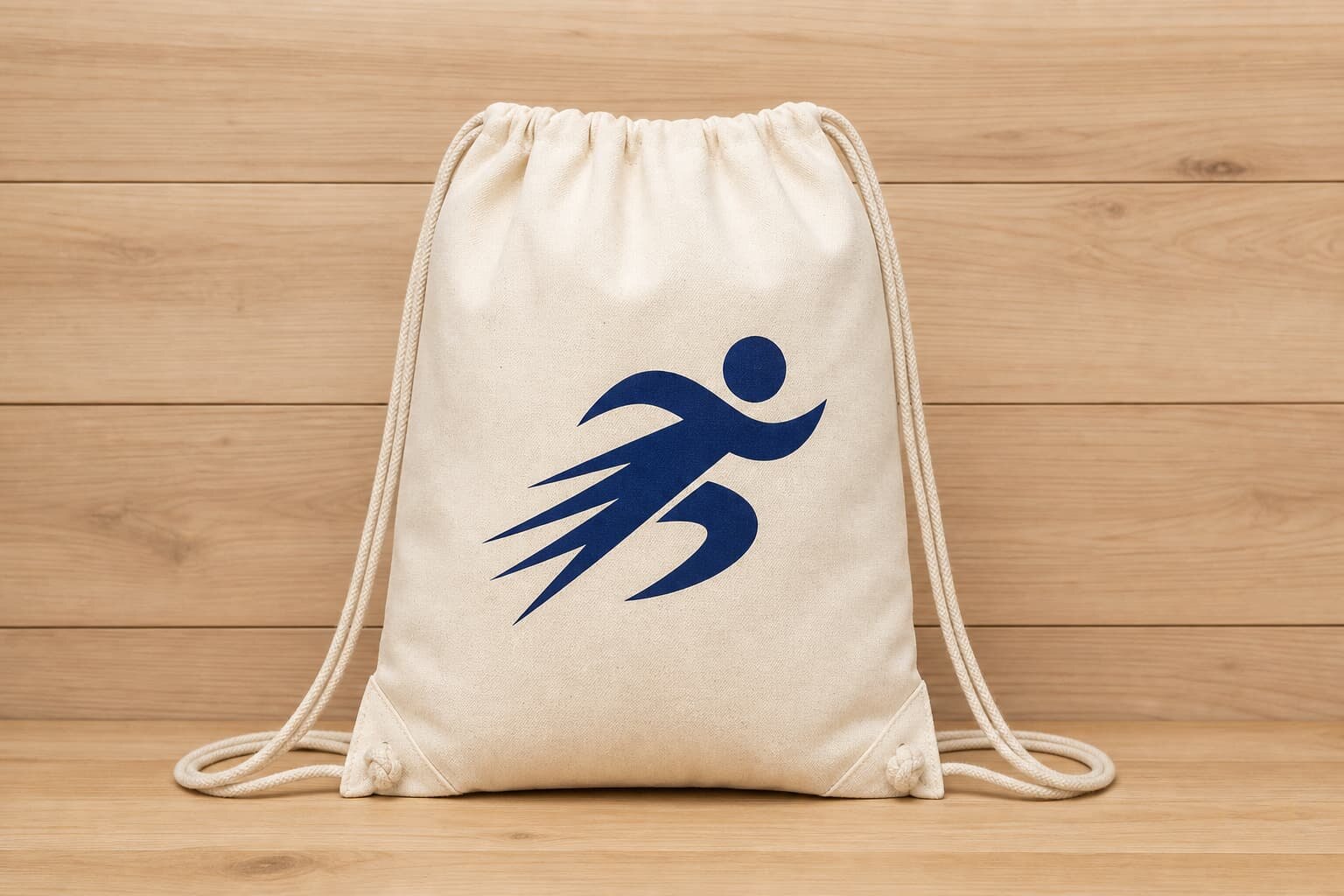
Why the Top Hem Fold Deserves Its Own Audit
The top hem fold on a drawstring backpack looks like a small sewing detail, but it controls three things buyers notice immediately: how smoothly the bag closes, how clean the top edge looks, and whether the opening survives repeated pulling. If the factory treats it as a simple fold line with no defined width, the final product can pass a quick visual check yet fail in daily use.
For procurement teams, the problem is that many quotes mention only bag size, fabric, print, and cord. They do not define the finished channel that carries the cord. Two factories can quote the same 34 x 42 cm cotton drawstring backpack, but one may use a narrow single fold and another may use a wider double fold. The unit price difference may be small, while the difference in function and complaint risk is large.
- Audit the top hem fold when the bag is used for retail, event merchandise, school kits, gym promotions, or repeated consumer use.
- Do not approve a quote based only on front panel size and logo area if the cord channel is not specified.
- Ask the supplier to confirm finished channel width after sewing, not fabric allowance before folding.
- Treat uneven hem fold, tight cord movement, and visible raw edges as commercial defects, not only cosmetic issues.
Define the Construction Before Comparing Quotes
A useful RFQ should state whether the buyer wants a single fold, double fold, binding, or reinforced channel. A single fold may be acceptable for very low-cost non-woven or short-life promotional bags, but it is usually weaker for cotton fabric because the raw edge can fray inside the channel. A double fold hides the raw edge and gives the stitch line more stable layers to hold.
The top hem also interacts with side seams. On many drawstring backpacks, the channel is folded first and then side seams are closed, leaving openings for the cord at both upper sides. If the side seam catches too much of the channel, the cord opening becomes narrow. If it catches too little, the opening can tear. The audit should therefore check the fold, the side opening, and the cord path together.
- Single fold: lowest labor and fabric use, higher fraying risk on woven cotton.
- Double fold: cleaner edge, better for cotton canvas and retail-grade orders.
- Bound top: useful for contrast trim or heavier fabrics, but adds material and alignment control.
- Reinforced channel: suitable when using thick rope, heavy fabric, or repeated load-bearing use.
- Side opening: must be large enough for cord movement but secured against seam slippage.
Fabric GSM Changes the Hem Behavior
The same hem specification does not behave the same way on every fabric. A 150 GSM cotton backpack is light and economical, but the fabric can ripple if the top fold is too narrow or the stitch tension is too tight. A 220-280 GSM cotton canvas backpack has better body, but the folded layers are thicker and may need a larger channel and stronger needle setup. A 300 GSM canvas backpack can look premium, but the top fold becomes bulky if the factory does not adjust seam allowances.
Buyers should not choose GSM only by hand feel or price. The hem fold is one of the first places where an unsuitable GSM decision becomes visible. Lightweight fabric can pucker along the stitch line. Heavy canvas can create a hard ridge that makes the mouth difficult to gather. If the backpack is meant to carry shoes, sportswear, catalogues, or retail goods, the fabric and hem should be tested together.
- 120-140 GSM cotton: use mainly for very light promotional packs and short campaigns.
- 150-180 GSM cotton: common for budget drawstring backpacks with moderate print coverage.
- 220-280 GSM cotton canvas: stronger option for brand merchandise and distributor programs.
- 300 GSM and above: check bulkiness at the top channel and side seam intersections.
- Polyester fabric: check heat sensitivity if the logo uses heat transfer near the hem.
Cord Diameter and Channel Clearance Must Match
A drawstring backpack can look correct when flat but feel wrong when pulled. The common cause is a cord channel that is too narrow for the cord diameter, especially after the channel is stitched, pressed, and packed. For example, a 6 mm cotton rope needs more clearance than a thin polyester cord because cotton rope has more surface friction and can swell slightly after dyeing or humidity exposure.
A practical rule is to define the finished channel width as at least 2.5 times the cord diameter, plus enough space for seam thickness and fabric movement. This is not a universal engineering rule, but it gives the buyer and factory a clear starting point for sampling. The real approval should be based on a pull test: close and open the bag repeatedly, then check whether the cord slides evenly and whether the top fold twists.
- For 4 mm cord, a narrow channel may work, but opening alignment still matters.
- For 5-6 mm cord, buyers should request a wider channel and test friction carefully.
- For 7-8 mm cotton rope, avoid tight channels and inspect side openings after sewing.
- For flat drawstring tape, check whether the tape folds or rolls inside the channel.
- For recycled cord, confirm consistency of diameter because recycled yarn lots may vary.
Logo Placement Near the Hem Needs Extra Control
Many buyers focus on logo size and color but forget that the top of a drawstring backpack gathers when the cord is pulled. If the logo sits too close to the bottom stitch of the top hem, the artwork can look bent, compressed, or uneven when the bag is closed. This is especially noticeable with straight text, QR codes, thin lines, and brand marks with strong horizontal alignment.
Screen printing is still a practical choice for cotton and canvas drawstring backpacks, especially for one to three solid colors. Heat transfer can handle finer detail or gradient artwork, but buyers should confirm adhesion on the chosen fabric and avoid placing the transfer where the fabric folds sharply. Embroidery is possible on heavier canvas, but it can add stiffness and may distort lightweight panels if the stitch count is high.
- Keep standard logo artwork at least 40-60 mm below the lower hem stitch unless a sample proves otherwise.
- Use screen print for solid logos on cotton and canvas when cost and durability are balanced.
- Use heat transfer for detailed artwork, but test wash, rub, and folding behavior.
- Use embroidery mainly on heavier canvas where needle density will not pull the panel out of shape.
- Check logo level after the bag is closed, not only when the backpack lies flat.
Sample Approval: What to Measure and Pull
A proper sample review for this issue takes more than a photo. The buyer should measure the finished top hem width at the left side, center, and right side. Then measure the mouth opening and cord length. If the sample is made with substitute fabric or substitute cord, the approval is only useful for rough appearance and not for production risk.
The buyer should also do a simple use test. Load the backpack with a realistic light load, pull the cords closed, open it again, and repeat the action at least 20 times. During this test, watch whether the top fold rolls over, whether the cord jams at one side, and whether the stitches start to loosen at the channel openings. These checks are fast, but they reveal problems that a still photo hides.
- Measure finished top hem width at three points and record the range.
- Confirm channel openings are clear and symmetrical on both sides.
- Pull the cords repeatedly to test smooth closing and reopening.
- Check whether the logo stays visually centered after the mouth gathers.
- Review the inside of the channel if possible to confirm no exposed raw edge on cotton fabric.
- Reject samples where the approved construction is not made with bulk-intended fabric and cord.
MOQ Logic Behind a Better Hem Specification
A stronger top hem fold does not always create a high MOQ by itself. MOQ is usually driven by fabric purchase quantity, dyeing minimums, print setup, cord color, packaging material, and factory line efficiency. However, a double fold or wider channel can affect fabric consumption and sewing time, so the buyer should ask the factory to separate material MOQ from production MOQ where possible.
For example, if the buyer wants a custom dyed 220 GSM canvas, matching cotton rope, four-color screen print, and individual retail packing, the MOQ will be different from a stock natural cotton backpack with a one-color logo. The top hem specification should be included early because changing it after sample approval may require recutting, resewing, or recalculating fabric consumption.
- Stock natural cotton usually supports lower MOQ than custom dyed canvas.
- Custom cord color may have a separate MOQ from the backpack sewing MOQ.
- Wide double folds use more fabric allowance and slightly more sewing time.
- Multi-color screen print may require setup charges even when bag MOQ is low.
- Retail packing, barcode labels, and hangtags can raise the practical order minimum.
- Ask for MOQ by specification option, not only one final number.
Quote Data Buyers Should Request
A usable factory quote should let the buyer compare construction, not only price. At minimum, the quote should state finished size, fabric composition, GSM, top hem construction, finished channel width, cord material and diameter, print method, number of print colors, packing method, carton quantity, estimated carton size, sample cost, sample lead time, bulk lead time, and validity period. Without these fields, the lowest quote may simply be the least defined quote.
Lead time should also be linked to the actual production route. Stock fabric and a one-color print can move faster than custom dyed canvas with lab dips and custom rope. If the buyer has a fixed event date or retail launch, the RFQ should ask the factory to identify which items are on the critical path. The top hem itself may not be slow, but fabric arrival, print approval, and packing material can delay the order.
- Request fabric composition, GSM, color method, and shrinkage information.
- Request finished top hem width, stitch density, and cord channel opening detail.
- Request logo size, print position, print method, and artwork file requirements.
- Request sample lead time separately from bulk lead time.
- Request carton packing details, including units per carton and gross weight estimate.
- Request a clear list of exclusions such as testing, inspection, labels, or special packaging.
Inline Factory Audit During Production
The best time to catch top hem fold problems is after the first batch is sewn, not after all cartons are packed. An inline audit can check the first 100-300 pieces depending on order size. The inspector or buyer representative should compare production pieces against the approved sample and confirm whether operators are keeping the same fold width and stitch placement.
This audit should include both measurement and function. If the hem fold is gradually drifting narrower during sewing, the cord channel may still pass on the first table check but fail after packing. If operators change stitch tension to increase speed, the top edge may pucker. If side seams are closed too high, the cord may catch at the opening. A simple production checklist prevents these defects from multiplying across the whole order.
- Check first output from each sewing line or operator group if several lines are used.
- Measure hem width on random pieces rather than only the line leader sample.
- Compare stitch density and thread tension with the approved sample.
- Pull cords on finished pieces selected from different bundles.
- Confirm print position after sewing because fabric handling can shift visual alignment.
- Stop and correct if the channel opening is partly blocked by side seam stitching.
Packing Can Damage a Correct Hem
A drawstring backpack with a well-made top hem can still arrive looking poor if the packing compresses the channel too tightly. Over-bundling, forced folding, or twisted cords can create hard creases along the mouth. This matters for retail buyers and distributors because the first impression may be the unpacking condition, not the factory inspection condition.
For bulk promotional orders, flat bulk packing may be acceptable, but the buyer should still define how many pieces are bundled and whether cords must be aligned. For retail or brand merchandise, individual polybags, recycled paper bands, hangtags, or carton dividers may be needed. Each option affects cost, packing speed, carton size, and sometimes MOQ, so it should be in the quote rather than added after production.
- Ask for packing photos from the first packed carton before the full order is sealed.
- Avoid folding directly across the top channel when the product is retail-facing.
- Keep cords untangled and inside the bag area unless a display format requires otherwise.
- Confirm carton quantity does not crush the upper hem and deform the bag mouth.
- Include barcode, hangtag, warning label, and polybag requirements before final quote approval.
Specification comparison for buyers
| Spec decision | Recommended option | When it fits | Buyer risk to check |
|---|---|---|---|
| Top hem fold construction | Double fold 25-35 mm finished channel with lockstitch close to lower fold edge | Cotton, canvas, and polyester backpacks where the cord must run smoothly and the upper edge must not fray | If the fold depth varies, the cord channel may pinch, twist, or look uneven across the bag mouth |
| Fabric weight | 150-180 GSM cotton for lightweight promo use; 220-280 GSM cotton canvas for retail or repeated use | Match GSM to campaign lifespan, print coverage, and target retail feel | Low GSM may collapse at the hem and show puckering after stitching; high GSM may need stronger needles and larger channel allowance |
| Cord channel allowance | Finished channel at least 2.5 times cord diameter plus seam clearance | Useful when using 5-8 mm cotton rope, polyester cord, or flat drawstring tape | A narrow channel increases friction and makes the bag hard to close during user testing |
| Stitching at hem | 8-10 stitches per inch for cotton and canvas; tension balanced on both sides | Standard for most export drawstring backpacks with screen print or heat transfer | Loose tension lets the fold open; tight tension causes puckering and size shrinkage |
| Logo process near hem | Keep print at least 40-60 mm below the bottom hem stitch unless artwork is proven on sample | Reduces distortion risk when the top panel is folded, pressed, or pulled by the cord | Logo placed too close to the channel can warp when the mouth gathers |
| Inspection method | Audit finished top hem width, channel clearance, cord glide, stitch density, and symmetry on AQL sample set | Works for pre-shipment inspection and inline checks after first 100-300 pieces | Checking only the flat dimensions misses functional closing defects |
| Packing method | Flat pack with cord untangled, mouth not over-compressed, cartons sized to avoid crushed hem folds | Better for retail-ready packs, distributor stock, and branded promotional goods | Over-tight bundling can crease the top hem and create a poor first impression |
Buyer checklist before sampling
- Define the finished top hem fold width in millimeters, not only the bag size.
- Confirm whether the top edge is single fold, double fold, bound, or reinforced with an inserted tape.
- Specify fabric composition and GSM before asking the factory to quote the hem construction.
- State cord type, cord diameter, cord color, end finish, and whether the cord must be recycled, cotton, or polyester.
- Ask for a photo of the hem cross-section or an opened production reference if the construction is critical.
- Check the approved sample by pulling both cords at least 20 times to test channel friction and stitch security.
- Measure top hem width at left, center, and right on at least five samples, not only one point.
- Keep logo placement away from the hem fold unless the sample proves the artwork stays flat after gathering.
- Include acceptable tolerance for hem width, stitch density, finished size, cord length, and mouth opening.
- Require carton packing photos showing whether the top hem is flat, compressed, or bent during bulk packing.
Factory quote questions to send
- What is the finished top hem fold width and what tolerance will you follow in bulk production?
- Is the top channel made by single fold, double fold, binding tape, or another method?
- What fabric GSM and shrinkage rate are you using for the quoted backpack?
- What cord diameter will fit this channel, and have you tested closing friction after stitching?
- How many stitches per inch will be used on the hem, side seams, and bottom corners?
- Will the logo be printed before or after sewing, and how far is it from the bottom hem stitch?
- Can you quote separate options for 150 GSM cotton, 220 GSM cotton canvas, and 300 GSM canvas if suitable?
- What is your MOQ for this construction, and which materials or print setup charges drive that MOQ?
- How many pre-production samples are included, and will they use bulk fabric, bulk cord, and final packing?
- What inline inspection step checks the top hem fold before all pieces are completed?
Quality-control points to confirm
- Finished top hem width should be measured at left, center, and right with the same tolerance used by the factory.
- Cord should move smoothly through the channel without snagging, excessive friction, or fabric twisting.
- Top edge should not show raw yarns, uneven fold depth, needle cuts, skipped stitches, or wavy puckering.
- Both side openings of the cord channel should be aligned and not partially closed by side seam catching.
- Stitch density and tension should be consistent enough to hold the fold without tearing lightweight fabric.
- Logo position should remain visually level after the bag mouth is gathered by the drawcord.
- Finished backpack dimensions should be checked after sewing and after normal steam pressing or packing compression.
- Packing should keep drawcords untangled and avoid hard creases across the folded top channel.