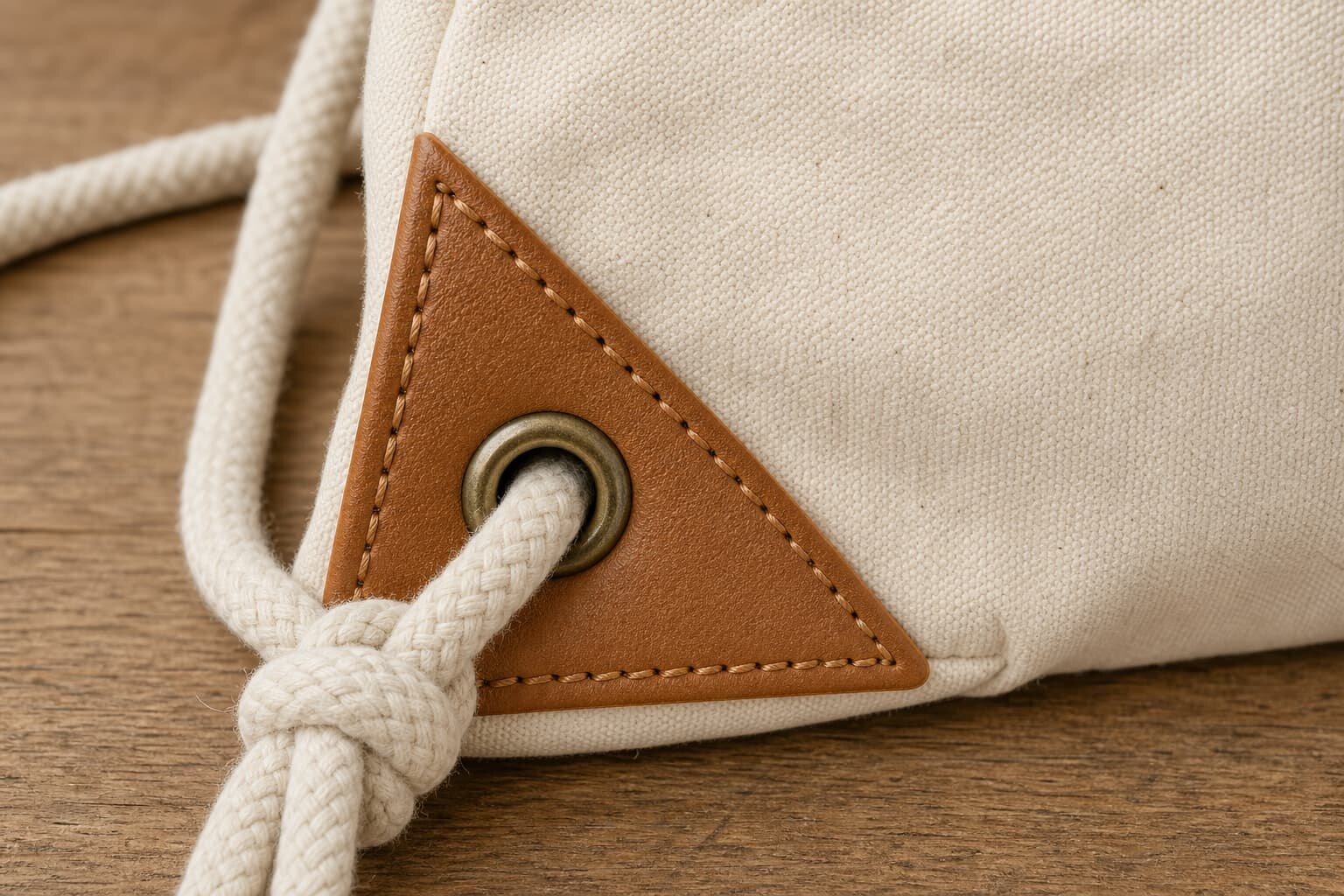
Why the top hem fold deserves its own approval memo
On a drawstring backpack, the top hem fold is not just a finishing step. It controls the opening size, the cord path, the feel of the mouth, and how much usable print space remains above the logo. If the hem is too narrow, the edge may fray or the bag may feel cheap. If it is too wide, you lose opening width and the cord can sit too high, which changes the way the bag closes. That is why a top hem fold approval memo is worth separate sign-off instead of being buried inside a general artwork approval.
Buyers run into trouble when one supplier quotes a simple folded edge and another quotes a double-fold or tunnel-facing build under the same product name. The bags may look similar in a photo, but the labor content, fabric consumption, and final hand-feel are not the same. A clear memo helps procurement compare apples to apples, cut down on sample revisions, and avoid the common bulk complaint where the approved artwork suddenly looks smaller because the factory changed the hem depth.
- The fold changes opening width, print area, and cord position.
- One vague quote can hide two very different labor structures.
- A separate approval memo reduces sample churn and bulk disputes.
What to lock before you ask for a price
The memo should define the hem in numbers, not in adjectives. State the fold width, the stitch type, the edge treatment, and the acceptable tolerance. For most light promotional bags, a 25-30 mm fold can work if the fabric is stable and the print stays away from the fold. For heavier cotton canvas, 30-40 mm often gives a cleaner mouth and better durability. If the bag uses a cord tunnel or facing, say so clearly, because that changes the sewing method and the fabric usage per piece.
You should also lock the material before the factory starts quoting. A 100-140 gsm polyester bag behaves very differently from a 180-220 gsm cotton canvas bag. The lighter fabric is cheaper and faster to sew, but it can pucker at the fold or show cord abrasion sooner. The heavier fabric gives a cleaner premium look, but it can raise labor, cutting waste, and packing bulk. If the buyer has not frozen the fabric weight, the top hem fold approval memo will not hold up in production.
- Fold width in mm and tolerance.
- Construction type: single fold, double fold, bound, or facing.
- Fabric weight, finish, and color standard.
- Cord diameter, cord end finish, and exit style.
Choosing the right hem build for the fabric
The best hem structure depends on the bag fabric and the use case. A single-fold hem is efficient for fast-moving promotional programs, especially on lighter polyester or poly-cotton. A double-fold hem is better when the buyer wants a cleaner interior, better edge coverage, and a more retail-ready hand-feel. Binding tape can solve fraying issues on rougher fabrics, while a separate facing or tunnel is the best answer when the bag needs a structured top line and more consistent cord movement.
This is where buyers should compare the supplier quote line by line. The hem build affects fabric consumption, sewing minutes, and the chance of rework. A supplier that quotes a simple fold on a 210D polyester bag is not the same as one quoting a two-stage fold on 200 gsm cotton canvas. The buyer should ask for the hem structure to be written directly into the spec sheet so the factory cannot switch it later to meet an internal cost target.
- Single fold: low labor, faster, but less margin for edge mistakes.
- Double fold: cleaner finish, more stable mouth, higher sewing time.
- Binding or facing: better edge control, more cost, more visual discipline.
- Do not compare quotes unless the hem structure is identical.
Comparison guide for hem options buyers can actually use
When sourcing a drawstring backpack top hem fold approval memo, buyers need a quick way to decide which build belongs in the RFQ. The right choice is rarely about style alone. It depends on the fabric weight, the expected load, the branding method, and how much risk the buyer can tolerate on the first bulk order. A light promotional bag can survive with a simpler hem if the artwork is small and the consumer will not overload it. A retail bag or school-use bag deserves more structure because the mouth sees more opening and closing stress.
Use the comparison table as a quote filter, not as a design preference chart. If one factory suggests a separate facing and another suggests a single fold, the buyers should not compare them on unit price alone. They need to compare structure, labor, packing volume, and the effect on the visible logo area. The wrong build can make a good price unusable because the top line looks crooked, the bag opens too narrowly, or the printed logo lands too close to the fold.
- Match the hem build to the fabric weight and end use.
- Treat labor content as part of the price, not an afterthought.
- Compare opening width after folding, not just cut size.
- Ask the factory to mark the fold line on the approved sample.
How print method and logo placement interact with the fold
The biggest mistake on this product is placing artwork too close to the top hem fold. When the factory folds and presses the mouth, a logo can warp, lose height, or look too compressed after packing. That problem is more obvious on screen print and heat transfer than on a woven label or side label. If the buyer wants a large front print, they need a safe zone below the fold so the artwork stays flat after the hem is built and the bag is cinched shut.
For quote control, tell the factory what print method is acceptable and what the logo tolerance is. Screen print is usually the most economical for simple one- to three-color art on flat fabric. Heat transfer can handle gradients or short runs, but it may show more edge wear if the artwork sits near a stress line. Embroidery needs enough fabric stability and should stay well away from the fold so it does not stiffen the mouth. A woven side label or sewn label is often the safest option when the buyer wants branding without risking the fold line.
- Keep artwork clear of the fold line by a defined safe distance.
- Choose print methods based on run size and fabric stability.
- Use a side label when the front panel is too busy or too small.
- Do not approve artwork from a flat drawing alone; inspect the sewn sample.
What a buyer should request in the quote package
A serious quote for this bag should not just show one unit price. It should separate the cost of fabric, cord, hem construction, print, labels, and packing. That breakdown gives procurement a way to see where the factory is saving money and where it is absorbing cost. It also helps the buyer understand whether the supplier has truly priced the approved top hem fold or has quietly substituted a lighter construction. If the quote only gives one all-in number, the buyer cannot tell what changed when the sample and the bulk bag start to drift apart.
Ask the supplier to include the sample timeline and bulk timeline in the same document. A clean process often starts with a proto sample, then a pre-production sample, then bulk cutting after approval. Depending on artwork and fabric availability, sampling may take about one to two weeks and bulk may take several weeks after all components are confirmed. The exact lead time depends on print method, fabric stock, cord sourcing, and how many rounds of comments the buyer expects to make. The memo should make those dependencies visible before the PO is issued.
- Request line items for fabric, sewing, print, label, cord, and packing.
- Ask for sample stage timing and bulk timing separately.
- Require the fold width and tolerance to appear in the quote text.
- Make sure the quote states what is included and what is excluded.
Sample approval workflow that prevents avoidable rework
Do not approve a drawstring backpack from one front photo. Ask for a sample packet that includes a flat lay, a close-up of the hem fold, a close-up of the cord exit, a label shot, and a measurement image with a ruler or caliper. The point is to capture how the bag behaves at the exact point where the fold, cord, and logo meet. If the bag is only checked in a closed state, the buyer may miss a twisted mouth, a rough raw edge, or a print that looks centered until the bag is cinched.
A good approval memo ties the physical sample to a photo set and a written measurement sheet. That way, when the factory asks for bulk release, procurement can compare the same reference points instead of relying on memory. For the best control, keep one signed golden sample on the buyer side and one on the factory side. That is especially useful when multiple people touch the order across procurement, art, quality, and shipping teams.
- Approve a proto sample before asking for bulk confirmation.
- Check the hem fold with a ruler in the photo packet.
- Save one golden sample with the signed memo attached.
- Do not release bulk if the sample photo set is incomplete.
Packing, carton load, and inbound handling matter too
The top hem fold can be ruined after approval if the packing method forces a harsh crease through the mouth or logo. Ask the factory how the bags will be folded, how many pieces go into each polybag, and whether the folding direction protects the top line. A folded bag that arrives with a hard crease across the brand area can create a quality complaint even when sewing was correct. For cotton canvas, moisture protection and carton cleanliness matter as much as the hem itself because the fabric can pick up warehouse dust or smell if packing is weak.
Carton details should be part of the approval memo because they affect warehouse receiving and retail presentation. Ask for the carton count, gross weight target, and outer carton markings. If the order ships with mixed sizes or mixed print versions, the buyer should specify carton separation clearly to prevent pick-and-pack errors. A neat bulk pack protects the hem edge, keeps the cord from snagging, and reduces the chance that the customer opens a box full of wrinkled, off-line bags.
- State fold direction so the logo is not creased in transit.
- Confirm polybag quantity, carton quantity, and carton labeling.
- Use moisture control where cotton or canvas can absorb warehouse odor.
- Make packing part of the sample approval, not a last-minute add-on.
Where the real cost changes happen
Most buyers expect the fabric to drive the price, but the top hem fold can move the quote more than they think. A wider hem uses more material and more sewing minutes. A safer print placement may reduce the artwork size or require an extra label. A bound edge may protect the fabric but add labor and a second material. If the buyer changes the hem after the quote is issued, the supplier may need to rework the cutting plan, which can affect both MOQ logic and lead time. That is why the approval memo should be tied to the first commercial quote, not written after the order is already in motion.
MOQ also changes with the hem build because factories often calculate efficiency by sewing sequence, not just by finished style. If the same order has one hem width for red bags and another for black bags, the line may need a second setup or extra handling. The same logic applies to print. A simple one-color screen print can stay efficient at lower volumes than a more complex transfer or embroidered badge. Buyers comparing quotes should ask not only what the minimum order is, but what design change triggered that minimum.
- Hem width and seam count change labor minutes.
- Print method can change MOQ as much as fabric choice.
- Color changes can force new cutting or sewing setups.
- Revisions after quote approval usually cost more than buyers expect.
Common failure points and the acceptance standard
The most common defects are easy to name and expensive to ignore. The fold may wander from one side to the other, the cord tunnel may catch during pull testing, the print may sit too close to the hem, or the raw edge may show after the bag is packed. On cotton or canvas, the hem can also distort after pressing if the stitch tension is too tight. These are not cosmetic issues only. They affect the user experience, the perceived value, and the repeatability of the factory result across the full order.
The approval memo should set a simple acceptance standard. For example, the buyer may allow only a narrow fold-width tolerance, require the logo to stay clear of the fold zone, and reject any bag with exposed raw edge, broken stitches, or a bag mouth that pulls unevenly. The key is not to write a huge quality manual for one bag, but to make the boundary visible enough that the supplier can quote and sew to the same target. If the team is going to reject a defect in inbound inspection, it should be written into the memo before the PO goes out.
- Reject exposed raw edge, crooked mouth, and uneven cord pull.
- Set a fold-width tolerance that quality can measure quickly.
- Tie logo clearance and stitch quality to the approved sample.
- Use the same acceptance rules for proto, pre-production, and bulk.
Specification comparison for buyers
| Spec decision | Recommended option | When it fits | Buyer risk to check |
|---|---|---|---|
| Single-fold top hem | 25-30 mm fold with clean overlock and one topstitch | Light promo bags, 100-140 gsm polyester or cotton, fast-turn orders | Check for raw-edge show, tunnel distortion, and uneven mouth width |
| Double-fold top hem | 30-40 mm total fold with enclosed edge and balanced stitch tension | Retail-facing cotton canvas, 180-220 gsm, better structure and feel | Check for reduced opening size, higher labor cost, and bulkier mouth |
| Fold plus binding tape | Folded edge reinforced with matching or contrast binding | Heavy-duty use, rough handling, or colored interior detail | Check color match, added cost, and seam stack-up at side corners |
| Separate facing or cord tunnel | Dedicated tunnel piece or facing for a sharper top line | Premium programs, structured backpacks, or larger logo programs | Check MOQ impact, lead time, and abrasion points where the cord exits |
Buyer checklist before sampling
- Confirm the approved top hem fold width in millimeters and the allowed tolerance.
- State whether the hem is single-fold, double-fold, bound, or made with a separate facing.
- Lock the fabric weight in GSM or oz and the fabric finish before quote comparison.
- Specify cord diameter, cord material, end finish, and whether tips are heat-sealed, knotted, or capped.
- Approve logo method, size, and distance from the fold so the print does not break on the channel line.
- Ask for a sewn proto, pre-production sample, and flat photo set with caliper or ruler references.
- Confirm packing method, folding orientation, polybag count, and carton markings.
- Request a line-item quote for fabric, sewing, print, labels, cord, and packing so cost changes are visible.
- Set acceptable seam, stitch, and raw-edge criteria before the factory starts bulk cutting.
- Keep one signed golden sample and one approved photo packet tied to the PO.
Factory quote questions to send
- What exact top hem fold construction are you quoting, and what fold width in mm will you hold in bulk?
- What fabric GSM or oz weight will you use, and is the fabric pre-shrunk, coated, brushed, or washed?
- How many sewing operations are required for the hem, and where are the labor cost breakpoints?
- Which print method are you recommending for this placement: screen print, heat transfer, embroidery, woven label, or side label?
- What is the minimum safe distance between the logo edge and the hem fold or cord tunnel?
- What is the MOQ by color, by print version, and by fabric shade if the hem structure changes?
- What sample stages are included before bulk, and how many rounds are priced?
- What packing method will you use, and does the folding method protect the logo or crease the hem?
- What are the lead times for proto, pre-production sample, and bulk after artwork and material approval?
- Which measurements will you inspect on your end before shipment, and can you share the final inspection checklist?
Quality-control points to confirm
- Measure top hem fold width at the left, center, and right side of each sample bag.
- Check that the cord tunnel is smooth and that the cord pulls without catching on raw fibers.
- Inspect stitch density and stitch straightness around the fold and side openings.
- Verify that the logo or label stays clear of the fold line and does not distort after pressing.
- Confirm that both sides of the mouth open evenly and the bag does not twist when the cord is pulled.
- Rub-test the print or label area near the fold to see whether the finish cracks, lifts, or frays.
- Inspect internal seam ends, thread tails, and cut edges for trim quality.
- Test one filled bag for mouth opening, cord glide, and shoulder carry balance.
- Check that folded packing does not create a permanent crease through the logo or top hem.
- Compare the bulk sample to the signed golden sample before final carton seal.