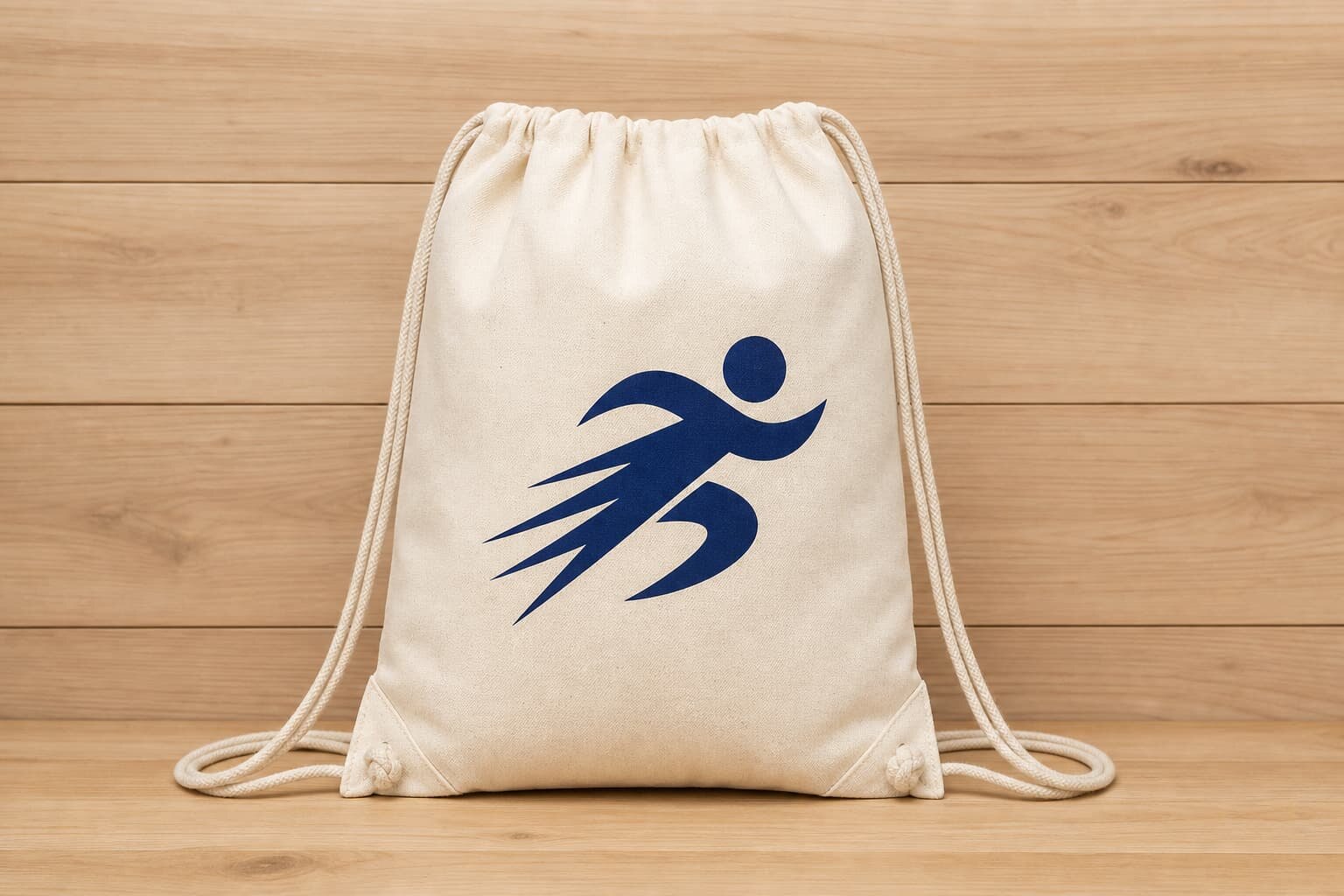
Why Timeline Planning Fails on Drawstring Backpack Orders
Most late drawstring backpack orders do not fail because sewing is difficult. They fail because the buyer and factory count lead time from different starting points. A buyer may assume the clock starts when the purchase order is sent. The factory may count from deposit receipt, final artwork approval, material arrival, or signed pre-production sample approval. If those dates are not separated in the RFQ, the quote can look acceptable but still miss the campaign or retail delivery window.
Drawstring backpacks look simple, but they combine several separate processes: fabric sourcing, cutting, logo production, sewing, trimming, packing, carton marking, and shipment handover. A one-color 210D polyester promotional bag using stock fabric can move quickly. A cotton canvas backpack with custom dyed cord, woven label, reinforced corners, and retail barcode packing needs a different calendar. Good timeline planning means identifying which part of the order controls the schedule before the order is placed.
- Do not accept a lead time that says only "25 days" without a start condition.
- Ask whether the timeline includes sample approval or begins after sample approval.
- Separate production lead time from transit time and customs clearance time.
- Confirm whether packing approval is included, especially for retail and distributor orders.
Start the RFQ With the Delivery Date, Not the Bag Price
A useful RFQ for drawstring backpack production should begin with the required in-hand date. For importers and distributors, that means the date the goods must be available in your warehouse, not the date they leave the factory. For brand owners, it may be a store launch, trade show, school term, sports event, or online campaign date. The factory can only judge whether the order is realistic if it sees the final use deadline and the shipping method expectation.
Work backward from that deadline. If ocean freight is required, the factory needs enough time not only to finish sewing but also to pack, inspect, book the vessel, deliver to the forwarder, and complete export documents. If air freight is possible, the product may still be limited by sample approval, print curing, or material availability. A strong RFQ gives the factory a planning target and asks for the risk points, not just the fastest answer.
- State target warehouse arrival date and latest acceptable ship date.
- Mention shipping mode preference: sea, air, courier, rail, or buyer forwarder pickup.
- Tell the factory if partial shipment is acceptable for urgent campaigns.
- Ask for the earliest realistic date and the safer planned date.
Choose Fabric Early Because It Controls the Calendar
Fabric selection is one of the biggest timeline drivers. For promotional drawstring backpacks, 210D polyester, 190T polyester, or non-woven PP are often available in stock colors. These can support faster sampling and production if the buyer accepts standard shade options. For better reusable bags, cotton canvas in 6 oz, 8 oz, or 10 oz, roughly 180-340 GSM depending on construction, may need greige fabric preparation, dyeing, or additional washing tests. Jute-look blends and heavy canvas can also slow cutting and sewing output.
Do not specify fabric only as "standard material" or "eco bag fabric." That leaves too much room for quote differences. One supplier may quote 210D polyester while another quotes 420D polyester or 8 oz canvas. The price, weight, print performance, carton volume, and lead time will all change. A buyer comparing quotes should request fabric name, denier or GSM, coating if any, color source, and available stock status.
- Fast route: stock 210D polyester, stock cord, one-color screen print.
- Balanced route: 420D polyester or 6-8 oz cotton canvas with standard color choices.
- Retail route: 8-10 oz cotton canvas, reinforced corners, label, barcode packing.
- Risk route: custom dyed fabric, custom cord, special finish, or low MOQ below mill minimum.
Build the Timeline Around Logo Production
Logo method can add more risk than sewing. Screen printing is usually the practical choice for solid logos on polyester, non-woven, and cotton drawstring backpacks. It needs artwork separation, screen preparation, print testing, drying or curing, and sometimes an underbase on dark fabric. If the logo has small text, gradients, or many colors, heat transfer or digital transfer may be cleaner, but the buyer should check handfeel, wash resistance, and edge durability on the actual bag material.
Embroidery is less common on lightweight drawstring backpacks because it can pull thin fabric and affect drape. It can work on heavier canvas or reinforced panels, but it requires stitch count confirmation and backing. Woven labels and sewn side labels add another component schedule. The safest process is to approve the artwork size, Pantone colors, print location, and logo technique before sample making. Changing the logo after fabric cutting can cause rework, scrap, and delivery slippage.
- Screen print: efficient for bold one to three color logos and medium-to-large runs.
- Heat transfer: useful for multicolor designs but needs edge and wash checks.
- Embroidery: suitable mainly for heavier canvas or reinforced panels.
- Woven label: clean retail detail but requires label MOQ and extra lead time.
Use MOQ Logic to Avoid False Lead Times
MOQ is not only a price issue. It affects which materials and production routes the factory can use. A 500 piece urgent order may be possible if it uses stock fabric and standard cord. The same 500 piece order may become slow or expensive if the buyer requires custom dyed cotton canvas, Pantone-matched drawcord, a woven label, and individual barcode labels. Below material MOQ, the factory may need to buy from local stock markets, accept shade limits, or charge a surcharge.
For larger orders, such as 10,000 to 50,000 pieces, the timeline changes again. The factory may need to reserve printing tables, split sewing lines, stage packing space, and order cartons in batches. Larger quantity can lower unit cost but does not automatically shorten time. Buyers should ask how quantity affects the production schedule and whether the factory plans one full shipment, batch shipments, or rolling completion.
- Low MOQ works best with stock fabric, stock cord, simple logo, and standard packing.
- Medium MOQ can support more fabric choices but still needs early material confirmation.
- High MOQ requires line planning, print capacity checks, and carton storage planning.
- MOQ below fabric or label minimum may create hidden cost and uncertain color matching.
Sample Approval Should Reduce Risk, Not Delay the Order
A drawstring backpack sample is not just a sales sample. It should confirm the production route. The sample should show actual fabric weight, actual print method, drawcord type, corner reinforcement, seam construction, finished size, and packing style when possible. If a factory sends a substitute fabric sample only to show shape, the buyer must not treat it as full approval for bulk production. That shortcut often causes claims later.
For urgent orders, buyers sometimes approve based on photos. That can be acceptable for repeat orders or simple promotional bags, but it is risky for new fabric, dark fabric printing, large logo coverage, or retail packing. A practical compromise is to approve digital layout first, then approve a physical print strike-off or material swatch by courier, while the factory prepares other materials in parallel. The order calendar should show which steps can overlap and which require buyer sign-off.
- Check finished bag size, not only flat cut panel size.
- Measure logo placement from top edge and side seam using the approved layout.
- Pull the drawcord several times to check channel friction and corner stress.
- Rub the print after curing to check adhesion before approving bulk printing.
- Confirm folded packing size if carton volume or retail display matters.
A Practical Production Schedule Buyers Can Request
Instead of asking "How many days for production?" ask the factory to provide a dated schedule. The schedule does not need to be complicated, but it should show the controlling operations. For a typical custom drawstring backpack order, the sequence is artwork confirmation, sample or strike-off, material purchase, cutting, printing, curing, sewing, trimming, inspection, packing, carton marking, and shipment handover. If the factory cannot show this sequence, the quoted lead time may be a guess.
A realistic schedule also protects the buyer from internal approval delays. If your marketing team needs three days to approve the artwork and your compliance team needs two days to check the barcode label, those are buyer-side lead time items. Put them into the plan. When both sides see approval dates clearly, it is easier to decide whether to simplify the design, pay for faster freight, or split the order.
- Day 0: deposit, final PO, final artwork, and packing instructions received.
- Days 1-5: sample, strike-off, or material confirmation depending on complexity.
- Days 3-10: fabric, cord, label, eyelet, and carton material preparation.
- Days 8-18: cutting, printing, curing, sewing, and inline checks.
- Days 18-24: trimming, final inspection, folding, packing, and carton marking.
- After packing: buyer inspection, shipment booking, export documents, and handover.
Packing Decisions Affect Both Lead Time and Freight Cost
Packing is often treated as the last detail, but it can change the timeline and landed cost. Bulk packing is faster and cheaper for event distribution, but it gives less protection to individual bags and may not suit retail channels. Individual polybag packing improves handling and presentation, but adds labor, material, barcode checks, and carton volume. Header cards, hangtags, insert cards, or retail labels add additional artwork approval and component lead time.
Drawstring backpacks can look compact, but carton volume changes quickly with fabric weight and reinforcement. A thin 210D polyester bag may pack tightly. An 8 oz canvas bag with thick cord and metal eyelets takes more space and may create higher freight cost. Buyers should request pieces per carton, carton size, gross weight, and estimated CBM during the quote stage. This allows proper freight comparison between suppliers.
- For event handout: consider bulk pack with clear carton marks by design or color.
- For ecommerce or retail: use individual polybag, barcode, and consistent fold size.
- For distributor inventory: confirm SKU separation and carton labels before packing.
- For heavy canvas: check carton gross weight so warehouse teams can handle cartons safely.
Acceptance Criteria Prevent Last-Minute Disputes
A good timeline is not complete unless it includes acceptance criteria. If buyers approve only a picture and later reject bulk goods for small shade differences, the shipment may be delayed while both sides argue. Drawstring backpacks are sewn textile items, so reasonable tolerances must be written in advance. Finished size, fabric GSM, print position, print color, seam strength, and packing quantity all need practical limits.
For example, a buyer may allow finished size tolerance of plus or minus 1 cm, logo placement tolerance of plus or minus 5 mm to 10 mm depending on bag size, and normal fabric shade tolerance within the approved production lot. The exact values depend on the product and market. What matters is that the factory knows the standard before production starts and the inspector uses the same standard before shipment.
- Fabric GSM or denier must match the approved quote and sample within agreed tolerance.
- Logo color should be checked against Pantone reference under consistent light.
- Print must not crack, peel, or transfer during basic rub and tape checks.
- Drawcord must move smoothly but not pull out easily from the channel.
- Carton quantity, carton mark, and barcode information must match the packing list.
Common Timeline Mistakes and How to Avoid Them
The most common mistake is approving price before approving the production route. A quote for 210D polyester with one-color print cannot be compared fairly with a quote for 8 oz cotton canvas and a woven label. Another mistake is sending low-resolution artwork and expecting immediate sample production. Factories need vector artwork or clean high-resolution files, exact logo size, print color references, and placement instructions before they can prepare screens or transfer files.
Buyers also lose time by changing packaging after production starts. Adding a barcode label, changing carton quantity, or requiring retail polybags late in the process can delay shipment even if the bags are already sewn. For seasonal campaigns and retail launches, the safest approach is to freeze the bag specification, artwork, packing method, and inspection standard before deposit. If a change is unavoidable, ask the factory for revised timing and cost before approving the change.
- Do not compare supplier lead times unless the fabric, logo, and packing specs are identical.
- Do not approve production based only on a digital layout for a new fabric or logo method.
- Do not assume stock fabric colors match Pantone exactly.
- Do not leave carton marks, barcodes, or shipping labels until the final week.
- Do not book fixed launch activity until inspection and freight timing are confirmed.
Specification comparison for buyers
| Spec decision | Recommended option | When it fits | Buyer risk to check |
|---|---|---|---|
| Fabric for fast promotional orders | 210D polyester or 190T polyester, 70-90 GSM equivalent | Event giveaways, school promotions, budget campaigns, tight delivery windows | Confirm tear strength, drawcord hole reinforcement, and whether the fabric color is stock or custom dyed |
| Fabric for retail or reusable programs | 6-10 oz cotton canvas or 180-240 GSM cotton | Brand merchandise, lifestyle retail, bookstore, gym, or eco-positioned ranges | Check shrinkage allowance, fabric shade tolerance, lint control, and whether printing needs pre-wash testing |
| Logo method for short lead time | One or two color screen print | Most promotional and distributor orders where logo color is solid | Confirm print size, Pantone reference, curing test, and whether dark fabric needs underbase printing |
| Logo method for detailed artwork | Heat transfer or digital transfer | Gradients, small text, multicolor graphics, low-to-medium MOQ | Check transfer handfeel, wash resistance, edge lifting, and final approval on actual fabric |
| Strength upgrade | Reinforced bottom corners with metal eyelets or bartack stitching | Heavier contents, sports promotions, retail use, school packs | Ask for pull test criteria and check whether reinforcement changes packing thickness |
| Packing method | Individual polybag with carton marks, or bulk pack for low-cost event distribution | Polybag for retail-ready handling; bulk pack for direct event handout | Confirm barcode placement, suffocation warning if required, carton weight limit, and bag folding size |
Buyer checklist before sampling
- Define launch date, in-warehouse date, vessel or air shipment cutoff, and final artwork approval deadline before asking for lead time.
- State bag size, fabric type, GSM or denier, drawcord material, reinforcement style, and print size in the RFQ.
- Separate sample lead time, bulk production time, inspection time, packing time, and transit time instead of asking only for one total delivery date.
- Confirm whether fabric, cord, eyelets, and packaging are stock items or need custom procurement.
- Approve a physical pre-production sample on actual fabric and actual print method before bulk cutting when timing allows.
- Set written tolerance for bag size, fabric weight, logo placement, print color, carton quantity, and packed carton weight.
- Ask the factory to identify the production bottleneck: fabric availability, print capacity, sewing line capacity, or packing labor.
- Reserve time for artwork correction, Pantone matching, barcode checking, and packing mark approval.
- Avoid changing logo size, fabric color, or packaging after deposit unless the revised timeline is accepted in writing.
- Plan QC inspection after bulk packing reaches at least 80 percent completion, with a clear shipment release process.
Factory quote questions to send
- Is the quoted lead time counted from deposit, artwork approval, fabric arrival, or pre-production sample approval?
- Are the fabric color, drawcord color, eyelets, labels, and packing materials stock items or custom ordered?
- What is the realistic sample lead time for our exact fabric and print method, not a substitute material?
- How many days are needed for print plate, screen, transfer film, or embroidery setup after artwork confirmation?
- What is the MOQ for the quoted fabric and logo method, and what cost or timing changes apply below that MOQ?
- Can you provide a production schedule with dates for material purchase, cutting, printing, sewing, QC, packing, and shipment booking?
- What are your standard tolerances for fabric GSM, finished size, logo placement, and logo color?
- What tests will you run before bulk production, such as print rub test, cord pull test, seam strength check, or carton drop check?
- How many pieces per carton, what carton size, what gross weight, and what volume should we use for freight planning?
- If the order is urgent, which part of the specification can be changed to reduce lead time without creating quality risk?
Quality-control points to confirm
- Check fabric weight against approved specification and confirm shade consistency before cutting.
- Compare finished size to approved sample after sewing, allowing for reasonable fabric and sewing tolerance.
- Test print adhesion by rub, tape, and light scratch checks before releasing bulk printing.
- Verify logo position from top edge and side seams, especially on bags with large front prints.
- Pull test drawcord channels, eyelets, corner reinforcement, and bartack points using the agreed buyer standard.
- Inspect seam security at bottom corners because this is where loaded drawstring backpacks most often fail.
- Confirm drawcord length, knotting, color, and material match the approved sample.
- Check individual packing, barcode labels, carton marks, carton quantity, and mixed SKU separation before shipment.
- Review carton compression risk if bags have bulky cords, thick canvas, or folded retail header cards.
- Keep approved sample, bulk sample, and inspection photos linked to the purchase order for later claim handling.