Why This Inspection Matters Before Final Payment
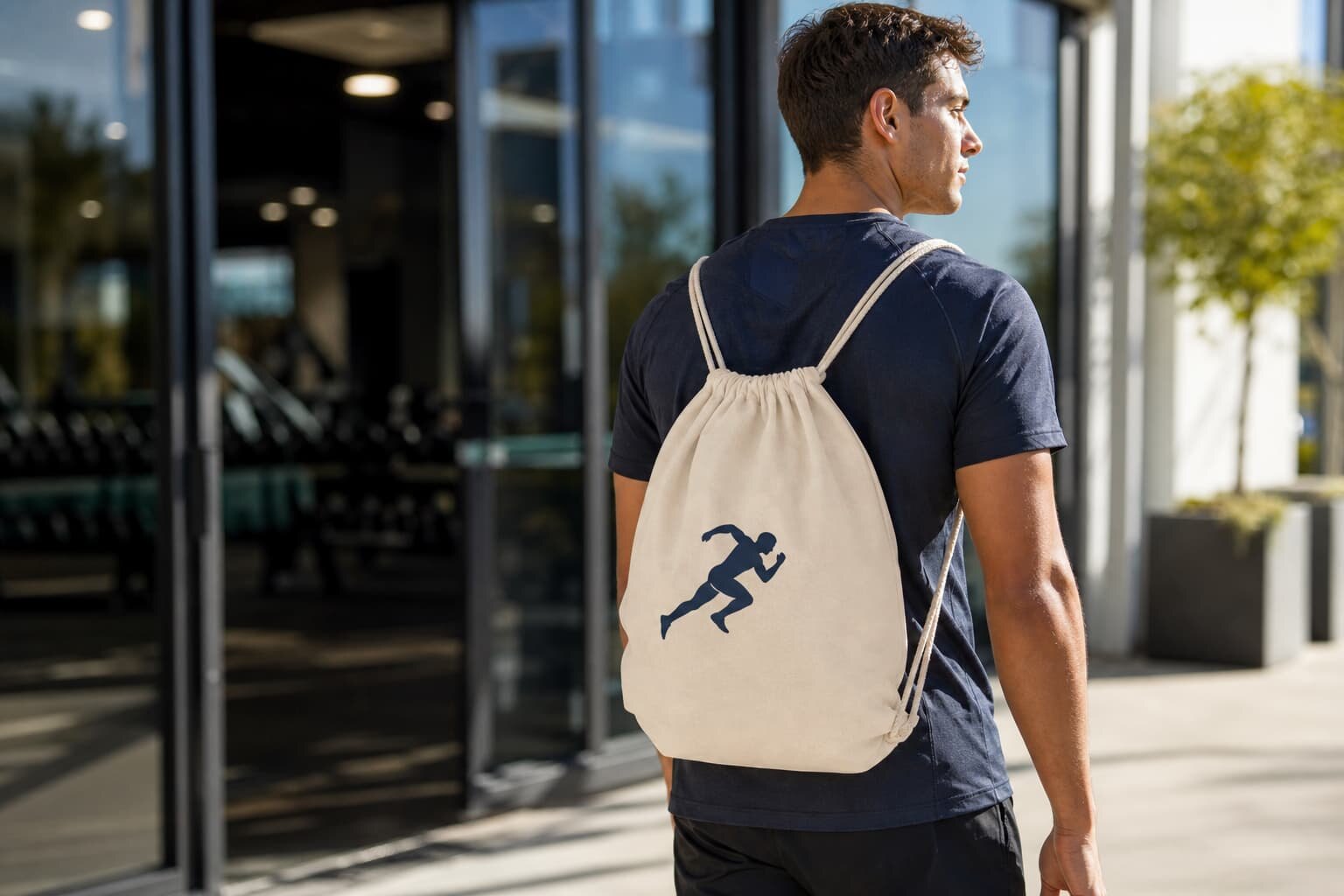
A drawstring backpack looks simple, but pre-shipment inspection is where many avoidable buying problems appear. The bag may pass a quick photo review while still having weak bottom corners, short cords, wrong carton quantities, or print ink that cracks after light folding. Once the goods are loaded, the buyer has little leverage and the cost of correction moves from factory-level rework to overseas sorting, repacking, credit notes, or customer complaints.
For procurement teams, the purpose of a pre-shipment inspection is not only to reject bad goods. It is to compare the actual packed order with the purchase order, approved sample, artwork proof, and supplier quote. If the quote promised 8 oz cotton canvas, 6 mm cotton cord, screen print, individual polybags, and 100 pieces per carton, the inspection should verify those points in the finished shipment, not only count visible defects.
- Inspect after most goods are packed, typically when at least 80 percent of production is finished.
- Use the signed pre-production sample and final packing instruction as the inspection standard.
- Check product, branding, packing, carton marks, and shipping readiness in one visit.
- Do not approve shipment based only on factory photos of selected samples.
Set the Inspection Standard Before Production Starts
The strongest inspection starts at RFQ stage. If the buyer only writes drawstring backpack with logo, the inspector has no clear standard later. A useful RFQ should define fabric material, GSM, finished size, cord type, reinforcement, print method, artwork position, packing, carton quantity, and acceptable tolerances. These details also make supplier quotes easier to compare because each factory is pricing the same bag.
For drawstring backpacks, tolerances should be practical. A small fabric bag may not hold exact millimeter measurements after cutting, sewing, pressing, and packing. However, a finished size tolerance of plus or minus 1 cm is usually more useful than no tolerance at all. Print position should also have a tolerance, such as plus or minus 5 mm from center, because a logo that shifts too far may look obviously crooked even if the sewing is acceptable.
- State finished size, not only cutting size, because sewing allowance changes the final measurement.
- Specify fabric GSM and material composition, such as 210D polyester, 5 oz cotton, 8 oz canvas, or laminated jute blend.
- Define cord material, diameter, color, and pulled length from bag opening to bottom corner.
- Attach artwork with print size, Pantone or approved color reference, and placement from bag edges.
- Include packing details such as individual polybag, folded size, carton quantity, carton mark, and barcode label.
Fabric, GSM, and Color Checks
Fabric is one of the easiest places for cost to change and one of the hardest problems to correct after sewing. A supplier may quote a lower GSM to win an order, or a buyer may approve a hand sample made from better stock fabric than the bulk production material. During pre-shipment inspection, the inspector should compare bulk fabric handfeel, opacity, weight, weave density, and color against the approved sample or fabric swatch.
Different drawstring backpack materials have different inspection concerns. Polyester can show dye migration, heat marks, and coating scratches. Cotton and canvas may have slubs, color shading, shrinkage, and lint contamination. Nonwoven material can tear at the seam if the GSM is too low. Jute-look or natural fabric blends may show more texture variation, so the approved sample should define what level of natural irregularity is acceptable.
- Check GSM by cutting and weighing a measured fabric area when the order risk is high.
- Compare bulk color under consistent lighting, not only under yellow warehouse light.
- Look for roll-to-roll shading by sampling cartons from different packed batches.
- Reject mildew smell, oil stains, large weaving defects, heavy dirt, and visible holes as serious quality issues.
- Confirm coating, lamination, or water-resistant finish if it was included in the quote.
Size, Sewing, and Reinforcement Acceptance Criteria
The main functional failures on drawstring backpacks usually come from sewing and reinforcement. A bag used for an event may carry catalogs, a bottle, shoes, or a hoodie. If the bottom corner is only caught by one weak seam, the cord can rip out quickly. Inspection should focus on the drawstring channel, side seams, bottom corners, eyelets if used, and any bartack or triangle reinforcement.
Finished size checking should include width, height, seam symmetry, opening width, and cord route. A bag can measure correctly but still function poorly if the drawstring channel is too tight or the cord is uneven. The inspector should open and close sample bags repeatedly, pull both cords evenly, and check whether the fabric gathers smoothly without seam tearing or rough friction.
- Measure width and height on flat bags after normal packing recovery, not while heavily creased.
- Check stitch density and skipped stitches on side seams, bottom seams, and drawstring channel.
- Pull-test bottom corners and cords with a practical load agreed before inspection.
- Confirm eyelets are tightly set, not sharp, cracked, loose, rusty, or misaligned.
- Check that both cords are equal enough for comfortable shoulder use.
Print and Logo Inspection for Bulk Goods
Logo quality is often the first thing the buyer's customer notices. For drawstring backpacks, common branding methods include screen print, heat transfer, sublimation on polyester, embroidery, woven label, rubber patch, and reflective print. Each method has a different inspection focus. Screen print must be cured and well registered. Heat transfer must bond cleanly without lifting edges. Embroidery should not distort thin fabric. Woven labels must be straight and securely sewn.
The inspection should compare bulk printing to the signed artwork and approved strike-off, not to a low-resolution email image. Check print size, color, position, opacity, edge sharpness, handfeel, ink cracking, pinholes, ghosting, and contamination. For dark fabric, underbase quality matters. For polyester, dye migration can cause white or light-colored logos to look grey, pink, or dull after heat exposure.
- Measure logo width and height on several pieces from different cartons.
- Check print position from top edge, side edge, and center line.
- Rub printed areas lightly with a clean white cloth if ink curing is a concern.
- Fold printed areas gently to check cracking, especially on thick ink deposits.
- Inspect inside packing for ink transfer, blocking, or sticking between bags.
Cord, Eyelet, and Wear-Point Testing
The cord system is both the closure and the shoulder strap, so it carries more stress than many buyers expect. A quotation should state cord material, diameter, color, and length. Polyester cord is common for promotional backpacks because it is smooth and economical. Cotton rope gives a more natural look but may fray if the end finishing is poor. Flat tape can be comfortable but requires different sewing and routing.
During inspection, the inspector should check whether the cord slides smoothly and whether the length is correct for the intended user. A youth event bag may need shorter cords than an adult sports promotion bag. If the cords are too long, the bag hangs low and may be unsafe for children. If too short, the bag is uncomfortable and the opening may not close properly.
- Measure pulled cord length from the channel exit to the bottom attachment point.
- Check cord diameter with a simple gauge or caliper when comfort and strength matter.
- Confirm cord ends are heat-cut, knotted, taped, or otherwise finished as approved.
- Pull the cord attachment points repeatedly to identify seam slippage or eyelet movement.
- Check for rough cord texture that may scratch neck or shoulder skin during use.
Packing, Carton, and Assortment Checks
Packing problems create receiving delays even when the bag itself is acceptable. Importers and distributors should treat packing as part of the product specification, not an afterthought. A drawstring backpack order may need individual polybags, paper bands, hangtags, retail stickers, suffocation warnings, barcode labels, or master carton marks. If these are missing or inconsistent, the warehouse may need to relabel or repack the order after arrival.
Carton inspection should confirm quantity per carton, assortment ratio, carton dimensions, gross weight, inner packing, and export carton strength. A carton that is too heavy can fail during handling. A carton that is too loose can crush the bags and crease prints. If the order includes multiple colors or logos, the inspector should open cartons from each SKU and verify the actual mix, not only trust the carton mark.
- Count pieces in opened cartons and compare with the packing list and carton mark.
- Check SKU, color, logo version, and size ratio inside mixed cartons.
- Confirm barcode scan readability if retail or distributor receiving requires it.
- Inspect polybag sealing, warning text, recycled bag claims if used, and folded presentation.
- Check carton tape, strap if any, corner damage, moisture signs, and shipping marks.
Lead Time, MOQ, and Inspection-Ready Planning
Pre-shipment inspection must be planned into the production calendar. If the buyer schedules inspection on the same day as vessel cutoff, any failure becomes a crisis. A more workable plan is to ask the factory for material arrival date, print start date, sewing completion date, packing date, inspection-ready date, and latest possible rework window. This is especially important for rush promotion orders and seasonal retail launches.
MOQ also affects inspection risk. A single-color 210D polyester backpack may have a lower MOQ because fabric and cord are common stock. Custom-dyed cotton canvas, special cord colors, metal eyelets, retail hangtags, or multiple print versions can raise MOQ or create split-batch production. The more versions an order has, the more important it is to inspect cartons across every version.
- Ask for an inspection-ready date after packing, not only a production finish date.
- Keep at least several working days for rework before freight booking when possible.
- Confirm whether the MOQ applies per fabric color, per logo, per print color, or per shipment.
- For split orders, inspect each SKU rather than only the largest quantity color.
- Do not release final balance until inspection status and corrective actions are clear.
How to Read Defects Without Overreacting
Not every small imperfection should block shipment. Fabric bags are sewn products, and minor loose threads or light creases may be acceptable depending on the market level. The buyer should separate critical, major, and minor defects before inspection. Critical defects affect safety or legal compliance. Major defects affect selling value, function, branding, or customer acceptance. Minor defects are visible but do not normally affect use or sale.
The practical question is whether the defect would cause a retailer, distributor, event organizer, or consumer to reject the bag. A slightly uneven natural cotton texture may be acceptable. A crooked front logo on 15 percent of the order is not. A few loose threads can be trimmed. Weak bottom corners or wrong carton barcodes require corrective action before shipping.
- Critical defects include broken needle pieces, sharp eyelets, mildew, severe chemical odor, and unsafe cord issues for child-related programs.
- Major defects include wrong fabric, wrong GSM, wrong logo, weak seams, serious stains, incorrect packing, and wrong assortment.
- Minor defects include trim-able loose threads, light wrinkles, tiny print specks outside the main logo area, or small measurement variation within tolerance.
- Require photos and carton references for any repeated defect pattern.
- Approve, rework, reinspect, or accept with concession based on defect type and quantity.
What the Final Inspection Report Should Include
A useful inspection report should help the buyer make a shipment decision quickly. It should not be only a set of random photos. The report should list the purchase order number, style number, factory name, inspection date, inspected quantity, packed quantity, carton numbers selected, reference documents used, inspection method, defect summary, measurement results, packing findings, and final recommendation.
The best reports connect each defect to a business decision. If the issue is wrong carton mark, the action may be relabeling. If the issue is weak seam strength, the action may be opening cartons and resewing affected batches. If the issue is print cracking, the buyer may require factory sorting, reprinting if possible, or replacement production. A clear report protects both sides because it records what was found before shipment.
- Include photos of approved sample comparison, measurement method, print position, seam quality, and carton packing.
- Record actual measurements in a table instead of only saying pass or fail.
- Separate defect photos by critical, major, and minor categories.
- Confirm whether inspected goods were sealed again after checking.
- State whether shipment is approved, rejected, pending rework, or pending buyer concession.
Specification comparison for buyers
| Spec decision | Recommended option | When it fits | Buyer risk to check |
|---|---|---|---|
| Fabric weight | 210D polyester for budget promo orders; 6-8 oz cotton or canvas for retail and reusable programs | Use polyester for lightweight events and cotton canvas when the bag must feel durable and brand-led | Factory may quote a lower GSM than requested; verify weight by cutting a measured fabric swatch or weighing finished samples |
| Cord construction | 5-7 mm polyester cord or cotton rope with heat-cut or knotted ends | Polyester cord is common for sports and school promotions; cotton rope fits natural cotton bags | Cord may be too short, uneven, or rough at the shoulder; inspect pulled length and cord end finishing |
| Bottom reinforcement | Triangle corner stitching, metal eyelets, or bartack reinforcement depending on load requirement | Required when the bag carries shoes, bottles, catalogs, or event kits | Weak bottom corners are a common failure point; check pull strength and stitch density |
| Print method | Screen print for solid logos, heat transfer for multi-color artwork, embroidery or woven label for premium styles | Choose by artwork size, color count, fabric surface, and handfeel expectation | Print cracks, dye migration, poor registration, and wrong print position can pass unnoticed if no approved production sample exists |
| Packing method | Individual polybag or paper band, then fixed inner quantity per export carton | Use individual packing for retail or distributor handling; bulk packing for internal event distribution | Mixed colors, wrong carton quantity, and missing barcode labels create receiving disputes |
| Inspection timing | After 80-100 percent packed but before final balance payment and container loading | Best for production orders where defects must be found before shipment leaves the factory | Inspecting too early misses packing and carton issues; inspecting too late limits rework options |
Buyer checklist before sampling
- Confirm the inspection uses the approved sample, signed artwork, final packing instruction, and purchase order spec sheet as reference documents.
- Check fabric type, color, GSM, handfeel, coating if any, shrinkage risk, and visible defects such as stains, slubs, holes, oil marks, and color shading.
- Measure finished bag size, cord length, print size, print position, side seam allowance, bottom corner reinforcement, and carton dimensions against stated tolerances.
- Pull-test cords, eyelets, bottom corners, seams, drawstring channel, and bartacks using a defined practical load instead of only visual checking.
- Inspect print quality for color match, registration, adhesion, curing, cracking, pinholes, ghost marks, stains, and ink transfer inside packing.
- Open packed cartons from different locations in the finished goods area and confirm quantity, color ratio, size ratio, barcode, hangtag, polybag, carton mark, and carton weight.
- Record all major and minor defects with photos, carton numbers, quantities affected, and the factory action plan before approving shipment.
- Hold shipment approval until reworked goods are reinspected or the buyer accepts a written concession for clearly identified nonconformities.
Factory quote questions to send
- What exact fabric construction and GSM are included in the quote, and is the GSM measured before or after dyeing, coating, or finishing?
- Which print method is quoted, how many colors are included, what is the maximum print area, and are setup screens, films, or digital proofs included?
- What cord diameter, material, color, length, and end finishing are included, and are eyelets, bartacks, or reinforced corners included in the unit price?
- What is the MOQ by fabric color, print color, and bag style, and what surcharge applies if the order is split across several logo versions or colorways?
- What sample types are included before mass production: fabric swatch, printed strike-off, pre-production sample, and packed sample?
- What are the expected production lead time and inspection-ready date after artwork approval, deposit, and material confirmation?
- What packing method, carton quantity, carton size, gross weight, inner bag, barcode label, and carton mark are included in the quotation?
- What defect standard will the factory use at pre-shipment inspection, and who pays for reinspection if the order fails the first inspection?
Quality-control points to confirm
- Fabric GSM and construction match the approved specification and quoted material.
- Finished dimensions remain within agreed tolerance after sewing and packing.
- Cord length, diameter, color, and end finishing match approved sample.
- Drawstring channel opens smoothly and does not catch on seam bulk or loose threads.
- Bottom corner reinforcement withstands practical pull testing without seam slippage.
- Print color, size, position, curing, and adhesion match the signed artwork approval.
- No critical safety issues appear, including sharp eyelet edges, loose metal parts, broken needles, mildew odor, or chemical smell.
- Packing quantity, assortment, barcode, carton mark, carton strength, and gross weight match buyer receiving requirements.
- Inspection findings are documented with defect photos, quantities, carton references, and corrective action before shipment release.