Drawstring Backpack OEM Communication Workflow Review for Europe
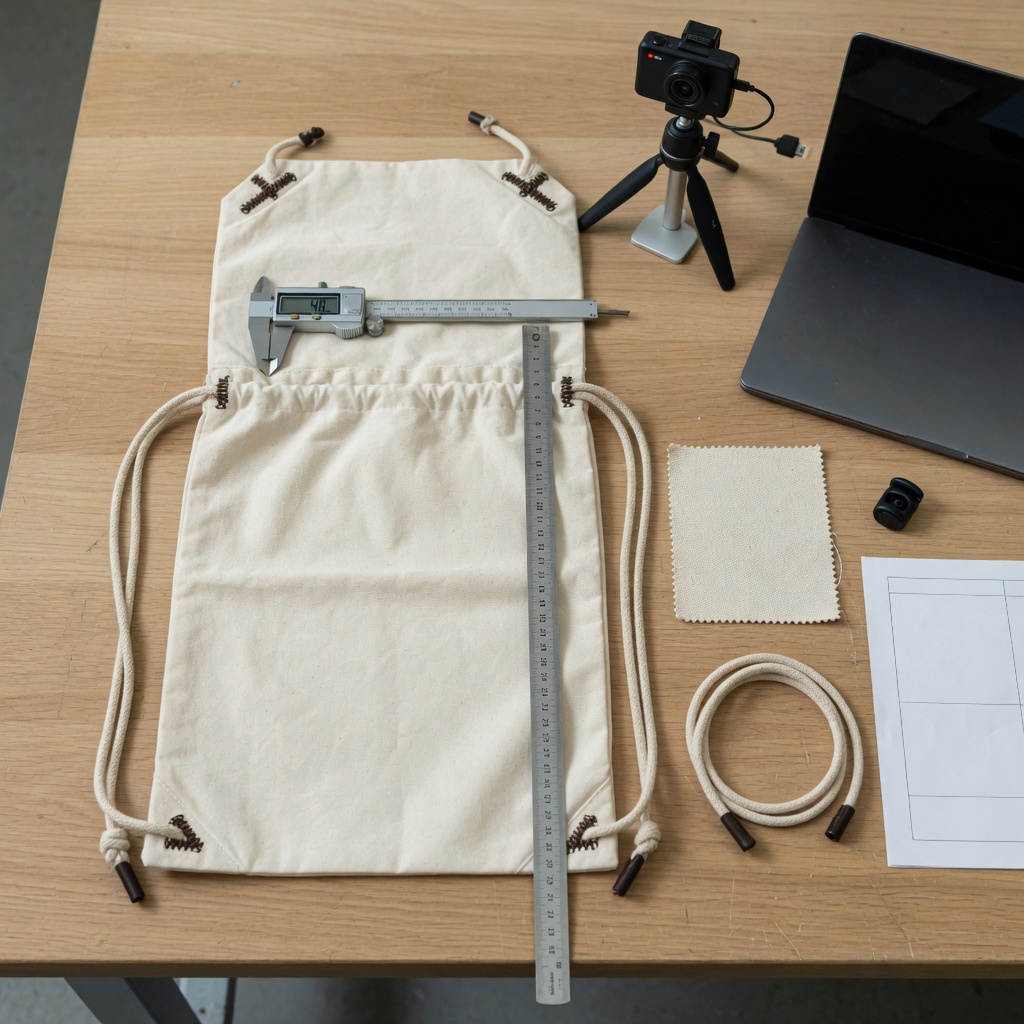
Editorial author: Vincent Xi, Editorial Author. Profile: https://cottontotemaker.com/authors/vincent-xi/
```json { "@context": "https://schema.org", "@type": "Article", "headline": "Drawstring Backpack OEM Communication Workflow Review for Europe", "author": { "@type": "Person", "name": "Vincent Xi", "jobTitle": "Editorial Author", "url": "https://cottontotemaker.com/authors/vincent-xi/" } } ```
European B2B buyers should not award custom drawstring backpack manufacturing until a communication workflow review is locked in the RFQ. The product looks simple; the specification is not. When opening size, casing construction, cord, print, fabric mass, and packing marks are left unstated, the factory fills the gaps and the importer has no file to defend at sample sign-off or at destination.
This lock-list is a buyer-side award filter for the Europe sales market. It is not a published factory standard, not a CottonToMaker process claim, and not legal advice. EU member states, EEA countries, and the UK are separate destinations; do not write as if one chemical, labelling, or packing rule covers all of Europe. Treat the workflow as complete only when the quotation states the following in writing:
- Measurable tech-pack fields and measurement methods.
- Three sample gates ending in a pre-production sample (PPS) from bulk-intent materials.
- Dimensional tolerances plus a revision cap that defines what counts as a cycle.
- Email, or an equivalent timestamped system, as the approval channel of record.
- An unedited remote-video protocol.
- Inline check points from incoming material through cord insertion and packing.
- A destination-country file that names an EU member state, an EEA country, or the UK (buyer-side control; not stated as a requirement on the cited manufacturer pages).
This page is that RFQ decision. It is not a complete product-category guide, a factory capability claim, a certification, or a single-rule Europe compliance manual.
Price the trade-offs in the RFQ, not after the first sample. A two-cycle revision cap can protect calendar time, but it also freezes an incomplete specification if the first physical prototype is rushed. Email creates an official record for later claims; operational chat speeds daily questions and is harder to version-control. Unedited testing videos can reduce travel for PPS review, yet the buyer still has to define what the camera must show: opening width, cord travel, stitch type, print registration, and measurements against the locked tech pack.
How the data were derived. Numerical and process claims below come from three publicly available manufacturer source contexts: a bag-OEM communication guide (omaska.com); a private-label drawstring bag production guide (szoneier.com); and an OEM/ODM page on non-woven drawstring bags used only for listed inline-check themes (initibag.com). Figures are reported as published on those pages. The source excerpts used for this article did not state publication dates. They are not CottonToMaker factory measurements, not independent laboratory results, not destination-law texts, and not demand, traffic, or ranking statistics. Private-label sample timings and non-woven check themes are comparison inputs for a drawstring backpack OEM RFQ; they are not evidence that every quoted line uses the same fabric, machine set, or calendar.
What to verify. Lead times, millimetre tolerances, approval windows, revision caps, and defect-rate language vary by factory, fabric, decoration method, and order quantity. Confirm current supplier SOPs, sample costs, Incoterms, authorised approvers, and destination-country requirements in writing before PPS approval. Do not treat a named millimetre, hour, day, cycle, or percent figure below as the live quote.
Why European buyers lock a communication workflow review for drawstring backpack OEM manufacturing
Opening circumference, hem width, cord diameter and length, cord-exit reinforcement, knot or cord-lock function, print position, and fabric mass all interact. Precise, measurable metrics in tech packs and bills of materials are described as a way to prevent quality failures that start as those unstated assumptions (How to Communicate with a Chinese Bag Manufacturer).
For European procurement, the communication file is also the file the importer can show at sample sign-off. A buyer shipping into an EU member state, an EEA country, or the UK should name that country, the intended use, and the documents required at sign-off: construction sheet, material declaration, print colour standard, and packing specification. Specify the language of record so later quality claims are not argued over chat screenshots.
The buyer job is therefore narrow: lock what will be measured, who may approve it, how many times it may change, what evidence is accepted remotely, and which European country the packing marks and material language must serve.
Tech pack contents and precise feedback during sample development
Do not start OEM sampling with a logo file and a target retail size. One private-label drawstring bag production guide describes sample development as using a detailed tech pack with fabric swatches, dimensions, cord details, and vector logos, plus digital mock-ups and physical prototypes (The Complete Guide to Private Label Drawstring Bags Production). Treat that list as a minimum specification set for a drawstring backpack RFQ, not as a brochure and not as a CottonToMaker tech-pack template.
Specify at least the following as measurable fields, each with a method and a unit:
- Bag body width and height, measured flat in millimetres, with the measurement point defined (for example, below the hem, excluding the casing).
- Opening width or circumference after the casing is sewn, because casing construction changes the usable opening.
- Casing height, stitch type, and needle pitch if appearance and cord friction are critical.
- Cord type (round, flat, or webbing), diameter or width, length from end to end, and finish (cut-and-seal, aglet, or knot).
- Cord-exit construction: bartack length and stitch count, or equivalent reinforcement.
- Fabric identification: fibre, construction, colour standard, and mass (grams per square metre or equivalent) with a rejectable tolerance.
- Print or embroidery: artwork in vector form, colour standard, position from defined edges, and maximum misregistration allowed.
- Packing: folding method, polybag or paper wrap, carton quantity, and destination marking rules the buyer will apply for the named European country.
Feedback on the first prototype should be clinical. “Make it look more premium” is not a revision instruction. An example of a measurable instruction (example only, not a published standard; confirm actual casing height on the locked tech pack) is: increase casing height from 20 mm to 25 mm, keep lockstitch, and re-measure opening width on three samples. Source literature on bag OEM communication describes sampling as a multi-stage process of paper pattern, first prototype, and pre-production sample, with that kind of clinical feedback (How to Communicate with a Chinese Bag Manufacturer). Digital mock-ups are useful for print placement and colour direction; they do not replace a physical prototype for cord travel, hem bulk, or fabric hand. If material declarations will later be filed for an EU member state, an EEA country, or the UK, either require the same fabric-lot language on the prototype that bulk must carry, or record in writing that the prototype is a construction sample only.
Sample stages, published timelines, and revision limits
Treat sampling as three locked gates, not one “sample.” Paper pattern confirms panel geometry and consumption. First prototype confirms construction, cord path, and decoration. PPS should be made from bulk-intent materials, on bulk-intent equipment, with bulk-intent stitching and packing. Approving a hand-made prototype as if it were a PPS is a common source of bulk deviation.
One cited production guide states that physical prototypes are completed in 5–7 days at ±3 mm tolerance, and that approval occurs within 48 hours limited to two revision cycles (units: calendar days, millimetres, hours, cycle count; scope: as published for private-label drawstring bag sample development on that page, not for every fabric, print method, or OEM line; as-of: undated excerpt used for this article; source: szoneier.com production guide). Those figures are RFQ comparison points, not guaranteed calendar time. A buyer who needs a third revision should price and schedule it before sampling starts.
A 48-hour approval window (same source, same undated context) forces merchandising, quality, and—where relevant—the European importer-of-record team to be ready. If brand or legal review takes a week, the published factory window is irrelevant. Write the buyer’s internal SLA into the purchase process so a pause the buyer created is not later treated as a factory delay.
Dimensional tolerance of ±3 mm (same source and undated context) may be acceptable on a large promotional backpack body and unacceptable on a small opening or a print window. Specify which dimensions use that tolerance and which are tighter. Cords often need a separate length tolerance because cut length and heat-seal shrinkage are not the same as sewn-bag width. Revision limits should name what counts as a revision: construction change, colour change, print change, and size change are not equal in cost or time.
Communication channels, records, and remote video evidence
Channel choice is a records choice. The cited bag-manufacturer communication guide states that email provides official records while WeChat supports daily operations, and that unedited testing videos enable remote QC before mass production (How to Communicate with a Chinese Bag Manufacturer). European buyers who may later need to demonstrate due diligence to a brand owner, insurer, or customs file should keep approvals, measurements, and change orders on email or another system that preserves timestamps and attachments. Chat can move photos of a needle or a cord lock the same day; it should not be the only place a size change is agreed.
Define the record pack at each gate:
- Tech pack version number, date, and file hash or equivalent identity.
- Swatch or strike-off identity tied to the same version.
- Measurement sheet for a stated sample size (for example three bags, not one hero piece; example sample size to confirm in the supplier quote).
- Written pass/fail against each critical dimension and function.
- Video file that is unedited for the test sequence the buyer named.
Remote video is evidence only if the protocol is specified. Ask for a continuous take that shows: bag laid flat next to a scale ruler; opening measured; cord pulled fully open and closed; bartack at each exit; reverse of print; and, if relevant, a load or shake test the buyer defined. Edited highlight reels hide the misses. Time-zone overlap with a Chinese OEM (a manufacturing-origin reference, not a sales-market target) should be stated as overlap hours for live calls, with written minutes issued the same day on email.
Name factory contact roles: merchandiser, pattern, printing, and quality. A European buyer’s quality manager should know who is authorised to accept a deviation. Unauthorised “it is OK” messages are how bulk lots ship with the wrong cord length.
Inline checks from cutting through cord insertion and bulk release
Bulk communication is the inline quality plan requested in the RFQ. One cited guide describes bulk production using CNC cutting, lockstitch sewing, bar-tacks, cord insertion, and inline QC keeping defects below 1 percent (unit: percent of units as published, classification not stated; scope: as published for that private-label drawstring bag process, not an audited AQL result and not a CottonToMaker defect rate; as-of: undated excerpt; source: szoneier.com production guide). Treat “below 1 percent” as supplier language to map to a named AQL, inspection level, and defect classification—not as an independent audit result. Ask whether the quoted drawstring backpack line actually uses CNC cutting or another cutting method for the specified fabric; do not copy the published machine list into the purchase order unless the supplier confirms it.
A separate OEM/ODM manufacturer page on non-woven drawstring bags states that B2B buyers require partners who communicate clearly, support product development, and control quality through checks on material, cutting, stitching, and print, then deliver consistent bulk production (Custom Non Woven Drawstring Bags Manufacturer). Those are check-point themes, not a woven-cotton process sheet. Map them onto the drawstring backpack and then verify fabric-specific tests on the quote:
- Incoming material: colour, mass, and width against the locked swatch; reject before cutting.
- Cutting: panel count and grain; CNC or die identity recorded if used.
- Stitching: lockstitch versus chainstitch where specified; skipped stitches at the casing.
- Reinforcement: bartack presence and length at cord exits.
- Cord insertion: correct length, no twisted pairs, functional lock or knot.
- Print: position and colour after sewing, not only on flat panels.
- Packing: count, fold, and destination marks for the named European country.
Ask how non-conforming units are isolated and whether the buyer will receive a daily or lot-end photo/video set against the same protocol used at PPS. If the factory cannot show the inline check, PPS approval is only a sample approval, not a process approval.
For Europe-bound goods, the bulk communication pack should also state who issues the packing list, who confirms the material-declaration language, and whether carton marks will differ for an EU member state versus the UK. That is a documentation instruction, not a claim that one chemical regulation applies across all of Europe.
Buyer decision table for the communication workflow review
Use this table to specify, compare, and approve the workflow—not to score marketing copy. Timings in the third column are published supplier-guide figures with the limitations stated above; verify them on the live quote.
| Decision | Specify in the RFQ | Published supplier-guide context to compare | Buyer verification / approval action | Order risk if omitted |
|---|---|---|---|---|
| Tech pack lock | Dimensions, cord, fabric mass, vector art, measurement method | Detailed tech pack with swatches, dimensions, cord details, vector logos (szoneier.com guide) | Reject any sample that cannot be measured against the locked file | Factory fills gaps; bulk does not match the photo |
| Sample gates | Paper pattern, first prototype, PPS from bulk-intent materials | Multi-stage sampling: paper pattern, first prototype, pre-production sample (omaska.com guide) | Sign each gate separately; do not skip PPS | Prototype sewing is not bulk sewing |
| Dimensional tolerance | Which measurements use ±3 mm vs tighter limits | ±3 mm tolerance stated for physical prototypes (undated szoneier.com excerpt; 5–7 day prototype window, same source) | Measure three PPS units, record actuals | Opening or print window fails in use |
| Revision policy | Number of cycles, what counts as a cycle, extra-cycle price | Approval within 48 hours, two revision cycles (undated szoneier.com excerpt) | Calendar the buyer’s own 48-hour review team | Silent extra samples delay shipment |
| Channel of record | Email for approvals; named chat only for daily ops | Email as official record; WeChat for daily operations (omaska.com guide) | File approvals in the purchase record | Disputes over “what was agreed” |
| Remote evidence | Unedited video protocol for function and measurement | Unedited testing videos for remote QC before mass production (omaska.com guide) | Reject edited montages; require continuous takes | Travel or surprise defects at bulk |
| Inline QC | Check points: material, cutting, stitching, print, cord, packing | Inline QC and process steps including CNC, lockstitch, bar-tacks, cord insertion; defect-rate language “below 1 percent” as published (undated szoneier.com excerpt); material/cutting/stitching/print checks on a non-woven OEM/ODM page (initibag.com) | Agree AQL and photo cadence before bulk start; confirm cutting method and fabric-specific tests | PPS quality does not appear in the carton |
| Europe destination file | Named country (EU member, EEA, or UK), marks, material declaration language | Buyer-side control: do not assume a single European rule; this row is not a cited manufacturer requirement | Legal/compliance sign-off before PPS | Relabel or hold at import |
Practical RFQ checklist for a drawstring backpack OEM communication workflow review
Every item below is something a European buyer can attach, compare across quotations, verify at sample, approve in writing, or write onto a purchase order. Score completeness first: the lower unit price that omits revision caps, video protocol, or destination packing rules is not a complete manufacturing offer.
A. Specification lock
- State the product as a custom drawstring backpack (not a generic “bag”) and attach the locked tech pack version identity.
- List critical measurements with method and millimetre units: flat width, flat height, opening, casing height, cord length, cord diameter, bartack length.
- Attach fabric swatches or named fabric codes and the mass/colour standard the PPS must match.
- Attach vector logos and a print/embroidery position drawing with maximum misregistration.
B. Sample gates and revision commercial terms
- Require digital mock-up plus physical first prototype plus PPS; forbid using the first prototype as the bulk standard.
- Ask the supplier to quote prototype calendar time and to confirm or replace the published 5–7 day figure for this fabric and decoration (example/assumption to verify in the supplier quote; undated szoneier.com context).
- Ask the supplier to quote dimensional tolerance per measurement and to confirm or replace ±3 mm (same verification rule).
- Set a written approval SLA (buyer and factory) and a revision cap; price extra cycles; define what counts as a revision (construction, colour, print, size).
C. Channels, authorised names, and remote evidence
- Name email as the approval channel of record and list authorised names on both sides.
- Name the operational chat tool, if any, and forbid construction changes that exist only in chat.
- Require unedited remote videos at prototype and PPS with a shot list: scale, opening, cord function, bartacks, print reverse, packing.
- Require a PPS measurement sheet for a stated sample size (specify three units unless the quote agrees another n; example/assumption to verify).
D. Inline QC into bulk
- Require incoming-material, cutting, stitching, print, and cord-insertion check points in writing, with how non-conforming units are isolated.
- Ask how inline QC is evidenced (photos, videos, reports) and how the supplier’s “defects below 1 percent” language, if used, maps to a named AQL (verify; do not treat as audited fact).
E. Europe destination file and bulk-start hold
- Name the European destination country and whether goods are for an EU member state, EEA, or the UK, and attach the packing/marking rules the buyer will apply.
- Require material and colour documentation language the importer will file; do not assume one chemical regime for all of Europe.
- State Incoterms, sample cost and ownership, and whether rejected samples are returned or destroyed.
- Require a bulk-start hold until written PPS approval and video evidence are filed on email.
- Require a change-order form for any post-PPS adjustment to cord, size, print, or fabric.
- Name the contact for quality deviations during bulk and the maximum hours to a written response.
Keep destination-country rules explicit rather than generic, and reconfirm every published timing and defect-rate phrase on the live quote before PPS approval.
Discuss Your Requirements
Review our manufacturing capabilities, then share your specifications for a supplier-fit review.