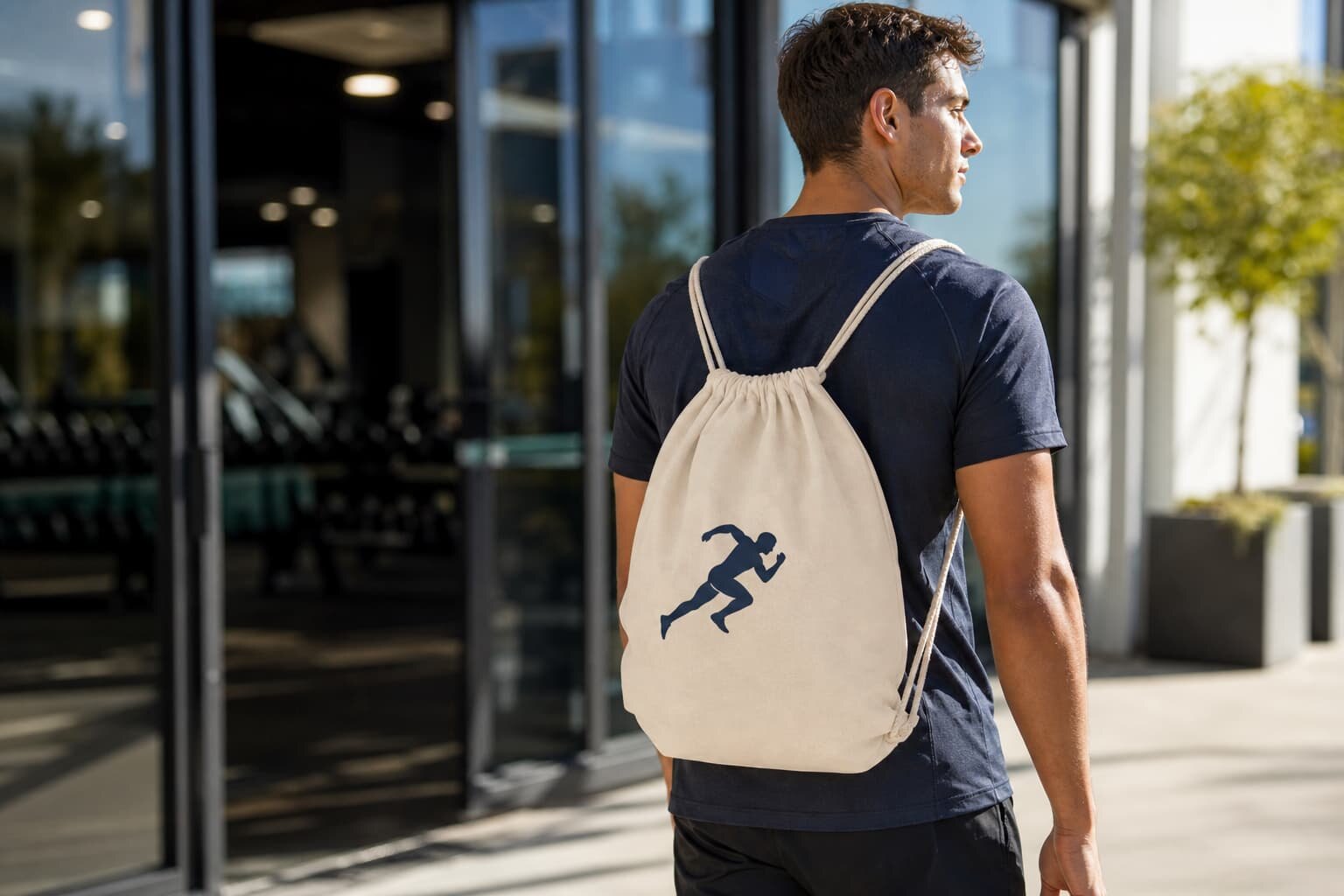
Why the Shipment Memo Matters for Logo Placement
A drawstring backpack is a simple product, but logo placement failures are expensive because they are usually discovered late. The bag may be sewn correctly, the fabric may be acceptable, and the carton count may be right, yet the order can still be rejected if the logo sits too high under the drawcord, too low near the bottom curve, or visibly off center. A shipment memo gives the buyer, factory, merchandiser, and inspector one written standard before cartons leave the factory.
For procurement teams, the shipment memo is not a decorative approval document. It is the final control sheet that connects artwork approval, production sample, bulk print layout, packing method, and inspection criteria. If the memo only says "logo on front," it is not strong enough. It should tell the factory exactly what was approved, what tolerance is acceptable, and what evidence must be sent before shipment release.
- Use the memo to freeze the logo size, location, print method, and packing presentation.
- Attach the approved artwork file name and sample approval date to avoid old artwork being used.
- Show measurement points in millimeters, not only a picture with arrows.
- Make the memo available to the final inspector, not only the factory sales contact.
Define the Bag Before Defining the Logo
Logo placement cannot be judged correctly until the finished backpack specification is fixed. A logo that looks centered on a 340 x 420 mm bag may look too large or too low on a 300 x 400 mm bag. Top hem height, drawcord channel width, corner reinforcement, side seam allowance, and bottom gusset all change the usable print area. Buyers should approve the logo placement against the actual finished size, not against a generic catalogue image.
Fabric also affects how the logo behaves. A 210D polyester drawstring backpack is common for promotional programs because it is light, compact, and cost efficient. A 300D polyester bag gives more body but can show heat marks if transfers are applied incorrectly. Cotton canvas at 5 oz, 6 oz, or 8 oz gives a more retail feel, but shrinkage, surface texture, and ink absorption need checking. Nonwoven fabric may be economical for very large campaigns, but its surface can limit fine logo detail.
- Confirm finished dimensions such as 340 x 420 mm, 350 x 450 mm, or buyer-specific size.
- State fabric clearly: 210D polyester, 300D polyester, 80-120 GSM nonwoven, or 5-8 oz cotton canvas.
- Check whether drawcords are polyester rope, cotton rope, PP cord, or flat tape because closure tension changes the top shape.
- Ask for the printable area after sewing, not just the panel size before stitching.
Choose a Placement Reference That Inspectors Can Measure
Many logo disputes start because the buyer, factory, and inspector measure from different reference points. On drawstring backpacks, the top edge is not always stable. When the drawcord is loose, the top opening may look flat; when pulled, it gathers. Measuring from the raw upper panel before hemming is also useless at final inspection. The shipment memo should state whether the vertical position is measured from the finished top edge, bottom seam, or top of the usable flat print area.
For most adult-size drawstring backpacks, a practical front logo position is centered horizontally and placed around 90-120 mm below the finished top edge, depending on bag height and logo size. For a lower logo, measure from the bottom seam upward to avoid the logo drifting into the curved lower corners. For retail programs, include a full-size placement diagram in the memo and require the factory to use a print jig or placement template during bulk printing.
- Horizontal placement: measure from both side seams to confirm center alignment.
- Vertical placement: measure from finished top edge or bottom seam, and do not mix both methods.
- Logo size: specify width and height in millimeters, not only percentage scaling.
- Tolerance: use +/-5 mm for stricter retail orders and +/-8 mm for standard promotional orders.
Match the Logo Method to Fabric, MOQ, and Risk
The print method should be selected before quotation comparison, not after the cheapest quote arrives. Screen printing is usually the most stable choice for solid logos in one to three colors. It works well on polyester and cotton when the ink system is correct and curing is controlled. It also supports repeat orders because screens and placement jigs can be standardized. However, screen charges and color setup make it less attractive for very small quantities or many artwork variations.
Heat transfer is useful for gradients, small text, full-color artwork, or mixed SKU programs where screen printing becomes inefficient. The risk is adhesion, edge lifting, heat press marks, and transfer stiffness. Embroidery is less common on lightweight drawstring backpacks because it can pucker the fabric, but it may work on heavier canvas or premium backpacks if backing is used. Woven labels are useful when logo detail is small or the buyer wants brand consistency across fabric colors, but label placement still needs the same memo discipline.
- Screen print: best for solid brand marks, event logos, and repeat distributor orders.
- Heat transfer: best for full-color artwork, gradients, low MOQ, and multiple logo versions.
- Embroidery: consider mainly for heavier canvas, not thin 210D polyester.
- Woven side label: good for subtle branding, but confirm seam location and label fold direction.
- Reflective print: useful for sports or school programs, but request reflectivity and wash/rub checks.
Put Real Quote Data in the Memo, Not Only Artwork
A shipment memo becomes stronger when it reflects the commercial assumptions behind the order. If one supplier quotes 210D polyester with one-color screen print and another quotes 300D polyester with heat transfer, the two offers are not comparable. Procurement should require quote data that explains material, print setup, packing, sample cost, and production lead time. This prevents the common problem where the purchase order is awarded on price, then the factory later adds setup charges or changes the packing method.
MOQ logic also belongs in the sourcing discussion. A factory may accept a small MOQ for stock fabric colors but require a higher MOQ for custom dyed fabric, custom drawcord color, or repeated logo versions. Screen printing may have a practical minimum because of setup time, while heat transfer may allow smaller runs but a higher unit cost. Buyers should ask the factory to separate unit price, setup cost, sample cost, and packing upgrade cost so each quotation can be compared correctly.
- Ask for unit price by quantity tier, such as 500, 1,000, 3,000, and 5,000 pieces.
- Separate fabric cost, print cost, setup cost, sample cost, and packing cost when comparing quotes.
- Confirm whether logo color matching is included or charged as a separate sample step.
- Ask if screens, transfer films, or embroidery programs are kept for reorder use.
- Record quoted lead time by stage: sample, material purchase, printing, sewing, packing, and export handover.
Sample Approval Checks Before Bulk Printing
A good pre-production sample should prove more than logo appearance. It should confirm that the logo is placed correctly on the finished backpack, that the print method suits the fabric, and that the packing method will not damage the decoration. The buyer should request photos with a ruler placed vertically and horizontally. A front view without measurement is useful for presentation, but it is not enough for production control.
Sample review should include the closed and open condition of the bag. When a drawstring backpack is pulled closed, the upper panel gathers and can visually lift the logo area. If the logo is too close to the top hem, it may disappear under wrinkles during real use. If the logo is too low, it may fold sharply during packing or sit too close to the bottom stress area. The shipment memo should include the final approved sample photo and the exact date of approval.
- Check logo position on the finished sewn sample, not only on printed fabric.
- Measure center alignment from both side seams and vertical distance from the agreed reference edge.
- Inspect print opacity on dark fabric and color consistency under normal light.
- Rub the print surface lightly after curing to check whether ink transfers.
- Fold the bag as it will be packed and inspect for cracking, lifting, or pressure marks.
- Approve one golden sample and keep factory, buyer, and inspector versions if the order value justifies it.
Line Release Evidence Buyers Should Request
The highest-risk moment is the start of bulk printing. Once hundreds or thousands of panels are printed in the wrong position, the factory cannot correct the problem without replacement fabric, reprinting, or a discount discussion. A line release photo packet helps catch issues early. The buyer should ask the factory to send photos from the first batch before full-speed production continues, especially when the order has strict branding requirements.
The photo packet should include a full front image, a close-up of the logo, a ruler measurement image, and a view of the printing jig or heat press alignment setup. For repeat orders, compare the new line release photo against the last approved shipment memo. Small changes in operator setup, panel cutting, or hem folding can shift the logo even when the artwork file has not changed.
- Request first-piece and first-20-piece photos before full bulk printing.
- Require ruler photos showing vertical distance and side-to-side centering.
- Ask for one photo after sewing if printing is done on panels before assembly.
- Record any approved deviation in writing, not only in chat messages.
- Stop production if logo drift exceeds the agreed tolerance before the first carton is packed.
Packing Controls That Protect the Logo During Shipment
Logo placement is not finished when printing passes QC. Packing can create new defects. Fresh screen print can offset onto the next bag if curing time is short or if bags are stacked under pressure too soon. Heat transfer logos can show edge lifting or gloss marks if folded across the transfer area. Cotton canvas can hold creases through the logo if packed tightly for a long export route. The shipment memo should specify the packing method and show a packed sample photo.
For many promotional drawstring backpacks, bulk packing is acceptable, such as 50 or 100 pieces per polybag and several hundred pieces per export carton. For retail, ecommerce, or distributor repacking, individual polybags, barcode labels, hangtags, or folded presentation may be required. The buyer should not assume these are included in the unit price. Packing method affects labor cost, carton size, freight volume, and risk of logo damage.
- Avoid folding directly through large heat transfer logos when possible.
- Use tissue or logo-face separation for high-gloss, rubberized, or fresh print surfaces if needed.
- Confirm pieces per inner polybag and pieces per export carton.
- Ask for carton size and gross weight before shipment booking.
- Check whether retail barcode, suffocation warning, hangtag, or country-of-origin label is required.
- Keep one first-carton photo in the shipment memo before final release.
Acceptance Criteria for Final Inspection
The final inspection should not rely on general appearance only. The inspection booking should include the shipment memo, approved sample photos, artwork file reference, placement tolerance, and packing standard. If the inspector only receives a purchase order with a product name, the inspection report may miss the main branding risk. Buyers should define what is critical, major, and minor for logo placement defects before inspection.
A practical approach is to classify wrong artwork, wrong print color, missing logo, severe off-center placement, and poor adhesion as major or critical depending on the sales channel. Slight placement variation inside tolerance may be acceptable. Minor ink specks outside the visible logo area may be handled under normal workmanship limits. The important point is that the factory understands the acceptance criteria before production, not after a failed inspection report.
- Critical: wrong logo, wrong brand, missing logo, or logo printed on the wrong side.
- Major: logo outside agreed tolerance, poor adhesion, color obviously mismatched, or print cracking.
- Major: logo hidden by drawstring gathering when bag is used as intended.
- Minor: small print dot or edge imperfection that is not visible at normal viewing distance.
- Inspection sample size: align with buyer AQL policy and add specific logo measurement samples if needed.
- Require carton-pull samples from different production times to catch placement drift.
How to Use the Memo Across Reorders
Reorders are not automatically safe. Factories may change fabric lots, operators, print screens, transfer suppliers, or packing workers. Even when the purchase order says "same as last order," the shipment memo should be reissued with the current PO number, artwork version, and approved tolerance. This is especially important for distributors handling multiple end-customer logos on similar backpack styles.
A strong reorder memo also helps compare supplier performance. If one factory consistently holds logo placement within +/-5 mm and another needs repeated corrections, procurement has evidence beyond unit price. Over several shipments, this data supports better supplier allocation, cleaner RFQs, and fewer arguments at inspection. For brand owners, it also protects logo consistency across markets and seasons.
- Keep the last approved memo, golden sample photo, and inspection report together.
- Mark artwork versions clearly, especially when end customers update logos.
- Ask the factory to confirm whether fabric, ink, transfer film, and packing method match the previous order.
- Repeat line-release approval if the factory changes production line or subcontracted print workshop.
- Track placement claims by PO number so future RFQs reflect real supplier capability.
Specification comparison for buyers
| Spec decision | Recommended option | When it fits | Buyer risk to check |
|---|---|---|---|
| Front logo position | Center logo 90-120 mm below top hem on a standard adult bag | Most brand giveaways, school kits, event merchandise, and distributor stock programs | Logo may be hidden when the drawcord is pulled tight if measured from the unclosed top edge only |
| Logo size | Width 120-180 mm for a 340 x 420 mm backpack | Readable at retail shelf distance without dominating the bag | Oversized artwork may cross fold lines or distort near side seams after packing |
| Fabric weight | 210D polyester or 5-8 oz cotton canvas depending on market position | 210D for low-cost event bags; cotton canvas for reusable retail or brand programs | Thin fabric can show print strike-through; heavy cotton can cause uneven ink deposit if not pre-tested |
| Print method | Screen print for solid one to three color logos; heat transfer for gradients or small quantities | Screen print supports stable repeat orders; transfer helps when artwork is complex or MOQ is low | Transfer edges can lift after folding or heat exposure if curing and packing are rushed |
| Placement tolerance | +/-5 mm for premium programs, +/-8 mm for standard promotional orders | Useful acceptance criteria for AQL inspection and shipment memo approval | No tolerance stated means the factory and inspector may judge logo position subjectively |
| Packing method | Flat pack with logo face protected; avoid tight rolling across the printed area | Better for fresh ink, transfer logos, and visible retail presentation | Tight bundles can create pressure marks, ink offset, or diagonal creases through the logo |
Buyer checklist before sampling
- Confirm final bag dimensions, fabric GSM or denier, drawcord type, and top hem construction before approving logo position.
- Define the logo placement reference point: from top finished edge, bottom seam, side seam, or center line, not from a loose fabric edge.
- State logo size in millimeters and include the approved artwork file name, color reference, and print method in the shipment memo.
- Approve a pre-production sample photo with ruler visible for both vertical and horizontal logo measurement.
- Set placement tolerance, print color tolerance, and defect limits before bulk printing starts.
- Require line-release photos from the first 20-50 printed pieces, including one close-up and one full bag image.
- Check whether packing method can crease, cover, offset, or abrade the printed logo during export transit.
- Ask the factory to separate rejected logo-placement pieces before sewing completion or final packing.
- Confirm carton marks, inner polybag method, and packing quantity match the purchase order and retail routing needs.
- Keep the shipment memo attached to the inspection booking so the third-party inspector checks the same approval standard.
Factory quote questions to send
- What fabric construction are you quoting: 210D polyester, 300D polyester, nonwoven GSM, cotton canvas oz/GSM, or another material?
- What is the finished backpack size and what tolerance do you apply after sewing and pressing?
- Which logo method are you quoting, and what is the minimum order quantity for that method and number of colors?
- Where will the logo be measured from, and can you provide a placement diagram with millimeter dimensions?
- What logo placement tolerance do you accept in bulk production, and how will your QC team record it?
- Will the quoted price include artwork setup, screen charges, transfer film, color matching, sample printing, and packing labor?
- How many pre-production samples are included, and are courier charges, revision samples, and photo approvals included?
- What is your estimated lead time for sample approval, material purchase, bulk printing, sewing, packing, and shipment readiness?
- How will you pack the bags to protect the logo: flat, folded once, rolled, individual polybag, or bulk pack?
- Can you provide shipment memo photos showing logo position, packing method, carton label, and carton count before release?
Quality-control points to confirm
- Measure logo placement on finished bags after sewing, not only on cut panels before assembly.
- Check logo center alignment against the finished bag center line, especially when side seams or drawcord channels pull unevenly.
- Verify print color, opacity, edge sharpness, curing, adhesion, and rubbing resistance before cartons are sealed.
- Inspect for print offset, ghost marks, heat press shine, ink cracking, and transfer edge lifting after folding.
- Confirm the top hem, corner reinforcement, eyelets, and drawcord tension do not distort the logo area.
- Review first-carton and last-carton samples because placement drift often appears after operators adjust jigs.
- Check that packed bags face the same direction when retail presentation or distributor repacking matters.
- Match carton quantity, gross weight, carton size, and shipping marks against the shipment memo and commercial invoice.