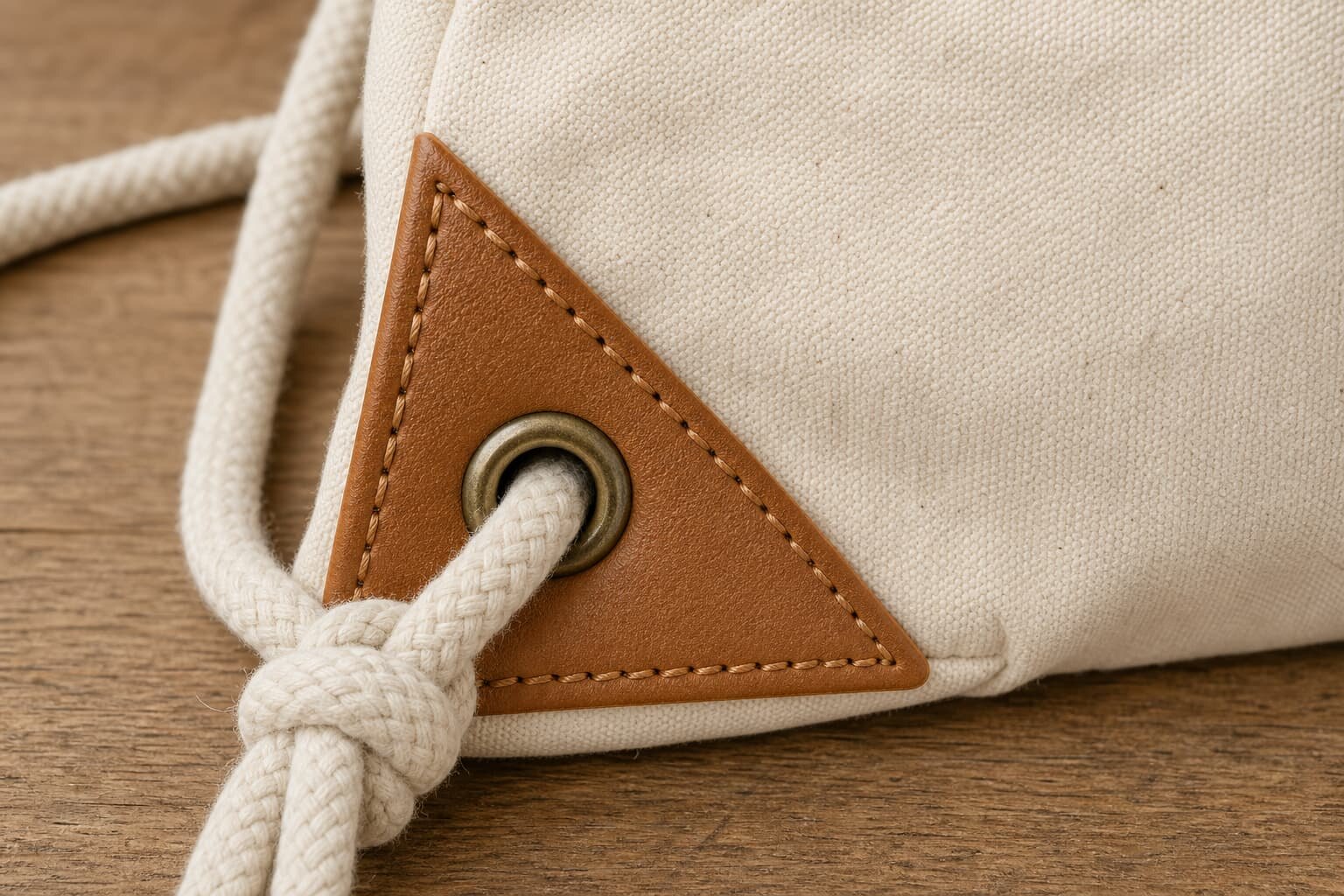
Why Fabric Weight Drives the Whole RFQ
For drawstring backpacks, fabric weight is not just a material detail. It affects the unit price, logo result, sewing speed, carton weight, freight cost, and the way the bag feels when a buyer lifts it. If an RFQ only says cotton drawstring backpack with logo, suppliers may quote different fabrics while appearing to quote the same item. One supplier may price 5 oz cotton sheeting, another may quote 8 oz canvas, and a third may use polyester 210D. The price comparison becomes misleading before negotiation even starts.
Procurement teams should treat fabric weight as one of the first locked specifications, not something to finalize after price collection. A 100 gsm promotional bag and a 340 gsm canvas backpack can both be called drawstring backpack, but they serve different programs. The first may suit a one-day event kit. The second may be expected to carry retail merchandise, books, or a bottle. When fabric weight is unclear, buyers often push suppliers for lower prices and unknowingly force the factory to downgrade the fabric.
- Use gsm when comparing different fabric types across countries.
- Use oz when buying cotton canvas from factories that stock fabric by ounce.
- Ask whether the quoted weight is nominal stock weight or measured finished weight.
- Do not compare quotes until fabric type, weight, size, logo method, and packing are aligned.
Common Fabric Weight Ranges for Drawstring Backpacks
The most common fabric weights depend on whether the bag is a disposable promotion, a brand merchandise item, or a heavier utility pack. Non-woven PP is often quoted around 80-120 gsm. Lightweight cotton may start around 4-5 oz, roughly 135-170 gsm. Standard cotton canvas for promotional drawstring backpacks often sits around 6-8 oz, roughly 200-270 gsm. Retail-feel cotton canvas is usually 10-12 oz, roughly 340-410 gsm. Heavy canvas can go to 14 oz and above, but the construction must be adjusted so the drawcord channel and corners are not too bulky.
Buyers should not assume higher GSM is automatically better. A very heavy fabric can make the bag look premium, but it may also increase carton gross weight, reduce pieces per carton, slow production, and make the top drawstring channel stiff. For school campaigns, a medium canvas with reinforced corners may perform better than an extremely heavy canvas with poor cord movement. For retail packaging, fabric handfeel, color consistency, and print clarity can matter more than the highest possible GSM.
- 80-120 gsm non-woven PP: low-cost campaigns and light contents.
- 4-5 oz cotton: lightweight cotton look, better for low-load use.
- 6-8 oz cotton canvas: balanced option for many branded promotions.
- 10-12 oz canvas: stronger retail handfeel and better perceived value.
- 14 oz plus canvas: only useful when construction and load expectations justify it.
Cotton, Canvas, Polyester, Non-Woven, and Jute Compared
Cotton and canvas are often preferred when the brand wants a natural handfeel and a print surface that looks less synthetic. Canvas is usually stronger and more structured than plain cotton sheeting at the same general size, but it costs more and increases packed weight. Polyester 210D or 300D is a practical option for sports promotions, full-color transfers, and water-resistant positioning, although buyers should be careful with coating quality and color migration. Non-woven PP is suitable when price is the main driver, but it does not create the same reusable impression as cotton canvas.
Jute and jute-cotton blends can work for certain natural-style drawstring bags, but they are less common for classic drawstring backpacks because the fabric is coarser and the drawcord channel can feel stiff. If a buyer wants a jute look, a sample is essential before committing. The logo method also changes by fabric. Screen print on cotton canvas is usually straightforward for solid artwork. Heat transfer on textured jute or heavy slub cotton needs testing. Embroidery on thin fabric can distort the panel, while embroidery on heavy canvas can look good if backing and needle setup are correct.
- Cotton sheeting: soft and economical, but less structured.
- Cotton canvas: stronger handfeel and better for reusable branded packs.
- Polyester Oxford: practical for full color, sports, and moisture resistance.
- Non-woven PP: cost-led option for short service life.
- Jute blend: distinctive natural texture, but requires logo and channel testing.
How Fabric Weight Changes Print Method Selection
The same logo can behave differently on 5 oz cotton, 8 oz canvas, and 12 oz canvas. Thin cotton may allow ink to show through or wrinkle during printing. Medium canvas usually accepts screen printing well, especially for one to three solid colors. Heavy canvas has more texture, which can reduce edge sharpness on fine text unless the screen mesh, squeegee pressure, and ink deposit are adjusted. If the artwork has gradients, photos, or many small colors, heat transfer may be easier to control, but the buyer should test handfeel and adhesion on the selected fabric weight.
For RFQs, buyers should provide logo size, print position, Pantone references, and artwork file type before asking for a firm quote. A supplier cannot price a drawstring backpack accurately if the logo is unknown. A small one-color front print is a different job from a large full-panel transfer or two-sided print. On heavier cotton canvas, ink consumption and drying time may increase. On polyester, sublimation or transfer may be possible depending on fabric color and coating, but color migration and heat marks must be checked.
- Screen print: best for solid logos, strong coverage, and larger bulk quantities.
- Heat transfer: useful for full-color artwork, gradients, or detailed campaign graphics.
- Embroidery: better on heavier canvas, but adds weight, time, and panel tension risk.
- Woven label: stable for natural fabrics and avoids large print cracking concerns.
- Digital direct print: sample first, especially on dark or textured cotton.
MOQ Logic: Why Weight and Color Affect Minimums
MOQ is not only a factory policy. It is tied to fabric availability, dyeing minimums, cutting efficiency, print setup, and packing labor. If the fabric weight is a regular stock item in natural cotton, black, or white, the MOQ may be easier to support. If the buyer requests custom dyed 10 oz canvas in a special brand color, the MOQ may increase because the mill has a minimum dye lot. A supplier may accept a smaller finished bag quantity, but the buyer may still pay for leftover fabric or face a surcharge.
Procurement teams should ask MOQ by color, by fabric weight, and by print setup. A 5,000-piece order split into five colors is not the same as 5,000 pieces in one color. Likewise, a reorder of 800 pieces may be possible in stock natural 8 oz canvas but not in custom dyed 12 oz canvas. If the program may repeat, include reorder MOQ and fabric continuity in the quote request. Otherwise, the first order may look fine, while replenishment becomes expensive or inconsistent.
- Stock natural cotton usually has more flexible MOQ than custom dyed canvas.
- Multiple colorways can increase cutting waste and print setup time.
- Small orders with heavy fabric may carry higher unit labor because sewing is slower.
- Reorders should specify whether the same fabric shade and weight must match the first order.
- Ask if leftover custom fabric can be stored, shipped, or credited.
Cost Drivers Buyers Should Separate in the Quote
A useful quote should show more than one lump-sum FOB price. Fabric weight is usually the biggest material driver, but drawcord, reinforcement, print method, packing, testing, and carton specification also affect cost. A cheaper quote may use thinner cord, smaller bag dimensions, no corner reinforcement, or a lighter carton. These differences may not be visible in a simple spreadsheet unless the buyer asks for line-level assumptions.
When comparing suppliers, request the same bag size, same fabric weight, same logo method, same packing, and same delivery term. Then ask each factory to state exclusions. Tooling, artwork cleanup, sample freight, special hangtags, individual polybags, desiccants, barcode labels, and palletization may be outside the base price. For importers and distributors, carton data is part of cost control because heavier canvas bags reduce carton quantity and can increase warehouse handling cost.
- Fabric: type, weight, color, dyeing status, and shrinkage treatment.
- Components: drawcord material, cord diameter, eyelets or tabs, labels, and reinforcements.
- Decoration: setup, print colors, print size, print positions, and approval sample.
- Packing: individual polybag or bulk pack, carton quality, carton size, and carton weight.
- Commercial terms: MOQ, sample cost, payment terms, lead time, validity, and incoterm.
Sample Checks Before Approving Bulk Production
A drawstring backpack sample should be more than a shape approval. It should confirm the fabric weight, handfeel, shrinkage behavior, print result, drawcord movement, and corner strength. If the sample is made with substitute fabric, the buyer should treat it as a construction sample only, not a production approval sample. For serious bulk orders, the final pre-production sample should use the same fabric lot or same approved production fabric quality.
Check the bag as a user would use it. Put in the expected contents, pull the drawcord, wear it on the shoulders, and inspect the corners after load. Many failures happen at the cord exit point or bottom reinforcement, not in the center fabric panel. If the logo is large, fold and pack the bag as it will ship, then open it after one or two days to see whether the print sticks, cracks, or keeps a deep crease.
- Weigh or verify a fabric swatch against the stated gsm tolerance.
- Measure finished dimensions after the sample is fully sewn and pressed.
- Check drawcord length, diameter, knot security, and shoulder comfort.
- Inspect print opacity, registration, curing, cracking, and rubbing resistance.
- Confirm seam allowance and stitch density at the top channel and bottom corners.
- Pack the sample in the proposed packing method and check crease marks.
Packing and Freight Impact of Heavier Fabric
Fabric weight directly changes export carton planning. A 12 oz canvas drawstring backpack may occupy more space and weigh much more than a 5 oz cotton version, even if the finished dimensions are the same. If the buyer only compares FOB unit price, the heavier option may look acceptable until freight, warehouse handling, and retailer carton limits are reviewed. Some retailers or distribution centers have maximum carton gross weights, and heavy canvas programs can exceed them if the factory packs too many pieces per carton.
Packing also affects appearance. Thick cotton canvas can hold creases, especially when folded tightly across the print area. If the logo must look clean at retail or for an event opening, request a folding method that avoids sharp creases across the decoration. For bulk giveaways, loose bulk packing may be acceptable. For retail or distributor resale, individual polybags, belly bands, hangtags, or barcode stickers may be needed, but each adds labor, material, and sometimes MOQ requirements.
- Request units per carton, carton dimensions, net weight, and gross weight.
- Set a maximum carton gross weight if your warehouse requires it.
- Ask how the bag is folded and whether the print area is protected.
- For natural cotton, confirm moisture control and carton lining if shipping in humid seasons.
- For retail packs, include barcode position, warning text, and inner pack quantity.
Lead Time Risks Linked to Fabric Weight
Lead time is often quoted too simply. The real schedule includes fabric sourcing, dyeing or bleaching, cutting, printing, drying or curing, sewing, trimming, inspection, packing, and export handover. Stock fabric can shorten the schedule, but custom dyed canvas, unusual heavy weights, or recycled fabric blends can extend it. Heavy fabric may also slow cutting and sewing because fewer layers can be cut at once and thicker seams need more careful handling.
Print method adds another schedule risk. Screen printing large panels on cotton canvas needs drying or curing time, and dark fabric may need underbase printing. Heat transfer can be faster after setup, but artwork approval and transfer material preparation still take time. If the campaign date is fixed, buyers should approve fabric weight and artwork early instead of leaving both open during price negotiation.
- Ask for a timeline by stage, not only total production days.
- Confirm when the lead time starts: deposit, artwork approval, sample approval, or fabric arrival.
- Separate sample lead time from bulk production lead time.
- Build extra time for custom dyed fabric, heavy canvas, and full-color artwork.
- Require the factory to notify you before substituting fabric to protect the schedule.
RFQ Specification Format That Prevents Misquotes
A strong RFQ for drawstring backpacks should remove guesswork. Start with the intended use and load expectation, then give the exact finished size, fabric type, fabric weight, color, drawcord details, reinforcement, logo method, packing, quantity, delivery term, and inspection requirement. If you are unsure whether 8 oz or 10 oz is better, ask the supplier to quote both options side by side using the same other specifications. Do not ask five suppliers to recommend freely and then compare the lowest numbers.
The best RFQ also states what the buyer will check during approval. For example, fabric weight tolerance, print position tolerance, seam strength, and carton weight should be known before production. This changes the supplier conversation from selling a generic bag to engineering the correct product for the program. It also helps the buyer defend the selected supplier internally because the quote comparison is based on measurable specifications rather than a low headline price.
- Product: cotton canvas drawstring backpack, finished size, panel construction, and reinforcement.
- Fabric: 8 oz canvas, natural color, acceptable gsm tolerance, and shade tolerance.
- Cord: cotton or polyester cord, diameter, color, and exit construction.
- Logo: one-color screen print, front center, print size, Pantone color, and artwork file.
- Packing: pieces per polybag, pieces per carton, carton limit, and carton marks.
- Quote data: MOQ, unit price, sample cost, production lead time, carton data, incoterm, and quote validity.
Specification comparison for buyers
| Spec decision | Recommended option | When it fits | Buyer risk to check |
|---|---|---|---|
| Budget event giveaway | 100-120 gsm non-woven PP or 4-5 oz cotton | Short-term promotions, large quantities, low unit cost target | Thin fabric may wrinkle, show contents, or fail under heavy books and bottles |
| Standard cotton promotional backpack | 6-8 oz cotton canvas, about 200-270 gsm | Brand campaigns, school kits, retail add-ons, distributor stock | Confirm shrinkage and print opacity before approving bulk fabric |
| Retail-feel cotton backpack | 10-12 oz cotton canvas, about 340-410 gsm | Merchandise programs, lifestyle brands, higher perceived value | Higher fabric cost, heavier cartons, and slower sewing on reinforced areas |
| Heavy-duty canvas drawstring backpack | 14-16 oz canvas, about 475-540 gsm | Workwear kits, tool-free utility packs, premium brand packs | Drawcord channel and corner tabs need stronger construction to avoid bulk and skipped stitches |
| Full-color artwork | Polyester 210D/300D or cotton canvas with transfer testing | Logos with gradients, photos, small color details, campaign graphics | Heat transfer adhesion and handfeel vary by coating and fabric texture |
| Natural eco-positioned bag | Unbleached cotton or recycled cotton canvas 8-12 oz | Organic look, retail packaging, natural color branding | Natural shade variation, slubs, seed specks, and dye-lot tolerance must be accepted in writing |
| Higher load requirement | 10 oz or heavier canvas with reinforced bottom corners | Kits with bottles, catalogs, apparel, sample products | Fabric GSM alone is not enough; check cord strength, bartacks, and seam allowance |
Buyer checklist before sampling
- State the fabric type and weight in both oz and approximate gsm where possible, for example 8 oz cotton canvas, about 270 gsm.
- Define bag size, finished tolerance, drawcord material, corner reinforcement, and whether the bottom is flat, boxed, or simple folded construction.
- Match print method to fabric weight: screen print for solid logos, heat transfer for full color, embroidery only on weights that can support needle tension.
- Request a pre-production sample using bulk fabric, bulk drawcord, actual print colors, and final sewing construction.
- Ask whether the quoted weight is fabric nominal weight before washing, finished fabric weight, or supplier shorthand from their stock catalog.
- Confirm MOQ by fabric color, fabric weight, logo method, and packing style, not only by total order quantity.
- Require carton weight, carton dimensions, units per carton, and packing method before comparing landed cost.
- Include acceptance criteria for GSM tolerance, color tolerance, print position tolerance, seam strength, and drawcord pull test.
- Check if heavier fabric changes lead time because of dyeing, cutting difficulty, sewing speed, or longer drying time after printing.
- Keep one approved sample and one signed specification sheet as the control standard for incoming inspection.
Factory quote questions to send
- What exact fabric construction are you quoting: cotton sheeting, cotton canvas, polyester Oxford, non-woven PP, jute blend, or recycled cotton?
- What is the fabric weight in gsm and oz, and what tolerance do you apply during bulk production?
- Is the fabric from regular stock, made-to-order dyeing, or greige fabric that must be finished after order confirmation?
- What bag size tolerance do you quote after cutting, sewing, and pressing?
- What drawcord diameter, material, and color are included in the price?
- Are the bottom corners folded, metal eyelet reinforced, PU leather tab reinforced, cotton tab reinforced, or bartacked directly through the fabric?
- Which logo process is included, and how many print colors or print positions are covered?
- Can you provide a printed sample on the same fabric weight before bulk production, and what is the sample lead time?
- What is the MOQ for this fabric weight and color if we reorder only one colorway later?
- How many pieces per export carton, what is the gross weight per carton, and will the cartons meet our warehouse weight limit?
Quality-control points to confirm
- Measure fabric GSM from a cut swatch or supplier test report and compare it with the approved specification tolerance.
- Check finished bag dimensions at top width, bottom width, height, and drawcord channel width after sewing.
- Pull test the drawcord and bottom corner tabs because these points usually fail before the main fabric tears.
- Inspect print adhesion, print cracking, color registration, and edge sharpness on the actual fabric texture.
- Check seam allowance, stitch density, skipped stitches, and loose threads at stress points.
- Review shade variation between panels, especially for natural cotton, black canvas, and custom dyed fabric.
- Confirm that packing does not create permanent creases across printed logos or thick drawcord areas.
- Verify carton marking, quantity per carton, polybag choice, and master carton strength before shipment release.