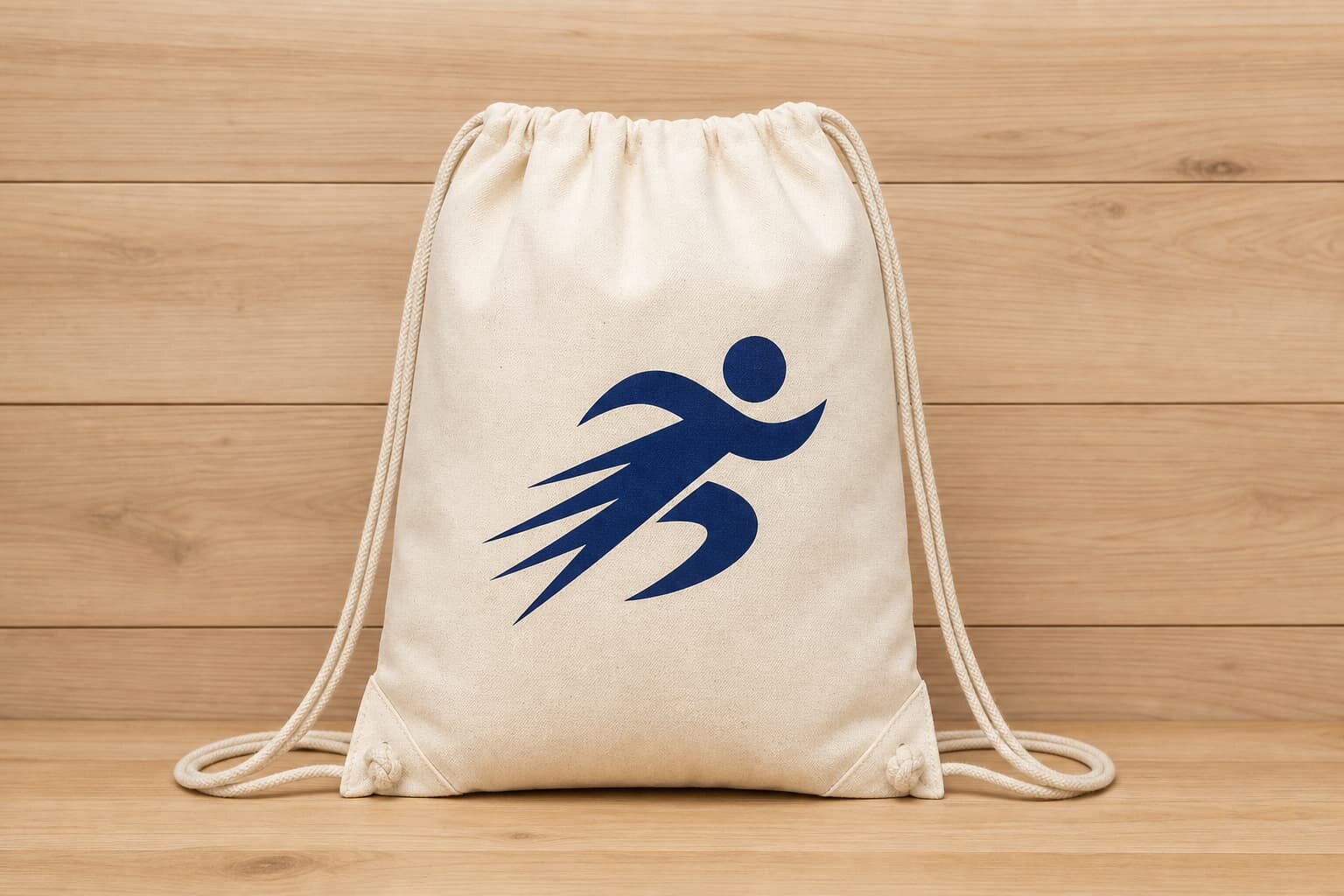
Why Bulk Quotes for Drawstring Backpacks Are Easy to Misread
A drawstring backpack looks like a simple product, so many buyers compare quotations only by unit price, size, and logo. That is where quote comparison becomes risky. Two suppliers can both write "210D drawstring bag, one color print" while quoting different fabric density, different cord thickness, different corner reinforcement, different carton packing, and different inspection assumptions. The cheaper quote may not be cheaper after sample correction, repacking, reprinting, or air freight caused by delay.
A good comparison checklist should separate the visible product from the cost drivers behind it. For procurement teams, the main job is not to collect the lowest number; it is to confirm that every supplier is pricing the same bag, the same approval process, and the same shipping-ready condition. If you send a vague RFQ, factories will fill in missing details with their normal practice, and normal practice differs widely between promotional, retail, school, sports, and distributor channels.
- Do not compare a 190T promotional sack with a 210D reinforced backpack as if they are the same product.
- Do not accept "standard cord" unless material, diameter, color, and length are stated.
- Do not ignore packing; unit packing can change labor time, carton volume, and retail compliance.
- Do not rely on a photo of a previous order unless the factory confirms the same fabric and construction are quoted.
Start With the Use Case Before Comparing Unit Prices
The correct specification depends on what the bag must survive. A one-day conference giveaway, a school sports kit bag, a supermarket retail item, and a branded merchandise pack do not need the same material or reinforcement. If the use case is unclear, the quote will move toward the lowest acceptable interpretation. That often means thinner fabric, lighter cord, fewer stitches, and bulk packing.
Before asking for a drawstring backpack bulk quote, write one short use-case line in the RFQ. For example: "Used for trade show giveaway, carrying brochures and one bottle, expected use 1-2 weeks" or "Retail drawstring backpack for gym and school use, must carry shoes and clothing repeatedly." This helps suppliers recommend the correct fabric weight and corner construction, and it also makes their quote easier to challenge if the sample feels too weak.
- Event giveaway: 190T polyester, 210D polyester, or non-woven may be acceptable if load is light.
- Sports or school use: 210D, 300D, 420D polyester, or 6-8 oz canvas is safer.
- Retail or brand merchandise: stronger fabric, cleaner seams, better cord, and individual packing are usually needed.
- Eco-positioned programs: cotton canvas, recycled polyester, jute-cotton blends, or RPET may be requested, but documentation and MOQ should be checked.
Fabric Weight and Construction: The First Quote Filter
Fabric description is the most common source of bad quote comparison. "Polyester drawstring backpack" is not enough. A 190T polyester bag, a 210D polyester bag, and a 420D polyester bag can all be called polyester drawstring backpacks, but they differ in hand feel, tear strength, print behavior, packing volume, and price. For cotton, the same problem appears when one supplier quotes 5 oz cotton and another quotes 8 oz canvas.
Ask suppliers to state fabric type and measurable weight. For polyester, denier is usually used, such as 210D or 420D. For cotton and non-woven, ask for GSM or ounce weight. If the bag must stand up to heavier use, also ask whether the fabric has coating, backing, or water-resistant treatment. A coated polyester may print and sew differently from an uncoated one, so it should not be treated as the same quote line.
- Polyester economy range: 190T or light 210D for short-life promotional orders.
- Common balanced option: 210D polyester for event, school, and merchandise use when reinforcement is adequate.
- Heavier polyester option: 300D or 420D when the bag carries shoes, sports gear, or books.
- Cotton option: 5-6 oz for light promotions; 8-10 oz for stronger retail-style canvas bags.
- Non-woven option: often 80-100 GSM for low-cost campaigns, but edge strength and print rub resistance must be checked.
Construction Details That Change Durability and Cost
The weak point of a drawstring backpack is usually not the center of the fabric panel. It is the cord exit area, bottom corner, side seam, casing channel, or top drawcord tunnel. If a quote does not describe these areas, the factory may choose the fastest construction. That may work for light giveaways but fail quickly when the user pulls the cords hard or carries a bottle.
Compare the bottom corner method carefully. Some bags use a simple seam with the cord inserted. Others use PU triangle patches, self-fabric reinforcement patches, metal eyelets, or bar-tacks. Metal eyelets can look clean, but if the fabric is thin and not properly reinforced, the eyelet can pull out. PU patches look stronger, but low-quality patches may crack. Fabric patches are often reliable but need neat sewing and enough stitch density.
- Ask for stitch density, especially at side seams and bottom reinforcement points.
- Confirm whether seams are single stitched, double stitched, overlocked, or bound.
- Check whether the drawcord tunnel is wide enough for smooth pulling after printing and sewing.
- Ask whether stress points have bar-tacks or reverse stitching.
- For heavier-use bags, request a pull test on the cord exit area during sample review.
Print Method: Match Artwork to Fabric Instead of Guessing
Logo printing can make two quotes look different even when the bag fabric is the same. Screen printing is usually efficient for solid logos and larger quantities, especially one to three colors. Heat transfer is useful for gradients, small detail, and multi-color artwork, but film type, transfer feel, and washing or rubbing performance should be checked. Sublimation works well on white or light polyester when full-surface graphics are needed, but it is not the same cost structure as a small front logo.
Ask the factory to quote the print method they recommend and explain why. A serious supplier should mention artwork color count, print size, fabric color, fabric coating, curing, and registration tolerance. If the quote only says "logo included," it is not detailed enough for comparison. Also confirm whether setup charges, screen charges, color matching, digital proof, and logo strike-off are included or billed separately.
- Screen print: best for solid spot colors and repeat orders where screens can be reused.
- Heat transfer: good for complex logos, gradients, or small batches, but check edge lifting and hand feel.
- Sublimation: suitable for polyester full-print designs, usually with white base fabric and different cutting workflow.
- Embroidery: possible on some heavier fabrics, but can distort thin polyester and increases handling time.
- Woven label: useful for subtle branding, side labels, or retail finish, but label MOQ and sewing position must be quoted.
MOQ Logic: Why the Lowest MOQ May Not Be the Real MOQ
Drawstring backpack MOQ depends on more than sewing capacity. Fabric availability, fabric dyeing, cord color, print setup, label MOQ, packing accessories, and carton markings all affect the real minimum. A factory may say the MOQ is 500 pieces, but that may apply only to available stock fabric, one bag color, one logo, and standard packing. If you ask for four colors, two logos, and custom cord, the economic MOQ changes.
When comparing quotes, request MOQ by variable. This means MOQ per fabric color, MOQ per logo version, MOQ per print method, MOQ per cord color, and MOQ per packing version. This helps distributors and retail buyers avoid surprises when splitting an order across branches, campaigns, or SKU assortments. It also helps brand owners decide whether to consolidate colors or accept a surcharge for small splits.
- Stock fabric MOQ is usually lower than custom dyed fabric MOQ.
- One logo in one position is cheaper than multiple logo placements or artwork versions.
- Assorted colors may be possible if the factory has fabric in stock, but color consistency may vary.
- Custom cord colors can create a separate MOQ, especially for cotton rope or special flat drawcords.
- Retail barcode or insert card changes can create packing-line complexity even when the bag is the same.
Sample Checks Before You Trust the Bulk Quote
A sample is not only a sales tool; it is the physical version of the quotation. The buyer should check whether the sample matches the quoted fabric, dimensions, cord, print method, reinforcement, and packing. If the sample is made from leftover fabric or a similar previous bag, it is useful for shape reference but not enough for production approval.
For branded bulk orders, request a logo strike-off before the pre-production sample when print risk is high. This is especially important for small text, fine lines, metallic ink, heat transfer films, large prints over seams, and logos on dark fabric. After the strike-off is approved, the pre-production sample should use final materials and final packing. Keep the approved sample sealed or clearly labeled so inspection has a reliable reference.
- Measure finished size flat after sewing, not only cutting panel size.
- Weigh the bag and compare it with expected fabric weight and construction.
- Pull both cords repeatedly to check sliding, knot security, and corner stress.
- Scratch or rub the print lightly after curing to check adhesion and surface cracking.
- Check packing sample for barcode readability, suffocation warning if required, and carton marking accuracy.
Packing and Carton Data Are Part of the Quote, Not an Afterthought
Packing affects cost, labor, carton volume, freight calculation, warehouse handling, and retail acceptance. A supplier quoting bulk pack may look cheaper than one quoting individual polybags with barcode stickers. That does not mean the second supplier is more expensive for your actual need. It may simply mean they included the work you forgot to specify.
Ask for pieces per inner pack if used, pieces per master carton, carton dimensions, gross weight, net weight, and carton material. For export orders, cartons must survive stacking, handling, humidity, and truck movement. For ecommerce or retail distribution, unit-level cleanliness and barcode accuracy may matter more than the lowest carton count. If a bag is light but bulky, carton volume may become a freight cost driver.
- Bulk pack is suitable for many event giveaways when local repacking is not required.
- Individual polybag protects the bag and keeps the logo clean, but adds labor and plastic.
- Barcode sticker, hangtag, insert card, or retail header card must be included in the packing quote.
- Carton marks should include item number, color, quantity, gross weight, net weight, carton size, and destination requirement if needed.
- For mixed-color cartons, request a packing list format that warehouse teams can use without opening every carton.
Lead Time Comparison: Ask for the Schedule Behind the Number
A quote that says "25 days production" does not tell you enough. Does that start after deposit, artwork approval, fabric arrival, or sample approval? Does it include inspection and packing correction? Does it assume stock fabric or custom dyed fabric? During peak season, printing and sewing capacity may not be the bottleneck; fabric purchase, transfer film, label production, or carton printing may be the delay point.
Ask each supplier to break lead time into steps. A practical schedule includes artwork confirmation, material preparation, sample or strike-off approval, bulk cutting, printing, sewing, trimming, packing, inspection, and shipment booking. For fixed event dates, add buffer for inspection failure or rework. If the quote does not include buffer, the buyer carries the timing risk.
- Sample lead time should be separate from mass production lead time.
- Custom dyed fabric or custom cord can extend the schedule more than sewing.
- Large screen print areas may require longer drying or curing control.
- Retail packing takes more line time than bulk packing.
- Inspection should happen before final shipment booking whenever possible.
How to Build a Fair Quote Comparison Sheet
A fair quote comparison sheet should force every supplier into the same structure. Start with product specification, then logo, then packing, then sample process, then commercial terms. Do not hide charges in email notes. Put setup fees, sample costs, packing accessories, documentation fees, and freight assumptions in separate columns. This makes the real landed comparison clearer.
When a supplier is cheaper, identify the exact reason before negotiating. The price may be lower because of thinner fabric, no reinforcement, bulk packing, fewer print colors, stock material, lower inspection standard, shorter quote validity, or a different Incoterm. Some of these differences are acceptable if they fit the project. Others are false savings. The purpose of the checklist is not to force the most expensive specification; it is to prevent accidental downgrades.
- Use one row per supplier and one column per cost driver.
- Separate unit price from setup charges, sample charges, and packing upgrades.
- Record Incoterm, port, currency, payment terms, and quote validity.
- Add a notes column for assumptions the supplier made without written buyer approval.
- Rank suppliers by total fit: specification match, sample quality, communication clarity, lead time confidence, and price.
Specification comparison for buyers
| Spec decision | Recommended option | When it fits | Buyer risk to check |
|---|---|---|---|
| Fabric body | 210D polyester or 6-8 oz cotton canvas | 210D suits giveaways and events; cotton canvas suits retail and eco-positioned promotions | Supplier may quote thinner 190T polyester or low-density canvas unless GSM/oz is locked |
| Cord system | PP cord for economy; cotton rope for natural look; flat polyester drawcord for comfort | Use PP cord for large promotional runs; upgrade cord for retail or heavier contents | Cord diameter and color fastness are often omitted and can change hand feel and durability |
| Corner reinforcement | PU triangle, fabric patch, or metal eyelet depending on target price | Necessary when the bag carries shoes, bottles, books, or sports items | Weak stitching at cord exit points causes early tearing even when fabric looks acceptable |
| Print method | Screen print for solid logos; heat transfer for gradients; sublimation for full-coverage polyester | Choose by artwork detail, fabric type, and quantity instead of lowest setup charge | Quotes may exclude screen setup, color matching, transfer film, or extra curing time |
| MOQ basis | One MOQ per fabric color plus logo version | Best for comparing multi-color programs and distributor assortments | A supplier may show one low MOQ but apply surcharges to mixed colors or small logo splits |
| Packing | Individual polybag only when needed; bulk pack for events; carton strength matched to export route | Retail and fulfillment need clean unit packing; event giveaways often do not | Under-specified packing leads to dirty bags, carton collapse, or unexpected repacking cost |
| Sample approval | Pre-production sample using final fabric, cord, logo size, and packing method | Required for repeat orders, retail programs, and any custom dyed fabric | Photo approval alone may miss fabric weight, drawcord friction, print hand feel, and seam tension |
| Lead time | Separate material purchase, printing, sewing, packing, and inspection windows | Useful when comparing factories during peak season or before fixed event dates | A single lead time number may hide fabric dyeing delay, print queue delay, or carton booking risk |
Buyer checklist before sampling
- Confirm the quoted fabric construction, not only the fabric name: 210D polyester, 420D polyester, 6 oz cotton, 8 oz canvas, non-woven GSM, or custom material.
- Ask whether GSM, denier, or oz tolerance is included in the specification and what the acceptable production range is.
- Check if the price is based on one body color and one logo design, or if it covers mixed colors, assorted sizes, and multiple artwork versions.
- Compare finished bag size, cutting size, seam allowance, and drawcord length; small size changes affect material usage and carton volume.
- Confirm corner treatment: no reinforcement, fabric patch, PU triangle, metal eyelet, or bar-tack stitching at stress points.
- Require logo method details: screen print color count, heat transfer type, sublimation coverage, embroidery position, or woven label size.
- Ask for setup charges, film charges, PMS color matching fees, sample charges, and whether they are included or separate.
- Review sample terms: material sample, logo strike-off, pre-production sample, approval method, and sample lead time.
- Compare packing method by unit: bulk pack, individual polybag, retail header card, barcode sticker, insert card, or master carton only.
- Request carton dimensions, gross weight, net weight, pieces per carton, and whether cartons are suitable for export stacking.
Factory quote questions to send
- What exact fabric are you quoting, including denier, GSM or oz, coating if any, and acceptable tolerance?
- Is the quoted size the finished size after sewing, and what is the size tolerance for mass production?
- What drawcord material, diameter, length, color, and tip treatment are included in the price?
- How are the bottom corners reinforced, and can you share close-up photos from a current production sample?
- Which logo method do you recommend for this artwork and fabric, and what are the setup charges by color or position?
- Does the unit price change if we split the order into several bag colors or several logo versions?
- What sample types are included before production, and do you provide a logo strike-off before the full pre-production sample?
- What packing method is included, and what is the added cost for individual polybags, barcodes, insert cards, or retail cartons?
- What is the realistic production lead time after sample approval and deposit, and which steps are on the critical path?
- What carton size, carton weight, and loading quantity should we use for freight calculation?
Quality-control points to confirm
- Finished size within agreed tolerance, measured flat from seam to seam after sewing.
- Fabric weight verified against approved sample using GSM or oz reference, not only by hand feel.
- Print position, logo size, color, opacity, curing, and adhesion checked against approved strike-off.
- Drawcord length, cord thickness, knot security, and pulling function checked on both sides.
- Bottom corner reinforcement tested by repeated pulling, especially on PU patches, eyelets, and bar-tacks.
- Seam strength checked around side seams, bottom seam, casing channel, and reinforcement patches.
- Color consistency checked between body fabric, cord, reinforcement patches, and printed logo.
- Packing checked for correct quantity per polybag or carton, barcode placement, carton markings, and carton strength.
- Random loading cartons checked for mixed colors, short quantity, dirty bags, oil marks, odor, and loose threads.
- Approved sample, production sample, and shipment sample retained for claim comparison.