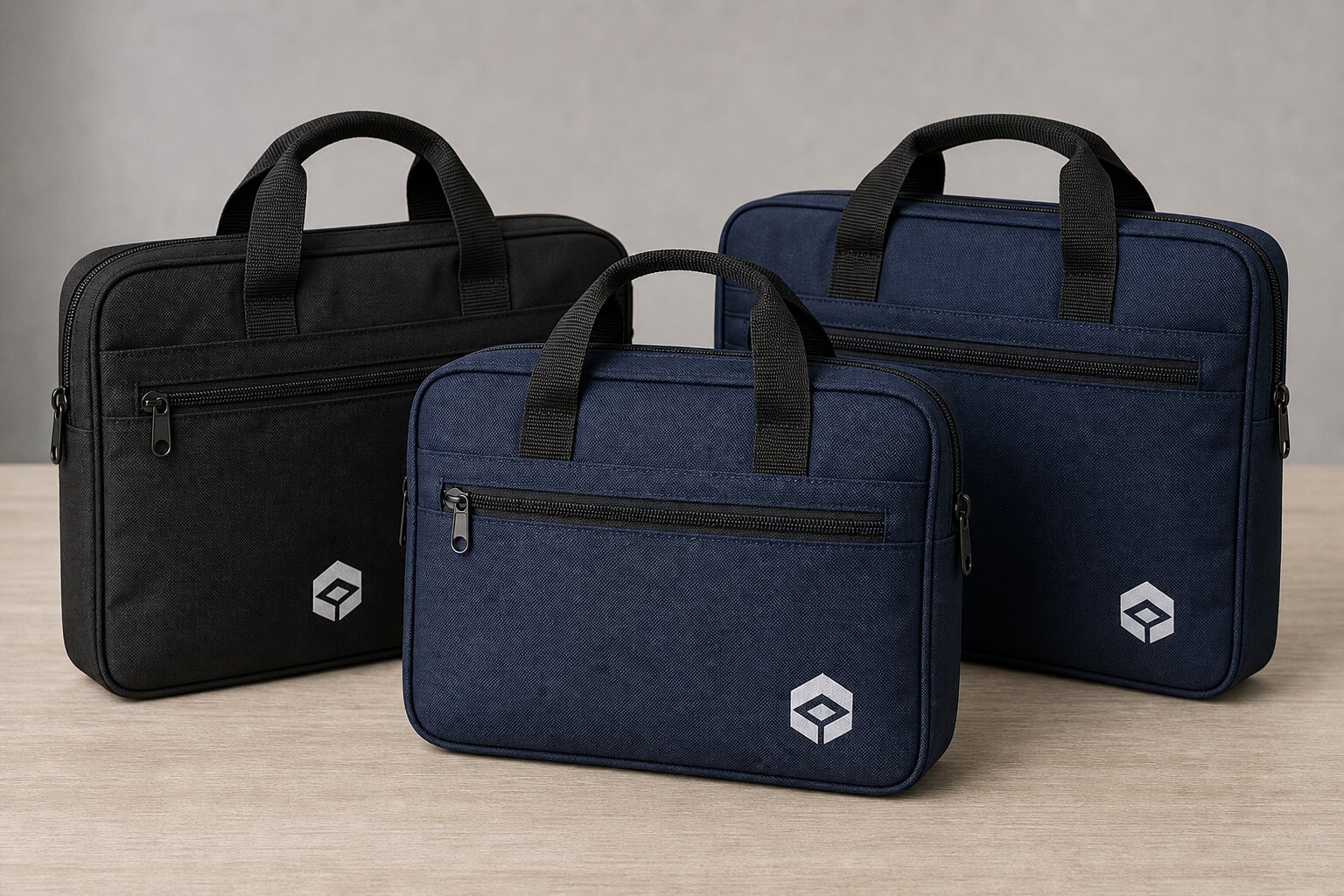
Start With the Actual Use Case, Not Just the Bag Size
For custom zipper business bags wholesale orders, the first mistake is requesting a price with only width, height, and quantity. A zipper business bag used for training documents has different requirements from one used for retail packaging, conference kits, banking files, or sales sample delivery.
A factory can recommend the correct fabric, zipper, handle, and printing method only after understanding what the bag needs to carry, how long it should last, and how it will be distributed. This is especially important for importers and distributors who need stable repeat orders rather than a one-time promotional bag.
- Confirm the main contents: A4 files, catalogs, laptop accessories, uniforms, samples, or retail products.
- Confirm the expected load weight so the factory can judge fabric weight, seam strength, and handle reinforcement.
- Confirm whether the bag is disposable packaging, reusable business storage, or a retail item.
- Confirm whether the bag will be folded flat, shipped filled, or packed individually for retail display.
- Confirm the target market because zipper quality, labeling, and compliance requirements may differ by region.
Choose the Right Material for Cost, Appearance, and Durability
Zipper business bags can be made from polyester, non-woven fabric, cotton canvas, PVC, jute blends, or laminated materials. The right choice depends on the buyer's price target, branding requirement, and how the bag will be handled after delivery.
For most B2B orders, 600D polyester is a common option because it balances structure, printability, and cost. Cotton canvas gives a more natural look but usually costs more and may require more careful control during printing and shrinkage. Non-woven fabric is economical but not suitable when the buyer expects long service life or heavy contents.
- 600D polyester: good for document bags, school business kits, trade show bags, and repeated daily use.
- Cotton canvas: suitable for premium business packaging, branded retail sets, and eco-positioned programs.
- Non-woven fabric: suitable for low-cost promotional distribution but weaker under repeated zipper stress.
- PVC or transparent material: useful when contents must be visible, but confirm market restrictions and odor control.
- Laminated fabric: improves water resistance and structure but may affect folding, printing, and recycling claims.
Product-Specific Material Comparison for Zipper Business Bags
Use the comparison below when shortlisting specifications before sending an RFQ. It helps procurement teams compare factories on the same basis instead of receiving quotes for different bag constructions.
- Material | Best use | Typical strength | Branding suitability | Buyer note
- 600D polyester | Business document bags, training kits, importer programs | Medium to high | Screen print, heat transfer, woven label, embroidery | Good default choice for wholesale orders needing structure and repeat use.
- 300D polyester | Lightweight file bags, lower-cost promotions | Medium | Screen print, heat transfer | Lower cost than 600D but less body and lower abrasion resistance.
- Cotton canvas | Premium business packaging, brand merchandise | Medium to high depending on weight | Screen print, embroidery, woven label | Check fabric weight, shrinkage, and color fastness before bulk production.
- Non-woven fabric | Budget event bags and simple document packaging | Low to medium | Screen print, heat transfer | Keep load weight modest and avoid overpromising durability.
- Clear PVC | Document visibility, office storage, sample organization | Medium | Printed logo patch, direct print if compatible | Confirm thickness, smell, cold-crack resistance, and destination market compliance.
Specify the Zipper Before You Compare Prices
The zipper is one of the most common failure points on business bags. A cheaper zipper can reduce the quote, but it may create complaints when buyers use the bag for catalogs, documents, or daily office storage.
When requesting custom zipper business bags wholesale pricing, specify the zipper type, zipper direction, puller style, and whether the zipper should run across the top only or around multiple sides. These details affect labor time, material cost, and the final user experience.
- Ask whether the factory will use nylon coil zipper, resin zipper, or metal zipper.
- For most document business bags, nylon coil zipper is practical, flexible, and cost-efficient.
- Confirm zipper size, such as #3, #5, or #8, based on bag size and load weight.
- Confirm whether the puller is standard, extended, branded, rubber, metal, or fabric tab style.
- Request sample testing for smooth opening, corner movement, and repeated closing under load.
Decide the Bag Structure: Flat Pouch, Gusseted Bag, or Handled Case
A zipper business bag may look simple, but construction changes the cost quickly. A flat pouch is efficient for papers and thin samples. A gusseted structure is better when the bag must hold catalogs, product kits, uniforms, or thicker retail items. A handled case needs stronger seams and reinforcement at stress points.
If the buyer only asks for a general 'zipper bag with logo,' factories may quote different constructions. This makes price comparison unreliable and can lead to a sample that does not match the intended use.
- Flat zipper pouch: best for documents, contracts, instruction manuals, and thin materials.
- Bottom gusset bag: better for catalogs, brochures, apparel, and thicker business kits.
- Side gusset bag: useful when contents need more volume and the bag must stand more naturally.
- Handled zipper bag: suitable for trade show kits, office supply sets, and retail-ready programs.
- Padded zipper business bag: useful for electronics or premium samples, but increases material and sewing cost.
Match the Branding Method to the Material and Order Quantity
Branding is not only a design decision. It affects MOQ, sample cost, production speed, color accuracy, and long-term appearance. For custom zipper business bags, the most common branding options are screen printing, heat transfer, embroidery, woven labels, rubber patches, and embossed patches.
Buyers should provide logo artwork in vector format and specify logo size, placement, print color, and whether Pantone matching is required. For dark fabric, ask the factory whether a white base layer is needed to keep the logo color accurate.
- Screen printing: cost-effective for simple logos and medium to large wholesale orders.
- Heat transfer: suitable for detailed logos, gradients, and smaller color runs, but confirm wash and abrasion resistance.
- Embroidery: durable and premium, but less suitable for very small text or complex gradients.
- Woven label: good for retail brands that want consistent logo quality across repeated orders.
- Rubber or embossed patch: strong visual effect for premium business bags, but tooling cost and MOQ may apply.
Confirm Interior Details Only If They Support the Bag Function
Extra pockets, card holders, lining, dividers, elastic loops, and pen slots can make a zipper business bag more useful, but they also add labor cost and sample time. Buyers should avoid adding features that look good in a drawing but do not improve the real use case.
For procurement teams, the key is to separate necessary function from optional decoration. A document bag may only need one main zipper compartment and a reinforced handle. A sales kit bag may need internal separation to protect samples and printed materials.
- Add lining when the bag needs a cleaner interior finish or better product presentation.
- Add divider panels when documents, samples, or accessories must stay separated.
- Add mesh pockets when the user needs to see small accessories quickly.
- Add name card windows for school, banking, training, or office distribution programs.
- Avoid unnecessary internal sewing if the order is price-sensitive and the bag is used mainly for packaging.
Use a Pre-RFQ Specification Checklist
A clear specification reduces back-and-forth communication and helps factories quote accurately. It also protects buyers from comparing a low quote based on thinner fabric, weaker zipper, or smaller logo area against a more complete quote from another supplier.
Before requesting wholesale pricing, prepare the following details in one document. This allows the factory to check material availability, estimate labor, and advise whether the design fits normal production methods.
- Bag size: width, height, depth or gusset, with tolerance requirements if needed.
- Material: fabric type, fabric weight, color, coating, lamination, or lining requirement.
- Zipper: zipper type, size, color, puller style, opening direction, and zipper length.
- Construction: flat, gusseted, handled, padded, reinforced, or multi-compartment.
- Logo: artwork file, size, placement, color, branding method, and Pantone reference.
- Packing: individual polybag, carton quantity, retail barcode, insert card, hangtag, or master carton marks.
- Testing and compliance: color fastness, load test, REACH, CPSIA, California Prop 65, or other market requirements.