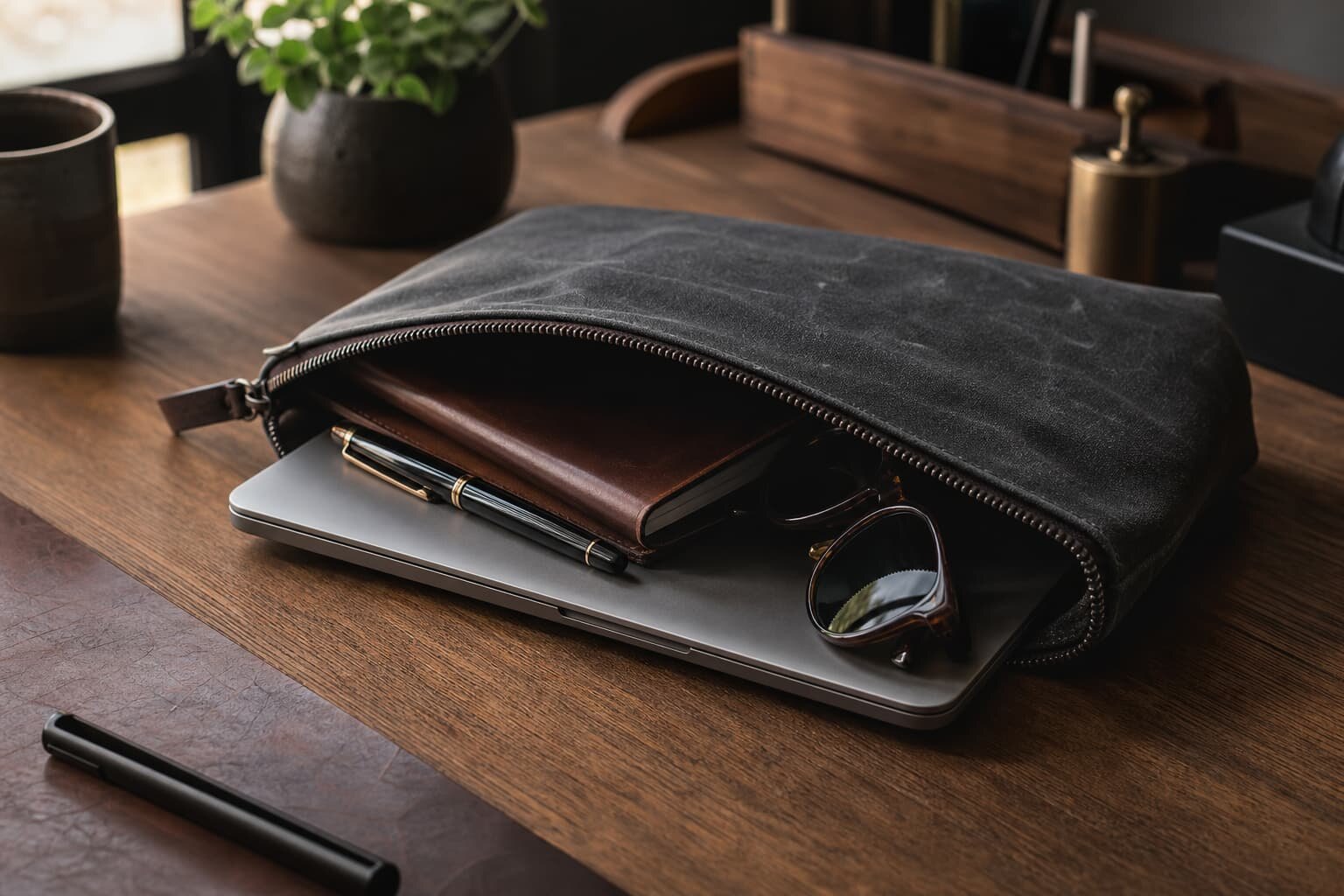
Start With the Use Case, Not Only the Bag Size
A custom zipper bag bulk order becomes easier to quote when the factory understands what the bag must carry and how the buyer will distribute it. A flat zipper pouch for event documents is not built the same way as a retail zipper business bag for stationery sets, charging cables, cosmetics, or sample kits. The size may look similar, but the correct fabric weight, zipper size, seam construction, lining choice, and packing method can be different.
Before requesting a quote, define the loading use. Will the bag hold paper, a catalog, tools, gifts, electronics, fabric samples, or mixed promotional items? Will the receiver reuse it for months, or is it mainly a presentation pack? These details help the supplier avoid quoting the cheapest possible construction and then revising the price later when your sample comments become more specific.
- For documents, specify the paper size plus clearance, such as A4 plus 15-25 mm on width and height.
- For thicker items, add a gusset or request a deeper zipper opening rather than increasing only the front panel size.
- For retail goods, confirm whether the inside seam finish must look clean when the customer opens the bag.
- For distributor programs, separate repeatable core specs from campaign-specific logo or color changes.
Define the Finished Dimensions and Opening Clearly
Many quote problems start with unclear size language. Buyers often write A4 zipper bag or laptop document pouch, but factories need finished width, finished height, gusset depth if any, and the zipper opening length. Finished size should mean the bag measured flat after sewing, not the fabric cutting size and not the size after stretching. If a bag needs to hold a folder, sample book, or boxed item, the practical loading size matters more than the outside dimension.
The zipper opening is especially important. A bag can have a wide front panel but a short zipper opening if the zipper stops too far from the corners. That may save labor or reduce zipper cost, but it can make the product difficult to use. For business bags, buyers should tell the factory whether the zipper runs across the top only, across the top and partly down one side, or around three sides like a portfolio case.
- State size as finished W x H x D, for example 350 x 260 x 30 mm.
- Confirm whether tolerance is plus or minus 5 mm, 10 mm, or another agreed range.
- Ask for the actual zipper opening length, not only the zipper tape length.
- Mark whether rounded corners, boxed corners, or square corners are required.
- For sets, test the largest intended item before freezing the production size.
Choose Fabric Weight That Matches Structure and Price
Fabric weight is one of the main cost and performance drivers in custom zipper business bags. Cotton canvas is usually described by ounces or GSM, while polyester, recycled polyester, and nonwoven alternatives are usually quoted in GSM. For a soft promotional zipper bag, lighter fabric may be acceptable. For a bag that should stand flatter, protect contents better, and feel retail-ready, a heavier canvas or reinforced polyester canvas is more suitable.
As a practical starting point, 8 oz cotton canvas can work for lightweight document or event pouches, but it may feel loose around the zipper. A 10-12 oz cotton canvas or roughly 280-340 GSM polyester canvas is a safer middle range for many business zipper bags. Heavier 14-16 oz canvas can look premium, but it increases fabric cost, freight weight, sewing difficulty, and may require stronger needles and slower production. If the buyer wants a smooth print surface, fabric weave and finishing are as important as weight.
- Natural cotton canvas can show cotton seed flecks; confirm if this is acceptable for your brand.
- Dyed canvas should be approved by swatch or lab dip when color matching is important.
- Polyester canvas gives more stable color and can suit heat transfer or sublimation-style effects, depending on fabric.
- Heavy fabric near the zipper may need seam allowance adjustment to prevent bulky corners.
- Ask whether shrinkage, colorfastness, or fabric hand feel has been checked on the proposed material.
Specify the Zipper Like a Functional Component
The zipper is not a small accessory on this product; it is the part the end user touches first. If the zipper jams, waves, scratches, or separates, the entire bag feels cheap even when the fabric and print are acceptable. A No. 5 nylon coil zipper is a common choice for many medium-size zipper business bags because it balances cost, flexibility, and smooth opening. Smaller No. 3 zippers may suit small pouches but can feel weak on larger document bags.
Buyers should specify zipper tape color, teeth color, slider finish, puller style, and opening direction. If the bag is used for retail or corporate gifting, a fabric puller, metal puller, rubber puller, or branded pull tab can add perceived value, but each option may affect MOQ and lead time. Also check the zipper end treatment. Poorly finished zipper ends can scratch contents or create lumps at the corner after packing.
- Ask whether the quoted zipper is nylon coil, resin, or metal; do not leave it as zipper only.
- Match zipper size to bag size and fabric weight; oversized zippers can look industrial, while undersized zippers fail faster.
- Check whether the zipper tape is stitched evenly without waves along the top edge.
- Request samples with the actual zipper color and slider finish when brand color is important.
- Confirm whether a custom puller has tooling, MOQ, and extra sample lead time.
Select Print Method Based on Artwork and Fabric
Logo decoration should be decided after fabric and bag construction are known. Screen printing is usually efficient for solid color logos on cotton canvas or polyester canvas, especially when the artwork has limited colors and clean edges. Heat transfer can handle gradients, small detail, or multi-color marks, but buyers should check hand feel, edge durability, and whether the transfer film suits the fabric texture. Embroidery can look premium, but it may distort thinner panels and is not ideal for very small text.
Logo position matters on zipper bags because the zipper seam, side seam, and folded corners can affect the flat print area. A design that looks centered in a PDF may be too close to the zipper tape after sewing. For bulk orders, the RFQ should include logo size in millimeters, Pantone or other color references, artwork file type, and distance from the top zipper edge and side edge. If the bag has a front pocket, label, or handle, show these in the artwork layout.
- Use vector artwork such as AI, EPS, or editable PDF for screen print and woven labels.
- Keep small text away from coarse canvas weave unless a transfer or label is used.
- Confirm print color tolerance because fabric base color changes the perceived logo color.
- Ask for curing method and adhesion checks when printing on coated or dyed fabric.
- For premium branding, compare direct print, woven label, rubber patch, and fabric puller before locking the quote.
Understand MOQ Logic Before Comparing Quotes
MOQ for custom zipper bags is not only one number. A supplier may say the MOQ is 500 pieces, but that may apply to one size, one fabric color, one zipper color, and one logo version. If the buyer wants three colors, two logo versions, and retail barcodes by market, the production plan becomes several smaller production lots. This affects fabric purchasing, printing setup, cutting efficiency, packing control, and inspection time.
When comparing factory quotes, separate the total order quantity from the quantity per variant. A 5,000-piece order can still be inefficient if it is split into 20 SKUs of 250 pieces each. Some factories can combine cutting or sewing for similar sizes, but printing, labels, zipper colors, and packing may still require separate setup. A clean RFQ should show the main order matrix so suppliers can quote without guessing.
- List each SKU with size, fabric color, zipper color, logo, print method, packing, and quantity.
- Ask whether price changes at quantity breaks such as 500, 1,000, 3,000, and 5,000 pieces per variant.
- Clarify whether sample cost is refundable after bulk order or charged separately.
- Check whether custom dyed fabric, custom zipper tape, or custom hardware has a higher MOQ than sewing.
- Avoid mixing too many low-volume variants unless retail or distributor requirements justify the added cost.
Build the RFQ Around Real Cost Drivers
A useful RFQ lets suppliers price the same product, not their own assumptions. For zipper business bags, the biggest cost drivers are fabric type and weight, zipper grade, size, lining, pockets, logo method, order quantity per variant, packing, and inspection requirements. Small details can create real cost differences. A lined bag with a branded zipper puller, individual barcode polybag, insert card, and export carton is not comparable to an unlined flat pouch packed 100 pieces per carton.
When you receive quotes, do not compare only the unit price. Compare what is included. A low quote may exclude packing labels, inner cartons, print setup, sample revisions, or inland documents. It may also assume a lighter fabric, shorter zipper, lower stitch density, or generic zipper puller. Ask the supplier to identify the exact construction in the quotation so your team can check it against the approved sample later.
- Fabric: composition, weight, color source, and whether stock or custom dyed.
- Construction: lining, gusset, inner pocket, handle, binding, and seam finish.
- Accessories: zipper size, slider, puller, label, hangtag, insert card, and barcode.
- Logo: method, size, number of colors, number of print positions, and setup cost.
- Packing: individual polybag, master carton quantity, carton marks, and pallet requirement if any.
- Commercial terms: Incoterm, quote validity, payment term, sample fee, lead time, and inspection arrangement.
Use Samples to Freeze Construction, Not Just Appearance
A sample should answer production questions before bulk fabric is cut. Buyers often approve a sample because the logo looks correct, while missing zipper length, seam allowance, fabric weight, or packing details. For custom zipper bag bulk orders, request a pre-production sample using the closest available fabric and final accessories. If the exact fabric or zipper color is not available at first sample stage, ask the factory to label the differences clearly and send material swatches for approval.
Sample review should be practical. Put the intended contents inside the bag, zip it closed, open it several times, and check whether the corners pull or the zipper catches. Measure the print position from the zipper edge and side seam. Fold or pack the sample as the final carton will be packed and see whether the logo cracks, the zipper bends, or the fabric creases badly. Written sample comments are better than general notes such as make better quality.
- Check finished size, loading fit, zipper smoothness, fabric hand feel, and logo position.
- Confirm stitch density and seam strength at zipper ends and corners.
- Review whether inside seams are acceptable for the product tier.
- Approve a physical color swatch or lab dip before bulk dyeing.
- Keep one signed or dated approval sample as the production control reference.
Plan Lead Time Around Approvals and Materials
Lead time for a custom zipper bag is not only sewing time. It includes artwork checking, sample making, sample shipping, buyer comments, material purchasing, cutting, printing, sewing, trimming, packing, inspection, and export handling. If fabric is stock and the logo is simple, the schedule is shorter. If the order uses custom dyed canvas, custom zipper tape, woven labels, special pullers, or retail packing, the timeline needs more approval steps.
A realistic purchasing schedule should separate sample lead time from bulk lead time. Buyers should also ask when the production clock starts. Some factories count from deposit; others count from artwork approval, material approval, or pre-production sample approval. To avoid missed launch dates, set a timeline that includes your internal approval days, not only the supplier production days.
- Confirm sample lead time after complete artwork and spec sheet are received.
- Ask whether bulk lead time starts after deposit, sample approval, or final material approval.
- Reserve extra time for custom fabric dyeing, custom zipper colors, and branded hardware.
- Schedule inspection before the shipment date, not after goods are already booked for pickup.
- For repeat orders, keep the approved fabric code, zipper code, print file, and packing standard on record.
Control Packing, Cartons, and Warehouse Receiving
Packing is part of the product specification because it affects bag appearance, warehouse efficiency, and claims risk. Flat zipper bags can crease if cartons are overfilled or compressed. Zipper sliders can mark the fabric when bags are packed too tightly without separation. Natural cotton canvas can absorb moisture if cartons are stored poorly. For retail or distributor programs, the packing method must also support barcode scanning and SKU separation.
Ask the factory to quote the packing method clearly: individual polybag, several pieces per inner bag, or bulk pack by carton. If your warehouse needs barcode labels, carton marks, PO numbers, country of origin labels, or mixed carton limits, include that in the RFQ. Carton quantity should be practical for lifting and storage. A carton that is too heavy may reduce handling safety and increase damage risk during transit.
- Define whether bags are packed flat, folded once, or with tissue or card support.
- Specify individual barcode label placement if goods go to retail or 3PL warehouses.
- Ask for estimated carton size, gross weight, net weight, and pieces per carton.
- Keep different SKUs in separate cartons unless mixed cartons are approved in writing.
- Request carton photos and packing photos during production for high-SKU orders.
Specification comparison for buyers
| Spec decision | Recommended option | When it fits | Buyer risk to check |
|---|---|---|---|
| Main fabric weight | 10-12 oz cotton canvas or 280-340 GSM polyester canvas | General document bags, retail gift sets, event kits, and corporate stationery bags | Too light fabric collapses around the zipper; too heavy fabric raises sewing cost and may need larger needles |
| Zipper type | No. 5 nylon coil zipper with matching or contrast tape | Most flat zipper business bags from A4 to laptop accessory size | Cheap zipper sliders can jam after packing compression; ask for zipper opening length and puller material |
| Logo method | Screen print for solid logos; heat transfer for gradients; woven label for premium small branding | Bulk orders where logo position must stay consistent across panels | Print cracking near zipper seam if artwork is too close to the stitched edge |
| Lining decision | Unlined for cost control; 190T polyester lining for cleaner inside finish | Unlined for promotional use; lined for retail, stationery sets, or higher perceived value | Lining changes lead time, MOQ, and inspection method; inside seams must not trap zipper tape |
| MOQ planning | Separate MOQ by fabric color, zipper color, size, and logo version | Orders with multiple departments, campaigns, or distributor SKUs | Combining many variants may look large on paper but still fall below production MOQ per variant |
| Packing format | Flat bulk pack with inner polybag by SKU, or individual polybag with barcode label | Bulk distribution, retail fulfillment, or warehouse receiving | Over-tight carton packing can bend zipper corners and create fabric creases before delivery |
Buyer checklist before sampling
- Confirm the exact finished size in width, height, and gusset if any; do not only send a document size such as A4 or letter.
- State the fabric type, weight or GSM, color standard, and whether a stock fabric color is acceptable.
- Specify zipper type, zipper tape color, slider color, puller style, and required opening direction.
- Provide logo artwork in vector format and mark print size, position, color references, and distance from seams or zipper.
- List all SKU variations separately by size, fabric color, zipper color, logo version, and packing requirement.
- Ask the factory to quote sample cost, sample lead time, bulk lead time, MOQ per variant, and what changes will affect unit price.
- Define packing: individual polybag or bulk pack, carton quantity, barcode label, insert card, silica gel, and carton marks.
- Request approval samples showing fabric, zipper, stitching, logo, packing, and final carton setup before mass production.
- Set acceptance criteria for size tolerance, print tolerance, zipper function, seam strength, color shade, and carton condition.
- Check whether the quoted price includes inland handling, export carton, labeling, documentation, and Incoterms.
Factory quote questions to send
- What fabric weight and composition are included in your quote, and can you provide swatches before sampling?
- Is the zipper a No. 3, No. 5, or other size, and what slider and puller material are included?
- What is the MOQ per size, per fabric color, per zipper color, and per logo version?
- Which print method are you quoting, and what artwork limitations apply near the zipper and side seams?
- Does the price include lining, inner pocket, handle, gusset, woven label, hangtag, barcode label, or only the basic zipper pouch?
- What are the expected sample lead time and bulk lead time after artwork, fabric, and packing approval?
- What tolerances do you apply for finished size, logo position, fabric shade, and print color?
- How many pieces per carton will you pack, and what carton size and gross weight do you estimate?
- What inspection steps are included before shipment, especially zipper testing and print adhesion checks?
- Which Incoterm, payment term, and quote validity period are used for this offer?
Quality-control points to confirm
- Measure finished width and height after the bag is zipped closed and laid flat, not stretched by hand.
- Open and close the zipper at least five times on random pieces to check slider smoothness, end stop security, and fabric catching.
- Check stitch density along the zipper tape, side seams, corners, and any handle attachment points.
- Rub the printed logo with dry and slightly damp white cloth to check visible ink transfer after curing.
- Compare fabric shade against the approved swatch under consistent light, especially for black, navy, natural, and dyed canvas.
- Inspect whether the zipper opening length matches the practical loading requirement for documents, samples, or retail goods.
- Check logo position from zipper edge and side seam using a ruler, because visual centering can shift on soft fabric.
- Review carton packing for compression marks, mixed SKU risk, missing labels, and moisture protection.
- Confirm that loose threads, sharp zipper ends, excess glue, needle holes, and oil marks are removed before packing.
- Keep one approved pre-production sample and one sealed production sample for comparison during final inspection.