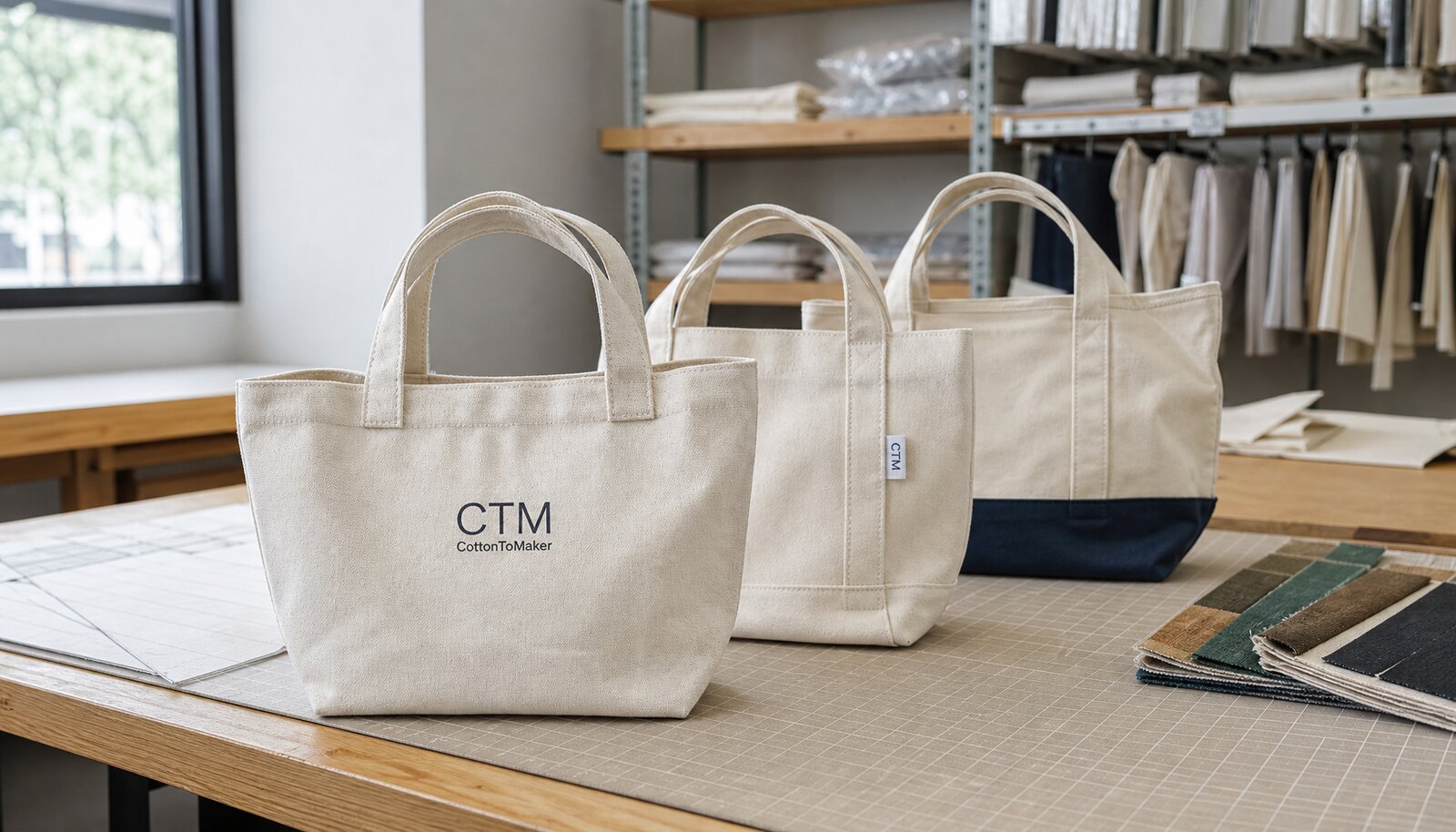
Why small canvas bags need a tighter brief than buyers expect
Custom small canvas bags look straightforward until the quote arrives and the specs are compared line by line. The bag is small, but the sourcing variables are not: fabric weight, print method, gusset depth, handle length, and packing format all change cost and performance. A supplier can quote the same bag three different ways depending on whether they use 8 oz canvas, 10 oz canvas, or a heavier 12 oz cloth with reinforced stitching.
For procurement teams, the main problem is not finding someone who can make a small canvas bag. The real issue is getting a bag that matches the use case without paying for unnecessary upgrades or accepting a weak build that fails in retail use. If the bag is for cosmetics, accessories, sample kits, or a small branded giveaway, the purchasing brief must define what the bag should hold, how it should close, and how it should look after printing and packing.
- Use the product function to decide the minimum fabric weight, not the other way around.
- Treat print, stitching, and packing as separate cost items when comparing suppliers.
- Small bags magnify spec mistakes because every dimension change is visible and measurable.
Choose the right canvas weight for the job
For most custom small canvas bags, 8 oz to 10 oz cotton canvas works for lightweight retail and promotional use. It is usually enough for sample sets, stationery, toiletries, gift items, or accessory bundles. If the bag needs a cleaner hand feel, more structure, or a premium retail impression, 12 oz is often the better choice, but it will add cost and can reduce flexibility in folding and packing.
Do not specify fabric by name alone. “Canvas” is too broad. State the weight in GSM or oz, confirm whether the cloth is natural, bleached, or dyed, and note if shrinkage matters. In many programs, unwashed natural canvas is acceptable, but it can change slightly after handling or humidity exposure. If the bag must look uniform on retail shelves, ask the supplier to describe how they control fabric shade and batch consistency.
- 8 oz: suitable for light contents and lower-cost promotions.
- 10 oz: a practical middle ground for most small branded bags.
- 12 oz: better structure, better print appearance, higher material cost.
- If the artwork is dark or dense, ask how the fabric color will affect logo contrast.
Size, gusset, and handle choices that change the quote
Many buyers focus on width and height, then forget that the gusset and handle are what drive usability. A flat pouch-style bag can be cheaper, but once the contents become boxed or bulky, the bag feels too tight and the logo area may distort. A small gusset of 2 to 3 cm can make a noticeable difference without turning the product into a full tote.
Handle choice matters as well. Self-fabric handles are usually cheaper and suit a simple promotional brief. Cotton webbing handles cost more but often give a cleaner retail finish and better comfort. The handle length should match the carry position you want: hand-carry, wrist-carry, or short shoulder carry. If you do not specify this, the supplier may default to a length that looks fine in sample photos but is awkward in use.
- Measure the internal capacity against the actual pack-out item, not only the empty bag size.
- Confirm the handle attachment points and top stitch pattern.
- Ask for a tolerance range on finished dimensions so the supplier cannot use a loose spec later.
Print method selection: where buyers save and where they get burned
For small canvas bags, screen printing is still the most common choice when the logo is simple and the run is repeatable. It is cost-effective for one or two colors and usually gives a durable, opaque mark. The drawback is setup: screens, plate costs, and color changes can make a short run more expensive than expected. If the design is multicolor or a photographic style graphic, heat transfer or digital print may be more practical for low quantities.
The key procurement issue is not just method, but the full print scope. The quote should state whether the price includes one side or two, whether the artwork is one color or multiple colors, and whether print placement is fixed or variable. A logo that sits 2 cm too low can look acceptable in a sample and still fail brand approval in bulk. For a clean corporate or retail presentation, request a marked artwork proof and a pre-production sample using the same method as the bulk order.
- Screen print: best for simple logos and longer-run repeat orders.
- Heat transfer or digital: better for short runs, gradients, or detailed art.
- Embroidery on small canvas bags is possible but usually slower and more expensive.
- Always separate one-time setup fees from per-piece print cost.
What a workable MOQ looks like for small custom bags
MOQ logic changes by fabric, print method, and packing. A supplier may quote a low MOQ for a plain bag, then require a much larger quantity once the order includes custom printing, special handles, or retail packaging. Buyers should avoid assuming that “custom” automatically means any quantity is available at the same price. In practice, a factory needs enough volume to cover fabric cutting, setup, and print preparation without losing efficiency.
For a first order, the simplest route is usually one standard size, one fabric weight, and one print position. If the program is not yet stable, avoid splitting the order into too many variations. Multiple colors, alternating handle styles, or mixed packaging formats often turn a manageable run into a production puzzle. If you want to test the market, a supplier may offer a trial MOQ, but the unit price should be expected to rise. The correct comparison is not only price per bag; it is price per bag plus setup cost divided by actual sellable units.
- Lower MOQ usually means fewer options, not lower manufacturing complexity.
- Ask whether MOQ applies per design, per color, or per size.
- If you need multiple SKUs, get a combined MOQ structure in writing.
How to read quotes without comparing the wrong numbers
A valid quote for custom small canvas bags should let you compare total landed cost, not just unit price. Separate the numbers into fabric, print, labor, packaging, sampling, and freight assumptions. A low unit price can hide a bigger carton size, weaker fabric, or extra charges for plates and revisions. Some suppliers quote only the bag body, then add handle upgrades, print setup, and inner packing later. That creates false price leadership.
A clear quote should tell you what is included and what is excluded. Look for fabric weight, finished size, print method, number of colors, handle length, packing style, carton count, and lead time after sample approval. For many buyers, the useful benchmark is not the cheapest quote but the quote with the fewest unresolved assumptions. If two suppliers are close in price, the better one is usually the one that names the tolerances and packing details more clearly.
- Compare unit price only after aligning size, fabric, print, and packing.
- Watch for hidden plate or screen charges.
- Request carton dimensions early so freight cost can be estimated accurately.
Supplier options: factory-direct, trading, and mixed sourcing routes
For repeat programs, a factory-direct route usually gives better control over fabric consistency, print registration, and packing instructions. It also makes it easier to lock down the same bag across replenishment orders. Trading companies can still be useful when you need smaller trial volumes, mixed product sourcing, or more flexible payment coordination. The tradeoff is that the actual production source may change, which can affect shade, stitch density, and lead time reliability.
When buying custom small canvas bags, the best route depends on your operational need. If you are a brand owner planning a retail launch, factory-direct sourcing gives the clearest line of control. If you are a distributor filling a mixed bag program or need to combine accessories with the order, a trading route may be practical. In either case, request evidence of actual production capability: sample photos from the workroom, stitch close-ups, print examples, and carton loading images. That is more useful than a polished brochure.
- Factory-direct: best for repeatability and lower long-run cost control.
- Trading route: useful for mixed orders and fast market tests.
- Evidence should include real sample photos, not only catalog images.
Sample approval rules that prevent bulk-order arguments
The biggest mistake in small canvas bag buying is approving the wrong sample stage. A hand-made prototype can prove the concept, but it is not a reliable reference for bulk production unless it uses the final fabric, final print process, and final packaging. A supplier may produce a cleaner sample using thicker cloth or a different print technique, then deliver a weaker bulk result that still matches the drawing on paper. That is avoidable if the sample approval stage is defined properly.
For final approval, the sample should match the exact bag size, stitching layout, print placement, and accessory details in the purchase order. Check the bag on a flat table and loaded with the real product weight. Confirm whether the logo sits at the correct height, whether the seams pull when loaded, and whether the handles remain level. If the bag is meant for retail shelves, open and re-pack it several times to see whether the shape stays acceptable after handling.
- Approve a pre-production sample, not just an early concept sample.
- Use actual packed contents during sample review.
- Lock the artwork file, color reference, and placement measurements before bulk release.
Packing, carton loading, and freight cost are part of the product
Packing decisions can change your landed cost as much as the bag itself. Small canvas bags are often bulk packed to reduce cost, but some buyers need each unit individually polybagged or labeled for retail handling. That adds labor, film cost, and carton volume. If the supplier does not confirm the packing format, the freight estimate may be misleading because the carton count and volume are not yet fixed.
Request carton dimensions, packing quantity per carton, gross weight, and whether master cartons include a size sticker or outer barcode. If the bags are for retail distribution, ask how they prevent surface scuffing or print rubbing during transport. A simple inner pack can be enough for a natural canvas bag, but printed bags may need separators or a cleaner fold method. These small details matter when the shipment is being handled by multiple warehouses or retail centers.
- Packing affects carton volume, freight rate, and warehouse handling time.
- Ask for the exact fold method if the bag is printed on both sides.
- Bulk packs are cheaper, but retail packs need a separate cost line.
Lead time risk, production control, and the QC points that matter most
Lead time for custom small canvas bags is usually not driven by sewing alone. Fabric sourcing, print setup, sample approval, and packaging preparation can all move the date. A realistic production plan starts after the pre-production sample is approved, not when the PO is signed. Buyers should be cautious if a supplier promises a very short lead time without naming the bottleneck. Often the schedule risk is in artwork approval, screen preparation, or packing changes, not in stitching capacity.
The most important QC points are easy to define but often ignored until the shipment arrives. Measure finished dimensions, inspect print alignment, examine the seams and handle anchors, and compare the fabric shade across cartons. If the bag is being imported for retail or promotional distribution, build a simple acceptance standard into the PO. Even a small bag should have a measurable tolerance, a clear packing spec, and a sign-off step that the supplier cannot bypass.
- Lead time should start from sample approval, not from initial inquiry.
- Major risks: artwork changes, missing packaging details, and fabric shade mismatch.
- A simple QC standard prevents disputes over small visual differences.
Specification comparison for buyers
| Spec decision | Recommended option | When it fits | Buyer risk to check |
|---|---|---|---|
| Canvas weight | 8 oz to 10 oz for light retail use; 12 oz for premium hand feel | Gift sets, cosmetic kits, jewelry packs, event giveaways, small retail carry bags | Too-light fabric can show print-through and lose shape; too-heavy fabric can raise cost and make the bag feel overbuilt |
| Bag construction | Flat pouch-style or small gusseted tote with 2-3 cm side gusset | When the bag must hold boxed items, sample sets, or thicker products | Gusset dimensions affect capacity more than buyers expect; mismatch leads to quote disputes and poor fit |
| Print method | Screen print for simple one- or two-color logos; heat transfer or digital print for short runs and gradient art | Branding with clean logos, seasonal art, or smaller MOQs | Some suppliers quote print cost without plate fees, color changes, or second-side printing |
| Handle style | Self-fabric handles or 25 mm cotton webbing handles | Retail and promotional use where comfort and durability matter | Handle stitching and bar-tacks must match load; weak top stitching causes early failure even on good fabric |
| Closure option | Open top for easy access; zipper or snap only if contents need protection | Sampling kits, cosmetics, accessories, or travel retail | Closures add labor and hardware cost; weak zipper quality creates a return issue rather than a cosmetic issue |
| MOQ route | Factory-direct with one standard size and one print position to start | New programs and repeated replenishment orders | Small custom runs often trigger high unit prices if too many variants are split across colors, sizes, or print placements |
| Packaging | Bulk packed with size label and carton mark; retail-ready polybag only if required | Wholesale, distributor, and B2B supply chains | Retail packaging adds labor, film, inserts, and carton volume; the quote must state exactly what is inside each bag and carton |
| Supplier type | Direct factory for repeat orders; trading route only if you need mixed product sourcing or very low trial quantities | Brands with stable specs and buyers who need quote control | Trading quotes can hide the actual production source, increasing variation in fabric shade, stitching, and lead time control |
| Sample approval stage | Pre-production sample with final fabric, print, and trim before bulk release | Any order with logo placement, color matching, or packing instructions | Approving a prototype sample that does not use final materials is a common cause of batch disputes |
Buyer checklist before sampling
- Confirm finished bag size, gusset depth, and tolerance before requesting price.
- State fabric weight in GSM or oz, plus whether the canvas must be bleached, natural, or dyed.
- Specify print method, print size, number of colors, and whether one or both sides need decoration.
- Define handle length, handle material, stitch type, and load expectation in practical terms.
- Decide if the order needs individual polybagging, barcode stickers, hangtags, or master carton marks.
- Request a pre-production sample using final fabric, final logo art, and final packaging instructions.
- Ask for carton dimensions and packing quantity so freight estimates are not based on guesswork.
- Separate unit price from one-time fees such as plates, screens, embroidery setup, and sample shipping.
Factory quote questions to send
- What fabric weight and weave count are included in the quoted price, and is the canvas pre-shrunk or untreated?
- What exact bag size, gusset, and handle length are you pricing, and what tolerance do you allow on finished dimensions?
- Which print method is included, how many colors are covered, and what setup or plate fees apply?
- Is the MOQ based on one design, one colorway, or one print position, and how does the unit price change at higher volume?
- Will the pre-production sample use final fabric, final printing, and final packing, or is it only a reference sample?
- What are the carton size, packing quantity per carton, gross weight, and estimated carton count for this order?
- What quality checks do you perform on stitching, print alignment, seam strength, and measurement accuracy before shipment?
- What lead time applies after sample approval, and what delays should I expect for busy seasons or color matching?
Quality-control points to confirm
- Finished dimensions should stay within the agreed tolerance; small bags can feel significantly different with only a few millimeters of variance.
- Stitching around handle anchors and side seams should be straight, secure, and free from skipped stitches, loose threads, or seam puckering.
- Print registration should stay within an agreed visual tolerance, with no obvious misalignment, bleeding, cracking, or off-center placement.
- Fabric shade should be consistent across the same order; visible shade variation between panels is a common issue with natural canvas.
- Handles should be even in length and attachment height so the bag hangs level when loaded.
- Cartons should match the agreed pack count, with clean labeling and no mixed sizes unless the PO allows it.
- If the order includes retail packing, each inner pack should be closed cleanly and protected from dust, moisture, or print rubbing.