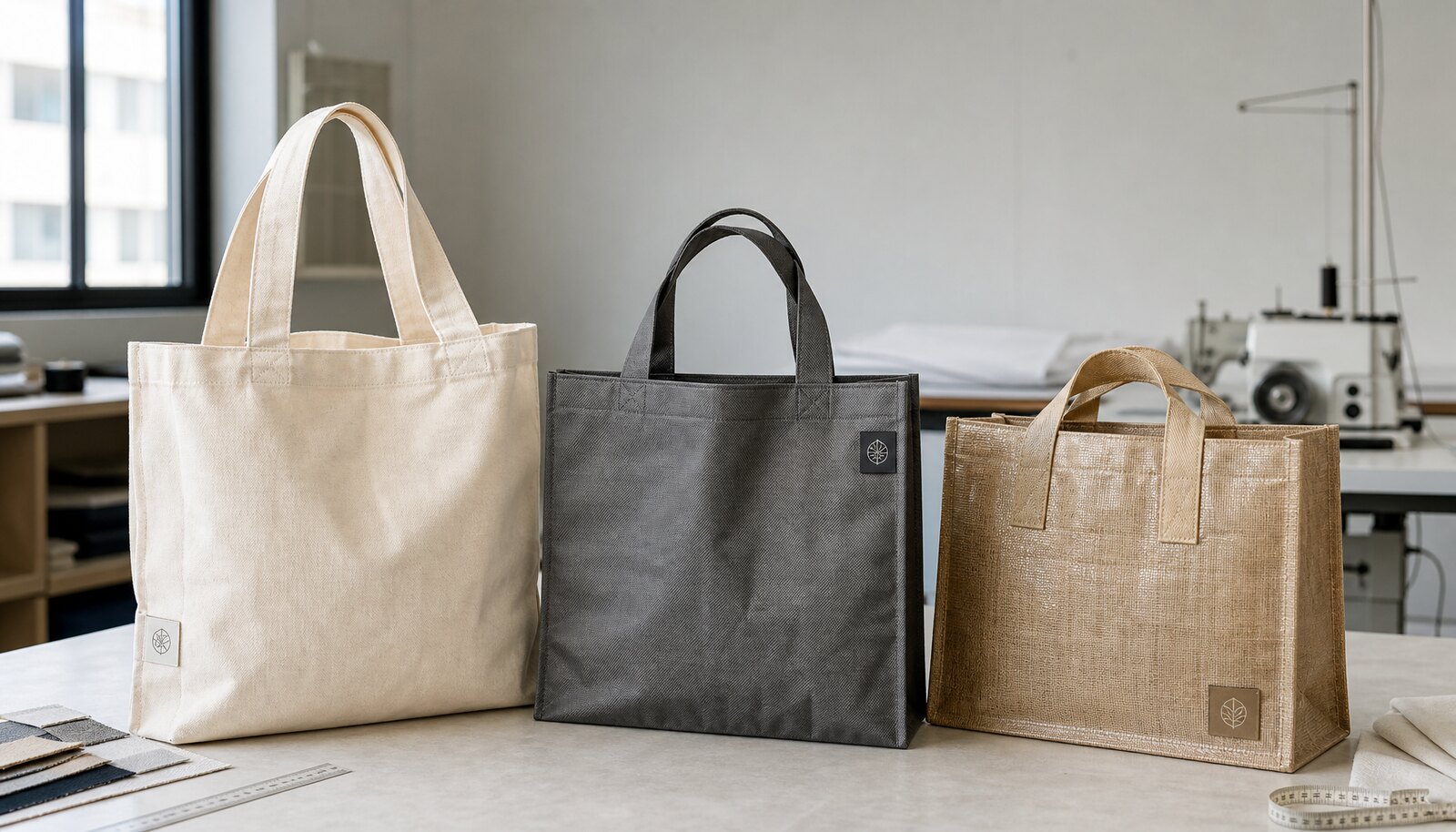
Why hotel shopping bags need a different buying spec
Custom shopping bags for hotels are not the same as generic retail totes, even when they look similar on a catalog page. In a hotel environment, the bag might be used for guest retail, spa purchases, minibar add-on sales, welcome kits, conference giveaways, or even staff issue and housekeeping support. Each use case changes the procurement logic. A bag that looks elegant in a gift shop may still fail if it collapses too easily in a welcome kit carton, while a low-cost event bag may be perfectly suitable for a conference desk but too flimsy for resale in a luxury boutique.
The easiest way to reduce quote noise is to define the bag’s job before defining the bag itself. Buyers should separate three questions: what the bag must look like, what it must carry, and what it must cost landed in the hotel network. If those three goals are not written clearly, suppliers will fill the gaps with their own assumptions. That is when one vendor quotes a lightweight stock tote, another quotes a fully sewn canvas bag, and the comparison becomes meaningless. A hotel procurement spec should be functional first and decorative second.
- Guest retail bag: higher perceived value, cleaner stitching, stronger branding, and often better fabric body.
- Welcome-kit bag: compact, lower cost, easy to pack, and often more important for weight and carton efficiency than for retail appearance.
- Conference or event giveaway: fast production, simple print, and predictable color consistency across a large run.
- Spa or boutique bag: often needs better finishing, cleaner folding, and a more premium handle feel.
- Multi-property program: standardize bag size and logo placement first, then decide material by use case and property tier.
Use-case mapping: which hotel program needs which bag
A procurement team gets better results when the hotel program is broken into specific use scenarios. Not every property needs the same level of finishing. A resort shop bag, for example, may need to look refined enough to sit beside apparel and accessories. A conference giveaway bag is usually judged by speed, price, and the ability to print a clean logo at volume. A welcome-kit bag may be hidden inside the guest room experience, so the key issue is not shelf presence but packing efficiency and reliable repeatability. The same logo can be printed on all three, but the bag structure may not need to be the same.
A useful internal rule is to define the bag by the most demanding thing it will carry, then adjust down only if the visual or cost target requires it. For guest retail, ask whether the bag should still look acceptable after multiple uses. For minibar accessory sales or boutique retail, ask whether the bag needs a gusset, a base insert, or a more structured body to stand on a shelf. For conference giveaways, ask whether the hotel needs a fast-turn stock base bag or a custom sewn bag with exact brand color control. These distinctions prevent overbuying and reduce the chance of collecting expensive bags that do not fit the actual program.
- Guest retail or boutique sales: prioritize appearance, repeat use, and a stronger handle finish.
- Welcome kits: prioritize packability, carton density, and stable unit cost.
- Conference giveaways: prioritize print speed, batch consistency, and clean bulk packing.
- Spa retail: prioritize a more premium hand feel and clean presentation because the bag sits next to higher-margin items.
- Mixed programs: create one base spec and only vary print or size when a real operational need exists.
Material choices, with practical tradeoffs instead of broad rules
For custom shopping bags for hotels, the common material options are cotton canvas, cotton sheeting, nonwoven PP, and in some programs coated or laminated fabrics that give the bag more structure. The right choice is not universal. It depends on how the bag will be used, how often it will be reused, and whether the bag needs to look premium on a shelf or merely perform as a convenient carry bag. In sourcing terms, the best material is the one that matches the job without carrying hidden cost in freight, labor, or carton volume.
Cotton canvas in the 10–12 oz range is a strong default for guest retail or higher-perceived-value hotel programs, but that is a typical construction choice, not a law. If the bag must be light, foldable, and low cost, 80–100 gsm nonwoven PP may be the better fit. If the bag needs to stand upright or hold its shape in a display, the buyer may need a base insert, a heavier fabric, or a structured side panel. The important procurement point is to ask for the exact fabric weight, weave or gsm, and whether any finishing treatment changes the way the bag feels in hand. A term like "eco bag" is not a spec.
Supplier routes and what each one changes in the quote
There are usually three sourcing routes for hotel bags: a direct factory, a trading company, or a local distributor with imported stock. A direct factory is often the strongest choice when the hotel needs repeatable print placement, stable stitching, and transparent control over material and packing. It is usually the easiest route for re-orders because the factory can keep the pattern, screens, or production notes on file. A trading company can be useful when the project includes multiple bag types, mixed packing requirements, or an internal team that prefers one point of contact. A local distributor is often the quickest option for urgent replenishment, but the price is usually higher because warehousing, import risk, and margin are already built in.
The buyer should not compare these routes only by unit price. One supplier may be quoting a stock base bag and another may be quoting a fully sewn bag made from raw fabric. One quote may include folding and carton packing while another excludes it. A factory that can show current stock, current sample photos, and a clear production calendar is often worth more than a quote that is slightly lower on paper but vague on process. For procurement, the real question is whether the supplier can repeat the same result next month and not just once.
- Direct factory: best for repeatability, clearer QC ownership, and better re-order support.
- Trading company: useful when multiple SKUs, packing styles, or markets are being coordinated.
- Local distributor: useful for urgent buys, but usually less flexible on custom dimensions and print details.
- Ask who owns artwork conversion, sample approval, and final carton packing to avoid responsibility gaps.
How to write a hotel-ready RFQ without making it sound generic
A strong RFQ for custom shopping bags for hotels should describe the bag in operational terms, not marketing language. Start with the use case, then specify size, material, handle style, print method, packing, and timing. If the hotel is opening a new property or launching a seasonal retail program, add the actual first-use date and the date by which approved samples must arrive. Suppliers respond better when they can plan the sequence of material purchase, sample printing, and mass production.
The RFQ should also remove ambiguity around the brand. Send vector files rather than screenshots, include Pantone references where applicable, and provide a simple placement diagram with measurements from the top edge, bottom edge, and side seam. If the logo must be centered in a particular way because of the bag gusset or bottom fold, say that directly. A procurement buyer does not need to over-explain the brand story; the goal is to give the factory enough detail to price the bag correctly and to eliminate preventable revisions. Good RFQs make quote comparisons cleaner and shorten the sample loop.
- Define use case, not just product type.
- State exact size, fabric weight, handle type, print method, and packing method.
- Include artwork files and a placement sketch with measurements.
- Add target delivery date and a sample approval deadline.
- Ask for pricing validity and re-order assumptions so later comparisons stay fair.
Print methods: what works for hotel logos and what tends to cause trouble
Most hotel shopping bags use one-color or two-color screen printing because it gives a durable result and keeps the quote manageable. For a hotel logo, that is usually the best starting point. Screen printing works well on cotton canvas, cotton sheeting, and nonwoven PP when the artwork is simple and the color count is limited. It is also easier for a factory to inspect and repeat over time. If the logo has gradient effects, small fine lines, or complex artwork, the supplier may suggest heat transfer or another process, but buyers should treat that as a special case rather than the default.
The procurement risk is not just the print method itself; it is the relationship between the print method and the handling environment. A transfer that looks sharp on day one can fail earlier if the bag is tightly folded, stored in humidity, or used frequently by guests. For hotel programs, a clean one-color print often outperforms a visually complex effect because the bag has to survive real use. Ask the supplier for a strike-off or a printed panel photo before the full sample ships, and verify both the edge sharpness and the opacity. In many cases, a smaller logo printed in the right location looks more premium than a large print that is poorly aligned.
- Best default: 1-color screen print for property names and simple logos.
- Use 2-color print only when the brand identity truly requires it.
- Treat heat transfer or digital print as a fallback for complex artwork.
- Require a strike-off, printed panel photo, or both before approving mass production.
- Check print alignment with measurements, not just visual judgment.
MOQ logic, version control, and how to avoid paying for unused complexity
MOQ is not a random factory rule; it reflects how many operations the bag requires. A plain open-top cotton tote in one color can usually be made in a smaller batch than a bag with gusset, zipper, lining, inner label, and multiple print positions. Every added element affects cutting, sewing, packing, and inspection time. That is why MOQ ranges should be treated as typical ranges by construction, not broad rules that apply to every factory. For a hotel buyer, a practical starting point is often 500–1,000 pieces per style and color, but the final number depends on material availability, print complexity, and whether the supplier is sewing from raw fabric or printing on a ready-made base bag.
Version control matters as much as MOQ. If the hotel group asks for several colors, department names, or different sizes, each variation may become a separate production batch with separate setup cost. That can push the real cost above the first quote even when the unit price looks fine. A useful decision rule is simple: if the bag will be seen by guests and re-ordered by the same properties, standardize the bag body and vary only the print. If the bag is a one-off event item, flexibility matters less than speed. This approach helps procurement avoid buying too many one-time variations that never become repeatable stock.
- One style, one size, one print position usually means lower setup cost.
- Multiple colors or print placements raise inspection and registration risk.
- Lower MOQ can still be expensive if the factory must buy custom-dyed fabric.
- Ask whether the supplier is quoting a stock base bag or a full cut-and-sew build.
- Treat MOQ as a function of construction, not as a fixed market rule.
Sample approval: photo sign-off, sealed reference, and rejection criteria
For hotel programs, sample approval should be a formal gate, not a casual email reply. The first sample should confirm the fabric feel, finished size, handle length, logo position, seam appearance, and fold behavior. If the hotel needs a more polished finish, the buyer should ask for a revised pre-production sample and then seal it as the approved production reference. That sealed sample becomes the standard for incoming inspection. Without a retained reference, later arguments over color, print position, or stitch density are much harder to settle.
A stronger approval process includes both photo sign-off and physical sample review. Photo sign-off is useful for confirming logo orientation, print registration, and panel appearance before the final courier sample ships. The physical sample is still needed to judge handle comfort, fabric body, and how the bag sits on a counter or shelf. Rejection criteria should be written before mass production begins. Common reasons to reject a hotel bag batch include visible seam skew, uneven fold lines on the front face, print drift, weak handle attachment, obvious shade mismatch, and dirty or damaged front panels. If the bag is retail-facing, the buyer should also reject presentations that look technically acceptable but visually sloppy on display.
- Approve the first printed panel by photo before paying for a full courier sample if timelines are tight.
- Keep a sealed PPS as the production standard.
- Measure finished size on the sample after flattening and pressing, not while the bag is twisted in transit.
- Reject visible seam skew, weak handle joins, dirty panels, and obvious print drift.
- If retail display matters, judge the bag under normal room light, not only under bright inspection lamps.
Packing, carton marking, and warehouse handling for hotel networks
Packing is often treated as a minor line item until the hotel warehouse receives mixed cartons and cannot sort the bags correctly. For most hotel shopping bag orders, bulk packing is the most economical and efficient method. It reduces labor, lowers carton volume, and makes central receiving easier. If the bags are going into gift shops or retail counters, the hotel may want a neater folded presentation or individual polybags, but that should be a deliberate decision because it adds cost and often increases freight volume. Buyers should ask the supplier to show how the bag will be folded and how many pieces fit in each carton so the impact on logistics can be judged early.
Master carton labels should include style number, color, quantity, purchase order reference, and destination. If the order is for multiple properties, the carton marks should be precise enough that receiving staff can route inventory without opening every box. Carton dimensions matter because they affect freight, storage rack fit, palletization, and final receiving labor. A low factory price can be offset by bulky cartons that drive up freight and internal handling. That is especially true when the bag is light but voluminous. Procurement teams should ask for the carton specification before the order is placed, not after production is finished.
- Bulk pack is best for central warehouse distribution and multi-property splitting.
- Individual polybag only when presentation or hygiene truly requires it.
- Ask for carton size early because it affects freight and storage.
- Use clear carton marks to reduce receiving mistakes.
- If the bag is retail-facing, ask for a folded presentation standard, not just a piece count.
Landed-cost comparison: the cheapest unit price is not always the best purchase
For hotel sourcing, landed cost is more useful than the factory ex-works price. Two quotes can look close on paper and still produce very different total costs. A supplier who charges slightly more per bag but packs more densely, reduces carton count, and avoids rework can be cheaper in practice. A low-cost bag that ships in oversized cartons or requires additional QC sorting at receipt can cost more by the time it reaches the property. That is why procurement should compare all quotes on the same basis: same material weight, same dimensions, same print method, same packing, and same incoterm.
The most common cost drivers are not mysterious. Material weight, sewing complexity, handle reinforcement, print setup, and packing method usually account for the main difference. Freight can also become a large share of the total if the bag is bulky or if the order is split into many small cartons. A sensible procurement rule is to ask each supplier to quote EXW, FOB, and CIF where possible, then normalize the figures for the same delivery point. Once those assumptions are aligned, the buyer can see whether a lower price is real or just a result of looser specifications.
- Normalize every quote before comparing unit prices.
- Watch freight impact on bulky, low-weight bags.
- Include receiving, storage, and split-distribution effort in the total cost view.
- Ask for EXW, FOB, and CIF if the route allows it.
- Repeatability matters: the supplier who can match the approved sample again is often the safer choice.
Specification comparison for buyers
| Spec decision | Recommended option | When it fits | Buyer risk to check |
|---|---|---|---|
| Supplier route | Direct factory with bag sewing and printing in-house | Best for repeat hotel programs that need consistent color, logo placement, and better control over revisions | Confirm whether cutting, printing, sewing, and packing happen in one site or are split across subcontractors |
| Material choice | 10–12 oz cotton canvas or 80–100 gsm nonwoven PP by use case | Canvas for guest retail and higher perceived value; nonwoven for short-stay, event, or high-volume giveaway programs | Do not over-spec a heavy bag if the use case is light retail or welcome-kit distribution |
| Handle construction | Self-fabric handles for lighter bags; reinforced webbing handles for heavier loads | Self-fabric is common for lower-cost retail bags; webbing is better for repeated carrying and heavier contents | Check handle width, stitch length, bar-tack reinforcement, and pull-test expectations |
| Print method | 1-color or 2-color silk screen for most hotel logos; heat transfer only for special artwork | Screen printing is durable and economical for bold logos and property names | Heat transfer may crack or peel faster if the bag is folded tightly, washed, or handled daily |
| MOQ logic | Typical ranges of 500–1,000 pcs per style/color for custom production, depending on construction | Good for chain hotels, seasonal launches, or pilot runs | Lower MOQ usually increases setup cost per piece and may not include efficient fabric purchasing |
| Packaging route | Bulk packed in export cartons, with inner polybag only when needed | Best for central warehouse receipt or multi-property distribution | Retail-ready individual packing adds labor and carton volume; confirm whether it is actually required |
| Sampling path | Pre-production sample after artwork approval, then sealed PPS before mass run | Useful when logo position, shade, stitching, or structure matter | Skipping a sealed sample often causes disputes over color, print placement, or bag shape |
| Lead time route | Stock base bag + custom print for speed, or full custom sewn bag for tighter brand control | Stock base works for urgent openings or event calendars; full custom suits brand-controlled programs | Base bag stock changes; ask for current inventory and reserve time for approval loops |
| Quality standard | Set measurable stitch, print, and dimension tolerances in the RFQ | Important for hotel groups and distributors reselling to hospitality accounts | Vague QC language makes receiving disputes much harder to resolve |
Buyer checklist before sampling
- Define the hotel use case first: guest retail, minibar accessory sales, welcome kit, conference giveaway, spa retail, or staff issue bag.
- Lock the target size, fabric weight, handle type, and closing style before asking for prices.
- Send vector artwork, Pantone references, and a simple placement sketch with measurements.
- State whether the bag must be foldable, gusseted, zippered, open-top, or structured for shelf display.
- Ask for a pre-production sample and a photo approval of the first printed panel before bulk sewing starts.
- Request current stock status if the supplier is quoting a ready-made base bag.
- Confirm carton pack count, carton dimensions, carton marks, and whether the bags need palletization.
- Ask for a quote broken out by bag cost, print cost, sample cost, packing cost, and freight terms.
- Set acceptance tolerances for size, stitching, print alignment, shade variation, and visible defects.
- Clarify whether the factory sources raw fabric or uses a ready-made base bag, because lead time and shade control are different.
Factory quote questions to send
- For this hotel use case, which material and construction do you recommend, and what is the actual GSM or oz weight being quoted?
- Is the quoted price based on a stock base bag, a cut-and-sewn custom bag, or a hybrid process?
- What is the MOQ per style, per color, per print position, and per handle type?
- Which print method is included, and how many colors are included in the base price?
- What are the setup charges for screen printing, plates, artwork conversion, or extra placements?
- Can you provide a pre-production sample, and what are the sample cost, sample lead time, and courier method?
- What is the standard carton pack quantity, carton size, and gross/net weight?
- What tolerance do you hold for finished size, print position, seam alignment, and stitch defects?
- What lead time applies after sample approval and deposit, and what part of that lead time depends on fabric availability?
- Can you quote EXW, FOB, and CIF separately so we can compare landed cost accurately?
Quality-control points to confirm
- Finished size should match the approved sample within a practical tolerance, often about +/- 0.5 to 1 cm depending on structure and bag type.
- Logo placement should stay centered and consistent across the run, with no obvious tilt or drifting position from bag to bag.
- Print should be opaque enough for the chosen fabric, with no pinholes, smudging, color bleed, or obvious edge jagging.
- Stitching should be even, with no broken seams at handle joins, gusset corners, bottom seams, or side seams.
- Handle reinforcement must hold the intended load without tearing the fabric or causing thread pop at the stress points.
- Fabric shade should stay within the approved sample range; large shade shifts between cartons should be rejected or separated.
- No oil stains, needle marks, loose threads, cutting damage, or miscut panels should be visible on front-facing surfaces.
- Cartons must be labeled with style, color, quantity, PO reference, and destination to reduce receiving errors at the hotel warehouse.
- If the bags are retail-facing, folds, crease marks, and hanging presentation should also be checked before release.
- If there is a zipper, snap, or gusset insert, test it for smooth operation and check that it is aligned and securely attached.