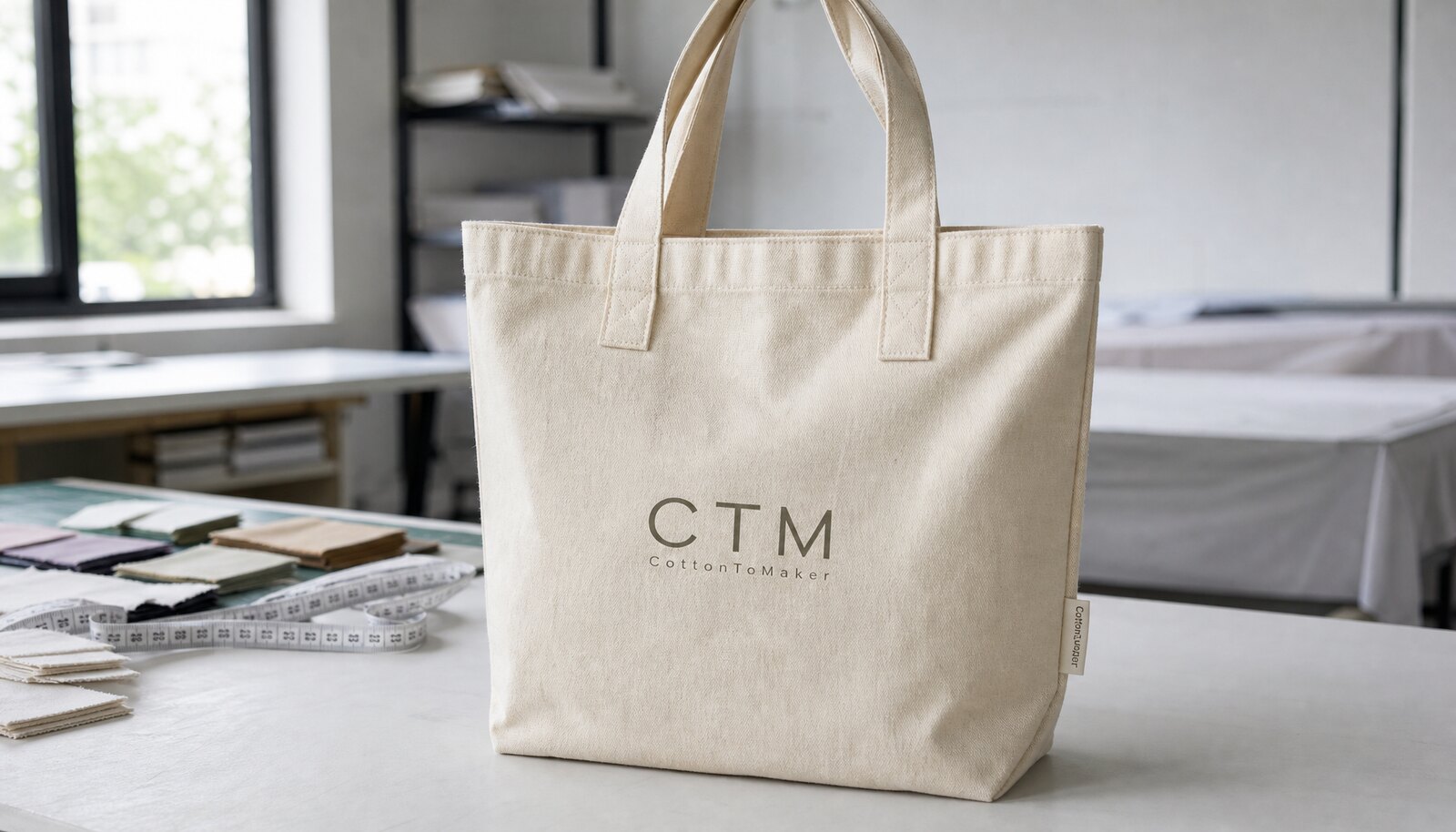
What a good event shopping bag has to solve
When buyers source custom shopping bags for events, the real job is not just handing out a logo item. The bag has to carry brochures, samples, catalogs, or retail purchases without looking cheap on the floor, in the lobby, or at the customer counter. If the bag tears or twists under light use, the event loses value after the first few minutes.
That is why the right spec starts with use case, not with artwork. A conference tote, a retail activation bag, and a sponsor giveaway all tolerate different weight, print coverage, and pack-out methods. A useful RFQ should define what the bag must hold, how often it will be reused, and whether the buyer cares more about lowest landed cost or about a stronger bag that stays in circulation after the event.
- Set the target load in practical terms, such as brochures plus one sample box, not just an abstract weight.
- Decide whether the bag is a temporary giveaway or a reusable shopping bag that should survive repeated use.
- Treat the printed logo as part of the product spec, because print area and color count change both cost and quality.
Choose the fabric before you compare prices
Fabric weight drives a large part of the quote, and it also changes how the bag feels in hand. For event shopping bags, 140 to 160 gsm cotton is a workable middle ground: light enough to fold flat, but substantial enough to look intentional. If the event is premium or the bag will be reused for shopping, 280 to 340 gsm canvas gives a stronger body and better shelf presence, but the shipping weight rises with it.
For cost-sensitive bulk events, nonwoven polypropylene in the 80 to 120 gsm range can work if the bag will not carry heavy merchandise. It prints well, packs efficiently, and keeps the unit price low, but it does not feel as durable or upscale as cotton or canvas. Jute can also fit event programs with an earthy brand position, yet it needs tighter control on weave uniformity, odor, and rough fiber shedding.
- Use 140 to 160 gsm cotton for standard trade shows, conferences, and brand activations.
- Use 280 to 340 gsm canvas when the bag should stay in use after the event and support a higher perceived value.
- Use 80 to 120 gsm nonwoven PP when the order is large, the budget is tight, and the bag is mainly for distribution.
Print method should match the artwork, not the mood board
The cheapest quote is often the one built around the easiest print method, not the best one for your art. One-color or two-color screen printing is usually the most stable option for event bags because it gives strong opacity on cotton or canvas and scales well across repeat orders. If the logo has fine gradients, multiple tones, or photo-style detail, digital transfer or heat transfer can work, but you need to accept different wear behavior and a more sensitive finish.
Placement matters as much as method. A large centered print on the front panel is easy to produce and easy to approve, while wraparound art, side-panel prints, or printing over a seam increase registration risk. For premium programs, a woven side label, woven patch, or small embroidery mark can look cleaner than a full-panel decoration, but it usually pushes up lead time and setup cost.
- Keep the number of print colors low unless the design truly requires more.
- Avoid tiny reverse text and thin lines on textured fabrics unless the factory has shown similar work.
- Approve the print position on a physical sample, not only on a flat artwork proof.
Read the quote line by line, not just the unit price
A usable quote should separate the cost of the fabric, cutting, sewing, print setup, packing, and any testing or certification work. If one supplier gives you a single number and another gives you a line-item quote, the lower number is often not directly comparable. Event bag quotes also move when the buyer changes handle length, gusset depth, color count, or pack style, so the RFQ has to lock those items before anyone starts pricing.
MOQ logic is usually tied to material and setup, not just the bag itself. A factory may be comfortable with 1,000 to 3,000 pcs per style for a standard cotton tote, but custom colors, multiple print zones, or mixed sizes can split the order into smaller production runs and raise the unit cost. If you need several event markets in one season, it is often cheaper to keep one base spec and vary only the print file or a small label insert.
- Ask whether the quote includes screen fees, plate fees, or logo setup charges.
- Confirm whether mixed colors share one MOQ or require a minimum per color.
- Request the same Incoterm from every supplier so landed cost comparisons stay clean.
Compare supplier routes before you award the order
The right supplier route depends on control, speed, and how much risk you are willing to carry. A direct factory with in-house sewing and printing is usually best for larger event programs because the factory controls the full process and can catch spec drift earlier. A trading company can still work if it gives you access to the real factory, clear responsibility for quality, and one person coordinating multiple SKUs, but you need better documentation because the seller is not the same entity that makes the bag.
Local decoration on imported blanks can be useful when time is short or the order is small, but it creates another failure point. The blank bag may look fine in a catalog and still fail when you add print, packing inserts, or stitched labels. Buyers should ask for recent factory photos, machine capability, a sample of similar construction, and evidence that the supplier has actually produced the same fabric and print method before.
- Prefer direct factory sourcing when you need repeatable spec control and export packing.
- Use a trading company only when it adds real value, such as multi-country coordination or consolidated sourcing.
- Treat blank-bag decoration as a short-term solution, not the default for a full event campaign.
Approve the sample against measurable criteria
The sample stage should protect you from avoidable production mistakes. Start with a blank or pre-production sample that confirms size, fabric weight, handle length, seam construction, and print position. A photo approval is not enough when the order matters; a bag can look correct on screen and still be off by enough to change the carry feel, the logo placement, or the way it folds in carton packing.
Set simple acceptance criteria and make them measurable. Check width, height, gusset, handle drop, stitch quality, print edge sharpness, and the way the bag sits when loaded with the intended event items. If the event bag is supposed to be reused, test the handles and seams under practical stress, because small defects in sewing often show up only after the first few carries.
- Approve one reference sample as the standard for bulk production.
- Check color against a physical Pantone reference or master swatch, not only a PDF.
- Reject samples with loose threads, crooked print, or handle reinforcement that looks uneven.
Packing decisions affect both damage and event handling
Packing is often ignored until the first shipment arrives with crushed cartons or bags that are harder to distribute than expected. For most importers and distributors, flat bulk packing in export cartons is the most efficient route. It keeps freight density high and makes warehouse handling easier, but it means the buyer must manage final distribution or retail kitting after arrival.
If the bag needs to include inserts, flyers, samples, or a folded insert card, define the kitting sequence in the RFQ. That work changes labor time and can create counting errors if the factory is not used to assembly work. Carton labeling should include style, color, quantity, gross weight, and carton number so receiving teams can reconcile the shipment without opening every box.
- Specify whether the bags should be individually polybagged or packed loose.
- State the carton count per case and whether the carton size has a freight limit.
- Use clear carton marks if the shipment will be split across multiple event sites.
Lead time risk is usually a sample problem first
A realistic schedule for custom event bags usually runs through sample approval, pre-production confirmation, bulk production, final inspection, and freight booking. For a straightforward cotton tote with simple screen print, the factory may need several days for sampling and roughly two to four weeks for production after approval, but the clock moves when artwork changes, material is sourced fresh, or the factory is busy with seasonal volume. If the order includes multiple print colors, special packing, or a premium handle finish, build more margin into the schedule.
The most common delay is not sewing; it is the approval loop. Buyers often wait until all stakeholders review the sample, then send a late change to the logo size, bag color, or carton pack. That adds days even before production starts. The practical fix is to nominate one person with final approval authority and to set a hard approval deadline so the factory can reserve line time and book freight without speculation.
- Build buffer time before the event date, especially if the bags must clear customs.
- Avoid last-minute changes to artwork or bag dimensions after the sample is approved.
- Ask whether peak season or fabric sourcing will affect the promised lead time.
Use the RFQ to force apples-to-apples quotes
A strong RFQ does not ask for a price alone. It gives the factory enough detail to quote the same product every time, which is the only way to compare suppliers honestly. Include finished size, fabric, GSM, handle type, print method, print area, quantity by color, packing format, shipping destination, and the date you need the bags on site. If the buyer has a target landed cost, state that too, because the supplier may suggest a simpler construction or a better freight plan that keeps the order inside budget.
When you review the final quotes, compare landed cost rather than ex-works cost. A lower factory price can disappear once you add packing fees, freight, duty, inspection, and the cost of missing an event window. For event shopping bags, the cheapest usable quote is usually the one with the fewest assumptions and the fewest handoffs. That is the real procurement target: stable production, predictable packing, and a bag that arrives ready for distribution.
- Require every supplier to quote the same spec sheet and artwork file.
- Separate the base bag price from decoration, packing, and freight.
- Award the order only after the sample, the quote, and the delivery plan all match.
Specification comparison for buyers
| Spec decision | Recommended option | When it fits | Buyer risk to check |
|---|---|---|---|
| Sourcing route | Direct factory with in-house sewing and printing | Best for 1 repeat program, 3,000 pcs or more, and buyers who need one party to own cutting, stitching, print, and final packing | Confirm the seller is the real producer, not a broker passing your order to another shop |
| Sourcing route | Trading company with a named factory and documented QC flow | Useful when you need multiple item types in one shipment or you are consolidating several bag programs | Ask who issues the inspection report and who is responsible if the factory changes between samples and production |
| Sourcing route | Stock bag with local decoration | Works for short deadlines, small runs, or simple one-color event giveaways | Check blank bag quality carefully because print cannot fix weak handles, poor fabric, or uneven seams |
| Fabric choice | 140 to 160 gsm cotton | Good balance for event bags that must feel reusable but still fold flat and stay price-conscious | Watch for shrinkage, uneven weave, and handle stress if the bag will carry catalogs or sample packs |
| Fabric choice | 280 to 340 gsm canvas | Better for premium brand events, retail activations, and bags that should be reused after the event | Higher fabric cost and shipping weight can push landed cost up fast if the bag is oversized |
| Print method | 1 to 2 color screen print | Best default for simple logos, strong opacity, and stable cost on medium to high volume orders | Fine lines, gradients, and small reverse text can fill in or lose edge sharpness on woven fabrics |
| MOQ strategy | Single style, one bag size, one print placement, limited color count | Helps you hit a workable MOQ and keeps unit cost and setup fees under control | Mixing too many colors or handle options often creates hidden mini-MOQs and quote gaps |
| Packing choice | Flat bulk pack in export cartons with carton marks | Best for importers, distributors, and event teams who will unpack and distribute bags later | If the bags are being kitted with inserts or packed for retail shelves, bulk pack alone is not enough |
Buyer checklist before sampling
- Lock the finished size, gusset, handle length, and target carry load before asking for quotes.
- Define the fabric type and GSM, not just 'cotton' or 'canvas'.
- State the print method, print size, number of colors, and whether both sides are printed.
- Ask for MOQ by style, color, and print variation, not one blended number.
- Approve a physical pre-production sample before bulk sewing starts.
- Confirm packing format, carton quantity, carton size, and carton mark text.
- Set the target ship date and back-calculate sample approval, production, and freight booking dates.
- Request the quote in line items so you can compare fabric, print, packing, and testing separately.
Factory quote questions to send
- What exact fabric, GSM, and finished size are included in this price?
- Is the quote for one-side print, two-side print, or a different print coverage area?
- What is the MOQ per color and per print design, and can colors be mixed in one order?
- Are screen fees, plate fees, or setup fees included, and are they reusable for repeat orders?
- What sample stage will you provide before production, and what is the approval process?
- What is the normal production lead time after sample approval, and what changes it?
- How are the bags packed, how many per carton, and what is the carton size and gross weight?
- What QC checks do you perform for size, stitch strength, print alignment, and packing count?
Quality-control points to confirm
- Finished size should stay within the agreed tolerance for width, height, and gusset depth, with no obvious panel distortion.
- Handle reinforcement should be clean and symmetrical, with no loose stitching, skipped stitches, or weak attachment points.
- Print placement should stay aligned to the approved artwork position, with no major shift, smearing, or color breakage.
- Fabric should match the approved weight and hand feel, with no thin spots, holes, oil marks, or shade mismatch across the lot.
- Seams should be straight and secure, with no open edges, broken thread ends, or weak bottom corners after a load check.
- Packing count should match the carton label and packing list, and the outer carton should survive normal export handling.
- The bag should pass a practical carry test based on the event load, not just a visual inspection.