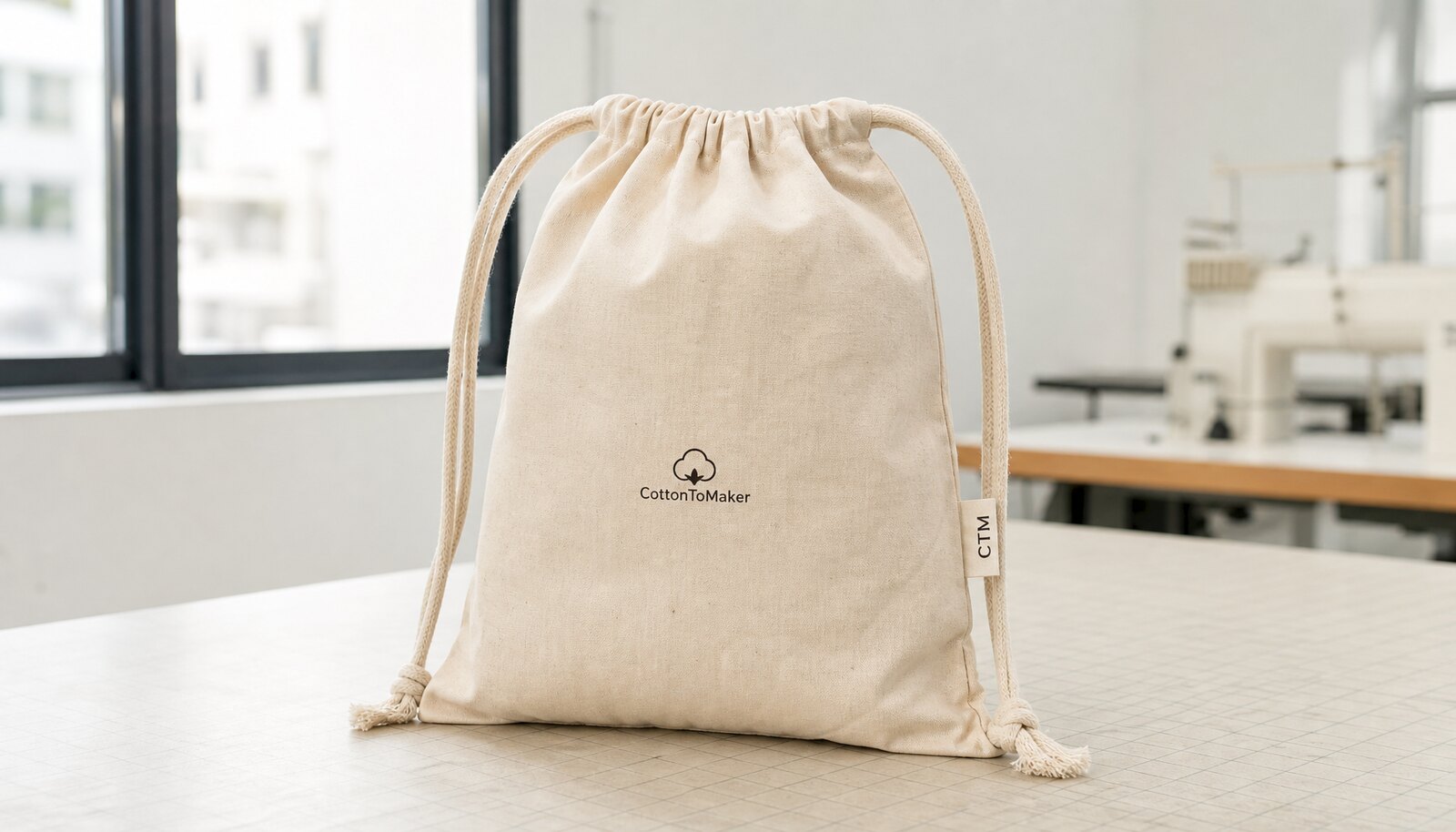
Start With the Use Case, Not the Logo
The fastest way to overpay for custom pull string bags is to start with decoration and only later decide what the bag must do. A logo does not define the build. The use case does. A bag for a trade show handout, a retail accessory, a gift pouch, or a secondary package for a product line can all look similar in photos and still require very different fabric weight, cord strength, print method, and packing. If the brief only says "custom drawstring bag," suppliers will fill the gaps with their own assumptions and you will receive quotes that cannot be compared cleanly.
Procurement teams get better results when they define the failure to avoid. If the bag must hold cosmetics, accessories, or folded apparel, thin cloth may look inexpensive but can distort, show contents, or wear out faster than expected. If the item will only carry a brochure, sample sachet, or light promo kit, heavy canvas adds cost without improving the commercial outcome. State the fill weight, whether the bag needs to close repeatedly, whether it must sit upright on shelf, and whether it will be shipped alone or inside another carton. That context lets the supplier choose the right pattern and stops the RFQ from becoming a vague design exercise.
A buyer should also separate end use from channel. A giveaway program does not need the same finish as a retail item, even if both are branded. A fulfillment pouch for e-commerce may need faster packing and easier cartonization than a boutique gift bag. If the item has to look premium at first touch, ask for a sample made to the same fold, cord length, and logo position you expect in bulk. Those details matter more than abstract brand language because they influence cost, lead time, and defect risk.
Choose the Right Fabric Weight and Build
Fabric weight is one of the main drivers of both cost and performance for custom pull string bags. Lightweight cotton around 120-150 GSM is a practical starting point for many promo and light retail programs because it keeps the bag affordable and easy to fold. When the buyer needs more structure, more opacity, or a stronger shelf impression, 8-10 oz canvas or a heavier cotton twill is a better fit. Heavier cloth improves body and can reduce the chance that contents show through, but it also raises material cost, sewing effort, and freight weight. In other words, the right choice is not the thickest cloth available; it is the cloth that matches the load and the channel.
Construction details can outweigh a small difference in GSM. A lighter bag with consistent seam allowance, a clean top channel, and smooth cord movement may outperform a heavier bag with weak stitch control. Ask how the cords are threaded, how the channel is reinforced, and whether the side and bottom seams are single-stitched or double-stitched. If the bag will carry a product with corners or rough edges, the seam construction matters more than the logo. Buyers should ask for a physical sample that shows the exact fabric, not just a print proof, because a proof cannot reveal hand feel, opacity, or the way the cloth folds.
It also helps to ask the factory to quote more than one fabric option if the project is still open. A 120-150 GSM version can serve as the cost benchmark, while a heavier twill can show the cost of a premium upgrade. That gives procurement a real tradeoff instead of a single quote that bakes in a choice the buyer has not approved. For repeat programs, request the finished weight and the expected shrinkage range after any prewash or finishing step so the re-order spec stays stable.
Decoration Choices That Hold Up in Production
Screen print is usually the most efficient decoration method for custom pull string bags when the logo is simple, the order is repeatable, and the quantity is large enough to spread setup cost. It works well for bold marks, one-color graphics, and clean brand blocks. The weak point is detail: small text, thin lines, and crowded multi-color artwork are harder to keep sharp, especially on textured cloth. If the artwork is complex, a better answer may be to simplify the logo or change the decoration method rather than forcing a print style that will look acceptable only on screen. Buyers should be cautious about approving artwork that looks fine in PDF but fails on woven or slubby fabric.
Alternative finishes are worth considering when the bag needs a more premium position. Woven labels, embroidered marks, and stitched patches can elevate the look, but they also change the way the bag folds, close, and ships. Embroidery adds thickness. A patch adds edge handling. A woven label may be durable but still needs placement control so it does not interfere with the cord channel or create an awkward feel. The buyer should ask the supplier to show examples at the same scale, on similar fabric, rather than assuming a method that works on apparel will behave the same way on a pouch.
Decoration decisions should be locked before the order is quoted, not after. The print method affects MOQ, setup fees, sample timing, and often the cutting layout. If the buyer needs a precise Pantone match, the supplier should know whether the cloth is white, natural, dyed, or washed, because the substrate changes how the ink reads. Buyers should also decide whether the artwork must sit far enough from the seam to avoid distortion. A pre-production sample made with final cloth and final decoration is the safest approval point because it shows the combined effect of material, print, and placement.
MOQ Logic and What Belongs in the Quote
MOQ for custom pull string bags is not just a supplier preference. It usually reflects how the factory buys fabric, prepares print screens, schedules sewing, and packs finished goods. A small run under 500 pieces often uses a different production logic than a 3,000-piece repeat order, even when the bag design is identical. That is why the unit price can fall quickly as volume rises: setup charges are spread across more units, cutting becomes more efficient, and the factory can sometimes use material more economically. Buyers should treat MOQ as a signal about process efficiency, not as an arbitrary line to negotiate away.
The quote itself needs to show the components that create the final cost. At minimum, procurement should ask for separate lines for sample fee, setup or tooling fee, unit price, and packing method. If labels, inserts, barcodes, or special folds are required, those should be priced separately too. A good quote also states what is included by assumption: one color only, one size only, one print area only, one carton style only. Without that clarity, two quotes can look similar while hiding very different scopes. This is especially important if the project includes multiple colorways or size options. Ask for pricing by tier rather than relying on one blended MOQ number.
If a supplier offers unusually low MOQ, the buyer should ask which part of the spec was simplified to make it possible. Sometimes the lower entry point is legitimate. Other times the supplier is compensating with a higher unit price, a narrower fabric choice, or more limited decoration. The useful question is not just "can you do it?" but "what changed in the process to make it possible at this volume?" That answer tells you whether the quote is scalable for a reorder.
How to Compare Supplier Routes Without Mixing Apples and Oranges
A direct factory is usually the strongest route when the buyer needs control over fabric selection, size tolerance, print consistency, and repeat order stability. It is the route to choose when the bag spec is fixed, the product will be reordered, or the buyer wants more direct visibility into material purchase and production control. The advantage is tighter process ownership. The downside is that direct factories can be less flexible on very small runs, and some will quote slower if the spec is still moving. For procurement-led programs, that tradeoff is often worth it because the order remains easier to audit and repeat.
A trader or sourcing company can make sense when the buyer is still comparing options, needs a fast price range across several factories, or is buying more than one item at the same time. The value is coordination and speed. The risk is transparency. If the intermediary cannot identify the actual maker, the buyer may have less visibility into line capacity, subcontracting, and defect ownership. That matters when something goes wrong after approval. A trader is not automatically the wrong answer, but the buyer should require the actual production source, the production address, and a clear statement of who handles cutting, printing, sewing, inspection, and packing.
A local decorator or small converter can be useful for very short runs or urgent replenishment, but it is rarely the cheapest long-term route for custom pull string bags if the cloth itself must be customized. Their price may look competitive when the order is tiny, yet the cost can rise quickly once the buyer adds fabric control, special packing, or more demanding quality requirements. The right comparison is therefore not only unit price. It is route control, lead time realism, and how easily the supplier can repeat the same spec next time.
Sample Approval and QC Thresholds That Prevent Rework
Sample approval is the point where the buyer should stop judging by appearance alone. A sample for custom pull string bags must confirm the fabric hand feel, the visible weight of the cloth, the cord action, the closure behavior, the logo placement, and the overall fold pattern. A nice photo is not enough. The buyer should compare the pre-production sample to the written spec and to the approved artwork, then record any deviation in plain language. Keep one sealed sample on the buyer side and one on the factory side so both teams are judging against the same reference if the bulk order later drifts.
The QC threshold should be practical enough for production, but tight enough to protect the commercial outcome. For small pouches, a tolerance around +/- 0.5 cm is often a workable starting point; larger bags can allow a little more, depending on the buyer standard and the product fit. The important part is to state whether the measurement is flat, opened, or finished after stuffing. Print placement should also have a stated tolerance, especially if the logo is centered or must sit a fixed distance from the top edge. If the mark contains fine text or thin lines, ask for a rub check and a visual check under strong light before the full run is packed.
For natural or garment-dyed cloth, shade variation deserves its own check. The same bag can look different under warehouse lighting, in daylight, or once stacked in cartons. Ask the supplier how they manage dye lot consistency and what happens if the first batch of cloth falls short. Also check the cords: diameter, smoothness, and end finishing should match the approved sample. A bag can pass size checks and still fail in use if the cords fray too quickly or the channel is too tight.
Packing, Barcode, and Retail Readiness
Packing should be part of the quotation, not a late-stage add-on. For promo programs and simple fulfillment, bulk packing into master cartons is usually the lowest-cost route. It reduces labor and keeps the order moving. For retail or e-commerce, the buyer may need individual polybags, barcode labels, inner pack counts, or hang tags. Once that is true, packing becomes a commercial spec, not a convenience item. It affects unit labor, carton size, freight planning, and sometimes even the lead time if the supplier must source packaging materials from a separate vendor.
A common procurement mistake is to add retail packing after the factory has already quoted a bulk order. That creates rework and can push the order schedule. The buyer should define the packing route at the same time as the bag spec: bulk pack, shelf-ready pack, or mixed inner packs. If barcode data is needed, provide the SKU logic early so the supplier does not create labels that need to be redone. If the bag will ship to a warehouse or marketplace fulfillment center, include carton-mark rules and any required pack-out counts in the RFQ. That gives the supplier one packing standard to quote against instead of a moving target.
Freight planning also depends on packing decisions. A bag that folds efficiently may lower the landed cost even if the unit price is slightly higher. Likewise, a retail-ready pack can save labor downstream but increase carton volume. Procurement should ask for carton dimensions and gross weight if the shipment is being booked from factory data. That lets the logistics team compare supplier quotes on the same basis and avoids surprises when the shipment is ready to move.
Lead Time and Schedule Risk
Lead time for custom pull string bags depends less on sewing alone than on the sequence of fabric booking, printing, stitching, inspection, and packing. A simple order using stock fabric and one-color print can move faster than a custom-dyed or retail-packed order, but only if the sample is approved quickly and the material is available. The buyer should ask for a dated production plan, not a single delivery promise. A useful schedule shows when the sample is signed off, when the fabric is locked, when mass cutting begins, when first-off inspection happens, and when final packing is expected.
Schedule risk increases when the order includes custom cords, special labels, metal tips, or several packaging steps. These are small line items in the quote but separate dependencies in production. If any one of them is delayed, the shipment can slip. That is why a good supplier should be able to explain what happens if fabric is short, if a print strike is rejected, or if a component arrives late. Buyers should ask whether the factory keeps any buffer material, whether it can shift production into another line, or whether the order has to wait until the exact component arrives. Those answers are more useful than a single optimistic date.
Seasonal congestion matters as well. If the launch is near a holiday, a trade show, or the end of a quarter, the first quoted lead time may not be safe. Buyers should add time for sample approval, material procurement, and freight booking, especially if the bags are part of a fixed event date. The aim is not to pad the schedule blindly. It is to avoid relying on best-case production when the launch date is fixed and the business cost of delay is high.
Landed Cost, Freight, and the Final RFQ Workflow
The cheapest factory quote is not always the cheapest landed cost. Custom pull string bags are relatively light, so freight, carton efficiency, and packing volume can change the economics more than the unit price suggests. A slightly higher-priced bag that folds flatter or packs more efficiently may reduce total cost once freight is added. The reverse is also true: a low unit quote with bulky packing or expensive retail inserts can become the more costly option after shipping and handling. Procurement should normalize every quote to the same incoterm, the same packing method, and the same quantity tier before comparing suppliers.
A strong RFQ for custom pull string bags is concise but complete. It should state the final size, fabric weight, color, logo method, artwork files, print placement, packing standard, destination, incoterm, and the quote validity period. It should also request sample timing and a simple production calendar in writing. That gives the buyer a cleaner basis for negotiation and reduces the chance that the supplier prices assumptions the buyer never approved. If two options are still under consideration, ask for both on the same brief and request a written note on the cost tradeoff. That usually reveals which spec item is actually driving price, rather than letting the conversation stay at the level of generalities.
The last step is internal comparison. Ask the team to review each quote line by line: fabric, decoration, setup, packing, sample, lead time, and freight basis. If one quote looks cheaper, check whether it excludes a fee that another supplier included. If one supplier promises a faster date, check whether that date assumes stock fabric or a simplified pack. The useful result is not the lowest number on paper. It is the quote that matches the same spec, carries the least hidden risk, and can be repeated without rework.
Specification comparison for buyers
| Decision area | What to compare line by line | Commercial tradeoff to expect | Buyer check before award |
|---|---|---|---|
| MOQ below 500 pcs | Sample fee, setup fee, unit price, pack method, and whether the quoted cloth is stock or custom | Lower volume often means higher per-unit cost, simpler decoration, or fewer fabric options | Confirm if the same fabric lot can be reserved for repeat orders and whether the quote includes one pre-production sample |
| MOQ 1,000-5,000 pcs | Price by color, by size, by print method, and by packing type | Good balance of unit cost and flexibility, but setup costs may still be visible in the quote | Check whether screen charges, art revisions, and barcode labels are extra or included |
| MOQ 5,000+ pcs | Raw material plan, lead time, production slot, carton spec, and re-order terms | Best chance to negotiate fabric control and more stable pricing, but schedule risk is higher if materials are not locked | Request written confirmation of fabric shade, cord lot, print standard, and packing count before material is cut |
| Fabric 120-150 GSM cotton | Finished size, fabric weight after finishing, hand feel, opacity, seam recovery | Lower cost and lighter freight, but thin cloth can show seam stress, shadowing, or wrinkling | Ask for a physical sample and inspect whether the cloth shows through under light |
| Fabric 8-10 oz canvas or heavy twill | Finished weight, shrinkage control, seam density, and folded thickness | More structure and better shelf presence, but higher material cost and more freight weight | Confirm the finished dimensions still meet spec after any wash or pre-shrink process |
| One-color screen print | Ink type, print area, placement tolerance, curing method, and rub resistance | Lowest setup burden for repeat orders, but fine type and multi-color art are weaker fits | Request a strike-off or pre-production sample on the final fabric, not only on paper artwork |
| Woven label, patch, or embroidery | Backing thickness, stitch density, placement, edge finish, and whether the closure still works cleanly | More premium look and better texture, but adds cost and can affect fold or closure performance | Check that the decoration does not block the cord channel or create bulky seams |
| Direct factory route | Who cuts, prints, sews, inspects, and packs the order; whether any step is subcontracted | Usually better control of spec, repeatability, and change handling; can be slower to quote on very small runs | Ask for line evidence, sample-room photos, and a named contact for production issues |
| Trader route | Whether the trader owns production or is aggregating factory capacity; what services are bundled | Can speed quoting and help with multi-item sourcing, but quote transparency may be weaker | Require the actual maker name, the factory address, and written confirmation of who owns QC |
Buyer checklist before sampling
- Final bag size with tolerance, including whether measurements are flat, open, or finished after stuffing
- Fabric type, weave, and GSM or oz weight after finishing
- Cord material, diameter, length, and whether the cord ends are knotted, heat-sealed, tipped, or left raw
- Logo file in vector format, one-color or multi-color breakdown, and approved Pantone references
- Print position, maximum print area, and whether artwork must stay clear of seams, gussets, or cord channels
- MOQ by color, by size, and by decoration method, not just one headline number
- Sample charge, sample lead time, and the control sample that will be used to judge bulk production
- Packing method, inner pack count, master carton count, and barcode or carton-mark requirements
- Testing or compliance documents needed for the destination market, if any
- Incoterm, payment terms, production lead time, and quote validity period
Factory quote questions to send
- What exact fabric weight are you quoting, and is that measured before or after finishing?
- What is the MOQ by size, color, and decoration method?
- What tooling, screen, plate, or setup fees are included in the unit price, and what is extra?
- Can you quote separate pricing for bulk pack, individual polybag, hang tag, and barcode labeling?
- What is your sample lead time, and will the pre-production sample use the same cloth lot as bulk?
- Who does the cutting, sewing, printing, inspection, and packing in your supply chain?
- What size tolerance and print-position tolerance do you work to on this bag?
- How do you handle shade variation, cord variation, and replacement material if the first lot is short?
- What carton size, carton quantity, and gross weight should we expect for freight planning?
- What documents can you provide with the shipment, such as packing list, commercial invoice, and any compliance file requested by the market?
Quality-control points to confirm
- Measure finished size against the approved spec, with a practical tolerance of about +/- 0.5 cm on small pouches and about +/- 1 cm on larger bags unless your buyer standard is tighter
- Check that fabric weight and hand feel match the approved sample and that the cloth is not visibly thinner, looser, or more transparent than expected
- Inspect seam quality for skipped stitches, broken threads, exposed raw edges, and uneven seam allowance at the side and bottom seams
- Pull the cords several times to confirm smooth movement, secure knots or tips, and no early fraying at the channel openings
- Verify print placement, centered layout, and clean registration, especially on logos with small text or fine lines
- Rub the print lightly and inspect for cracking, smearing, poor curing, or transfer onto adjacent fabric
- Check for shade variation across the batch, especially if the order uses dyed fabric, custom cords, or multiple production lots
- Inspect for stains, oil marks, odor, holes, broken yarns, and other visible defects before packing
- Confirm inner pack counts, master carton counts, and barcode labels against the purchase order and carton-mark instructions
- Keep an approved golden sample, a pre-production sample, and the first production-off sample tied back to the PO for dispute resolution