Start with the buying problem, not the tote artwork
Most quote comparisons fail because buyers ask for a “custom organic cotton tote” before they define how the bag will be used. An eco apparel brand selling at retail needs a different tote than a distributor buying for events, member gifts, or packaging inserts. The best RFQ starts with one clear use case, because use case drives fabric weight, handle build, print method, packing, and the true landed cost.
For custom organic cotton totes wholesale, the fastest way to reduce price noise is to state the end use in commercial terms. For example: retail resale at shelf, gift-with-purchase, promo giveaway, or shipping accessory. A factory will price a retail-grade tote with stronger seam reinforcement, cleaner folding, and tighter print alignment differently from a bulk event bag. If you do not specify the use case, suppliers often quote their own default, which makes comparisons misleading.
- Retail tote: stronger seams, better finishing, more careful packing
- Promo tote: lower-cost construction, simpler print, fewer secondary operations
- Packaging tote: consistent size and fold, often more important than handfeel
Choose fabric weight by shelf price and carry load
Fabric weight is the first real cost driver in organic cotton tote sourcing. The common range for buyer-ready custom organic cotton totes is about 150–180 GSM for a balanced retail bag, with lighter builds used only when price pressure is severe and the tote carries low weight. If the tote is meant to replace plastic shopping bags or serve as a visible merch item, buyers usually move up to a more substantial GSM because thin fabric can look cheap even when the print is good.
The choice is not only about strength. Heavier fabric improves perceived value, but it can increase sewing time, carton weight, and freight cost. It can also affect print result, because coarse or heavily textured canvas may show minor print distortion more easily. When comparing supplier quotes, look at the GSM plus weave and finishing together. A 160 GSM clean plain weave can outperform a rougher 180 GSM fabric if the bag needs crisp branding and consistent folding.
- 150–160 GSM: good for light retail use, events, and low-cost campaigns
- 170–180 GSM: stronger retail feel, better for daily carry and premium eco apparel programs
- Above 180 GSM: use only if the bag is part of a higher-ticket program and freight still works
Use a print method that matches order size and artwork complexity
Print method is where many tote programs become more expensive than expected. Screen print is usually the workhorse for wholesale tote bags because it handles simple logos well, keeps unit cost reasonable at scale, and gives durable results on cotton. If the artwork is one or two colors and the order is repeatable, screen print is usually the first method to price. It also makes it easier to compare suppliers because the process is familiar and output is measurable.
If your artwork includes gradients, photographic detail, or many colors, the quote may move to heat transfer or another decoration method. That can work, but it often changes MOQ logic, production speed, and wash durability expectations. Buyers should not compare a one-color screen print quote against a complex transfer quote and call them equivalent. Ask how many print screens are included, whether setup charges are separate, and whether the print size is fixed or variable by bag size.
- Screen print: best for repeat wholesale runs and simple branding
- Woven label or side label: better when the brand wants subtle premium positioning
- Embroidery: durable but slower and often pricier; useful only for small logo areas
Read MOQ logic before you compare supplier prices
MOQ on custom organic cotton totes is rarely one number. A factory may quote a minimum per color, per print design, per fabric lot, and sometimes per packing style. That is normal. The problem is that buyers compare only the headline MOQ and miss the hidden cost of splitting the order into multiple colors, multiple handle lengths, or multiple print placements. If your brand needs variety, build that into the sourcing plan from the start.
For procurement teams, the most useful question is not “What is your MOQ?” but “What is the cheapest way to structure the order without creating waste?” One shared body spec with one print method and one packing method usually gives the best economics. If you want three tote colors, two print placements, and two label versions, expect the real MOQ to rise quickly. Ask the factory to quote the base price at one version, then show the incremental cost for each variation.
- One fabric spec, one print method, and one packing standard usually produce the best unit cost
- Multiple SKUs raise waste risk at cutting, sewing, and carton allocation
- If variants are necessary, price them separately before merging them into one PO
What a usable factory quote should include
A proper quote for wholesale organic cotton totes should show more than a single ex-factory unit price. It should separate fabric, cutting, sewing, print, labels, packing, and any setup cost. If the supplier only gives a lump sum, the comparison becomes weak because you cannot see where the money is going or which part can be improved. Buyers who manage multiple suppliers usually need this line-item view to normalize quotes across factories.
A strong quote also states assumptions. That means the exact tote size, fabric GSM, print size, print colors, packing method, carton count, and sampling steps. If the supplier leaves these out, the order may still be “correct” from their point of view while being wrong for your channel. One common mistake is accepting a good unit price that assumes bulk packing, then discovering that retail folding and individual polybags add meaningful labor and carton cost later.
- Ask for line items: body fabric, handles, print, labels, packing, cartons
- Confirm whether setup costs are one-time or repeated per artwork or color
- Request the quote assumptions in writing so you can compare suppliers fairly
Use samples to test the failures that show up later
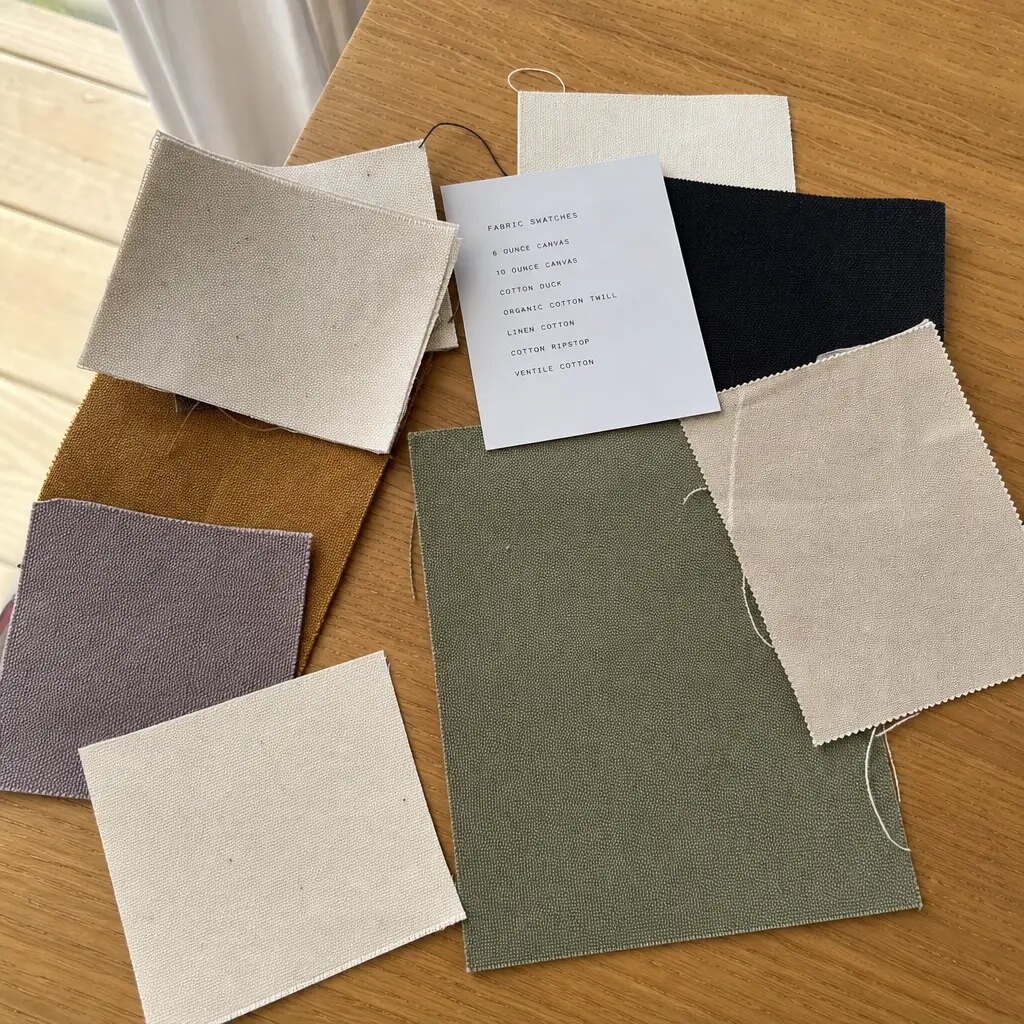
Sampling for custom organic cotton totes should not stop at a blank bag. The buyer needs to see the actual fabric, actual print method, and actual label or side tag. A fabric swatch proves the handfeel and weave. A blank sample proves dimensions and construction. A printed pre-production sample proves logo placement, color behavior, and packability. If any one of these is missing, the sample approval is incomplete.
The best acceptance criteria are simple and physical: size tolerance, handle symmetry, print position, seam quality, and fold behavior. You do not need a long scoring sheet, but you do need to define what failure looks like. For example, if the handle is twisted, if the logo sits too close to the seam, or if the bag stands awkwardly because the gusset is off, reject it before mass production. That is cheaper than sorting finished cartons.
- Review fabric swatch for weave consistency and color tone before approving bulk
- Use one pre-production sample with final artwork, not a generic blank sample
- Keep the approved sample physically labeled and matched to the PO
Packing choices affect warehouse cost and retail readiness
Packing is often treated as a minor detail, but for tote bags it changes labor, carton size, and receiving efficiency. Bulk packing in cartons is cheaper and usually best for importers and distributors. Individual polybagging is better when the tote goes directly to retail stores or requires cleaner presentation on shelf. If the bag must be folded to a specific size, state that fold standard in the RFQ and show it in the approved sample.
Carton logic matters because a tote bag is bulky relative to its unit value. A slightly larger fold or a thicker GSM can reduce the number of units per carton and lift freight cost. That means a lower factory price does not always win the landed-cost comparison. Buyers should request carton dimensions, net and gross weight, and cartons per pallet if they plan warehouse intake or distribution center handling. These details affect both freight and receiving speed.
- Bulk pack: lower cost, better for wholesale and fulfillment
- Individual polybag: cleaner presentation, more labor, higher carton volume
- Specify fold size, carton count, and outer marks before the sample is approved
Quality control should focus on the failure points that matter in use
Organic cotton tote QC should not be a generic fabric inspection only. The failures that matter are usually in the sewing and decoration stages: crooked handles, weak reinforcement, print smearing, and inconsistent bag dimensions. Buyers should define what is acceptable at the top of the run and what is not. For example, if the bag is for apparel retail, visible stitching slippage and uneven handle drop will be noticed by customers even if the logo looks fine.
A practical QC standard is to compare the shipment against the approved sample and a dimension tolerance sheet. The bag should meet the agreed GSM, fit the print placement window, and maintain enough seam strength for the intended load. If the tote is a premium retail item, add stricter tolerances on print clarity and fold consistency. If it is a campaign item, prioritize function and carton count over cosmetic perfection, but do not let basic sewing defects pass.
- Check stitch density at handle joins and side seams
- Review print for registration, edge sharpness, and curing consistency
- Verify carton labels, count, and packing arrangement against the PO
Build a landed-cost comparison, not just a unit-price comparison
Two suppliers can quote the same tote at very different ex-factory prices and still produce the same landed cost, or the reverse. For procurement teams, the right comparison includes fabric cost, print setup, packing labor, cartons, inland handling, freight, duty, and destination charges. Organic cotton totes are simple-looking products, but their bulk makes freight and packing a meaningful part of total cost. A supplier with a slightly higher unit price may still be cheaper if they pack more efficiently or quote more accurately on export handling.
When you compare offers, normalize them by the same assumptions. Use the same tote size, same GSM, same print area, same carton count, and same destination terms. If one supplier includes labels and another does not, adjust the quote. Buyers who ignore these details often choose the wrong source because the lowest unit price was built on a different packing and print assumption. The cleanest comparison is a landed-cost sheet with one line per cost element.
- Compare quotes on the same bag size, GSM, print, and pack method
- Add freight and destination charges before choosing the supplier
- Watch for hidden differences in label, carton, and sample charges
A buyer-ready sourcing workflow for eco apparel brands
A workable sourcing workflow for custom organic cotton totes wholesale starts with a short spec sheet and ends with a signed sample and a clear shipment standard. First, define the use case and target price band. Second, pick the body fabric weight and construction. Third, lock the decoration method and artwork. Fourth, request line-item quotes from two or three factories that can prove they make cotton bags regularly, not just occasionally. Fifth, approve a sample made from the final fabric and print method. Sixth, release production only after packing and carton details are confirmed.
This workflow keeps procurement, brand, and warehouse teams aligned. The brand team cares about look and feel, procurement cares about price and MOQ logic, and warehouse or distribution cares about carton count and fold consistency. If the tote is intended for eco apparel retail, the brand should also decide early whether the tote is part of the product line or a support item. That single decision changes the required finish, the acceptable defects, and the margin model.
- Step 1: define use case and target price band
- Step 2: lock fabric, size, and decoration method
- Step 3: compare line-item quotes and sample against the same acceptance standard
- Step 4: release production only after carton and packing data are fixed
Specification comparison for buyers
| Spec decision | Recommended option | When it fits | Buyer risk to check |
|---|---|---|---|
| Fabric weight | 150–180 GSM organic cotton canvas | Most retail-ready eco apparel programs that need a clean handfeel and decent carry strength | Too light will look flimsy; too heavy raises freight and may change print results |
| Weave construction | Plain weave for budget runs; canvas weave for premium handfeel | Plain weave suits promo and event channels; canvas suits higher perceived value | Loose weave can distort print edges and shrink unevenly after washing |
| Print method | 1–2 color screen print or small woven label for simple branding | Best for repeat bulk orders with consistent artwork and strong unit economics | Complex multi-color artwork may need higher MOQ, extra screens, and lower production speed |
| Handle length and reinforcement | Long shoulder handles with cross-stitch or box-X reinforcement | Retail and apparel buyers wanting everyday carry and better durability | Unreinforced handles are a common failure point on heavy fills |
| MOQ route | Factory-direct custom order with one shared fabric spec | When you want the best unit cost and can align design across colors or print variations | Too many variants across size, color, and print can push the order into uneconomic MOQs |
| Sampling path | Pre-production sample after fabric and artwork confirmation | For branded programs where print placement, color, and seam quality matter | Skipping a true pre-production sample often causes logo misplacement and pack-out surprises |
| Packing method | Bulk polybag with carton label; insert sheets only if retail requires it | Importer and distributor programs focused on carton efficiency and easier warehouse intake | Retail-ready folding standards must be agreed early or cartons will arrive inconsistently packed |
| Compliance evidence | Fiber content, origin, and test documents tied to the PO | Brands selling into markets with material disclosure or restricted-substance requirements | Claiming organic status without document traceability creates customs and retail compliance risk |
| Landed-cost model | Compare factory price plus print, carton, freight, duty, and handling | Any buyer evaluating two or more suppliers on total cost, not just ex-factory unit price | A low unit price can become the highest landed cost if cartons, labor, or freight are underquoted |
Buyer checklist before sampling
- Lock the tote dimensions, fabric GSM, handle length, and seam reinforcement before requesting pricing.
- Send one artwork file with exact print size, placement, number of colors, and Pantone targets if color matching matters.
- State whether the tote is for retail resale, event giveaway, or packaging use, because that changes print, packing, and quality thresholds.
- Request a quote that separates fabric, printing, sewing, labels, packing, and freight assumptions.
- Approve a pre-production sample with the real print method, final fabric lot, and final label/side tag.
- Confirm carton pack count, carton dimensions, gross weight, and palletization if warehouse efficiency matters.
- Tie organic claims to documentable fabric traceability and ask for the exact documents included with shipment.
- Set acceptable tolerances for bag size, print position, stitch density, and handle strength before production starts.
Factory quote questions to send
- What exact fabric weight, weave, and shrinkage allowance are you quoting for the tote body and handles?
- Is the quoted print a direct screen print, heat transfer, embroidery, woven label, or another method, and how many colors are included?
- What is the MOQ per color, per size, and per artwork version, and what happens if we combine variants in one PO?
- What samples are included in the process: fabric swatch, blank sample, printed sample, and pre-production sample?
- What packing method is included in the unit price, and can you quote bulk pack versus individual polybagged retail pack separately?
- What lead time applies after sample approval, and what parts of the schedule are most likely to move?
- Which quality checks do you do before shipment, and can you share your AQL or internal inspection standard?
- What documents will you provide for organic cotton traceability, carton labels, and export paperwork?
Quality-control points to confirm
- Fabric GSM matches the approved range, with no major lot-to-lot drift that changes drape or opacity.
- Bag dimensions stay within an agreed tolerance on body width, body height, gusset, and handle drop.
- Stitching is straight, backtacked at stress points, and reinforced at handle joins with no skipped stitches.
- Print placement is centered within the approved tolerance and free of smudging, pinholes, or color bleeding.
- Handles are even in length and attachment points are symmetrical, with no twisting after pressing.
- Organic cotton labels, side labels, or hangtags match the approved artwork and are attached in the correct position.
- Cartons are packed to the approved count, with clear outer marks and no crushed corners or loose internal packing.
- Pre-shipment sample or top-of-run reference is retained for comparison against the shipped lot.