Start with the craft fair job, not the bag name
A custom organic cotton tote can be a cheap handout, a paid merchandise item, a sponsor bag, a vendor welcome kit, or a reusable shopper for buyers moving between booths. Those uses look similar in a product photo, but they do not need the same specification. The right wholesale buying checklist for craft fairs starts with the job the bag must do, then turns that job into fabric, size, handle, print, packing, and inspection requirements.
If the RFQ says only organic cotton tote with logo, suppliers may quote their nearest promotional stock item. That might mean lighter fabric, shorter handles, minimal reinforcement, or a print area that is not suitable for your artwork. It may still look acceptable when empty. The problem appears later, when attendees load it with boxed candles, jars, prints, yarn, folded apparel, ceramics, books, or sponsor inserts.
Split the program into cost-control bags and revenue bags. A giveaway can be simpler and packed in bulk. A retail tote needs better sewing consistency, controlled print placement, cleaner folding, and a physical print approval. Sponsor totes sit in the middle: cost matters, but the event brand and sponsor marks must look intentional.
- Giveaway tote: lighter fabric may be acceptable, usually flat body, one print position, simple bulk packing, and strict unit-cost control.
- Retail merchandise tote: commonly 8 oz to 12 oz canvas, stronger perceived value, cleaner sewing, and physical print approval before bulk production.
- Vendor welcome bag: moderate fabric weight, reliable logo placement, and counted bundles that support allocation by booth, brand, or event zone.
- Reusable shopper tote: gusset, shoulder comfort, and handle reinforcement matter because attendees may carry mixed purchases for several hours.
- Sponsor tote: confirm logo hierarchy, sponsor artwork versions, print colors, and whether each sponsor mark creates extra screens or sorting work.
Turn the RFQ into measurable specifications suppliers can price
Wholesale tote quotes are only useful when suppliers are pricing the same product. Two factories can both say 100% organic cotton tote and mean very different things: a 6 oz sheeting bag, an 8 oz canvas tote, a 10 oz bottom-gusset shopper, or a heavier retail bag with labels and special folding. Before comparing unit prices, make the RFQ specific enough that differences are visible.
Use finished measurements instead of marketing descriptions. State the body width and height after sewing, the bottom gusset depth measured open, handle total length, handle drop, handle width, and print placement from clear reference points. For example, define the print location from the top edge of the bag to the top of the artwork and from the side seam to the print centerline. Cotton cutting, sewing, and pressing have normal variation, so include tolerances rather than assuming bulk pieces will match the sample exactly.
Artwork needs the same discipline. Send vector files when possible, Pantone or LAB color references, print size in centimeters, safe distance from seams and gusset folds, and a version list. If a craft fair program has different cities, years, sponsors, or vendor tiers, each version can affect screen setup, sorting, carton marks, and inspection.
- Core product data: fiber content, fabric GSM and oz, weave, finish, bag size, gusset, handle length, handle width, reinforcement, and stitching standard.
- Artwork data: file format, color references, print size, print position, number of print colors, print method, and version count.
- Tolerance data: body dimensions, gusset depth, handle drop, print placement, fabric weight, fabric shade, and print color should all have agreed inspection limits.
- Packing data: pieces per inner bundle, pieces per carton, carton dimensions, carton marks, barcode or hangtag needs, and maximum gross weight per carton.
- Approval data: swatch, blank sample, print strike-off, pre-production sample, inspection stage, and shipment release authority.
Specify organic cotton fabric by GSM, ounces, weave, finish, and tolerance
Fabric language can make or break a tote RFQ. One supplier may write 8 oz canvas, another may write 270 GSM cotton, and another may use a loose phrase such as premium heavy cotton. Ask for both oz and GSM where possible, plus weave, finish, and fabric weight tolerance. As a practical conversion range, 6 oz cotton is often around 200 GSM, 8 oz around 270 GSM, 10 oz around 340 GSM, and 12 oz around 400 GSM. Exact numbers vary by weave, yarn, finishing, and test method, so the purchase order should state the agreed tolerance, often negotiated around ±5% when the supplier can support it.
For many craft fair tote programs, 8 oz to 10 oz organic cotton canvas is the balanced choice. It feels reusable, gives the front panel enough body for a clean logo, and usually keeps carton weight and freight manageable. A 6 oz to 7 oz tote can work for light giveaways, but it may not feel strong enough for paid resale. A 12 oz canvas can be attractive for premium merchandise, yet it increases material cost, carton gross weight, storage space, and sometimes sewing difficulty.
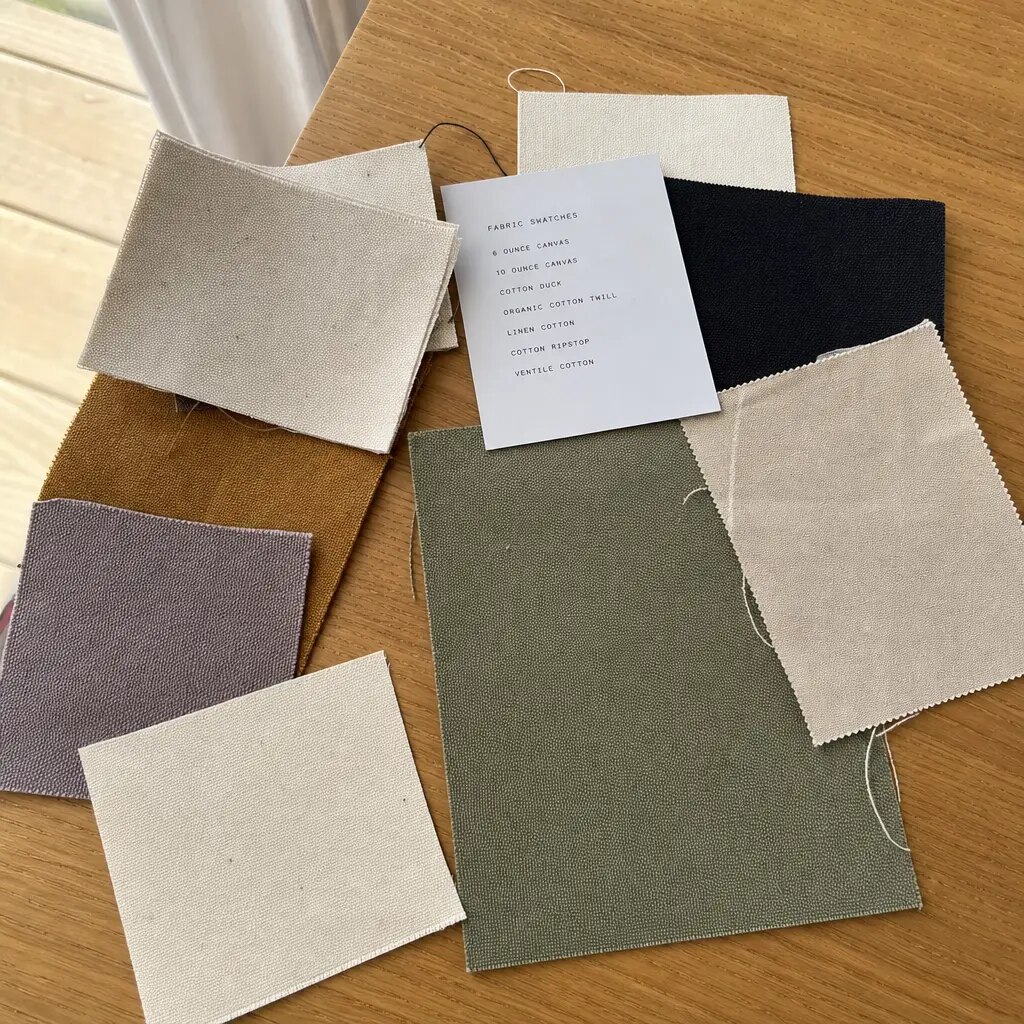
Finish changes the appearance and the production risk. Natural unbleached cotton has a warm tone and visible seed flecks. That can support the organic look, but it also affects ink brightness and makes white or pale artwork look different from a digital proof. Bleached fabric gives a brighter base. Dyed fabric adds lab dip approval, shade tolerance, dyeing MOQ, colorfastness expectations, shrinkage review, and usually more lead time.
- RFQ example: 100% organic cotton canvas, natural unbleached, plain weave, 8 oz / approximately 270 GSM, fabric weight tolerance ±5%, finished bag tolerance per signed spec.
- Natural fabric: approve the level of seed flecks and slubs; reject stains, holes, oil marks, dirty crease lines, mildew odor, and heavy slubs in the logo area.
- Dyed fabric: request lab dip, production shade tolerance, colorfastness expectation, shrinkage impact, dye MOQ, and revised lead time.
- Bleached fabric: confirm base color target and ensure sustainability or claim wording does not overstate the product.
- Avoid vague buying terms such as eco tote, thick cotton, premium canvas, market bag, or heavy duty unless they are backed by measurable specs.
Choose construction around real carrying behavior
A flat tote is the simplest choice. It is economical, prints easily, packs tightly, and works well for paper goods, stickers, maps, lightweight textiles, postcards, and sponsor inserts. Its limitation is volume. Once attendees start carrying jars, boxes, yarn skeins, folded apparel, or small ceramics, a flat tote can distort, pull at the side seams, and wrinkle the front print.
A bottom-gusset tote costs more but behaves better as a shopper. The gusset gives usable depth, helps the bag sit more naturally when filled, and improves perceived value for resale. If the tote needs a gusset, specify the finished open depth, such as 10 cm, and define the acceptable tolerance. Do not rely on a generic name such as market tote or shopper bag because usable depth after sewing and pressing can differ from pattern dimensions.
Handles deserve close attention. At craft fairs, attendees are often browsing with one hand free, holding a phone, or carrying several small purchases. Shoulder-length handles are usually more comfortable than short hand-carry handles. A common shoulder-handle range is 60 to 70 cm total handle length, often producing a drop around 25 to 30 cm depending on the bag height and attachment position. For comfort, handle width of about 2.5 to 3 cm is a practical range for cotton totes used with mixed goods.
- Flat tote starting point: about 38 x 42 cm for paper goods, low-cost handouts, and simple sponsor distribution.
- Bottom-gusset starting point: about 38 x 42 x 10 cm for retail merchandise, maker goods, and mixed craft purchases.
- Handle spec: state total handle length, drop, width, fabric type, attachment location, and whether shoulder carry over a coat is required.
- Reinforcement: request box-X stitching, bartack, or an agreed equivalent at handle joins for shopper and resale totes.
- Presentation: if bags hang on racks, check handle length and body stiffness; if bags are stacked, confirm fold line does not cut through the logo.
Match the print method to artwork, fabric texture, and reorder plans
Water-based screen printing is usually the first print method to review for custom organic cotton totes with one to three solid colors. It is efficient for repeat event logos, sponsor marks, and simple maker-brand artwork, and it can have a softer hand feel than many transfer methods. Still, cotton is not coated paper. Yarn texture, absorbency, and natural slubs can soften edges and reduce opacity, especially on natural or darker fabric.
Digital printing or transfer may be better for full-color illustrations, gradients, photographs, or many small sponsor logos. These methods can solve artwork complexity, but the surface feel, fold performance, and rubbing behavior should be checked on a physical sample. Embroidery can work for a small premium mark on heavier fabric, although it is usually not practical for large front graphics and can pucker lighter cloth if stitch density is too high.
Think about reorders before choosing a print route. If the same fair logo repeats every season, screen setup may become efficient across runs. If every event uses a different city, date, sponsor block, or artist design, digital or transfer may reduce setup complexity even when the unit cost is higher. Ask the supplier to separate screen charges, artwork separation, setup fees, retained screen policy, and strike-off timing.
- Screen print: best for solid logos, sponsor marks, simple typography, one to three spot colors, and repeat orders.
- Digital or transfer: useful for full-color art, gradients, short runs with many versions, or designs with too many colors for practical screen printing.
- Embroidery: consider only for small premium marks on suitable fabric weight after checking puckering, backside finish, and needle damage.
- Artwork risks: very fine text, thin strokes, large solid ink areas, print near seams, print over gusset folds, and low-contrast ink on natural fabric.
- Approval requirement: review a physical strike-off for color, opacity, registration, edge sharpness, hand feel, and placement before bulk production.
Clarify organic claims, labels, and compliance documents early
Organic cotton is not only a material choice. It is also a claims and documentation issue. If your website, catalog, hangtag, retailer listing, invoice, or sustainability page will say organic cotton, ask what documents can be supplied and what those documents cover. A supplier may support an organic cotton material claim without supporting a certified finished-bag claim. Those are different statements.
This distinction matters for retailer programs, museum shops, craft fair stores, subscription boxes, corporate gifting, and distributor compliance files. The wording on the tote, hangtag, carton label, product page, and invoice should match the documentation available. If your customer requires a specific certification scheme or transaction document, name it in the RFQ. Avoid broad language such as certified organic bag unless the supplier confirms the exact scope and provides supporting documents for the finished item.
Labeling can also change cost, MOQ, and schedule. A woven side label, printed care label, hangtag, barcode sticker, belly band, price tag, or retail fold may each require separate artwork approval and application labor. For a free handout, minimal labeling may be enough. For resale, barcode accuracy, material composition, country-of-origin marking, care language, and organic claim wording should be checked before bulk production.
- Ask whether documentation covers fiber, yarn, fabric, transaction, processing facility, or finished bag.
- Do not print finished-product certification language unless the supplier can support that exact claim.
- Confirm material wording, care language, country of origin, barcode data, hangtag text, and retailer-required labeling before approving the sample.
- Separate quote lines for woven label, printed label, hangtag, string, barcode sticker, belly band, and application labor.
- File documents with the purchase order so sales, compliance, receiving, and customer service teams use the same claim language.
Compare MOQ, setup charges, and landed cost rather than unit price alone
MOQ is shaped by fabric availability, cutting efficiency, sewing setup, print setup, label procurement, dyeing minimums, packing labor, and artwork version control. A stock natural organic cotton flat tote with one screen print should not be compared directly with a custom-dyed gusset tote with two print positions, woven labels, and retail packaging. The product name may be similar, but the cost drivers are not.
Ask for price breaks that match your real event plan. Useful comparison points are often 500, 1,000, 2,500, and 5,000 pieces, although the right quantities depend on the fair calendar, forecasted sales, storage space, and reorder timing. If several fair locations will use the same blank bag, ask whether producing blanks in one batch and printing by artwork version later reduces risk. If the artwork changes every season, ask how that affects setup fees and minimums.
Separate one-time and recurring charges. Screen fees, artwork separation, strike-off costs, sample charges, custom label setup, dyeing, special folding, barcode application, and carton labeling can change the real cost per usable bag. For reorders, ask whether screens are retained, how long artwork files are kept, whether the approved sample remains valid, and whether repeat MOQ differs from first-order MOQ.
- Lowest-complexity route: stock size, natural organic cotton, standard 8 oz or 10 oz fabric, one print position, one artwork, and counted bulk packing.
- MOQ triggers: custom dyed fabric, nonstandard GSM, unusual size, multiple colorways, woven labels, many artwork versions, and retail packaging.
- Cost comparison: calculate unit price plus allocated setup, sample, label, packing, inland freight, ocean or air freight, duties, and receiving labor where applicable.
- Reorder questions: retained screens, repeat setup charges, approved sample validity, artwork version control, lead time, and repeat MOQ.
- Inventory risk: a very low price at a high quantity may not be attractive if artwork changes annually or storage costs are high.
Use samples to approve production controls, not just appearance
A sample should prove the specification. It should not merely look good on a conference table. For a wholesale order, a safer approval path is fabric swatch, lab dip if the fabric is dyed, blank construction sample, print strike-off, and final pre-production sample. When the schedule is tight, some steps may be combined, but the final approval sample should use production fabric or a confirmed equivalent, final sewing method, final handle length, final print process, final labels, and the intended folding method.
Measure the sample before signing it off. Record body width, height, gusset depth, handle drop, handle width, print size, print placement, label position, and folded dimensions. Then test the sample with realistic contents. A craft fair tote may carry books, jars, boxed candles, small ceramics, folded apparel, yarn, stationery, or several small purchases at once. A practical in-house load check is not the same as laboratory testing, but it can reveal weak handle stitching, awkward handle length, or insufficient fabric body.
Create a clear sample trail. Keep one approved sample with the buyer and one with the factory. Reference the sample date, revision, artwork file, fabric spec, and tolerance sheet on the purchase order. If the logo moves, handle length changes, fabric weight is adjusted, or the fold method changes, update the written spec. Verbal revisions are a common source of bulk disputes.
- Measure before approval: width, height, gusset, handle drop, handle width, print dimensions, print placement, label position, and fold line.
- Functional check: load the tote with realistic craft fair goods and carry it by hand and shoulder to review comfort and stress points.
- Print check: rub the printed area with a dry white cloth and a slightly damp cloth to look for obvious transfer, tackiness, or weak curing.
- Folding check: pack the tote as planned and confirm creases do not damage the print or make the logo look misaligned.
- Control file: photograph the approved sample with a ruler and store it with the PO, artwork, quote, documentation, and inspection criteria.
Write QC criteria inspectors can measure
Quality language must be usable on the inspection table. Phrases such as good sewing or clean print leave too much room for interpretation. The order should define acceptable limits for finished dimensions, handle drop, print placement, fabric defects, stitching defects, loose threads, stains, label accuracy, and packing accuracy. For many cotton tote constructions, a body dimension tolerance around ±1 cm is a practical starting point, but the final tolerance should be agreed with the supplier based on fabric behavior, size, and construction.
Fabric QC should separate natural characteristics from defects. Natural unbleached cotton may show seed flecks and minor shade variation, and those can be acceptable when they match the approved sample. Rejectable issues include oil stains, dirty fold marks, weaving holes, large slubs crossing the logo area, contamination, mildew odor, and fabric shade that clearly conflicts with the approved sample. Retail resale standards should usually be stricter than standards for a free handout.
Print QC should compare bulk goods to the signed strike-off and pre-production sample. Inspect color, opacity, registration, edge sharpness, placement, smudges, pinholes, curing, and adhesion. Sewing QC should focus on open seams, skipped stitches, broken threads, needle cuts, loose threads, twisted handles, handle reinforcement, gusset corners, and seam strength. Packing QC should verify that the right artwork versions and counts are in the right cartons, especially for multi-city or multi-sponsor craft fair programs.
- Dimension checks: width, height, gusset depth, handle total length, handle drop, handle width, print placement, and label placement.
- Sewing checks: open seams, skipped stitches, broken thread, needle cuts, weak reinforcement, twisted handles, loose threads, and uneven top hems.
- Print checks: color target, opacity, registration, edge sharpness, smudges, pinholes, tackiness, ink transfer, and maximum placement deviation.
- Fabric checks: acceptable seed flecks per approved sample; reject stains, holes, oil marks, dirty crease lines, heavy logo-area slubs, and odor.
- Packing checks: carton count, bundle count, SKU or artwork version, carton marks, barcode labels, packing list totals, and gross weight.
Plan packing for receiving, event distribution, and resale
A tote order can pass product inspection and still cause trouble at receiving. Craft fair teams need to unload cartons, count units, move stock to booths, allocate bags to vendors, and set up retail tables quickly. Loose bulk packing can reduce cost, but it may slow counting and create allocation errors. Inner bundles of 25 or 50 pieces are often more practical because staff can distribute stock without recounting every bag.
Carton planning should be quoted before production starts. Ask for pieces per carton, carton dimensions, net weight, gross weight, estimated CBM, folding method, carton marks, and whether cartons include liners. Overpacked cartons can crush gussets, bend handles, crease prints, and become too heavy for manual handling. Underfilled cartons increase freight cost and storage volume. The right packing method depends on fabric weight, print area, tote shape, and how quickly the goods must be distributed after arrival.
Retail resale adds more checkpoints. If the tote will be sold in craft fair shops, museum stores, maker boutiques, or online bundles, it may need barcodes, hangtags, belly bands, price labels, or individual folding. Those details can improve presentation, but they also add labor, materials, carton volume, and inspection requirements. For pure event distribution, counted inner bundles are usually more useful than decorative packaging.
- Event distribution: request inner bundles of 25 or 50 pieces with simple bundle labels showing artwork version and quantity.
- Lowest-cost handout: bulk packing with carton liner may be acceptable if carton counts, fold consistency, and carton weight are controlled.
- Retail resale: confirm barcode accuracy, hangtag placement, belly band size, folding appearance, and the added carton cube.
- Carton marks: include PO number, item code, artwork version, fabric color, quantity, carton number, destination, and any event allocation code.
- Handling target: set a maximum gross weight per carton that your warehouse, fair team, or distributor can move safely and efficiently.
Specification comparison for buyers
| Spec decision | Recommended option | When it fits | Buyer risk to check |
|---|---|---|---|
| Fabric weight | 8 oz to 10 oz organic cotton canvas, approximately 270 to 340 GSM, for most craft fair tote programs | Paid merchandise totes, sponsor bags, reusable shopper totes, vendor welcome bags, and fair shop inventory where the bag needs a reusable feel without excessive weight | Do not compare quotes unless GSM or oz, weave, finish, and weight tolerance are stated; a 6 oz sheeting tote is not equivalent to a 10 oz canvas tote |
| Fabric construction | Plain weave canvas or firm cotton sheeting with stable finishing, controlled slub level, and consistent yarn density | Natural cotton look with a predictable print surface and enough body for event handling | Loose weave, heavy slubs, poor finishing, or excessive shrinkage can cause distorted dimensions, broken print edges, and inconsistent hand feel |
| Bag shape | Flat tote for economical handout; bottom-gusset tote for retail use and bulkier craft purchases | Flat totes pack tightly and suit paper goods; gusset totes carry boxes, jars, yarn, ceramics, apparel, and mixed purchases more naturally | Specify gusset as finished open depth; do not rely on generic terms such as market tote or shopper bag |
| Finished size | 38 x 42 cm flat tote or 38 x 42 x 10 cm bottom-gusset tote as common RFQ starting points | Useful for event programs, booth merchandise, sponsor promotions, maker retail tables, and fair shop sales | Finished dimensions should include tolerance, typically negotiated around ±1 cm for body dimensions and ±0.5 to ±1 cm for handle drop and print placement depending on construction |
| Handle specification | Self-fabric handles 2.5 to 3 cm wide, shoulder length, with box-X stitching, bartack, or equivalent reinforcement | Comfortable for attendees walking a fair while carrying multiple purchases; consistent with organic cotton positioning | Short, narrow, twisted, or weakly attached handles create complaints even when the bag body fabric is acceptable |
| Print method | Water-based screen print for one to three spot colors; digital print or transfer only when artwork complexity requires it | Screen printing is efficient for repeat event logos, sponsor marks, and simple maker-brand artwork | Natural cotton texture affects opacity, fine lines, and edge sharpness; approve a physical strike-off, not only a digital mockup |
| Certification claim | Request organic cotton documentation and define whether it supports fiber, fabric, transaction, or finished-product claims | Needed for retailer listings, hangtags, sustainability pages, catalogs, museum shops, and distributor compliance files | Organic cotton material documentation is not automatically a certified finished-bag claim; wording must match the documents supplied |
| MOQ and price breaks | Ask for 500, 1,000, 2,500, and 5,000 piece breaks with setup charges, sample fees, label costs, and packing costs separated | Helps compare a first craft fair run against seasonal or multi-location reorders | Low unit pricing can hide screen charges, dye MOQ, custom label MOQ, reprint fees, carton changes, or high freight volume |
| Packing method | Bulk cartons with inner bundles of 25 or 50 pieces for event distribution; retail folding only when resale requires it | Counted bundles help fair teams, distributors, and retail buyers receive, allocate, and set up stock quickly | Overpacked cartons can crease prints and crush gussets; under-specified cartons cause receiving errors, freight surprises, and slow booth setup |
Buyer checklist before sampling
- Define the commercial use before requesting price: free attendee giveaway, paid retail tote, vendor welcome bag, sponsor bag, staff bag, reusable shopper, subscription-box insert, or post-event merchandise item.
- Specify the fabric in measurable terms: 100% organic cotton, weave type, fabric weight in oz and GSM, finish, color, shrinkage expectation, and acceptable weight tolerance such as ±5% when agreed with the supplier.
- State finished dimensions clearly: body width, body height, bottom gusset depth, side gusset if applicable, handle total length, handle drop, handle width, and whether each measurement is taken flat or opened.
- Choose natural, bleached, dyed, or custom Pantone fabric early because fabric color affects MOQ, lead time, shade approval, ink opacity, documentation, shrinkage, and unit cost.
- Match tote construction to carrying behavior: flat tote for paper goods and low-cost distribution; bottom-gusset tote for boxed items, jars, ceramics, yarn, apparel, and retail resale.
- Confirm handle reinforcement at stress points, such as box-X stitching, bartack, or dense double stitching, and define whether the tote must pass an agreed internal load check with realistic contents.
- Match print method to artwork: water-based screen print for spot-color logos, digital or transfer for complex full-color artwork, and embroidery only for small premium marks on suitable fabric weight.
- Send production-ready artwork: vector file where possible, Pantone or LAB color references, print dimensions in centimeters, logo placement distances, safe area from seams, and artwork version list.
- Require a physical pre-production sample using production fabric, production print method, final handle construction, final labels, and intended folding method before bulk cutting or printing.
- Ask for a retained factory reference sample and ensure the purchase order references the approved sample date, revision number, artwork file name, material spec, and signed tolerance sheet.
Factory quote questions to send
- What exact organic cotton fabric will be used: fiber content, certified scope if available, weight in oz and GSM, weave type, natural or dyed finish, fabric width, finishing process, expected shrinkage, and weight tolerance?
- Is the cotton, yarn, fabric, or finished bag covered by organic documentation, and what documents can be supplied for our compliance file if our catalog, hangtag, or retailer listing uses an organic cotton claim?
- Does the quoted tote support a certified finished-product claim, or only a material-level organic cotton claim? If only material-level documentation is available, what wording do you recommend we avoid?
- What are the MOQs for the bag style, custom size, stock fabric color, custom dyed fabric, each print color, each artwork version, woven label, hangtag, barcode sticker, and retail packing method?
- Can you quote the same artwork on both a flat tote and a bottom-gusset tote so we can compare unit price, carton cube, gross weight, usable capacity, and landed cost per bag?
- Which print method do you recommend for our artwork, what are the limits for fine lines and small text, what is the maximum printable area, and how far must artwork stay from seams, handles, and gusset folds?
- What sample stages are included in the quote: fabric swatch, lab dip if dyed, blank construction sample, print strike-off, pre-production sample, packaging sample, and retained factory reference sample?
- What are your standard tolerances for finished body dimensions, gusset depth, handle drop, print placement, print color variation, fabric shade variation, and fabric weight?
- What internal load test, handle pull check, seam check, or carton drop/handling check do you recommend for this construction, and can the method be included in the order file?
- How many pieces per inner bundle and carton do you recommend, what are the carton dimensions, net weight, gross weight, carton marks, estimated CBM, and maximum carton weight for the quoted quantity?
Quality-control points to confirm
- Fabric weight should be verified from a cut swatch or GSM test and compared with the approved sample and purchase order tolerance rather than judged by hand feel alone.
- Finished dimensions should be measured using a consistent method, including width, height, bottom gusset, handle total length, handle drop, handle width, and print placement from agreed reference points.
- Fabric appearance should be checked before and after printing; acceptable natural cotton flecks must be distinguished from stains, holes, weaving defects, heavy slubs on the logo area, oil marks, mildew odor, and contamination.
- Seams must be closed and secure; side seams, bottom seams, gusset corners, and handle attachment points should have no open seams, skipped stitching runs, broken thread, needle cuts, or visible seam failure.
- Handle reinforcement should match the approved sample, with box-X stitching, bartack, or agreed equivalent positioned correctly and no loose thread that weakens the stress point.
- Print color, opacity, registration, edge sharpness, and placement should match the approved strike-off and pre-production sample within the agreed tolerance, not merely look close under uncontrolled lighting.
- Ink adhesion should be checked by an appropriate rubbing, tape pull, wash simulation, or handling test for the print method and fabric finish; obvious ink transfer, flaking, or tackiness should be rejected.
- The tote should carry the agreed test load without handle tearing, seam opening, distorted reinforcement, or visible failure beyond normal cotton stretch; the test weight and duration should be recorded in the QC file.
- Labels, hangtags, barcodes, country-of-origin wording, care language, and organic claim wording should match the purchase order and approved artwork, especially if the totes are for retail resale.
- Loose threads, oil marks, dirty fold lines, print smudges, mixed artwork versions, wrong fabric shade, incorrect logo placement, and incorrect bundle count should be sorted, reworked, or rejected according to the inspection plan.