Start With the Bakery Use Case, Not the Tote Name
For artisan bakeries, the same custom organic cotton tote can be used in very different ways: a paid retail item beside the checkout, a premium gift bag for holiday assortments, a reusable carryout bag for bread and pastries, or a distributor-branded item sold to multiple bakery accounts. These use cases do not need the same fabric weight, gusset, print coverage, packing, or inspection priority. A good RFQ starts with what the tote must carry and how it will be sold or handed over.
Procurement teams often receive confusing quotes because the request says only “organic cotton tote with logo.” One factory may quote a light flat tote for giveaway use, while another quotes a heavier gusseted tote for retail sale. Both can be technically correct, but they are not comparable. Define the commercial role first, then build the specification around load, presentation, margin, and handling.
- For bread-only carryout, a flat or shallow gusset tote can be enough if handle strength is controlled.
- For pastry boxes, jars, coffee bags, and mixed bakery gift sets, use a box gusset so the tote stands better.
- For paid retail merchandise, buyers normally need better fabric hand feel, cleaner stitching, and individual presentation.
- For distributor programs, keep the body standardized and vary print artwork to control MOQ and setup cost.
Choose Fabric Weight by Function and Feel
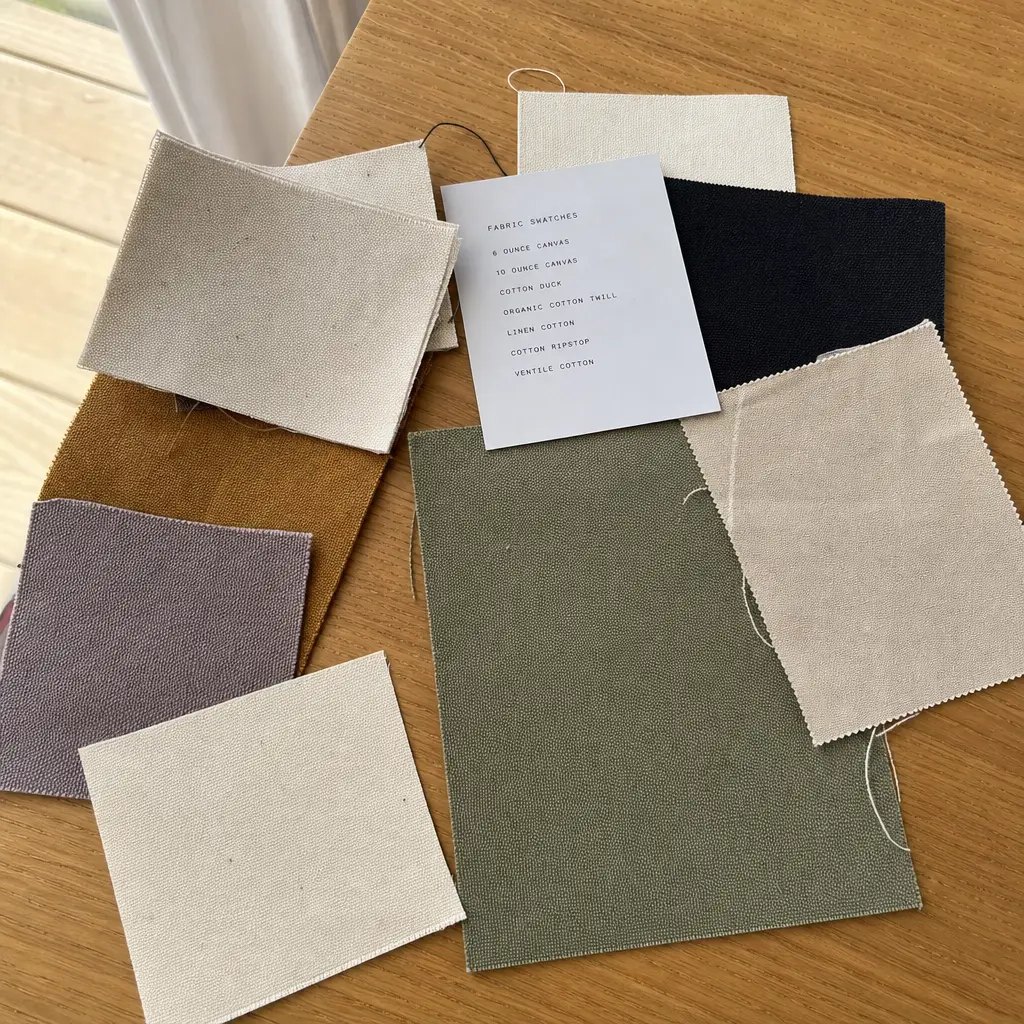
Organic cotton tote quotes should state fabric weight in GSM as well as ounce rating. Many buyers refer to 8 oz, 10 oz, or 12 oz cotton canvas, but the finished feel can vary by yarn count, weave density, washing, and finishing. For bakery totes, 10 oz or 12 oz organic cotton canvas is often the practical range when the bag is expected to be reused and still feel retail-worthy. A lighter 6 oz or 8 oz fabric may work for event giveaways, but it can look limp when carrying boxed pastries.
Do not automatically choose the heaviest fabric. Heavier cotton increases material cost, sewing difficulty, carton weight, freight cost, and sometimes print ink consumption. A 12 oz canvas can be excellent for a premium bakery gift tote, but it may be over-specified for a simple counter bag. The better buying decision is to match GSM to load, price point, and customer expectation.
- 6-8 oz cotton: lower-cost event or promotional bakery totes where long-term reuse is not the main value.
- 10 oz cotton canvas: balanced option for most bakery retail and carryout programs.
- 12 oz cotton canvas: stronger hand feel for gift sets, paid merchandise, and premium branding.
- Above 12 oz: only useful when the tote is positioned as a durable lifestyle item and freight cost is acceptable.
Specify Size, Gusset, and Handle Drop Clearly
Bakery products are awkward compared with normal retail items. Bread can be long but light; pastry boxes can be wide and crush-sensitive; coffee bags and jars add weight in one corner. A tote that looks fine on a line drawing may perform badly if the gusset is too shallow or the handles are too short. The RFQ should include finished width, height, gusset depth, handle width, and handle drop, plus whether measurements are taken flat or after expansion.
For artisan bakeries, a common mistake is ordering a standard flat tote because the unit price looks attractive, then discovering it does not hold gift boxes neatly. If the tote supports boxed goods, a bottom or side gusset is usually worth the extra sewing cost. If it supports baguettes and wrapped loaves, a taller flat body or long vertical format may be better. The factory needs the intended contents, not only the outside dimensions.
- Send product dimensions for the largest pastry box, bread sleeve, or gift bundle expected to fit.
- Define handle drop for shoulder carry or hand carry; do not leave it to factory default.
- Use reinforced stitching at handle attachment points when the load may exceed light promotional use.
- Confirm whether the tote must stand upright when filled, because this affects gusset and fabric choice.
Match Print Method to Bakery Artwork
Most bakery tote artwork is suitable for screen printing: a logo, store name, simple illustration, ingredient icon, or location list. Water-based screen print gives a softer feel on cotton and is usually preferred when the brand wants a natural, understated look. Plastisol can give stronger opacity but may feel heavier. Heat transfer can reproduce detailed artwork, but it may not match the soft craft character many bakery brands want on organic cotton.
The risk is not only print cost; it is print accuracy on textured canvas. Fine serif type, thin wheat illustrations, small QR codes, and detailed pastry drawings can fill in or break up on a rougher weave. Before bulk production, request a print strike-off on the actual fabric or closest approved fabric. Digital artwork approval is not enough because monitor color and fabric absorption do not show final results.
- Use screen print for solid logos, simple line art, and 1-3 color bakery graphics.
- Use embroidery only for small premium marks because large embroidery can pucker cotton panels.
- Avoid very small QR codes unless tested at final print size on the actual fabric.
- Include Pantone targets but approve against a physical strike-off under neutral lighting.
Understand MOQ Before Splitting Designs
MOQ is not one number. For custom organic cotton totes, MOQ can be driven by fabric purchasing, fabric dyeing, cutting efficiency, sewing line setup, print screens, artwork versions, packing style, and export carton planning. A buyer may want 3,000 pieces split across six bakery locations, but the factory may treat each location logo as a separate print setup. The total order looks large, while each version may be inefficient.
A practical approach is to standardize the bag body and fabric, then split the artwork only where commercial value justifies it. For example, one natural organic cotton body can support several one-color prints. This keeps cutting and sewing efficient while allowing bakery locations or seasonal programs to have separate branding. The quote should show whether the MOQ applies to the total order, each artwork, each fabric color, or each packing method.
- Ask for pricing at realistic breaks such as 500, 1,000, 3,000, and 5,000 pieces when the program may scale.
- Separate screen or setup charges from unit price so repeat orders are easier to calculate.
- Group low-volume artwork versions into one production batch when fabric and bag body are the same.
- Avoid changing bag dimensions between designs unless the volume supports separate cutting and sewing setup.
Use Sample Stages to Prevent Bulk Mistakes
A single sample is rarely enough for an organic cotton tote program. The buyer should separate fabric approval, print approval, construction approval, and packing approval. This is especially important for bakery buyers because the tote must support both brand presentation and practical carrying. If the first time the buyer sees final folding, carton marks, and print placement is after bulk completion, corrections become expensive.
The pre-production sample should be made in the confirmed fabric weight, final dimensions, final print method, and intended packing style. If the factory cannot use bulk fabric yet, the sample report should clearly state what differs. The sealed sample should become the reference for inspection. Procurement teams should keep one approved sample internally and ensure the factory keeps one matching sample on the production floor.
- Fabric swatch: approve color, weight, weave, hand feel, and any visible natural cotton flecks.
- Print strike-off: approve color, opacity, line clarity, edge sharpness, and print hand feel.
- Pre-production sample: approve size, gusset, handle drop, stitching, label, and finished appearance.
- Packing sample: approve folding, individual bag if used, hangtag, barcode, carton marks, and carton quantity.
Compare Quotes With the Same Cost Inputs
The cheapest quote is often the quote with the most missing data. For wholesale bakery totes, a proper comparison includes unit price, fabric weight, organic documentation, print method, print colors, setup charges, sample fees, packing type, carton quantity, carton dimensions, gross weight, lead time, payment terms, and Incoterm. Without these fields, two quotes cannot be compared fairly.
Freight can also change the real cost ranking. A heavier 12 oz gusseted tote packed individually may have a stronger retail feel but also higher carton volume and weight. A flat 10 oz tote bulk packed by 50 pieces may reduce landed cost. Buyers should calculate cost per usable tote at destination, not only ex-factory unit price. For distributors, carton quantity and warehouse handling can matter as much as a few cents in unit price.
- Request carton dimensions and gross weight before approving the quote, not after production.
- Ask whether screen charges, label charges, hangtag costs, and barcode application are included.
- Compare the same Incoterm across suppliers, such as FOB port or EXW factory, before ranking price.
- Calculate landed cost impact when moving from flat tote to gusseted tote or from bulk to individual packing.
Set QC Thresholds Before Production Starts
Organic cotton canvas has natural texture, but natural does not mean uncontrolled. Buyers should define what is acceptable for slubs, cotton seed specks, shade variation, stains, and print irregularity. A light natural fabric can show oil marks, dust, and handling stains more clearly than dyed fabric. Bakery brands also need clean presentation because the tote may sit beside food packaging, even if it does not directly contact food.
Quality control should combine measurement checks, workmanship checks, and print checks. Measurement tolerance might be plus or minus 0.5-1 cm for typical totes, depending on construction. Print placement tolerance should be defined in centimeters from top edge and side seam or from the center line. Handle strength should be reviewed by stitch quality and practical load test, not only by visual inspection.
- Reject obvious front-panel stains, mildew smell, oil marks, and dirty fold lines.
- Control print defects such as pinholes, heavy ink buildup, off-register colors, and tilted placement.
- Inspect handle reinforcement for skipped stitches, loose threads, weak corners, and uneven attachment.
- Use the approved sample as the visual standard for fabric hand feel, print color, and workmanship.
Plan Packing for Bakery Operations and Import Handling
Packing decisions affect cost, waste, carton volume, and store handling. Bulk packing by 25 or 50 pieces per inner polybag is usually efficient for bakery backroom use, distributor stock, or wholesale replenishment. Individual recycled polybags, belly bands, hangtags, or barcode labels may be necessary for retail sale, but they add labor, material cost, and packing time.
Carton planning should be included in the RFQ because organic cotton totes can absorb moisture and show dirt if packed poorly. Export cartons should be strong enough for sea freight stacking, with inner protection when needed. If the destination warehouse has carton weight limits, state them early. A carton that is cheap for the factory may be difficult for warehouse staff or may exceed parcel handling limits.
- Define folded size if totes must fit bakery shelves, retail bins, or ecommerce mailer preparation.
- Use carton marks that identify PO number, SKU, artwork version, quantity, and destination.
- Avoid overpacking heavy totes into cartons that exceed practical manual handling weight.
- Consider desiccant or inner liner when shipping through humid routes or long sea freight schedules.
Protect the Schedule From Approval Delays
Lead time should not be quoted as one vague number. For custom organic cotton totes, the schedule includes artwork preparation, fabric sourcing or booking, sample making, print strike-off approval, pre-production sample approval, bulk cutting, sewing, printing, inspection, packing, and export handling. If the buyer approves artwork late or changes bag size after sampling, the production clock resets in practice even if the purchase order was issued earlier.
Bakery programs often connect to seasonal gifting, store openings, market launches, or holiday promotions. Missing the delivery window can turn a good tote into dead inventory. Procurement teams should build a calendar that shows buyer approval dates as well as factory production dates. The supplier should identify which steps are on the critical path, especially organic fabric availability and print approval.
- Treat lead time as starting after deposit, artwork approval, material confirmation, and PPS approval.
- Lock artwork size before screens are made to avoid extra setup cost and schedule loss.
- Add buffer for holiday production peaks, port congestion, and customs documentation review.
- Keep repeat-order artwork and approved sample records so replenishment can move faster.
Specification comparison for buyers
| Spec decision | Recommended option | When it fits | Buyer risk to check |
|---|---|---|---|
| Fabric weight for bakery retail totes | 10 oz or 12 oz organic cotton canvas, roughly 280-340 GSM depending on mill construction | Good for bread, pastry boxes, coffee packs, and reusable customer purchases without feeling too heavy at checkout | Do not compare only by ounce rating; request GSM, weave, finished hand feel, and pre-production fabric swatch because mills can vary |
| Bag construction | Flat tote for low-cost retail giveaway, boxed bottom gusset for paid merchandise or bakery gift sets | Flat totes suit baguettes and light counter sales; gusseted totes stand better for pastry boxes and mixed bakery items | Unclear gusset drawings cause carton surprises and poor shelf presentation; specify finished width, height, depth, and tolerance |
| Handle specification | Self-fabric handles 2.5-3 cm wide with reinforced cross-stitch or box-stitch | Works for customer reuse and premium bakery branding without adding separate webbing inventory | Thin handles reduce cost but cut into the hand when carrying dense bread or jars; define handle drop and load expectation |
| Print method | Water-based screen print for 1-3 solid colors; heat transfer only for detailed artwork with controlled wash expectations | Screen print is usually best for bakery logos, ingredient icons, store locations, and simple seasonal graphics | Fine lines can fill on textured organic canvas; require artwork size, Pantone target, and test print before bulk |
| Organic claim handling | Use transaction certificate or material declaration according to buyer market requirement | Relevant for retail buyers, distributor tenders, and brands using organic messaging on hangtags or ecommerce pages | Do not print organic claims until documentation scope is clear; certification can apply to fiber, fabric, factory process, or final product differently |
| MOQ logic | One shared bag body with artwork split by colorway or store version when possible | Useful for bakery chains, distributor assortments, or seasonal programs needing multiple designs | Splitting too many small designs raises screen, setup, packing, and inspection cost; ask for MOQ by body, fabric dye lot, and print version |
| Packing method | Bulk polybag by 25-50 pcs with export carton, or individual recycled polybag only for retail barcode handling | Bulk packing reduces waste and cost for bakery backroom use; individual packing supports retail shelves and marketplace fulfillment | Individual packing adds labor and carton volume; define barcode, hangtag, folded size, carton marks, and moisture control |
| Lead time planning | Approve fabric, print strike-off, and PPS before counting bulk production lead time | Best for importers coordinating bakery launch dates, store openings, or holiday gift programs | Holiday congestion and organic fabric availability affect schedule; quote should separate sampling time, fabric booking, production, and shipping window |
Buyer checklist before sampling
- Define the tote use case: paid retail merchandise, bakery gift program, customer carryout bag, wholesale distributor item, or event giveaway.
- Specify finished bag size in centimeters or inches, including gusset depth, handle drop, seam allowance expectation, and measurement tolerance.
- Choose fabric by GSM, weave, color, shrinkage expectation, and organic documentation requirement instead of accepting a vague cotton description.
- State the exact artwork size, print position, Pantone references, print method preference, and whether print feel must remain soft.
- Set MOQ expectations by total quantity, design split, color split, and delivery destination so suppliers can quote realistic setup costs.
- Request sample stages separately: fabric swatch, print strike-off, pre-production sample, and sealed approval sample for inspection reference.
- Define packing before quote comparison, including folding method, inner polybag quantity, retail barcode, carton size limit, and pallet requirement.
- Require quote data for unit price, mold or screen cost, sample charge, carton quantity, carton dimensions, gross weight, lead time, payment terms, and Incoterm.
- Confirm acceptable defect thresholds for print registration, stains, loose threads, seam strength, measurement variation, and color difference.
- Keep one approved sample and one approved packing photo on file before releasing deposit or production balance.
Factory quote questions to send
- What is the exact organic cotton fabric construction, GSM, weave, color, and available certification or material documentation scope?
- Is the quoted price based on greige fabric, natural unbleached fabric, dyed fabric, or washed fabric, and what shrinkage should be expected?
- What MOQ applies to the bag body, fabric color, print color, artwork version, and retail packing style?
- Which print method is quoted, how many screens or setup charges are included, and what is the maximum printable area on this bag size?
- Can you provide a fabric swatch and print strike-off before making the pre-production sample, and what is the timing for each stage?
- What are the finished bag tolerances for width, height, gusset, handle drop, and print placement?
- How many pieces fit per export carton, what are the carton dimensions and gross weight, and can carton weight stay under our warehouse limit?
- Are hangtags, barcode stickers, individual bags, or master carton labels included in the quoted price or charged separately?
- What quality control standard do you use for stains, broken stitches, print defects, and measurement variance before shipment?
- What production lead time is valid after artwork approval, deposit, material booking, and PPS approval, not only after purchase order date?
Quality-control points to confirm
- Finished dimensions should match approved sample within agreed tolerance, commonly plus or minus 0.5-1 cm depending on bag size and construction.
- Fabric GSM should be verified against the approved swatch, with no unexpected thin panels, mixed fabric lots, or excessive slub concentration on the front print area.
- Print color should be compared against the approved strike-off under neutral light, not only against a digital artwork file.
- Print placement should be centered and level within the agreed tolerance, especially on gusseted totes where panel distortion can shift artwork.
- Handle attachment should show consistent reinforcement stitches with no skipped stitches, loose thread nests, or weak corner tension.
- Seams should be clean, backstitched where needed, and free from open seams, puckering, or raw edges visible from normal customer use.
- Bags should be free from oil marks, mildew smell, dust, dye stains, needle holes outside seam lines, and dirty fold marks.
- Cartons should match the approved packing plan, with correct quantity, dry liner or polybag protection if needed, legible carton marks, and acceptable gross weight.