Start With the Claim
For university bookstore buyers, the first sourcing decision is not the logo or tote size. It is what the word organic is allowed to mean for this order. A supplier may offer fabric made with organic cotton, material purchased from a certified supplier, or a finished product supported by stronger chain-of-custody evidence. Those are different commercial offers, even when the mockup looks identical.
Put the approved claim in writing before requesting final prices. If the bookstore only needs fabric-level wording, the documents and cost may be simpler. If the tote will be sold as certified merchandise, ask whether the supplier can provide current scope certificates plus order-specific evidence, such as a transaction certificate or equivalent lot, booking, invoice, or chain-of-custody reference where applicable. The exact document depends on the certification program and which entity is certified.
Keep the wording consistent across the PO, quote, invoice, packing list, care label, hangtag, product page, and any campus sustainability copy. Do not let a hangtag say more than the documents can support. If the evidence covers organic cotton fabric, use fabric-level language. If the claim covers the finished tote and shipped lot, require the supplier to show how that claim is documented.
- Define the requirement as fiber, fabric, certified material, or finished-product claim.
- Identify the documented stage: yarn, greige fabric, dyed fabric, finished fabric, sewn tote, or shipped lot.
- Request current scope certificates from the certified entity before order placement.
- Request order-specific evidence after material booking when the claim requires it.
- Approve exact claim wording before artwork, labels, invoices, and product copy are released.
Map Campus Stakeholders
University bookstore tote programs often involve more decision makers than a normal promotional order. Procurement may manage vendor onboarding, payment terms, insurance, and import terms. The bookstore team cares about SKU setup, margin, shelf presentation, barcode accuracy, and receiving effort. Licensing may control the school name, seal, mascot, athletic marks, department logos, sponsor marks, and official colors. Sustainability staff may review organic cotton wording, packaging reduction, and supporting documents.
The practical risk is timing. If licensing rejects artwork after screens are made, the order may need new screens and another printed sample. If sustainability rejects claim wording after hangtags are printed, the supplier may need relabeling. If receiving discovers barcode or carton-label problems during a busy semester window, the bookstore absorbs the labor.
Tell the supplier how the tote will be used. A paid retail item needs clean folding, barcode scanning, stronger logo control, and reliable carton separation. An orientation tote may prioritize event-count packing and delivery date. A department giveaway may be simpler, but still needs correct logo approval and claim wording.
- Name the approver for university marks, sponsor logos, slogans, and official colors.
- Name the approver for organic cotton language, certificate review, and packaging choices.
- Confirm SKU, barcode, hangtag, carton label, and receiving requirements with the bookstore team.
- State whether the tote is retail merchandise, orientation giveaway, alumni gift, event kit, or textbook bundle packaging.
- Set internal approval dates before fabric cutting, printing, labeling, and final packing.
Specify Fabric by Use
Fabric weight affects feel, durability, cost, sewing speed, carton volume, and retail value. Bookstore totes may carry textbooks, apparel, notebooks, bottles, laptops, and checkout purchases. A bag that looks fine in a digital mockup can feel too light when loaded.
Use GSM as a starting point, then confirm weave, finish, and supplier tolerance. As examples to discuss with the factory, 140 to 180 GSM cotton may suit orientation packets and light event use. Around 200 to 220 GSM can work for everyday campus totes. Around 260 to 280 GSM often feels more appropriate for paid bookstore merchandise. Heavier 320 to 340 GSM canvas can feel premium, but increases material cost, carton volume, and sewing demands.
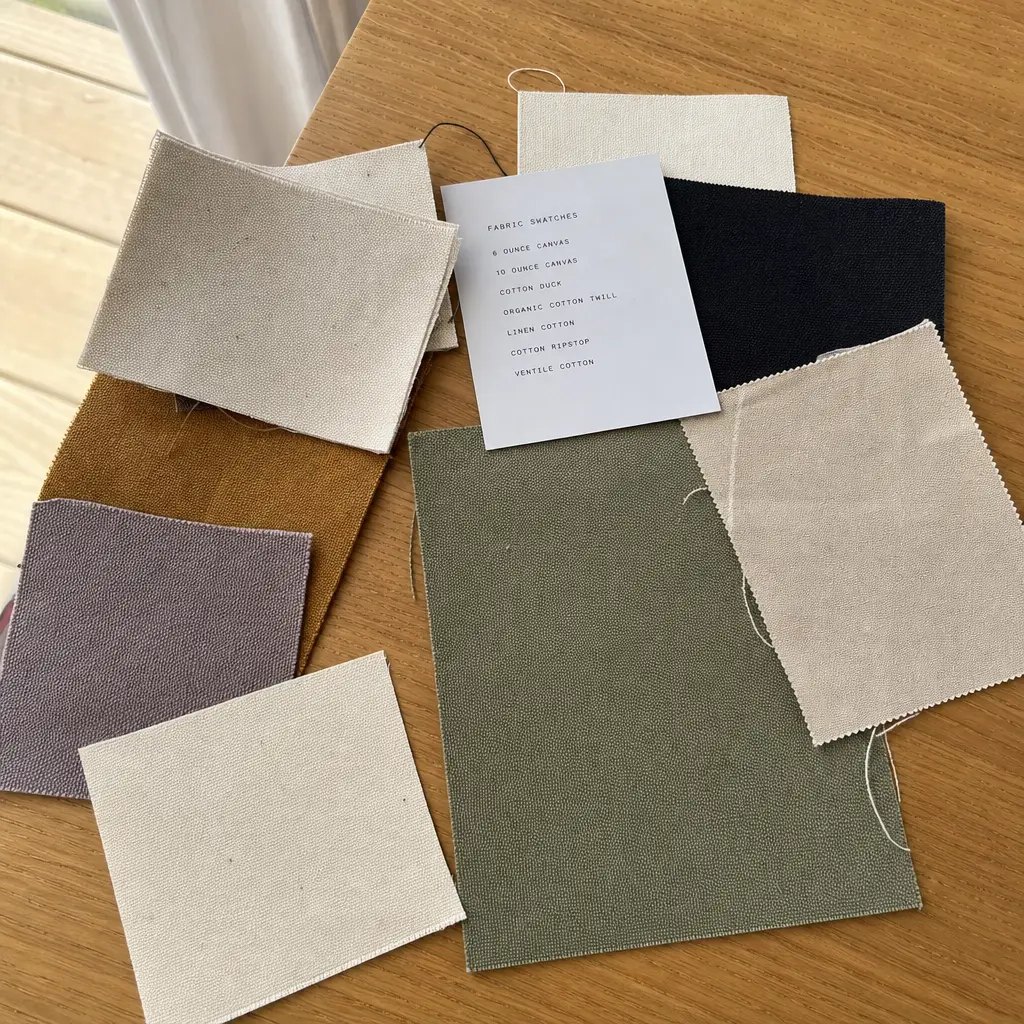
Do not buy by GSM alone. Canvas, twill, duck, plain weave, and sheeting behave differently under load, print, folding, and washing. Natural undyed organic cotton may show flecks, seed specks, slubs, and lot-to-lot shade movement. That character can be acceptable, but the buyer should approve it with a physical swatch rather than debating it during final inspection.
- Light event use: confirm whether a lower GSM is acceptable for the expected load and giveaway positioning.
- Everyday bookstore use: balance structure, print surface, carton efficiency, and target retail price.
- Premium retail use: confirm whether heavier canvas justifies higher cost, bulkier cartons, and slower production.
- Ask for weave, finish, shrinkage expectation, color standard, and GSM tolerance in the quote.
- Approve natural, bleached, dyed, washed, or pre-shrunk fabric before bulk cutting.
Choose the Supplier Route
A custom organic cotton totes supplier may be a sewing factory, trading company, sourcing agent, domestic decorator, promotional distributor, or retail-ready bag specialist. Each route can be valid. The buyer’s job is to understand what each party controls and what is subcontracted.
A domestic decorator using stock organic cotton blanks can be efficient for rush orders, small quantities, and many artwork versions. The tradeoff is limited control over body size, handle length, labels, fabric lot, and future replenishment. A direct or factory-backed route is usually stronger for annual bookstore programs with custom dimensions, reinforced handles, private labels, hangtags, barcodes, and repeated ordering.
Ask who purchases fabric, who owns the certificate relationship, who cuts and sews, who prints, who attaches labels, who performs inspection, and who packs by SKU. Subcontracting is common in textile production, but it should be visible. Hidden handoffs create delays when defects, documents, or claim language need correction.
- Use stock blanks when speed, low quantity, and simple decoration matter more than custom construction.
- Use direct factory sourcing when size, reinforcement, labels, and repeatability matter most.
- Use a sourcing agent only when factory identity, document flow, and defect responsibility are clear.
- Require a printed pre-production sample when mascot detail, official color, or shelf appearance matters.
- Ask for order-specific evidence instead of relying on old certificates or broad sales claims.
Build a Comparable RFQ
Many tote quotes are not comparable because the RFQ says only organic cotton tote, quantity, logo, and delivery date. One supplier may quote a light plain-weave bag in bulk cartons. Another may quote heavier canvas, reinforced handles, hangtags, barcode stickers, SKU-separated cartons, and documentation support. The lower unit price may simply be a different product.
A useful RFQ turns the tote into a measurable item. Define the bag body, handle construction, fabric, decoration, certification scope, sample path, packing, inspection, lead time, and Incoterm. Then supplier differences become visible: material access, documentation strength, print capability, lead time realism, and total landed cost.
Ask for a line-by-line quote. Setup charges, sample fees, screen costs, label costs, barcode labor, packaging, inspection, documentation review, carton volume, and freight assumptions all affect the real price. EXW, FOB, DDP, and delivered warehouse terms also shift cost and responsibility between buyer and supplier.
- Body: finished width, height, gusset, panel shape, bottom construction, and measurement method.
- Handles: material, width, total length, drop, reinforcement, stitch pattern, and thread color.
- Fabric: organic cotton weave, GSM, finish, color, shrinkage expectation, and approved swatch standard.
- Logo: vector artwork, print method, color count, Pantone target, print size, placement, and tolerance.
- Labels: care label, origin label, brand label, barcode, hangtag, and approved organic claim wording.
- Packing: fold method, paper band or bag, carton quantity, carton marks, SKU separation, and moisture protection.
- Commercials: quantity breaks, fees, lead time, carton CBM, Incoterm, payment terms, and inspection responsibility.
Control Printing and Color
The most visible failures usually appear on the logo: the school color is off, the edge is soft, the print is crooked, the ink feels heavy, or a large solid area cracks after folding. For licensed bookstore merchandise, these details affect whether the tote looks official enough to sell.
For one to four spot colors on cotton canvas, screen printing is often practical because it can deliver strong coverage and repeatable placement when artwork is vector and curing is controlled. Digital printing or heat transfer may suit gradients, detailed mascot art, small runs, or many department versions. A digital proof is still not a production approval because it cannot show fabric absorption, ink hand feel, odor, color shift, rub resistance, or cracking risk.
Approve the print on the actual fabric whenever possible. Natural cotton can warm or dull colors compared with paper or a white digital screen. Large ink areas need special review because heavy deposits can stiffen the panel, block when stacked, or crack on fold lines. The printed pre-production sample should become the physical standard for color, placement, label position, and fold method.
- Define print placement from fixed points, such as top seam to logo top and side seam to logo center.
- Use Pantone targets plus a physical approved sample because fabric shade changes the result.
- Confirm whether the supplier can hold the requested print-position tolerance before writing it into the PO.
- Check large solid prints for stiffness, fold cracking, blocking, transfer, and odor.
- Ask for curing confirmation and dry rub, wet rub, or damp-cloth checks for retail merchandise.
Separate MOQ and Cost Drivers
MOQ for custom organic cotton totes is rarely one number. Fabric purchase, dyeing, cutting efficiency, sewing setup, print screens, label production, hangtags, barcode stickers, packing method, and shipment split can each create a minimum. A supplier may accept 500 pieces using stock fabric but require more for custom dyeing, unusual GSM, private woven labels, or multiple artwork versions.
Bookstore programs get complicated when several departments want the same tote body with different logos. A total order of 2,500 pieces may look efficient, but five 500-piece versions create separate screens, approvals, carton labels, barcode checks, and packing risk. Ask MOQ and price by artwork version, fabric color, handle style, label, hangtag, barcode SKU, and packing format.
Compare landed cost, not only FOB unit price. Higher GSM, larger gussets, shoulder handles, individual packing, extra labels, and low carton density all affect freight and receiving labor. A cheap tote becomes expensive if cartons are oversized, barcodes fail, or bookstore staff must relabel product in the back room.
- Fabric: special GSM, custom dyeing, or non-stock color can create higher minimums.
- Construction: gussets, shoulder handles, and reinforcement add material, labor, and inspection points.
- Print: more colors, two-sided artwork, large coverage, and multiple versions increase setup time.
- Labels: woven labels, hangtags, care labels, and barcode stickers may each have their own MOQ.
- Packing: retail folds and SKU separation add labor but may reduce bookstore receiving work.
- Documentation: stronger claim support may require controlled material booking and administrative review.
Approve Samples in Sequence
Sample approval should move from material to construction to decoration to packing. One digital proof or one rushed finished sample can hide bulk risk. A better sequence is fabric swatch, blank construction sample, printed pre-production sample, label and packing sample for retail orders, then a sealed master sample.
The fabric swatch confirms weave, GSM, shade, finish, hand feel, and the documentation scope tied to that material. If the tote is dyed, approve a lab dip or dyed swatch before bulk dyeing. If the fabric is washed, enzyme-washed, or pre-shrunk, the sample record should say so.
The pre-production sample should use intended bulk fabric, final handle construction, approved logo method, correct label wording, and proposed packing whenever possible. If any material is substituted for speed, mark the limitation clearly. A size sample made from substitute fabric can help confirm shape, but it should not become the final production standard unless procurement accepts that in writing.
- Fabric swatch: GSM, weave, shade, finish, hand feel, shrinkage expectation, and document scope.
- Blank sample: finished size, gusset, handle drop, stitch pattern, seam allowance, and inside finishing.
- Print sample: color, placement, ink coverage, registration, curing, sharpness, odor, and hand feel.
- Label sample: fiber content, country of origin, care wording, brand label, claim wording, and placement.
- Packing sample: fold, barcode location, hangtag, paper band or bag, carton quantity, and scan test.
- Master sample: signed, dated, photographed, referenced on the PO, and retained for final inspection.
Set Inspection Rules
Quality control is easier when defect categories are defined before production. Critical defects may include wrong university logo, wrong artwork version, unsupported organic claim, missing required origin label, severe contamination, mixed designs, or incorrect carton marks. Major defects may include broken seams, weak handle stitching, print cracking, obvious print misplacement, out-of-tolerance dimensions, missing retail labels, or barcode failure. Minor defects may include small thread ends, limited natural cotton flecks, or slight shade variation within the approved swatch boundary.
Tolerances should be written as buyer requirements and confirmed by the supplier. As practical examples, some buyers start with plus or minus 10 mm for finished body dimensions, plus or minus 5 mm for ordinary print placement, and plus or minus 5 percent for GSM. The right limit depends on construction, artwork, fabric source, and factory capability. Tighter limits may raise sorting time, waste, and price.
AQL inspection is useful, but the checklist should reflect bookstore use. Retail totes need strict front-logo appearance, barcode accuracy, and clean folding. Orientation totes may need especially reliable carton counts and handle-load consistency. The final report should include measurement data, defect photos, carton photos, sample size, inspection date, reference sample, and pass or fail recommendation before shipment release.
- Measure bags flat after sewing: width, height, gusset, handle drop, handle width, and logo placement.
- Use a practical load check based on expected bookstore contents, then inspect handle stitches afterward.
- Inspect print after curing and cooling for cracking, rub resistance, odor, blocking, and alignment.
- Separate natural cotton character from defects by approving a swatch and shade boundary first.
- Check barcode scans, SKU separation, artwork versions, carton quantities, and carton sequence.
- Hold shipment release until inspection results, document checks, and carton photos are complete.
Plan Bookstore Packing
Packing is not a final afterthought for university bookstore orders. It determines whether receiving is smooth or painful. A tote sold at checkout may need a clean fold, barcode sticker, hangtag, and cartons separated by SKU. A tote for orientation may need bulk packing by fixed event quantity so staff can count quickly. A plastic-reduction program may prefer paper bands or no individual bags, but the fabric still needs protection from moisture, dust, abrasion, and carton damage.
Think through the movement from factory carton to receiving dock, storage shelf, sales floor, or event table. If the bookstore scans barcodes, approve sticker size and placement before bulk packing so it does not cover the logo, care label, or organic claim. If totes are sold folded, check that the fold does not damage a heavy printed area. If cartons contain mixed artwork versions, the carton mark must make the mix obvious.
Carton data affects landed cost. Heavy canvas, large gussets, and individual packing reduce carton density. Ask for carton dimensions, gross weight, net weight, pieces per carton, estimated CBM, pallet notes where needed, and carton-mark examples before final approval. Freight, warehouse, and bookstore teams can then plan with real numbers.
- Retail sale: folded tote, barcode, hangtag if needed, clean presentation, and SKU-separated cartons.
- Event distribution: bulk pack by fixed count with carton marks by department, date, or location.
- Plastic reduction: paper band, no individual bag, or recycled polybag only where protection is required.
- Receiving: carton labels with PO number, SKU, artwork version, quantity, country of origin, and carton number.
- Freight: confirm carton strength, moisture protection, stacking limits, CBM, and gross weight.
- Barcode control: approve size, placement, scan format, SKU mapping, and sample scan before bulk packing.
Specification comparison for buyers
| Supplier option | What to verify | Commercial advantage | Buyer risk to control |
|---|---|---|---|
| Direct sewing factory | fabric batch documents, dye-lot photos, approved sample archive, and final QC record | Better sample-to-bulk control and faster production feedback | May be weaker on export paperwork or branded packing unless checked early |
| Trading company | Factory name, production photos, trim-source proof, and who owns QC decisions | Can coordinate small mixed orders and extra services | Markup can hide real factory capability and slow defect decisions |
| Specialized bag workshop | seam allowance, handle reinforcement, label attachment, fabric pre-shrink note, and batch shade control | More practical for detailed construction, trims, and repeat programs | Capacity may be limited during peak seasons |
| Low-price general supplier | organic cotton canvas, batch documentation where available, undyed or low-impact dyed fabric, and shrinkage control | Useful for simple promotional runs with loose specs | Material downgrades, weak packing, and vague inspection scope can erase savings |
| Retail-ready supplier | plastic-reduction request, recycled carton note, bundle count, carton mark, and moisture protection without overpacking | Can handle labels, SKU separation, carton marks, and receiving rules | Higher unit cost must be compared against reduced warehouse work |
| Compliance-focused supplier | Fabric records, labeling review, test plan, and production traceability | Safer for retail programs and repeat brand orders | Documentation claims need evidence, not only sales language |
| Local sample room plus bulk factory | Signed sample, bulk factory handoff, first-piece photos, and deviation owner | Good for complex branding before large production | Sample room quality may not match bulk line unless handoff is controlled |
Buyer checklist before sampling
- Define whether the requirement is organic cotton fiber, organic cotton fabric, certified material purchased from a certified supplier, or a finished-product claim supported by order-specific evidence.
- Write the exact organic claim allowed on the hangtag, care label, product page, invoice, purchase order, packing list, and carton documents before approving artwork.
- Ask for current scope certificates from the certified entity and, where required, transaction certificate, lot reference, fabric booking, invoice link, or chain-of-custody document for the shipped order.
- Specify finished width, height, gusset depth, handle drop, handle width, fabric weave, GSM, color, finish, logo size, print placement, label placement, and intended carrying load.
- Require the supplier to identify fabric mill or fabric source, sewing factory, printing location, label supplier, packing location, and any subcontracted production step.
- Frame GSM, dimension, and print-position tolerances as buyer requirements to confirm with the supplier, not as assumed universal factory standards.
- Set a sample path: fabric swatch, blank construction sample, printed pre-production sample, label and packing sample for retail orders, and sealed signed master sample.
- Request MOQ separately for fabric, dyeing, bag body, handle style, print colors, artwork versions, woven labels, hangtags, barcodes, packing format, and shipment split.
- Require quotes to list unit price, setup charges, sample fees, documentation scope, carton quantity, carton dimensions, gross weight, lead time, Incoterms, payment terms, and inspection responsibility.
- Confirm final inspection method, defect classification, measurement points, barcode scan checks, carton-mark photos, and shipment-release conditions before paying the balance.
Factory quote questions to send
- Which part of the tote is supported by organic cotton documentation: fiber, yarn, greige fabric, dyed fabric, finished fabric, sewn bag, or final shipped lot?
- Who is the certificate holder, and does your company appear in the certified chain of custody or purchase certified material from another entity?
- Can you provide current scope certificates now and order-specific evidence after booking, such as a transaction certificate, lot number, fabric booking reference, or invoice link where applicable?
- What exact claim wording do your documents support, and what wording should we avoid on hangtags, care labels, product pages, invoices, and purchase orders?
- What fabric options do you recommend for this use: light event tote, everyday bookstore tote, or premium retail tote, and how do GSM, weave, shrinkage, cost, and carton volume change?
- Is the fabric canvas, twill, duck, plain weave, or sheeting, and is it natural undyed, bleached, piece-dyed, garment-washed, enzyme-washed, or pre-shrunk?
- What finished-size, handle-drop, print-placement, and GSM tolerance can you commit to for this construction, and what tolerance affects price or sorting time?
- What MOQ applies separately to fabric purchase, dyeing, cutting, sewing, print color count, artwork version, label, hangtag, barcode sticker, individual packing, and shipment split?
- What print method do you recommend for our artwork, and what physical check will verify color, ink adhesion, curing, rub resistance, and fold performance?
- How many sample stages are included, how many working days does each stage take, and which approved sample becomes the sealed production standard?
Quality-control points to confirm
- Fabric weight checked against the approved GSM and the buyer-agreed tolerance, such as plus or minus 5 percent when both parties confirm it is realistic for the fabric source.
- Fabric weave, shade, finish, hand feel, slubs, seed specks, and natural cotton flecks compared with the approved swatch so normal material character is not misclassified as poor workmanship.
- Finished bag dimensions measured flat after sewing, including width, height, gusset depth, handle drop, handle width, and print position from fixed reference points.
- Handle attachment inspected for box stitch or cross stitch accuracy, reinforcement size, stitch density, skipped stitches, broken thread, weak corners, and performance after a practical load check.
- Seams checked for seam allowance, fraying, needle holes, loose threads, puckering, twisted panels, uneven gussets, and clean inside finishing.
- Print checked for approved color target, registration, ink coverage, edge sharpness, curing, dry rub resistance, wet rub or damp-cloth result where required, cracking, blocking when folded, odor, and alignment.
- Organic cotton documents matched to the purchase order, fabric booking or lot, invoice wording, packing list wording, carton marks, and shipment quantity when the document type allows that linkage.
- Labels checked for fiber content, country of origin, care wording, brand label, barcode, hangtag, university licensing language, and consistency with the approved organic claim.
- Packing checked for folded size, retail presentation, carton quantity, carton strength, moisture protection, carton markings, mixed-SKU separation, barcode scan accuracy, and clean receiving condition.
- Final inspection completed using agreed AQL levels or buyer-defined defect limits before shipment release, with photos of measured defects, reference samples, carton marks, and barcode checks retained.