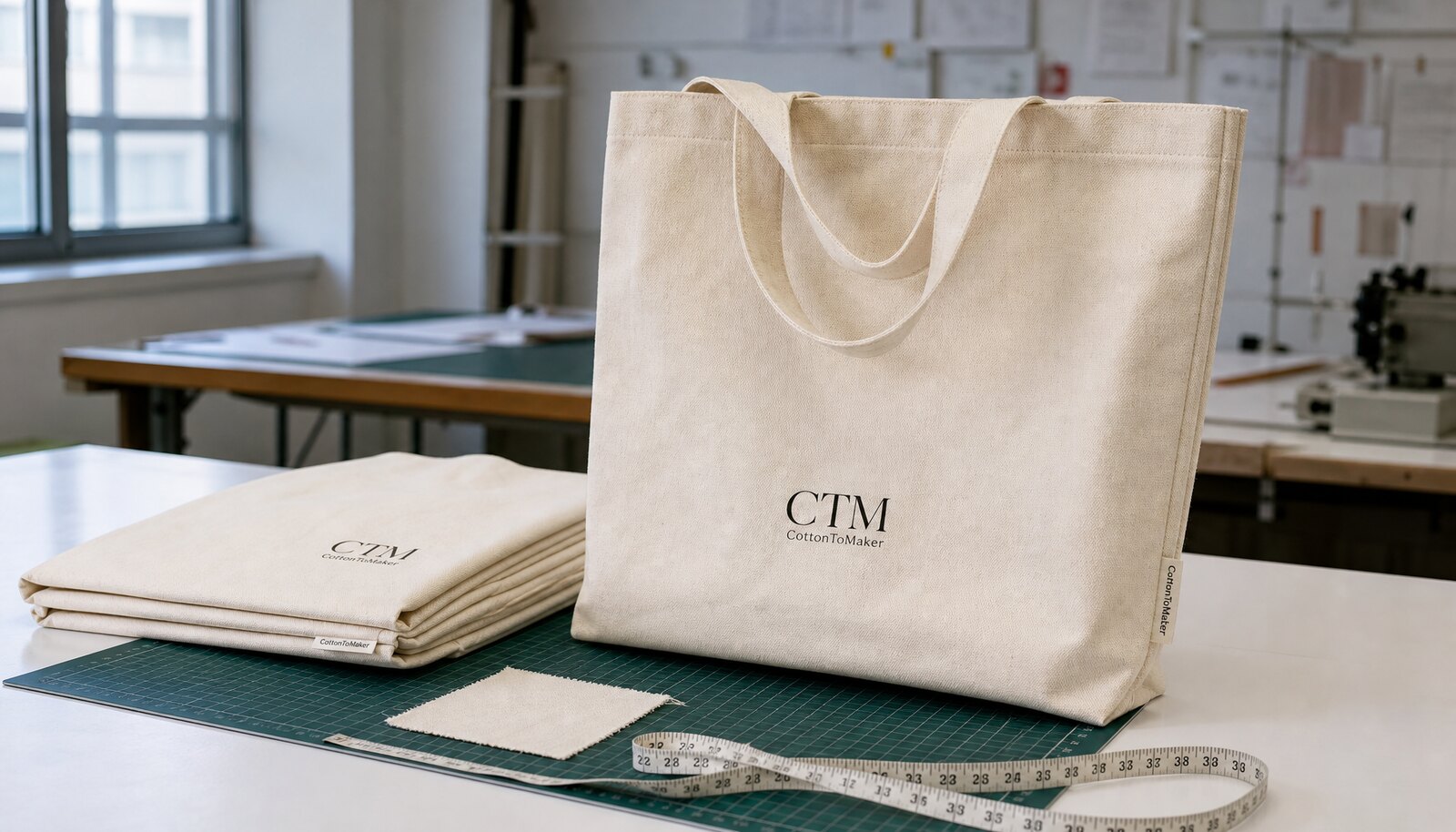
Start with the retail use case, not the tote itself
Gift shop tote orders usually fail for one of three reasons: the buyer ordered a bag that was too light for retail handling, the supplier could not prove the organic claim, or the packing arrived in a format the store team could not receive efficiently. A strong custom organic cotton totes supplier compliance checklist for gift shops starts with the use case, because a tote sold near a museum register is not the same product as a premium souvenir bag on a display wall. The first job is to define what the customer will do with the bag after purchase: carry a few lightweight items, hold books, act as a reusable retail bag, or serve as a branded gift item that needs a more premium hand feel.
That use case should drive every sourcing decision that follows. If the brief stays vague, suppliers will price their own assumptions and you will spend the rest of the process negotiating exceptions. Procurement teams get better results when they treat the bag as a finished retail product with compliance, quality, and receiving requirements, not as an artwork file attached to a generic tote. The best RFQ is the one that makes it hard for the factory to guess wrong.
- Separate the retail role of the tote from the artwork brief.
- Pick one target use case first: light souvenir, premium gift, or heavier carry bag.
- Treat compliance, packing, and traceability as product requirements, not admin tasks.
Freeze fabric, size, and construction before you ask for price
Price comparison only works if every supplier is quoting the same physical bag. Fabric weight is the first variable to lock. For many gift shop programs, 140 to 160 GSM can work for a light-use promotional tote, but it can feel thin in natural ecru and may show more transparency. A more premium retail tote often sits closer to 180 to 220 GSM because the bag has more body, prints more cleanly, and tends to feel less temporary in hand. Ask whether GSM is measured before or after finishing, because that detail affects both cost and perceived quality.
Construction choices matter just as much. A flat tote is cheaper and easier to price, but a gusseted bag can be more useful on a store shelf and more practical for books or boxed souvenirs. Handle length, handle attachment, corner reinforcement, and seam allowance all affect performance and manufacturing yield. If you want the bag to stand up in a gift shop display, say so. If you want it to fold small for checkout use, say that instead. The factory should quote the exact build you intend to receive, not an easier substitute that looks similar from a distance.
- Lock body size, gusset depth, handle length, and seam construction before RFQ.
- State whether the bag should stand up, fold flat, or carry heavier merchandise.
- Confirm whether the fabric is natural, bleached, dyed, or finished, because each option changes hand feel and cost.
Compare sourcing routes before you compare unit price
A low unit price does not tell you much until you know who actually makes the bag. A direct sewing factory usually gives the cleanest line from sample to bulk because one site controls cutting, sewing, print, and often packing. That reduces handoff errors and makes corrective action easier when something is off spec. A trading company or sourcing agent can be useful if you are coordinating multiple SKUs or need a single commercial contact, but it adds markup and can blur accountability unless the factory identity is disclosed early.
A specialized bag workshop is often the strongest choice when the tote construction is more important than the decoration, especially for repeat programs with the same body shape and reinforcement details. Local decoration on imported blanks can be fast for short runs, but it is only acceptable when the blank provenance and chain of custody are already documented. Use the comparison table to judge the operating model, not just the quotation. The best sourcing route depends on whether your priority is traceability, speed, flexibility, or retail-ready packing. If you need all four, expect the quote to reflect that complexity.
- Prefer a direct factory when you need one accountable source for traceability and defect fixes.
- Use a trader only if the actual factory name and the owner of QC decisions are disclosed.
- Treat imported blanks with local decoration as a speed option, not the default route for an organic claim.
Build the compliance file before you release the sample
Compliance for custom organic cotton totes is not just about showing that cotton was involved. Buyers need documents that match the legal entity making the goods and, where applicable, the lot being shipped. For organic claims, the strongest starting point is a current scope certificate for the exact company and site that will manufacture the bags. If the claim is shipment-specific, ask for the relevant transaction certificate or equivalent shipment document as well. A certificate in a sales deck does not prove the factory making your tote is covered by the claim.
Beyond the organic claim, ask for the documents that support market access and traceability. If the supplier subcontracts any step, that needs to be declared. If your destination market requires chemical or labeling evidence, ask for the test report that actually matches the fabric, color, and finish you are buying. For example, OEKO-TEX Standard 100 can support chemical testing evidence, but it is not a substitute for organic certification; GOTS supports organic processing claims but still needs to match the correct site and transaction flow. For EU or UK distribution, buyers often also check REACH-related restricted-substance coverage. For US channels, label and warning requirements can change depending on the product category and the retailer's own rules. The point is not to collect every certificate in the market. The point is to collect the right evidence for your actual tote, your actual production site, and your actual destination market.
- Confirm the legal entity on the certificate matches the company issuing the quote.
- Confirm the production address on the certificate matches the sewing or printing site.
- Ask whether any subcontractor will touch the bag before shipment.
- Request current test reports only when they match the exact material, color, and finish you are buying.
- Do not treat a marketing certificate as proof unless it is tied to the order lot and the manufacturing site.
Break the quote into cost drivers you can actually compare
If the supplier gives you one all-in number, you cannot tell whether the cost is coming from fabric, decoration, packing, or freight assumptions. Ask for a line-item quote that shows the blank bag, print setup, print run, labels, hang tags, polybags, cartons, and any testing or certification fees. That structure makes it possible to compare suppliers who quote different service levels. It also shows whether the supplier is using a low base price but recovering margin through setup charges or packing add-ons.
The same logic applies to Incoterms. An EXW price may look attractive because it leaves the factory gate with almost nothing included, but the buyer then carries pickup, export handling, freight, and destination costs. FOB is often easier to compare for ocean shipments because the seller handles origin export and port delivery, while the buyer still controls freight. DAP or DDP can be useful for smaller teams that want fewer moving parts, but you need to confirm exactly what is included, especially taxes and destination handling. A simple example makes the issue visible: if one supplier is 6 cents cheaper on EXW but the freight and origin charges add 10 cents per bag, the apparently cheaper quote is actually more expensive. For gift shop orders, freight can change the landed cost more than a small difference in sewing labor. Normalize every quote to the same landed basis before you decide.
- Ask for separate pricing on base bag, print setup, labels, packing, cartons, and testing.
- Compare all quotes on the same Incoterm and the same carton assumption.
- Watch for hidden cost in artwork changes, packing changes, and small color runs.
- Do not accept a unit price until you know which freight and destination charges are excluded.
Use a sample approval process with measurable tolerances
A good sample process starts with the actual production materials and the actual decoration method. A paper proof is not enough. Request a pre-production sample from the exact fabric, print process, and packing configuration that will run in bulk. Then lock a sealed reference sample so both sides can point to the same standard if there is a disagreement later. If the supplier wants to skip the physical sample and go directly to bulk because the logo is simple, that is usually where avoidable quality drift enters the order.
Set acceptance limits before the sample arrives. Buyers often rely on phrases like "good quality" or "close enough," but those are not enforceable. Use concrete limits for body size, handle length, print placement, shade variation, and seam finish. For many tote programs, a practical tolerance is around plus or minus 1 cm on body dimensions and plus or minus 0.5 cm on handles, unless your brand needs tighter control. For logo placement, use a millimeter-based tolerance and define what counts as visible misregistration. The sample also needs a load or pull test that matches the real retail use case. A bag that will hold books, catalogs, or heavier souvenirs should survive that load without handle failure, seam pop, or distortion that customers will notice. If the tote is washable, also agree on shrinkage or wash appearance before production starts.
- Approve one physical pre-production sample and keep one sealed reference sample.
- Set numeric tolerances for size, handles, print location, and shade.
- Use a pull or load test that reflects the real retail use case, not a generic pass/fail statement.
- Reject samples with weak handles, poor opacity, excessive print blur, or obvious color shift.
Set QC gates and rejection thresholds before bulk starts
Final inspection is easier when the team knows what counts as a critical, major, or minor defect. For organic cotton totes, critical defects should remain zero: wrong fiber claim, missing required label, hole in the bag, broken handle, strong chemical odor, mixed SKU, or a lot that cannot be traced to the documented fabric roll and print batch. Major defects are the kinds of issues that make the bag unsuitable for retail sale without rework, such as dimensions outside tolerance, print off-center beyond the agreed limit, weak reinforcement, dirty marks, or cartons packed with the wrong count. Minor defects are cosmetic issues that do not affect function, such as slight loose threads or light wrinkling, but even those should be bounded by your house standard.
A practical inspection plan usually includes three gates: an incoming fabric check, a first-article or first-run check, and a final random inspection. If you use a sampling plan such as AQL 2.5 for major defects and 4.0 for minor defects, say so in the PO or QC instruction so the supplier knows the rule in advance. Ask for method names on any test report, not just a "pass" stamp. For example, if the factory claims a pull test, you want the load applied, the sample size, and the result recorded. If the supplier cannot tell you how the lot will be sampled, how the defects are classified, or which records will be shared, the inspection was never really defined. Good QC is not a report after the fact; it is a standard the factory builds to during production.
- Classify critical defects separately and keep critical acceptance at zero.
- Use an agreed AQL or house sampling plan and state it before production.
- Require traceability to fabric roll, print run, and sewing line.
- Ask for photos or records of first-article approval, not just the final carton count.
Specify packing for gift shops, not just for export cartons
A tote can be technically correct and still fail the retailer's receiving process. Gift shops care about how the bag folds, how many pieces are in an inner pack, whether a barcode is scannable, and whether the carton is easy to receive and store. If the bag will hang on a peg, the fold size matters. If it will sit in a basket or on a shelf, the crease direction and visible front face matter more. Retail packing should be designed around how the shop sells the item, not around what is easiest for the sewing line to pack.
Ask the supplier to state the exact packing method in the quote: folded or flat, polybagged or not, inner pack count, master carton count, carton dimensions, gross weight, and mark format. If the retailer wants a low-plastic program, say whether polybags are prohibited or simply minimized. If the product needs a fiber-content label, country-of-origin label, care instruction, or barcode, fix the placement before bulk. This is also where you protect warehouse labor. A pack spec that arrives retail-ready can save hours of repacking at destination, which is often worth more than the extra pennies spent at origin.
- Fix fold style, inner pack count, and carton count before production starts.
- Define barcode placement and carton marks in the sample phase.
- State whether polybags are allowed, required, or prohibited.
- Ask for carton dimensions and gross weight so freight and receiving can be planned accurately.
Plan MOQ, lead time, and reorder economics together
MOQ is not just a factory constraint. It is a cash-flow and inventory decision. A small order may seem safer, but if the print setup, label run, and carton packing are fixed costs, the unit price can rise sharply when the quantity is too low. On the other hand, pushing MOQ too high ties up cash and can leave you with inventory after the season passes. The right number depends on how quickly the gift shop sells through, whether the tote is a seasonal item, and how much storage you actually have. If a larger order lowers the unit price by a few cents but adds months of stock carrying cost, the lower quote may not be cheaper in practice.
Lead time should be broken into material booking, sample approval, bulk production, packing, inspection, and shipping. Organic programs can take longer because the supplier may need certified fabric allocation or additional documentation before cutting begins. Freight also changes the economics. Higher carton density can reduce the freight cost per unit, but overpacking to chase density can create receiving pain or raise dimensional weight on air shipments. For repeat programs, ask whether the factory can reserve fabric shade or keep an approved print screen on file for reorder. That is often the difference between a stable replenishment program and a fresh sourcing exercise every season. Buyers who plan for reorder economics usually get better continuity and fewer surprises than buyers who only chase the first order price.
- Compare MOQ against sell-through, cash tied up in stock, and warehouse space.
- Separate material, production, inspection, and shipping time in the schedule.
- Ask whether fabric, screens, or labels can be reserved for reorders.
- Check whether a larger order truly lowers landed cost after freight and storage are included.
Release the PO only when the order is fully frozen
The purchase order should read like the final commercial and technical agreement, not a loose instruction to start work. By the time you release it, the supplier should have the final approved sample, the artwork proof, the packing instruction, the compliance document list, the Incoterm, the lead time, and the inspection rule in writing. If any of those items are still open, the factory will fill the gap with its own assumptions. That is where avoidable disputes begin. A clear PO protects both sides because it removes the room for memory-based interpretation later.
Before release, do a final consistency check against the sample, the quote, and the compliance file. If those three do not match, the bulk run is not ready. Define what counts as a chargeable change after PO release, and make sure the supplier agrees in writing. The simplest rule is also the strongest one: any change to size, fabric, print, packing, label content, or document scope after approval gets a written price and schedule impact before work starts. For gift shop programs, this discipline matters because small late changes are common and they often look harmless until they hit the factory line or the warehouse receiving dock. The buyer who freezes the order early usually gets the most predictable landed cost.
- Do not release the PO until the sample, quote, and compliance file all match.
- Attach the final approved sample or reference photo set to the order file.
- Require written approval for any subcontracted step if one is used.
- Put the change-control rule in writing before bulk production begins.
Specification comparison for buyers
| Supplier option | What to verify | Commercial advantage | Buyer risk to control |
|---|---|---|---|
| Direct sewing factory | fabric batch documents, dye-lot photos, approved sample archive, and final QC record | Better sample-to-bulk control and faster production feedback | May be weaker on export paperwork or branded packing unless checked early |
| Trading company | Factory name, production photos, trim-source proof, and who owns QC decisions | Can coordinate small mixed orders and extra services | Markup can hide real factory capability and slow defect decisions |
| Specialized bag workshop | seam allowance, handle reinforcement, label attachment, fabric pre-shrink note, and batch shade control | More practical for detailed construction, trims, and repeat programs | Capacity may be limited during peak seasons |
| Low-price general supplier | organic cotton canvas, batch documentation where available, undyed or low-impact dyed fabric, and shrinkage control | Useful for simple promotional runs with loose specs | Material downgrades, weak packing, and vague inspection scope can erase savings |
| Retail-ready supplier | plastic-reduction request, recycled carton note, bundle count, carton mark, and moisture protection without overpacking | Can handle labels, SKU separation, carton marks, and receiving rules | Higher unit cost must be compared against reduced warehouse work |
| Compliance-focused supplier | Fabric records, labeling review, test plan, and production traceability | Safer for retail programs and repeat brand orders | Documentation claims need evidence, not only sales language |
| Local sample room plus bulk factory | Signed sample, bulk factory handoff, first-piece photos, and deviation owner | Good for complex branding before large production | Sample room quality may not match bulk line unless handoff is controlled |
Buyer checklist before sampling
- Define the end market and the claim language first: organic cotton, organic cotton blend, or simply cotton, because the documentation burden changes with the claim.
- Lock tote dimensions, finished handle length, gusset depth, fabric GSM, and weave before requesting price.
- State the print method, number of colors, print placement, and acceptable color reference in the RFQ.
- Ask for separate pricing on the blank bag, print setup, print run, labels, hang tags, packing, cartons, and any test fees.
- Request the supplier's legal entity name, factory address, and the exact production site that will cut, sew, print, and pack the order.
- Require current compliance documents that match the site making the goods, not a parent company or unrelated showroom.
- Ask whether any subcontractor will touch the fabric, print, label, or pack the bags before shipment.
- Request a pre-production sample made from the actual fabric and actual print method, then keep one sealed approved reference sample.
- Set measurable tolerances for size, handle length, print position, stitch quality, shade variation, and acceptable defect count.
- Define folding style, inner pack count, barcode placement, carton marks, and whether polybags are allowed, required, or prohibited.
Factory quote questions to send
- What exact fabric GSM, weave, finish, and finished width are included in this quote?
- Which legal entity will manufacture the bags, and is that entity covered by the certificate you are providing?
- Can you issue a current transaction certificate or equivalent shipment-level document for the bulk order if the claim requires it?
- Will sewing, printing, labeling, and packing be done in-house or subcontracted, and if subcontracted, who is the named party?
- What is your quoted price basis: EXW, FOB, DAP, DDP, or another Incoterm?
- What is included in the unit price, and what is charged separately?
- How many print colors, screens, plates, or setup charges are included?
- What are the MOQ thresholds for the blank bag, printed bag, and packed carton unit?
- What are the tolerances for body size, handle length, shade, and print placement?
- What inspection standard and AQL are you quoting against, and how do you classify major versus minor defects?
Quality-control points to confirm
- Fabric GSM matches the approved spec within the agreed tolerance, and the supplier states whether the measurement is before or after finishing.
- Finished body dimensions, gusset depth, and handle length stay within tolerance, typically within plus or minus 1 cm for the body and plus or minus 0.5 cm for handles unless your spec is tighter.
- Print position stays within the approved art box, with no visible ghosting, banding, pinholes, or color bleed; for small logos, set a placement tolerance in millimeters rather than leaving it subjective.
- Stitching is straight and consistent, with no skipped stitches, broken threads, seam puckering beyond the approved sample, or exposed raw edges.
- Handle attachment and reinforcement pass the agreed pull or load test with no seam pop, tearing, or deformation that would be visible in normal retail use.
- No critical defects are accepted: holes, stains, oil marks, mold, strong odor, broken seams, mixed SKUs, or incorrect fiber claims.
- Shade variation stays within the approved lot sample; mixed dye lots need prior written approval.
- Label content, country of origin, fiber composition, care instructions, and barcode or SKU data match the approved artwork and destination-market rules.
- Folding style, inner pack count, and carton count match the packing instruction exactly, with no unapproved repacking or mixed assortments.
- Cartons are dry, clean, sealed, and marked correctly, with gross weight and dimensions matching the shipment documents closely enough for receiving.