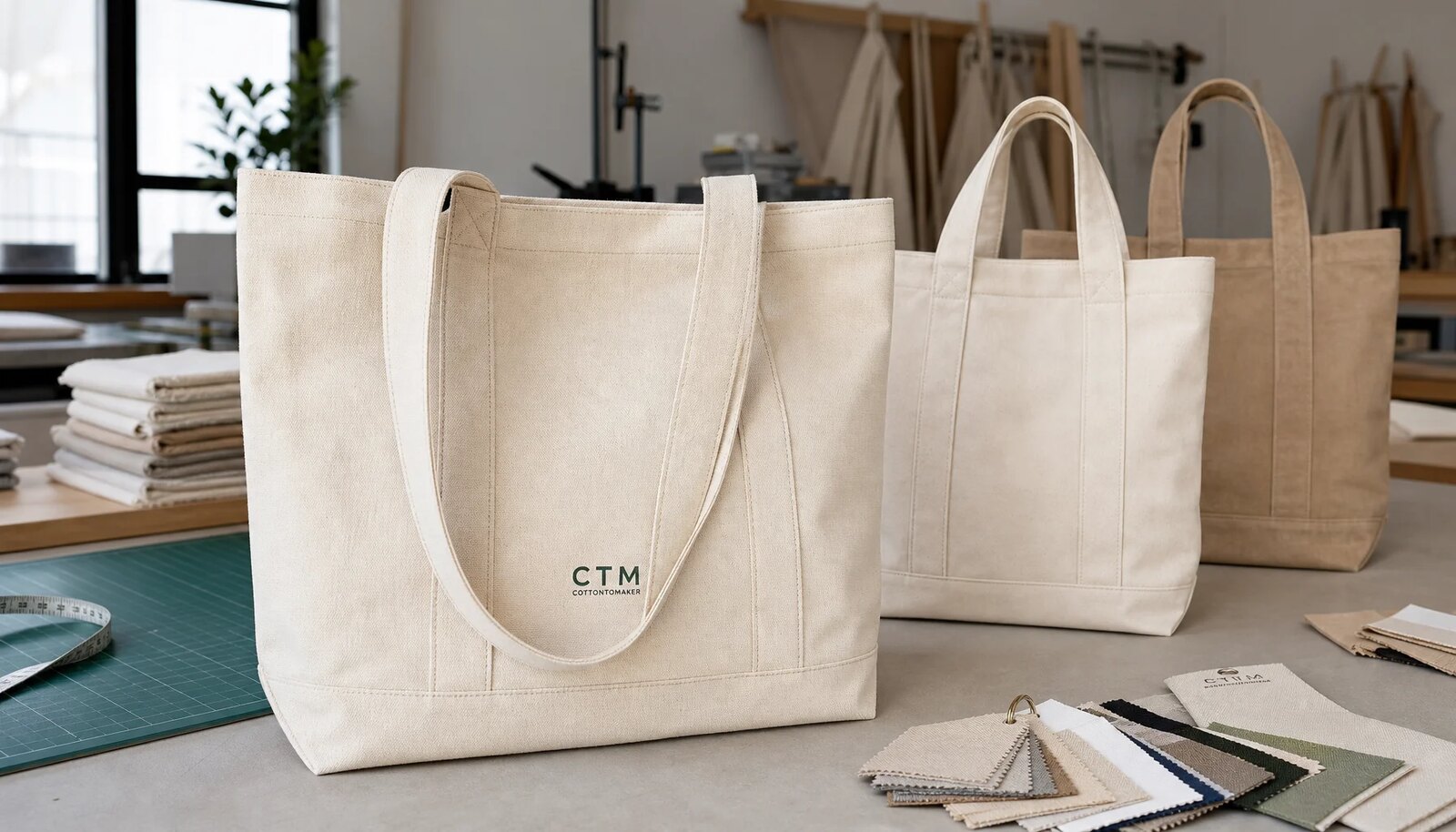
Define the Craft Fair Buying Problem Before the RFQ
A craft fair tote order is rarely just a simple bag purchase. The tote may be used by shoppers moving between booths, by vendors carrying samples, by sponsors as a branded giveaway, or by a retail team selling merchandise at the event. Each use case changes the correct fabric weight, handle length, print method, carton plan, and even the way the order should be split across artwork versions.
The RFQ should start with the commercial function of the tote. A giveaway tote can tolerate a lighter construction if the brand mainly wants visibility. A paid merchandise tote needs better fabric body, cleaner sewing, and more controlled print quality. A vendor kit tote may need a wider gusset and stronger handles because it carries catalogs, brochures, small samples, and packaging materials. Without this context, suppliers may quote the cheapest version and leave you comparing numbers that are not technically equal.
- For shopper giveaways, prioritize stable print, comfortable handles, and economical carton packing.
- For retail resale, specify cleaner stitching, heavier fabric, and stricter visual inspection.
- For vendor kits, add gusset depth, load target, and reinforced handle stitching.
- For sponsor bags, control artwork placement and Pantone matching across all logo versions.
Organic Cotton Claims Need Clear Boundaries
The words organic cotton can mean different things in supplier quotes. Some factories quote fabric made from organic cotton yarn, some quote certified organic fabric, and some quote finished bags with transaction documentation available only above a certain volume. A procurement RFQ should state exactly what evidence is required and where the claim will appear: product label, hangtag, website listing, invoice description, or event marketing material.
If the tote will be sold by a retailer or distributed by a brand with sustainability claims, the document requirement matters as much as the fabric itself. Buyers should not rely on a low quote that only says organic cotton in the email body. Request the available document type, the name on the certificate, the scope, and whether the finished goods shipment can be connected to the order. If your company only needs organic cotton material without consumer-facing certification language, say that clearly to avoid paying for a documentation level you do not need.
- State whether organic proof is required for yarn, fabric, factory process, finished goods, or transaction.
- Do not place certification logos on artwork unless your compliance team approves the exact usage.
- Separate material description from marketing claims in the RFQ.
- Require all label wording to be approved before bulk label production.
Choose Fabric Weight by Load, Appearance, and Freight
For custom organic cotton totes used at craft fairs, the practical range is often 8 oz to 12 oz cotton canvas, roughly 230-340 GSM depending on weave and finishing. An 8 oz tote can work for low-cost event distribution, but it may feel soft and less structured. A 10 oz tote is a common balance for reusable shopper bags. A 12 oz tote has better body and perceived value, but it increases unit cost, carton weight, and shipping volume.
The RFQ should not only say cotton tote bag. It should include fabric type, weight, color, and tolerance. Natural unbleached organic cotton has visible cotton seed flecks and a warmer base color, which affects printed ink appearance. Bleached or dyed fabric gives a cleaner background but changes cost and lead time. If artwork includes light colors or detailed lines, the base fabric shade and surface texture should be evaluated during print strike-off, not after bulk bags are sewn.
- Use 8 oz to 10 oz for budget-sensitive giveaways where the tote carries light items.
- Use 10 oz to 12 oz for craft fair retail, sponsor merchandise, and higher perceived value.
- Specify natural, bleached, or dyed fabric because print color changes on each base.
- Request GSM tolerance and fabric shrinkage information when dimensions are critical.
Set Bag Dimensions That Match Real Event Use
A standard flat tote may look acceptable in a product photo but perform poorly at a craft fair if it cannot hold common purchases. Finished size should be based on expected contents such as art prints, candles, packaged crafts, brochures, or small apparel items. For general craft fair programs, buyers often consider sizes around 38 x 42 cm, with or without a bottom gusset. A gusset of 8-12 cm improves capacity but changes carton quantity and sewing cost.
Handle length is another frequent RFQ gap. Short hand-carry handles are cheaper but less useful for shoppers walking for hours. Shoulder-length handles around 55-65 cm are more practical for event traffic, especially when attendees carry multiple items. Handle width also affects comfort and sewing strength. The RFQ should include finished handle length, handle width, stitch pattern, and whether the handle is self-fabric cotton webbing or a separate cotton tape.
- Define finished body size in centimeters and state whether measurements are before or after washing if relevant.
- Add bottom gusset depth when the tote must stand better or carry boxed goods.
- Specify shoulder handle length for shopper comfort during multi-hour events.
- Use reinforced X-stitch or box stitch at handle attachment for heavier loads.
Match Print Method to Artwork and Organic Positioning
Most craft fair tote programs use screen printing because it gives stable color, reasonable cost, and good durability on cotton canvas. Water-based ink is often preferred for an organic cotton tote because it has a softer hand-feel and fits the product story better than thick plastisol-style prints. However, water-based ink depends on curing control and fabric absorbency, so approval by digital mockup alone is not enough for a serious order.
The RFQ should include vector artwork, Pantone references, print size, print location, color count, and whether printing is one side or both sides. For multi-sponsor event totes, every additional logo color and artwork version can add screens, setup time, approval work, and packing separation. If artwork includes fine lines, distressed texture, or large solid ink coverage, request a strike-off on the actual selected fabric before the pre-production sample.
- Use screen print for solid logos, event names, sponsor marks, and simple retail graphics.
- Use heat transfer only when artwork detail justifies it and hand-feel is accepted.
- Avoid large heavy ink blocks on soft canvas unless print hand-feel is approved.
- Approve print scale on a real bag panel, not only on a flat digital layout.
Build MOQ Logic Around Versions, Not Only Quantity
MOQ problems often appear after the buyer sends a general quantity but later adds multiple event names, sponsor logos, or colorways. A factory may be able to produce 1,000 pieces in one artwork efficiently, but 1,000 pieces split into ten artworks creates more screens, more print setup, more sorting, and higher defect risk. The RFQ should show the total order quantity and the breakdown by artwork, size, fabric color, label, and packing style.
For craft fair distributors and retail buyers, the cleanest cost structure is usually one tote construction with controlled artwork variables. If several events need different sponsor panels, consider keeping the same fabric, size, handle, and carton method while changing only the front print. This helps the factory quote accurately and reduces the chance of mixed cartons. When buyers request tiered pricing, the tiers should reflect real production splits, not only total purchase volume.
- Request pricing for one artwork, then separate pricing for each extra artwork version.
- Clarify whether MOQ is per design, per fabric color, per print color, or total order.
- Group small event quantities under one common tote spec to protect unit cost.
- Require carton labels to identify artwork version when orders are split by event.
Use Samples to Lock Decisions Before Bulk Production
A good sampling sequence prevents the most expensive tote mistakes. The first approval can be a fabric swatch to confirm organic cotton base color, GSM, and hand-feel. The next stage may be a blank tote sample to verify size, gusset, handle length, and sewing construction. After that, a printed strike-off confirms ink behavior, color, coverage, and placement. The pre-production sample should combine all approved elements and become the bulk standard.
Buyers should write acceptance criteria into the RFQ instead of simply asking for a sample. For example, state that the pre-production sample must use the correct GSM, final handle construction, actual label position, final print size, and proposed packing fold. If the factory sends a substitute fabric sample or a different handle type for speed, it may be useful for concept review but should not be treated as bulk approval.
- Approve fabric swatch before judging print color on natural cotton.
- Measure blank sample dimensions and handle length against the RFQ.
- Review print strike-off for Pantone match, ink coverage, edge sharpness, and hand-feel.
- Keep one signed or sealed pre-production sample as the inspection reference.
Control Quote Data So Supplier Prices Are Comparable
A useful supplier quote should show more than a unit price. For custom organic cotton totes, the buyer needs to see fabric specification, construction details, print method, color count, MOQ, sample charges, setup charges, carton packing, lead time, payment terms, and trade term. Without those fields, one supplier may quote a lighter fabric, another may exclude screen charges, and another may pack too many pieces per carton to make freight appear cheaper.
Procurement teams should request a quote table with separate commercial lines. Unit price should be tied to a named spec, not a loose description. Screen charges, label charges, hangtag charges, testing charges, and sample courier cost should be shown separately where applicable. If the supplier quotes FOB, request port name and estimated carton data so your forwarder can calculate freight. If the supplier quotes DDP or delivered terms, confirm whether duties, taxes, remote delivery, and warehouse appointment fees are included.
- Require fabric weight, size, gusset, handle, print method, and packing in the quoted spec line.
- Separate tooling, screens, samples, labels, hangtags, and testing from unit price.
- Request carton CBM and gross weight before comparing landed cost.
- Ask for tiered pricing based on realistic artwork splits, not only total quantity.
Define QC Thresholds Before Inspection Day
Organic cotton totes can fail inspection for reasons that are easy to prevent in the RFQ. Common issues include uneven bag size, weak handle stitching, fabric stains, heavy creasing across printed areas, loose threads, skipped stitches, misaligned prints, and wrong carton marks. A factory needs clear standards before production starts, especially when the order has multiple artwork versions or will be delivered to several event locations.
The inspection standard should include both functional and visual checks. Functional checks cover handle pull strength, seam security, carton count, and packing method. Visual checks cover fabric shade, print color, registration, label placement, and general workmanship. For retail resale, the acceptable defect level should be stricter than for a free giveaway. If the bag will be sold at a craft fair booth, the front print panel and handle stitching should receive higher attention because these are the first areas customers notice.
- Measure random finished bags from each production lot and artwork version.
- Test handle stitching with a practical load target agreed before production.
- Inspect print placement against the approved sample, not only against artwork file dimensions.
- Reject cartons with mixed designs unless mixed packing was intentionally specified.
Plan Packing for Freight, Warehousing, and Event Distribution
Packing is not just a logistics detail for craft fair totes. Poor folding can create permanent creases across the printed logo. Overpacked cartons can deform gussets and make warehouse handling difficult. Underpacked cartons increase freight cost. The RFQ should require the supplier to quote pieces per carton, carton dimensions, gross weight, net weight, inner packing, carton marks, and whether bags are flat packed or folded.
For most organic cotton tote orders, bulk flat packing is efficient when the bags are distributed by staff or packed into event kits later. Individual polybags add cost, labor, and plastic use, so they should be used only when needed for retail cleanliness, barcode control, or direct-to-store handling. If the order is split by event, carton markings must show design code, quantity, PO number, and destination reference. This prevents the common problem of opening cartons at the venue to find the wrong sponsor artwork.
- Use flat packing when print appearance and fast event distribution matter.
- Limit individual polybags unless retail presentation or warehouse scanning requires them.
- Set maximum carton weight based on your warehouse handling rules.
- Mark cartons by artwork version, event name, PO number, and quantity.
Specification comparison for buyers
| Spec decision | Recommended option | When it fits | Buyer risk to check |
|---|---|---|---|
| Fabric weight | 10 oz to 12 oz organic cotton canvas, about 280-340 GSM | Reusable craft fair totes carrying catalogs, small purchases, and vendor materials | Too-light fabric may sag after loading; too-heavy fabric raises freight and unit cost |
| Bag construction | Flat tote with bottom gusset and reinforced X-stitch handles | Retail buyers needing better shelf presence and practical carrying capacity | Unspecified gusset depth causes mismatched carton quantity and poor packing efficiency |
| Handle length | 55-65 cm self-fabric handles, reinforced at stress points | Shoulder carry for shoppers walking between booths | Short handles reduce usability; long handles can drag when children carry bags |
| Print method | Water-based screen print for 1-3 solid colors | Organic positioning, moderate artwork detail, and stable repeat production | Pantone drift and ink show-through if no strike-off is approved |
| Labeling | Side seam woven label or inside printed care label | Brands needing identity without overloading the main artwork | Certification claims on labels must match approved transaction documents |
| MOQ logic | Start from one fabric color, one size, and one print setup to control MOQ | Mixed craft fair programs with several event dates but one common tote style | Too many artwork versions can multiply screen charges and packing errors |
| Sample approval | Pre-production sample using correct GSM, handle length, print size, and packing method | Any order where the tote is sold, gifted with purchase, or distributed by sponsors | Photo-only approval can miss handle strength, shrinkage, and print hand-feel |
| Carton packing | Flat packed, 50-100 pcs per export carton depending on GSM and tote size | Importers balancing warehouse handling, carton strength, and freight volume | Overpacked cartons crease prints and may exceed manual handling weight limits |
Buyer checklist before sampling
- Define the tote use case: shopper giveaway, paid merchandise, vendor kit, sponsor bag, or retail resale item.
- State organic cotton requirement clearly, including whether certification documents are required for the yarn, fabric, finished bag, or transaction.
- Specify fabric type and weight, such as organic cotton canvas at 10 oz, 12 oz, or a GSM range with tolerance.
- Provide finished bag dimensions, gusset depth, handle length, handle width, and acceptable measurement tolerance.
- Send artwork as vector files with Pantone references, print position, maximum print area, and whether one-side or two-side printing is needed.
- Confirm print method, ink type, artwork color count, and whether a printed strike-off is required before bulk production.
- List required sample stages: material swatch, blank bag sample, print strike-off, and pre-production sample.
- Set acceptance criteria for seam strength, handle reinforcement, print adhesion, print registration, color variance, and packing condition.
- Request carton dimensions, gross weight, net weight, pieces per carton, carton marking, and palletization option if needed.
- Separate ex-factory unit price, tooling or screen charge, sample charge, packing charge, freight term, and estimated lead time in the quote.
Factory quote questions to send
- What organic cotton fabric options can be produced consistently for this tote size, and what are the GSM tolerances?
- Is the quoted fabric greige, dyed, bleached, or natural unbleached cotton, and how does that affect print color and shrinkage?
- What is the MOQ for one size, one fabric color, and one artwork, and how does MOQ change if we split artwork by event or sponsor?
- Which print method do you recommend for this artwork, and what are the setup charges, color limitations, and curing requirements?
- Can you provide a printed strike-off on the selected organic cotton fabric before the full pre-production sample?
- What seam construction and handle reinforcement are included in the quoted price?
- What measurement, color, print, and packing tolerances will your QC team use for final inspection?
- How many pieces fit in one export carton, and what are the estimated carton dimensions and gross weight?
- What is the realistic production lead time after deposit and final sample approval, not only after order confirmation?
- Which quote items are included in the unit price and which are charged separately, such as labels, hangtags, inner polybags, screen setup, or testing?
Quality-control points to confirm
- Finished bag dimensions should follow the approved sample with a practical tolerance, commonly plus or minus 1 cm for body size and handle length unless otherwise agreed.
- Fabric weight should be verified against the approved swatch or GSM test, not judged only by hand-feel.
- Handle attachment should use reinforced stitching and withstand the agreed loading test without tearing, skipped stitches, or seam opening.
- Print color should match approved Pantone or strike-off standard within agreed visual tolerance under consistent lighting.
- Print adhesion should pass a basic rub test after curing, especially for water-based ink on heavier canvas.
- Seams should be clean, with no open stitching, loose threads affecting appearance, or needle damage along high-stress points.
- Organic claim labels, hangtags, and carton marks should match the approved wording and compliance documents.
- Cartons should protect printed panels from heavy creasing, moisture exposure, and over-compression during export handling.