Why tote RFQs go sideways
A custom organic cotton tote sounds simple until three suppliers quote three different bags. One assumes a light plain weave. One prices a heavier canvas. Another builds in custom dyeing, a print underbase, individual polybags, and a longer sample path. Nobody is necessarily wrong. The RFQ left too much room for interpretation.
That gap is common with eco apparel brands because the tote is often treated as packaging or launch merchandise rather than a real production item. The garment program gets the detailed tech pack. The tote gets a sentence: organic cotton tote with logo. That may start a conversation, but it will not produce comparable pricing, reliable samples, or clean internal approval.
A better custom organic cotton totes RFQ does not need to be long for the sake of looking formal. It needs to name the cost drivers: fabric weight, weave, size, gusset, handle construction, decoration method, organic documentation, packing, MOQ, and inspection tolerance. Once those are clear, buyers can compare suppliers on the same production basis instead of chasing a low number that later changes after sampling.
Use the RFQ as a buying control document. It should make assumptions visible before the purchase order is issued. If a supplier wants to offer an alternative, that can be useful, but it should be labeled as an alternative construction, not mixed into the base quote.
- The main problem is not lack of supplier interest; it is quote inconsistency from vague specifications
- Organic cotton claims need a documentation path, not just a fabric description
- The RFQ should separate base requirements from optional upgrades so cost changes are easy to see
- A clear RFQ helps procurement, design, compliance, warehouse, and sales teams approve the same product
Define use before dimensions
Start with the job the bag has to do. A tote used as apparel packaging does not need the same structure as a resale tote that customers will carry every week. A gift-with-purchase bag may need strong logo visibility and clean folding. A wholesale store bag may need carton efficiency and fast repeat production. Those use cases change the specification before fabric or print is even discussed.
Write the intended use in the first part of the RFQ, then lock the finished size. Use centimeters and state the measurement rule: width x height x gusset, measured flat, expanded, or boxed-bottom. If the bag must hold a folded hoodie, fit into a mailer, hang from a retail fixture, or sit inside a checkout counter space, say so. A few practical constraints can prevent a sample that looks attractive but fails in the real workflow.
Ask the factory to repeat the dimensions back in the quote. This small step catches many errors early. Gusseted totes are especially easy to misread because one supplier may measure the side panel differently from another. If you have a reference bag, include photos and measurements, but do not let the sample replace written specifications. A sample communicates hand feel and proportion. The RFQ controls the commercial quote.
Also define handle use. Shoulder-carry and hand-carry totes are different products even when the bag body is identical. Handle drop affects comfort, fabric consumption, carton folding, and how the tote looks when displayed. If the tote must carry multiple garments, shoes, books, or bottles, include that expected load so the factory can adjust reinforcement.
- State the use case: packaging, retail shopping, resale merchandise, event, or gift-with-purchase
- Write finished size as width x height x gusset in centimeters with the measurement method
- Include fit constraints such as garment size, carton size, mailer size, or retail display needs
- Ask the supplier to echo back size, gusset type, and handle drop in the quote
Fabric is the real price driver
For eco apparel brands, fabric is both a brand signal and a cost decision. Natural organic cotton canvas is often the cleanest starting point because it avoids custom dyeing, keeps the look consistent with sustainability messaging, and usually reduces approval work. Stock dyed shades can also be efficient when the supplier already has acceptable fabric available. Custom dyeing should be treated as a deliberate choice, not a default request.
Weight and weave matter as much as fiber content. A 100% organic cotton bag can still feel flimsy if the weave is loose or the GSM is too low. For many apparel retail totes, 8 oz to 10 oz canvas, roughly 270 to 340 GSM, gives a practical balance of structure, print surface, reuse value, and freight weight. Heavier fabric can feel premium, but it increases carton volume and shipping cost. Lighter fabric may save unit cost while making the tote look less durable than the brand intended.
Ask for construction details in the RFQ: canvas, twill, or plain weave; target GSM; usable fabric width; finish; expected shrinkage; and GSM tolerance for bulk cloth. If the factory quotes only cotton weight without weave or tolerance, the price is incomplete. Two fabrics can share a GSM number and behave differently under print, folding, and load.
For natural cotton, shade still needs attention. Greige, natural, and bleached-looking cotton can vary. If the bag will be photographed for ecommerce or displayed across multiple stores, ask how bulk shade will be controlled. For dyed fabric, define whether stock shade approval is enough or whether a custom Pantone target is required. Custom shade control adds time, especially when the organic cotton supply must match a certification or documentation path.
- Use 270 to 340 GSM organic cotton canvas as a practical starting range for structured retail totes
- Ask for weave, GSM, fabric width, finish, shrinkage expectation, and bulk tolerance
- Natural fabric usually reduces MOQ and lead-time pressure compared with custom dyeing
- Heavier fabric affects freight, carton count, and warehouse handling, not only unit price
Construction details decide performance
Two tote bags can photograph almost the same and perform very differently. The difference usually comes from construction: seam allowance, handle insertion, reinforcement, gusset shape, stitch density, and trimming quality. These details are not decoration. They decide how the bag hangs, how it carries weight, and how consistently it can be sewn in bulk.
For a basic apparel tote, self-fabric handles around 2.5 to 3 cm wide are common. The RFQ should also name handle length or drop, because carry style matters. A shoulder tote needs a longer loop than a hand-carry bag. If the handle is too short, customers notice immediately. If it is too long, the bag may drag, fold awkwardly in cartons, or look sloppy on retail displays.
Reinforcement needs to be written, not assumed. Ask for box-x stitching, bar-tack reinforcement, or the supplier's standard stress-point method, then approve it on the pre-production sample. Handle insertion depth should also be clear on heavier bags. A beautiful print cannot compensate for weak handle attachment.
Optional features deserve their own quote lines. An inside pocket, zipper, snap, lining, woven side label, hangtag, or barcode sticker may sound minor, but each one adds setup, sewing time, inspection points, or packing steps. Price the core bag first. Then ask the supplier to add each option separately so the team can decide what is worth keeping.
- Specify handle width, handle drop, attachment method, insertion depth, and reinforcement
- Name gusset type: flat, side gusset, bottom gusset, or boxed bottom
- Separate the base tote from pockets, zippers, snaps, labels, hangtags, and barcode stickers
- If the tote must carry weight, write the expected use instead of relying on standard construction
Make artwork production-ready
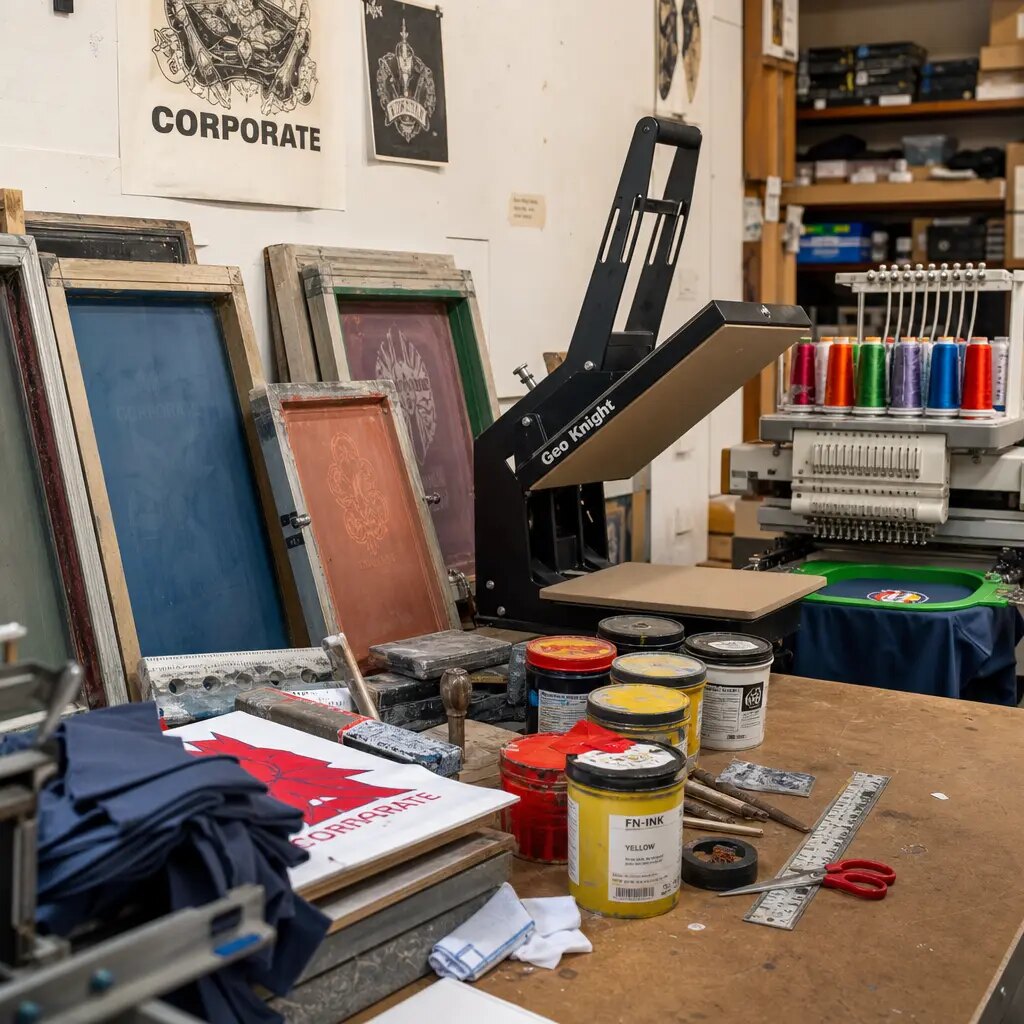
Logo decoration is where vague RFQs often become expensive. Water-based screen print is a practical first option for many custom organic cotton totes because it works well on cotton, supports a softer hand feel, and fits eco-oriented product language. It is best for solid shapes, controlled color counts, and artwork that does not depend on very fine detail.
The RFQ should include the artwork file, print size in centimeters, print placement, number of colors, one-side or two-side coverage, and color references. Placement should be measured from fixed points such as the top edge, side seam, or bag centerline. Do not rely on a visual mockup alone. Mockups can look balanced on screen while leaving the factory unsure where to place screens on actual cut panels.
Dark dyed totes need extra attention. A green logo that looks strong on white paper may disappear on black or navy fabric unless the supplier uses an underbase or changes the ink system. Underbase can improve opacity, but it may change hand feel and cost. Put that decision into the RFQ so suppliers do not quote different assumptions.
Pantone language also needs care. Exact matching on natural cotton is different from matching on coated paper. If the brand requires the closest possible Pantone match, state that and ask for a strike-off on actual tote fabric. If a visual match within an approved tolerance is acceptable, write that instead. This is a small wording choice with real cost and timing impact.
For quieter branding, consider whether a woven label, side label, or hangtag can do the job. A smaller decoration can reduce print risk and keep the tote feeling more premium. The RFQ should make decoration choices visible enough that design and procurement can discuss them before sampling begins.
- Include print size, position, color count, artwork file, and one-side or two-side coverage
- Approve print on actual production fabric, especially for natural or dark dyed cotton
- Ask whether fine lines, reversed text, gradients, and large solid areas are suitable for the chosen method
- Clarify Pantone target, visual tolerance, underbase, screen fees, and strike-off cost
Organic proof belongs in the quote
If the tote will be marketed as organic, the RFQ needs more than the phrase organic cotton. It should state the claim your brand intends to make and ask what evidence the supplier can provide for the actual bulk order. Procurement should know this before price comparison, because documentation can affect sourcing, lead time, and supplier eligibility.
A general certificate may show that a mill, trader, or facility has certification capability, but buyers often need evidence tied to a transaction, lot, or shipment. The exact requirement depends on the brand, retailer, market, and claim being made. Do not ask the factory to guess. If your channel requires GOTS, OCS, or another chain-of-custody path, name it in the RFQ and ask which part of the supply chain is covered.
Also include practical compliance details: fiber content labeling, country-of-origin marking, carton marks, retailer packaging rules, and whether the tote will be sold as a product or used as packaging. A tote sold at retail may need different labeling support than a bag used only at checkout. If the tote is part of a larger apparel launch, align the documentation standard with the garment program so your team does not manage two different claim systems for the same campaign.
Keep the request direct. Ask what documents will be available after order placement, when they can be issued, and whether there is any cost or lead time tied to them. This protects the buyer from discovering after production that the paperwork does not support the marketing copy.
- State the organic claim and selling channel before quoting starts
- Ask for order-level or shipment-level evidence, not only certificate screenshots
- Clarify whether the requirement applies to fabric only or finished goods chain of custody
- Include labeling, origin marking, carton marking, and retailer documentation requirements
Sampling should answer one question at a time
Good sampling is not about adding rounds. It is about putting the rounds in the right order. Start with a digital layout review for size, handle drop, logo position, and print scale. Then confirm the material with a swatch or existing fabric sample. For printed totes, request a print strike-off on the actual fabric before approving the full pre-production sample.
This order saves time because it avoids rebuilding a complete bag just to change print scale or fabric shade. The pre-production sample should confirm the locked choices: finished size, gusset, handle construction, seam quality, print appearance, label placement, and packing method if packing is important to the channel. After PPS approval, the RFQ or purchase order should state which changes are still open and which require repricing.
Internal approval can slow the project as much as factory work. Decide who signs off on design, procurement, compliance, and warehouse packing before sampling starts. If the design team approves the look but the warehouse later rejects the carton method, the schedule still slips. A clear RFQ gives each team a defined moment to review the detail that matters to them.
Keep one approved sample or a detailed approval record as the final inspection reference. For bulk orders, the QC team needs a standard that covers more than appearance. The approved record should include measurements, fabric, print, stitching, trims, packing, and carton labels.
- Use a practical sequence: digital layout, material review, print strike-off, pre-production sample
- Approve print on actual fabric because absorbency and shade affect color and edge clarity
- State that the approved PPS becomes the bulk production reference within agreed tolerances
- Name internal approval owners before sampling begins
MOQ and pricing need layers
A single MOQ number rarely tells the whole truth. Tote production can have a sewing MOQ, fabric MOQ, dyeing MOQ, print setup quantity, label MOQ, and carton printing minimum. A supplier may be able to sew 500 bags, but five fabric colors and five artworks can turn that into a much less efficient order. Ask for MOQ by total order, by fabric color, by artwork, and by accessory.
The most efficient route for many eco apparel brands is one core size, one natural fabric, and multiple print graphics where needed. That keeps cutting and sewing efficient while allowing seasonal or campaign-specific artwork. If the brand wants custom dyed bags, compare the added cost and lead time against the branding benefit. A natural organic cotton canvas tote with a sharp logo may serve the launch better than a fully shade-matched tote that misses the calendar.
Request price breaks at realistic quantities such as 500, 1000, 3000, and 5000 pieces. Ask the factory to separate the base bag cost from screen fees, strike-off charges, sample fees, label setup, dye surcharge, carton printing, and packing changes. This structure makes quote comparison cleaner. It also prevents a low unit price from hiding fixed costs that appear later.
Be specific about Incoterms and shipment assumptions if freight comparison matters. Unit price alone is not the landed cost. Fabric weight, carton quantity, carton dimensions, gross weight, and packing method can all change shipping cost. At RFQ stage, you may not need final freight, but you do need enough carton data to judge whether a heavier or bulkier tote is still commercially sensible.
- Ask MOQ by total order, color, artwork, fabric shade, and accessory
- Request quantity breaks and fixed cost lines instead of one blended number
- Separate base bag, print, trims, packing, documentation, and carton printing assumptions
- Use carton quantity and gross weight to understand freight impact early
Lead time is lost before sewing
Most tote delays begin before sewing starts. Fabric availability, organic documentation, artwork approval, lab dips, print strike-offs, and sample sign-off can each hold the schedule. A simple natural canvas tote with one print color has a different timeline from a custom dyed bag with multiple artwork versions and retailer labels.
Ask the supplier to quote lead time from confirmed artwork, approved material, and deposit, not from the inquiry date. That wording matters. It gives procurement a schedule based on the moment the factory can actually move. If the order needs custom dyeing, ask for the lead time for lab dip approval and bulk fabric preparation separately. If the print is complex, ask whether strike-off approval is on the critical path.
Build inspection and logistics into the plan. The ex-factory date is not the same as the delivery date. Final inspection booking, carton correction, export documents, freight cut-off, and warehouse receiving windows all need space. If the tote supports an apparel launch, develop it early enough that bag issues do not hold finished garments.
When timing is tight, reduce variables. Choose stock natural fabric, limit print colors, avoid new trims, and use standard cartons unless the channel requires otherwise. That is not a design compromise in every case. Often it is the difference between a clean launch and a rushed shipment.
- Ask for lead time from artwork approval, material approval, and deposit
- Separate fabric, sample, print, bulk sewing, inspection, and shipping milestones
- Treat custom dyeing, extra trims, and special packing as schedule risks
- Include inspection booking and freight cut-off in the real delivery plan
Packing can break a clean order
Packing looks like an afterthought until the shipment reaches the warehouse. Organic cotton totes are often packed without individual polybags to reduce plastic use. That can work well, but only when fold method, bundle count, carton strength, moisture protection, and carton marks are controlled. Loose packing can create creases, contamination, print rub, and receiving errors.
Printed bags need special attention. If fresh or heavy ink sits face-to-face under pressure, logos may offset. The supplier may need to change fold direction, reduce bundle size, use tissue separators, or allow more curing time before packing. These are small operational details, but they protect the part of the tote the customer sees first.
Carton rules should match your warehouse, not only the factory's habit. State units per carton, maximum gross weight, carton dimensions if required, SKU separation, barcode label placement, PO number, country-of-origin mark, and whether master carton marks are needed on two sides or four. If mixed cartons are not allowed, say so clearly.
For retail distribution, include any channel-specific label rules in the RFQ. Carton relabeling after arrival is expensive and irritating for everyone involved. A good packing spec is simple enough for the factory to follow repeatedly and precise enough for the receiving team to trust.
- State whether individual polybags are prohibited, optional, recycled-only, or required
- Define fold method, bundle count, carton quantity, carton marks, and gross weight limit
- Protect printed surfaces from offset, fold marks, moisture, and contamination
- Specify single-SKU or mixed-carton rules before production packing starts
Specification comparison for buyers
| Spec decision | Recommended option | When it fits | Buyer risk to check |
|---|---|---|---|
| Fabric weight | 8 oz to 10 oz organic cotton canvas, about 270 to 340 GSM | Retail totes, apparel store packaging, launch merchandise, and repeat-use shopping bags where structure matters but freight weight still needs control | A supplier may quote a lighter plain weave while calling it canvas; request fabric construction, measured GSM, and the allowed bulk tolerance |
| Fabric source | Certified organic fabric with order-level or shipment-level evidence tied to the production lot | Needed when the tote is sold, promoted, or labeled as organic in product copy, hangtags, retailer files, or sustainability reporting | A certificate screenshot does not prove your bulk order; ask what document will be issued for the actual fabric lot or shipment |
| Fabric finish | Natural, greige, or stock dyed fabric from an approved shade card | Best when the buyer wants shorter lead time, lower fabric MOQ pressure, and fewer shade-approval rounds | Custom dyeing can add fabric MOQ, lab dip review, shade variation risk, and longer fabric preparation time |
| Weave type | Canvas or sturdy twill with enough body to hold shape and accept print cleanly | Useful for branded carry bags that must look structured on shelf and survive repeated use | A soft plain weave may feel cheaper and lighter, but it can collapse, distort artwork, and wear faster |
| Finished size | Width x height x gusset in cm, measured flat with a stated method | Required for fair quote comparison, sampling accuracy, carton planning, and internal approval | Factories may interpret gusseted and boxed-bottom sizes differently unless the measurement rule is written |
| Handle construction | Self-fabric handles, 2.5 to 3 cm wide, with box-x stitching or bar-tack reinforcement at stress points | Standard for apparel retail totes, event bags, grocery-style totes, and moderate-load use | If the bag may carry books, bottles, or multiple garments, specify load expectation, handle drop, insertion depth, and reinforcement method |
| Print method | Water-based screen print for simple logos up to 2 colors | Good for organic positioning, soft hand feel, and repeatable output on cotton canvas | Fine lines, large solid print areas, dark fabric, or exact Pantone needs may require underbase, testing, or another decoration method |
| Accessories | Open top, no pocket, no zipper for the core quote; price add-ons separately | Best for cost-controlled launch bags, store packaging, and wholesale programs where speed and consistency matter | Pockets, snaps, zippers, woven labels, hangtags, and barcode stickers each affect sewing, setup, packing, and inspection |
| Packing route | No individual polybag, or recycled polybag only when the sales channel requires it | Works for eco brands that want lower plastic use while keeping warehouse handling practical | Without bundle counts, fold method, carton marks, and carton weight limits, bags may arrive creased, overpacked, or hard to receive |
Buyer checklist before sampling
- State the finished bag size in centimeters and define the measurement method: width x height x gusset, measured flat, expanded, or boxed-bottom as applicable.
- Name the intended use: apparel packaging, retail shopping tote, event giveaway, gift-with-purchase, resale merchandise, or wholesale customer bag.
- Specify fabric composition and target weight, for example 100% organic cotton canvas at 280 GSM with an acceptable bulk tolerance.
- Ask for fabric construction details in the quote: canvas, twill, plain weave, finished fabric width, yarn count if available, and expected shrinkage or dimensional change.
- Define whether the fabric must be natural, greige, stock dyed, or custom Pantone dyed, and whether shade variation within the lot is acceptable.
- Attach final artwork files with print dimensions, print position, color references, number of print colors, and the preferred decoration method.
- State whether the logo must match a Pantone reference exactly or only visually within an agreed production tolerance on the actual tote fabric.
- List handle length or drop, handle width, attachment method, insertion depth, and required reinforcement stitching.
- Separate optional features line by line: inside pocket, bottom gusset, side gusset, snap, zipper, woven label, hangtag, barcode sticker, or individual polybag.
- Request quote breaks by quantity, such as 500, 1000, 3000, and 5000 pieces per design, and ask whether mixed artworks can share sewing efficiency.
Factory quote questions to send
- What fabric construction are you quoting exactly, including weave, GSM, usable width, shrinkage expectation, finish, and mill or fabric source?
- Is the quoted organic cotton based on certified fabric supply for bulk production, and what transaction-level or shipment-level evidence can you provide after order placement?
- What is included in the print price: number of colors, maximum print area, one side or two sides, underbase, screen charges, strike-off, and color matching work?
- What are your artwork limits for water-based screen print on this fabric, especially for fine lines, reversed text, large flood areas, and dark dyed cotton?
- What is the MOQ by total order, by bag color, by fabric shade, and by artwork, and where can mixed-color or mixed-design orders share efficiency?
- Which cost items are fixed versus variable: sample fee, screen fee, dye surcharge, woven label setup, carton printing, barcode labeling, and export documentation?
- What are your standard tolerances for finished size, print position, print color, fabric GSM, handle length, handle placement, and carton quantity?
- How do you reinforce handles, and can you share close photos of the stitch method or include this detail in the pre-production sample?
- What is your normal lead time from artwork approval, material approval, and deposit to shipment for 1000, 3000, and 5000 pieces?
- How many units fit per export carton, what is the gross weight, and how are bundles arranged to prevent print offset, fold marks, or handle creasing?
Quality-control points to confirm
- Finished size tolerance should be stated clearly, commonly around plus or minus 1 cm for width and height and plus or minus 0.5 to 1 cm for gusset depending on construction.
- Fabric GSM should be checked from bulk fabric, not only from development swatches; set the acceptable tolerance before cutting begins.
- Fabric construction should match the approved quote, especially when the buyer requested canvas or twill rather than a lighter plain weave.
- Print position should be measured from fixed reference points such as top edge, side seam, or bag centerline, not judged visually only.
- Print color and opacity should be approved on actual production fabric because natural cotton shade, dyed fabric color, and surface texture affect final appearance.
- Handles must be checked for length-pair consistency, attachment position, reinforcement stitching, insertion depth, and twist direction so bags hang evenly.
- Seams should be reviewed for skipped stitches, open seams, puckering, loose threads, weak corners, and weak handle insertion points.
- Bulk shade consistency matters on both natural and dyed fabrics; carton-to-carton variation should be monitored during cutting, sewing, and packing.
- Carton count, carton marking, SKU separation, barcode placement, and bundle method should be verified during final inspection to avoid warehouse receiving errors.
- Packaging must be checked for print rub, fold marks, moisture risk, contamination, and loose fibers before cartons are sealed.