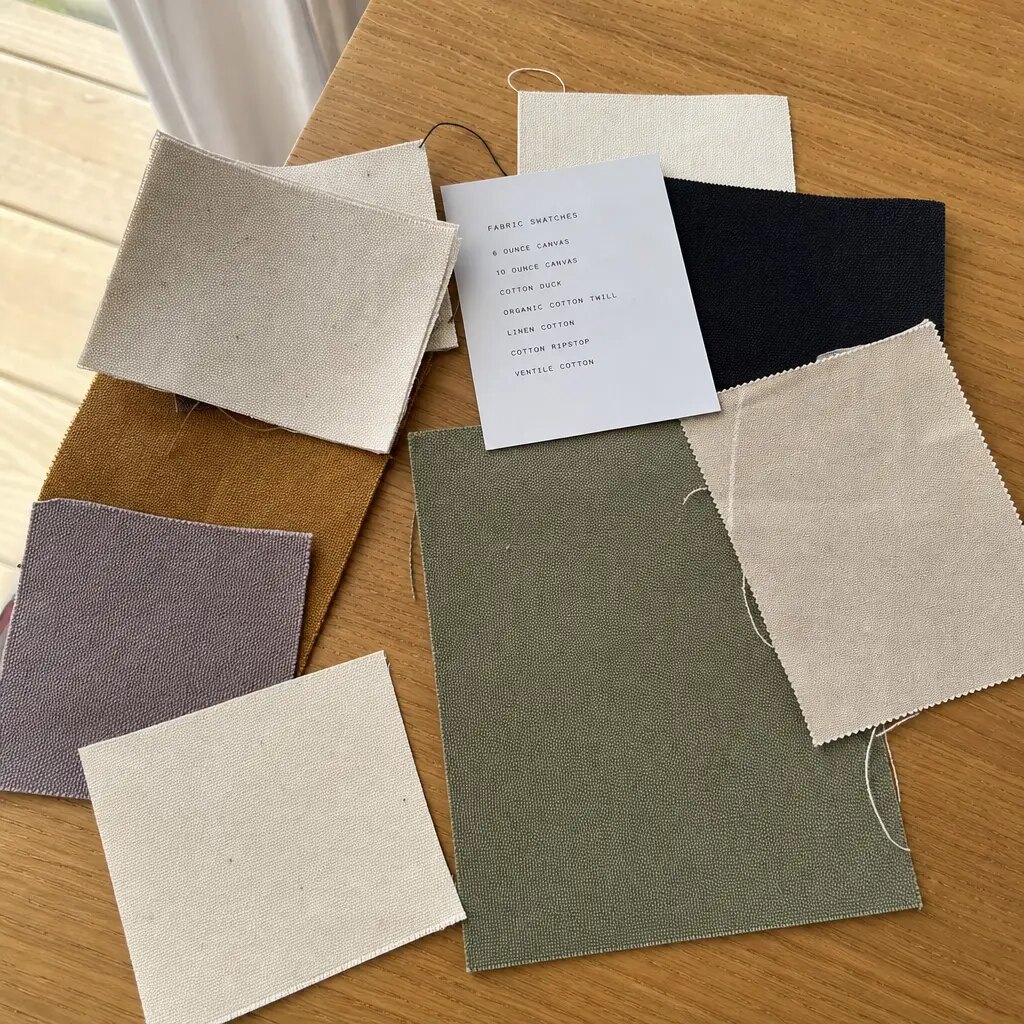
Why MOQ Is Negotiable Only After the Spec Is Real
For hotel retail, the minimum order quantity is not a fixed sales rule. It is usually a combination of fabric booking, cutting efficiency, printing setup, sewing line scheduling, labeling, and packing labor. A supplier can often reduce one part of the MOQ if the buyer controls the other variables. The mistake is asking, "What is your MOQ for organic cotton totes?" before defining the tote body, fabric weight, artwork count, and packing route.
A hotel group may want 300 totes for a resort boutique, 500 for a city hotel gift shop, and 800 for a spa retail program. If each property needs a different fabric color, handle color, print size, and hangtag, the factory sees three small productions. If all properties share the same natural 12 oz organic cotton body and only the front logo changes, the same order can become one fabric and sewing batch with multiple print setups. That is where MOQ negotiation becomes practical instead of emotional.
- Negotiate fabric MOQ separately from print MOQ.
- Keep the tote body common when splitting hotel property logos.
- Use natural or greige organic cotton when the launch quantity is uncertain.
- Avoid custom dyeing for a first retail test unless brand color accuracy is more important than MOQ.
- Request the factory's true bottleneck: fabric roll, cutting table, print screen, label, or packing labor.
Start With the Hotel Retail Use Case
A tote sold in a hotel boutique needs a different specification from a disposable event bag. Retail buyers usually need a bag that sits neatly on a shelf, carries towels or small purchases, and feels worth the selling price. Procurement teams should define whether the bag is a gift shop product, welcome amenity, conference bag, spa merchandise item, or reusable guest shopping bag. This affects GSM, handle strength, print durability, and packing.
For most hotel retail totes, 10 oz to 12 oz organic cotton canvas is the safe range. Around 340 GSM gives a good hand feel without becoming too heavy for freight. Around 407 GSM feels more premium and stands better, but it raises fabric cost and can increase sewing time. Lighter cotton, such as 6 oz or 8 oz, may be suitable for amenity giveaways, but it often looks weak in a retail display unless the design is intentionally soft and foldable.
- Gift shop retail: 10 oz or 12 oz canvas, reinforced handles, clean shelf fold.
- Spa merchandise: natural or soft white cotton, low-odor printing, refined label placement.
- Conference welcome bag: 8 oz to 10 oz cotton, efficient packing, larger front print area.
- Luxury resort retail: heavier canvas, inside pocket option, woven side label, premium hangtag.
- Guest reusable bag: moderate GSM, strong handle stitching, bulk packing to control cost.
Fabric Choices That Change the MOQ
Organic cotton is not only a marketing description. It changes sourcing because the factory must know whether certified organic fabric is already available, whether the certificate scope covers the material supplier, and whether the buyer needs documentation for customs, retail claim, or internal ESG reporting. A low quote may be based on ordinary cotton unless the RFQ states "organic cotton canvas" and asks for certificate scope before sampling.
Fabric weight also affects MOQ because mills and fabric warehouses manage inventory by rolls, not by finished bag count. A factory may be able to cut 500 units from stock natural 10 oz organic cotton, but may need a much higher quantity for custom-dyed 12 oz canvas. If the buyer wants dyed handles, the handle tape may have its own MOQ. To reduce risk, specify the preferred fabric but allow the supplier to quote two routes: stock natural organic cotton and custom-dyed organic cotton.
- Natural organic cotton usually gives the most flexible MOQ.
- Custom color fabric increases MOQ because dyeing is handled by fabric lot.
- Unwashed canvas is more stable for production but may feel firmer.
- Washed cotton has a softer hand feel but can shrink and distort more.
- Heavier GSM increases fabric consumption, carton weight, and freight cost.
Print Method Decisions for MOQ and Retail Finish
Water-based screen printing is often the best starting point for custom organic cotton totes in hotel retail. It gives a soft hand feel, works well on natural cotton, and is cost-effective when the artwork uses one to three solid colors. The MOQ pressure comes from screen setup and print line changeover. If a buyer splits 1,000 totes into five hotel logos, the factory may accept the sewing quantity but charge setup per artwork and color.
Digital transfer, DTF, or heat transfer can help with low-volume artwork splits or full-color graphics, but the buyer should not treat them as automatic upgrades. Transfers may feel heavier on canvas, show a border edge, or behave differently after rubbing and washing. Embroidery can look premium for small logos but is slower and may pucker lighter fabric. For hotel retail, the right print method is the one that matches artwork complexity, tactile expectation, and reorder plan.
- Use screen print for simple logos, destination graphics, and repeat orders.
- Use transfer printing only after approving hand feel and edge appearance.
- Use embroidery for small marks, not large filled artwork on lightweight cotton.
- Require a print strike-off on the actual bulk fabric, not a separate swatch material.
- State print area in centimeters and provide Pantone references with artwork files.
How to Negotiate MOQ Without Damaging the Quote
A factory can sometimes reduce MOQ, but the unit price will move if the production line becomes inefficient. Buyers get better results by offering practical compromises: keep one tote size, use one fabric color, accept stock handle tape, reduce artwork versions, or combine all properties into one cutting batch. This gives the supplier room to lower the finished-goods MOQ while protecting production efficiency.
The strongest MOQ negotiation is based on forecast and reorder logic. A hotel retail launch may start with 500 to 1,000 units, but procurement can explain expected replenishment timing, seasonal peaks, and how many properties may join the program. A supplier is more likely to support a lower first order if the sample, artwork, and packing system can be repeated. Avoid requesting the lowest possible MOQ while also asking for custom dyeing, multiple labels, special carton sorting, and urgent delivery.
- Better negotiation lever: one shared tote body with multiple logo prints.
- Better negotiation lever: stock organic cotton fabric instead of custom dye.
- Better negotiation lever: one common hangtag with property barcode stickers.
- Poor negotiation lever: many small colorways with separate packing instructions.
- Poor negotiation lever: requesting retail-perfect samples before paying any setup cost.
Sample Approval Should Lock the Production Standard
For hotel retail totes, sampling should not be a decorative approval step. It should lock measurable production standards. The buyer should approve fabric hand feel, GSM, tote size, handle length, handle reinforcement, print position, print color, label placement, folding method, and retail hangtag position. If any of these are left open, the factory may use a practical production interpretation that does not match the hotel retail team's shelf or merchandising plan.
A good sample process usually includes a fabric swatch or material card, then a pre-production sample using the correct tote construction, then a print strike-off on the actual fabric. For repeat programs, keep a sealed production sample at both buyer and factory side. The sealed sample should not replace written tolerances, but it gives merchandisers and inspectors a common reference when checking bulk goods.
- Approve GSM by measured fabric sample, not only by catalog description.
- Approve handle drop because shoulder comfort affects retail returns and complaints.
- Approve print placement using distances from top edge and side seam.
- Approve folding because shelf presentation and barcode scanning depend on it.
- Keep one sealed sample for each artwork version if logo placement differs.
Quote Data That Makes Supplier Comparison Fair
Procurement teams often compare tote quotes by unit price only, which hides the real cost. One supplier may include screen charges, carton labels, recycled polybags, and export carton data. Another may quote only the basic bag and add charges later. For a fair comparison, require each factory to quote against the same fabric weight, size, print area, artwork count, packing method, and trade term.
Useful quote data should include fabric GSM, fabric type, bag dimensions, handle length, print method, number of print colors, setup fees, sample fees, packing details, units per carton, carton size, gross weight, lead time, payment terms, and validity period. If the shipment is bulky, carton dimensions affect freight more than small differences in unit price. Importers and distributors should also ask whether the quote is EXW, FOB, CIF, or DDP before presenting landed cost to hotel buyers.
- Unit price without carton data is not enough for landed-cost comparison.
- Setup charges should be separated from unit price for repeat order planning.
- Quote validity matters because organic cotton and freight costs can move.
- FOB quote should identify port and included export handling.
- Packing assumptions should be written before price approval.
Packing Choices Affect Cost, Shelf Handling, and ESG Claims
Packing is often treated as a final detail, but it affects labor, carton size, plastic use, barcode control, and retail handling. Individual polybags protect each tote from dust and make store receiving easier, but they add material cost and may conflict with a hotel brand's sustainability policy. Bulk packing with carton liners reduces plastic, but the buyer must manage creasing, dust exposure, and barcode placement.
For hotel retail, the best packing format depends on how the tote is sold. If the tote is displayed folded on a shelf with a hangtag, individual packing may be unnecessary. If it ships through a distributor warehouse where each unit needs a barcode scan, individual labels or belly bands may be needed. The RFQ should state folding direction, hangtag position, barcode type, carton quantity, carton marks, and whether mixed-property cartons are allowed.
- Retail shelf pack: folded consistently, hangtag visible, minimal creasing.
- Warehouse pack: barcode accessible, SKU separated, carton marks clear.
- Low-plastic pack: bulk folded with carton liner and dust protection.
- Gift pack: paper belly band or branded paper sleeve if budget allows.
- Export pack: moisture protection and carton strength suitable for sea or air freight.
Lead Time Risks in Hotel Retail Launches
Hotel retail programs often have fixed launch dates tied to openings, seasonal travel, spa promotions, or conference calendars. The safest lead-time plan separates material preparation, sampling, print approval, bulk production, inspection, packing, and freight. A simple natural organic cotton tote with one-color screen print may move quickly if fabric is in stock. Custom-dyed fabric, multi-logo sorting, or special labels can add weeks before sewing even starts.
Buyers should avoid approving production based on artwork alone when the fabric is not booked. Fabric availability can change during sample revisions, especially for organic cotton canvas. If timing is tight, the supplier should confirm whether fabric is reserved, how long screens take, whether labels are outsourced, and whether final packing materials are ready. A realistic RFQ should include the required delivery date and ask the factory to show the critical path rather than only a total production lead time.
- Stock natural fabric reduces schedule risk.
- Custom dyeing needs lab dip approval before bulk fabric production.
- Woven labels and hangtags can become hidden bottlenecks.
- Multiple artwork approvals can delay print scheduling.
- Final inspection should be booked before goods are packed into export cartons.
Quality Thresholds for Organic Cotton Hotel Totes
Natural organic cotton has character, but hotel retail still needs controlled appearance. Small slubs may be acceptable if the buyer approves a natural look. Oil marks, dark stains, strong odor, uneven print, loose handle stitching, and distorted body shape should not pass retail inspection. The RFQ should state which natural fabric variations are acceptable and which defects are rejectable.
AQL inspection should cover fabric condition, dimensions, print, sewing, labels, packing, and carton marks. For standard tote dimensions, many buyers use a tolerance around plus or minus 1 cm for body size, but the agreed tolerance should match the bag structure. Handle reinforcement deserves special attention because guests may use the tote for books, bottled water, towels, or local purchases. A simple load test based on the expected use is more useful than a vague promise of strong stitching.
- Critical defects: wrong logo, wrong material, mold, strong odor, unsafe sharp object, major stain.
- Major defects: poor print registration, broken stitches, open seam, incorrect label, wrong packing.
- Minor defects: small loose thread, slight natural slub, minor crease within approved standard.
- Functional test: handle seam strength under agreed load for a set time.
- Visual test: print and fabric appearance checked under consistent lighting.
Specification comparison for buyers
| Spec decision | Recommended option | When it fits | Buyer risk to check |
|---|---|---|---|
| Fabric weight for hotel retail tote | 10 oz or 12 oz organic cotton canvas, about 340-407 GSM | Gift shop totes, amenity retail, spa merchandise, and reusable guest shopping bags needing a premium hand feel | Too light a GSM can collapse on shelf; too heavy a GSM increases freight, sewing time, and MOQ pressure |
| Lower MOQ route | Use factory-stock organic cotton greige or natural fabric with standard handle tape | First seasonal run, boutique hotel group test order, or mixed-property retail rollout | Stock fabric shade may vary by lot; approve shade tolerance and shrinkage before bulk cutting |
| Higher-control route | Book custom-dyed organic cotton fabric and matching handles | Brand color programs, resort uniforms-linked merchandise, or retail collections needing exact Pantone matching | Dye-lot MOQ may be several times higher than sewing MOQ; color lab dips add schedule risk |
| Print method | Water-based screen print for 1-3 solid colors on natural cotton | Most hotel logos, destination graphics, spa marks, and simple retail slogans | Fine lines can fill on textured canvas; require strike-off on the actual fabric weight |
| Print alternative | DTF or heat transfer only for detailed full-color artwork at low volume | Small pre-opening retail drops or multiple property-specific graphics below screen print efficiency | Transfer hand feel, wash durability, and edge gloss may not suit premium hotel retail |
| MOQ negotiation structure | Negotiate total fabric yield first, then split units by print artwork or property label | Hotel groups buying one tote body for several properties or store assortments | Supplier may quote a low unit MOQ but charge hidden setup, relabeling, or carton-sorting fees |
| Packing format | Individual polybag only when retail handling requires it; otherwise folded bulk pack with carton liners | Gift shop backrooms, resort boutiques, and ESG-sensitive brands reducing disposable packaging | Bulk packing reduces plastic but increases risk of dust, creasing, and barcode handling issues |
| Quote comparison basis | Compare ex-factory or FOB with the same fabric, print area, packing, testing, and carton data | Importer, distributor, or procurement team comparing multiple factories | A cheaper quote may exclude organic certificate scope, print setup, inner packing, or final AQL inspection |
Buyer checklist before sampling
- Define the tote use case: hotel gift shop retail, guest amenity, spa merchandise, conference welcome bag, or loyalty gift.
- State fabric clearly: organic cotton canvas or plain cotton, target GSM or ounce weight, natural or dyed, washed or unwashed.
- Separate MOQ by fabric, sewing, print setup, label, and packing instead of requesting only one overall MOQ.
- Send artwork size, color count, Pantone references, print placement, and whether the print must pass wash or rub tests.
- List all variants: property name, logo color, handle color, woven label, hangtag, barcode, and carton sorting requirement.
- Request sample stages: blank fabric swatch, pre-production sample, print strike-off, and sealed production sample.
- Confirm packing requirements: folding method, individual polybag or bulk pack, barcode sticker, carton marks, and master carton size.
- Ask for quote data in measurable terms: fabric width, estimated consumption, carton quantity, carton dimensions, gross weight, lead time, and payment terms.
- Define acceptance limits for size tolerance, print position, print color, stitch strength, loose threads, stains, and odor.
- Keep organic documentation in scope: transaction certificate availability, supplier certificate copy, and whether certification applies to the material or final product claim.
Factory quote questions to send
- What is the MOQ for organic cotton fabric booking, and what is the MOQ for sewing if fabric is already in stock?
- Is the quoted fabric certified organic cotton canvas, and can you provide certificate scope before sampling?
- What GSM, ounce weight, yarn count, fabric width, and shrinkage rate are used for the quoted tote?
- How many totes can be cut from one roll or one fabric booking, and what is the estimated fabric consumption per bag?
- Can one body color and size be split across multiple hotel property logos, and what is the minimum per print design?
- What print method is included in the quote, and what setup cost applies per color, per screen, or per artwork?
- Will the print strike-off be made on the same fabric GSM and color as bulk production?
- What sample fee, tooling fee, screen fee, and courier fee are charged, and which are refundable after bulk order?
- What is the quoted lead time for material preparation, sample approval, bulk sewing, printing, packing, and export handover?
- What packing is included: individual polybag, recycled polybag, paper belly band, hangtag, barcode label, carton liner, or bulk pack?
Quality-control points to confirm
- Fabric GSM should be checked by cutting and weighing a measured sample, not only by supplier declaration.
- Finished tote dimensions should stay within the agreed tolerance, commonly plus or minus 1 cm for body size on standard totes.
- Handle length and handle attachment must be consistent because retail customers notice uneven shoulder fit quickly.
- Print color should be compared against approved strike-off under consistent lighting, with acceptable Delta E or visual tolerance stated in advance.
- Print placement should be measured from the top edge or side seam using a fixed tolerance, not judged by eye only.
- Seams and handle reinforcement should pass a practical load test based on the intended retail use, such as books, towels, or bottled goods.
- Natural organic cotton should be inspected for stains, oil marks, weaving defects, strong odor, and unacceptable slubs.
- Carton packing should prevent moisture, dust, hard creases, and barcode damage during export handling.