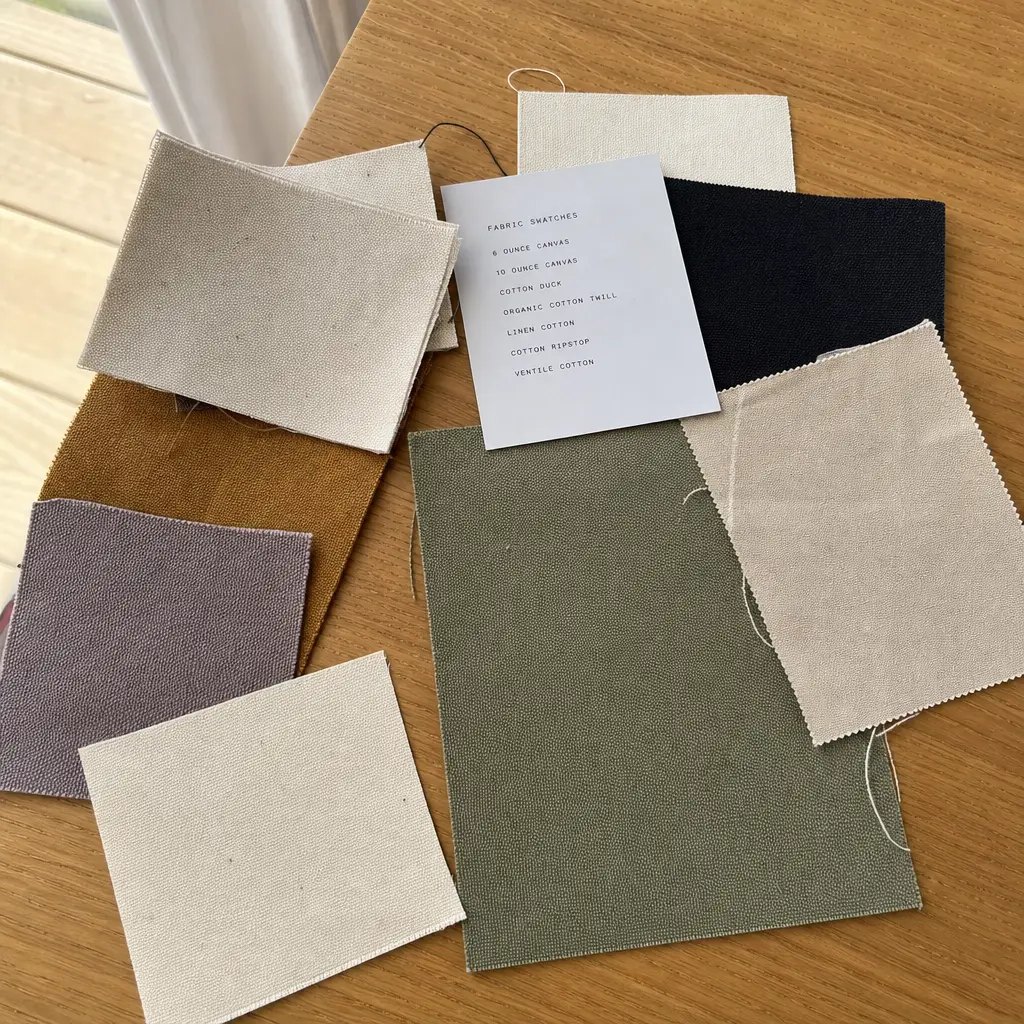
Start with the real load, not the sustainability claim
The main buying mistake on custom organic cotton totes for liquor retail is choosing fabric on eco positioning alone, then discovering the bag twists, sags, or tears when loaded with glass. A tote for cosmetics or bookstore use may look similar on a quotation sheet, but liquor retail puts very different stress on the side seams, bottom panel, and handle attachment. Before comparing mills or bag factories, define the actual load case: one 750 ml bottle, two bottles, mixed basket with one bottle plus snacks, or a premium reusable store tote expected to survive repeat visits.
That one decision drives almost every material choice. If the program is a simple branded giveaway for light purchases, a 10 oz organic cotton tote may be enough. If it needs to carry two heavy bottles and still feel structured on shelf, moving to 12 oz or 14 oz canvas with reinforced handles usually saves more in returns and complaints than it adds in unit cost. Buyers who describe the carrying use clearly get more comparable quotes and fewer unpleasant sample revisions.
- Single bottle gift bag: prioritize gusset shape and bottle fit
- Two bottle carry: prioritize bottom support and seam strength
- General shopping tote: prioritize handle comfort and print area
- Premium reusable bag: prioritize durability over the lowest GSM quote
Choose GSM by bottle weight, shape retention, and freight impact
For most liquor retailers, the practical range for organic cotton totes is about 280 to 400 GSM. In common trade language that usually maps to roughly 10 oz to 14 oz canvas, though buyers should always request GSM because ounce naming varies by market and supplier habit. Below about 280 GSM, standard retail totes can still work for low-load promotional use, but the bag often loses shape and the handles can rope up uncomfortably under bottle weight. Above 400 GSM, the bag may feel premium, yet freight and sewing difficulty increase quickly, and print can become less crisp on textured heavy canvas.
A good middle ground for many programs is 10 oz to 12 oz organic cotton canvas. It gives enough body for branded retail use without pushing carton weights too high. If the tote is narrow and intended for wine or spirits bottle gifting, a gusseted 8 oz to 10 oz construction may still be suitable because the product load is constrained and vertical. For wider shopping totes, especially where two bottles may sit side by side, extra body in the base and side seams matters more than headline fabric claims.
- 280 to 340 GSM: common range for standard branded retail totes
- 340 to 400 GSM: better for heavier loads and more structured premium feel
- Natural fabric often has visible slubs; decide if that suits the brand image
- Heavier GSM increases carton weight, sea freight cost, and machine sewing time
Construction details matter more than one extra ounce of fabric
When buyers compare quotes, they often focus on fabric weight and overlook construction. In practice, poor handle stitching can cause failure faster than choosing 10 oz instead of 12 oz. For liquor retail, self-fabric handles are common and usually cost-effective, but the attachment area needs reinforcement. X-box stitch or well-executed cross reinforcement is the normal safe choice for bags expected to carry glass. If the supplier cannot show clear close-up photos of handle anchoring or a physical load sample, the quote is incomplete even if the price looks attractive.
The base shape also changes usability. A flat tote may be acceptable for general shopping, but if the bag will regularly hold bottles, a bottom gusset improves load distribution and helps the bag stand or sit more predictably. Side gussets make display neater and reduce panel distortion when bottles press outward. Buyers should state whether the bag should remain visually presentable when carrying a rigid load, because factories can quote the same dimensions in very different constructions.
- Specify handle width and drop, not only 'long handles'
- Require reinforcement pattern at handle attachment
- Add bottom gusset for bottle weight distribution
- Use side gusset where product shape needs better control
- Request seam allowance guidance if dimensions are bottle-fit critical
Printing method should follow artwork, not supplier convenience
Organic cotton buyers in liquor retail usually want branding that feels clean and premium, but print selection should stay practical. For most logos, water-based screen printing is the most commercially stable option in bulk. It handles solid one-color or two-color branding well, gives good opacity on natural fabric, and is easier to cost across medium to large runs. Pigment or reactive approaches may also appear depending on the factory setup, but the useful buying question is simple: how consistent will the logo look across the full order and on the next reorder?
Digital printing or direct-to-garment methods can help with short runs, photo art, or multiple SKUs, yet they often raise unit cost and may behave differently on heavier canvas. Large dark panels can feel stiff if the ink deposit is heavy. For black or deep-colored fabric, buyers should verify whether the logo is screen printed, heat transfer applied, or woven into a label instead. A low quote can hide a print method mismatch that only becomes obvious after wash-off, rub-off, or inconsistent color appearance under store lighting.
- Screen print: best value for simple logos and bulk repeat orders
- Digital or DTG: useful for low MOQ or complex multi-color art
- Large ink coverage can stiffen fabric and increase defect risk
- Approve Pantone target and acceptable variation before mass print
- Request a rub test reference if print durability is important
MOQ logic: lower minimums usually come from simpler material routes
If the first order is a market test or regional launch, the cleanest way to reduce MOQ is to remove variables from the material route. Stock organic greige or natural fabric, standard handle webbing width if used, and a one-color screen print generally give the factory the most flexibility. Once you add custom dye, exact PMS matching on dark colors, multiple print positions, woven labels, or special retail packing, the minimum efficient run usually rises because each process has setup loss and approval time.
This is why two quotes that look close in unit price can behave very differently at reorder stage. A supplier may offer a low MOQ by using available fabric and looser color matching, while another builds the quote around a dedicated dyed lot that requires a larger commitment but scales better over a yearly program. Buyers should compare MOQ at component level, not just finished bag quantity. Fabric mill minimums, print setup minimums, and carton labeling minimums often explain why one supplier cannot match another structure.
- Lowest MOQ route: natural fabric, one-color print, standard dimensions
- Custom dyed body fabric usually raises MOQ and timeline
- Inside labels, barcodes, and retail inserts can each carry separate minimums
- Annual volume forecast can unlock better material booking and repeat consistency
Sample approval should test bottle fit, load, and store presentation
A pre-production sample is not just for logo approval. For liquor retail, it should be used as a practical fit and stress test. Load the actual bottle types the store sells most often, including heavier glass shapes and any gift add-ons that may go into the tote. Review whether the bag leans, collapses, or distorts the print panel when full. If the tote is part of a premium seasonal display, place it on the shelf or counter fixture where it will be sold. A sample that looks fine on a desk can still fail visually in-store when the bottom is too soft or the handle drop is awkward.
Sample comments are most useful when they translate into measurable revisions. Instead of saying the tote 'feels small,' state that the finished gusset should increase by a specific amount or that the handle drop should be 1 inch longer for over-shoulder carry. Instead of saying the fabric 'feels thin,' compare it against a retained sample approved from another program or request a target GSM increase. The more concrete the sample review, the less back-and-forth later in bulk production.
- Test with actual bottle dimensions and realistic fill weight
- Review standing shape, side seam strain, and print distortion under load
- Measure finished size after sewing, not cut panels only
- Keep one signed reference sample for inbound QC comparison
- Record sample revisions by dimension, GSM, print color, and packing method
Quality control thresholds that actually prevent returns
QC on cotton totes often defaults to visual inspection only, but liquor retail programs benefit from a short list of stricter acceptance points. The visible problems are common: uneven handle lengths, print off-center, seam puckering, stains on natural fabric, and measurements outside tolerance. The less visible but more damaging issues are weak reinforcement stitching and inconsistent fabric weight between lots. If one carton contains softer fabric and another contains a firmer lot, the store team notices immediately when bags are displayed together.
Set a simple acceptance standard in the PO or quality appendix. For example, define measurement tolerance, print placement tolerance from top edge or side seam, and whether minor slubs are acceptable on natural organic fabric. Clarify what counts as a critical defect for the retailer: holes, broken stitches, mildew odor, severe print smearing, or wrong carton assortment. Factories can meet these standards more consistently when the buyer defines them before bulk cutting rather than after inspection photos arrive.
- Measurement tolerance often needs to be tighter for bottle-fit gift totes
- Natural cotton can show minor slubs; decide acceptable visual level in advance
- Handle pairing must be even enough for shelf presentation and carrying comfort
- Print placement tolerance should be measured from fixed bag points
- Carton assortment errors can disrupt store allocation even if bag quality is fine
Packing choices affect presentation, moisture risk, and DC handling cost
Packing is often treated as an afterthought, yet it changes landed cost and retail readiness. Organic cotton in natural shades can pick up dust, transfer marks, or moisture spotting during long transit if packed too loosely. On the other hand, overpacking every bag in individual poly can raise cost, create unnecessary waste, and slow store setup. The right packing method depends on the retailer's distribution route. If goods go through a central distribution center and are unpacked in volume, flat folded bundle packing may be efficient. If bags go directly to premium stores or must stay display-clean, extra inner protection may be justified.
Buyers should also look at carton dimensions and gross weight, not only bag count. Heavy canvas totes can push cartons above comfortable manual handling weight surprisingly fast. For ocean shipments in humid periods, a carton liner or moisture-control approach may prevent avoidable staining on natural fabric. This is especially relevant if the brand rejects slight marks that would normally be accepted in utility bags. Packing needs to serve retail operations, not just factory convenience.
- State fold method if shelf presentation matters after unpacking
- Set carton weight limits to match warehouse handling practice
- Use moisture barrier liner when route or season creates humidity exposure
- Align barcode and carton marking format with retailer receiving rules
- Confirm bundle quantity for store allocation efficiency
Lead time risk usually sits in fabric and print approvals
A tote bag sewing line is rarely the only schedule variable. For organic cotton programs, the biggest lead-time risks often happen earlier: fabric booking, certification paperwork flow, dyeing if custom color is involved, and print approval if logo color is tightly controlled. Buyers who place POs late sometimes try to recover time by rushing sewing, but that does not solve delayed greige fabric arrival or repeated print strike-off corrections. A realistic schedule starts with the longest material path, not the fastest stitch time.
Natural fabric with simple one-color print generally gives the shortest and most predictable route. Dyed fabric, full-panel dark print, or multiple trim components extend both approval and production time. Buyers should request a stage-by-stage timeline with sample, bulk fabric booking, dyeing if any, print setup, sewing, packing, and booking windows. That reveals where the supplier is optimistic and where contingency should sit. It also makes quote comparisons more meaningful because one factory's '30 days' may omit pre-production approvals that another factory includes.
- Fastest route: stock natural organic fabric plus simple print
- Custom dye adds approval and production variability
- Peak season vessel booking can erase factory-side time savings
- Stage timing should be listed separately, not hidden in one total lead time
- Retail event dates should include inbound warehouse buffer, not ETD only
Compare quotes on landed usable cost, not ex-works price alone
The lowest unit quote is often not the lowest program cost. A lighter bag with weak packing and inconsistent print may seem cheaper ex-works, but if it causes rework, claims, or poor store presentation, the real cost per usable bag goes up. Procurement teams should compare quotations using a landed usable cost view: ex-works or FOB price, sample and tooling charges if any, packing additions, shipping cube, duty treatment as applicable, expected defect allowance, and the cost of retail handling complexity.
This is also where heavier fabric needs a commercial check. Moving from 10 oz to 12 oz may increase unit cost moderately but reduce complaints and support a premium reuse story. Moving from 12 oz to 14 oz may look impressive in a sample room yet add more freight and carton weight than the retail program can recover. Buyers should model at least two spec levels against the intended retail role: promotional carry bag versus premium branded reusable tote. The right material choice is the one that protects margin and customer experience together.
- Include freight cube and carton weight in quote comparison
- Assign a practical defect allowance when evaluating new suppliers
- Consider store labor impact if packing is too complex
- Review whether premium fabric increase supports actual sell-through or brand goal
- Use annual reorder cost, not first-order price only, for sourcing decisions
Specification comparison for buyers
| Spec decision | Recommended option | When it fits | Buyer risk to check |
|---|---|---|---|
| Fabric weight for standard retail tote | 10 oz to 12 oz organic cotton canvas, about 280 to 340 GSM | General liquor store merchandising, gift-with-purchase, and mixed-basket carry use | Too light a fabric can distort under 2 to 4 bottle loads; verify finished GSM tolerance and seam strength, not nominal fabric name only |
| Fabric weight for 2-bottle or heavy basket use | 12 oz to 14 oz organic cotton canvas, about 340 to 400 GSM | Programs expecting heavier glass bottle loads or repeat-use premium store bags | Heavier fabric raises freight, printing difficulty, and carton weight; confirm whether cost increase is justified by use case |
| Single-bottle gift tote body | 8 oz to 10 oz organic cotton with full side and bottom gusset | Narrow wine or spirits gift bag where shape control matters more than broad shopping capacity | Some suppliers quote flat tote construction as if equivalent; check actual finished width, gusset depth, and bottle fit by sample |
| Handle construction | Self-fabric handles with X-box stitch or cross stitch at stress points | Most branded liquor retail totes where clean look and adequate strength are needed | Simple straight stitch may pass visual review but fail under load; require stitch pattern photos and load sample |
| Printing method for logo coverage | Water-based screen print for solid logos; digital or DTG only for short runs and multi-color artwork | Bulk retail programs needing reliable color, reasonable cost, and durable branding | Large dark areas can feel heavy or crack if ink deposit is poor; request print adhesion and rub test standard |
| Natural vs dyed fabric | Natural organic cotton for lower MOQ and simpler color approval; dyed black or brand color only when sell-through supports it | Programs balancing eco story, budget, and faster replenishment | Dyed lots can vary shade and may require higher MOQ; ask whether dye lot approval strike-off is included |
| Organic claim level | Certified organic fabric with document trail from mill to bag factory when claim appears on packaging or POS | Retailers making explicit sustainability claims or selling under private label standards | Many quotes use 'organic cotton' casually; verify scope certificate availability and whether factory is included in chain-of-custody handling |
| Packing format | Individual flat fold without poly where retail can accept, master carton with moisture barrier liner if sea freight season is humid | Store distribution where unpacking speed and lower packaging waste both matter | No-poly packing can lead to dust transfer or moisture marks on natural fabric; align packaging with route, climate, and retail presentation |
| MOQ route | Use stock organic greige fabric plus standard handle width for lower MOQ; reserve custom dye and custom hardware for larger annual volume | Pilot runs, regional store tests, and first orders with uncertain demand | Small initial MOQ can hide higher unit cost or limited spec control; compare total landed cost against scaling to a more efficient run size |
Buyer checklist before sampling
- Define real carrying load: single bottle, two bottles, or general mixed retail basket use
- State target fabric as finished GSM or oz plus tolerance, not only 'canvas' or 'cotton'
- Specify finished bag dimensions including gusset, handle drop, and seam allowance expectations
- Decide whether the bag must stand upright, fold flat, or fit existing shelf or gift display fixtures
- Match print method to artwork coverage, color count, and annual reorder quantity
- Clarify whether the organic claim must be certificate-backed for retail packaging or compliance review
- Approve a pre-production sample loaded with actual bottle sizes before bulk cutting
- Set acceptable shade tolerance for natural or dyed fabric and for printed logo color
- Define packing method by store distribution needs: bundle count, carton weight limit, barcode labeling, and moisture protection
- Compare quotes on landed cost per usable bag, not unit ex-works price only
Factory quote questions to send
- What is the actual finished fabric weight in GSM after washing or finishing, and what tolerance do you control in bulk?
- Is the fabric certified organic, and what transaction or scope documents can support the claim if the retailer requests them?
- Are dimensions quoted as cut size or finished sewn size, and what is the production tolerance for width, height, and gusset?
- What stitch construction is used at handle attachments, and can you provide close-up photos or load test samples?
- Which print method is included in the quote, what ink system is used, and what color tolerance can be maintained between reorders?
- What MOQ applies to natural fabric, dyed fabric, custom PMS print, inside label, and carton marking separately?
- Does the quotation include sample cost, pre-production sample lead time, and revision rounds before bulk approval?
- How are bags packed per bundle and carton, what is the master carton size and gross weight, and is a moisture barrier liner included?
- What inspection standard is normally applied, and which defects are treated as critical for print, stitching, holes, stains, and measurement?
- What is the bulk lead time by order size, and which stages most often create delay: fabric booking, dyeing, printing, sewing, or export booking?
Quality-control points to confirm
- Fabric weight within agreed tolerance, for example plus or minus 5 percent of finished GSM
- Finished size within agreed tolerance, typically plus or minus 0.5 inch for width and height and tighter if bottle fit is critical
- Handle length pair tolerance controlled so bags hang evenly at retail
- X-box or reinforced handle stitching present and symmetrical at all stress points
- No slub holes, weaving bars, oil marks, mildew odor, or cutting stains on visible panels
- Print registration, color density, and edge sharpness matched to approved sample with no major pinholes or smearing
- Inside seams trimmed cleanly with no long thread ends that affect store presentation
- Carton count, bundle count, and carton labeling match purchase order and store distribution plan
- Needle detection or metal control procedure applied if the retailer requires it for packed goods
- Drop test or simple load test completed on pre-production sample using actual bottle weight