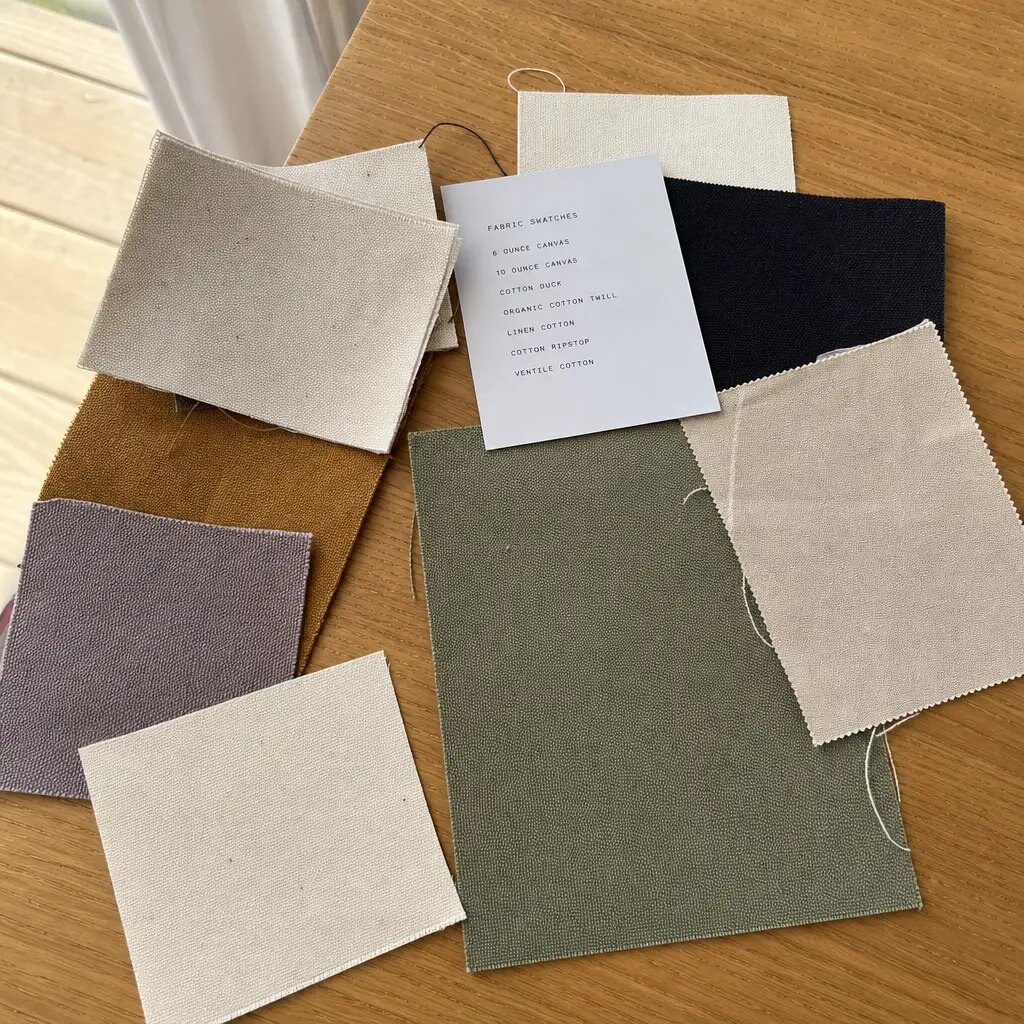
1. Start with the channel and the load, not the mockup
Coffee roasters rarely buy totes for a single use case. A retail merch tote needs to look good on a hook, carry a clear brand mark, and survive repeated use. An event giveaway has to move fast, stay within budget, and pack efficiently. A subscription insert needs to fold flat and survive carton compression. A wholesale add-on or staff bag may need to carry beans, mugs, tasting notes, and a small retail bundle without stress at the handles. If the first approval is the artwork, suppliers will often quote a generic tote instead of the product you actually need.
A buyer brief should describe the business problem before anyone talks about decoration. State where the tote will be used, who receives it, what it must carry, and whether it is a sellable retail item or a promo item. Add the finished size, handle drop, print area, and whether the bag needs to stand upright on a shelf or disappear into a subscription carton. That context tells the factory whether to prioritize structure, print clarity, foldability, or freight efficiency.
For coffee brands, the channel usually determines the build. A premium merch bag can justify heavier cloth and a cleaner decoration method. A tasting event tote may only need enough structure for flyers and a 12 oz coffee bag. Subscription programs usually care more about flat packing and carton cube than heavyweight hand feel. When the use case is clear, the quote is easier to compare and the final bag is less likely to be overbuilt or underbuilt.
- Retail merch: prioritize shelf presence, logo clarity, and repeat-use feel.
- Event giveaway: prioritize unit cost, fast packing, and simple construction.
- Subscription insert: prioritize flat folding, carton efficiency, and low damage risk.
- Wholesale add-on: prioritize handle strength and enough body for coffee and retail inserts.
- If the tote will be sold, spec it like a consumer product.
2. Compare fabric weight, weave, and finish as one decision
Fabric weight matters because buyers feel it immediately. It also changes unit cost, freight weight, carton cube, and how premium the tote looks in hand. For many coffee roaster programs, 180-200 GSM is the most workable middle band because it usually gives enough body for retail presentation without making the tote stiff or expensive to ship. A 140-160 GSM build can work for lower-cost campaigns, but it often reads like a promo bag. Heavy canvas at 220 GSM and above gives a more substantial feel, yet it increases sewing cost, bulk, and shipping weight.
Weight alone is not enough. Ask what weave the supplier is quoting and whether the cloth is a loose plain weave, a tight plain weave, a light canvas, or a heavier canvas. A tighter surface usually prints more cleanly and hides contents better. If the roastery logo includes small text, thin lines, or a fine emblem, a denser weave gives you more margin. If the brand wants a softer, more natural look, a less dense fabric may be acceptable, but it needs to be tested for opacity and structure.
Treat GSM as a target, not a complete spec. Ask whether the number is before or after finishing, and ask for the allowed tolerance. The number that matters most is the finished tote size after conditioning, because cotton can shift after washing, moisture exposure, or pre-shrinking. If the supplier quotes a GSM and does not explain the finish, you do not yet have a comparable spec. The same fabric can behave very differently once it is washed, pressed, or packed for shipment.
- 140-160 GSM: light, foldable, lower-cost, but check opacity and shelf presence.
- 180-200 GSM: balanced body for retail merch, inserts, and repeat use.
- 220+ GSM: premium feel and strong presence, but bulkier and more expensive to move.
- Tight plain weave: better for print definition and content concealment.
- Always ask whether the quoted weight is raw cloth or finished cloth.
3. Put the organic claim path in writing before artwork is approved
Not every cotton tote that looks natural can be sold as organic. If your marketing copy, hangtag, carton mark, or e-commerce listing will use an organic claim, the supplier needs to support it with the correct documents. At minimum, buyers should ask for the mill's current scope certificate, the cut-and-sew factory's scope certificate if applicable, and the transaction certificate or equivalent shipment document required by the relevant standard and market. A supplier declaration that matches the PO, invoice, and carton description should also be part of the file.
The practical rule is simple: lock the wording before artwork release. If the supplier cannot confirm the claim path, the tote should not carry an organic claim in the finished artwork or packaging. That prevents the common failure mode where the bag itself is acceptable but the supporting paperwork does not line up at receiving, customs, or internal compliance review. It also avoids rework when carton marks and hangtags do not match the approved product description.
Coffee roasters run into this when a tote is bundled with premium beans or used in a retail launch. The tote may sit next to products that already have traceability controls, so the same discipline should apply here. If the order can only support a limited claim, state that boundary in the PO and in the proof approval. Do not let the product story get more precise than the paperwork.
- Request the mill and factory scope certificates, not a verbal assurance.
- Require the transaction certificate or equivalent shipment paper used by the applicable standard.
- Make the product wording on the PO, invoice, carton marks, and artwork match exactly.
- Do not approve organic wording until the document path is confirmed.
- If the chain of custody is unclear, simplify the claim instead of stretching it.
4. Build around construction, dimensions, and tolerance before the artwork gets expensive
Handles and seams decide whether a tote becomes a real carry bag or a short-lived giveaway. For coffee roaster use, self-fabric handles can work, but the handle width, drop, and attachment need to support actual loads. Box-X reinforcement or a dense bar-tack style stitch gives the handle more life at the stress point. Narrow handles, loose attachment, or uneven placement can look fine in a photo and still fail after repeated use.
The body needs the same discipline. Side seams and bottom seams should stay flat and square when the bag is filled. If the tote has a gusset or boxed bottom, ask how the corners are built and whether seam allowance is consistent from panel to panel. Top hems matter too. A crooked hem is obvious when the bag hangs on a hook or sits upright in a shelf stack. In retail, small construction defects are often more visible than the logo.
Give the supplier numeric tolerance targets. Many buyer programs hold finished width and height within about +/- 1 cm and handle drop within about +/- 0.5 cm for a simple tote, then tighten those numbers if the bag is retail-facing or part of a premium launch. The point is not the exact number. The point is to make the tolerance explicit so every sample and production lot is judged against the same standard.
- Specify handle width, handle drop, and reinforcement style in the RFQ.
- Use Box-X stitching or an equivalent reinforcement at the stress points.
- Check that the top hem is even and the side seams stay square when loaded.
- Set numeric tolerances for size and handle placement before approval.
- Test the sample with real coffee retail items, not an empty bag.
5. Match the decoration method to the fabric and artwork complexity
Screen print is usually the most dependable decoration method for custom organic cotton totes because it handles bold logos, repeats consistently, and keeps cost controlled on reorder programs. It works well when the artwork is simple and the brand wants a clear mark that reads from a display hook. Woven labels and sewn labels are useful when the front panel should stay cleaner or when the brand wants a more premium cue without filling the tote with ink. Embroidery can work for small accents, but it can distort lighter cloth and is rarely the right choice for small text or large logo fields.
Heat transfer and similar methods can solve detailed or short-run artwork needs, but they should be tested on the actual fabric before approval. Cotton texture changes how a print sits, how edges hold up, and how the mark looks after folding and handling. A digital proof only confirms layout. It does not tell you how the fabric absorbs ink, whether the edge is crisp, or whether fine copy survives on a textured weave. If the logo includes small type, ask for a strike-off or a near-production sample before you commit to bulk.
Coffee roasters usually get better results from restraint. A strong logo, one accent color, and a clean placement is easier to buy, easier to control, and more durable than a crowded design. If the tote is sold at retail, the decoration should read clearly on a hook and still look coherent when the bag is folded in a shelf stack or carried in hand.
- Screen print: strong for bold logos and repeat orders.
- Woven or sewn label: useful when you want a cleaner front panel.
- Embroidery: durable, but verify that it does not distort the cloth.
- Heat transfer: only if the artwork requires it and only after a real fabric test.
- Set minimum line width, placement tolerance, and color reference before approval.
6. Compare suppliers on the same basis, or the price is not useful
A direct factory, a trading company, and a local decorator can all sell a tote that looks similar in photos, but they do not control the same parts of the job. A direct factory usually gives the best repeatability because it can own fabric booking, sewing, and packing more tightly. A trading company can be useful for broader buying programs, but you still need to know which factory is actually making the tote and whether that site can repeat the same spec later. A local decorator can be the fastest path for a small event order, but they often have fewer fabric choices and less disciplined document control.
The quote needs the same discipline. Separate sample cost, setup cost, print cost, label cost, individual packaging, carton printing, and freight assumption so you can see where the money is going. If one supplier includes pre-shrunk cloth and another quotes raw fabric, the prices are not comparable. If one quote assumes flat packing and another includes polybags, the landed cost will differ even when the unit price looks close. Procurement gets the best result when every supplier prices the same tote, not a version they prefer to sell.
If a supplier explains how they control fabric batches, stitch consistency, and packing counts, they are showing you that they can repeat the order. If they only focus on unit price, you may save money on the first shipment and spend it later on rework, claim handling, or reorder inconsistency. The lowest quote is not useful if the material, finish, or paperwork cannot be repeated.
- Direct factory: strongest option for repeatability and document control.
- Trading company: useful for mixed purchasing, but verify the actual factory.
- Local decorator: good for short lead time, but check packing and claim support.
- Make every supplier quote the same GSM, size, decoration, and packing format.
- Treat any unquoted spec item as a real cost risk.
7. Use samples to prove the build, not just the layout
A digital proof is only layout approval. It cannot tell you how the cloth will drape, how the print will sit on texture, or whether the handle reinforcement will behave under load. The pre-production sample should use the intended fabric, thread, print system, label method, and packing method. If the supplier swaps in a lighter cloth or different ink to make the sample easier, the approval is not meaningful. For a coffee roaster, the sample has to reflect how customers will see the tote at retail, at events, or after it comes out of a subscription carton.
Inspect the sample like a buyer, not like a designer. Fold it and reopen it several times. Check whether the body holds shape, whether the print still looks clean on the crease line, and whether the tote hangs square. Load-test it with the items your customer will actually carry. If the sample twists, feels flimsy, or shows poor print coverage near seams, fix the spec before bulk cloth is cut. The goal is not to move quickly through approval. The goal is to approve something that can be repeated without surprises.
Keep a physical reference sample if you can. A signed sample gives your team a stable point of comparison when the bulk shipment lands or when a reorder comes months later. If the supplier changes a seam allowance, handle drop, or print placement in the future, the reference sample makes the difference visible immediately.
- Require the sample to use bulk fabric, bulk thread, and the final print method.
- Check how the tote folds, opens, and hangs in a retail setting.
- Load-test it with real coffee retail items, not a generic weight.
- Keep a signed reference sample for reorders and disputes.
- Do not approve a bulk run on artwork alone.
8. Set receiving QC and defect thresholds before the shipment leaves the factory
Receiving checks should cover more than carton count. Start with the paperwork: PO description, carton marks, invoice wording, and any organic documentation should all match. Then inspect the physical goods for weight, size, stitch quality, print placement, and labeling. Finished dimensions should be measured after pressing or conditioning because a tote can look correct at the sewing line and still move once it is packed, shipped, and unpacked. If the order uses pre-shrunk cloth, confirm that the finished size still sits within the agreed tolerance after conditioning.
Define defects before the shipment leaves the factory. Loose threads are usually a minor issue if they are trimmed cleanly, but open seams, misaligned handles, or large print errors should be treated differently. The same logic applies to packing errors. Mixed cartons, missing size labels, dirty bags, and damaged handles are not cosmetic details if the bags are going to retail, a 3PL, or a launch event. A buyer should know what can be reworked locally and what should be rejected before cargo release.
The strongest QC programs are written and simple. They state what to check, how many cartons to open, what counts as acceptable, and who signs off on exceptions. That protects both the brand and the factory. It also prevents arguments later about whether a seam pucker or a print shift was within tolerance. If the buyer and supplier do not agree on the defect threshold, they do not really agree on the product.
- Check carton marks, invoice wording, and claim wording before opening the goods.
- Measure finished size after pressing or conditioning.
- Inspect stitch quality, handle attachment, print placement, and label alignment.
- Separate reworkable defects from reject-level defects in writing.
- Keep photo evidence for any shipment dispute or chargeback.
9. Treat packing, cartons, and warehouse intake as part of the product spec
Packing affects freight cost, warehouse handling, and first impression. Flat-packed totes are usually the most efficient option because they reduce carton cube and make counting easier at receiving. If the bags are folded consistently and packed into clearly labeled cartons, the warehouse can verify counts much faster. Individual polybags can be useful when the tote is sold at retail or needs a cleaner shelf presentation, but they add labor, material cost, and waste. Tissue, hangtags, and inserts should only be included if they support the channel. For event giveaways or subscription inserts, they can become unnecessary cost.
Ask the factory to quote carton dimensions, gross weight, units per carton, and the carton label format. That information lets logistics estimate freight and storage before the PO is approved. It also helps the warehouse decide whether the bags should be split by size, color, or artwork version. Mixed cartons can save space, but they often slow intake and create count errors. If the bags are going overseas or into a 3PL, add moisture protection and stackability requirements so the cartons survive transit and pallet handling.
If your receiving team wants a smooth intake process, give the supplier a written pack spec. State the fold method, count per carton, carton marking style, whether the outer carton must survive pallet stacking, and whether each SKU needs its own carton. A tote that lands neatly in the warehouse is not a minor logistics detail. It is part of the product experience and part of the total cost.
- Flat pack is usually the lowest-cost and easiest-to-receive format.
- Polybag each tote only when the retail channel or hygiene need justifies it.
- Ask for carton dimensions and gross weight before approving the quote.
- Avoid mixed cartons unless the warehouse has explicitly approved them.
- Give the supplier a written pack spec so the intake team is not improvising.
10. Treat MOQ, lead time, and reorderability as one production plan
MOQ is easier to manage when the base tote stays the same and only the print changes. Once you start varying fabric color, handle style, label version, and packing format at the same time, the order behaves like several small production runs instead of one clean program. That is where cost and MOQ climb quickly. For coffee roasters that run seasonal art or collaboration drops, the most useful decision is often what stays fixed for the year. Keep the body fabric, handle construction, and carton format stable, then change only the artwork when you need a new release.
Lead time should be broken into stages: sample development, material booking, production, inspection, and shipment booking. If the launch date matters, ask whether the factory can reserve fabric after sample approval and whether any organic or custom materials need earlier booking. A supplier who only gives you one total lead-time number is not giving you enough control. You need to know where the schedule can slip and what has to happen before the next step begins.
Reorders are where a good tote program becomes efficient. Ask whether the supplier can repeat the exact same spec later without changing fabric hand, stitch pattern, or packing method. If the answer is yes, the tote becomes easier to replenish and easier to scale. If the answer is no, treat that as a sourcing risk, not a minor production note. Reorderability is a quality issue as much as a planning issue.
- Lower MOQ is easier when the body spec stays fixed and only the print changes.
- Multiple colors, handles, sizes, and packing versions usually raise cost and lead time.
- Break lead time into sample, material booking, production, inspection, and shipping.
- Reserve fabric after sample approval if the launch date is fixed.
- Ask for a reorder path that does not require rebuilding the tote from scratch.
Specification comparison for buyers
| Option | Weave / finish | Best buyer fit | Buyer tradeoffs to verify |
|---|---|---|---|
| 140-160 GSM plain weave | Light hand, lower yarn density, minimal structure | Event giveaways, inserts, and budget-led campaigns | Print can look less opaque, seams can twist under load, and dark contents may show through; confirm carton cube stays low enough to protect freight economics |
| 180-200 GSM tight plain weave or light canvas | Balanced body, cleaner surface, better drape than heavy canvas | Retail merch, subscription inserts, and repeat-use programs | Verify print clarity on textured cloth, post-condition shrinkage, and whether the bag still folds flat enough for efficient packing |
| 220-260 GSM canvas | Heavy hand, stronger shelf presence, stiffer fold | Premium resale tote programs and high-load carry use | Confirm that the added weight is worth the freight hit, and check handle reinforcement because heavier cloth without stronger stitching can still fail |
| Pre-shrunk or sanforized finish | More stable finished dimensions and less post-wash movement | Programs that need consistent retail presentation or predictable reorders | Require finished-size tolerance after conditioning, not only raw cloth weight; ask for shrink risk by dimension, not a generic yes/no |
| Tight weave with smooth finish | Cleaner print face, less texture break, more consistent ink edges | Fine logos, small type, or artwork with thin lines | Check whether the finish changes hand feel, whether the bag still feels natural, and whether the supplier is quoting before or after finishing |
| Certified organic claim path | Chain-of-custody documents from mill to shipment | Any tote sold or labeled with an organic claim | Require scope certificates, transaction certificate or equivalent, lot references, and matching wording across PO, invoice, carton marks, and artwork |
| Screen print on cotton | Best for bold artwork, single-color logos, and repeat runs | Most coffee roaster merch and event bags | Set minimum line width, placement tolerance, and ink opacity; verify the logo still reads across seams and fold lines |
Buyer checklist before sampling
- Start with the channel: retail merch, event giveaway, subscription insert, wholesale add-on, or staff use.
- Define the real carry load, such as two coffee bags, a mug, tasting notes, a sampler box, or a full retail bundle.
- Choose one target GSM and one acceptable backup range, then include both in the RFQ.
- State the weave and finish you want: plain weave, tight plain weave, canvas, pre-shrunk, pre-washed, or sanforized.
- Set finished-size tolerances for width, height, handle drop, and gusset depth if used.
- Decide whether the tote needs an organic claim and list the document set required at mill, factory, and shipment level.
- Lock the decoration method before artwork approval and identify a backup method if the first choice is not viable.
- Require a pre-production sample made from bulk fabric, bulk thread, real print method, and final packing format.
- Ask for a line-item quote that separates fabric, sewing, printing, labels, packing, carton marking, and freight assumptions.
- Write the reorder rule into the PO: what can change, what cannot change, and who must approve any substitution.
Factory quote questions to send
- What exact fabric construction, GSM, and finish are you quoting, and is that weight measured before or after finishing?
- What is the woven structure and yarn density, and does the cloth lean toward a looser plain weave or a tighter print-friendly face?
- Will the fabric be pre-shrunk, pre-washed, or sanforized, and what finished-size tolerance can you hold after conditioning?
- Which certification path applies to this tote, and what scope certificate, transaction certificate, or equivalent shipment document will you provide?
- Can you show how the mill batch, cut-and-sew lot, and shipment paperwork will match each other by lot, roll, or reference number?
- What handle width, handle drop, attachment method, and reinforcement stitch do you recommend for the load we expect?
- What is the print method, how many colors are included, and what minimum line width and text size can you hold cleanly on cotton?
- What is the MOQ by color, size, and artwork version, and which changes increase MOQ immediately?
- What is included in the unit price, and which items are separate charges for setup, samples, labels, packing, or carton printing?
- Can the sample be made from the same bulk materials and production line as the final order, without substitute fabric or substitute ink?
Quality-control points to confirm
- Verify that the PO, invoice, carton mark, and organic documentation use the same product description.
- Measure finished size after pressing or conditioning, not only right off the sewing line.
- Check width, height, and handle drop against the approved tolerance, with tighter control for retail-facing programs.
- Inspect stitch density, seam alignment, top hem consistency, and handle attachment symmetry left to right.
- Look for open seams, skipped stitches, loose threads, needle damage, and pucker at the handle base or side seams.
- Check print placement, edge sharpness, ink opacity, and whether the mark breaks on the fabric texture or fold line.
- Confirm that labels, hangtags, and carton marks match the approved artwork and are placed consistently.
- Reject bags with stains, oil marks, odor from finishing chemicals, or mixed sizes inside the same carton.
- Open cartons across the lot, not just the top layer, and reconcile counts against the packing list.
- Document any defect with photos, carton numbers, and a written disposition before cargo release or chargeback approval.