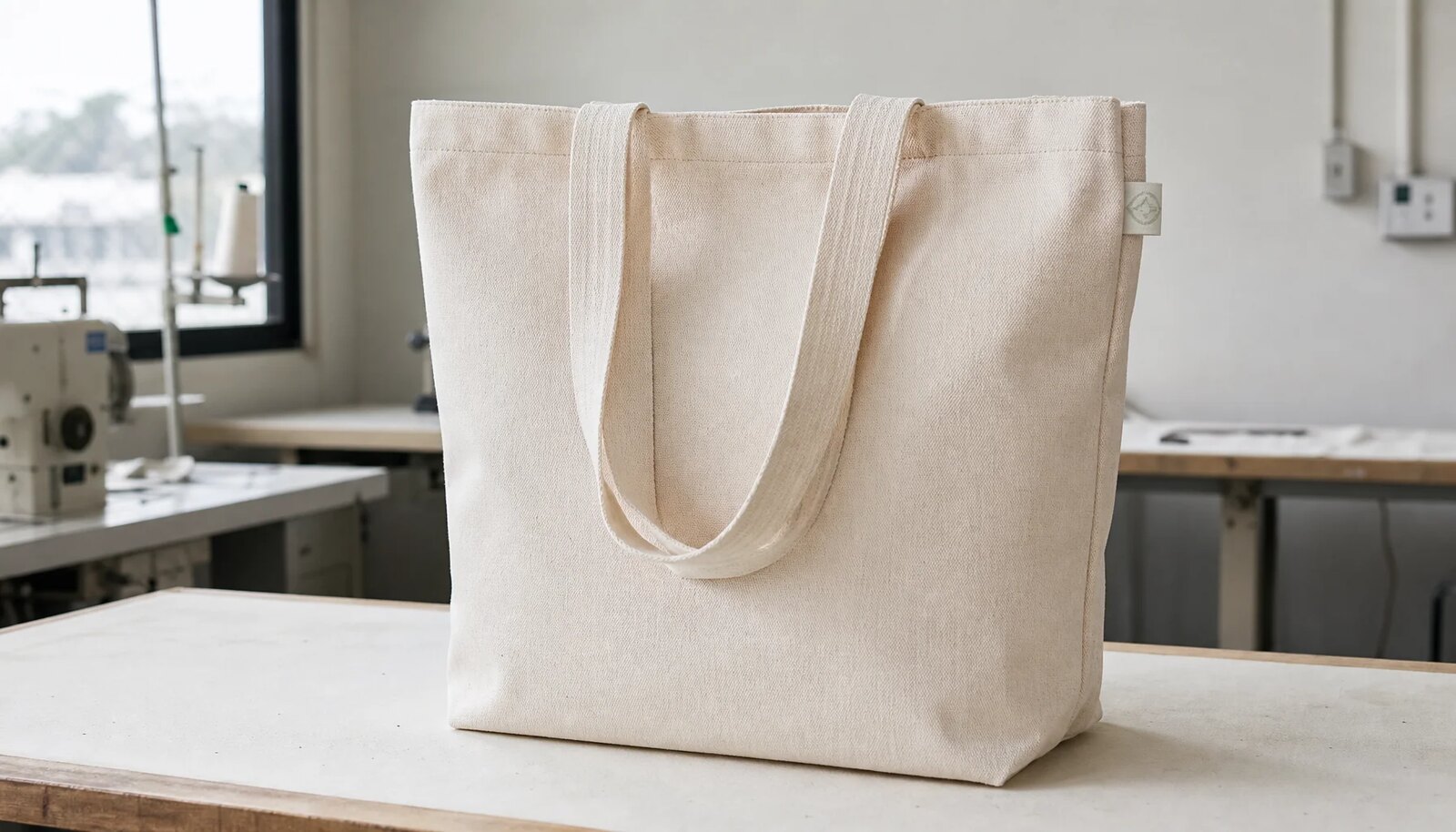
Start With the Selling Job, Not the Tote
A farmers market tote is not just a branded bag. It is a working container that may carry produce, bread, jars, flowers, printed materials, or cold and damp items on the same trip. That is why the first procurement decision is not fabric weight or print method. It is use case. A giveaway tote for a market sponsor, a resale item for vendors, and an operational bag for staff can all look similar in a mockup while needing very different body, handle, and packing specs. If the bag has to live in a stall all day, it should open quickly and hold shape. If it is meant to be folded into a purse or apron pocket, the weight and structure need to stay lighter.
Write the brief around the actual workflow. Define the carry load, whether the bag must stand open on a table, whether it should fold flat, whether it will be reused weekly, and whether washability matters. If the program includes both light handouts and heavier vendor use, split the spec into two SKUs instead of forcing one bag to do both jobs. That one change usually improves the quote, the sample, and the bulk approval because suppliers are no longer guessing at your real performance target.
- Define the real load and reuse pattern before requesting quotes.
- Split giveaway and vendor-use totes if the performance target differs.
- State whether the tote must stand open, fold flat, or survive repeated reuse.
Choose Fabric Weight, Weave, and Finish Together
GSM is the first number most buyers use, but it is only a starting point. For custom organic cotton totes used by farmers market vendors, 180 to 220 gsm is often the most practical range because it gives enough body for a clean logo, enough structure for produce, and enough durability for repeated use without becoming too rigid. Lighter cloth in the 140 to 160 gsm range can work for event giveaways and low-load handouts. Heavier cloth in the 240 to 280 gsm range feels more premium and can support heavier contents, but it also increases sewing time, carton weight, and freight cost.
Treat GSM as part of the fabric system, not the whole answer. Two 200 gsm fabrics can behave very differently if one is loosely woven, prewashed, or made with a different yarn count. A loose weave may still show print strike-through or stretch under load. Ask for the weave type, yarn count, finishing process, and expected shrinkage after wash or conditioning. If the sample is unwashed but bulk will be prewashed or softened, call that out before approval because the finished dimensions and print placement will shift.
- 140 to 160 gsm: light, economical, and easier to crease or show strike-through.
- 180 to 220 gsm: the best all-around range for reusable market totes and retail bags.
- 240 to 280 gsm: better for heavy loads and premium perception, with higher total landed cost.
Turn Organic Claims Into a Traceability Requirement
The word organic only matters in procurement if the documentation can survive review. If the buyer needs a defensible claim on the finished tote, ask how the cotton is traced from fiber or yarn to fabric to cut-and-sew to packing. This is where certification scope matters. GOTS is the most common finished-product path when the buyer wants a stronger processing and handling standard across the supply chain. OCS can support an organic fiber claim, but it is not the same as a finished-bag processing certification. If marketing wants to say organic cotton tote on a finished good, the supplier should be able to show exactly which certification path applies to that claim.
Ask for the paper trail before the first sample is approved. At minimum, confirm the active scope certificate, the transaction certificate or equivalent shipment-level proof if your program requires it, the mill or factory name, the order lot numbers, and whether printing, labels, and packing sit inside the same certification scope. If the supplier plans to substitute fabric lots, inks, or labels, make that a re-approval event. In procurement terms, the question is not only whether the material is organic. It is whether the claim is traceable all the way to the finished tote you are actually buying.
- Use GOTS when the finished-bag claim and processing scope both matter.
- Use OCS only when the program is comfortable with a fiber-content claim, not a full processing claim.
- Require the scope certificate, transaction certificate, lot numbers, and supplier name before bulk approval.
Specify the Construction Like a Buyer, Not a Mood Board
A tote spec should describe the finished bag, not just the sketch. State the finished width, height, gusset depth, handle length, handle drop, seam allowance, and top hem construction. If you only give a nominal size, different factories will interpret it differently. Soft goods also need tolerance. A practical starting point is plus or minus 0.25 inch for smaller totes and plus or minus 0.5 inch for larger bags, but the right band depends on the bag shape and brand standard. Put the tolerance in the PO so inspection is not a debate after the shipment lands.
The stress points matter more than the center panel. Handle width, handle anchor reinforcement, stitch density, and seam allowance determine whether the bag survives daily market use. Wider handles distribute weight better and feel better on the hand. Narrow handles save cost but can cut into the hand and look underbuilt when the bag is full. For a reusable tote, ask the factory to identify where it uses bar-tacks, box stitching, or reinforcing patches, and ask for the stitch count or stitches per inch. If the bag will carry jars or dense produce, also confirm whether the bottom gusset stays stable when the bag is loaded, set down, and lifted repeatedly.
- Quote finished dimensions, handle drop, gusset depth, and seam allowance, not just a rough size.
- Set dimensional tolerance in the PO before sample approval.
- Ask for reinforcement details at the handle anchors and other load points.
Match Decoration to Artwork Complexity
Decoration should follow the cloth, not fight it. For organic cotton totes, one- or two-color screen print is usually the safest choice because it gives sharp logo edges, repeatable output, and controlled cost. Water-based ink can work well when the brand wants a softer hand feel, but the ink opacity has to match the weave. On lighter cloth, too much ink can cause strike-through or make the bag feel stiff. If the artwork includes small text or fine lines, ask the supplier for its minimum line thickness and minimum space between elements on the chosen fabric weight.
More complex artwork changes the buying equation. Full-color graphics and gradients may push the job toward transfers, but transfer methods can alter the hand feel and can wear differently after repeated folding. Embroidery can look premium, but on lighter cotton it can pucker the fabric or distort the bag panel. Woven labels and sewn-on patches are useful when the brand wants a more understated look or when the buyer wants to minimize ink coverage. Approve decoration on a sewn sample, not only on a flat proof, because seam lines, handle placement, and fabric tension often change the final placement.
- Use screen print for simple branding and repeatable color control.
- Treat fine-line art, gradients, and multi-color logos as higher-risk jobs.
- Approve the decoration on a sewn sample, not only on a flat mockup.
Compare Suppliers on the Same Buying Basis
MOQ is usually driven by fabric booking, print setup, sewing efficiency, and packing requirements, not just by the order quantity. A one-color tote on stock fabric can often be quoted at a lower MOQ because the factory can move it efficiently. Add another print color, a custom label, a retail fold, or special carton markings, and MOQ usually rises because every extra step adds a control point. Two quotes can look close at the unit price and still be very different once sample fees, setup fees, and packing are included.
Ask for a line-item quote so you can compare apples to apples. Request fabric, cutting, sewing, decoration, labels, packing, sample charges, and freight separately. Then normalize each quote to the same finished size, same GSM, same decoration method, same packing format, and same tolerance. For a farmers market vendor program, the goal is not the cheapest invoice line. It is the lowest risk of rework, late delivery, and a tote that feels different from the approved sample. A slightly higher unit price can be the better buy if it includes better traceability, cleaner packing, and a more reliable schedule.
- Normalize every quote to the same size, fabric weight, print method, and packing format.
- Ask for sample charges and setup charges separately so hidden costs do not disappear into the unit price.
- Treat lead time, traceability, and packing quality as part of the supplier comparison.
Use Samples to Expose the Real Risk
A sample is useful only if it tests the failure points that matter in production. Before bulk approval, measure the finished bag, inspect the weave, compare the color to the approved reference, and check the print under normal indoor light. Then load the tote with the heaviest realistic contents and inspect the seams, handle attachment, body distortion, and opening shape. If the bag will be washed or wiped frequently, run a conditioning or wash check before final sign-off because shrinkage can change both size and logo placement. The sample should show how the tote behaves in use, not just how it photographs.
Keep one signed golden sample and use it as the production reference. That sample should define size, color, stitch appearance, label position, print placement, and overall finish. If the supplier sends a pre-production sample, compare it directly against the golden sample and record every difference, even if it seems small. In tote programs, the most expensive problems are often spec drift rather than obvious defects. A handle that is slightly shorter, a label that moves, or a seam that looks looser can turn into a receiving dispute if nobody documented the approval baseline.
- Use the sample to test size, print, seam finish, and handle strength together.
- If the tote will be washed or heavily reused, test shrinkage and print durability before bulk.
- Keep one signed golden sample as the production and inspection reference.
Set QC, Testing, and Acceptable Defects Before Bulk
Quality control for custom organic cotton totes should cover both the product and the paperwork trail. On the physical side, inspect fabric weight, seam construction, handle reinforcement, print adhesion, color consistency, and finished dimensions. On the documentation side, confirm that the packing list, carton count, material statement, and label text all match the approved spec. If the tote will be sold at retail, add checks for fold consistency, barcode readability, hangtag placement, and presentation quality. The inspection plan should match the buying risk, not the factory's internal habit.
Ask the factory how it checks goods before packing and before shipment. Good suppliers can explain where they sample stitch quality, how they verify print rub resistance, and how they count carton content. If you use AQL, put the defect severity and accept/reject rule into the PO so everyone works from the same standard. A common starting point in soft goods is AQL 2.5 for major defects and 4.0 for minor defects, but the buyer should tune that to the channel and risk profile. If the supplier cannot describe its own control points, the buyer is carrying too much inspection risk downstream.
- Measure against the approved spec, not just a visual sample.
- Check label text, carton count, and packing format before shipment.
- Add retail-facing checks when the tote will be sold, not only distributed.
Packing and Landed Cost Decide the Real Winner
Packing is not an afterthought. A tote packed too tightly can arrive creased, misshapen, or with pressure marks on the print area. A tote packed too loosely can look sloppy at retail and increase receiving errors. Decide early whether you want bulk packing, folded and banded units, polybagged units, or full retail-ready presentation. For farmers market vendors who will use the bags immediately, bulk packing may be enough. For distributors and retail buyers, individual packing may be required if the tote needs barcodes, care labels, fiber labels, or country-of-origin marking.
The cheapest tote on paper is often not the cheapest tote in use. A lighter cloth can reduce factory cost but increase rejects or shorten useful life. A heavier cloth can feel stronger but raise sewing, packing, and freight cost. Compare landed cost on the same basis: same finished size, same GSM, same decoration method, same packing, and the same overrun or underrun rule. When you review suppliers, score material stability, documentation quality, production reliability, communication speed, and freight efficiency. That keeps the discussion tied to the commercial outcome instead of drifting into price-only negotiation.
- Choose bulk or retail packing based on how the bags will be received and sold.
- Confirm carton count, barcode placement, and label text before production.
- Judge the tote by landed cost and usable life, not just invoice price.
What to Include in the RFQ
A good RFQ removes ambiguity before the supplier starts guessing. The request should include the finished bag size, gusset depth, handle length, handle drop, fabric GSM, weave type, yarn count, decoration method, label method, packing format, and the certification path for any organic claim. It should also include the target quantity, color count, sample stage, inspection rule, and any retail-labeling requirements. The more explicit the request, the less likely the quote is to hide assumptions that later become change orders.
For farmers market vendor programs, the RFQ should also state the load expectation and the use environment. Does the tote need to carry produce and jars, sit upright at a stall, or survive weekly reuse? Does the buyer want a subtle natural look or a stronger retail finish? Those decisions affect the cloth, the seam build, and the decoration method. When the RFQ is written well, you get quotes that are comparable, samples that are useful, and fewer surprises in bulk.
- Include finished size, GSM, weave, handle spec, decoration, packing, and certification path in the RFQ.
- State the use environment and load expectation so suppliers do not guess at the performance target.
- Make sample stage and inspection rules part of the quote request, not an afterthought.
Specification comparison for buyers
| Spec decision | Recommended option | When it fits | Buyer risk to check |
|---|---|---|---|
| Certified finished-bag supply path | Single factory with an active GOTS scope certificate, lot-level traceability, and shipment-level transaction certificates | Programs that need a defensible organic claim on the finished tote and clean documentation for audits or retail review | Confirm the certificate scope covers cutting, sewing, decoration, and packing, and verify the transaction certificate matches the PO, quantity, and lot numbers |
| Fiber-only organic claim path | OCS-certified fiber with separate cut-and-sew and decoration controls | When the buyer needs documented organic fiber content but not a full processing certification on the finished bag | Make sure procurement and marketing do not describe the bag as GOTS-certified if the processing scope is not covered |
| Trading company with multiple mills | Flexible sourcing across mills and factories when lead time or MOQ matters more than strict mill control | Seasonal promotions, test runs, or buyers still validating demand | Watch for fabric swaps, shade drift, or a sample made from better cloth than the bulk order |
| Imported blank plus domestic decoration | Fast turnaround with limited custom sewing changes | Short deadlines, simple logos, or event programs where the blank is already approved | Check whether the organic claim applies to the blank only, and whether the finished bag still carries the needed documentation |
| Split sourcing: fabric mill plus cut-and-sew partner | Separate control of cloth cost and sewing cost | Larger buys that need price optimization and custom construction | More handoffs mean more chance of shade mismatch, late approval, and unclear defect ownership |
| 140 to 160 gsm fabric | Light hand feel and lower freight weight | Giveaways, light retail handouts, or short-life promo pieces | Thin cloth can show print strike-through, crease heavily, and feel underbuilt for produce or jar loads |
| 180 to 220 gsm fabric | Balanced body, drape, and durability | Most farmers market vendor totes and reusable retail bags | Confirm shrinkage, finished size after conditioning, and whether the weave is tight enough for the decoration method |
| 240 to 280 gsm fabric | Stiffer structure and a more premium hand feel | Heavy loads, premium resale, or repeated reuse over a longer life cycle | Higher sewing cost, heavier cartons, and reduced packing efficiency can raise landed cost |
| One- or two-color screen print | Best for sharp logos on organic cotton | Most branded tote programs with simple artwork and controlled color count | Fine lines, extra colors, and poor ink opacity increase setup cost and registration risk |
Buyer checklist before sampling
- Define the finished use case first: giveaway, resale, staff bag, or vendor work tote.
- Lock the finished bag size, gusset depth, seam allowance, handle drop, and top hem before asking for pricing.
- Set the fabric target in GSM, weave type, yarn count, and shrinkage allowance so suppliers do not quote different cloths under the same name.
- Choose the organic claim path up front and ask whether the supplier can provide a scope certificate, transaction certificate, and lot-level traceability.
- Select the decoration method before sample approval and confirm setup charges, color limits, and artwork minimum line thickness.
- Specify handle width, handle reinforcement, and the load the bag must carry without seam failure or noticeable stretch.
- State the tolerance for finished size, handle length, and logo placement so inspection is not subjective.
- Request a golden sample and keep it as the reference for size, color, print placement, stitching, and finish.
- Set the inspection rule in the PO, including AQL level, defect severity, and any required load, rub, or wash tests.
- Ask the supplier which changes require re-approval, including fabric lot, ink formula, label source, carton format, and pack count.
Factory quote questions to send
- What exact fabric composition, weave, GSM, yarn count, finish, and shrinkage allowance are included in this quote?
- Which certification path applies to the finished bag, and can you provide the active scope certificate and transaction certificate if the order requires them?
- What is the finished bag size, handle length, handle drop, gusset depth, and tolerance you are pricing against?
- What is the MOQ by size, color, decoration method, label method, and packing format, and which change raises MOQ the most?
- What sample stages are included, which samples are charged separately, and what is the approval sequence before bulk?
- Which decoration method are you pricing, how many colors are included, and do setup charges, screens, plates, or transfer fees appear separately?
- What load test, seam test, or print durability test do you use internally before shipment?
- What carton pack, inner pack, barcode method, care label, fiber label, and carton marking format are included in the base quote?
- What is the standard lead time after sample approval and deposit, broken out by fabric booking, sewing, decoration, inspection, and packing?
- What overrun or underrun tolerance do you use on custom orders, and what happens if the bulk deviates from the approved sample or agreed fabric lot?
Quality-control points to confirm
- Measure fabric weight against the approved standard using the same method each time, and require the supplier to stay within a set tolerance such as plus or minus 5 percent or plus or minus 10 gsm, whichever is stricter for your program.
- Check finished dimensions after conditioning, not only at the cutting stage, and require the final bag to stay within the dimensional tolerance stated in the PO for width, height, gusset, and handle drop.
- Run a handle and seam load check at around 2x the intended working load for 5 to 10 minutes, and reject any seam opening, handle tear, or permanent distortion that affects normal use.
- Inspect stitch density, bar-tack placement, and seam allowance consistency, with no skipped stitches, exposed raw edges beyond the standard, or loose thread bundles at stress points.
- Use a rub test for print durability, such as AATCC 8 or ISO 105-X12 for dry crocking, and set a buyer threshold for no visible transfer beyond the agreed allowance.
- If the bag will be washed or sold as a reusable retail item, ask for a wash or laundering test such as ISO 105-C06 or AATCC 61 and set a shrinkage limit before approval, commonly 3 to 5 percent maximum depending on the use case.
- Compare color to the approved lab dip or strike-off under a standard light source, and if you use colorimetry, define an acceptable delta E threshold in advance for corporate branding programs.
- Verify that the certification paperwork matches the order: active scope certificate, shipment-level transaction certificate if required, and lot numbers that line up with the fabric and finished bags.
- Use AQL sampling for bulk inspection, commonly a starting point of 2.5 major and 4.0 minor for soft goods, and define what counts as major versus minor before the factory packs the order.
- Check packing and presentation at the carton level: count, barcode readability, label placement, country-of-origin marking, and any retail fold or hangtag requirement should match the approved pack spec exactly.