Why Logo Placement Fails on Bookstore Tote Orders
University bookstore buyers often start with the logo file, but the factory starts with the finished bag structure. A tote is not a flat poster. Side seams, handle reinforcement, bottom gusset, fabric shrinkage, pressing marks, and carton compression all affect where the logo will actually sit when the bag reaches the store shelf. If the RFQ only says "front center logo," suppliers may quote the same price while planning different placements.
For custom organic cotton totes, logo placement has commercial consequences. A logo printed too low disappears when the bag is filled with hoodies or textbooks. A logo printed too close to the side seam looks distorted on a hanging display. A crest with fine lines may lose detail if printed on coarse canvas without artwork adjustment. The safest RFQ treats placement as a measured production specification, not a design preference.
- Use finished bag dimensions for all placement measurements.
- Measure the logo position from the top edge, side edges, and bottom fold after sewing.
- Allow extra clearance around handle stitching because reinforcement boxes can interrupt artwork.
- Review placement on a filled tote and a hanging tote, not only on a flat sample.
Start With the Finished Tote Size and Fabric Weight
A common bookstore tote size is around 380 x 420 mm with a 80-120 mm bottom gusset, but there is no single standard. Orientation kits may need a wider gusset for folders, drinkware, and apparel. Retail gift totes may need a cleaner flat profile for shelf presentation. The logo placement should be built around the finished size and use case before the factory makes print screens or cutting markers.
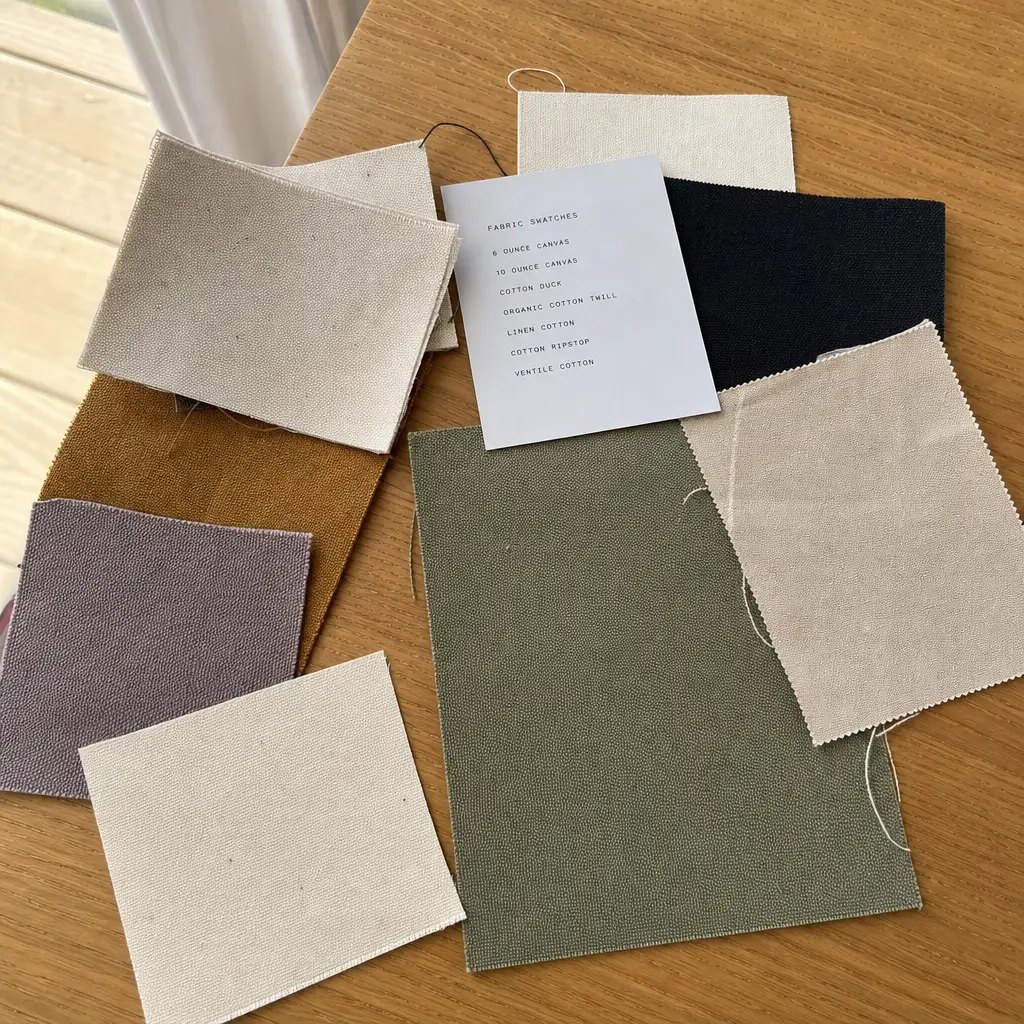
Fabric weight also changes placement behavior. Organic cotton at 180-220 GSM works for lightweight giveaway totes, but it can show more wrinkling and print-through. For paid bookstore merchandise, 280-340 GSM canvas or 10-12 oz organic cotton is usually more stable. Heavier 14 oz fabric gives a premium hand but increases unit cost, carton weight, needle wear, and curing time. The buyer should state GSM or ounce weight and fabric construction so suppliers quote comparable goods.
- Light giveaway tote: 180-220 GSM plain weave, suitable for lower load and simpler artwork.
- Retail bookstore tote: 280-340 GSM canvas or twill, better for screen print and repeated use.
- Premium campus shop tote: 12-14 oz canvas, stronger structure but higher freight impact.
- RFQ wording: state finished size, gusset, handle drop, fabric GSM, weave, and organic cotton requirement together.
Define the Printable Zone Before Approving Artwork
The printable zone is smaller than the visible front panel. A factory needs working clearance from side seams, bottom fold, gusset edges, and handle stitching. For a standard 380 x 420 mm tote, a practical front logo width is often 220-280 mm, depending on the artwork shape. Tall vertical emblems need more top clearance, while wide wordmarks need stronger control of left-right centering.
Good placement drawings show the bag outline, seam lines, handle attachment position, gusset fold, logo bounding box, and measurement arrows. If a buyer sends only a PDF mockup without millimeter references, two suppliers can interpret it differently and both believe they followed the artwork. The quote package should include a finished-bag technical layout with tolerances. This prevents disputes later when bulk goods vary by a few millimeters.
- Keep 25-35 mm minimum clearance from side seams for most screen print logos.
- Keep 40-60 mm clearance above the bottom fold when the tote has a gusset.
- Avoid placing artwork under handle reinforcement boxes unless the design intentionally overlaps.
- State whether the logo should align to the visual center of the flat panel or the center of the usable print area.
Choose the Logo Method for the Actual University Mark
Screen printing is usually the most practical method for university bookstore totes when the logo uses solid colors and the order quantity is high enough to absorb setup. It gives clean coverage on organic cotton and a stable unit cost after screens are made. For natural cotton, ink color should be tested on the real fabric because the base color can warm or dull a Pantone match.
Heat transfer can handle gradients, small text, or multi-color mascot artwork, but it changes the handfeel and may not fit every sustainability policy. Embroidery looks premium on heavier canvas but may pucker lighter organic cotton and is not ideal for large filled logos. Woven side labels are useful for secondary branding, SKU grouping, or eco claims, but they are not a substitute for a readable front bookstore logo.
- Screen print: best for solid marks, school names, bookstore slogans, and bulk order economics.
- Heat transfer: useful for complex art, but review wash durability and surface feel.
- Embroidery: suitable for small premium marks on heavier canvas, not large front panels.
- Woven label: good for side seam branding or product line identification.
- Combined branding: front screen print plus side label works well when buyers need both campus identity and product traceability.
Understand MOQ and Cost Drivers
MOQ for custom organic cotton totes is not controlled by one factor. Fabric purchase, organic cotton availability, dyeing if the bag is not natural, print setup, cutting efficiency, label production, and carton configuration can each create a different minimum. A supplier may accept a lower sewing MOQ but still charge higher unit cost because screen setup and fabric wastage are spread across fewer bags.
The RFQ should ask the factory to separate cost drivers instead of giving one vague unit price. Screen charges, sample charges, custom label costs, organic fabric premiums, inner packing, carton labeling, and inspection costs should be visible. This makes it easier to compare quotes from factories that structure pricing differently. A low unit price may become less attractive when the buyer adds tooling, revision samples, repacking, or air freight caused by a late approval.
- Artwork colors affect screen count and setup cost.
- Higher GSM increases fabric cost, shipping weight, and sometimes sewing time.
- Gusseted totes use more fabric and need more careful folding in cartons.
- Natural organic cotton normally avoids dyeing MOQ, but color variation must be accepted within range.
- Private labels and barcode stickers can have their own MOQ and lead time.
Build a Sample Approval That Prevents Bulk Mistakes
A digital artwork proof is not enough for university bookstore tote production. The buyer should approve a physical pre-production sample made with final fabric, final logo size, final ink or transfer, final handle construction, and final stitching. This sample becomes the factory reference for bulk production and the buyer reference for inspection. If the sample is made from substitute fabric, it should not be treated as final placement approval.
Sample review should be practical. Put a notebook, hoodie, or textbook inside the tote and see whether the logo still reads correctly. Hang the tote from the handle and check whether the logo is blocked by folds. Measure the logo from the finished top edge and side seam. Rub the print after curing and inspect fine lines. The buyer should return clear comments in one consolidated revision, because repeated small artwork changes can consume the production calendar.
- Approve logo size in millimeters, not only percentage scale.
- Approve placement from finished edges after sewing and pressing.
- Approve print color on actual organic cotton fabric under consistent light.
- Approve handle drop and how the bag hangs on bookstore fixtures.
- Keep one signed sample at the factory and one with the buyer or inspection team.
Set QC Tolerances the Factory Can Measure
Logo placement quality must be measurable. For many screen-printed cotton totes, a placement tolerance of plus or minus 5 mm is realistic if the bag is stable and the fixture is well controlled. Very soft fabric, large prints, or irregular handmade finishing may need a wider tolerance. The buyer should not write "perfectly centered" in the PO because it creates argument without giving the inspector a usable standard.
Inspection should separate critical, major, and minor defects. A wrong logo, wrong color, severe skew, ink transfer, broken handle stitching, or contaminated fabric may be critical or major depending on the order terms. Small thread ends or very slight natural cotton specks may be minor if they fall within the agreed standard. Organic cotton often has a natural character, so the buyer must define what level of seed flecks, shade variation, or slub is acceptable.
- Logo position: measure from finished side seam and top edge.
- Logo skew: compare the print baseline with the top seam or approved reference line.
- Ink coverage: reject pinholes, smears, and uneven curing above the agreed defect limit.
- Color: compare approved sample and bulk under stable light, not mixed warehouse lighting.
- Stitching: inspect handle reinforcement because bookstore totes often carry heavy books.
Packing Choices That Protect the Printed Panel
Packing is part of logo quality. Freshly printed cotton totes can crease, rub, or transfer if packed too tightly or before proper curing. Flat packing is normally best for bookstore receiving because staff can count units quickly and cartons stack cleanly. If the buyer requires individual polybags, the RFQ should state material, warning text, suffocation holes if needed, barcode position, and whether the bag must be folded with the logo visible.
Carton quantity should balance freight efficiency with product protection. A carton of 50-100 pieces is common depending on fabric GSM, gusset, and folding method. Heavier canvas and wider gussets increase carton volume and gross weight. The quote should include estimated carton dimensions and weight because landed cost can change noticeably when a premium 12-14 oz tote replaces a lightweight giveaway tote.
- Use interleaving paper only when necessary for dark ink or sensitive prints.
- Avoid sharp folds across large logo areas when the print method is prone to cracking.
- Mark cartons by SKU, color, quantity, PO number, and bookstore receiving code if required.
- Confirm whether cartons need master labels, inner bundles, or retail-ready barcode stickers.
- Do not approve a unit price without carton size and gross weight for landed-cost comparison.
Plan Lead Time Around Artwork, Fabric, and Print Curing
A realistic schedule starts before bulk sewing. Artwork cleaning, placement drawing, sample making, sample shipping, buyer review, fabric procurement, cutting, printing, curing, sewing, trimming, inspection, and packing all need time. For organic cotton totes, fabric availability can be the longest early variable, especially if the buyer specifies a non-standard GSM, dyed color, or certification documentation requirement.
University bookstore orders are often tied to semester openings, alumni weekends, orientation, or graduation. Missing the retail window can turn a good product into dead stock. The PO should define which date controls production release: deposit received, artwork approved, sample approved, or fabric confirmed. If approval is late, the buyer should understand whether the factory can compress the schedule without increasing print defects, overtime cost, or freight expense.
- Allow artwork cleanup time for crests, mascots, small text, and licensing marks.
- Do not book final delivery dates from quotation date alone.
- Confirm whether the factory has organic cotton greige fabric available or must purchase it.
- Leave curing and inspection time after printing, especially for heavier ink coverage.
- Build a buffer before campus events because receiving teams may need time for counting and allocation.
Quote Data Needed for Fair Supplier Comparison
Two tote quotes can look similar while covering different specifications. One supplier may quote 10 oz fabric, another 12 oz. One may include one-color screen print, another may assume heat transfer. One may pack 100 pieces per carton, another 50. Without structured quote data, the buyer may choose the lowest unit price and later discover higher freight, weaker fabric, or extra charges for screens and labels.
A good supplier quote should read like a production summary. It should list fabric type, GSM or ounce weight, finished dimensions, handle length and width, print method, logo size, number of colors, placement tolerance, sample cost, MOQ logic, unit price at quantity breaks, carton details, lead time, payment terms, and inspection support. This data helps procurement compare landed cost and helps brand owners see whether the factory has understood the bookstore channel.
- Request pricing at realistic quantity breaks such as 500, 1,000, 3,000, and 5,000 pieces when applicable.
- Ask whether screen charges are one-time, repeat-order reusable, or charged again for artwork changes.
- Separate tote unit cost from labels, barcode stickers, inner bags, and special cartons.
- Include estimated CBM and gross weight so freight forwarders can calculate landed cost.
- Require the supplier to confirm what is excluded from the quote, not only what is included.
Specification comparison for buyers
| Spec decision | Recommended option | When it fits | Buyer risk to check |
|---|---|---|---|
| Front logo placement | Centered print area with at least 25-35 mm clearance from side seams and bottom fold | Best for bookstore merchandise, orientation gifts, alumni events, and general retail display | Artwork may look low after filling the tote if the bottom gusset is not included in the placement drawing |
| Fabric weight | 10-12 oz organic cotton canvas or 280-340 GSM twill/canvas | Good balance for paid retail totes that need structure without becoming heavy in cartons | Low GSM can show ink bleed and handle stress; high GSM raises freight and may need longer drying time |
| Print method | Screen print for solid university marks; heat transfer only for complex gradients or small runs | Screen print gives stable cost in bulk orders and good handfeel on natural cotton | Fine crest lines may fill in on textured fabric unless the artwork is adjusted before sample approval |
| Logo size | 220-280 mm wide for a standard 380 x 420 mm tote, adjusted to bookstore planogram needs | Fits most front panels while leaving visual breathing room and avoiding seam distortion | Oversized prints can crack near folds and increase defect rate during stacking and packing |
| Side or bottom label | Small woven side label or inner care label for brand support, not the main university mark | Useful when bookstore wants CottonToMaker sample branding, eco messaging, or SKU identification | Side labels must be locked before bulk cutting because label seam position cannot be changed late |
| Handle construction | Self-fabric or cotton webbing handles with reinforced cross stitch | Suitable for books, apparel, notebooks, and orientation kits sold through campus retail | Logo may be partly hidden on hanging displays if handle drop and print height are not reviewed together |
| Packing method | Flat packed, 50-100 pcs per export carton with inner polybag only if required by buyer policy | Keeps cartons clean and allows bookstore receiving teams to count units quickly | Too-tight carton packing can crease printed panels before ink has fully cured |
| Approval sample | Pre-production sample using final fabric, final ink, final logo size, and final stitch method | Necessary before bulk print screens, cutting templates, and carton layout are locked | A digital mockup is not enough to approve logo position on a sewn organic cotton tote |
Buyer checklist before sampling
- Define the tote body size, gusset size, handle drop, and target fabric GSM before discussing artwork.
- Provide vector artwork with Pantone references, minimum line thickness, and clear rules for crest or mascot details.
- Mark logo position from finished bag edges, not from fabric panels before sewing.
- Set seam, handle, and gusset clearance so the logo is visible when the tote is filled and hanging.
- Choose screen print, heat transfer, embroidery, woven label, or a combined method based on logo detail and order quantity.
- Request a pre-production sample made with final organic cotton fabric, final ink, and final placement.
- Approve tolerance for logo position, color difference, print skew, and visible defects before production starts.
- Confirm carton quantity, carton size, gross weight, inner packing, barcode labels, and bookstore receiving requirements.
- Ask the supplier to separate tooling, sampling, unit price, packing, and freight-impact data in the quote.
- Reserve schedule time for artwork cleaning, sample revision, fabric shrinkage testing, print curing, and final inspection.
Factory quote questions to send
- What organic cotton fabric construction, GSM, and shrinkage range are included in the quoted price?
- Is the quoted tote size measured flat after sewing, and what tolerance applies to body width, height, and gusset?
- What is the maximum printable area after allowing for side seams, bottom fold, gusset, and handle attachment?
- Which print method is quoted, how many colors are included, and are screen charges listed separately?
- What logo placement tolerance can the factory hold in bulk production, measured from finished bag edges?
- Will the pre-production sample use final bulk fabric, final ink, final thread, and final packing method?
- What MOQ applies to fabric dyeing, organic cotton fabric purchase, print setup, and custom woven labels separately?
- How many pieces per carton are quoted, and what are the estimated carton dimensions and gross weight?
- What inspection standard will be used for print defects, skipped stitches, stains, broken needles, and packing errors?
- What lead time is counted from deposit, artwork approval, fabric arrival, sample approval, and bulk production release?
Quality-control points to confirm
- Logo center position should stay within the agreed tolerance, commonly plus or minus 5 mm for standard screen print placement on finished totes.
- Print skew should be visually controlled and measured against the top edge or side seam, not against an uneven fabric fold.
- Pantone color should be reviewed under stable light, with acceptable variation agreed before bulk printing on natural cotton.
- Ink adhesion should pass normal rub and tape checks after curing, especially on heavier organic canvas.
- No print should cross into seam allowance, handle reinforcement stitching, bottom fold, or gusset distortion zone unless intentionally designed.
- Handle stitching should withstand the agreed load test for books and campus merchandise, with no loose threads or broken stitches.
- Finished bag dimensions should be checked after sewing and pressing, allowing for organic cotton shrinkage and fabric relaxation.
- Cartons should protect printed panels from crushing, moisture, and transfer staining during export transit.