Start With The Retail Moment, Not The Artboard
A hotel tote is judged in motion. A guest may see it folded beside spa products, hanging near reception, stacked at a resort market, photographed for an online shop, or carried through the lobby after checkout. That is why logo placement should not begin with a centered mark on a blank PDF. A logo can look perfect on a flat layout and still sit too high once the handles fall forward, too low when the bottom gusset opens, or half-hidden after the retail team folds the bag for shelf display.
Before asking a supplier to quote, describe where the tote will be sold and how it will be handled. A beach club tote that needs to read across a wall display may need a larger, higher logo. A spa boutique tote may look better with a smaller mark and generous blank space. A hotel group selling across several properties may benefit from one consistent body with artwork changes by location, because shared construction can simplify MOQ, sampling, inspection, and reorders.
Procurement, merchandising, and brand teams should review placement together. Ask simple, practical questions: does the property name need to read from two meters away, will the tote hang from a peg, will a barcode need to face outward, and must the logo stay visible when the unit is folded? These answers shape the specification more than the artwork file itself. A useful custom organic cotton totes logo placement guide for hotel retail begins with the selling environment, then turns that environment into measurable production instructions.
- For hanging display, keep the main logo below handle attachment points so handles and shadows do not cover the mark.
- For folded shelf display, define the fold direction and confirm whether the logo, barcode, or hangtag must remain visible.
- For spa or amenity bundles, leave blank space where tissue, ribbon, product boxes, or welcome cards may sit.
- For destination illustrations, review the logo when the bag is filled, not only when it lies flat.
- For ecommerce, request sample photos flat, hanging, folded, and filled so the retail team can judge actual visibility.
Lock The Tote Construction Before You Lock The Logo
Logo placement is controlled by the finished bag, not by the artwork file. A flat tote, bottom-gusset tote, and side-gusset tote each create a different visible front panel. When the logo is printed before sewing, the supplier must account for seam allowance, top hem turn, fabric behavior, and gusset take-up. When the logo is printed after sewing, the target is the finished bag, but seams, handle bases, and fabric thickness can make the print surface harder to hold flat.
For paid hotel retail, medium to heavy organic cotton canvas usually presents better than lightweight promotional cotton. A 150-180 GSM tote may work for events or giveaways, but it wrinkles quickly and gives less stable support under print. A 280-340 GSM canvas, often sold commercially as about 10-12 oz, gives a stronger hand feel, cleaner print support, and better shelf presence. Heavier 380-450 GSM canvas can feel more structured, yet it also increases fabric cost, folded bulk, carton volume, and freight weight.
Handles deserve the same attention as the body. Long shoulder handles can fall over the logo in photos, on hooks, or during store handling. Short handles keep the front cleaner but may change how guests use the tote. Bar tacks, box stitching, and reinforced handle bases can crowd a logo placed too close to the top opening. Before approving artwork, ask for a dimensioned construction drawing that shows finished width, height, gusset, top hem, handle position, and reinforcement.
- Light promotional tote: about 150-220 GSM, lower cost, more wrinkles, less stable logo surface, better for giveaways than paid retail.
- Retail hotel tote: about 280-340 GSM, balanced structure, print support, shelf presentation, and manageable freight weight.
- Premium structured tote: about 380-450 GSM, stronger body with higher material cost, carton bulk, and shipping weight.
- Bottom gusset: mark the fold line before approving any lower logo placement.
- Side gusset: confirm whether the logo is centered on the visible front panel, not the total flat fabric width.
- RFQ minimum: finished size, gusset depth, handle drop, handle width, fabric GSM, fabric color, seam construction, reinforcement, and construction drawing.
Measure From Finished Edges, Not Cut Panels
The safest main placement for many hotel retail totes is a centered front logo measured on the finished front panel. On a medium tote, the top of the logo often starts about 90-120 mm below the finished top opening. Smaller bags may need 70-90 mm. Taller pool, beach, or market totes may need a higher visual center so the mark remains visible when the bag is filled with towels, bottles, apparel, or retail goods. These ranges are starting points; the sample decides the final answer.
Write placement in a way a factory QC team and a third-party inspector can measure. Include logo bounding box width and height, the distance from the finished top edge to the top of the logo, and the alignment to the finished centerline. For lower or side placements, include distance from the finished side seam and bottom seam or gusset fold. For irregular artwork, use the full bounding box rather than trying to measure individual letters or shapes.
A premium hotel tote does not always need a large mark. For many medium bags, a 160-240 mm wide wordmark or emblem is enough, depending on bag width and artwork proportions. Oversized branding can make the item feel promotional. A very small mark can disappear on textured natural cotton. If the hotel brand book specifies clear space, minimum size, or lockup rules, include it in the tech pack and do not allow the factory to resize artwork to fill the panel.
- Common medium tote starting point: top of logo about 90-120 mm below the finished top opening.
- Common logo width: about 160-240 mm for many wordmarks, adjusted by bag width and brand rules.
- Keep at least 45-60 mm clearance from side seams and bottom folds for most screen-printed artwork.
- Specify placement from finished bag edges, not from raw cut panel edges.
- Define logo bounding box, centerline, top distance, and acceptable tilt.
- For flat-panel screen print, +/-5 mm placement tolerance is often practical; after-sewing decoration or near-gusset printing may require a wider written tolerance.
Use Quiet Branding Zones With Care
Lower corner logos are popular for hotels that want the tote to feel like lifestyle merchandise rather than a giveaway. They can work beautifully for boutique properties, wellness resorts, and destination artwork, but they are less forgiving than centered marks. The artwork needs enough clearance from the bottom gusset fold and side seam bulk. When the tote is loaded, the lower panel curves outward; a mark placed too low can look angled, sit below the shelf sightline, or disappear when the bag hangs.
Back-panel printing is useful when the front carries artwork and the reverse needs a property name, short sustainability note, web address, or care message. Treat it as a separate production step, not as a small afterthought. A second print side can add screens, drying space, handling time, curing risk, and inspection points. If the message is short and secondary, a hangtag, inside label, or side seam label may do the job with less production complexity.
Side labels can be especially useful for hotel groups. The tote body can stay constant while the front artwork changes by property, season, or shop. The side label then preserves brand continuity. Labels need their own spec: visible width, folded size, material, cutting method, color, text size, orientation, and seam capture. A 25-40 mm visible side label is common, but the final dimension should fit the seam construction and readability need.
- Lower corner logo: commonly 45-70 mm from finished side and bottom seams, adjusted for gusset depth.
- Avoid placing print directly on bottom fold lines, side seam bulges, or areas that curve sharply when loaded.
- Back print: keep text short and large enough for cotton texture; avoid tiny legal copy unless tested.
- Woven label: durable and sharp for small marks, but it has setup, yarn color, and MOQ considerations.
- Printed cotton label: softer natural look, often easier for small programs, but less sharp for fine lettering.
- Confirm label orientation before sewing; upside-down or reversed side labels are common avoidable defects.
Match Print Method To Artwork And Fabric
Water-based screen print is a practical default for many organic cotton hotel totes. It gives a softer textile hand than heavy plastic-feeling ink and suits wordmarks, line art, icons, and one to four spot colors. It is also repeatable when screens, ink formulas, artwork size, and fabric are documented. For large filled areas, ask the factory to test opacity, drying, cracking, and stiffness on the selected canvas before bulk approval.
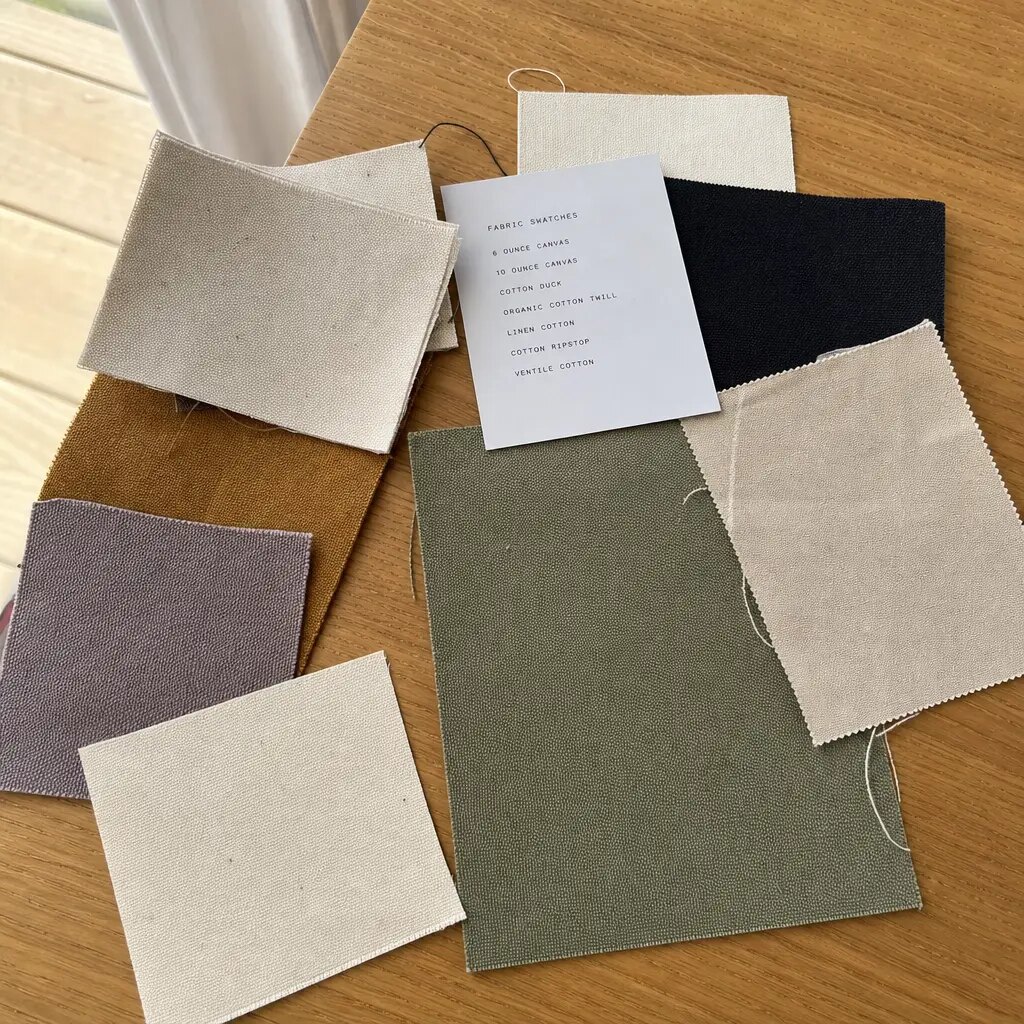
Natural, unbleached, and ecru organic cotton are warm substrates, not neutral white print bases. Cotton flecks, slubs, and weave texture can mute ink compared with a digital proof. Pantone references help communication, but the approved standard should be the cured strike-off on the actual fabric. If color is critical, define the viewing light and acceptable visual variance instead of relying only on a digital file.
Embroidery can look premium for small emblems, but it is not automatically the better choice. Dense stitches may pucker lighter canvas, and fine hotel lettering can lose legibility in thread. Backing may be needed and can change the inside feel of the tote. Digital printing can support complex artwork, though buyers should review hand feel, edge sharpness, color fastness, and unit economics. Heat transfers may be useful in limited cases, but they should be wear-tested because they can feel less integrated with organic cotton.
- Use water-based screen print for clean wordmarks, icons, and repeat hotel retail programs.
- Test large solid prints for stiffness, pinholes, edge buildup, curing, and rub performance.
- Use embroidery only for small marks after puckering and backing are reviewed.
- Avoid very fine reversed text, tiny QR codes, and thin serif lettering unless proven in a strike-off.
- Approve the real fabric, real ink, real curing method, and actual artwork size before bulk.
- Document screens, ink formulas, and approved strike-offs for reorder consistency.
Write Tolerances Before Production Starts
Tolerances are not legal decoration; they are how a buyer and supplier avoid avoidable arguments. Organic cotton canvas is cut, printed, sewn, trimmed, folded, and packed through processes that naturally vary. A hotel buyer may want every unit identical, but the inspection standard must be measurable and realistic. Finished width and height are often controlled around +/-5 to +/-10 mm depending on construction and shrinkage. Handle drop may need a similar practical range.
Logo placement tolerance should reflect the decoration method. For screen printing on flat cut panels with good jigs and stable construction, +/-5 mm is a reasonable target in many cases. For after-sewing print, embroidery, heavy canvas, or lower placement near gussets, the factory may need a wider tolerance. Logo tilt also deserves a written limit because visible slant can look worse at retail than a small vertical shift.
The PO should identify critical, major, and minor defects. A wrong logo, wrong artwork, unsafe needle contamination, incorrect required label, or severe ink transfer may be critical. Noticeable slant, print cracking, major stains, open seams, or handle failure are usually major. Loose threads or minor specks may be minor if they fall within the agreed standard. If the buyer uses AQL inspection, include the inspection level and acceptable limits. If not, state the buyer's internal acceptance rules clearly.
- Finished width and height: commonly +/-5 to +/-10 mm, depending on construction.
- Fabric GSM: confirm supplier tolerance, often around +/-5%, and write it into the order.
- Main logo placement: often +/-5 mm for controlled flat-panel printing; wider only if justified and approved.
- Logo tilt: define measurement method against top edge or side seam.
- Handle drop and width: measure relaxed, not stretched.
- Label position: define visible width and distance from top or side reference point.
- Color: compare to approved fabric strike-off, not only Pantone book or digital screen.
Turn Sample Approval Into A Measurable Standard
A sample should not be approved only because it looks attractive in a meeting room. Once approved, it becomes the production reference. Measure and record finished width, height, gusset, handle drop, handle width, fabric weight, logo size, logo placement, print color, label position, fold method, and carton presentation. Photograph the tote flat, hanging, folded, and filled with a realistic retail load. Those photos often reveal placement problems that a clean flat-lay hides.
Organic cotton shade and flecks may vary slightly by lot. That natural look can support the product story, but it should be understood before inspection. The approved strike-off should show the real ink on the selected fabric after curing. A digital proof is useful for layout approval, yet it cannot verify opacity, hand feel, edge clarity, curing, or how the print reacts to slubs and weave texture.
Keep one sealed approval sample and one working sample. The sealed sample stays clean for factory, buyer, and inspection comparison. The working sample can move through merchandising, retail, packing, and photography teams. If the logo moves, the color changes, or the folding method is revised, issue an updated approval record with date, file name, and version number.
- Approve a sealed pre-production sample before bulk cutting or bulk decoration.
- Record logo position from finished top edge, side seam, and bottom fold where relevant.
- Attach final artwork file name, color target, fabric GSM, construction drawing, and approval date.
- Confirm whether slubs, cotton flecks, shade variation, and minor weave irregularities are acceptable.
- Check the sample flat, hanging, filled, and folded.
- If approved with comments, require a corrected sample or written factory confirmation before production starts.
- Retain the approval sample for reorders and inspection comparison.
Specify Packing Because Packing Changes Presentation
Packing is part of logo placement. A well-printed tote can arrive with a hard crease through the artwork if folding is not controlled. Flat packing gives strong retail presentation but increases carton volume. A uniform fold reduces CBM but may wrinkle the panel. Individual bags can protect the print, while some hotel buyers may prefer paper bands, tissue, or reduced-plastic packing to match the property's sustainability positioning.
Separate retail-ready packing from export-safe packing. Retail-ready packing may require the logo facing outward, a hangtag attached, barcode visibility, and consistent fold size. Export packing focuses on carton strength, moisture control, compression, and shipping efficiency. If only opening stock needs boutique-ready presentation, split the order into retail-ready cartons and warehouse replenishment cartons instead of paying for premium folding on every unit.
Curing and compression also matter. Water-based prints need adequate curing before tight folding. Heavy ink areas packed face-to-face or compressed too early may block, shine, or transfer. Organic cotton can absorb moisture during sea freight or humid storage, so carton liners or moisture-control measures may be appropriate depending on route, season, and warehouse conditions.
- Specify whether the logo must face outward after folding.
- Approve a folding photo or packing sample before mass packing.
- Define pieces per inner bundle, pieces per carton, carton size, gross weight, net weight, and estimated CBM.
- Avoid fold lines through the primary logo where possible.
- Do not pack heavy prints tightly before full curing.
- Keep barcode and hangtag visible if cartons are going directly to hotel retail stores.
- Use moisture protection where humidity, sea freight, or long storage creates risk.
Control Cost Without Making The Tote Feel Cheap
The lowest unit price is not always the lowest landed or retail-ready cost. Logo placement affects labor, setup, reject risk, drying time, and packing. A centered front print on a flat panel is usually more efficient than a lower print near a gusset or a second-side print. Printing before sewing can be efficient, but only when the factory controls placement through cutting and sewing. Printing after sewing may slow output because seams and handles interfere with the print surface.
MOQ logic is important for hotel groups. Five property logos on one shared organic cotton body may be efficient if fabric, size, handles, gusset, label, and packing are the same. Five different fabric colors, handle colors, labels, and gussets may become five separate production lots. Ask the supplier to separate shared material MOQ from per-artwork decoration cost. That structure makes it easier to see where complexity is actually adding cost.
Freight should be compared before final approval, not after production. A 340 GSM canvas tote weighs and cubes differently from a 220 GSM tote. Flat retail packing may improve shelf presentation but increase CBM. Hangtags, barcode stickers, carton liners, individual packing, and lower carton compression can all affect landed cost. Ask for carton dimensions and weights in the quote so procurement can compare options realistically.
- Separate bag unit price from screen charges, sample charges, label setup, hangtags, barcode stickers, and retail packing.
- Quote quantity tiers by artwork and by shared construction, such as 300, 500, 1,000, and 3,000 pcs.
- Ask whether MOQ is per artwork, per fabric color, per label, per bag construction, or per total order.
- Compare FOB or EXW quotes consistently; do not mix Incoterms when evaluating suppliers.
- Request carton size, carton quantity, gross weight, net weight, and estimated CBM for each packing option.
- Standardize body, fabric, and handles where possible; vary print or hangtag when merchandising allows.
Plan Lead Time Around Approval Gates
Hotel retail programs often lose time because logo placement remains open after sampling. A realistic workflow includes artwork review, fabric confirmation, strike-off, prototype, sample comments, final pre-production sample, material booking, cutting, decoration, sewing, trimming, inspection, packing, and shipment. If the buyer changes logo position after screens are prepared or panels are printed, the factory may need a new setup, new strike-off, or rework.
Organic cotton availability also affects timing. Stock natural canvas may move quickly. Custom dyed organic cotton, special GSM, woven labels, custom hangtags, and barcode stickers may require longer planning and higher minimums. Certification documents can also take time if the buyer requires transaction certificates or finished-product scope documentation rather than a general organic cotton statement.
Hotel programs usually have fixed retail dates: property openings, summer resort launches, spa menu changes, conferences, holiday gift shop resets, and planogram updates. Procurement should ask the supplier for the last safe date for artwork changes, placement changes, label changes, and packing changes. Once bulk cutting or decoration begins, a small artwork move may not be operationally small.
- Plan sample stages: artwork check, fabric confirmation, strike-off, prototype, comments, final approval.
- Bulk lead time should start only after sample approval, PO or deposit, material confirmation, and packaging approval.
- Custom dyed fabric and woven labels can be longer-lead items than sewing.
- Freeze logo placement before bulk cutting and screen preparation.
- For launch programs, ask for a critical path with artwork, sample, production, inspection, and shipping dates.
- Keep all approved files for reorders: construction drawing, artwork, strike-off, label file, carton marks, and packing photos.
Specification comparison for buyers
| Spec decision | Recommended option | When it fits | Buyer risk to check |
|---|---|---|---|
| Main front logo position | Center the artwork on the finished front panel. For many medium hotel retail totes, use the top of the logo about 90-120 mm below the finished top opening, then confirm on a pre-production sample. | Hotel boutique totes, spa retail bags, welcome-shop merchandise, resort gift shops, and hotel group retail programs where the property name must read clearly. | If placement is measured from the raw cut panel instead of the finished bag, seam allowance, top hem turn, shrinkage, and gusset take-up can move the logo 5-15 mm from target. |
| Lower corner logo | Place lower left or lower right, commonly 45-70 mm from the finished side seam and bottom seam, and above the bottom gusset fold line. | Premium resorts, understated lifestyle retail, co-branded destination artwork, and totes intended for guest use after checkout. | A low mark can enter the bottom fold, look tilted when the bag is filled, disappear on a wall hook, or distort around seam bulk. |
| Back panel message | Use a small centered back print for a short sustainability note, web address, property message, or care line separate from the main front artwork. | Hotel groups that need guest-facing artwork on the front and a compliance, care, or brand note on the reverse. | Back prints add screens, print passes, curing space, handling, and inspection points. Heavy back prints may show through on light fabric. |
| Print sequence | Print on flat cut panels when the factory can control sewing allowances. Print after sewing only when the design, equipment, or construction requires it. | Repeated hotel retail orders with stable construction, simple front placement, and 1-4 spot colors. | Pre-sewing print needs accurate engineering. After-sewing print faces seam interference and may require wider placement tolerance. |
| Print method for organic cotton | Use water-based screen print for solid logos and line art. Test pigment or discharge-style effects on the actual fabric. Reserve embroidery for small marks. | Most hotel retail orders from about 300-3,000 pcs per design, or shared body programs where brand consistency matters. | Large ink deposits can feel stiff, crack, or show pinholes. Embroidery can pucker lighter fabrics and may need backing. |
| Fabric weight for retail structure | Specify 10-12 oz canvas, approximately 280-340 GSM, as a practical range for structured paid retail totes. | Hotel shops, spa boutiques, beach clubs, and resort stores needing better shelf presentation and stronger handles than a giveaway tote. | 150-220 GSM fabric may reduce unit cost but wrinkles more, distorts more easily under print, and can look promotional rather than retail. |
| Finished size tolerance | Set finished width and height tolerance commonly at +/-5 to +/-10 mm, depending on fabric, washing or shrinkage, cutting method, and construction. | Buyers comparing suppliers, planning shelf display, or matching previous reorder dimensions. | Organic cotton fabric and canvas sewing are not rigid processes. Unrealistic +/-2 mm tolerances can create disputes and unnecessary rejects. |
| Logo placement tolerance | For flat-panel screen print, target +/-5 mm when construction allows. For after-sewing print, embroidery, or near-gusset placement, agree a wider tolerance in writing. | Bulk QC, third-party inspection, and hotel group reorder matching. | If no tolerance is written, factories and inspectors may judge by eye, leading to subjective claims and inconsistent acceptance. |
| Side label branding | Use a small woven or printed cotton label sewn into the side seam, often with 25-40 mm visible width and enough seam allowance captured in stitching. | Multi-property programs, subtle branding, seasonal artwork, and retail lines where the bag body stays constant but front artwork changes. | Label MOQ, yarn colors, cutting method, fray control, orientation, and label approval can create separate cost and lead time. |
Buyer checklist before sampling
- Define the finished bag body before artwork approval: width, height, bottom gusset depth, side gusset if any, handle drop, handle width, fabric GSM, fabric color, seam type, reinforcement method, and whether the tote must stand, fold flat, or hang on a retail peg.
- Confirm the selling environment: boutique shelf, spa counter, guest-room amenity set, beach shop wall hook, front-desk display, resort market, conference retail table, or ecommerce photography. Placement should support the actual display format.
- Use finished-bag reference points. State placement from the finished top opening, finished side seams, bottom seam or gusset fold, and logo bounding box. Do not rely only on raw panel measurements.
- Choose one primary branding zone and one secondary zone. Avoid adding front print, back print, handle print, side label, inside label, hangtag, and barcode placement without a clear merchandising reason.
- Specify logo size in millimeters, color target, print method, print sequence, and whether the mark must remain visible when folded, stacked, hung, or packed for store delivery.
- Approve a print strike-off on the actual organic cotton fabric weight, color, and finish. Digital proofs and paper proofs cannot confirm ink opacity, hand feel, edge sharpness, or curing performance.
- Set written tolerances before bulk production: finished size, logo placement, logo tilt, fabric GSM, print color, handle drop, and label position. Record which items are critical and which are minor.
- Inspect the pre-production sample for centerline accuracy, handle symmetry, seam strength, bar-tack placement, logo straightness, print opacity, ink hand feel, side label position, and appearance when filled with a realistic retail load.
- Separate retail-ready packing from warehouse packing so the factory can quote folding labor, barcode visibility, hangtag attachment, carton size, inner bundle quantity, and moisture protection correctly.
- Provide annual forecast and first order quantity by artwork. MOQ, screen charges, label setup, material booking, and reorder economics depend on how many designs share the same construction.
Factory quote questions to send
- Will the logo be printed before sewing on cut panels or after sewing on finished bags? What placement tolerance do you recommend for that method and this construction?
- What organic cotton fabric weights, weaves, and colors are available from stock? Which GSM, dye color, or certification scope requires fresh fabric production and higher MOQ?
- What certification documents can be supplied for the organic cotton scope: transaction certificate, fabric certificate, finished product scope certificate, or only supplier declaration?
- Can the same tote construction be shared across several hotel artwork versions to reduce MOQ pressure, or does each artwork require a separate production lot?
- Which print method do you recommend for our exact artwork on the selected fabric, and what should we expect for hand feel, opacity, curing time, color limitation, and wash or rub performance?
- What is the maximum print area you can hold flat without distortion for this bag size, handle position, seam construction, and gusset structure?
- Are screen charges, color separation, label setup, pre-production sample, hangtag stringing, barcode application, retail folding, moisture protection, and carton marking included or listed separately?
- What bulk QC tolerances will you use for finished size, handle drop, logo placement, logo tilt, print color, fabric GSM, and label position?
- How many pieces are packed per inner bundle and export carton? Will the logo face outward after folding, and will barcodes remain scannable without opening the unit?
- Can you quote two packing options: retail-ready flat or uniform fold, and lower-volume warehouse fold for replenishment stock? Include carton size, gross weight, net weight, and estimated CBM.
Quality-control points to confirm
- Finished bag size should normally be controlled within +/-5 to +/-10 mm depending on fabric shrinkage, GSM, cutting method, seam construction, and whether the bag is washed or unwashed.
- Fabric GSM should be checked against the approved specification using a measured sample area or supplier test report. A typical commercial tolerance may be about +/-5%, but the agreed tolerance should be written in the PO or tech pack.
- Main logo placement should be measured from the finished top edge and finished side seams on a relaxed, flat bag. The inspector should not stretch the fabric or force the gusset flat in a way the consumer will not see it.
- For centered logos, inspectors should check both horizontal centerline and vertical distance from the top opening. A logo can pass one measurement and still look unbalanced if the other is missed.
- Logo tilt should be checked against the finished top edge or side seam. For hotel retail, visible slant is often more damaging than a small vertical shift.
- Print color should be compared with the approved strike-off under consistent light. Natural cotton base color, slubs, and cotton flecks can warm or mute ink appearance and should be allowed for in the approval record.
- Print adhesion and cure should be checked with a light dry-rub test and, if required by the buyer, a wet-rub or wash test suitable for the product use claim. Do not pack tightly before the ink is fully cured.
- Large ink areas should be checked for stiffness, cracking, pinholes, uneven coverage, registration shift, ink buildup at edges, and strike-through to the inside of the bag.
- Needle holes, skipped stitches, loose threads, bar-tack security, seam puckering, and handle alignment should be reviewed carefully near logo zones because defects draw attention there.
- Side labels should be checked for orientation, visible width, seam capture, fraying, color, and whether the label sits straight when the bag is filled.