Make Logo Placement a Production Spec
An artisan bakery tote may be a paid merchandise item, a gift carrier, a loyalty reward, a farmers market package, and a walking brand impression. The same bag may hold sourdough, baguettes, pastry boxes, coffee bags, preserves, flour packs, books, or seasonal hampers. That mix changes how the logo should sit on the panel. A mark that looks centered in a flat mockup can hide behind handles, bend over a gusset, or sit too low once the tote is filled.
Procurement teams should treat placement as a production specification, not a design preference. A useful instruction states logo size, reference points, print method, safe zones, and tolerance. For example: 20 cm wide front logo, centered between finished side seams, 9 cm below finished top opening, one-color water-based screen print, no critical artwork within 4 cm of the bottom gusset fold, +/-5 mm placement tolerance, approved against pre-production sample P2.
This custom organic cotton totes logo placement guide for artisan bakeries is strongest when used before quoting. If an RFQ says only “front logo,” suppliers may price different bag sizes, print areas, fabric weights, and setup needs. Comparable quotes require the same construction, artwork, placement rule, packing format, and inspection standard.
- Measure from finished bag edges, not cutting marks, panel edges before sewing, or artwork canvas boundaries.
- Show top hem, side seams, bottom seam, gusset folds, handle stitching, reinforcement boxes, and label positions on the placement drawing.
- Keep key artwork away from bulky, folded, stretched, or high-abrasion areas unless distortion is approved on a sample.
- State the commercial use: resale merchandise, gift packaging, loyalty reward, farmers market tote, wholesale partner bag, or launch campaign item.
- Attach artwork version, drawing, approved sample reference, tolerance, and defect classification to the purchase order.
Lock Construction Before Artwork Approval
Logo position should not be finalized until tote construction is fixed. A flat tote gives a clean print panel and simple measurement points, but it may not stand well with pastry boxes or round loaves. A bottom-gusset tote improves capacity and counter presentation, yet the fold reduces the safe print area. A side-and-bottom gusset adds volume for jars, gift sets, or mixed purchases, but it creates more seam bulk and more variation in the filled shape.
Common reference sizes include a flat tote around 38 x 42 cm or a bottom-gusset tote around 35 x 40 x 10 cm. These are starting points, not standards. A baguette-focused bakery may need a taller body. A patisserie may need a wider base for boxes. A bakery selling retail merchandise may prefer a flatter panel because the bag must hang neatly and show the logo on display.
Handles affect the upper print zone. Short hand-carry handles may fall across the design in photos or on a shelf. Shoulder handles improve visibility in use, but reinforcement boxes create no-print zones near the top opening. If handle drop, strap width, or reinforcement size changes after sample approval, the logo may need to move. Lock handle details before approving final artwork.
- Flat retail tote: about 38 x 42 cm, efficient print alignment, suitable for bread, books, and light retail goods.
- Bottom-gusset bakery tote: about 35 x 40 x 10 cm, better for loaves and boxes, with reduced artwork space near the lower fold.
- Premium merchandise tote: about 36 x 38 x 12 cm, heavier fabric, structured base, and reinforced handles for resale positioning.
- Upper no-print zone: often 6-10 cm depending on hem depth, handle stitching, and reinforcement box size.
- Side clearance: usually at least 3-4 cm from finished side seams for screen printing on canvas.
- Gusset clearance: usually at least 4-5 cm from the bottom fold when artwork must stay readable when filled.
Specify Fabric and Organic Claim Scope
Organic cotton tote fabric is usually quoted in ounces, GSM, or both. Light 5-6 oz cotton may suit short promotional campaigns, but it can feel thin for paid bakery merchandise or mixed purchases with jars, flour, and coffee. Many bakery buyers compare 8 oz, 10 oz, and 12 oz canvas because these weights balance durability, printability, price, and perceived value. Ask for the supplier’s measured GSM range because ounce-to-GSM conversion varies by weave and finishing.
The surface changes the logo. Natural unbleached organic cotton has a warm tone, seed flecks, and fiber hairiness, so pale ink and fine type may look softer than expected. Bleached cotton gives cleaner contrast but changes the feel and brand story. Dyed organic cotton can look strong in bakery palettes such as chocolate, navy, burgundy, black, or forest green, but it needs lab dip approval and ink opacity testing. Washed fabric may feel softer, yet shrinkage or relaxation can affect finished dimensions.
Clarify the organic claim before comparing prices. A supplier may support organic fiber, yarn, fabric, or finished goods under different documentation scopes. Ask which records are available and whether they cover the transaction, material stage, facility certification, or finished product. Material due diligence and logo approval should both be part of the sourcing file.
- 5-6 oz cotton: lighter and lower cost, better for short campaigns than paid reusable merchandise.
- 8 oz organic cotton: practical for bakery giveaways, moderate reuse, and simple front logos.
- 10 oz organic cotton: stronger hand feel for loyalty totes, gift sets, and retail counter sales.
- 12 oz organic cotton canvas: premium structure, with higher material cost, freight weight, and texture impact on fine print.
- Natural finish: approve ink color on actual fabric because seed flecks and warm tone change perceived color.
- Dyed finish: require lab dip, shade tolerance, and strike-off because dark bases reduce ink brightness.
Choose the Right Branding Method
For many bakery tote programs, one-color or two-color screen printing is the safest starting point. It suits bold logos, hand-drawn bread icons, store names, simple line illustrations, and repeat orders. Water-based inks can create a softer hand, while higher-opacity pigment systems may be needed on natural or dyed cotton. The factory should confirm screen size, printable area, curing method, and whether large coverage will make the panel stiff.
Digital printing helps when artwork has many colors, gradients, or short seasonal runs, but textured cotton can reduce edge sharpness and color strength. Heat transfers reproduce fine detail, yet they may feel film-like and can show cracking, lifting, or pressure marks if folded poorly. Embroidery can look premium on a small corner mark, but it can pucker lighter fabrics and is rarely suitable for large bakery illustrations.
Labels and patches are useful when the base tote remains stable and campaign artwork changes. A side tab can keep the bakery name on every bag while the front design rotates by holiday, location, or collaboration. Treat labels as separate components with their own material, yarn color, exposed length, fold style, seam allowance, colorfastness, MOQ, lead time, and strike-off approval.
- Screen print: best for bold one- to three-color bakery logos and repeatable bulk production.
- Digital print: useful for complex or seasonal graphics, but sample for color strength and edge clarity.
- Heat transfer: good for fine detail, but inspect film feel, cracking, edge lifting, and fold marks.
- Embroidery: suitable for small premium marks; risky for thin fabric, large artwork, and fine text.
- Woven label or patch: strong for subtle branding, but requires separate color, size, exposure, and seam approval.
- High-opacity ink: necessary for many dark totes; verify hand feel, curing, and rub behavior before bulk.
Use Placement Rules QC Can Measure
A front-center logo is popular because it is readable and straightforward to inspect. On a 38 cm wide tote, an 18-22 cm wide main logo is often balanced. Larger artwork can work on a flat tote if the design is simple, but it should not crowd seams, gusset folds, or handle reinforcement. A vertical position around 8-10 cm below the finished top opening is common, though the final number should follow handle drop, hem depth, and filled-bag appearance.
Lower-corner placement gives a quieter, more premium look. It works well when the main panel carries an illustration, bread pattern, store map, or campaign message. The risk is visual alignment. If the panel is printed before sewing, small cutting or seam variation can make the corner mark look crooked. State whether the logo will be judged in flat-lay view, filled standing view, or both.
Two-sided prints need two drawings. The front might carry the bakery logo while the back carries store locations, care instructions, a reuse statement, or a QR code. Each side needs its own reference points because fold direction, handle position, and carton orientation may matter. If the tote is folded for resale, specify which side faces outward and whether any fold may cross the printed area.
- Front-center tolerance: +/-5 mm is a common target when artwork is away from seams and construction is stable.
- Side tab tolerance: +/-3 mm may be possible when the seam operation is controlled and label exposure is clearly defined.
- Fine line caution: avoid very thin strokes on canvas; confirm minimum line weight through a strike-off.
- QR code rule: keep at least 4 cm from seams and folds, then scan after folding and filling the tote.
- Top clearance rule: keep key artwork below handle reinforcement and the natural handle fall line.
- Gusset rule: do not place critical logo elements across bottom folds unless filled-bag distortion is approved.
Build an RFQ for Comparable Quotes
A strong RFQ makes suppliers price the same bag, not their own interpretation of it. Include finished dimensions, gusset type, handle details, fabric weight, weave, finish, base color, artwork files, logo size, placement drawing, print method preference, order quantity, packing format, destination market, and target delivery date. If decisions are still open, ask for option lines instead of allowing assumptions to hide inside one blended price.
Compare quote structure, not only unit price. One supplier may exclude screens, strike-offs, sample freight, label development, hangtags, barcode labels, carton marks, inspection support, or individual packing. Another may include those items and look higher at first. Procurement should compare total landed cost, production clarity, schedule risk, and documentation support.
Ask for carton information early. Totes are soft goods, but they can be bulky. Fabric weight, gusset depth, folding method, individual packing, and hangtags affect carton cube and gross weight. A low factory price can lose value if the tote ships inefficiently, exceeds warehouse handling limits, or requires repacking before distribution to bakery locations.
- Request quote lines by quantity break, fabric weight, fabric color, print method, number of sides, and packing format.
- List setup costs separately: screens, digital setup, artwork adjustment, strike-offs, labels, patches, hangtags, barcodes, and samples.
- Ask for carton dimensions, pieces per carton, gross weight, net weight, and proposed fold method.
- State Incoterms clearly, such as EXW, FOB, CIF, DAP, or delivered warehouse terms.
- Ask for quote validity and assumptions because cotton, dyeing, labor, and freight costs can change.
- Require suppliers to identify the MOQ driver instead of giving only one unexplained minimum quantity.
Understand MOQ and Cost Drivers
MOQ is often controlled by upstream inputs, not sewing capacity alone. A factory may accept a smaller order using stock natural organic cotton and a simple one-color print. The same tote may require a higher MOQ if it uses custom dyed fabric, custom woven labels, jacquard handles, special washing, or multiple print colors, because mills, dyers, printers, and label makers have separate minimums.
The main cost drivers are material weight, fabric availability, print complexity, sewing construction, label components, packing labor, and freight cube. A 12 oz gusseted tote with two-sided printing and individual retail packing is not just a heavier version of an 8 oz flat tote. It has different cutting yield, sewing time, curing time, folding bulk, carton volume, and inspection work.
Tolerances should protect the brand without creating unnecessary rejects. Cotton canvas is flexible, and sewn goods do not behave like rigid molded items. Finished-size tolerance may be wider than logo placement tolerance. Gusseted bags can vary after pressing, folding, and filling. A centered front logo may target +/-5 mm, while finished height may need a different tolerance based on fabric and construction.
- Fabric MOQ may come from mill rolls, stock width, organic documentation, dyeing lot size, or washing batch.
- Print MOQ may come from screen setup, ink mixing, drying capacity, digital minimum charges, or two-sided handling.
- Label MOQ may come from woven label looms, custom yarns, patch backing, cutting dies, or folded label style.
- Sewing cost rises with gussets, lining, pockets, reinforced handles, tight trimming, and small batch changes.
- Packing cost rises with hangtags, barcodes, paper bands, individual bags, SKU sorting, and carton-specific labels.
- Freight cost rises with heavier canvas, bulky folds, oversized cartons, and poorly optimized carton quantity.
Control Sampling Before Bulk Cutting
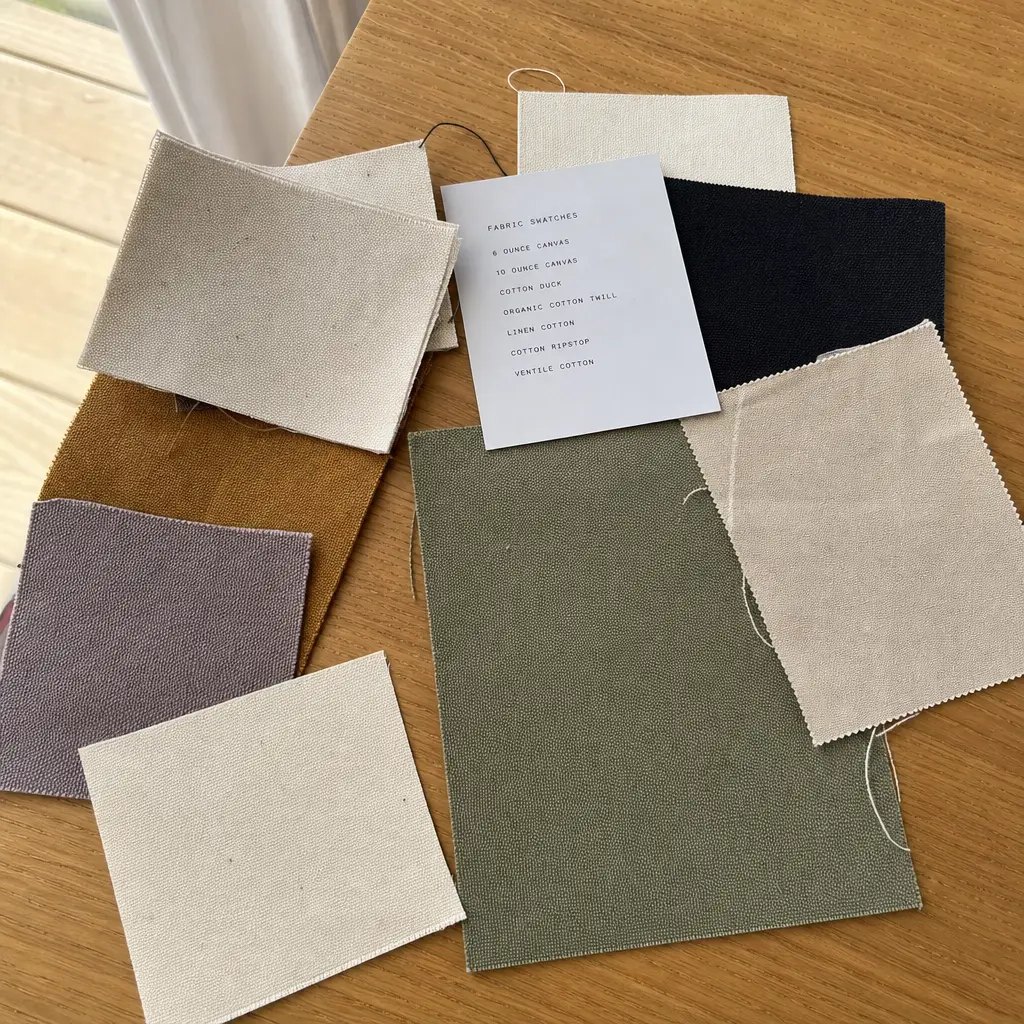
A reliable sampling path includes a fabric swatch, print strike-off, label strike-off if used, and full pre-production sample. The fabric swatch checks weight, weave, color, surface texture, finish, and hand feel. The print strike-off checks ink color, opacity, edge definition, registration, rub behavior, and stiffness on the actual fabric. The full sample proves whether the logo still works after cutting, sewing, handle attachment, gusset folding, pressing, and packing.
Skipping sample steps does not remove risk; it moves risk into bulk production. A strike-off may look correct on a flat fabric piece while the finished tote puts the mark too close to handle reinforcement. A blank sample may feel strong, while the printed version becomes stiff across a large ink area. Photos can confirm layout and ruler measurements, but they cannot fully show fabric weight, true color, ink hand, handle comfort, or retail fold presentation.
Repeat orders may use a lighter approval path if supplier, fabric lot type, ink, logo size, handle, construction, and packing are unchanged. A new sample is still prudent when changing from natural to dyed cotton, changing bag size, adding a gusset, enlarging the logo, adding a QR code, changing handle drop, switching print method, or adding side labels. Record approvals by sample version, artwork version, date, and PO number.
- Fabric swatch approval: confirm GSM, weave, shade, seed flecks, finish, shrinkage expectation, and documentation scope.
- Strike-off approval: confirm ink color, opacity, line clarity, registration, hand feel, rub behavior, and fold response.
- Label approval: confirm exposed size, fold type, color, text clarity, seam allowance, shrinkage, and needle performance.
- Full sample approval: confirm finished size, handle drop, logo position, gusset shape, seam quality, and packing fold.
- Reference samples: keep one approved sample with the buyer and one sealed production reference at the factory.
- Bulk release rule: do not authorize material cutting until unresolved sample comments are closed in writing.
Define QC for Print, Sewing, and Load
Quality control starts before production. The inspector needs the approved sample, placement drawing, artwork file, tolerance sheet, defect classification, and measuring method. If the logo is specified from finished side seams, QC should not measure from a folded edge or internal seam allowance. If vertical position is measured from the top opening, handles should lie naturally rather than being pulled upward to change the reading.
Print inspection should cover more than location. Check color against the approved strike-off, especially on natural and dark dyed cotton. Inspect for pinholes, bleeding, ghosting, cracking, smudging, transfer marks, poor curing, stiff hand feel, and loss of fine detail. Bakery graphics often include wheat lines, serif type, small addresses, or ingredient notes that can fill in on textured fabric. QR codes should be scanned after folding and filling, not only on a flat table.
Sewing quality affects how the logo looks. A correct print can appear off center if the tote is twisted, the gusset is uneven, or side seams are not balanced. Measure finished width, height, gusset depth, handle drop, handle width, and top hem depth. Handle pull expectations should match the real bakery load: bread only is different from jars, flour, coffee bags, and books.
- Measure logo position from finished edges using the same reference points shown on the approved drawing.
- Compare print color with the approved strike-off under consistent lighting and against the correct fabric base.
- Check ink for pinholes, bleeding, edge loss, cracking, ghosting, smudging, transfer marks, and excessive stiffness.
- Scan QR codes and read small text after printing, folding, carton pressure, and normal tote filling.
- Measure finished width, height, gusset depth, handle drop, handle width, and top hem depth.
- Inspect reinforcement boxes, bar tacks, stitch density, skipped stitches, puckering, loose threads, and needle damage.
- Review carton labels, SKU separation, count accuracy, moisture protection, and logo-safe fold before shipment.
Specify Packing So Logos Arrive Clean
Packing can create defects after printing and sewing are correct. A large logo folded through heavy ink may develop a crease. Transfers can show pressure marks if stacked tightly before full curing. Natural cotton can pick up moisture or carton odor in poor storage. Mixed SKU cartons can create distribution errors for multi-location bakery groups. These risks are easier to prevent in the packing specification than to fix after delivery.
Packing should match the sales channel. Bulk packing may be fine for giveaways if the fold protects the logo and carton quantity is manageable. Paid merchandise usually needs a cleaner fold, hangtag, barcode, paper band, belly band, or individual protective bag. If the bakery avoids polybags, paper bands or inner cartons may be better, but the supplier still needs a plan for moisture, rubbing, and carton pressure.
Carton orientation should be approved. If retail teams need to open cartons and see the logo immediately, specify logo-facing orientation. If the tote is two-sided, state which side faces outward when folded. If QR codes, price labels, or hangtags are used, include their placement in sample photos and final inspection. Carton gross weight should be practical for warehouse handling, not only efficient for freight.
- Bulk pack: lower material cost, but higher risk of rubbing, inconsistent orientation, and weak retail presentation.
- Individual bag or paper band: better for resale handling, but adds labor, material, carton cube, and inspection points.
- Logo-safe fold: avoid folding through heavy ink, QR codes, transfers, and fine text whenever possible.
- Carton quantity: balance freight efficiency with crushing risk, carton weight limits, and warehouse handling needs.
- Moisture control: use dry cartons, avoid packing uncured prints, and protect goods from damp storage.
- Retail details: quote hangtags, barcodes, belly bands, price labels, and SKU sorting as separate line items.
Specification comparison for buyers
| Spec decision | Recommended option | When it fits | Buyer risk to check |
|---|---|---|---|
| Front center logo on organic cotton canvas | 18-22 cm wide one-color screen print on 8-12 oz canvas, positioned 8-10 cm below the finished top opening | Best for retail bakery totes, opening campaigns, loyalty programs, farmers markets, and gift sets where the logo must be readable at walking distance | Confirm measurement from finished side seams and finished top edge. A +/-5 mm placement tolerance is realistic only when artwork stays clear of seams, gusset folds, and handle reinforcement. |
| Lower-corner bakery mark | One-color print, cotton patch, or woven label placed 4-6 cm from the finished side seam and 4-6 cm from the finished bottom seam or gusset fold | Good for premium artisan bakery merchandise, subtle branding, illustrated totes, and co-branded seasonal packaging | Corner artwork can appear tilted after hemming or gusset folding. Approve both flat-lay and filled-bag views before bulk cutting. |
| Side seam tab label | Organic cotton or woven cotton tab label with 2.5-4 cm exposed length sewn into the side seam | Useful when front artwork changes by season but the bakery wants a consistent brand identifier on every base tote | Label MOQ, yarn color, shrinkage, seam allowance, and lead time may differ from bag MOQ. Require a label strike-off and seam pull review. |
| Full-width front artwork | Screen print within a safe area, normally leaving at least 3-4 cm from side seams and 4-5 cm from the bottom gusset fold | Fits ingredient stories, store maps, bread illustrations, launch graphics, and premium resale tote artwork | Large ink coverage can stiffen canvas, increase curing time, crack on folds, or show pinholes on textured yarns. Approve a strike-off on the actual fabric. |
| Two-sided branding | Front logo plus back care message, reuse statement, store list, or QR code, preferably using the same ink system | Works for subscription bakery bags, retail merchandise, franchise locations, and distributor promotions requiring instructions or multiple addresses | Second-side printing adds handling and orientation risk. Require separate placement drawings, side rules, and inspection criteria for each printed side. |
| Handle or strap branding | Use custom woven webbing, jacquard strap, or a small sewn label rather than direct print on narrow handles | Suitable for premium gift totes, bakery merchandise, and close-view branding details | Direct handle printing can blur, rub, or misregister on ribbed webbing. Confirm strap width, webbing MOQ, abrasion behavior, and added sampling time. |
| Bottom gusset identification | Avoid the primary logo; use batch code, care detail, or discreet supplier traceability only if required | Appropriate for internal tracking, resale labeling, or compliance support where a visible front mark is not desired | Bottom placement is rarely visible and is exposed to abrasion. Add it only when it supports traceability or required labeling. |
| Dark dyed organic cotton tote | High-opacity water-based ink, tested pigment ink, discharge where suitable, patch, or woven label depending on color and hand-feel target | Needed for black, chocolate, navy, burgundy, forest green, or other bakery color ranges | Dye shade, fabric hairiness, and ink opacity affect final color. Approve the lab dip and print strike-off under store-like lighting, not only factory daylight. |
| QR code or loyalty panel | Print on a flat area at least 4 cm from folds, seams, and handle reinforcement; use a tested final-size code | Useful for loyalty registration, store locator pages, care instructions, ingredient sourcing pages, and campaign tracking | Fine modules can fill in on canvas. Scan after printing, folding, packing, and filling the tote, not only on a flat strike-off. |
Buyer checklist before sampling
- Define finished width, finished height, gusset type and depth, handle drop, handle width, fabric weight, weave, finish, base color, and organic cotton documentation scope before discussing logo position.
- State the expected load profile: baguettes, round sourdough loaves, pastry boxes, coffee bags, jars, flour packs, books, merchandise, or mixed counter purchases.
- Send vector artwork with fonts outlined, linked images embedded, minimum line weight checked, Pantone or ink reference included, and separate files for every printed side.
- Provide a dimensioned placement drawing measured from finished bag edges, showing top hem, handles, reinforcement boxes, side seams, bottom seam, gusset folds, label location, and no-print zones.
- Choose the branding method by artwork detail, fabric color, hand feel, expected rub exposure, order quantity, repeat-order plan, and acceptable defect rate instead of unit price alone.
- Set measurable tolerances in writing, such as +/-5 mm for a centered front print and +/-3 mm for a side tab label when the construction and artwork allow that level.
- Request fabric swatches, print strike-offs, label strike-offs, and a full pre-production sample for any new fabric weight, dyed fabric, new logo size, side label, gusset construction, or two-sided print.
- Confirm whether MOQ is driven by stock fabric availability, mill lot, dyeing lot, print setup, label production, custom webbing, sewing efficiency, or packing format.
- Require a line-item quote covering unit price, sample fee, screen charge, digital setup, label charge, hangtag charge, barcode application, packing materials, carton marks, inspection support, and Incoterms.
- Approve photos with ruler measurements for layout, but use a physical sample for fabric weight, ink hand feel, handle comfort, true color, fold presentation, and retail-ready packing decisions.
Factory quote questions to send
- Which organic cotton fabric options can you quote for this tote: 8 oz, 10 oz, 12 oz, or a stated GSM range, and are they natural greige, washed, bleached, dyed, or stock-ready?
- Can you state measured GSM tolerance, weave type, fabric width, shrinkage expectation, color shade tolerance, and whether the material is stock, mill-made, or custom dyed?
- Which organic cotton documentation can be supplied, and does it cover fiber, yarn, fabric, finished product, transaction scope, or factory certification only?
- What controls the MOQ for this order: fabric purchase, dyeing lot, printing setup, label production, custom handle webbing, sewing line setup, or export packing?
- Which logo method do you recommend for our artwork and base fabric: screen print, digital print, transfer, embroidery, woven label, cotton patch, or side tab, and why?
- What is the maximum safe printable area after allowing for top hem, side seams, bottom seam, gusset folds, handle stitching, reinforcement boxes, and carton fold line?
- What placement tolerance can you hold in bulk, and will QC measure from finished edges, seam centers, gusset folds, or panel cutting marks?
- Can you provide a fabric swatch, print strike-off, label strike-off if applicable, and full pre-production sample before bulk fabric cutting and printing?
- How will you test or inspect print adhesion, dry and wet rubbing, ink cracking on folds, seam strength, handle pull, skipped stitches, needle holes, shade variation, and carton moisture risk?
- How many pieces are packed per inner pack and master carton, what are the carton dimensions and gross weight, and how will the bag be folded to avoid logo creasing?
Quality-control points to confirm
- Logo center position measured from finished bag side seams, not from unsewn fabric panels, print table marks, or artwork canvas boundaries.
- Logo vertical position measured from the finished top opening after hemming, with handles lying naturally and not pulled upward to change the reading.
- Lower-corner artwork measured from the finished side seam and finished bottom seam or gusset fold exactly as shown in the approved placement drawing.
- Print color compared against the approved strike-off under consistent lighting, with separate checks for natural, bleached, washed, and dark dyed organic cotton bases.
- Ink coverage inspected for pinholes, bleeding, poor edge definition, ghosting, cracking, transfer marks, smudging, uneven curing, and excessive stiffness.
- Fine text and QR codes checked for legibility and scan function after printing, folding, packing pressure, and filling the tote to a normal bakery-use shape.
- Fabric weight verified by GSM or ounce specification with agreed tolerance before bulk cutting, with shade and surface texture compared to the approved swatch.
- Finished size, gusset depth, handle drop, handle width, top hem depth, and seam allowance measured against the approved sample and purchase order.
- Handle attachment checked by stitch length, reinforcement box size, bar tack consistency, needle damage, loose threads, and pull resistance appropriate for the intended bakery load.
- Side seams, bottom seams, gusset corners, and labels inspected for skipped stitches, puckering, raw edges, loose trimming, uneven folding, open seams, and incorrect label exposure.