Start with the production gate, not the launch date
For custom organic cotton totes, lead time planning begins when the product specification is stable enough for a factory to book materials, create print tools, cut fabric, and reserve sewing capacity. A target launch date is useful, but it is not a production instruction. The factory needs to know exactly what is being made, how it will be decorated, how it will be packed, and what documents must accompany the shipment.
A standard natural organic cotton tote with one front screen print, no custom trim, and flat bulk packing is a relatively direct order. A tote with custom dyed fabric, two print locations, woven side label, inner care label, hangtag, barcode sticker, retail fold, and destination-specific carton marks is a coordinated B2B program. Both may be called custom totes, but their calendars are very different.
Procurement teams get better quotes when they ask suppliers to identify the production gate for each stage. Artwork approval may be required before screens are made. Lab dip approval may be required before dyeing. Label approval may be required before sewing. Barcode data may be required before retail packing. If one approval is late, finished goods can wait in line even when the bags themselves are simple.
A useful custom organic cotton totes lead time planning guide for eco apparel brands should separate buyer-side approval days, supplier-side production days, and logistics days. Without that separation, an optimistic 25-day production quote can become a missed retail date because sample review, artwork correction, carton mark approval, or freight booking was never scheduled.
- Low-complexity program: stock natural organic cotton, one size, 140-160 gsm, one-color screen print, no special labels, flat bulk cartons.
- Medium-complexity program: 160-180 gsm fabric, two print colors, woven side label, approved carton marks, and one pre-production sample.
- High-complexity program: custom dyed fabric, multiple SKUs, inside print, hangtag, barcode sticker, retail fold, and buyer-specific documentation.
- Ask suppliers to state when lead time starts: after deposit, artwork approval, fabric arrival, pre-production sample approval, or all trims approved.
Specify fabric in numbers suppliers can quote
Organic cotton tote sourcing often starts with broad phrases such as eco, natural, premium, or reusable. Those words may describe the brand intent, but they do not control production. The factory needs a material spec: fabric weight, weave, color route, yarn quality if relevant, shrinkage expectation, and documentation requirement.
For many apparel brands, 140-160 gsm works for light giveaway bags, showroom handouts, soft apparel packaging, and low-cost promotional programs. A 160-180 gsm tote usually has better opacity and retail presence while still keeping carton weight and sewing time manageable. Heavier 200-260 gsm fabric can support a more structured hand feel or heavier carry use, but it increases material cost, carton gross weight, and sometimes sewing difficulty at folded seams and handle joins.
Gsm should be defined carefully. Ask whether the quoted gsm is finished fabric weight, greige fabric weight before processing, or a nominal catalog value. A practical tolerance might be around +/-5% to +/-10%, depending on the fabric and supplier capability, but it must be written. If the bag is washed, pressed, dyed, or otherwise finished, shrinkage and final dimensions should be confirmed on the approved sample.
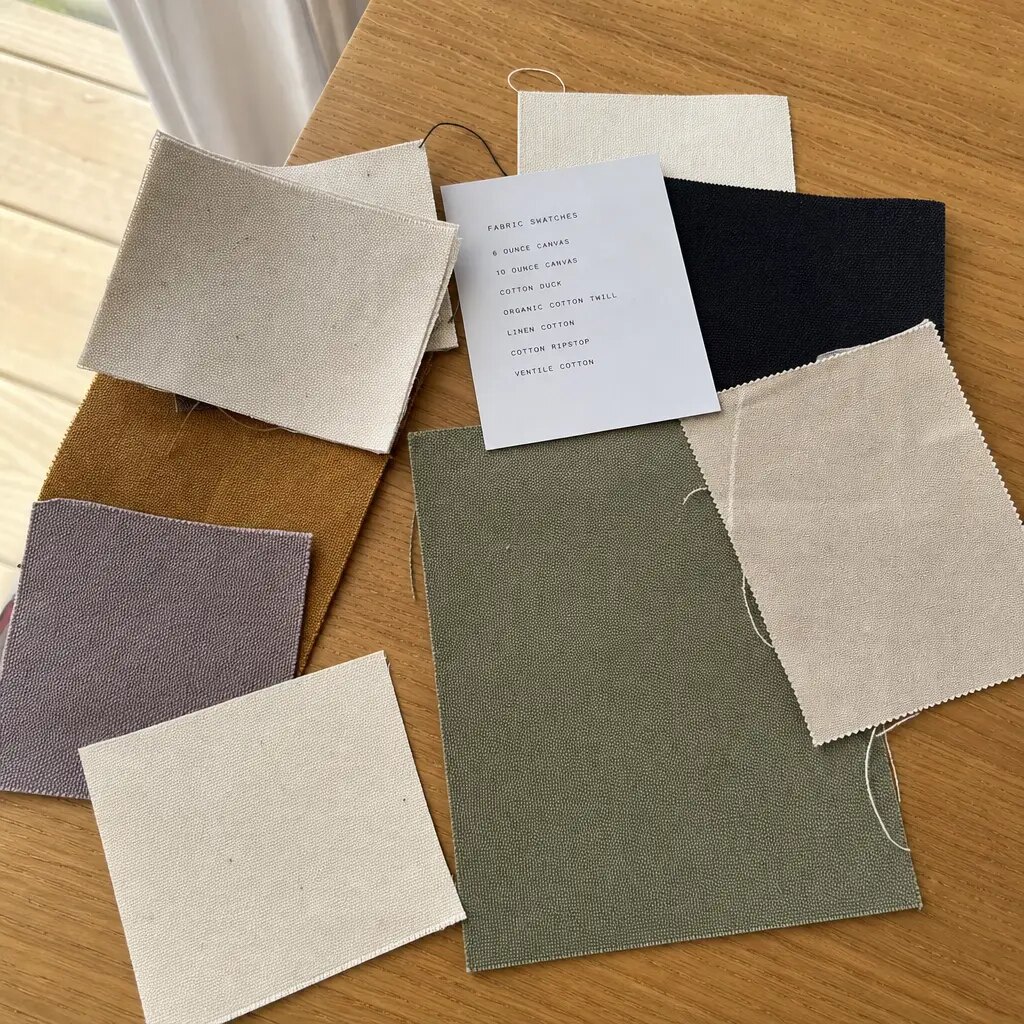
Natural undyed cotton is usually the lowest-risk route for lead time because it avoids lab dip development and dye lot approval. However, natural cotton is not a single fixed shade. Lot variation can shift the way logo colors appear, especially off-white, cream, muted green, brown, and black inks. When brand color matters, approve the print on the actual fabric, not only on a screen proof.
- State fabric weight as finished gsm where possible, with an agreed tolerance range.
- Define weave, such as plain weave cotton, and request combed or ring-spun yarn only when hand feel and print edge quality justify it.
- For custom dyed fabric, schedule lab dip approval, bulk shade approval, and possible re-dip time.
- Ask for expected shrinkage after washing, pressing, or normal handling if the finished size is critical.
- Keep one approved fabric swatch or sealed pre-production sample as the reference for bulk inspection.
Treat MOQ as a stack of production drivers
MOQ is not only a supplier sales preference. It is often a practical result of fabric rolls, dye lots, cutting efficiency, screen setup, trim purchasing, label production, line changeover, and packing labor. A buyer who asks only for the lowest total MOQ may miss the reason one quote is lower and another is more realistic.
A stock natural tote can often run at a lower MOQ because fabric may already be available and the factory can cut efficiently. Custom dyed organic cotton may require a minimum dye lot. A woven side label may have its own trim MOQ. A print version may require separate screens. A retail fold with barcode application may need additional labor setup and carton planning. When these minimums are hidden inside one total quantity, quote comparison becomes muddy.
Ask each supplier to break MOQ down by driver: fabric gsm, fabric color, bag size, print version, label type, and packing format. This is especially important for eco apparel brands ordering multiple seasonal logos, capsule collections, or regional barcode versions. A total order of 3,000 pieces may look efficient, but if it includes six print versions at 500 pieces each, the print setup cost and production flow change.
For a first order with a new supplier, simplify the MOQ stack where possible. One fabric, one size, one print method, one label type, and one packing method produce cleaner sampling, clearer inspection, and faster production. Customization should support the brand experience, not multiply risk in places the customer will barely notice.
- Request MOQ per fabric, size, colorway, print version, label, and packing style.
- Separate one-time setup fees from recurring unit cost, especially for screens, labels, and artwork revisions.
- Ask whether reorders can run below first-order MOQ after patterns, screens, labels, and packing standards are approved.
- Confirm whether assorted SKUs can share fabric and production time or must run as separate jobs.
- Compare quotes using the same quantity breakdown, not only the same total quantity.
Choose decoration based on artwork risk
Screen printing remains the most predictable decoration route for many bulk custom organic cotton totes, especially when the artwork is a simple brand mark, one or two solid colors, and a repeatable front-panel placement. It has setup cost, but the process is well suited to consistent production when artwork is clean and the ink is properly cured.
Artwork complexity can change both lead time and rejection risk. Small reversed text, thin strokes, tight registration, halftones, and large solid ink blocks are more sensitive to fabric texture. Organic cotton is not as smooth as coated paper or synthetic film. The weave can soften edges, surface fibers can affect ink coverage, and a heavy fold through the print can create marks during packing.
Heat transfer or digital printing can be useful for short runs, complex graphics, gradients, or frequent artwork changes. The tradeoff is that the buyer should check adhesion, surface feel, shine, cracking, and folding performance. A transfer that looks good flat on a sample table may behave differently after being folded into a retail pack or rubbed against another printed panel inside a carton.
A production-ready artwork file should include dimensions, color references, print position, and minimum line weight. Placement should be measured from stable reference points, such as top edge, side seam, center line, or bottom seam. Avoid approving vague mockups that show the logo floating in the approximate center of the bag. At bulk scale, vague placement becomes a dispute.
- Use screen print for simple logos, solid marks, repeat orders, and stable cost control.
- Request a strike-off for small text, thin lines, halftones, heavy ink coverage, or multi-color registration.
- Define print placement tolerance, for example within an agreed millimeter range from top edge and center line.
- Ask how the factory checks cure, rub resistance, transfer adhesion, or cracking before packing.
- Sample the print with the actual folding method if the order is retail packed.
Build the calendar backward from the required arrival date
The tote may look like an accessory, but for an apparel brand it can sit on the critical path for a launch, e-commerce kit, wholesale delivery, retail gift-with-purchase program, event, or store opening. The safest schedule starts with the required arrival date and works backward through warehouse receiving, freight transit, export handoff, final inspection, packing, sewing, printing, cutting, fabric preparation, sample approval, and RFQ finalization.
A practical B2B timeline includes buyer activities as well as supplier activities. Internal artwork approval, legal review of care labels, barcode creation, purchase order release, deposit payment, sample review, and deviation approval all take time. Many delays are not caused by sewing capacity; they happen because an approval file is missing or a sample is waiting on someone’s desk.
For a standard stock-fabric program, many suppliers may quote roughly 15-30 working days for bulk production after written approval, but that is not the same as total calendar time. Sample making can take 5-10 working days depending on queue and complexity. Courier transit and buyer review can add several days. Custom dyeing, special fabric booking, multiple print colors, retail packing, or documentation requirements can extend the schedule further.
Peak season should also be treated as a real planning variable. Factory queues, holiday closures, freight congestion, and port or warehouse capacity can all affect shipment timing. A procurement calendar should include decision deadlines, not only desired dates. If sample approval is due by Tuesday to hold a production slot, that date should be visible to every stakeholder.
- RFQ clarification and quote comparison: allow enough time for suppliers to answer technical assumptions, not just return a unit price.
- Sample making: commonly 5-10 working days for straightforward totes, longer for custom fabric, trims, or complex printing.
- Buyer sample review: schedule measurement, artwork check, handling test, internal signoff, and written approval.
- Bulk production: often 15-30 working days after approval for standard orders; custom fabric and retail packing can extend this.
- Final inspection and shipment handoff: reserve time for carton closing, document checks, freight booking, and any rework.
Use sampling as a control record
A tote sample is not only a visual preview. In procurement terms, it is a control record for material, dimensions, construction, decoration, labels, and packing. The factory and buyer should agree whether a sample is a development sample for discussion, a print strike-off for artwork approval, or a pre-production sample that authorizes bulk production.
The pre-production sample should be made with the same fabric, print method, thread, label, handle construction, and packing style intended for bulk. If substitutions are used because bulk material is not yet available, record that clearly and decide what must be re-approved before production. A sample made from similar fabric is useful for shape review, but it is not enough for final color, gsm, shrinkage, or print behavior.
Measure the sample against the written spec sheet. Check body width, body height, gusset depth, top hem, handle length, handle width, handle position, print size, print placement, label position, and folding method. Corrections should be written in measurable language. 'Move front print 15 mm higher' is enforceable. 'Make logo look better' is not.
Handling checks matter too. Load the bag with a realistic weight for its intended use, carry it by the handles, inspect stress points, fold it as it will be packed, and check whether the print cracks, transfers, or lands on a hard crease. Small defects become expensive when repeated across thousands of pieces, so sample approval should be calm, specific, and documented.
- Keep one approved physical sample with the buyer and one sealed reference sample with the factory when possible.
- Assign sample version numbers and record the date, fabric, gsm, print method, trim, packing, and approved deviations.
- Approve color on actual cotton fabric, not only on a digital mockup or PDF proof.
- Do not authorize bulk production until corrections are written and acknowledged by the supplier.
- If approving with exceptions, state exactly which items may differ and which must be corrected before bulk.
Plan packing before the bags are sewn
Packing is part of the product specification because it affects labor time, carton volume, freight cost, warehouse receiving, and inspection. A flat bulk pack is usually the fastest and most carton-efficient route for importers, promotional programs, or apparel brands that will kit the totes in their own warehouse. Retail-ready packing can be valuable, but it adds components and process steps.
A retail fold may require a folding board or approved folding standard. Hangtags need artwork, printing, string or attachment method, and placement. Barcode stickers need accurate SKU data and scan checks. Individual bags or sleeves require size confirmation and may require warning text depending on the market and buyer policy. Carton marks need to match the purchase order, destination, SKU, and receiving rules.
Packing can become the hidden reason a finished order is late. Bags may be sewn and printed, but if hangtags arrive late or barcode files are wrong, final packing cannot close. If carton quantities are not approved, the supplier may pack in a way that increases freight cost or creates warehouse receiving problems. These details should be confirmed before the final production week.
Carton efficiency also affects quality. Overfilled cartons can crush handles or press hard creases into printed panels. Underfilled cartons increase freight volume and may allow bags to shift. Heavy gsm fabric, long handles, and retail folds reduce pieces per carton. Ask for carton dimensions, gross weight, net weight, pieces per carton, and carton mark format early enough to adjust.
- Flat bulk pack: fastest and usually best for warehouse receiving or later kitting.
- Retail fold: better presentation but requires an approved fold, orientation, and inspection standard.
- Individual bagging: protects presentation but adds labor, material cost, carton volume, and possible labeling requirements.
- Barcode or hangtag packing: approve SKU data, artwork, placement, and scan results before bulk packing.
- Carton plan: define pieces per carton, assortment, dimensions, weight, marks, and pallet rules if applicable.
Set measurable QC tolerances
Quality control becomes much stronger when the standard is measurable. Phrases such as good quality, neat stitching, or premium finish are too subjective for remote inspection or final shipment release. A QC plan should define tolerances for dimensions, fabric weight, print placement, workmanship, labels, packing, and carton count.
For tote dimensions, common tolerance categories include body width, body height, gusset, handle length, handle width, handle spacing, and print placement. The exact tolerance should match product use and supplier capability, but it must be agreed before production. A small variation may be acceptable for a soft cotton tote, while print placement on a retail-facing front panel may need tighter control.
Fabric checks should happen before cutting and again during production if multiple lots are used. Inspect gsm, shade, holes, stains, oil marks, weaving defects, excessive slubs beyond the approved standard, and surface fuzz that affects printing. Organic cotton fabric may have natural texture, but natural texture is not the same as uncontrolled defects.
Handle and seam inspection is especially important because the handle join is the highest-stress area of the bag. Check reinforcement type, stitch density, skipped stitches, broken stitches, loose threads, seam puckering, raw edges, and needle damage. If the tote is intended to carry heavier items, define a simple load or pull check with the supplier and apply it consistently.
For B2B orders, inspection evidence should be useful, not decorative. Ask for photos with rulers, close-ups of stress points, fabric defects, print tests, barcode scans if relevant, carton marks, and measurement records. Final product beauty photos are nice, but they do not replace a QC file.
- Dimension control: body width, height, gusset, handle length, handle spacing, and print placement measured from agreed reference points.
- Fabric control: gsm range, shade consistency, surface defects, stains, holes, oil marks, and heavy creasing before cutting.
- Sewing control: stitch density, skipped stitches, open seams, loose threads, top hem, bottom seam, and handle reinforcement.
- Print control: color, registration, ink coverage, cure, rub resistance, cracking, smearing, and fold marks.
- Packing control: pieces per carton, SKU assortment, carton marks, barcode scans, gross weight, and packing list match.
Compare suppliers by capability, not only unit price
A direct factory, trading company, and sourcing agency can all quote a custom organic cotton tote, but the service and visibility behind the quote may be very different. A direct factory may provide better access to production details, sampling feedback, capacity, and QC discussions. It can be a strong route when the buyer has a clear spec and can manage approvals.
A trading company or sourcing partner may be useful when an apparel brand needs multiple categories, consolidation, document coordination, local communication, or support across several factories. That service can justify a higher unit price if it reduces internal workload or improves delivery control. The risk is lower visibility unless the buyer asks who actually prints, sews, packs, and inspects the goods.
Lead time planning depends on knowing which processes are in-house and which are subcontracted. If printing is outsourced, the schedule must include the print shop queue and transport between facilities. If labels come from a trim supplier, label approval and trim MOQ affect sewing. If final inspection is handled by a third party, the inspection booking date must be reserved before packing is complete.
A low quote may exclude sample courier, print setup, label setup, testing, documentation, special carton marks, barcode application, export fees, or realistic rework time. Procurement should compare quotes on the same incoterm, same packing, same sample path, same documentation requirement, and same QC responsibility.
- Ask which processes are in-house: fabric sourcing, cutting, printing, sewing, labeling, finishing, packing, and QC.
- Request the lead time basis in writing, including the exact trigger for day one of production.
- Separate unit price, setup charges, sample charges, packing extras, documentation, testing, and freight-related services.
- Confirm whether the supplier can support reorders using the same approved sample, screens, labels, and carton plan.
- Treat unclear assumptions as quote risk, especially when the supplier gives a very short lead time.
Write the RFQ as the future inspection standard
The best RFQ does more than request a price. It creates the foundation for the quote, purchase order, sample approval, production schedule, and final inspection. If those documents use different language, disputes become more likely. If they use the same spec version, the order is easier to manage.
Instead of requesting an organic cotton tote with logo, describe the finished product in production language. Include finished dimensions, fabric gsm and tolerance, weave, color route, print method, artwork file, print size, print placement, label details, packing method, target quantity by SKU, incoterm, destination, sample expectation, documentation requirement, and QC standard.
The RFQ should also ask the supplier to confirm assumptions. That includes fabric availability, MOQ drivers, sample timing, production lead time after approval, packing included in price, carton dimensions, estimated gross weight, setup fees, and excluded services. If the buyer needs organic cotton documentation for internal ESG reporting, retailer compliance, or product claims, the exact document requirement should be named.
A strong RFQ is not long for the sake of being long. It is specific where ambiguity causes cost, quality, or timing problems. For eco apparel brands, the tote may carry the brand in a customer’s hand long after the garment is sold. It deserves the same procurement discipline as any other customer-facing product.
- Use one spec version number across RFQ, supplier quote, PO, sample approval, and inspection checklist.
- Attach production-ready vector artwork and define print dimensions, color references, and placement tolerance.
- Ask suppliers to list all assumptions and exclusions, especially around fabric, packing, documents, and setup costs.
- Request sample lead time, bulk production lead time, shipment-ready date, and the exact approval trigger for each.
- Include a defect and deviation process so out-of-tolerance goods are sorted, reworked, replaced, or approved before shipment.
Specification comparison for buyers
| Planning decision | Typical B2B specification | Lead time impact | Procurement control point |
|---|---|---|---|
| Fabric weight | 140-160 gsm for light promo or apparel packaging; 160-180 gsm for most branded retail totes; 200-260 gsm for heavier reusable or resale bags | Stock natural fabric is usually faster; custom gsm, washing, dyeing, or heavier fabric can add booking and production time | Ask whether gsm is finished fabric weight and define an acceptable tolerance, commonly around +/-5% to +/-10% depending on supplier capability |
| Fabric construction | Plain weave organic cotton; combed or ring-spun yarn when smoother hand feel and cleaner print edges matter | Higher-grade yarn or tighter construction may need confirmed fabric availability before the supplier can commit to dates | Request fabric construction, yarn quality if relevant, shrinkage expectation, and whether the supplier is using stock greige, stock finished, or order-specific fabric |
| Color route | Natural undyed base for lowest timing risk; custom dyed base only when brand color is essential | Custom dyeing adds lab dip approval, dye lot minimums, shade control, and possible rework if the first dip is rejected | Approve lab dip or strike-off on actual cotton and state shade tolerance method, such as approved swatch comparison under consistent light |
| Print method | 1-2 color screen print for most bulk tote programs; transfer or digital only when artwork complexity requires it | Additional colors add screens, registration checks, strike-offs, and approval time; transfers add film or paper preparation and adhesion checks | Define print size, placement tolerance, Pantone or color standard, minimum line weight, cure check, and rub or wash test requirement if relevant |
| Handle construction | 25-30 mm self-fabric handles, cotton webbing, or reinforced tape with box stitch, cross stitch, or bar tack at stress points | Custom handle width, length, or contrast material can change cutting, sewing, and trim sourcing time | Specify handle length measured from top edge, handle width, attachment method, stitch density expectation, and pull or load check method |
| MOQ logic | Quote MOQ by fabric, size, colorway, print version, label type, and packing method | MOQ is often driven by fabric rolls, dye lots, trim minimums, screen setup, cutting efficiency, and carton planning | Ask suppliers to separate production MOQ from setup fees so first orders and reorders can be compared accurately |
| Sampling path | Development sample when the brief is still open; pre-production sample from bulk-intended materials before production release | Sample making, courier transit, buyer review, and revisions can consume more calendar time than expected | Set sample version numbers, approval owner, revision deadline, and written conditions for releasing fabric, printing, sewing, and packing |
| Packing format | Flat bulk pack for warehouse efficiency; retail fold, hangtag, barcode, insert, or individual bagging only when required by channel | Retail packing adds artwork approvals, component sourcing, folding labor, scan checks, carton volume, and inspection points | Define pieces per inner pack and carton, carton dimensions, gross weight target, carton marks, SKU assortment, and barcode verification |
| Supplier route | Direct factory for clear tote programs; sourcing partner or trader when consolidation, documentation, or multi-category coordination is needed | Subcontracted printing, sewing, or packing can add hidden queues unless disclosed early | Confirm which processes are in-house, which are outsourced, who owns QC, and when lead time starts |
Buyer checklist before sampling
- Finished tote dimensions: body width, body height, bottom gusset or side gusset if any, top hem width, seam allowance if required, handle length, handle width, handle attachment position, and measurement tolerance for each dimension.
- Fabric specification: organic cotton status, fabric weight in gsm, whether gsm is finished or greige weight, weave type, yarn quality if relevant, natural or dyed base, shade expectation, shrinkage expectation, and acceptable gsm range.
- Certification and documentation: exact documents required by the buyer or retailer, such as organic cotton transaction documentation, scope certificate reference, material declaration, test report, packing list, commercial invoice, or other compliance records.
- Artwork package: vector file format, print dimensions, print location, color count, Pantone or approved color reference, minimum line thickness, underbase requirement if any, and confirmation that artwork does not cross seams or fold lines unless approved.
- Logo and trim plan: front print, back print, inside print, woven side label, printed care label, inner brand label, hangtag, barcode sticker, belly band, cotton tape, or no-label option, with MOQ and setup cost by item.
- Quantity structure: total order quantity plus breakdown by size, colorway, print version, destination, label version, packing style, and SKU so the supplier can identify real MOQ constraints.
- Sample plan: development sample if needed, print strike-off if artwork is risky, pre-production sample made with bulk-intended materials, revision allowance, courier timing, approval owner, and date bulk production may begin.
- Packing and logistics: flat bulk pack, retail fold, individual polybag, paper band, hangtag, barcode sticker, carton assortment, pieces per carton, carton mark, pallet requirement, incoterm, destination, and freight mode.
- Quality-control standard: fabric gsm verification, shade check, dimension tolerance, seam and handle inspection, print placement tolerance, print cure or rub check, label accuracy, barcode scan check, carton count, and photo evidence required before shipment.
- Calendar controls: target ex-factory date, shipment-ready date, latest inspection date, required delivery date, buyer-side approval deadlines, supplier-side production days, and buffer time for sample review, documentation, peak season, and freight booking.
Factory quote questions to send
- What exact organic cotton fabric are you quoting: gsm, weave, yarn quality if applicable, finished width, stock status, and normal gsm tolerance?
- Is the price based on stock natural fabric, stock dyed fabric, custom woven fabric, custom dyed fabric, or fabric that must be specially booked for this order?
- What documentation can you provide for the organic cotton material, when will it be available, and is any document excluded from the quoted price?
- What are your normal dimension tolerances for tote body width, body height, gusset, handle length, handle position, and print placement?
- Which print method is included, how many colors are included, what ink or transfer type is planned, and what is the setup cost per screen, plate, film, or artwork revision?
- Can you provide a print strike-off or pre-production sample on the actual fabric, and what rub, cure, wash, or adhesion checks do you normally perform?
- What is the MOQ by fabric, gsm, bag size, fabric color, print version, print method, label type, and packing method, not only by total order quantity?
- How long do you need for sample making, sample revision, courier dispatch, bulk production after written approval, final packing, and shipment handoff?
- Does the quoted lead time start after deposit, after artwork approval, after fabric arrival, after pre-production sample approval, or after all trims and packaging are approved?
- Will the pre-production sample use the same fabric, ink, label, thread, handle construction, sewing method, folding standard, and packing method as bulk production?
Quality-control points to confirm
- Fabric gsm checked from representative fabric or finished bag panels against the approved range, with the method recorded and any lot-to-lot variation flagged before cutting.
- Fabric surface inspected before printing and cutting for holes, stains, oil marks, shade bands, weaving defects, excessive slubs beyond the agreed standard, heavy creasing, and foreign fibers that affect appearance.
- Natural or dyed shade checked against the approved swatch or sample under consistent lighting, with carton or batch separation if minor shade variation is accepted.
- Flat-lay dimensions measured from multiple cartons, including body width, body height, bottom or side gusset, top hem, handle length, handle width, handle spacing, and print location from agreed reference points.
- Handle attachment inspected for reinforcement type, stitch density, loose threads, skipped stitches, broken stitches, needle damage, and stress-point security using the agreed pull or load check method.
- Side seams, bottom seams, top hem, gusset seams, and handle joins checked for open seams, puckering, uneven tension, raw edges, twisting, and seam allowance that affects finished size or durability.
- Print checked for position, color, registration, ink coverage, edge clarity, pinholes, smearing, cracking, curing, transfer adhesion, rub resistance, and visible marks caused by folding or stacking.
- Labels, hangtags, care labels, side tabs, barcode stickers, and carton labels verified for spelling, material, placement, orientation, version control, and scan accuracy where barcodes are used.
- Packing checked against the approved folding standard so handles are not crushed, printed panels do not rub heavily, retail presentation is consistent, and each SKU is packed in the correct inner and master carton quantity.
- Carton count, assortment breakdown, carton marks, carton dimensions, gross weight, net weight, packing list, and shipment documents matched before dispatch to reduce receiving errors and chargeback risk.