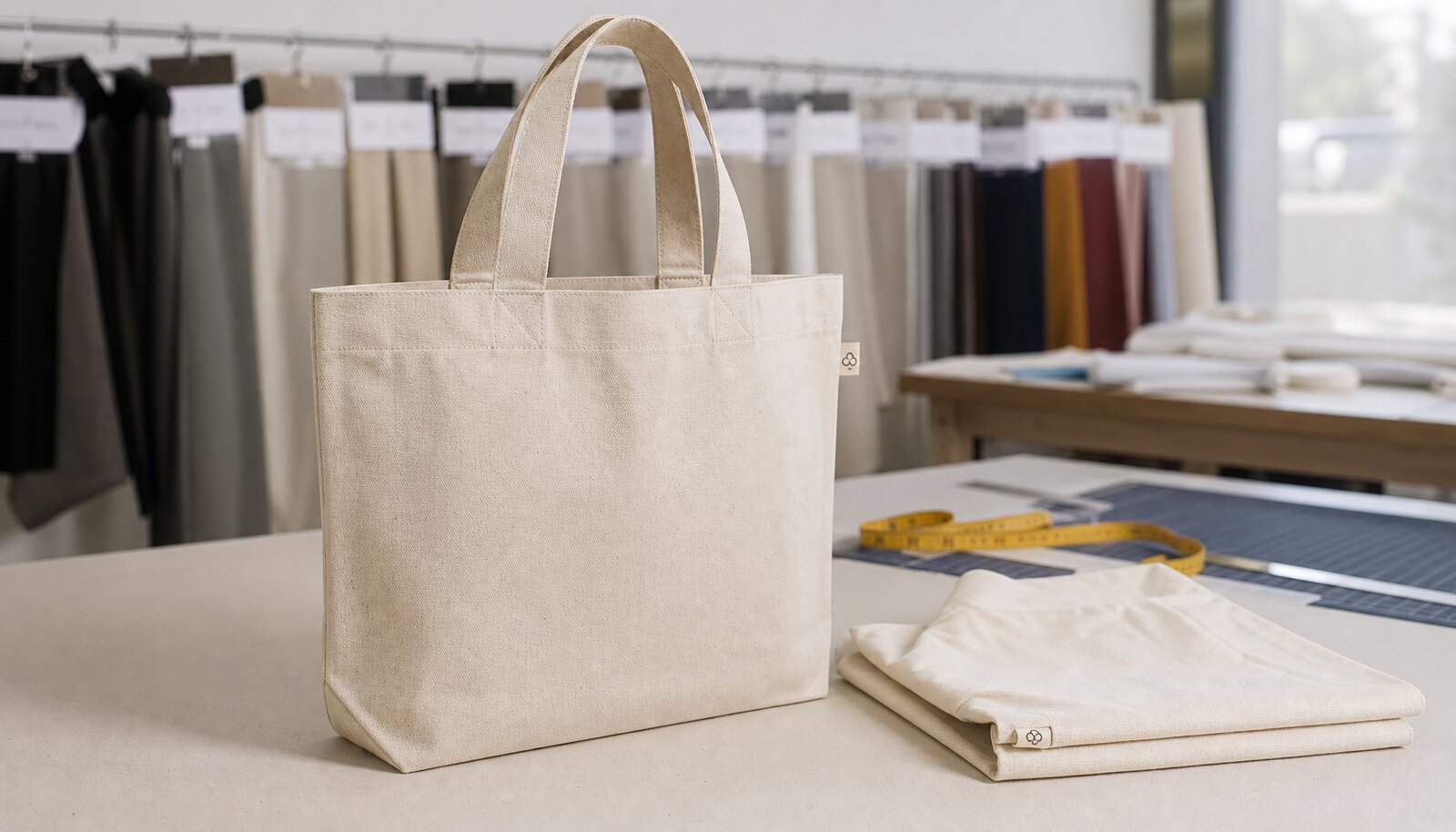
Lead Time Starts Before Sewing
For boutique wineries, tote lead time is usually decided before the sewing line ever starts. The real schedule is driven by artwork sign-off, fabric booking, print setup, sample approval, and freight method. A simple one-color tote can move quickly, but the moment you add a custom gusset, a heavier organic cotton fabric, or retail-ready packing, the calendar expands. Buyers who only ask for a unit price usually discover this too late, when the order is already tied to a launch date or harvest event.
The practical way to plan is to work backwards from the date the bags must be in hand. If the totes are for a tasting-room refresh, seasonal gift set, or trade event, define the non-negotiable receive date first and then add a buffer for sample revisions and shipping delay. For overseas supply, transit can matter as much as sewing. A quote that looks fast on paper may still miss the window if the supplier cannot reserve fabric or lock the print schedule early.
- Start with the in-hand date, not the order date.
- Separate sample time, production time, and freight time.
- Add extra buffer when the order is tied to a fixed winery event.
- Do not treat artwork approval as a minor step; it can shift every downstream date.
Choose a Tote Spec That Matches Winery Use
The right spec depends on how the tote will be used. A light promotional bag for bottle tags or tasting-room giveaways does not need the same fabric weight as a retail tote that will carry a bottle, brochure, and merchandise. For most organic cotton totes, 160 to 180 gsm is a sensible working range. It gives enough body for printing and daily use without pushing the bag into an overly stiff, high-cost build. If the tote must feel more substantial or carry heavier retail items, 200 gsm is easier to justify.
Construction matters just as much as fabric. Reinforced handles, clean bartacks, and a gusset can make the bag feel more premium and reduce failure risk. For a winery buyer, the useful question is not whether the tote is technically possible, but whether it will survive real customer use. Ask the factory to match the tote to the actual load profile: one bottle, two bottles, a boxed gift, or a general merch bag. That definition influences everything from handle length to seam strength.
- Use lighter fabric for low-cost promo bags and heavier fabric for retail bags.
- Specify the load the bag must carry, not just the dimensions.
- Decide early whether the bag needs structure, a gusset, or a flat profile.
- Keep the design simple if you want a shorter lead time and fewer defects.
Compare Sourcing Routes Before You Compare Prices
A direct factory, a local decorator, and a trading company can all quote the same tote, but they do not carry the same risk. A direct factory is usually better when you need control over fabric, stitching, and production slotting. A local printer can help with speed if the bag body is standard and the print is simple, but the base bag may limit your options. A trading company may make communication easier, yet the quoted lead time can hide the fact that they are buying capacity from someone else and cannot truly guarantee the schedule.
For boutique wineries, the sourcing route should match the order profile. If the tote is part of a repeat program, direct factory control is usually more reliable. If the need is urgent and the spec is simple, a domestic decorator may win on transit time even if the unit price is higher. What matters is not the cheapest quote line; it is the route that can hold the required date with the fewest hidden handoffs. Ask who owns fabric booking, who approves the sample, and who is responsible if one stage slips.
- Ask who actually owns production capacity.
- Ask who approves the sample before bulk starts.
- Ask whether the factory holds fabric in stock or buys it after deposit.
- Ask who absorbs rework if the first print run misses the standard.
Build the Schedule Backwards from the Launch Date
A realistic schedule breaks into clear stages. Artwork confirmation may take only a few days if the logo is already clean and vector-ready, but sample development can take a week or longer if the bag has never been made before. Fabric sourcing adds more time when the mill does not hold the exact weight or shade in stock. Then comes cutting, printing, sewing, finishing, inspection, and packing. By the time you include holiday congestion or harvest-season demand, a simple tote can still become a long-lead item.
Use stage timing instead of one lump lead time. For a standard custom organic cotton tote, a buyer might see roughly 2 to 5 days for artwork approval, 5 to 10 days for sample making, 15 to 30 days for bulk production, and 3 to 7 days for packing and outbound prep. Freight then sits on top of that. Ocean freight, consolidation delays, and customs clearance can add weeks. If the bags need to sit in a warehouse before release, add that buffer too. The job is not to make the schedule sound short; the job is to make it dependable.
- Break the timeline into artwork, sample, material, sewing, packing, and freight.
- Do not let the supplier quote only one total lead time without stage detail.
- Treat transit as part of lead time, not an afterthought.
- If the tote launch is tied to a fixed event, lock the freight method early.
Approve Samples Like a Buyer, Not a Viewer
A screen image is not enough to approve a custom tote. The bag must be handled, folded, measured, and loaded. A physical pre-production sample tells you whether the cotton has the right hand feel, whether the print sits in the correct position, and whether the handles feel balanced when the tote is full. For a winery, the critical test is real use: can the bag still look clean and carry product after it has weight in it, not just when it is empty on a table.
Sampling should also confirm the details that are expensive to fix later. Check the finished size, handle drop, print location, and seam quality against the approved drawing. If the artwork has small text or a fine logo line, test legibility on the actual fabric color, because natural cotton will absorb ink differently than coated paper or a digital proof. If the tote is going into retail, the sample should also show the final label placement, barcode area, and any hang tag or side mark that the receiving team will need.
- Use a physical sample for first orders and any new construction.
- Compare the sample against a dimension sheet, not memory.
- Test the tote under the real carrying load the customer will use.
- Approve color and print position only after seeing the actual fabric.
Set QC Thresholds the Factory Can Actually Follow
Quality control works best when the acceptance criteria are measurable. A tote that is described only as good quality will create arguments later. Set the allowable tolerance on width, height, and handle length. Specify the stitch points that must be reinforced. Define whether a small print shift is acceptable or whether the logo must sit exactly at center. If the bag is being sold in a shop, a slightly imperfect fold may be acceptable; if it is a premium gift item, the standard should be tighter.
The most useful QC points are the ones that stop a customer complaint before packing. On organic cotton totes, weak bartacks, missed stitches, ink rub-off, thread ends, stains, and unpleasant odor are the common problems to catch early. If the tote must carry bottles, do a simple load test that reflects real use. If the bag is meant for retail sale, confirm that the finished stack or carton format does not crush the tote and change its shape. A clean QC sheet saves more money than a discount on the unit price.
- Define size tolerance in writing.
- Require reinforcement at handle stress points.
- Check print rub resistance and color consistency.
- Inspect for stains, odor, loose threads, and needle damage.
- Use a load test that matches the actual customer use case.
Plan Packing, Cartons, and Pallets as One System
Packing decisions affect labor cost, carton count, and freight volume. A flat-fold bulk pack is usually the most efficient route for wholesale orders, but it only works if your receiving team can handle the bags on arrival and if the retail plan does not require individual presentation. If the totes must go straight to shelves or gift sets, individual bagging, belly bands, or barcode stickers may be worth the extra labor. The mistake is to treat packing as a final step. In reality, it shapes the landed cost and the warehouse workflow.
Carton planning matters even on relatively light products like organic cotton bags. If the carton is too large, the freight cube rises and the bags shift inside. If the carton is too small, the folds become messy and the tote can arrive marked or creased. Ask for carton dimensions, gross weight, carton count, and pallet height before the quote is approved. For wine retail programs, it also helps to align carton marks with SKU, color, and print version so the warehouse can receive and count the order quickly.
- Choose bulk packing unless retail presentation requires otherwise.
- Lock carton count and gross weight before production starts.
- Use clear carton marks for SKU, color, and quantity.
- Check whether the bag must be polybagged, banded, or left unwrapped.
- Confirm pallet height if the receiving warehouse has a handling limit.
Read the Quote as a Landed-Cost Sheet
A good quote separates the pieces that move the total cost. The base unit price should not hide the screen charge, sample fee, packing labor, cartons, or freight assumptions. Ask for the price at the relevant Incoterm, then compare it against the full cost to land the tote in your warehouse. A low EXW price can become expensive once you add inland trucking, export handling, and shipping. A slightly higher factory price may still win if the supplier is closer to the port, already has fabric in stock, or can pack efficiently.
Compare quotes by the same rules. If one supplier uses 160 gsm fabric and another uses 180 gsm, you are not comparing the same bag. If one quote includes individual polybags and the other is bulk packed, the unit price is misleading. For winery buyers, the best quote is the one that shows how the supplier arrived at the number. It should let procurement, marketing, and logistics all review the same sheet without guessing what was omitted.
- Separate unit price from sample, tooling, packing, and freight.
- Compare like for like on fabric weight, print method, and packing style.
- Ask for EXW, FOB, or DDP pricing only if you understand what each includes.
- Watch for hidden costs in artwork, repeat screens, labels, and carton changes.
Use MOQ Logic and Inventory Math to Avoid Overbuying
MOQ is not just a factory number. It is usually the result of fabric minimums, print setup, sewing efficiency, and packing labor. If you split one tote into several colors, several print placements, or multiple logo versions, each variant can create its own minimum. Boutique wineries often need a smaller overall run, but they still want the bag to look specific and premium. The way to manage that tension is to simplify the construction and concentrate volume into fewer versions.
Inventory planning should follow the product calendar. Harvest season, holiday gifting, trade tastings, and tasting-room restocks do not behave the same way. If the bag is for a seasonal launch, calculate the quantity needed to cover demand through the full replenishment cycle, not just the first shipment. A simple rule is to forecast sales during the lead time, add a buffer for event spikes, and then round up only as far as your storage and cash flow allow. That is a better use of capital than buying too little and paying for a rush reorder later.
- Reduce the number of variants before asking for a quote.
- Plan inventory by season, not by an average month.
- Use a safety stock buffer when the tote is tied to events or gifting.
- Do not let a low MOQ hide a poor replenishment plan.
Send a Clean RFQ Package and Avoid the Usual Mistakes
The fastest way to get a useful factory quote is to send a complete RFQ package. Include the bag dimensions, fabric target, print file, placement drawing, expected order quantity, target delivery date, and the packing format you want on arrival. If the winery has a retail team, add barcode or label requirements up front. If the bag must support bottles, say so directly and include the intended load. The more specific the brief, the less likely the supplier is to quote a wrong structure and then recover the mistake through delays or change charges.
Most delays come from avoidable gaps. Buyers wait too long to finalize artwork, approve a sample from a photo, or compare quotes that do not describe the same spec. Others forget to include freight time, or they approve a packaging format that looks efficient in the factory but is awkward in the warehouse. A good RFQ is short, but it is not vague. It gives the factory enough information to price the real job, not a guess.
- Provide final artwork or a near-final layout before requesting the quote.
- State the delivery date and whether it is ship date or in-hand date.
- Tell the supplier if the bag is for bottles, retail merchandise, or giveaways.
- Include packing, label, and carton requirements in the first brief.
- Ask for a written schedule with milestones before placing the order.
Specification comparison for buyers
| Spec decision | Recommended option | When it fits | Buyer risk to check |
|---|---|---|---|
| Sourcing route | Direct factory with cut-and-sew control | Best for repeat winery programs, custom sizes, and schedule control | Confirm you are speaking with the maker, not a middle layer that cannot hold the line slot |
| Fabric weight | 160 to 180 gsm for most retail totes, 200 gsm if the bag must carry bottles comfortably | Fits tasting-room merch, gift shop sales, and event giveaways that need a better hand feel | Too-light fabric looks thin, loses structure, and can distort after printing |
| Print method | One to two color screen print for most winery logos | Best when the artwork is clean, the run is medium to large, and you want strong opacity on natural cotton | Check color registration, cure quality, and rub resistance before approving mass production |
| Construction | Reinforced handles, bartacks at stress points, and a gusset if the tote must stand up better | Fits heavier retail use, bottle carry, and premium merch programs | Weak handle attachment is a common failure point even when the print looks perfect |
| Sampling route | Physical pre-production sample before bulk start | Essential for first orders, new artwork, or any bag that carries product weight | Photo approval alone can hide size drift, fabric shade differences, and stitching errors |
| Packing format | Flat-fold bulk packing with clear carton marks, or individual bagging only if retail display requires it | Fits wholesale shipment, pallet efficiency, and lower freight cost | Retail teams may need labels, inserts, or barcode placement that changes labor and carton count |
| Lead-time strategy | Reserve fabric and production capacity early, then lock artwork fast | Useful for harvest season, holiday gifting, and winery events with fixed launch dates | Late artwork approval is the fastest way to lose your buffer and pay for a rush slot |
| Quote structure | Separate EXW or FOB pricing, sampling cost, packing cost, and freight options | Best for comparing suppliers on a true landed-cost basis | A low unit price can hide tool charges, extra packing labor, or inland fees |
Buyer checklist before sampling
- Confirm the final bag size, gusset depth, handle drop, and intended load weight before requesting quotes.
- State the fabric target in GSM or oz, and decide whether you want a natural undyed finish, bleached white, or dyed body.
- Provide vector artwork, Pantone targets if needed, and a clear print placement drawing with measurements.
- Define the printing method you will accept, especially if the design has fine lines or more than two colors.
- Ask for a physical pre-production sample on the same fabric and with the same print method as bulk.
- Set acceptance tolerances for dimensions, stitch quality, print alignment, and color variation.
- Specify packing format, carton quantity, pallet needs, and whether the bags must arrive retail-ready or bulk packed.
- Request a lead-time breakdown by stage so you can see where the schedule can slip.
- Get quote lines for sample fee, tooling or screen charge, packing, and freight separately.
- Build a buffer for freight delays if the bags are tied to a harvest event, tasting-room opening, or holiday launch.
Factory quote questions to send
- What is your exact production lead time from artwork approval and deposit, not from the first inquiry?
- What fabric weight, yarn count, and weave density will you use for this tote?
- Which print method is included in the quote, and how many colors are covered before the price changes?
- Can you send a physical sample made from the same fabric and stitched on the same line planned for bulk?
- What are the MOQ rules by color, print version, and packing style?
- What is included in the unit price, and what is billed separately for screens, artwork, packing, or cartons?
- What size tolerance do you hold on width, height, and handle length?
- How do you test seam strength, handle reinforcement, and print rub resistance before shipment?
- What is the carton count, carton size, and gross weight per carton for the finished order?
- Which Incoterm is quoted, and what freight options are available if the delivery date is fixed?
Quality-control points to confirm
- Measure bag width, height, and gusset against the approved spec, with a tighter tolerance for structured retail totes than for soft promotional bags.
- Inspect handle attachment for even bartacks, secure seam ends, and no skipped stitches at the stress points.
- Check print placement, registration, and color density on the first and last bag in the run, not just on a single perfect sample.
- Rub-test the print and inside seams to catch weak curing, dye transfer, or loose fibers before packing.
- Confirm the bag can support the intended bottle or merchandise load without seam stretch, handle tearing, or panel distortion.
- Look for oil marks, needle holes, stains, thread trimming, and odor, especially on natural cotton and organic cotton lots.
- Verify folding method, carton count, and label placement so the receiving team can reconcile the shipment fast.
- Reject cartons that exceed the agreed gross weight or pallet height if they create warehouse handling issues.
- Match the bulk shade to the approved sample under daylight, not only under factory fluorescent lighting.
- Record an AQL or at least a clear pass-fail standard before shipment so a supplier cannot redefine quality after production starts.