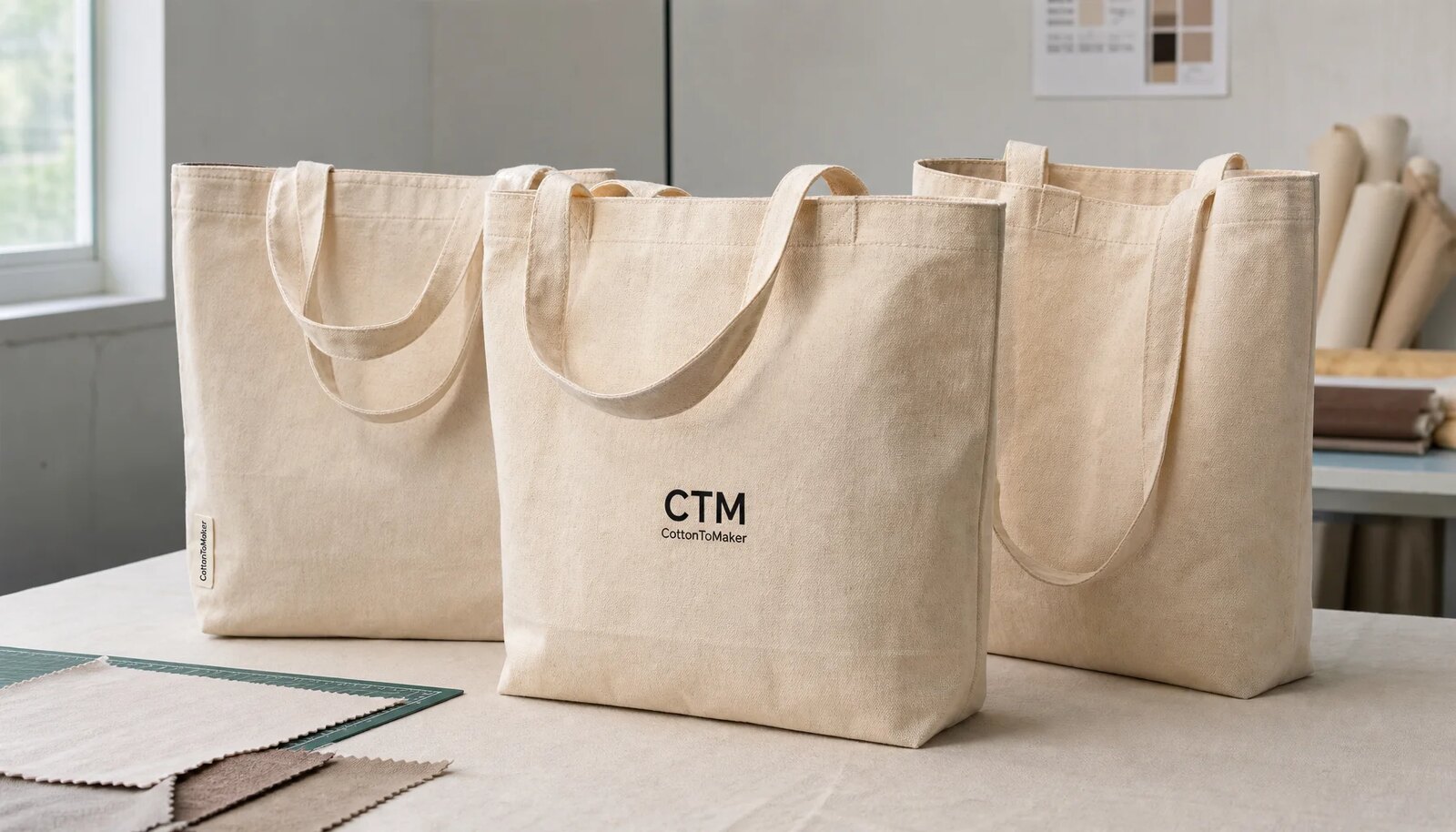
Start With the Selling Use, Not the Bag Name
For hotel retail, an organic cotton tote can be a paid souvenir, a spa shop carry bag, a beach-resort amenity, a conference welcome bag, or a branded gift sold through a hotel boutique. These uses look similar in photos but require different material choices. A tote sold for profit must feel stable on the shelf, carry mixed retail items, and survive repeat use. A welcome amenity may need lower cost, lighter fabric, and compact packing because it is distributed by housekeeping or front desk staff.
The common sourcing mistake is to request a custom organic cotton tote without defining the load, retail price point, and shelf presentation. Factories then quote whatever construction is easiest to price. One supplier may quote 180 GSM cotton sheeting with flat handles, another may quote 280 GSM canvas with bottom gusset, and both will call the item an organic cotton tote. The buyer sees a price gap but not the specification gap.
- For paid hotel shop retail, start with 220-280 GSM canvas, reinforced handles, and a bottom gusset.
- For high-end resort boutiques, consider 300-340 GSM canvas if the bag must stand better and feel more substantial.
- For amenity distribution, 180-200 GSM can work if the handle stitching and load expectation are controlled.
- For spa or wellness retail, natural unbleached cotton usually supports the brand story better than bright white dyed cotton.
- For airport or cruise retail channels, carton volume and barcode compliance can matter as much as fabric feel.
Choose Organic Cotton Fabric by GSM and Weave
GSM is one of the first numbers procurement should lock down because it affects hand feel, print quality, seam strength, packing volume, and unit cost. For hotel retail totes, 220-280 GSM organic cotton canvas is often the safest middle range. It feels retail-ready without becoming too bulky for export cartons or guest luggage. It also gives screen printing a more stable surface than very light cotton sheeting.
Do not rely on fabric names alone. In quotations, cotton sheeting, canvas, and duck can be translated loosely. A factory may use the word canvas for a fabric that is closer to plain cotton sheeting. A clear RFQ should state the fabric type, target GSM, tolerance, color, shrinkage expectation if washing is relevant, and whether fabric certification documentation is required. If the bag will be sold as organic cotton in a hotel shop, the paperwork must support the claim.
- 180-200 GSM: suitable for light-use promotional or amenity totes where price and packing efficiency are priorities.
- 220-280 GSM: practical retail range for most hotel gift shops, spa retail, and destination souvenir totes.
- 300-340 GSM: stronger premium impression but higher material cost, carton volume, and needle-stress risk during sewing.
- Natural unbleached cotton: sustainable look, but shade variation and cotton seed specks must be accepted within a defined range.
- Dyed organic cotton: stronger color control but needs dye lot approval, colorfastness review, and higher MOQ planning.
Set Size, Gusset, and Handle Specs Around Real Hotel Purchases
A hotel retail tote is rarely carrying only one flat brochure. It may carry a beach towel, sunscreen, spa products, a water bottle, packaged snacks, a robe, or local retail goods. The body size and gusset must match the merchandise mix. A flat tote is cheaper and packs smaller, but it does not present as well when guests buy bulky items. A boxed bottom gusset improves capacity and shelf shape, especially for resort and spa shops.
Handle drop is another detail that changes customer satisfaction. Short handles work for hand-carry gift bags, but shoulder-carry is preferred for beach resorts and city hotels where guests walk with purchases. For most retail totes, a handle drop around 25-30 cm is easier to shoulder-carry. Handle width around 2.5-3.0 cm is more comfortable than narrow self-fabric strips, especially when the bag carries bottles or books.
- Common compact retail size: about 32 x 36 cm with no gusset or a shallow gusset for light souvenir goods.
- Common resort retail size: about 38 x 42 cm with an 8-12 cm bottom gusset for towels and larger merchandise.
- Shoulder-friendly handle drop: usually 25-30 cm, but confirm against the target guest use.
- Handle reinforcement: require box stitch or X stitch at each attachment point, not only a straight seam.
- Seam finishing: inside seams should be neat enough for a retail item, not only functional for giveaway use.
Match Print Method to Artwork and Fabric Texture
Water-based screen printing is usually the best starting point for custom organic cotton totes used in hotel retail. It gives a soft hand feel, works well on natural cotton, and suits simple hotel logos, destination graphics, spa branding, and one-to-three color artwork. It is also easier to inspect than many low-cost transfers because the ink sits consistently on the textile surface when the mesh, pressure, and curing are controlled.
The risk is that buyers approve a digital artwork proof and skip the strike-off. Natural cotton canvas has texture, slubs, and shade variation. Thin serif letters, small map details, fine lines, and pale ink colors may not print cleanly. A proper sample approval should include print size, placement from top and side edges, Pantone reference or acceptable visual target, ink type, curing condition, and rub resistance.
- Use screen print for solid hotel logos, destination marks, line art, and limited color designs.
- Use embroidery only for smaller logos or premium details because large embroidery can distort cotton panels.
- Use woven labels or side labels when the front design should stay clean or when multiple hotel properties share one bag body.
- Avoid low-quality heat transfers for premium hotel retail unless wash, peel, and hand-feel tests are approved.
- Require strike-off on actual bulk fabric or approved sample fabric, not only on a separate test cloth.
Understand MOQ Logic Before Comparing Unit Prices
MOQ for organic cotton totes is not only a factory preference. It is driven by fabric sourcing, dyeing if required, certification documents, cutting efficiency, print setup, sewing line changeover, label preparation, and packing labor. A low MOQ may be possible for natural stock organic cotton fabric with simple one-color print. A custom dyed fabric, uncommon GSM, multiple artwork versions, or certified transaction documentation can raise the practical MOQ.
When two quotes have different MOQs, compare what the supplier is actually controlling. A higher MOQ may include bulk fabric booking from a certified source, stable GSM, and better color consistency. A lower MOQ may use available fabric stock, which can be useful for a test order but may not support repeat orders or strict shade matching. For hotel groups with multiple properties, combining artwork versions on one fabric base can reduce cost while preserving property-specific branding.
- Lower MOQ is easier with natural cotton, standard size, standard handle, and one-color screen print.
- MOQ rises when fabric is custom dyed, fabric weight is uncommon, or several print positions are required.
- Multiple hotel logos can sometimes share one fabric production lot if only the print screen changes.
- Certified organic documentation may have separate minimums and paperwork costs; include it in the RFQ.
- Sample order quantity should not be used to judge bulk price because cutting and print setup are not efficient.
Quote Data That Prevents Misleading Comparisons
A useful quote for hotel retail totes should allow procurement to compare landed cost, retail margin, and operational risk. Unit price alone is not enough. The buyer needs fabric GSM, organic documentation, finished size, gusset, handle construction, print method, number of print colors, label details, packing plan, carton data, sample cost, bulk lead time, and payment terms. Without these details, the lowest quote often hides a lighter fabric, weaker handle, lower-grade print, or less careful packing.
For importers and distributors, carton data is especially important. A 300 GSM gusseted tote may look only slightly more expensive per piece but can increase CBM and shipping cost. Individual polybags can protect retail presentation, but they add labor, material, plastic use, and packing volume. If the hotel buyer wants a plastic-free retail story, folded paper bands or master polybag packing may be better, but the risk of dirt and creasing must be managed.
- Quote line should state finished bag size, not only cut panel size.
- Fabric line should state organic cotton type, GSM, color, and tolerance.
- Print line should state method, colors, print size, and whether setup cost is included.
- Packing line should state pieces per carton, carton size, gross weight, net weight, and CBM.
- Commercial line should state MOQ, sample timing, bulk lead time, Incoterm, payment terms, and document availability.
Sample Approval Should Simulate Bulk Production
The pre-production sample is not just a photo confirmation. It is the buyer’s last chance to control fabric hand feel, logo scale, construction, folding method, and retail appearance before the factory cuts bulk material. For hotel retail, the sample should be made from the same fabric weight and color family as production. If the sample uses substitute fabric, it may still be useful for size review, but it should not approve final material.
Sample review should be done with the intended retail load. Put a towel, bottle, book, or spa product set inside the tote and evaluate handle comfort, side seam tension, bottom shape, and logo visibility. Lay the bag flat and check measurement tolerance. Hang it on a retail fixture if that is how it will be sold. Many problems that look small on a table become obvious when the tote is filled or displayed.
- Approve fabric swatch before approving the full sample if GSM, shade, or texture is critical.
- Measure finished width, height, gusset, handle drop, handle width, and print placement.
- Check whether the print looks clean over cotton slubs and seam areas.
- Review folding marks and packing presentation after the sample has been packed for at least one day.
- Keep one signed or sealed approval sample for factory reference and one for buyer inspection comparison.
QC Thresholds for Retail-Ready Organic Cotton Totes
Retail-ready QC is stricter than promotional giveaway QC. Hotel shop staff do not want to sort stained bags, trim loose threads, or explain crooked logos to guests. For organic cotton totes, the main inspection areas are fabric defects, shade consistency, cutting and sewing accuracy, handle strength, print quality, odor, and packing condition. Natural cotton may include small specks or slubs, but oil stains, dirty handling marks, mold smell, large weaving flaws in the print area, and severe creasing should be rejected.
Dimension tolerance should be realistic because cotton fabric moves during cutting, printing, sewing, and pressing. A typical practical tolerance may be plus or minus 1 cm for body width and height, with tighter control for print placement and label position. For handle strength, the acceptance standard should reflect the intended use. If the tote is expected to carry a beach towel and bottled items, the test load should be higher than a conference document bag.
- Fabric: verify GSM, shade range, stains, holes, heavy slubs, and odor before cutting or during inline inspection.
- Sewing: inspect stitch density, skipped stitches, loose threads, seam allowance, and reinforced handle attachment.
- Print: inspect color, registration, edge sharpness, cracking, smudges, curing, and rub resistance.
- Dimensions: measure finished bags from packed bulk, not only the first sewing output.
- Packing: inspect carton dryness, carton strength, barcode label position, and count accuracy.
Packing Choices Affect Shelf Presentation and Landed Cost
Packing should be selected according to the retail channel. A hotel boutique may need each tote folded consistently with a hang tag and barcode. A resort amenity program may prefer bulk flat packing by room allocation. A distributor may need carton marks by SKU, property, color, or artwork version. The best packing plan protects the fabric and print while avoiding unnecessary volume and plastic.
Flat packing is usually economical and keeps carton height controlled. However, heavy compression can create hard creases that are difficult for hotel staff to remove. Individual polybags protect against dirt and moisture but can conflict with sustainability messaging. Paper bands or kraft sleeves look more retail-friendly, but they must be tested for scuffing and barcode readability. The RFQ should request carton dimensions before order confirmation because freight cost can change the true landed cost.
- For retail shelves: use consistent folding, hang tag, barcode, and optional paper band if the brand wants a plastic-reduced presentation.
- For amenity distribution: use bulk flat packing with clear inner bundle counts by property or department.
- For ecommerce resale: consider individual packing protection, barcode accuracy, and carton drop resistance.
- For humid destinations: require dry cartons, moisture control, and no long storage in damp conditions before shipment.
- For import planning: compare CBM per 1,000 pieces across fabric weights and packing styles.
Lead Time and Schedule Risks Buyers Should Build Into the RFQ
Lead time for custom organic cotton totes should be counted from approved artwork, confirmed specification, sample approval if required, and material booking. Counting from the first inquiry creates unrealistic expectations. Organic cotton fabric availability can change by GSM, color, and certification need. Natural stock fabric may move quickly, while dyed fabric or uncommon canvas weight may require additional days for sourcing, dyeing, drying, testing, and shade approval.
Hotel retail programs often have fixed launch dates tied to renovation openings, seasonal resort traffic, events, or property rebranding. The safest workflow separates artwork approval, material approval, pre-production sample approval, bulk production, inspection, and shipping booking. If the buyer needs multiple properties or languages on labels, artwork version control must be treated as a schedule risk, not a minor design detail.
- Material sourcing risk: organic cotton GSM and certification availability should be confirmed before price is treated as final.
- Artwork risk: late changes to logo size, print color, or label text can reset sample and screen preparation.
- Production risk: heavy canvas and multiple sewing details can slow output compared with light flat totes.
- Packing risk: hang tags, barcodes, paper bands, and carton sorting add labor time near shipment.
- Inspection risk: failed print curing or seam strength tests may require rework before shipment release.
Specification comparison for buyers
| Spec decision | Recommended option | When it fits | Buyer risk to check |
|---|---|---|---|
| Main fabric weight | 220-280 GSM organic cotton canvas for most hotel shop totes | Good balance of retail hand feel, foldability, print surface, and suitcase-friendly weight | Supplier may quote lighter plain weave cotton while calling it canvas; require GSM tolerance and fabric swatch approval |
| Premium retail version | 300-340 GSM organic cotton canvas with bottom gusset | Higher room-rate hotels, resort boutiques, spa retail, gift-with-purchase programs with premium positioning | Higher fabric cost, bulkier cartons, and longer drying time after washing; test shrinkage and carton volume |
| Budget retail or amenity version | 180-200 GSM organic cotton sheeting or light canvas | Short campaigns, welcome gifts, low-price souvenir programs, or high-volume resort distribution | Handles may feel weak if width and stitching are not upgraded; check load test and seam reinforcement |
| Color choice | Natural unbleached organic cotton for sustainability-led hotel retail | Works for eco gift shops, beach resorts, wellness hotels, and low-ink branding | Natural shade varies by cotton batch; approve a shade range instead of expecting pure white |
| Printing method | Water-based screen print for simple one-to-three color hotel artwork | Best for logos, destination graphics, spa marks, and boutique retail designs with solid colors | Fine lines can fill on rough canvas; require strike-off on actual bulk fabric, not paper proof only |
| Construction | Boxed bottom gusset with cross-stitched handles | Improves shelf shape, capacity, and perceived retail value for hotel shops | Cheap quotes may use flat tote construction; compare finished size, gusset depth, and handle stitching method |
| Handle spec | Self-fabric 2.5-3.0 cm handles or cotton webbing with reinforced X-stitch | Suitable for beach towels, spa products, books, bottled drinks, and mixed retail purchases | Handle length affects shoulder use; specify drop length and test with intended hotel retail load |
| Packaging | Flat packed in export carton with inner polybag option only if required | Controls carton volume and keeps fabric creases manageable for hotel retail unpacking | Over-compressed packing leaves hard creases; require carton dimensions and pieces per carton before approval |
Buyer checklist before sampling
- Define whether the tote is sold retail, used as a guest amenity, or bundled with spa and resort merchandise because each use changes fabric weight and finishing tolerance.
- Specify organic cotton certification requirement at quotation stage, including whether transaction certificate, scope certificate, or fabric-level documentation is needed.
- Choose a target GSM range and fabric type instead of using only the word canvas; include acceptable GSM tolerance in the purchase order.
- Provide finished size, gusset depth, handle drop, handle width, seam allowance expectation, and intended carrying load.
- Send final artwork with Pantone references, print size, placement, and whether the print must be tested on natural fabric shade.
- Require a pre-production sample using the same fabric weight, handle construction, label, print method, and packing direction as bulk production.
- Compare quotes by finished bag specification, not unit price alone; include carton packing, certificate documents, print setup, sample cost, and inland freight if applicable.
- Set inspection checkpoints for GSM, finished dimensions, print adhesion, seam strength, handle attachment, stains, odor, needle holes, and packing moisture control.
- Confirm lead time from artwork approval and material booking, not from inquiry date.
- Request carton marks, barcode labels, hang tags, and retailer compliance files before production starts.
Factory quote questions to send
- Which organic cotton standard can you support for this order, and what document can be provided with shipment?
- Is the quoted fabric plain weave cotton, cotton canvas, or cotton duck, and what is the tested GSM tolerance?
- Will bulk fabric be natural unbleached, dyed, or optic white, and can you send a shade range for approval?
- What is the minimum order quantity for our selected GSM, color, size, print colors, and certification requirement?
- Which print method is included in the quote, and is the price based on water-based ink, pigment ink, or heat transfer?
- Does the price include handle reinforcement, bottom gusset, inside seam finishing, label sewing, hang tag attachment, and individual packing if required?
- How many days are needed for material sourcing, sample making, sample revision, bulk cutting, printing, sewing, inspection, and packing?
- What are the carton dimensions, gross weight, net weight, pieces per carton, and estimated CBM for the quoted packing plan?
- Can you provide a pre-production sample made from bulk material before mass production starts?
- What inspection standard do you use for fabric defects, print defects, dimension tolerance, and seam strength?
Quality-control points to confirm
- Fabric GSM should be tested from bulk cloth, with a practical tolerance such as plus or minus 5 percent unless the buyer specifies tighter control.
- Finished tote dimensions should be checked after sewing and pressing, not only from cut panels; common tolerance is plus or minus 1 cm for body size and plus or minus 0.5 cm for handle width.
- Print adhesion should pass dry rub and light wet rub checks suitable for cotton bags; darker inks on natural fabric need extra attention to crocking.
- Handle attachment should use reinforced box or X stitching, with no skipped stitches, loose threads, or needle damage around stress points.
- Seams should hold the intended load without tearing, especially at side seam, bottom corner, and handle joint.
- Natural cotton surface should be free from unacceptable oil stains, mold smell, heavy slubs in logo areas, and visible dirt caused by workshop handling.
- Cartons should be dry, correctly marked, and strong enough for export stacking; moisture control is important for natural cotton goods.
- Barcode, hang tag, care label, and country-of-origin label positions should match the approved sample and retailer instructions.