Start With the Carrying Job, Not the Lowest GSM
A custom organic cotton totes fabric weight guide for wellness studios should begin with the carrying job, because fabric weight only matters when it is tied to real use. One studio may need a tote for trial-class welcome gifts, another for retreat kits, another for retail merchandise, and another for staff or member materials. A 5 oz tote can be suitable for brochures and a T-shirt, but the same bag can look under-specified when it carries a towel, glass bottle, candle, boxed skincare, or multiple retail items.
Procurement teams should define the tote as a functional package before discussing price. List the contents, estimated load, distribution channel, expected reuse, and brand position. A studio that sells premium memberships, spa treatments, clean beauty, or wellness retreats often needs a bag that communicates more value than a basic event handout. The buying goal is not automatically to choose the heaviest fabric; it is to choose the lightest construction that still feels credible, prints cleanly, carries the load, and fits the landed-cost target.
This is also where B2B buyers should separate internal use from customer-facing use. A branch shipment bag for staff materials can be simpler than a retail tote sold at reception. A retreat gift bag may need more structure because it appears in photos and is handled repeatedly during travel. A member welcome kit sits between those two extremes: it must feel intentional, but it may not justify 10 oz canvas unless the kit contains dense products or the studio wants the tote to become a reusable brand item.
- Use 5 oz when the tote is mainly a short-term giveaway, mailer insert, or document carrier.
- Use 6 oz when the bag needs better handfeel while staying within a promotional budget.
- Use 8 oz when the tote will be sold, reused often, photographed, or used for heavier wellness products.
- Use 10 oz when structure, premium feel, and long-term reuse matter more than freight economy.
- Add a gusset when the tote carries boxed goods, towels, bottles, candles, or multi-item kits.
- Ask the studio team to approve a loaded sample, not just an empty flat sample.
How Fabric Weight Changes the Bag in Real Production
Organic cotton tote fabric is commonly quoted in ounces per square yard and sometimes in GSM. Buyers should request both because mills, traders, and factories may use different systems. In practical tote sourcing, 5 oz is often around 140 to 150 GSM, 6 oz around 170 to 180 GSM, 8 oz around 230 to 240 GSM, and 10 oz around 280 to 300 GSM. These figures are useful for comparison, but the exact finished GSM depends on yarn count, weave density, finishing, moisture content, washing, dyeing, and whether the supplier is quoting greige fabric or finished fabric.
Higher GSM improves body, opacity, and perceived value, but it changes the economics of the whole order. More yarn is used per bag, cutting is bulkier, sewing can be slower, needles and thread may need adjustment, and cartons may hold fewer units. For wellness studios ordering across multiple locations, the hidden cost is often carton volume and storage space. A premium 10 oz gusseted tote may look excellent on a retail shelf, but if it materially increases CBM compared with a 6 oz flat tote, the landed-cost gap will be larger than the FOB unit price suggests.
Fabric weight also affects print results. Thin natural cotton can allow darker artwork or internal seams to show through, especially when the bag is unbleached. Heavier canvas provides a more stable panel, which helps screen-print edges and makes simple studio branding look cleaner. However, thicker textured canvas can still affect fine lines and small type. This is why the print sample must be made on the same weight and finish as bulk production, not on a convenient substitute swatch.
- GSM affects fabric cost directly because more organic cotton yarn is used per bag.
- Finished GSM can change after bleaching, dyeing, washing, calendaring, softening, or shrinkage control.
- Heavier canvas can reduce sewing speed and may require stronger needles, thread, and tension settings.
- Thicker fabric makes folding bulkier, reducing pieces per carton and increasing CBM per 1,000 bags.
- Higher opacity helps prevent show-through and usually improves perceived quality for retail totes.
- The purchase order should state finished GSM tolerance, not only a marketing term such as thick cotton.
Choose 5 oz, 6 oz, 8 oz, or 10 oz by Program Type
A 5 oz organic cotton tote is the entry point for many wellness promotions. It can work for studio open days, trial membership campaigns, community events, conference handouts, or lightweight literature packs. Its advantage is cost and packability. Its limitation is brand feel. If the studio’s positioning is premium, calm, sustainable, and long-term, a very light tote may read as disposable even when the fiber is organic. Buyers should avoid using 5 oz for bundles with bottles, towels, candles, or boxed products unless they have physically tested the load.
A 6 oz tote is often the safer baseline for wellness studio welcome kits. It gives a better handfeel than 5 oz while still controlling unit price and freight. It is suitable for class schedules, a small towel, a T-shirt, a lightweight journal, sachets, or trial-size products. For many B2B buyers, 6 oz is the best starting point for quote comparison because it reveals whether the supplier can control organic cotton fabric quality without pushing the project into a premium canvas budget.
An 8 oz canvas tote is usually the stronger choice for paid merchandise, retreat kits, and product bundles. It feels more substantial, carries denser contents better, and gives the brand a more reusable product. A 10 oz tote is the premium option for boutique retail and high-value gifting, especially with a gusset and wider handles. It should be chosen deliberately because it increases fabric cost, carton weight, and freight volume. The procurement question is not whether 10 oz is better; it is whether the end use and selling price justify the extra landed cost.
- For free trial-class gifts, compare 5 oz and 6 oz based on brand position and expected contents.
- For member welcome kits, start at 6 oz and move to 8 oz if the kit contains denser retail items.
- For paid merchandise, start the comparison at 8 oz unless the target retail price is very low.
- For retreat kits, use 8 oz or 10 oz with a gusset, reinforced handles, and a loaded sample test.
- For skincare, candle, supplement, or drinkware bundles, test the actual product load before approving bulk production.
- For direct-mail or e-commerce inserts, avoid heavy canvas unless postage and fulfillment costs support it.
Construction Details Can Outperform Extra Fabric Weight
Fabric weight alone does not make a tote durable. A 10 oz bag with narrow handles, poor back-tacking, or weak seam finishing can disappoint faster than a well-made 8 oz tote with reinforced stress points. Procurement teams should define finished size, gusset type, handle width, handle drop, seam finishing, stitch density, reinforcement method, and thread quality in the same RFQ as the fabric weight. Otherwise, suppliers may reduce construction quality to hit a price target while still claiming the requested GSM.
For wellness studios, handle comfort is especially important. Customers may carry the bag after class, while shopping, during retreat travel, or between a studio and a workplace. A handle width of about 2.5 to 3 cm is common for basic totes, but wider handles can improve comfort when the bag carries heavier products. Handle drop should be selected for the expected carry style: hand carry, shoulder carry, or both. A bag that looks balanced in a product photo may become awkward if the handle drop is too short for winter clothing or too long for hand carry.
The gusset decision should be based on product shape rather than guesswork. Flat totes are efficient for documents, soft apparel, and thin retail items. Bottom gussets help the bag accept boxes, towels, and bottles. Side and bottom gussets create more dimensional capacity but add sewing operations and packed bulk. If the tote is intended for a product bundle, the buyer should send product dimensions or a packing diagram to the factory and request a sample photo with the contents inside.
- Flat tote: simplest and lowest cost, best for documents, journals, light apparel, and low-bulk items.
- Bottom gusset: better for boxed retail products, folded towels, bottles, and welcome kits.
- Side and bottom gusset: more capacity and presentation value, with higher sewing cost and carton volume.
- Cross-stitch or box-stitch handles: stronger and more suitable for heavier contents than basic straight stitching.
- Inside overlock or bound seams: cleaner finish and better resistance to fraying during repeated use.
- Handle drop should be measured and approved, not described only as short, long, or shoulder length.
Print, Label, and Finish Choices for Branding
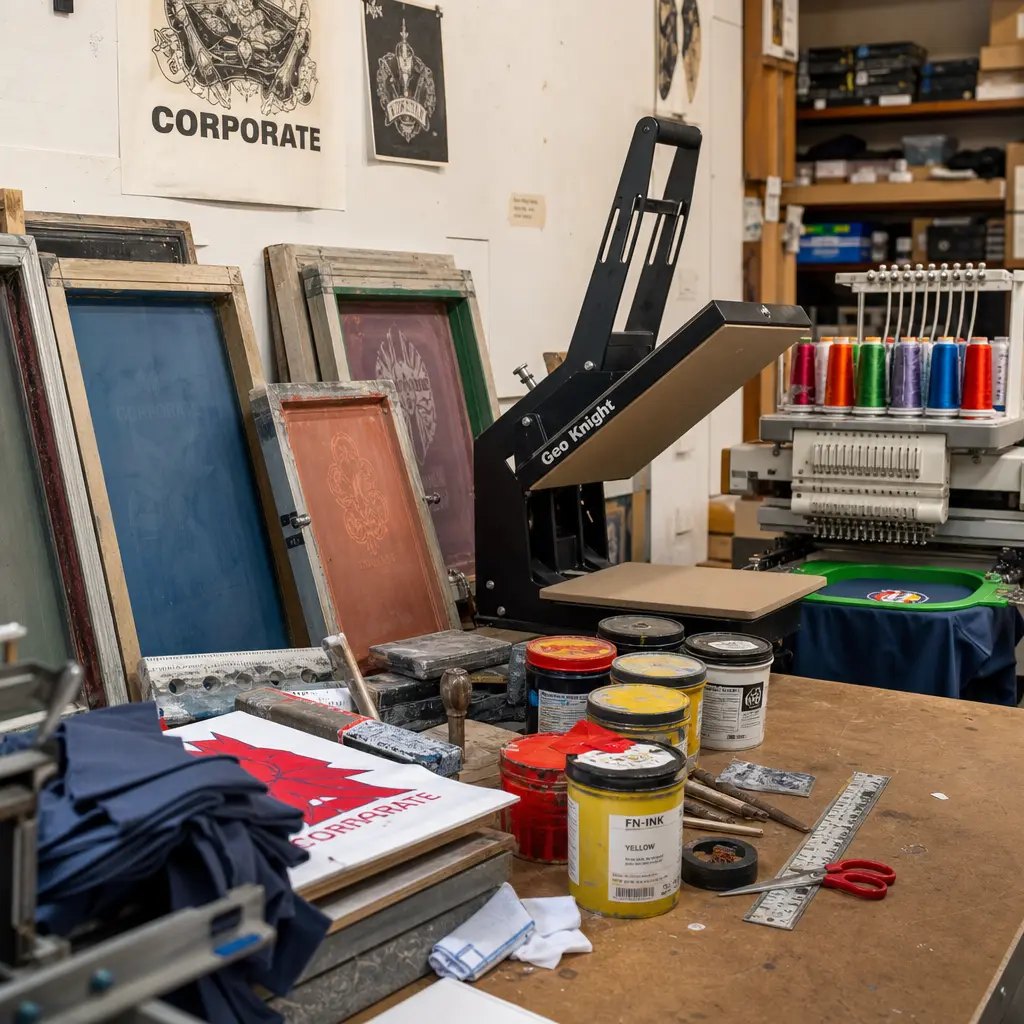
Screen printing is normally the most reliable method for wellness studio logos, especially when the artwork uses one to three solid colors, simple typography, or clean line art. It is cost-efficient at medium and higher quantities and works well on 6 oz to 10 oz cotton when the ink, mesh, and curing are controlled. The quote should specify ink type, number of colors, print size, print position, one-side or two-side printing, screen charges, and whether the print will be sampled on the exact organic cotton fabric.
Water-based ink is often preferred when the studio wants a softer handfeel and a lower-plastic brand impression, but buyers still need to confirm opacity and rub performance. Natural unbleached cotton is not a perfectly white base, so light ink colors can appear warmer or less bright than on a digital mockup. Low-PVC or other ink systems may be appropriate depending on the supplier’s capability, compliance needs, and fabric finish. The correct choice should be proven by a printed sample, not by a catalog promise.
Digital print and heat transfer can be useful for multicolor artwork, gradients, limited editions, or small test runs. They are not automatically better for premium wellness branding. On textured organic cotton, fine gradients and pale tones may shift, transfers may create a different handfeel, and durability depends on process control. Embroidery can look premium on 8 oz or 10 oz fabric, but it can pucker lighter fabric and is better for smaller marks than large front-panel graphics. In all cases, artwork approval should include size, placement, color standard, and tolerance.
- Use screen print for solid yoga studio logos, slogans, line art, and repeat programs.
- Use water-based ink when softer handfeel is important, but check opacity on natural cotton.
- Use digital print for gradients, art editions, and low MOQ tests only after sampling on exact fabric.
- Use heat transfer selectively when artwork requires it and the buyer accepts the handfeel.
- Use embroidery for small premium marks on heavier canvas, not large flexible artwork.
- Approve the printed sample after folding, rubbing, and comparing color under consistent light.
Organic Cotton Documentation and Claim Control
Wellness studios often choose organic cotton because the material supports a health, sustainability, or low-impact brand message. For B2B procurement, the claim must be matched to documentation. A supplier saying organic cotton is not the same as providing the documents your sales channel, retailer, or internal compliance team may require. Before quoting, decide whether the order needs a simple material declaration, transaction certificate, scope certificate reference, chain-of-custody documentation, or buyer-specific compliance form.
The documentation requirement can affect supplier selection, MOQ, lead time, and cost. Some factories may sew organic cotton bags but rely on external fabric mills for certificates. Others may have access to stock organic cotton fabric but not custom dyed certified material at a low MOQ. If the tote will be sold with an organic claim on a hangtag, website, or retail listing, the buyer should confirm claim wording before production. Overstated or unsupported claims can create commercial risk even when the physical bag is acceptable.
Documentation should be connected to the purchase order and shipment. Ask the factory what document names, certificate numbers, material descriptions, quantities, and invoice references can be provided. Also confirm whether trims, thread, labels, inks, and packing are included in any claim or excluded from it. Many problems come from vague language such as eco, natural, sustainable, or green cotton. Those terms may be useful for marketing only after procurement verifies what they mean for the actual material supplied.
- State the required organic cotton document type before requesting final price.
- Confirm whether the certificate applies to fabric, finished bag production, or both.
- Match claim wording on labels, websites, and packaging to the documentation available.
- Avoid vague quote terms such as eco cotton unless the supplier defines the material basis.
- Check whether custom dyeing changes documentation availability or lead time.
- Keep document requirements in the PO so they are not treated as optional after shipment.
MOQ Logic and Cost Drivers Behind the Quote
MOQ is rarely one simple number. A factory may have one MOQ for cutting and sewing, another for organic cotton fabric purchase, another for dyeing, another for printing, another for labels, and another for retail packing. If the buyer requests natural stock fabric in a standard weight, the factory may support a lower order quantity. If the buyer requests custom dyed organic cotton at 8 oz with a special finish, the fabric MOQ and dye-house schedule can become the real constraint.
The main cost drivers are fabric weight, bag dimensions, gusset, handle length, print colors, print area, packing method, inspection requirement, documentation, and freight volume. Buyers often compare two quotes by unit price only, but one supplier may be quoting lighter finished GSM, smaller dimensions, thinner handles, fewer stitches, bulk packing without liner, or no document support. A useful RFQ makes these variables visible so the buyer can compare the same bag rather than two different interpretations of the brief.
For repeat studio programs, buyers should also separate one-time costs from reorder costs. Screen charges, sample fees, lab dips, artwork adjustment, and first-time setup may not apply in the same way on repeat orders. Conversely, fabric price, freight, and labor can change. Ask suppliers to show tooling or setup separately from unit price, and request a repeat-order assumption if the studio expects seasonal launches or annual membership kits.
- Fabric cost rises with GSM, finished size, handle length, gusset depth, and cutting waste.
- Print setup cost increases with each screen, color, side, and artwork position.
- Custom dyeing adds MOQ, lab dip approval, shade risk, shrinkage control, and extra lead time.
- Individual packing adds labor, packing material, label control, and often more carton volume.
- Organic documentation may add administrative time and should be priced before order confirmation.
- A fair quote comparison requires identical GSM, dimensions, construction, artwork, packing, and carton data.
Sample Approval: Measure Before Production Starts
A tote sample should prove the specification, not merely show a general look. For custom organic cotton totes, the approved sample should use the nominated fabric weight, organic material, color, construction, handle, print method, print size, label, and folding method. If the supplier sends a sample in conventional cotton while quoting organic cotton, it can help confirm shape only; it should not be treated as production approval for material, handfeel, or print behavior.
Measure the sample like an inspector. Record finished width, height, gusset, handle width, handle drop, fabric weight, print size, print position, stitch density, seam finish, and visible defects. Compare the sample to the intended contents. If the tote will carry a towel, bottle, journal, and product box, load those items and observe handle comfort, bottom sagging, seam stress, standing shape, and whether the bag still looks presentable. This step is more useful than debating GSM in isolation.
Sample approval should create a physical and written standard. Keep one signed or tagged sample with the buyer and one sealed reference with the factory. If changes are needed, document them clearly: increase handle drop by 2 cm, move print down by 1 cm, change ink color, deepen gusset, or switch from 6 oz to 8 oz. Vague feedback such as make it nicer or stronger can lead to inconsistent adjustments and new pricing surprises.
- Request fabric swatches in the proposed GSM range before paying for full samples if timing allows.
- Cut and weigh a small fabric swatch if finished GSM verification is required.
- Measure handle drop from the top edge of the bag to the top of the handle curve.
- Measure print placement from fixed edges, not from estimated center points.
- Fold the printed area as packed and inspect whether ink cracks, transfers, or creases strongly.
- Keep written approval notes with the sealed sample so QC has a clear reference.
Packing Decisions Affect Cost, Creasing, and Cleanliness
Wellness brands often prefer lower-waste packing, but natural organic cotton can pick up dust, carton rub, moisture, and warehouse odor if it is not protected. Bulk packing is acceptable for many studio programs, especially when bags are distributed internally or unpacked by staff before use. However, bulk packing should still be defined: folding method, number of bags per bundle, carton liner, moisture protection, carton strength, shipping marks, and whether the bags are pressed before folding.
Retail-ready packing needs a different calculation. A paper belly band, hangtag, recycled paper sleeve, barcode label, or individual bag can improve presentation and SKU control, but it adds material, labor, carton volume, and sometimes waste. If the tote is sold at a reception desk or shipped through e-commerce, individual presentation may be justified. If it is handed out during a retreat check-in, a clean bulk pack with organized bundles may be more efficient.
The folding method matters when the logo is printed across the main panel. A hard fold through fresh or heavy ink can create a visible crease before the buyer receives the goods. For 8 oz and 10 oz canvas, bulky folds can reduce carton quantity significantly. The quote should show carton size and pieces per carton for the selected fabric weight and packing method, not a generic estimate from a different tote style.
- Use bulk packing for branch distribution when retail presentation is not required.
- Use carton liners or clean inner protection for natural, bleached, or light-colored cotton bags.
- Use paper bands or belly bands for retail display when full individual bags are unnecessary.
- Use individual packing when barcode control, cleanliness, gifting, or e-commerce fulfillment requires it.
- Avoid folding directly through large printed logos when ink handfeel or cracking is a concern.
- Request carton dimensions, gross weight, net weight, and CBM based on the final approved fold.
Lead Time Risks in Organic Cotton Tote Orders
Lead time depends on material availability as much as sewing capacity. If stock organic cotton fabric is available in the right weight and shade, sampling and production can move faster. If the order requires weaving, custom dyeing, washing, special finishing, lab dips, print development, or documentation review, the calendar expands. Buyers should not approve artwork while leaving fabric status uncertain, because the final fabric can change print color, shrinkage, and handfeel.
For wellness studio launches, the common schedule mistake is counting only mass production days. A realistic schedule includes RFQ clarification, fabric sourcing, artwork adjustment, sample making, sample shipping, buyer review, deposit, material booking, printing, sewing, inspection, packing, export handling, and transit. A late sample approval can also push production into a busy season, where capacity, fabric availability, and shipping costs may change.
Procurement teams should create decision deadlines as well as supplier deadlines. Confirm who approves artwork, who checks organic documentation, who signs the sample, who reviews carton data, and who releases the deposit. If multiple studio stakeholders are involved, delay often occurs on the buyer side. The most practical way to protect the launch date is to freeze the specification before the factory books fabric and cutting markers.
- Reserve extra time for organic fabric sourcing when the GSM is not a standard stock item.
- Add time for lab dips and shade approval if the tote is dyed to a brand color.
- Approve print artwork only after confirming final bag size, fabric shade, and print area.
- Avoid changing handle length, gusset depth, or print size after cutting markers are prepared.
- Build inspection and possible rework time into the delivery plan instead of treating QC as optional.
- Ask which item is on the critical path: fabric, dyeing, printing, labels, packing, or documentation.
Specification comparison for buyers
| Spec decision | Recommended option | When it fits | Buyer risk to check |
|---|---|---|---|
| 5 oz / 140-150 GSM organic cotton | Light plain-weave tote with basic turned seams and standard handles | Low-cost event giveaways, trial-class handouts, mailer inserts, and light document carrying | Can feel too thin for retail; ask for finished GSM after all finishing and set a ±5% tolerance |
| 6 oz / 170-180 GSM organic cotton | Standard promotional tote with reinforced handle stitching and cleaner panel structure | Member welcome kits, spa add-on gifts, teacher-training packs, and brand launches needing better handfeel than 5 oz | Some suppliers quote nominal 6 oz but ship lighter finished fabric; require fabric weight verification from production swatches |
| 8 oz / 230-240 GSM organic cotton canvas | Midweight canvas tote with improved opacity, better print stability, and stronger body | Retail merchandise, retreat gift bags, and product bundles with towels, bottles, journals, or boxed skincare | Heavier cartons and lower pieces per carton can raise landed cost; confirm CBM, gross weight, and fold size |
| 10 oz / 280-300 GSM organic cotton canvas | Structured premium tote with wider handles and reinforced stress points | Boutique retail, premium retreat kits, reusable shopping bag positioning, and higher-value member gifts | May exceed budget once freight, duty basis, storage, and slower sewing output are included; test comfort when loaded |
| Flat tote without gusset | Two-panel construction with simple seam finishing | Printed schedules, apparel, documents, journals, and low-bulk merchandise | Limited capacity; poor fit for bottles, towels, boxed products, or multi-item kits |
| Bottom gusset tote | 5-10 cm bottom gusset matched to product depth | Welcome kits with towels, skincare boxes, supplements, candles, or drinkware | Incorrect gusset measurement changes packing fit and standing shape; request a loaded sample with real contents |
| Side and bottom gusset tote | More dimensional tote with boxed capacity and better presentation on shelf | Retail bundles, retreat travel kits, and gift-with-purchase programs | More sewing operations and higher bulk; compare total landed cost, not only unit price |
| Screen print on 6-10 oz cotton | Water-based or low-PVC ink with controlled curing and rub resistance | One to three solid-color logos, clean studio branding, and medium-to-high quantity orders | Ink cracking, poor curing, or color shift on natural cotton; include dry rub, fold, and shade checks in sample approval |
| Digital print or heat transfer | Use selectively for gradients, art editions, low MOQ tests, or multicolor artwork not suited to screens | Limited edition retreats, artist collaborations, launch campaigns, and small-batch merchandise | Handfeel and durability may disappoint; require a printed sample on the exact fabric weight and finish |
Buyer checklist before sampling
- Define the bag job first: giveaway, member welcome kit, paid retail product, retreat gift, teacher-training pack, or product bundle carrier.
- List the actual contents and approximate load: towel, bottle, journal, candle, skincare boxes, apparel, supplements, brochures, or documents.
- State fabric in both ounces and GSM, with an allowed finished tolerance such as plus or minus 5 percent after finishing.
- Clarify organic cotton documentation: material declaration, transaction certificate, scope certificate reference, chain-of-custody requirement, or buyer-specific compliance form.
- Specify fabric color and finish: natural unbleached, bleached, dyed, washed, softened, or custom brand color with lab dip approval.
- Confirm construction: flat or gusseted body, finished dimensions, handle width, handle drop, seam type, stitch density, and reinforcement method.
- Match print method to artwork: screen print for solid logos, digital print for gradients, heat transfer for small runs, embroidery only for heavier fabric and smaller logo areas.
- Request a pre-production sample using the exact fabric weight, organic material, color, print method, handle, stitching, label, and packing method.
- Require carton data in every quote: pieces per carton, carton size, gross weight, net weight, estimated CBM, folding method, and whether cartons use liners.
- Set QC acceptance points for GSM, dimensions, print placement, stitch density, handle attachment, color, odor, stains, slubs in the logo area, and packing cleanliness.
Factory quote questions to send
- What is the actual finished GSM range for the fabric being quoted, and is the fabric greige, bleached, dyed, washed, softened, or otherwise finished after weaving?
- Is the organic cotton available from current stock fabric, or does the fabric need to be woven, dyed, or finished specifically for this order quantity?
- Which organic cotton documentation can you provide for this order: material declaration, transaction certificate, scope certificate reference, or other chain-of-custody document?
- What MOQ applies separately to organic fabric purchase, dyeing, bag sewing, printing, each print color, labels, and individual packing?
- Can you quote the same tote in 6 oz, 8 oz, and 10 oz organic cotton with identical size, gusset, handle, artwork, packing, and carton data so we can compare landed cost?
- What construction do you recommend for our intended contents, and what static load or handle pull check can you perform before shipment?
- What print method do you recommend for our artwork, and what are the curing, rubbing, color tolerance, and placement controls?
- What sample stages are included: fabric swatch, lab dip, blank sample, printed strike-off, pre-production sample, and sealed production reference?
- What are your normal dimension tolerances for bag width, height, gusset, handle width, handle drop, and print placement?
- How many pieces are packed per carton, what are the carton dimensions and weights, and will the bag be folded in a way that crosses the printed logo?
Quality-control points to confirm
- Fabric weight should be tested from cut swatches before sewing and verified against the approved sample within the agreed finished GSM tolerance, commonly set at plus or minus 5 percent unless otherwise specified.
- Fabric lot and shade should match the approved swatch or lab dip; mixed lots should not be used in one order without buyer approval.
- Finished dimensions should be measured flat after sewing and pressing, with separate tolerances for width, height, gusset, handle width, and handle drop; a common starting point is plus or minus 1 cm on body dimensions and plus or minus 0.5 cm on handle-related dimensions.
- Handle attachment should show consistent reinforcement stitching, secure back-tacking, no skipped stitches, no loose threads, and no visible tearing under a buyer-defined load check.
- Seams should be checked for stitch density, broken threads, raw-edge exposure, puckering, fraying, needle damage, and uneven seam allowance; for medium canvas, 7 to 9 stitches per inch is a common target range to discuss with the factory.
- Print placement should be measured from fixed edges such as the top edge and side seam, not judged by eye only; a common control is plus or minus 0.5 cm for logo placement.
- Ink curing should pass dry rub checks and should not crack heavily, transfer, or peel when the tote is folded along the print area.
- Artwork color should be checked against the approved standard while allowing for the natural shade and texture of organic cotton fabric.
- Bags should be checked for oil marks, dirt, odor, mildew smell, needle holes, broken yarns, and obvious slubs or stains in the logo area.
- Packing should match the agreed folding method, pieces per carton, liner or inner protection, shipping marks, SKU labels, barcode labels, and carton strength requirement.