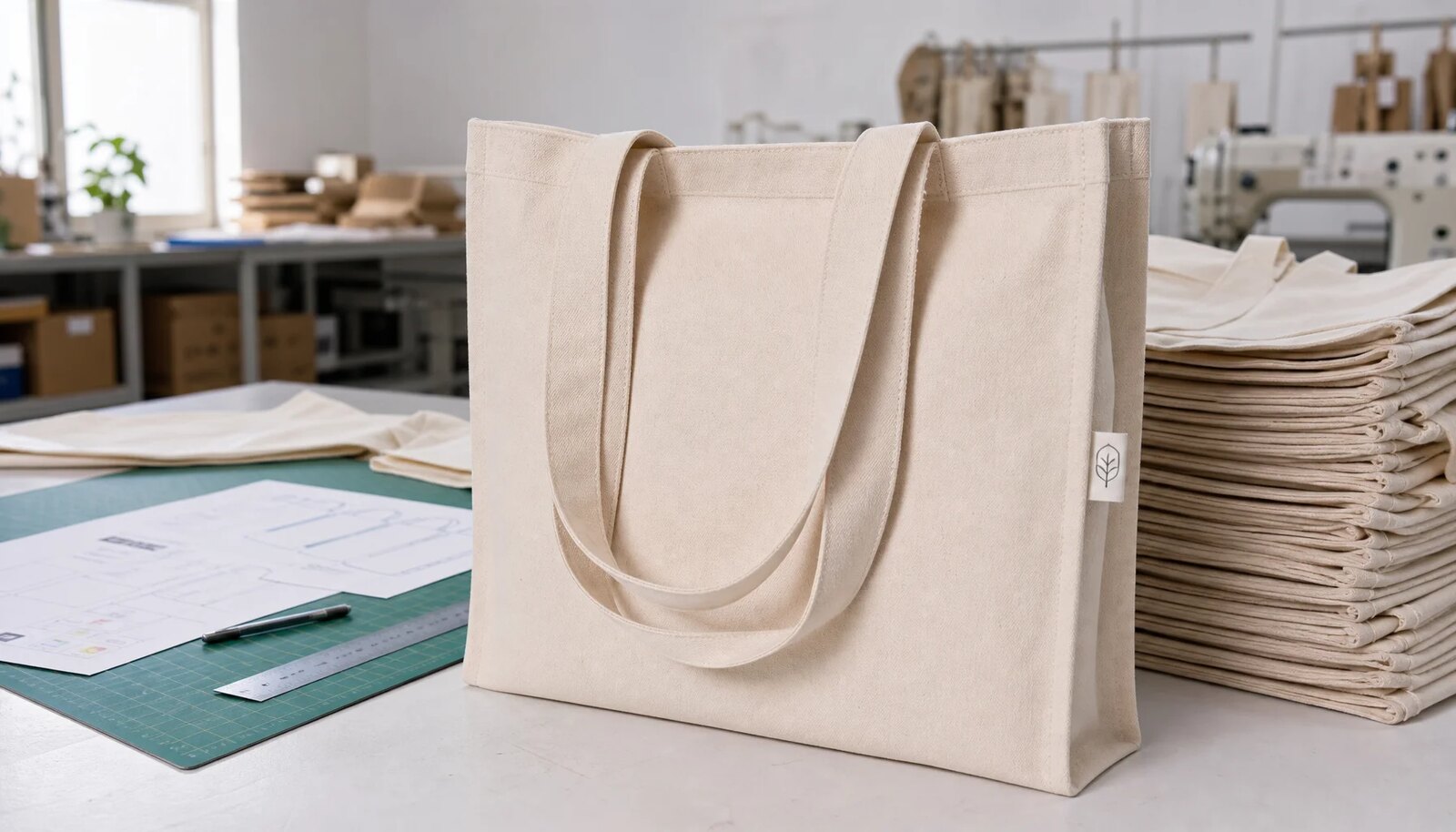
Why Durability Testing Belongs in the RFQ
Organic cotton totes are often added to an apparel program late: a launch bag, store giveaway, loyalty gift, resale accessory, or e-commerce packaging insert. Because they are simple cut-and-sew items, teams can underestimate them. Customers do not. A weak handle, stained panel, crooked logo, or print that rubs onto tissue can make the whole brand experience feel careless.
For procurement, durability testing is not about making every tote heavy or expensive. It is about removing guesswork. Many supplier quotes use the same phrase, custom organic cotton tote, while the actual products differ in GSM, weave, handle construction, stitch density, print process, folding, carton density, and inspection scope. If the RFQ is vague, the lowest price may only be the least-defined price.
A useful custom organic cotton totes durability testing checklist for eco apparel brands connects the RFQ, the approved sample, and the final inspection plan. The RFQ tells suppliers what to price. The sample proves the selected construction and decoration. The inspection plan checks that bulk production follows the approved standard. When those three records match, buyers can compare real production risk instead of relying on broad product descriptions.
- Define the tote by use case, load, construction, decoration, packing, and documentation before asking for price.
- Treat handles, top hem, side seams, bottom seam, gusset corners, and print surface as the main failure points.
- Use measurable acceptance language such as GSM range, measurement tolerance, reinforcement pattern, rub result, and load test.
- Normalize quotes before comparing unit price, especially when suppliers use different fabric weights or packing methods.
Map the Use Case to Practical Test Limits
The right durability target starts with how the bag will be used. A checkout tote holding one folded T-shirt does not need the same specification as a shoulder tote sold as merchandise or used for groceries. When the use case is unclear, the supplier may price a light promotional bag while the buyer imagines a reusable retail tote. That gap usually appears after sampling, when changes are slower and more expensive.
Write the use case in plain operational terms. What will go inside? How much will it weigh? Will customers carry it by hand or over the shoulder? Is reuse expected? Will the tote be folded tightly, packed with garments, stored in a fulfillment center, or shipped through long transit? For apparel packaging, a practical 3 kg load check may be enough. For retail or daily-use bags, a 5 kg or higher test may be more appropriate if the construction is designed and priced for that load.
Keep sample testing and bulk testing separate. At sample stage, you are deciding whether the specification is fit for purpose. At bulk stage, you are confirming that production matched the approved specification. If a pre-production sample fails repeated lifting, revise the construction. If the sample passes but bulk fails, investigate fabric substitution, sewing control, reinforcement size, print curing, or packing execution.
- For apparel packaging, prioritize clean folding, print offset resistance, handle comfort, and presentation after unpacking.
- For retail resale, tighten checks for fabric shade, logo placement, seam appearance, loose threads, labels, and hangtags.
- For event giveaways, focus on carton count accuracy, basic load holding, fast unpacking, print rub, and mixed-version control.
- For daily-use totes, test repeated lifts, uneven contents, bottom seam stress, handle angle, and gusset corner strength.
- For e-commerce inserts, check whether the tote creases, transfers ink, or traps odor after being compressed with garments.
Specify Fabric Before You Accept the Organic Cotton Claim
Organic cotton content is only the starting point. A procurement-ready fabric line should also state GSM, weave, color process, finish, shrinkage expectation, and documentation capability. A 150 GSM plain weave, a 160 GSM drill, and a 180 GSM canvas may all be organic cotton, but they will not carry weight, hold shape, print, fold, or feel the same. Do not approve a quote that only says organic cotton bag without a defined textile specification.
For many apparel brand programs, 140-150 GSM works for lighter promotional bags, simple order inserts, or short-use packaging where a lower weight is acceptable. The 160-180 GSM range is often a stronger baseline for branded retail totes because it offers better perceived value, a more stable print surface, and improved resistance at stress points. Fabric above 180 GSM can suit premium resale or heavier reuse, but it can also raise unit cost, freight weight, carton volume, cutting pressure, sewing time, and needle wear.
Shade and shrinkage should be agreed early. Natural undyed cotton may show flecks and shade variation; that can be attractive if it fits the brand, but the acceptable range should be approved by swatch. Dyed organic cotton needs lab dip approval, bulk shade control, and carton-level shade checks. If the tote may be washed, request shrinkage data or run a practical wash check before bulk approval. If the care instruction is spot clean only, the QC plan should not treat the tote like a washable garment.
- Write the fabric line as organic cotton content, GSM, weave, color, finish, shrinkage target, and documentation requirement.
- Ask whether GSM tolerance is guaranteed and how it will be checked; around +/-5% is a common practical discussion point, but supplier capability should decide the final rule.
- Use 140-150 GSM only when a lighter, softer, less structured bag is acceptable for the channel.
- Use 160-180 GSM as a useful baseline for many branded eco apparel tote programs.
- Use 180-220 GSM when structure, repeated use, and premium feel matter more than minimum cost or carton weight.
- Request a bulk-intended fabric swatch or cutting before final sample approval, especially for dyed or custom-finished fabric.
Set Dimensions, Handles, and Seam Tolerances
Most tote failures do not start in the middle of the fabric panel. They start where stress is concentrated: the handle base, top hem, side seams, bottom seam, and gusset corners. A bag made from acceptable fabric can still fail if the handle is too narrow, the reinforcement is short, the seam allowance drifts, or the thread tension is poor.
Write dimensions as finished measurements, not only pattern measurements. Include width, height, bottom gusset, side gusset if any, top hem depth, handle length, handle drop, handle width, and handle placement from side seams. For many programs, a body tolerance around +/-1.0 cm and a logo placement tolerance around +/-0.5 cm may be workable, depending on size, construction, and factory capability. The important step is to agree the rule before inspection.
Handles deserve extra attention because customers feel them immediately. Folded cotton handles usually look cleaner and feel stronger than raw-edge straps. Shoulder carry requires a defined handle drop, not just total strap length. At the attachment point, box-X stitching, bar-tacks, dense double rows, or a reinforced top hem spread load better than sparse single-row stitching. The approved sample must show the exact reinforcement pattern and size; even a small shortcut can change performance.
- Specify finished width, height, bottom gusset, side gusset, top hem width, seam allowance target, and finished tolerance.
- Specify handle length, handle drop, handle width, handle folding, placement from side seams, and reinforcement pattern.
- Define stitch density in stitches per inch or centimeter if your supplier can control it consistently.
- Classify skipped stitches, broken threads, loose thread tails at stress points, and shortened reinforcement as major defects.
- For gusseted totes, inspect bottom corners closely because bulky apparel and uneven loads concentrate stress there.
- Compare bulk handle placement against the approved sample; small shifts can affect comfort and make the tote look uneven in retail presentation.
Choose Print Method With Durability in Mind
Decoration is part of durability. The logo surface is handled, folded, stacked, packed, rubbed against other bags, and sometimes pressed against garments or tissue. Screen print is usually practical for one to three solid brand colors on cotton totes because it can be economical at volume and controlled with clear artwork, PMS targets, and curing checks. It still needs rub testing and fold-line review.
Heat transfer and digital print can be useful for short runs, gradients, photographic artwork, or many colors. Their risks are different: edge lift, cracking, bubbling, thicker handfeel, abrasion sensitivity, and failure along fold lines. Embroidery can look premium and last well for small marks, but it may pucker thin fabric or distort large filled artwork. The best method depends on artwork size, fabric weight, order quantity, packing method, and the final sales channel.
A proper print specification includes more than the logo file. Provide vector artwork when possible, print size, placement from top and side edges, color references, acceptable variance, and whether the design can move to avoid a fold, seam, or handle. Ask the supplier to confirm the print method and ink or transfer type in the quote. If the print vendor changes after sample approval, request a new strike-off or top-of-production approval.
- Screen print is usually the default for simple solid logos, but curing and rub resistance must be checked.
- Transfer print can support complex artwork, but test edge lift, cracking, handfeel, and fold-line behavior before approval.
- Embroidery works best for small premium marks on fabric heavy enough to support stitches without puckering.
- Define logo placement tolerance, commonly tighter than body measurements because customers notice crooked branding quickly.
- Rub the print after folding and stacking, not only when the sample is flat and freshly printed.
- Check offset onto white tissue, adjacent bags, polybags, or the reverse panel if totes are packed face-to-face.
Use a Concrete Durability Testing Checklist
A checklist only helps when each item has a pass condition. Words such as strong, premium, or durable leave too much room for interpretation. Better instructions define the load weight, cycle count, visible defects, measurement tolerance, rub method, and comparison sample. The aim is not to turn every tote order into a laboratory project. The aim is to make practical risk visible before goods ship.
For load checks, place the agreed weight inside the tote and hold or lift it by the handles. Record the weight, duration or number of lifts, and any damage. A light apparel packaging tote may be tested at 3 kg. A more robust retail or daily-use tote may require 5 kg or more if that use was part of the specification and price. If two suppliers quote against different load targets, their prices are not directly comparable.
Print and seam checks should combine visual review with functional handling. Apply moderate tension across seams to look for slippage or stitch opening. Rub the print with a clean white cloth or tissue and record visible pigment transfer. Fold the tote using the approved packing method, apply light stacking pressure, then inspect for cracking, blocking, or offset. If the tote is expected to be washed, run shrinkage or colorfastness checks that match the approved care instruction.
- Load-hold check: fill the tote with the agreed weight, hold by handles, and inspect handle bases, top hem, side seams, bottom seam, and gusset corners.
- Repeated-lift check: lift and set down the loaded tote for the agreed cycle count, then document seam movement, thread breakage, or handle distortion.
- Handle pull review: apply controlled hand force or fixture force at both handle ends and compare the result with the approved sample.
- Seam slippage review: apply moderate tension across side seams and bottom seams and check for opening, skipped stitches, or fabric tearing.
- Dry rub check: rub the print with white cloth or tissue and record visible pigment transfer or surface damage.
- Light wet rub check: use only when relevant to the channel, such as bags that may contact damp garments or be used outdoors.
- Fold-line check: fold by the approved packing method and inspect cracking, blocking, print offset, and permanent creasing.
- Measurement check: confirm body dimensions, gusset, handle length, handle drop, handle width, and logo placement against tolerance.
- Appearance check: inspect stains, holes, odor, fabric shade, needle damage, crooked labels, loose threads, and carton compression marks.
Control Sample Approval Like a Production Record
A pre-production sample is more than a nice-looking tote. It is the production reference. It should use the same fabric, GSM, thread, stitch density, handle reinforcement, print process, trims, labels, folding method, and packing materials planned for bulk. A showroom sample or similar stock sample can support early discussion, but it should not authorize mass production unless its limits are clearly written.
Create a sample approval sheet and make it specific. Record the sample version, date, supplier, fabric weight, weave, dimensions, handle measurements, reinforcement pattern, print method, print placement, color comments, packing notes, and buyer decision. Photograph the front, back, handles, handle bases, top hem, side seams, bottom seam, inside finishing, gusset corners, labels, hangtags, and folded state. These photos are useful when inspectors or warehouse teams cannot access every earlier sample version.
Approval with comments should be measurable. Replace notes such as make stronger or logo looks low with clear revisions: increase handle drop by 3 cm, move logo 2 cm lower, change handle base to box-X, reduce print size to avoid the fold line, or increase top hem depth. Keep one approved sample sealed and labelled, and ask the factory to keep one too. If the fabric lot, dye lot, sewing line, print vendor, or packing method changes, request revised approval or top-of-production confirmation.
- Do not approve a final sample unless it reflects intended bulk fabric, thread, reinforcement, print, trims, labels, folding, and packing.
- Label the approved sample with style name, order number, version number, approval date, fabric GSM, and allowed tolerances.
- Attach close-up photos of stress points so reinforcement can be compared accurately during inspection.
- Separate reference sample, proto sample, pre-production sample, print strike-off, and top-of-production sample in your records.
- Require resubmission if fabric mill, dye lot, print method, handle construction, label, or packing changes after approval.
Inspect Bulk Goods Before Shipment
Final inspection should go beyond carton count and logo appearance. Organic cotton totes are soft goods, but many defects are functional: weak handles, open seams, unstable prints, measurement drift, and packing damage. An AQL-style random inspection helps define sample size and pass or fail criteria. Even if your company does not require formal AQL, it is still useful to separate defects into critical, major, and minor categories.
Critical defects may include safety issues, mildew, severe contamination, wrong product, wrong logo, or wet cartons. Major defects often include broken handles, open seams, wrong GSM, severe stains, missing labels, major print misplacement, unacceptable rub transfer, incorrect carton quantity, or mixed artwork versions. Minor defects may include small loose thread tails, light wrinkles, or small cosmetic marks within the agreed standard. The sales channel matters; retail resale usually needs a tighter appearance standard than a basic event giveaway.
Sampling should represent the real shipment, not just the cartons that are easiest to open. Inspect across carton numbers, colors, artwork versions, sizes, production dates, and fabric lots when available. Include a small set of functional checks: load holding, repeated lifting, print rub, measurement, and packing review. If the first packed cartons show compression, odor, wet marks, wrong fold, or print offset, stop and correct before the full shipment is sealed.
- Check dimensions: body width, height, gusset, top hem, handle length, handle drop, handle width, and logo placement.
- Check construction: handle reinforcement, top hem, side seams, bottom seam, gusset corners, stitch density, and thread tension.
- Check function: load holding, repeated-lift behavior, handle pull response, seam slippage, and fabric tearing.
- Check decoration: print color, registration, edge quality, curing, rub resistance, cracking, offset, and placement.
- Check appearance: stains, holes, oil marks, odor, shade variation, loose threads, needle damage, crooked labels, and wrinkles beyond standard.
- Check packing: folding method, polybag or master bag, carton count, carton strength, carton markings, gross weight, and version separation.
- Check records: approved sample version, packing list, inspection checklist, corrective action notes, and required organic cotton paperwork.
Normalize Supplier Quotes Before Comparing Cost
Two suppliers may quote very different prices because they are not quoting the same tote. One may price 140 GSM natural cotton, flat handles, simple stitching, one-color print, and loose bulk packing. Another may price 180 GSM dyed cotton, folded handles, box-X reinforcement, tighter print control, individual polybags, hangtags, and inspection support. The higher quote may simply be the only quote aligned with the brand program.
Normalize the RFQ before comparing unit price. Give every supplier the same target dimensions, GSM, weave, handle construction, reinforcement pattern, print method, print size, color count, packing method, organic cotton documentation requirement, sample requirement, inspection expectation, and lead time. Ask suppliers to list exclusions and assumptions. A longer quote is not a problem if it shows what is included and what is not.
MOQ is usually driven by fabric color, fabric weight, dyeing route, cutting efficiency, print setup, artwork versions, trims, and packing. Low MOQ is easier when the buyer uses stock natural fabric, one size, one logo, one print color, and simple packing. Custom dyed fabric, multiple logo versions, special labels, barcode bags, hangtags, and strict retail packing can add cost and increase MOQ. These choices are manageable when they are visible at quotation stage.
- Ask whether the supplier is a direct factory, trading company, sourcing office, or print-and-sew coordinator.
- Require separate line items for sample fee, fabric surcharge, dyeing, screen setup, labels, hangtags, polybags, cartons, documentation, and inspection support.
- Compare cost at the same GSM, weave, dimensions, reinforcement, print size, print method, and packing count.
- Ask which parts of the tote are made in-house and which are subcontracted, especially printing, dyeing, embroidery, and packing.
- Clarify whether lead time starts after deposit, artwork approval, lab dip approval, sample approval, or documentation confirmation.
- Request a price impact table for common changes such as +20 GSM fabric, longer handles, box-X reinforcement, individual polybag, or extra print color.
Plan Packing, Cartons, and Transit Checks
Packing can protect a good tote, or it can damage it before the buyer ever sees it. Loose bulk packing may be fine for simple event distribution, but it can create creases, distorted handles, print abrasion, and uneven presentation. Retail-ready totes or premium apparel packaging may need a defined fold, individual polybag, master polybag, hangtag protection, barcode placement, or tissue separation. Each choice affects labor, carton size, freight weight, and inspection time.
Carton density is a quality control point. If too many totes are compressed into one carton, prints may crease, transfers may block, and handles may deform. If cartons are too loose, bags can shift during transit and abrade against each other. Request carton dimensions, pieces per carton, gross weight, and first-carton packing photos. For long transit or sea freight, ask how the supplier controls moisture risk, carton strength, and storage conditions before pickup.
Packing also protects receiving accuracy. Orders with multiple colors, logo versions, sizes, barcode labels, or destination splits need clear carton marks and version separation. Carton labels should identify style, color, quantity, PO number, destination, and any internal version code. If goods ship directly to a warehouse, retailer, or fulfillment center, align carton labels and packing lists with their receiving rules before the goods leave the factory.
- Choose loose bulk packing only when creases and retail presentation are not critical.
- Use master polybags or individual polybags when dust protection, e-commerce handling, or retail presentation matters.
- Approve fold lines so they do not cross sensitive print areas, barcodes, labels, or the main display panel when avoidable.
- Confirm pieces per carton, carton dimensions, gross weight, carton mark format, and version code before mass packing.
- Request first-carton packing photos before the factory packs the full order.
- Inspect cartons for wet marks, crushing, odor, incorrect count, mixed versions, and over-compression before shipment.
Specification comparison for buyers
| Spec decision | B2B buying target | Typical tolerance or checkpoint | Risk to control |
|---|---|---|---|
| Fabric weight | 140-150 GSM for light packaging or event use; 160-180 GSM for most branded apparel totes; 180-220 GSM for more structured retail or daily-use totes | Agree GSM tolerance before sampling, commonly around +/-5% if the supplier can support it; verify by swatch, fabric report, or inspection weighing method | A quote that only says organic cotton may hide a lighter fabric, different weave, stock greige cloth, or substitution between sample and bulk |
| Fabric construction | Plain weave, drill, or canvas selected by intended handfeel, structure, print surface, and cost target | Record weave, color process, finish, shrinkage expectation, and fabric lot identity where available | Two totes with the same GSM can perform differently if one has looser weave, lower yarn quality, or unstable finishing |
| Finished measurements | Width, height, bottom gusset, side gusset if any, top hem depth, handle length, handle drop, and handle width | Set finished tolerance by dimension, often +/-0.5 cm for logo placement and smaller features, +/-1.0 cm for body dimensions depending on size and factory capability | Loose measurement rules cause uneven presentation, poor carton fit, inconsistent handle comfort, and logo placement disputes |
| Handle reinforcement | Folded cotton handles with box-X, bar-tack, dense double-row stitching, or reinforced top hem at load points | Confirm stitch pattern, stitch density, reinforcement size, thread type, and placement from side seams on the approved sample | Single-row stitching or short reinforcement can tear at the top hem even when the body fabric appears strong |
| Seam construction | Clean top hem, controlled side seams, secure bottom seam, and reinforced gusset corners when the bag carries bulky items | Define seam allowance, stitch density, raw-edge control, thread tension, and defect classification for skipped stitches or open seams | Weak seams often fail after repeated lifting, not during a quick visual inspection |
| Print durability | Screen print for solid logo programs; embroidery for small premium marks; transfer or digital only when artwork complexity justifies the tradeoff | Check dry rub, light wet rub if relevant, curing, edge lift, cracking, fold-line behavior, registration, and offset during packing | Prints may look correct on a flat sample but crack, block, or transfer when folded, stacked, or shipped |
| Organic cotton documentation | Documentation matched to the buyer policy, order route, and supplier capability, confirmed before PO | Ask what scope, transaction, batch, or material records can be provided for the quoted lot and whether fees are included | Documentation requested after goods are finished can be unavailable, delayed, or inconsistent with the sourcing claim |
| MOQ and cost structure | MOQ tied to fabric color, fabric weight, dyeing, print setup, artwork versions, trims, and packing requirements | Require line items for sample fee, screen or setup charge, labels, hangtags, polybags, cartons, documentation, and inspection support | A very low MOQ often means stock fabric, limited colors, higher unit price, fewer trim choices, or weaker leverage over QC details |
| Inspection plan | AQL-style random inspection plus functional checks for load holding, repeated lifts, handle pull, seam slippage, print rub, dimensions, and packing | Classify critical, major, and minor defects; sample across cartons, colors, artwork versions, and production lots | Visual-only inspection misses weak handle attachment, unstable print curing, carton compression, and mixed-version packing |
Buyer checklist before sampling
- Define the tote use case before pricing: apparel packaging, retail resale, event giveaway, loyalty gift, subscription insert, grocery/reusable carry, staff merchandise, or wholesale retailer program.
- State the expected load in practical terms, such as 3 kg of folded apparel, 5 kg of mixed garments, or heavier daily-use contents, and define whether the tote should pass a static hold or repeated-lift check.
- Lock the fabric specification in writing: organic cotton content, GSM, weave, color process, finish, handfeel target, shrinkage expectation, and whether the fabric is natural, bleached, piece dyed, yarn dyed, washed, or printed.
- Request organic cotton documentation appropriate to your policy and route, and confirm before PO whether the quoted supplier can provide the required scope, transaction, batch, or material records for this order.
- Specify finished bag dimensions: width, height, bottom gusset, side gusset if any, top hem width, seam allowance target, and finished measurement tolerances.
- Specify handle details: total length, handle drop, handle width, folded or flat construction, placement distance from side seams, stitch pattern, reinforcement size, and whether bar-tacks or box-X stitching are included.
- Define construction checkpoints: stitches per inch or centimeter, thread type if required, top hem finish, side seam finish, bottom seam treatment, raw-edge control, and acceptable thread trimming.
- Set decoration requirements: print method, artwork file format, print size, placement from top and side edges, PMS or brand color target, color count, ink or transfer type if known, and acceptable color variance.
- Add print durability checks to sample and bulk review: dry rub, light wet rub when relevant, fold-line review, stacking review, abrasion review, cracking, edge lift, and offset onto tissue or adjacent bags.
- Approve a pre-production sample made with bulk fabric, bulk thread, bulk reinforcement, bulk print process, trims, labels, folding method, and packing plan; clearly label any sample that uses substitute materials as reference only.
Factory quote questions to send
- What exact fabric are you quoting, including organic cotton content, GSM, weave, yarn count if available, fabric width, color process, finish, handfeel, and expected shrinkage after washing, steam finishing, or pressing?
- Is the fabric stock, made-to-order, dyed-to-order, or greige fabric finished for this order, and what fabric MOQ applies by color and GSM?
- What organic cotton documentation can you provide for this order, and does the quoted price include certification handling, transaction documentation, batch records, or other traceability paperwork required by our policy?
- Is the quoted sample made from the same bulk fabric, thread, reinforcement, print process, trims, labels, folding method, and packing materials planned for production, or is it a reference sample only?
- What finished tote dimensions are included in the price, including width, height, bottom gusset, side gusset if any, seam allowance, top hem width, handle length, handle drop, and handle width?
- What finished measurement tolerances can you hold for body dimensions, gusset, handles, and logo placement, and how will you measure them during inline and final QC?
- What reinforcement is included at each handle base and stress point: box-X, bar-tack, double rows, reinforced top hem, extra patch, or another construction?
- What stitch density and thread type are planned for the top hem, side seams, bottom seam, gusset corners, and handle attachment?
- Which print method are you pricing, what ink or transfer type is included, and what setup cost, screen charge, plate cost, color charge, artwork charge, or minimum print quantity applies?
- How will you control logo placement, PMS color matching, print registration, curing, print handfeel, rub resistance, cracking, edge lift, and offset during bulk production?
Quality-control points to confirm
- Fabric should match the approved organic cotton content, GSM, weave, color, finish, and handfeel within the agreed tolerance; visibly thin, stained, slub-heavy, skewed, or mismatched cloth should require written buyer approval before bulk acceptance.
- GSM verification should follow an agreed method, such as supplier fabric report, cutting-room fabric check, or inspector fabric weight calculation from a measured sample area; the method should be stated because casual handfeel is not enough.
- Organic cotton documentation should match the supplier route, product description, and shipment requirements agreed at quotation stage; it should not be treated as a post-shipment administrative task.
- Finished measurements should stay within approved tolerances for body width, height, gusset, top hem, handle length, handle drop, handle width, and logo placement after trimming, pressing, folding, and packing.
- Handle seams should show consistent stitch density, secure thread tension, no skipped stitches, no broken threads, no loose thread tails at stress points, and no puckering that weakens the attachment area.
- Handle reinforcement should match the approved sample exactly, including box-X size, bar-tack location, double-row distance, or reinforced patch placement; shortened or partial reinforcement should be counted as a major functional defect.
- A loaded tote should pass the agreed hold test using a realistic load for the intended use, with no tearing at the handle base, top hem, side seam, bottom seam, or gusset corners.
- Repeated-lift checks should record load weight, cycle count, visible seam movement, thread breakage, handle elongation, fabric tearing, or distortion compared with the approved sample.
- Seams should not show slippage, open stitches, broken threads, raw edges outside the approved construction, distorted corners, twisted side seams, or uneven top hems after normal handling.
- Print should be centered within the agreed placement window, show clean edges, consistent coverage, correct registration, acceptable color match, and no major ink buildup or thin spots.