Why coffee roasters need a tougher tote spec
A tote for a coffee roaster is not the same as a free event bag. It has to survive retail handling, being folded into a carton, stacked with other goods, and carried home with a real load. Buyers often under-spec these bags because they look simple, then discover the seams twist, the print cracks, or the handles stretch after a few weeks in stores.
The right durability standard depends on how the bag will be used. If it is a resale item in a coffee shop, the tote needs to feel like a product, not a giveaway. If it will sit beside beans, mugs, and brewing gear, the bag must keep its shape, hold weight without distortion, and still look good after repeated handling.
- Treat the tote as retail merchandise if the brand sells it at the counter.
- Account for real carry weight, not just a light showroom sample.
- Plan for repeated folding, stacking, and shelf handling, not one-time event use.
Build the bag spec before you request prices
Price comparisons are useless when each supplier is quoting a different tote. Start with the finished size, gusset depth, handle drop, fabric weight, and reinforcement details. For organic cotton totes, a practical range often starts around 200 to 240 GSM for lighter retail use and moves higher when the bag must feel more structured or carry heavier contents.
The sewing construction matters as much as the fabric. Folded seams, bartacks at handle ends, x-box reinforcement, and a stable gusset change how long the tote lasts under load. If your spec sheet does not define those details, one supplier may quote a simple promo build while another quotes a reinforced retail build, and the unit prices will not be comparable.
- State the finished dimensions and acceptable tolerance on every panel.
- Define handle width, handle length, and whether handles are self-fabric or webbing.
- Specify reinforcement at handle joins, side seams, and base corners.
Choose fabric weight, weave, and finish for actual use
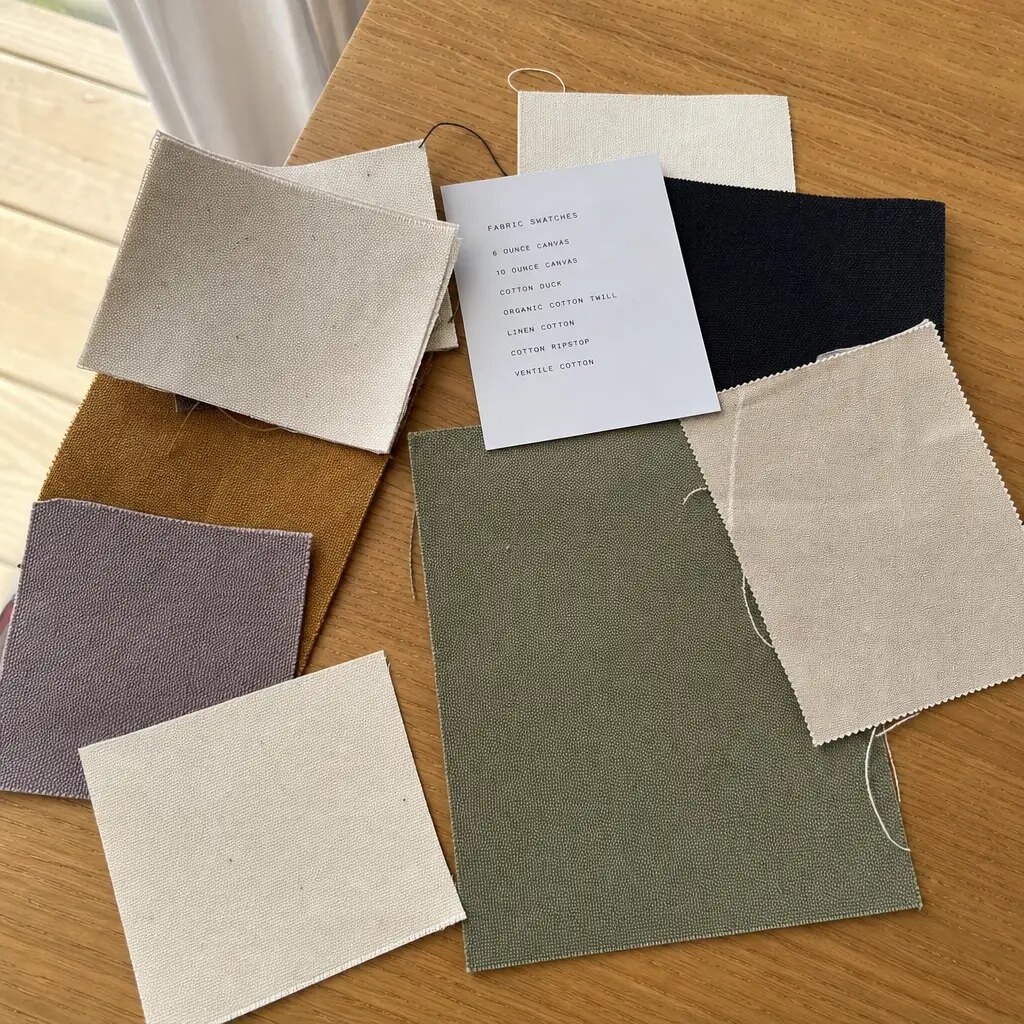
Organic cotton totes are usually sold in canvas, twill, or plain weave constructions. Canvas gives more body and a more retail-ready feel, while lighter plain weave can work for low-cost programs but often needs stronger sewing to prevent sagging. The fabric choice affects not just appearance, but also print sharpness, fold memory, and how the tote hangs when empty.
Finish also affects performance. A raw natural finish may be right for a brand that wants a clean, unbleached look, but buyers should ask about shrinkage, surface fuzz, and whether the fabric was pre-shrunk or enzyme washed. If the tote will be printed on both sides or stored for long periods, a more stable finish usually reduces complaint risk after delivery.
- Use a heavier fabric when the tote must feel premium at retail.
- Ask for shrinkage data if the bag will be steamed, washed, or pressed.
- Be clear on natural, bleached, or dyed fabric because each changes color consistency.
Pick the branding method that survives handling
For coffee roasters, the logo usually needs to look clean on natural cotton and survive constant touch. Screen print is the most common choice because it balances cost, clarity, and repeatability, especially on flat tote panels. Water-based inks are often preferred for a softer handfeel, while thicker ink systems can be more durable but may feel heavier on the fabric.
Embroidery, woven labels, and sewn side labels can work better when the brand wants a premium retail look or lower risk of surface cracking. The tradeoff is cost, production time, and sometimes a less flexible layout. If the bag will be folded repeatedly, heavy artwork blocks or dense print areas can crack earlier than a small, well-placed logo, so artwork size should be part of the durability decision.
- Use screen print when the artwork is simple and you need repeatability.
- Use embroidery or a sewn label when the brand wants a more durable premium cue.
- Avoid oversized solid print blocks unless the supplier has proven the ink system on the same fabric.
What a complete supplier quote should show
A usable quote is more than a unit price. It should show fabric source, GSM, construction method, print method, color count, sample cost, lead time, carton packing, and the incoterm being used. Without those line items, a low quote can hide expensive changes later, such as extra screen charges, upgraded handles, or a different fabric lot.
MOQ logic should also be visible. A supplier may quote one price at 500 pieces and a much better price at 2,000 pieces because the setup cost is spread over more units. That is normal, but the buyer needs to know whether the MOQ is driven by fabric purchase, print setup, color dyeing, or sewing line efficiency. If the supplier cannot explain the breakpoints, the quote is not ready for comparison.
- Ask for separate lines for sampling, tooling, production, and packaging.
- Require the quote to state whether the fabric is stock, reserved, or custom run.
- Confirm whether freight, duties, and destination delivery are included or excluded.
How to approve the sample without creating future defects
The sample stage is where many tote programs quietly fail. Buyers often approve a visually clean sample even though it was made with different fabric, heavier stitching, or a slower production method than bulk. A better approach is to request a pre-production sample that matches the intended fabric, print method, and packing format as closely as possible.
Once the sample arrives, test it like a real product. Check the tote when folded, loaded, carried, and stored. Measure the body after load stress, inspect print edges after rubbing, and look at the handles for stretch or distortion. Keep one signed reference sample on both sides so the factory and buyer have the same standard before bulk production starts.
- Compare the sample to the approved drawing, not to memory.
- Check both the front and back panels because symmetry issues often appear only on one side.
- Keep a retained sample from the sign-off stage for future reorders.
Packing and transit can damage a tote before it reaches shelf
A durable tote can still arrive in bad condition if packing is careless. Organic cotton absorbs odors and moisture more easily than synthetic goods, so wet cartons, poor ventilation, or storage next to chemicals can create a rejection problem before the bags are even opened. Folding direction also matters because a hard fold can create a permanent crease across printed areas or distort the bag’s shape.
For retail resale, buyers should define how many pieces go into an inner polybag, how many go into a master carton, and whether the bags should be flat packed or loosely nested. If the program is meant for a premium counter display, ask the factory to avoid over-compression. If the bags will go directly into bulk warehouse stock, carton strength and pallet stability matter more than a retail-ready fold pattern.
- Specify carton pack count and target carton weight before production starts.
- Ask for moisture-safe storage and clean packing conditions.
- Use barcode or SKU labels only if the warehouse process actually needs them.
QC thresholds that catch costly problems early
A useful QC plan is based on defects that change the buying experience. For organic cotton totes, that usually means poor seam strength, crooked handles, misaligned print, stains, needle damage, and size drift. Buyers should agree the inspection standard in advance, including the size tolerance and what defect level triggers rework, sorting, or rejection.
Some teams rely only on visual inspection and miss hidden weakness. That is a mistake. Ask for sample pull tests on handle joins, inspect stitch consistency on the inside of the bag, and review whether the print stays intact after bending or abrasion. A tote can pass a shelf test and still fail in the field if the reinforcement points are underbuilt.
- Set measurement tolerances before the supplier cuts fabric.
- Define what counts as a critical defect versus a cosmetic one.
- Check stitching on the inside of the tote, not just the face side.
Compare landed cost by sourcing route, not unit price alone
Two tote quotes can look similar until you add sampling, freight, duties, carton handling, and the cost of rejected pieces. A low ex-works quote from an overseas factory may still lose to a nearshore source if the lead time is shorter and the buyer avoids air freight. On the other hand, a local decorator may look expensive on paper but become the lower-risk choice if the launch date is fixed and the order is small.
For roasters, landed cost should be compared against sell-through and reorder speed. If the tote is a seasonal promo, speed may matter more than squeezing the last cent out of production. If it is a long-running retail SKU, then repeatability, pack consistency, and the ability to reorder the exact same build become part of the real cost calculation.
- Include sampling, freight, duty, and warehouse handling in the comparison.
- Estimate the cost of delays as part of the sourcing decision.
- Do not compare suppliers until the fabric, print method, and packing are equal.
Turn the RFQ into a production document
The strongest RFQs are short but complete. They give the factory enough detail to quote one build, not five different interpretations. Attach a dimension sketch, artwork file, target fabric weight, print placement, packaging request, and a clear order forecast. If your team expects multiple colorways or seasonal artwork, say that upfront so the supplier can plan fabric and screen setup correctly.
This is also where procurement can prevent repeated back-and-forth. Add your acceptance criteria to the RFQ, not just the PO. If the supplier sees the same spec in sourcing, sampling, and production, you reduce the chance of surprise substitutions. For custom organic cotton totes, consistency is what protects margin after the first shipment clears customs.
- Attach the spec sheet, artwork, carton request, and order forecast together.
- Write down what cannot change after sample approval.
- State whether reorders must match the original fabric lot or can use an approved equivalent.
Specification comparison for buyers
| Spec decision | Recommended option | When it fits | Buyer risk to check |
|---|---|---|---|
| Dedicated cut-and-sew factory | Best for repeatable construction and stable grading | You need the same tote rebuilt for seasonal drops, retail programs, or reorderable merch | Confirm fabric traceability, sewing standard, and whether the factory truly buys organic cotton directly |
| Trading company with factory network | Use when you want one contact and flexible factory matching | You are comparing multiple programs or do not have time to manage factory selection yourself | Watch hidden margin, vague responsibility if defects appear, and weak control over the actual production site |
| Local decorator on blank stock | Fastest route for small runs and event deadlines | You only need light customization and can accept limited fabric and color choices | Blank quality may not be organic-certified and handle or seam construction may not meet retail expectations |
| Nearshore supplier | Good for shorter transit and quicker sample turns | Your launch calendar is tight or you need lower inventory exposure | Unit cost is often higher, so verify whether freight and fewer delays actually offset the premium |
| Mill-direct fabric plus sewing contractor | Strong for custom handfeel and cost control at scale | You want to lock fabric first and separate the sewing source from the textile source | Shade variation, shrinkage, and coordination errors become your problem if the handoff is not tightly written |
| Sample house or short-run studio | Useful for prototyping and market tests | You are validating size, print placement, and sell-through before committing to volume | Prototype methods may differ from mass production, so do not approve a sample that cannot be reproduced at scale |
| High-volume export factory | Best for larger purchase orders and stable reorders | You have forecast confidence and need competitive landed cost on ongoing buys | MOQ, lead time, and less flexible revisions can create waste if the bag spec is not frozen early |
| Dual-source setup | Smart for brands that need a backup supplier | You run multiple channels or seasonal programs and cannot afford one point of failure | Two suppliers must work to the same spec sheet or the product will drift in fit, print, and color |
Buyer checklist before sampling
- Define the tote use case first: retail checkout bag, coffee club gift, event giveaway, or resale item.
- Lock the finished size, gusset depth, handle length, and whether the bag needs a bottom board or reinforced base.
- Choose the fabric weight in GSM and state whether you want plain weave, canvas, or twill.
- Request the organic cotton evidence you need for your market, including the certificate type and document trail.
- Specify print method, ink type, number of colors, and the exact logo placement with a placement diagram.
- Set seam requirements: folded edges, bartacks, x-box reinforcement, or binding on high-stress points.
- State your acceptable shrinkage, color variation, and measurement tolerances before samples are made.
- Ask for a pre-production sample and a production reference photo before bulk cutting starts.
- Confirm carton pack count, polybag use, master carton strength, and palletization if needed.
- Align incoterms, target ship date, and whether the supplier must quote air, sea, or domestic freight separately.
Factory quote questions to send
- What exact fabric composition, weave, and GSM will you use for this tote, and what tolerance do you allow from batch to batch?
- Can you provide the organic cotton documentation for the fabric lot that will be used in production?
- What is your MOQ by color and by print method, and how does the unit price change at 300, 500, 1,000, and 3,000 pieces?
- How many print colors are included in the quote, and what is the setup cost for extra screens, plates, or embroidery runs?
- What seam construction will you use on the handles and stress points, and can you show a reference sample or photo?
- What are the sample stages, what does each sample cost, and how long does each stage take?
- What is the planned production lead time after sample approval, and what delays usually push it out?
- What carton pack count, carton dimensions, and gross weight should we expect?
- What QC standard do you inspect to, and what is your pass/fail rule for measurements, print alignment, and stains?
- What packaging options are included, and which items are extra if we need inserts, barcodes, or retail-ready labeling?
Quality-control points to confirm
- Verify finished size against the approved spec sheet, including body width, height, and gusset depth.
- Check handle length, handle symmetry, and reinforcement stitching on both ends.
- Inspect seam density, bartacks, and stress-point stitching for skipped stitches or loose thread ends.
- Measure fabric weight and confirm it matches the approved GSM range.
- Review print placement, registration, edge sharpness, and whether the ink sits flat without cracking or bleeding.
- Reject visible stains, oil marks, snags, holes, uneven dye, or contamination from sewing and packing.
- Test a sample load that reflects the real use case, then inspect seams, handles, and print after handling.
- Check shrinkage or distortion if the tote will be washed, steamed, or pressed before sale.
- Confirm label placement, care label accuracy, and any barcode or retail sticker requirements.
- Audit carton count, inner packing, and outer carton strength before final shipment release.