Start With Event Risk
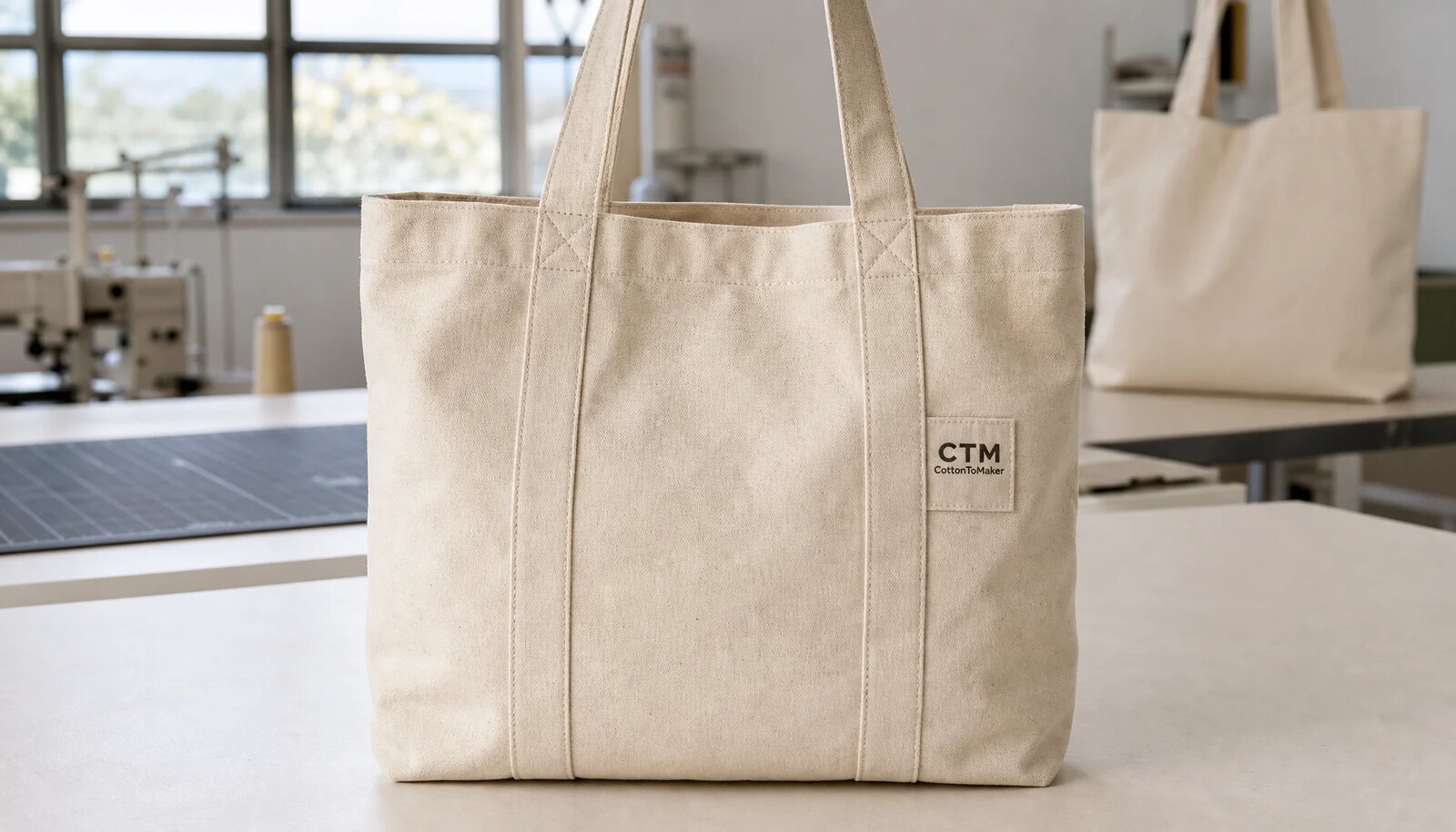
A custom organic cotton tote can look polished in a mockup and still fail at the venue. The common causes are practical: the RFQ did not define load, fabric basis, handle reinforcement, seam construction, print durability, organic claim scope, or packing method. Event totes are filled quickly, moved in cartons, handed out under pressure, and judged in public by attendees and sponsors.
Begin by naming the failures that would interrupt the event. Handle anchors tearing, bottom seams opening under catalogues, logos cracking on fold lines, shade variation across sponsor photos, or mixed artwork versions arriving at the wrong registration desk are different risks. Each needs its own control point.
The useful procurement question is not only whether the tote is durable. Ask what it must carry, how long it must be used, which decoration method is needed, how it will be packed, and what inspection result will be accepted. That turns durability into a measurable specification.
- List the event failures that would disrupt handout, sponsor presentation, or attendee use.
- State the use case before price comparison: handout, welcome kit, sponsor gift, retail item, employee pack, or reusable attendee bag.
- Ask every supplier to quote against the same load, fabric, handle, print, and packing scope.
- Record missing quote details as open risks to close before award.
Convert Contents Into Load
The strongest custom organic cotton totes durability testing checklist for event planners starts with the contents. Weigh one complete attendee kit: printed materials, notebook, bottle, sample box, charger, apparel item, lanyard pack, and sponsor inserts. If final contents are not ready, build a conservative planning list and identify it as an estimate.
Planning weights should be treated as examples, not universal standards. A light paper handout may be under 1 kg. A mixed conference kit may sit around 1-3 kg depending on contents. VIP packs, boxed samples, drinkware, or retail merchandise can exceed that. Ask the supplier to confirm which construction is suitable for the target load.
Comfort is part of performance. Narrow handles can feel harsh once the bag is full. Long handles may support shoulder carry but swing awkwardly on a compact tote. Heavier fabric can feel more substantial while increasing folded bulk, carton volume, and freight cost.
- Include target loaded weight in the RFQ and purchase order.
- Test with the heaviest likely content list if sponsors may add materials late.
- Check both structural strength and carry comfort on the approved sample.
- Review carton gross weight if venue staff will move cartons repeatedly.
Use a Field Test Checklist
Event planners do not need a laboratory to catch many avoidable tote failures before bulk production. A practical sample test should be repeatable, written, photographed, and tied to a pass or fail decision. Use the approved or worst-case event weight, not an empty bag or a guess.
For low-risk orders, test at least three production-representative samples. For high-volume, heavy-load, sponsor-visible, multi-version, or retail-style orders, increase the sample count with the supplier or inspection partner. The goal is not to invent a universal standard; it is to confirm that the selected construction survives the intended event use.
A useful form includes sample ID, fabric GSM, loaded weight, test contents, tester name, date, hold time, carry time, photos taken, and acceptance notes. After each test, inspect the four handle anchors, top hem, side seams, bottom seam, gusset corners, print area, and body shape.
- Static hang: load to target event weight, hang by both handles for 30 minutes, then record pass or fail.
- Lift simulation: lift and set down the loaded tote 25 times, watching for anchor stress, seam noise, or visible distortion.
- Carry simulation: carry the loaded tote for 5 minutes using the intended hand or shoulder mode, then inspect seams and comfort.
- Print check: fold as packed, flex the logo area 20 times, dry rub, scratch lightly, and check transfer to facing fabric.
- Acceptance: pass only when there is no handle tearing, open seam, broken reinforcement stitch, severe distortion, or unacceptable print damage.
Verify Organic Cotton Claims
Organic cotton sourcing advice should be tied to documents, not product names alone. Ask which framework applies to the order, such as GOTS, OCS, or another recognized chain-of-custody program relevant to the supplier's claim. Then confirm whether the available evidence covers fiber, yarn, fabric, finished bag production, decoration, transaction documentation, or only the facility.
A scope certificate shows what a certified organization is approved to handle; it is not always proof that a specific shipment is covered. For order-level evidence, buyers commonly ask for transaction certificates, transaction records, certified material invoices, lot references, or equivalent documentation allowed by the certification system. The exact document depends on the program and supply chain.
Labeling permission matters before artwork approval. If a certification logo, organic claim, hangtag statement, carton mark, or sponsor sustainability message will be used, ask who is authorized to apply it and what wording is allowed. Keep approved claim language with the purchase order, sample record, and final artwork file.
- Ask which certification framework applies and which entity in the chain holds the relevant scope.
- Request transaction-level evidence where the claim requires it.
- Confirm whether decoration, labeling, and finished product claims are included or excluded.
- Keep certification documents, approved claim wording, and artwork approvals in the procurement file.
Specify Fabric Properly
GSM is useful, but it is not the whole fabric specification. As planning examples, 180-200 GSM may suit light brochures, badge packs, and low-load giveaways. For moderate event kits with catalogues, notebooks, bottles, or several inserts, 220-280 GSM is often a more practical starting range. At 300 GSM and above, the tote may feel more substantial, but cartons become bulkier and freight can rise.
Ask what the GSM number means. Some quotes refer to greige fabric. Others refer to post-finish fabric or finished goods. Scouring, bleaching, dyeing, washing, compacting, and calendaring can change weight, shrinkage, surface texture, and hand feel. A tolerance such as plus or minus 5% may be useful when the supplier can verify it, but it should be agreed for the actual fabric.
Weave affects strength and print quality. A loose weave can meet a target GSM but stretch at seams or blur print edges. A tighter plain weave or canvas-style cotton may provide better body and cleaner logo reproduction. For natural organic cotton, approve a shade band rather than expecting a perfect screen-color match.
- Specify composition, GSM basis, GSM tolerance, weave, color, finish, and approved hand feel.
- Approve actual swatches or sample bags instead of relying only on GSM.
- Control natural cotton shade by approved shade band and carton grouping where needed.
- Ask whether fabric is natural, bleached, dyed, washed, compacted, or otherwise finished.
Control Size and Carry Fit
Finished dimensions should be written as measured values. State width, height, gusset depth, handle length, handle drop, handle width, printable area, and measurement method. A tolerance such as plus or minus 1 cm on main dimensions can be a useful planning example for many event totes, but the final tolerance should reflect the style, fabric, and factory capability.
Gussets change capacity and construction risk. A flat tote is simple, economical, and easy to stack. A side or bottom gusset creates more volume for boxed samples, bottles, apparel, or kit bundles, but it adds sewing points that need inspection. Test the sample with actual inserts, not only empty.
Handle drop should match the carry mode. Short handles work for hand carry and desk distribution. Longer handles support shoulder carry, which matters when attendees move between sessions. On compact bags, very long handles may look awkward or affect comfort. Ask the supplier to measure handle drop from the top opening to the top of the handle curve.
- State finished width, height, gusset, handle length, handle drop, handle width, and printable area.
- Provide dimensions for inserts that must fit inside the tote.
- Check folded dimensions if the tote will be packed inside another kit box.
- Approve handle drop by trying the loaded sample, not only by reading the spec sheet.
Engineer Handles and Seams
Most tote failures begin at construction points. The weak area is usually a handle anchor, sparse stitch line, loose thread tension, uneven seam allowance, or bottom corner. The RFQ should describe construction, not just appearance. Include handle material, width, drop, attachment depth, stitch rows, thread type if required, and reinforcement method.
Self-fabric folded handles are common because they preserve the cotton look. Cotton webbing handles may be useful when a different strength profile or style is acceptable. Either way, the anchor carries the stress. For moderate or heavier event kits, specify box-X, bartack, double-row stitching, cross stitch, or another buyer-approved reinforcement shown on the pre-production sample.
Side seams, bottom seams, gusset corners, and top hems deserve the same inspection discipline. Turn the sample inside out. Raw edge exposure, skipped stitches, thread loops, loose tension, uneven seam allowance, and heavy puckering are not harmless if the order will carry weight or be reused.
- Require handle material, width, drop, attachment depth, stitch rows, and reinforcement method in the quote.
- Inspect all four handle anchors before and after the sample load test.
- Photograph approved seams, handle anchors, inside finishing, and stitch appearance.
- Treat open seams, broken stitches, and failed anchors as major defects.
Test Print Durability
A structurally strong tote can still fail the brand brief. Logos may crack, rub, look dull on natural cotton, bleed at the edges, or transfer onto the next bag in the carton. For simple solid logos, screen printing is often practical, but durability depends on artwork, fabric texture, ink system, deposit thickness, curing, fold direction, stacking pressure, and process control.
Review artwork before final pricing. Fine lines may fill in on textured cotton. Small reversed type may lose clarity. Large solid ink areas can feel stiff or crack if folded. Multi-color artwork needs registration control. Gradients or photographic effects may require a different decoration method.
Color matching needs realistic expectations. A Pantone color on natural cotton will not look exactly like coated paper or a screen preview. If color matters, request a strike-off or printed pre-production sample on the actual fabric. Define acceptable commercial variation and name every artwork version clearly.
Basic print checks are easy to run before approval. Fold the bag the way it will be packed, rub the print with a clean dry cloth, flex the logo area, and check for transfer to facing fabric or packing material. Look for cracking, lifting, flaking, pinholes, opacity loss, smearing, and edge bleed.
- Approve print on actual cotton fabric when brand color or durability matters.
- Define print size, location, centerline, top-edge distance, and placement tolerance.
- Ask the supplier to flag artwork risks before production.
- Keep every artwork version identified through production, packing, and carton marking.
Approve Samples as Records
A useful sample process separates design direction from production control. A proto sample can confirm shape, dimensions, handle position, construction direction, and general fabric feel. A pre-production sample should confirm the intended production fabric or approved substitute, thread, stitching, reinforcement, print method, label, fold, packing, and carton marks.
Measure the sample instead of relying only on the spec sheet. Check body width, height, gusset, handle drop, handle width, print position, label placement, seam quality, shade, stains, holes, loose threads, and print appearance. Then run the load and print checks before signing off.
Approval should be specific enough for inspection. Notes such as logo approved 8 cm below top edge, handle drop approved at 27 cm, and natural shade accepted within submitted band are more useful than sample approved. If deviations are accepted, record whether they apply only to the sample or also to bulk production.
Keep the physical sample when possible. If it must travel, keep clear photos of the front, back, inside seams, handle anchors, bottom seam, label, print close-up, fold method, and carton mark.
- Use separate approval lines for fabric, size, construction, print, label, fold, and packing.
- Record approved deviations rather than leaving them informal.
- Use the pre-production sample as the reference for inspection.
- Do not approve bulk production from a mockup alone when construction or print durability matters.
Set QC Acceptance Rules
Quality control works best when acceptance rules are set before cutting. The inspection plan should cover finished dimensions, handle drop, handle placement, GSM range, shade range, print placement, print appearance, seam quality, label position, carton count, carton marks, and packing method. Waiting until cartons are sealed turns every defect into a rushed negotiation.
For larger orders, many buyers use AQL inspection with critical, major, and minor defect categories. The exact inspection level should be selected with the buyer, supplier, or inspection partner based on order size and risk. The important step is to define defects in plain language before production.
Critical defects may include safety hazards, mold, contaminated goods, or unusable wet cartons. Major defects often include wrong artwork, missing print, handle failure, open seams, severe stains, mixed SKUs, incorrect size outside tolerance, or carton quantities that disrupt distribution. Minor defects may include small loose threads, slight wrinkles, or small appearance variations within the approved standard.
- Set tolerances and defect categories before cutting starts.
- Choose sample size logic with the inspection partner, especially for high-volume or event-critical orders.
- Ask for in-process checks at fabric, sewing, printing, and packing stages when risk justifies it.
- Require re-inspection or documented rework for failed major construction, print, or SKU controls.
Specification comparison for buyers
| Option | Best fit | Buyer advantages | Controls to confirm before award |
|---|---|---|---|
| Light handout tote | Registration desks, paper inserts, badge packs, low-load giveaways, and short-use events | Lower unit cost, lighter cartons, easier venue handling, and simpler production scope | Confirm maximum kit weight, fabric GSM basis, handle stitching, print curing, carton quantity, and whether the bag is only intended for light contents. |
| Standard conference tote | Multi-day attendee kits with notebooks, brochures, sponsor inserts, small samples, or light bottles | Balanced cost, structure, print area, attendee reuse potential, and manageable carton volume | Approve fabric swatch, finished dimensions, handle drop, reinforcement, seam finish, print placement, fold method, and dimensional tolerance. |
| Reinforced kit tote | VIP packs, boxed samples, drinkware, heavier catalogues, apparel bundles, or reusable sponsor gifts | Better carrying performance and lower public-facing failure risk when contents are heavier | Price heavier fabric, wider handles, box-X or bartack reinforcement, stricter inspection, bulkier cartons, and longer sample approval. |
| Gusseted event tote | Kits with boxes, bottles, folded apparel, retail inserts, or items that need to stand inside the bag | More practical internal volume and cleaner packing for irregular contents | Check gusset depth, bottom seam strength, corner stitching, sample fit with real inserts, folded size, and carton impact. |
| Retail-style organic cotton tote | Merchandise tables, paid gift shop items, employee packs, premium sponsor bundles, or brand stores | Cleaner presentation and stronger perceived value when finishing and print consistency are controlled | Require a production-representative sample, tighter shade approval, finished-size tolerance, label placement, print durability checks, and carton protection. |
| Multi-version sponsor tote | Orders split by sponsor logo, language, destination, event day, department, or kit type | Better distribution control when version separation is built into production and packing | Confirm artwork version codes, SKU separation, carton marks, carton sequence, approved packing list, and inspection checks for mixed-version cartons. |
Buyer checklist before sampling
- Event kit weight recorded: list every planned item, weigh one complete kit where possible, add conservative weight for late sponsor inserts, and state the target loaded weight in the RFQ.
- Use case defined: same-day handout, multi-day conference carry, VIP gift, retail merchandise, employee welcome kit, registration bag, or reusable attendee tote.
- Finished product specification written: width, height, gusset depth, handle length, handle drop, handle width, printable area, fabric GSM basis, weave, color, finish, print method, fold, and packing format.
- Organic claim evidence requested: certification scope, transaction-level documentation where applicable, lot or invoice traceability, and approved wording for bag, label, carton, website, and sponsor material.
- Handle construction specified: handle material, width, attachment depth, stitch rows, reinforcement method, and approved appearance at all four anchors.
- Sample size for planner test set: test at least 3 production-representative samples for low-risk orders and more when the order is high-volume, heavy-load, multi-version, or sponsor-critical.
- Static hang test field: load each sample to the target event weight, hang by both handles for 30 minutes, record pass or fail, then inspect anchors, top hem, side seams, and body distortion.
- Lift and carry simulation field: lift and set down each loaded sample 25 times, carry for 5 minutes using the intended hand or shoulder mode, record pass or fail, and note discomfort, twisting, or seam stress.
- Print durability field: fold on the planned fold line, flex the logo area 20 times, dry rub with a clean white cloth, scratch lightly by fingernail, and record cracking, transfer, flaking, smear, or opacity loss.
- Acceptance notes field: approve only if there is no handle tearing, no open seams, no broken reinforcement stitches, no unacceptable print damage, no severe distortion, and no mismatch from approved sample or artwork version.
Factory quote questions to send
- What exact organic cotton composition is quoted, and what documentation supports the organic claim for this order?
- Which certification framework applies, such as GOTS, OCS, or another recognized chain-of-custody program, and which company in the supply chain holds the relevant scope?
- Does the available scope cover fiber, yarn, fabric, finished bag production, decoration, labeling permission, transaction documentation, or only the supplier facility?
- Can you provide transaction certificate, transaction record, certified material invoice, lot reference, or equivalent order-level evidence where required by the applicable framework?
- What claim wording may the buyer use on the bag, label, carton, website, sponsor deck, or event material without exceeding the documented scope?
- Is the quoted GSM measured on greige fabric, post-finish fabric, or finished goods, and what tolerance can be verified during QC?
- What are the finished width, height, gusset depth, handle length, handle drop, handle width, printable area, and accepted dimensional tolerances?
- What seam construction is used on side seams, bottom seams, gusset corners, top hem, and inner finishing, and what stitch density or stitch rows are standard for this quote?
- How are the handles made, how deep are they inserted into the top hem, and which reinforcement method is included in the quoted price?
- What loaded weight do you recommend for this construction, and what static hang, lift, carry, pull, or handling checks do you perform before shipment?
Quality-control points to confirm
- Fabric matches the approved organic cotton specification, shade band, weave appearance, hand feel, and GSM range, with no unacceptable stains, holes, thin spots, oil marks, heavy slubs, or weave distortion.
- Organic cotton documents, transaction evidence, label approvals, and claim wording match the buyer's intended use and do not exceed the verified certification scope.
- Finished dimensions remain within the written tolerance for width, height, gusset, handle length, handle drop, handle width, and printable area after normal conditioning.
- Handle width, placement, attachment depth, and left-right symmetry match the approved sample, with no twisting that affects carrying comfort or presentation.
- Static hang test is documented with sample ID, test weight, hold time, before-and-after photos, and pass or fail notes for all four handle anchors.
- Lift and carry simulation is documented with repetitions or carry time, loaded weight, tester notes, and seam inspection after the test.
- Handle anchors show the specified box-X, bartack, double-row, cross-stitch, or approved reinforcement method at all four points, with no broken stitches, fabric tearing, seam slippage, or distortion after load simulation.
- Side seams, bottom seams, gusset corners, and top hems are straight, secure, and aligned, with consistent stitch density, no skipped stitches, no open seams, no exposed raw edges, and no excessive puckering beyond the approved sample.
- Print is centered within the approved tolerance, with correct artwork version, print size, ink color, opacity, registration, edge quality, and no unwanted ink on handles, seams, back panels, or adjacent pieces.
- After fold, flex, dry rub, light scratch, and transfer checks, the print does not crack, lift, flake, smear, bleed, or mark the facing panel or packing material beyond the agreed standard.