The buying problem: premium tote, clean carton, no retail complaints
A custom organic cotton tote for hotel retail has to satisfy two different users. The guest sees the bag on a shelf, in a spa, or as part of a welcome pack and judges it by touch, print clarity, and how cleanly it presents. The hotel retail team judges it by carton count, stockroom handling, replenishment speed, and whether bags arrive flat enough to place directly into display fixtures.
Many RFQs describe the product well but leave the carton packing plan vague. That creates avoidable problems: crushed handles, deep fold lines through the logo, cartons too heavy for hotel storage, and inconsistent inner packing between production lots. The packing method should be treated as part of the product specification, not a warehouse detail added after sewing is finished.
- Define the tote use: paid retail merchandise, guest gift bag, spa amenity carrier, or room welcome packaging.
- Decide whether the tote must be shelf-ready, counter-display ready, or bulk stockroom replenishment only.
- Set a carton gross weight limit early, especially for hotels without pallet handling equipment.
- Approve a folded sample photo before mass packing, not only the sewn tote sample.
Fabric weight and organic cotton specification
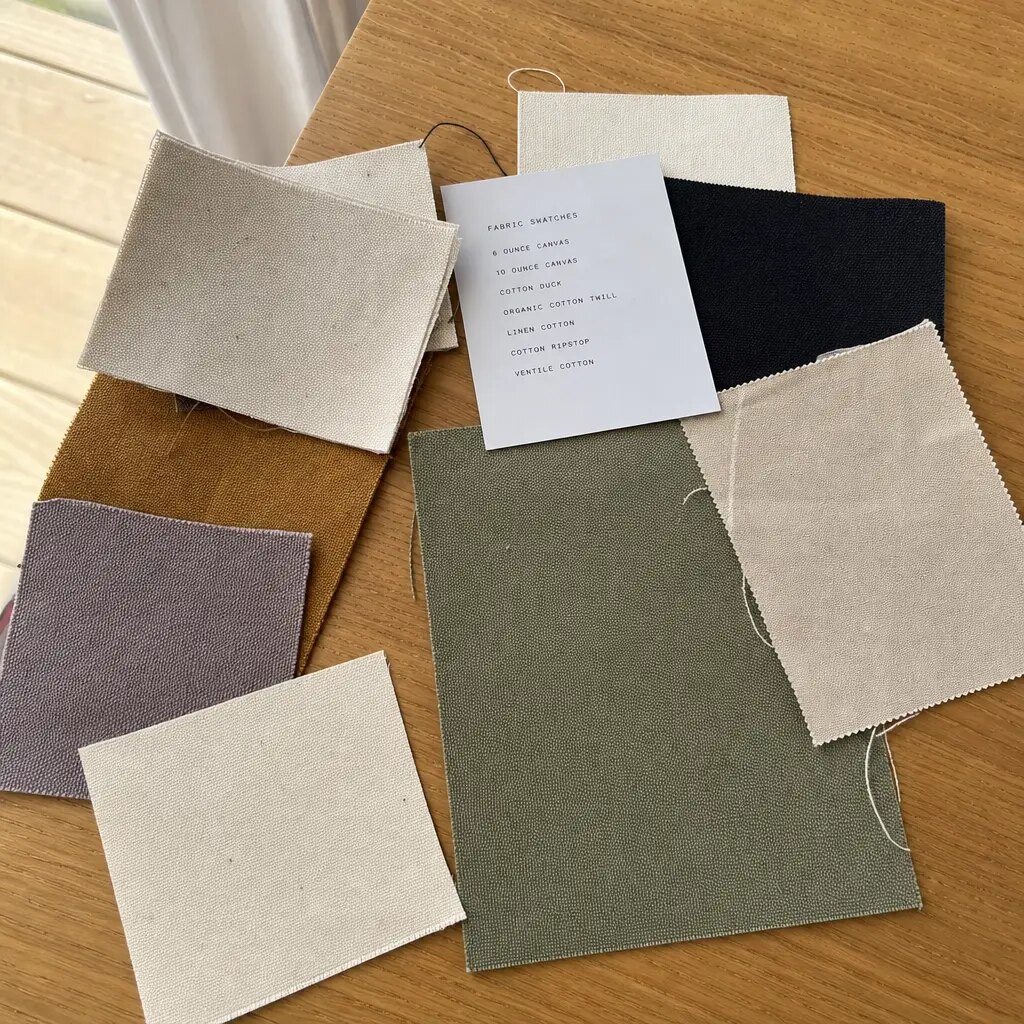
For hotel retail, the practical fabric range is usually 10 oz to 12 oz organic cotton canvas, approximately 280-340 GSM. A lighter 6 oz to 8 oz tote can work for low-cost event handouts, but it often feels too thin for hotel shop pricing and may not support a crisp retail fold. A heavier 14 oz fabric gives more structure but increases unit cost, carton volume, and freight cost.
The buyer should separate the cotton claim from the performance requirement. Organic cotton describes the fiber origin or certification route; it does not automatically mean the tote is stronger, cleaner, or more premium. If a hotel brand requires a certified claim, the RFQ should state whether certified fabric, certified finished goods, transaction certificates, or supplier declarations are required. These have different costs and lead times.
- Typical retail tote: 12 oz natural organic cotton canvas with self-fabric handles.
- Budget amenity tote: 8 oz to 10 oz if the load is light and the bag is not sold as premium merchandise.
- High-structure tote: 14 oz only when the buyer accepts higher carton volume and possible folding marks.
- Natural cotton shade: approve physical limit samples, because unbleached cotton varies by batch.
Size, handle drop, and sewing choices that affect carton packing
Carton efficiency starts with the tote dimensions. A wide shallow tote may display well but wastes carton space when folded. A tall tote with long handles may create uneven stack height unless the fold line and handle placement are planned. For hotel retail, common body sizes such as 38 x 42 cm, 40 x 35 x 10 cm, or 45 x 38 x 12 cm should be tested against the actual product contents and the carton target quantity.
Handle drop is not only a comfort detail. Long handles can twist or bulk up during folding, especially on 12 oz canvas. Short handles are easier to pack but may not fit over the shoulder. The RFQ should specify handle width, length, drop, stitching pattern, and whether the handle should be tucked inside, folded behind, or laid flat across the bag body before packing.
- Retail shoulder tote: handle drop around 25-30 cm, packed with handles aligned to reduce stack height.
- Hand-carry gift tote: shorter handle drop around 12-18 cm, easier to fold and cartonize.
- Gusseted tote: improves product capacity but increases folding thickness and carton cube.
- Stress areas: cross-stitch or box-stitch at handle joints should be visible and consistent.
Print method decisions for hotel logos and destination artwork
Most hotel retail tote programs use screen printing because it is stable, cost-effective, and suitable for logos, property names, line icons, and destination graphics. Water-based ink is often preferred on organic cotton because it gives a softer handfeel and avoids a heavy plastic surface. The tradeoff is that pale colors on natural cotton may look muted, so physical strike-off approval is more reliable than digital proofing.
Heat transfer can reproduce gradients and fine details, but it needs stronger sample testing. On cotton canvas, low-grade transfers may crack, peel, or look too glossy against a natural organic cotton surface. Embroidery gives a premium look but adds cost, thread bulk, and sometimes backing marks. For retail cartons, embroidery also affects folding because the embroidered panel should not be sharply creased.
- Best for simple hotel branding: 1-2 color water-based screen print.
- Best for detailed illustration: transfer print only after rub, fold, and wash testing.
- Best for premium small mark: embroidery or woven side label, with fold line planned away from the logo.
- Artwork file: vector format with Pantone references and print size in centimeters.
MOQ logic: why the lowest number is not always the best quote
MOQ for custom organic cotton totes is driven by fabric availability, cutting efficiency, print setup, sewing line planning, and packing labor. If the factory has suitable organic cotton canvas in stock, a lower MOQ may be realistic. If the fabric must be woven, dyed, bleached, or certified through a specific chain, MOQ rises quickly because the fabric mill has its own minimums.
Buyers comparing suppliers should look beyond the headline MOQ. A factory may accept a small order by using stock fabric, but that can limit color, GSM, and certification documents. Another supplier may quote a higher MOQ because they are reserving one fabric lot and one print setup for better shade and measurement consistency. The right decision depends on whether the hotel program is a one-time launch, a seasonal retail item, or a repeat replenishment product.
- Small launch order: use stock natural organic canvas if certification requirements are flexible.
- Multi-property program: consolidate quantities by fabric and print method, then split artwork by property if setup cost allows.
- Repeat retail item: prioritize stable fabric source and carton packing repeatability over the lowest trial MOQ.
- Mixed designs: clarify whether MOQ applies per size, per fabric color, per print design, or total PO quantity.
Carton packing plan for hotel retail operations
A good carton packing plan protects the tote and makes receiving easy. For 10 oz to 12 oz organic cotton totes, many buyers use 50 to 100 pieces per carton depending on bag size, gusset, handle bulk, and individual packing. The carton should not be filled until it bulges. Bulging cartons crush the folded edges, distort handles, and increase damage risk during export handling.
Individual packing depends on the brand position and sustainability rules. A recyclable polybag keeps the tote clean during ocean freight and hotel stockroom handling. A paper band reduces plastic but offers less moisture protection. Bulk packing reduces cost but increases the risk of dirt, counting errors, and uneven folding. For hotel retail, the best compromise is often a neatly folded tote with paper band or thin recyclable bag, then counted stacks inside a lined export carton.
- Recommended gross weight: keep cartons within a manual handling range agreed with the buyer, often under 15-18 kg.
- Carton marking: PO number, item code, color, print design, quantity, carton number, gross weight, net weight, and destination.
- Inner packing: use consistent stack count such as 10 pieces per bundle to speed receiving checks.
- Moisture control: add inner liner or desiccant plan for long ocean freight routes if humidity risk is high.
- Approval evidence: require photos of folded unit, inner stack, full open carton, sealed carton, and carton mark.
Sample approval should include the folded packed presentation
A sewn sample can look correct on a table and still fail when packed. The logo may sit on the fold line, the handles may create a thick ridge, or the gusset may not lie flat inside the carton. For hotel retail, the pre-production sample should include the real fabric, approved print method, handle construction, label placement, folding method, and individual packing.
The sample review should be practical. Measure the tote flat, load it with the expected product weight, review print clarity under normal retail lighting, then fold it as the factory proposes. If the bag is sold in a hotel shop, the front face after unfolding should not show a hard crease across the brand mark. If the tote is used for welcome amenities, the packing method should allow staff to fill it quickly without reshaping every bag.
- Approve fabric handfeel, GSM, shade, and visible slubs before print approval.
- Measure logo position from top edge and side seam, not by visual centering only.
- Photograph the fold method and make it part of the production file.
- Test one packed sample after 48-72 hours under carton-like pressure to see fold memory.
- Keep one signed approval sample with the buyer and one with the factory QC team.
Lead time risks from fabric, printing, and carton decisions
A realistic lead time begins after artwork, deposit, and sample approval, not from the first email inquiry. Stock organic canvas with simple screen printing can move faster than custom dyed or certified fabric programs, but hotel retail buyers should still allow time for strike-off approval, pre-production sample comments, bulk fabric inspection, cutting, sewing, printing, final inspection, and export packing.
Carton decisions can also delay shipment. If the buyer changes individual packing, carton quantity, barcode labels, or carton marks after production starts, the factory may need to repack finished goods. Repacking organic cotton totes is labor-heavy because each item must be unfolded, inspected, refolded, and restacked. The packing instruction should be locked before mass sewing finishes.
- Fastest route: stock natural organic canvas, simple screen print, standard carton, no special barcode labeling.
- Higher-risk route: custom fabric color, multiple hotel property artworks, retail hangtags, barcode stickers, and custom carton marks.
- Common delay: Pantone mismatch on natural cotton because the artwork was approved only on screen.
- Packing delay: carton quantity changed after the first packed carton test.
Quote data needed for landed-cost comparison
A useful quote for custom organic cotton totes should give more than a unit price. The buyer needs enough data to calculate landed cost, compare suppliers fairly, and catch hidden packing differences. A quote with a lower unit price but larger carton volume may cost more after freight and warehousing. A quote that excludes print setup, sample cost, carton upgrade, or individual packing is not directly comparable.
Procurement teams should request a quote sheet that separates product cost, artwork setup, sample charges, packing method, carton quantity, estimated carton size, gross weight, export terms, and lead time assumptions. For importers and distributors, carton cube can be as important as unit price because hotel retail programs often ship by mixed container, LCL, or air replenishment for urgent launches.
- Unit price: state Incoterm clearly, such as EXW, FOB, CIF, or DDP where applicable.
- Packing cost: identify individual bag, paper band, hangtag, barcode label, master carton, and inner liner separately.
- Carton data: pieces per carton, carton dimensions, gross weight, net weight, and total CBM.
- Setup charges: screen, embroidery digitizing, label mold, sample fee, and courier cost.
- Commercial terms: payment schedule, validity period, production lead time, and rework responsibility.
Acceptance criteria before shipment release
The final inspection should combine product quality and packing accuracy. For hotel retail, visible defects carry more risk than small technical deviations because the tote often sits in guest-facing spaces. Dirty marks, strong odor, crooked logos, weak handles, and crushed cartons should not be treated as minor issues just because the bag is low-tech to manufacture.
A practical inspection plan uses agreed tolerances and defect categories. Dimensions, print placement, stitch quality, handle strength, fabric shade, and carton packing should be checked against the approved sample and packing file. If the order includes several hotel property artworks, inspection should verify the correct quantity per design and carton mark, not only total piece count.
- Dimension tolerance: agree before production, commonly plus or minus 0.5-1.0 cm depending on tote style.
- Print placement tolerance: define acceptable deviation in millimeters from top and side reference points.
- Load test: hang the bag with the agreed weight for a fixed time and inspect handle joints afterward.
- Carton check: no wet cartons, no crushed corners beyond acceptable shipping wear, no mixed designs unless approved.
- Shipment release: require final inspection report, packed carton photos, and packing list matching carton marks.
Specification comparison for buyers
| Spec decision | Recommended option | When it fits | Buyer risk to check |
|---|---|---|---|
| Fabric weight for hotel retail tote | 10 oz to 12 oz organic cotton canvas, approximately 280-340 GSM | Gift shop totes, welcome amenity bags, spa retail, and reusable guest purchase bags that need a premium handfeel | Low GSM quotes may look competitive but crease badly, show print-through, and fail loaded hanging tests |
| Fabric construction | Plain weave canvas for structure; twill only if the buyer accepts a softer drape | Plain weave is easier to fold consistently and stack in cartons for retail replenishment | Suppliers may quote organic cotton but not clarify weave, shrinkage, or whether fabric is pre-shrunk |
| Print method | Water-based screen print for 1-3 solid colors; heat transfer only for detailed artwork with strict sample testing | Hotel logos, boutique retail graphics, destination names, and simple brand marks | Water-based ink can look dull on natural cotton if artwork uses pale colors; heat transfer may crack if low grade |
| Handle specification | Self-fabric handles, 2.5-3.0 cm width, cross-stitched at stress points | Retail totes expected to carry robes, bottled amenities, books, or beach accessories | Narrow handles reduce cost but cut into the hand and may fail at the bartack area under load |
| Carton packing unit | Individual folded bag in recyclable polybag or paper band, 50-100 pieces per export carton depending on size and GSM | Hotel retail teams needing clean stockroom handling and easy unit counting | Overpacked cartons cause deep fold marks, carton bulging, and higher claim risk at destination inspection |
| MOQ logic | MOQ based on fabric dye/greige stock, print setup, and carton efficiency rather than one fixed number | Buyers mixing several hotel properties or colorways under one program | A low MOQ may hide higher unit price, mixed-lot fabric shade risk, or manual packing inconsistency |
| Sample approval route | Digital layout, pre-production sample with real fabric and print, then packed carton photo before mass shipment | New artwork, new tote size, new handle length, or first order with a supplier | Approving only a flat artwork file misses print scale, handle drop, fold position, and retail presentation issues |
| Supplier route | Direct bag factory with in-house cutting, sewing, printing coordination, and export carton control | Importers and distributors needing repeatable packing plans across multiple POs | Trading-only quotes may not control fabric lot, print shop timing, carton quality, or AQL rework decisions |
Buyer checklist before sampling
- Define tote size in width x height x gusset, not only by general use such as amenity bag or gift shop tote.
- State organic cotton standard required, such as GOTS certified fabric or organic cotton claim supported by transaction documents, before price comparison.
- Lock fabric weight, weave, color, shrinkage tolerance, handle width, handle drop, and seam construction in the RFQ.
- Send artwork as vector files with Pantone references and expected print position measured from bag edges.
- Require a real pre-production sample using the approved fabric, print method, handle construction, and folding method.
- Specify individual packing, carton quantity, carton dimensions, carton gross weight limit, and carton marking format.
- Set acceptance criteria for print color, print placement, seam strength, fabric defects, odor, stains, and carton damage.
- Compare quotes using unit price plus packing cost, inland freight, carton volume, payment terms, sample fees, and rework responsibility.
Factory quote questions to send
- What exact organic cotton fabric weight, weave, and yarn construction are included in the quote?
- Is the fabric made from available greige stock, stock organic canvas, or custom woven material, and how does that affect MOQ?
- What shrinkage rate should we expect after washing or steam pressing, and is the fabric pre-shrunk?
- Which print method is quoted, how many colors are included, and what is the maximum printable area?
- Are screen setup charges, Pantone color matching, sample freight, carton printing, and inner packing included or separate?
- How many pieces fit per carton for our selected GSM and tote size, and what are the estimated carton dimensions and gross weight?
- What carton burst strength or export carton grade will be used, and is any inner liner or moisture protection included?
- What sample stages are recommended before production, and what sample lead time applies after artwork approval?
- What inspection standard, AQL level, and defect list will the factory accept before shipment?
- What is the production lead time after deposit and sample approval, and which steps are most likely to delay the order?
Quality-control points to confirm
- Fabric GSM should be checked by cutting and weighing a measured swatch, not by relying only on the supplier's fabric label.
- Finished tote dimensions should be measured after sewing and pressing, with tolerance agreed before production, commonly plus or minus 0.5-1.0 cm for bag body dimensions.
- Print placement should be measured from the top edge and side seams; visible off-center placement should be treated as a major defect for retail-facing goods.
- Handle attachment should include reinforced stitching and should pass a loaded hanging test suitable for the intended retail load.
- Seams should be straight, closed, and free from skipped stitches, broken threads, loose bartacks, or raw edges in visible areas.
- Natural cotton shade variation should be approved by limit samples, because unbleached organic cotton rarely matches a digital white background.
- Odor, mildew, oil marks, needle stains, and dirty fold lines should be treated as shipment-critical defects for hotel retail.
- Cartons should be checked for correct quantity, dry condition, readable shipping marks, no bulging, and acceptable gross weight for manual warehouse handling.