Build The Pricing Brief Around The Show Deadline
A good bulk price starts with a brief that suppliers can quote without guessing. For trade show exhibitors, the bag is not just a product; it is part of an event schedule. The tote must be approved, produced, inspected, packed, shipped, received, and available before booth setup. A low quote loses its value if the cartons arrive after the advance warehouse window closes or if the booth team has to sort mixed versions on-site.
Put the timing and delivery facts at the top of the RFQ: show date, booth setup date, warehouse receiving date, inspection date, latest ship date, destination type, and delivery contact. Then define the tote in measurable terms: size, fabric, handle, gusset, reinforcement, print method, artwork versions, packing count, and required organic documentation. When every supplier prices the same brief, the buyer can compare real differences instead of discovering later that one quote removed samples, used lighter fabric, or excluded delivery.
- Start the RFQ with event dates, receiving window, delivery address, trade term, and final decision date.
- Use one written specification for all suppliers so quantity breaks and freight assumptions are comparable.
- Separate required features from optional upgrades, such as heavier fabric, gusset, two-side print, or palletization.
- Ask suppliers to list exclusions clearly, especially samples, setup charges, organic documents, inspection, duty, tax, and local delivery.
Match The Tote To The Event Use Case
The right organic cotton tote depends on what the exhibitor expects the bag to do. A mass handout at a busy booth needs fast distribution and a controlled unit cost. A qualified lead gift needs better presentation and stronger construction. A press kit may need a gusset and cleaner folding. A sponsor tote may need multiple artwork versions and carton segregation. One generic specification rarely serves all of those jobs well.
Procurement should ask marketing and event teams what will go inside the tote before fabric is chosen. Paper catalogs create flat weight. Water bottles, product samples, boxed gifts, and small devices place stress on seams and handle attachments. If the bag is pre-packed before the show, folding direction and carton count affect labor. If attendees are expected to keep the tote after the event, the bag should feel reusable rather than disposable.
- Mass giveaway: 5 oz to 8 oz fabric, simple one-color print, flat packing, tight cost control.
- Standard booth tote: 8 oz to 10 oz canvas, reinforced handles, useful for brochures, folders, notebooks, and light samples.
- Press or sponsor kit: 10 oz to 12 oz canvas, gusset, stronger stitching, cleaner print approval, and protective carton packing.
- Multi-show program: avoid date-locked artwork when surplus inventory may be reused at later events.
- Pre-packed kit: test carton count, folding method, insert fit, and staff packing time before bulk approval.
Specify Fabric So Quotes Are Truly Comparable
Fabric is usually the biggest cost driver in custom organic cotton totes. Organic cotton sheeting is lighter and often used for budget literature bags. Organic cotton canvas has more structure and is more suitable for reusable exhibitor totes. Weight may be stated in ounces per square yard or GSM, so include both when possible. As a practical reference, 8 oz canvas is roughly 270 GSM, 10 oz is roughly 340 GSM, and 12 oz is roughly 400 GSM, though exact feel varies by mill and weave.
Avoid vague buying language such as heavy cotton, premium canvas, eco tote, or standard quality. A stronger specification reads: 10 oz organic cotton canvas, natural unbleached, finished size 38 x 42 cm, 10 cm gusset, 65 cm long handles, reinforced handle attachment, one-side screen print. That level of detail lets the factory price material, cutting, sewing, printing, and packing accurately, and it gives QC a standard to inspect against.
- 5 oz to 6 oz: lower-cost literature bags, lighter feel, more wrinkling, less structure.
- 8 oz to 10 oz: practical middle tier for most exhibitor totes and general booth giveaways.
- 12 oz: premium feel and stronger load performance, with higher material cost and freight weight.
- Natural unbleached cotton: approve shade range and logo contrast on real fabric.
- Dyed organic cotton: allow for color approval, rubbing checks, dye-lot variation, and longer lead time.
Use A Concrete Bulk Pricing Worksheet
The keyword in a procurement plan is plan. Buyers need more than a list of price drivers; they need a worksheet that shows where the money goes. Ask each supplier to break out the quote in the same structure: unit price, setup, sample charges, print charges, documentation, packing, inspection, freight, duty, tax, local delivery, and contingency stock. The lowest FOB unit price may not be the lowest usable event cost.
A simple comparison can change the decision. Suppose a 1,500-piece order is quoted at a lower unit price than a 750-piece order, but the larger order adds storage and leaves 500 event-dated bags unused. The apparent savings may disappear. On the other hand, if the same artwork will support three shows, a 2,500-piece run with staged delivery may reduce setup cost per bag and prevent a rushed reorder. The worksheet should compare landed cost per usable tote, not just quoted unit price.
- Worksheet line 1: bag unit price by quantity tier and by fabric weight.
- Worksheet line 2: setup, screens, color matching, artwork version fees, and strike-offs.
- Worksheet line 3: samples, organic documentation, inspection, carton labels, palletization, and special packing.
- Worksheet line 4: freight, insurance, duty, tax, customs clearance, warehouse receiving, storage, and final delivery.
- Worksheet line 5: usable quantity after reserves, surplus risk, damaged-carton allowance, and multi-show reuse potential.
Choose Quantity Breaks From Real Demand
Bulk pricing improves when fixed costs are spread across more totes, but bigger is not always better. The demand plan should start with attendee estimates, qualified lead targets, staff needs, sponsor allocations, press kits, distributor requests, reserve stock, and post-show use. If expected demand is 1,800 totes, request tiers at 1,500, 2,000, and 2,500 rather than only 1,000 and 5,000.
Version splits need special attention. Five sponsor versions of 400 pieces each do not price like one 2,000-piece print run. Each version may require its own artwork review, screen setup, strike-off, print schedule, carton label, and inspection note. To keep cost under control, use one common bag body whenever possible and change only the printed artwork.
- Ask for quantity breaks that match decisions: 750, 1,500, 2,500, 5,000, and 10,000 pieces are often useful starting points.
- Confirm whether MOQ applies to total order quantity, each fabric color, each artwork version, or each destination.
- Add reserve stock for staff, damaged cartons, late sponsor requests, and higher booth traffic.
- Compare one multi-show production run against smaller event-specific runs when artwork can remain current.
- Require version quantities in the quote so setup and segregation costs are visible.
Control Artwork, Print Method, And Color Approval
For most trade show totes, one-color or two-color screen printing is the most practical bulk option. It is efficient, durable enough for many exhibitor uses, and predictable when the artwork is clean. Complex sponsor grids, gradients, small QR codes, photographic images, and tight color targets need more testing. Natural cotton is textured and off-white, so colors can appear warmer or less saturated than they do on a screen or coated paper.
The artwork approval process should be staged. First, check vector files, logo clear space, print size, and placement. Second, approve a strike-off on the actual fabric. Third, approve a sewn pre-production sample that shows final construction and print position. Do not let production begin until the artwork version list is frozen. Late changes can create new screen charges, delay printing, and increase the chance of mixed cartons.
- Lowest-risk print: one-side screen print, one or two solid colors, medium print area, clean vector artwork.
- Cost adders: more colors, two-side printing, oversized artwork, specialty ink, transfers, embroidery, and many versions.
- QC risks: small sponsor logos, QR codes, thin lines, reversed text, gradients, and large solids across fold lines.
- Approval records should include artwork file name, Pantone or color standard, strike-off photo, sample date, and written release.
- Ask whether ink will be water-based, pigment, discharge where suitable, transfer, digital, or another method, and why.
Compare Supplier Routes For Event Logistics
Direct factory sourcing can work well when the buyer has a clear specification, repeat orders, and enough time to manage samples, inspection, and shipment decisions. It gives better visibility into fabric, sewing, printing, packing, and reorders. This route is useful for standardized tote programs, multi-show calendars, and buyers who need controlled organic documentation.
A distributor, sourcing agent, or promotional products partner may be better when the tote is part of a larger event kit or when delivery coordination matters more than factory-level control. For example, a distributor may consolidate totes with notebooks, lanyards, badges, inserts, and packaging, then deliver kits to an advance warehouse or multiple regional destinations. The buyer should still clarify who owns sample approval, correction decisions, documentation, carton labels, and rework cost.
- Use a direct factory when repeatability, technical control, organic documentation, and stable reorders matter most.
- Use a distributor or sourcing partner for kitting, multi-item programs, advance warehouse delivery, and multi-destination fulfillment.
- For tight trade show deadlines, confirm who manages shipment booking, customs clearance, delivery appointments, and exception handling.
- For split shipments, require destination-level packing lists, carton marks, and version quantities before production closes.
- Do not compare supplier routes only by unit price; compare control, speed, documentation, logistics, and accountability.
Lock The Spec With Samples Before Bulk Production
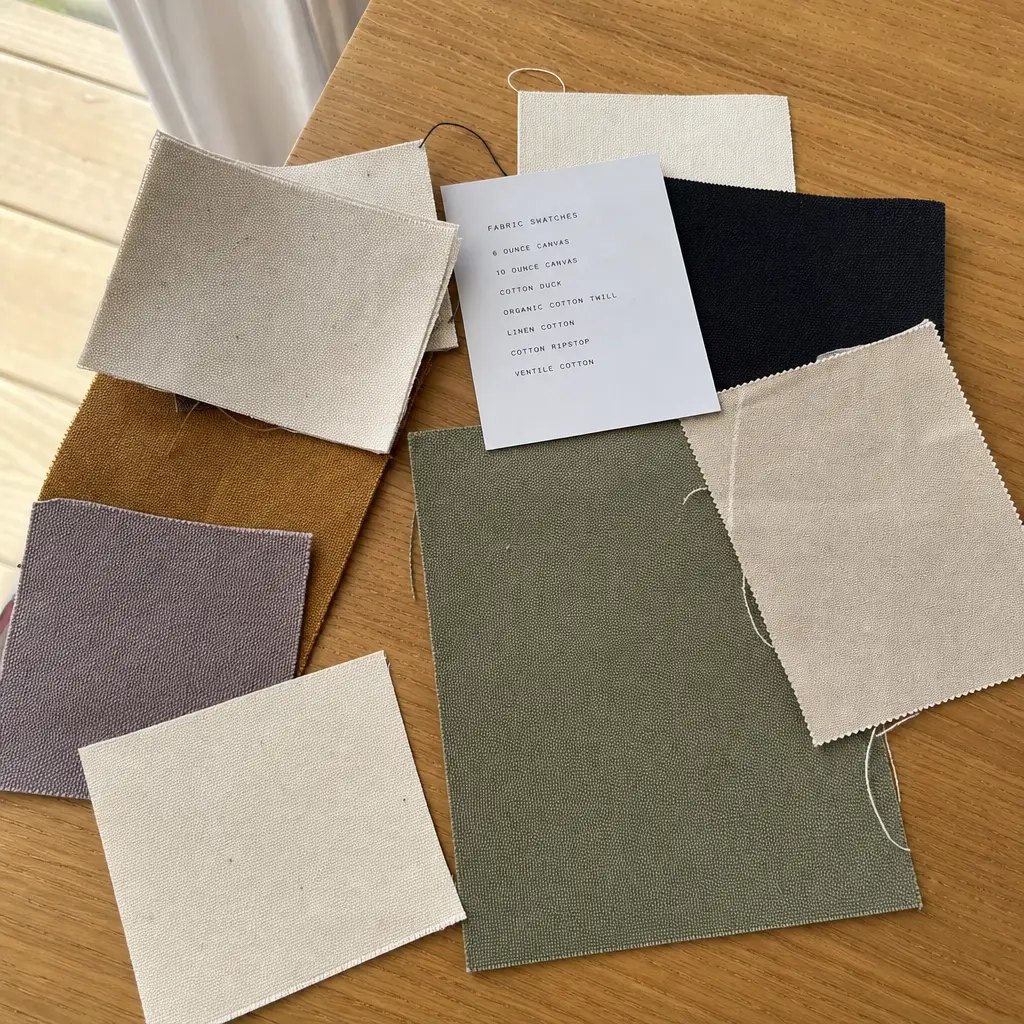
Samples prevent expensive arguments because they convert the quote into a physical standard. A fabric swatch confirms weight, weave, shade, hand feel, and whether the organic cotton appearance fits the brand. A print strike-off confirms color, opacity, edge sharpness, ink hand, and adhesion on the actual fabric. A sewn pre-production sample confirms finished size, gusset, handle drop, stitching, reinforcement, print placement, and folding.
For a new supplier, new fabric, dyed finish, sponsor-sensitive logo, or tight color target, skipping samples pushes risk into bulk production. A repeat order may rely on a retained sample and prior strike-off, but procurement should document that decision. Test the sample with real event contents: folder, catalog, bottle, product box, notebook, or insert stack. Carry the loaded bag, inspect the handle stress points, fold it as packed, and check whether the logo creases acceptably.
- Fabric swatch: approve oz or GSM, weave, shade range, hand feel, and documentation scope.
- Print strike-off: approve color, opacity, edge quality, dry rub, damp rub, tape test, and folded appearance.
- Sewn sample: measure width, height, gusset, handle length, handle drop, handle width, reinforcement, and print location.
- Packed sample: confirm folding direction, bundle count, carton marks, liner, print protection, and carton weight.
- Approval file: keep measured values, photos, comments, approval date, and sample reference with the purchase order.
Set QC And Packing Rules For The Event Route
Trade show totes do not need luxury handbag inspection, but they must be clean, correctly printed, strong enough, and packed for the receiving route. Define major defects before production: wrong artwork, wrong version, missing logo, broken handle, open seam, severe stain, wrong size, wrong fabric weight, wrong color, unreadable sponsor mark, or mixed cartons. Minor issues such as a loose thread or small natural shade variation can be allowed within an agreed limit.
Packing deserves the same attention as sewing and printing. Totes may go to a company warehouse, hotel, booth builder, fulfillment center, event venue, advance warehouse, or drayage contractor. Each route can have label formats, receiving windows, booth numbers, appointment rules, carton limits, or pallet requirements. Request carton dimensions, gross weight, net weight, CBM, pallet count, and carton marks before booking freight.
- Inspect dimensions, fabric weight, seams, handle attachment, stains, odor, print placement, print adhesion, and version accuracy.
- Open random cartons to verify count, version segregation, folding direction, liner use, carton strength, and packing list match.
- Use 50 or 100 pieces per carton only when carton weight remains practical for handling and receiving rules.
- Avoid over-compression that creates deep logo creases, distorted handles, dirty fabric, or hard-to-count bundles.
- Carton marks should show PO number, item code, version, quantity, carton number, gross weight, destination, event name, and booth or warehouse reference.
Specification comparison for buyers
| Pricing decision | Typical B2B option | Price impact and tradeoff | Best use for exhibitors |
|---|---|---|---|
| Entry quantity | 500-750 pieces, one artwork, stock natural fabric where available | Higher unit price because setup, sampling, cutting, and print preparation are spread over fewer bags; useful when surplus risk is more expensive than unit cost | Small conferences, targeted lead gifts, pilot campaigns, last-minute programs with limited distribution |
| Core bulk tier | 1,500-2,500 pieces, one or two artwork versions, 8 oz to 10 oz organic cotton canvas | Better balance of unit cost, production efficiency, and manageable inventory; setup charges have less impact per tote | Most booth giveaways, regional shows, sales-team events, and exhibitor kits |
| High-volume tier | 5,000-10,000 pieces, common bag body with controlled version splits | Lower unit cost may be offset by storage, freight volume, version management, and event-specific artwork risk | National campaigns, multi-show calendars, sponsor programs, and distributor allocations |
| Light fabric plan | 5 oz to 6 oz organic cotton sheeting or light canvas, flat body, simple handles | Lowest material and freight cost, but weaker structure, more wrinkling, and less reuse value | Literature-only handouts, awareness campaigns, high-traffic booths with tight budgets |
| Standard canvas plan | 8 oz to 10 oz organic cotton canvas, reinforced handles, optional gusset | Moderate material cost with stronger perceived value and better load performance | Brochures, notebooks, catalogs, small samples, and general trade show use |
| Premium canvas plan | 10 oz to 12 oz organic cotton canvas, larger gusset, upgraded stitching | Higher fabric cost, carton weight, and freight CBM; stronger for heavier kits and reuse | Press kits, sponsor gifts, VIP bags, retail-style giveaways, and post-show use |
| Simple logo plan | One-side, one-color screen print, medium print area | Lowest print setup risk; color and placement are easier to control on natural cotton | Most exhibitor marks, event names, booth themes, and sponsor programs with clean artwork |
| Versioned artwork plan | Shared tote body with separate sponsor, region, language, or team prints | Each version can add setup, strike-off, carton segregation, inspection, and count-control cost | Multi-destination events, sponsor tiers, channel partners, regional sales campaigns |
| Delivered-cost plan | FOB, DAP, DDP, or warehouse-delivered pricing compared with freight and duty shown separately | Prevents a low FOB price from hiding freight, clearance, tax, storage, or event receiving costs | Budget approvals where procurement, marketing, and logistics need one true landed number |
Buyer checklist before sampling
- Set the show open date, booth setup date, receiving deadline, inspection date, and latest ship date before requesting pricing.
- Estimate tote demand by audience: public giveaway, qualified leads, press, sponsors, staff, distributors, reserve stock, and post-show use.
- Choose comparison quantities that match real decisions, such as 750, 1,500, 2,500, 5,000, and 10,000 pieces.
- Ask suppliers to quote the same trade term and delivery point: EXW, FOB, CIF, DAP, DDP, or delivered-to-warehouse.
- Define fabric as certified organic cotton sheeting or canvas, with target oz, GSM, weave, finish, color, and tolerance.
- State finished dimensions, gusset, handle length, handle drop, handle width, seam style, and reinforcement method.
- List expected contents and approximate loaded weight so handle strength and fabric weight can be checked against actual use.
- Provide vector artwork, print size, print side, location, color standard, sponsor versions, and artwork freeze date.
- Request a pricing worksheet showing unit price, setup, samples, documentation, packing, inspection, freight, duty, tax, and delivery.
- Confirm organic documentation needed for the intended claim before approving price, not after production starts.
Factory quote questions to send
- What exact organic cotton fabric is included: sheeting or canvas, oz, GSM, weave, yarn count if available, finish, and color?
- Which organic documentation can you provide for this order: fiber, yarn, fabric, finished product, transaction certificate, or supplier declaration?
- Does your quoted price support our intended wording, such as organic cotton tote, made with organic cotton, or certified organic cotton product?
- Can you quote the same bag at 6 oz, 8 oz, 10 oz, and 12 oz so we can compare unit price, carton weight, and load performance?
- What MOQ applies to the total order, each fabric color, each artwork version, each print method, and each shipping destination?
- What is included in the unit price: fabric, cutting, sewing, printing, trimming, folding, carton packing, export carton marks, and inspection support?
- Which charges are separate: screens, setup, color matching, strike-offs, pre-production sample, organic documents, palletization, or warehouse labels?
- What tolerances do you allow for fabric weight, finished dimensions, handle drop, print placement, color variance, and carton count?
- How many working days are needed for swatch, print strike-off, sewn sample, bulk production, inspection, packing, and shipment booking?
- Can you provide carton dimensions, gross weight, net weight, total CBM, pallet count, and routing assumptions for each quantity tier?
Quality-control points to confirm
- Bulk fabric weight should be checked from production fabric using GSM cutting samples or an equivalent documented method, not only from the approval sample.
- Organic cotton documentation should match the buyer's claim wording, PO quantity, supplier name, material scope, and product description before final payment.
- Finished width, height, gusset, handle width, and handle drop should be measured against written tolerances, commonly plus or minus 0.5 cm to 1 cm depending on construction.
- Handle attachment should use bar-tack, cross-stitch, box stitch, or an approved equivalent, and should be load-tested with realistic event contents.
- Seam strength and bottom corners should be inspected because catalogs, bottles, and boxed samples concentrate weight at stress points.
- Print placement should be checked from defined reference points, with an agreed tolerance such as plus or minus 0.5 cm from center or from the approved sample.
- Screen print color should be compared under consistent lighting against Pantone, a signed strike-off, or an approved physical standard.
- Ink adhesion should be checked by dry rub, damp rub, fold, and tape tests before packing, especially on dyed fabric, heavy ink coverage, or transfer prints.
- Fine text, QR codes, sponsor logos, and thin lines should be inspected for filling, broken lines, poor edge sharpness, and reduced readability on textured cotton.
- Packing inspection should verify carton count, version segregation, carton marks, folding direction, liner use, moisture protection, and match to the packing list.