Start With the Use Case, Not the Lowest Unit Price
Corporate gifting orders fail when buyers price the tote as a generic commodity. A tote that carries a welcome kit for 500 employees has different requirements than a tote used at a trade show or a boardroom gift set. The right pricing plan starts with the use case: what goes inside the bag, how visible the logo needs to be, whether the tote should feel premium in hand, and how long it must survive repeated use. If the use case is not defined, the quote comparison becomes useless because each supplier will optimize a different version of the bag.
For procurement teams, the practical goal is to turn the tote into a controlled specification. That means writing down the load expectation, the target hand feel, the acceptable amount of wrinkling, and the presentation standard. If the bag will sit inside a corporate gifting box, you may accept a lighter fabric but stricter folding and packing requirements. If it is the gift itself, the fabric, seam quality, and logo finish carry more weight. Price follows those decisions, so the first RFQ should describe the job the tote must do, not just the color and logo.
- Define the tote's intended load: brochures, bottle set, apparel, laptop, or mixed gift kit.
- State whether the bag must look premium on delivery or only function well in transit.
- Separate the bag spec from the packaging spec so suppliers do not assume the same budget for both.
Choose Fabric Weight That Matches the Gift Value
Fabric weight is one of the biggest cost drivers, and it is also one of the easiest places to make a bad buying decision. For custom organic cotton totes, a 170 to 190 gsm fabric is usually the entry point for event giveaways or light corporate mailers. It is lighter, cheaper to ship, and easier to fold flat. Once the bag needs to feel more substantial, 200 to 240 gsm is a better range. That extra weight improves structure, reduces transparency, and makes the bag feel closer to a real retail gift item instead of a promo throwaway.
The tradeoff is not only price. Heavier fabric may require stronger stitching, better cutting control, and more careful pre-shrink management. If the tote is oversized, a thin fabric can sag and distort the logo. If the tote is small and premium, heavy canvas can become stiff and overbuilt. The buyer should ask for the finished gsm, the base cloth composition, whether the fabric is prewashed or pre-shrunk, and how much the fabric weight shifts after printing and packing.
- 170 to 190 gsm: better for volume events and mailer use, but watch opacity and structure.
- 200 to 240 gsm: better for gifting, resale, and higher perceived value.
- Ask for the fabric spec before artwork approval so the print area and tote proportion stay realistic.
Decide the Print Method Before You Send Artwork
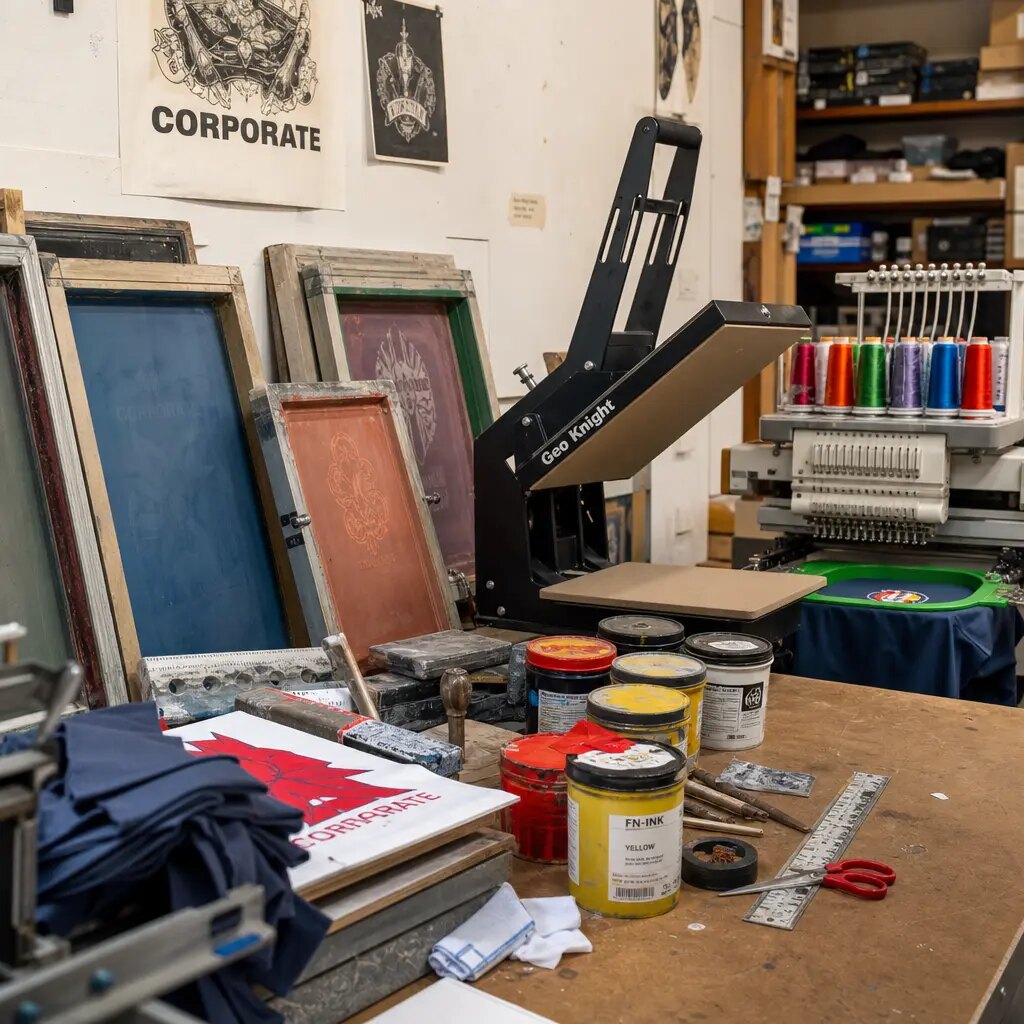
The print method should be selected before the art file is finalized, because it changes both the quote and the acceptable artwork detail. Screen print is the most common option for bulk tote orders with simple logos. It is reliable, cost-effective, and strong for one or two spot colors. Water-based or discharge-style printing can give a softer hand feel, but the artwork and fabric compatibility need to be checked carefully. If the buyer wants a premium branding detail rather than large-format printing, a woven label, stitched patch, or small embroidery may be the better route.
The practical mistake is to send one logo file and let suppliers decide the decoration method by themselves. That usually leads to mismatched quotes and inconsistent samples. A buyer should specify the print area, Pantone targets if relevant, number of print locations, and the acceptable print feel. For corporate gifting, the logo should usually stay clean, centered, and durable. A tote that looks good on day one but cracks after one fold is not a gift-grade product, even if the unit price looks attractive.
- Screen print suits long runs and simple logos with controlled color count.
- Woven labels or stitched patches work well when the brand wants a quieter, retail-style presentation.
- Ask how the ink or thread affects hand feel, because that changes the unboxing impression.
Build the MOQ and Pricing Ladder Into the RFQ
MOQ logic matters because the cheapest quote at one quantity is often not the best quote at the quantity you will actually buy. Suppliers price tote bags around fabric consumption, cutting efficiency, print setup, labor, and packing time. A factory may offer a low unit price at 10,000 pieces but a much less efficient price at 1,000 pieces because setup costs are spread over fewer units. Conversely, a small run may work if the supplier already has the right fabric in stock or if the design uses a standard bag body with custom branding only.
The best RFQ asks for tiered pricing, not a single number. Request breakpoints such as 500, 1,000, 3,000, and 5,000 pieces, then compare whether the unit cost drops in a predictable way. That tells you whether the supplier is giving a real factory price or simply hiding margin inside one quantity bucket. For imported corporate gifting programs, it also helps to know whether the supplier can keep the same fabric and print standard on the reorder, because a low first quote is not useful if the second batch changes cloth or shade.
- Ask for tiered pricing with clear breakpoints, not one flat unit price.
- Separate the quote for blank bags, printed bags, and packed gift-ready bags.
- Check whether the MOQ changes by decoration method, colorway, or packaging style.
What a Supplier Quote Must Show Line by Line
A useful factory quote is a working document, not a sales message. It should identify the fabric type, GSM, finished size, handle spec, print method, artwork count, packing method, carton size, lead time, and validity period. If any of those lines are missing, the buyer cannot compare suppliers on the same basis. The most common procurement mistake is comparing a quote that includes simple flat packing against another quote that includes individual polybagging or branded belly bands. That is not a fair comparison, and it usually leads to surprise costs after sample approval.
The quote should also show what is not included. For example, if freight, customs clearance, testing, or design adjustments are excluded, the buyer needs to know before approval. A strong supplier will identify accessory costs such as woven labels, hangtags, extra stitching, or multiple print locations. For a corporate gifting order, quote clarity is more valuable than a vague discount. It lets procurement decide whether to simplify the spec, adjust the delivery timeline, or shift packaging responsibility to a downstream assembler.
- Require line items for fabric, printing, labeling, packing, and carton specification.
- Insist on lead time, quote validity, and re-order price logic.
- Verify the included shipment basis: EXW, FOB, or another Incoterm.
Sample Approval: Measure, Test, and Sign Off on the Right Details
A sample is not just a visual reference. It is the tool that locks the standard before bulk cutting begins. For organic cotton totes, the pre-production sample should be checked for size, stitch quality, handle length, logo placement, print saturation, seam alignment, and overall shape when empty and lightly loaded. If the tote is part of a corporate gift set, the sample should also be checked inside the final packaging format, because a bag that folds well by itself may not sit correctly in a box or presentation sleeve.
The cleanest approval process is to create a sealed golden sample after the buyer signs off on the pre-production sample. That sample should be held by both sides as the reference for size, color, print position, and packing standard. If there is a later dispute, the golden sample is the only practical benchmark. Buyers should avoid approving from photos alone. Photos miss stitch tension, fabric weight, print texture, and the way the bag collapses or stands when filled.
- Measure the sample against a written size sheet, not against memory.
- Load-test the handles with a realistic internal weight before sign-off.
- Approve the sample in the final packing format, not only as a loose tote.
Packing Makes the Gifting Impression; It Also Changes Cost
Packing is not a minor detail in a gifting order. It changes labor, carton size, freight density, and the final presentation. A flat-packed tote is efficient and usually the lowest-cost option, but it may need ironing or reshaping if the fabric creases heavily. An individual polybag can protect the tote and keep each piece clean, but it adds plastic, labor, and carton volume. For more premium corporate programs, a tissue wrap or belly band may be worth the added cost because the tote arrives in a better visual state and is easier to distribute as a gift.
The buyer should define how the tote will be handled after production. If the bags are being inserted into gift boxes, the supplier should pack them to the exact fold standard needed by the kitting team. If they are being shipped directly to offices or event venues, carton strength and moisture protection matter more. Ask for the inner pack count, outer carton count, carton dimensions, and carton marks. Those details affect both warehouse handling and landed cost.
- Flat pack reduces freight but may require stricter folding control.
- Polybag or tissue wrap improves presentation but raises labor and material cost.
- Match packing style to the downstream kitting or distribution plan.
Lead Time Risks That Break Q4 and Event Orders
Lead time on tote orders is usually more fragile than buyers expect. The calendar impact comes from fabric sourcing, printing queue position, sample approval delays, and packing capacity. Even when the supplier says a standard lead time is available, peak gifting season can push out production if fabric shade or finishing is not already on hand. A buyer planning a corporate gifting campaign should work backward from the event date and treat the approval date as the real start of production, not the date the RFQ was sent.
The best way to reduce schedule risk is to shorten decision loops. Close artwork early, fix the packing spec before sampling, and avoid late changes to handle length or logo placement. If the order is time-sensitive, ask the supplier which part of the process is the bottleneck: fabric lead time, print capacity, or packing labor. That answer matters more than a generic promise. A factory that can sew quickly but waits for organic fabric is still a risk, especially for seasonal gifting, conference launches, or year-end orders.
- Build buffer time for artwork approval, sample corrections, and carton confirmation.
- Ask where the schedule bottleneck is before you commit to a delivery date.
- Treat the approved sample date as the production gate, not the RFQ date.
Land Cost Comparison and the Buying Workflow That Prevents Surprises
The cheapest tote quote is often not the cheapest landed solution. Procurement should compare the full landed cost: unit price, print setup, packing, carton dimensions, inland transport, ocean or air freight, duties, and any destination handling fees. A slightly higher factory price can still win if the supplier packs more efficiently or uses a carton size that loads better. Likewise, a lower ex-works price can become expensive if the bag needs rework after sample approval or if the carton count is inconsistent and causes warehouse delays.
A practical buying workflow keeps the decision sequence tight: define the spec, gather tiered quotes, sample the leading options, lock the golden sample, confirm packing, and then release bulk production. That workflow protects both price and quality. It also gives the buyer leverage to compare suppliers on real factors instead of marketing language. For organic cotton tote programs, the goal is not to find the lowest quote on paper. It is to buy a bag that arrives on time, packs cleanly, and reflects the brand without forcing the team to manage production problems after the order is already placed.
- Compare landed cost, not only factory unit price.
- Use a controlled sample approval workflow before releasing bulk.
- Keep the spec stable once pricing is confirmed so rework does not erase savings.
Specification comparison for buyers
| Spec decision | Recommended option | When it fits | Buyer risk to check |
|---|---|---|---|
| Sourcing route | Direct factory with cut-and-sew capability | Best when you need custom size, handle construction, and repeat orders with controlled QC | Confirm whether the factory actually controls sewing, printing, and packing instead of outsourcing each step |
| Sourcing route | Trading company or broker | Useful when you need fast quote collection across several plants or a mixed product program | Watch for markup opacity, vague carton data, and inconsistent sample ownership |
| Fabric weight | 200 to 240 gsm organic cotton canvas or heavy drill | Best for corporate gifting where the tote must feel substantial and hold laptops, catalogs, or gift sets | Heavier fabric raises cost and can shrink more if prewashing is not controlled |
| Fabric weight | 170 to 190 gsm organic cotton twill or lighter canvas | Fits large mailer programs, event giveaways, or orders where unit price matters more than premium hand feel | Thin fabric can show logo strike-through and may need reinforcement at stress points |
| Print method | 1 to 2 color screen print | Strong choice for clean logos, long runs, and stable artwork with simple spot colors | Check curing, ink hand feel, and whether the print area can survive seam distortion |
| Print method | Woven label, stitched patch, or small embroidery | Useful for brand programs that want a premium gift look without full-coverage printing | Small details can add labor cost and slow production if placement is not locked early |
| Packing style | Flat packed with size-controlled bundle and carton count per case | Best for warehouse efficiency and bulk gifting kits | Verify fold standard, bag count per inner pack, and compression marks on printed surfaces |
| Approval route | Pre-production sample plus sealed golden sample | Best for orders above a single event run or when multiple stakeholders will inspect the goods | Do not rely on a photo approval alone; photo approval misses handle length, stitch density, and hand feel |
Buyer checklist before sampling
- Confirm the final tote size, gusset, handle length, and usable print area before asking for price.
- Choose fabric weight in GSM and decide whether the tote needs a soft hand feel or a structured carry profile.
- Lock the logo method, number of colors, print size, and whether a woven label or side label is required.
- State target order quantity, reorder expectation, and whether pricing must be tiered by breakpoints.
- Specify packing: flat pack, individual polybag, tissue wrap, belly band, or gift-box insert if required.
- Ask for carton data, net weight, gross weight, and carton dimensions so freight can be estimated correctly.
- Request a pre-production sample, measurement sheet, and sealed approved sample before bulk cutting starts.
- Set acceptance tolerances for size, stitch quality, print registration, and shade variation in writing.
Factory quote questions to send
- What fabric type, GSM, and finished bag dimensions are included in the quote?
- How many print colors are included, and what is the setup charge for each method?
- What is the MOQ per artwork version, and how does price change at higher quantities?
- Does the quote include handles, reinforced stitching, label application, and washing or shrinkage control if applicable?
- What packing method is included, and how many pieces are packed per inner pack and per carton?
- What is the production lead time after sample approval, and what schedule risk exists in peak season?
- Can you share carton size, gross weight, and estimated loading quantity for sea or air freight planning?
- Which QC points are checked before shipment, and can you provide photos or an inspection report?
Quality-control points to confirm
- Fabric GSM must stay within an agreed tolerance, and the hand feel should match the approved sample, not just the spec sheet.
- Finished size should stay within an agreed tolerance for body width, height, and gusset after stitching and pressing.
- Handle stitch length, bar tack count, and seam reinforcement must be consistent on both sides of the tote.
- Print registration should sit inside the approved placement window, with no visible smearing, pinholes, or color bleed.
- Thread color, label placement, and side seam alignment should match the golden sample or approved artwork sheet.
- Carton count, inner pack count, and outer marks must match the packing list exactly to avoid receiving errors.
- Random bag pull tests should confirm that handles and side seams withstand normal gifting and carry use.
- Bulk shade variation should be checked against the approved shade band so cartons do not mix visibly different lots.