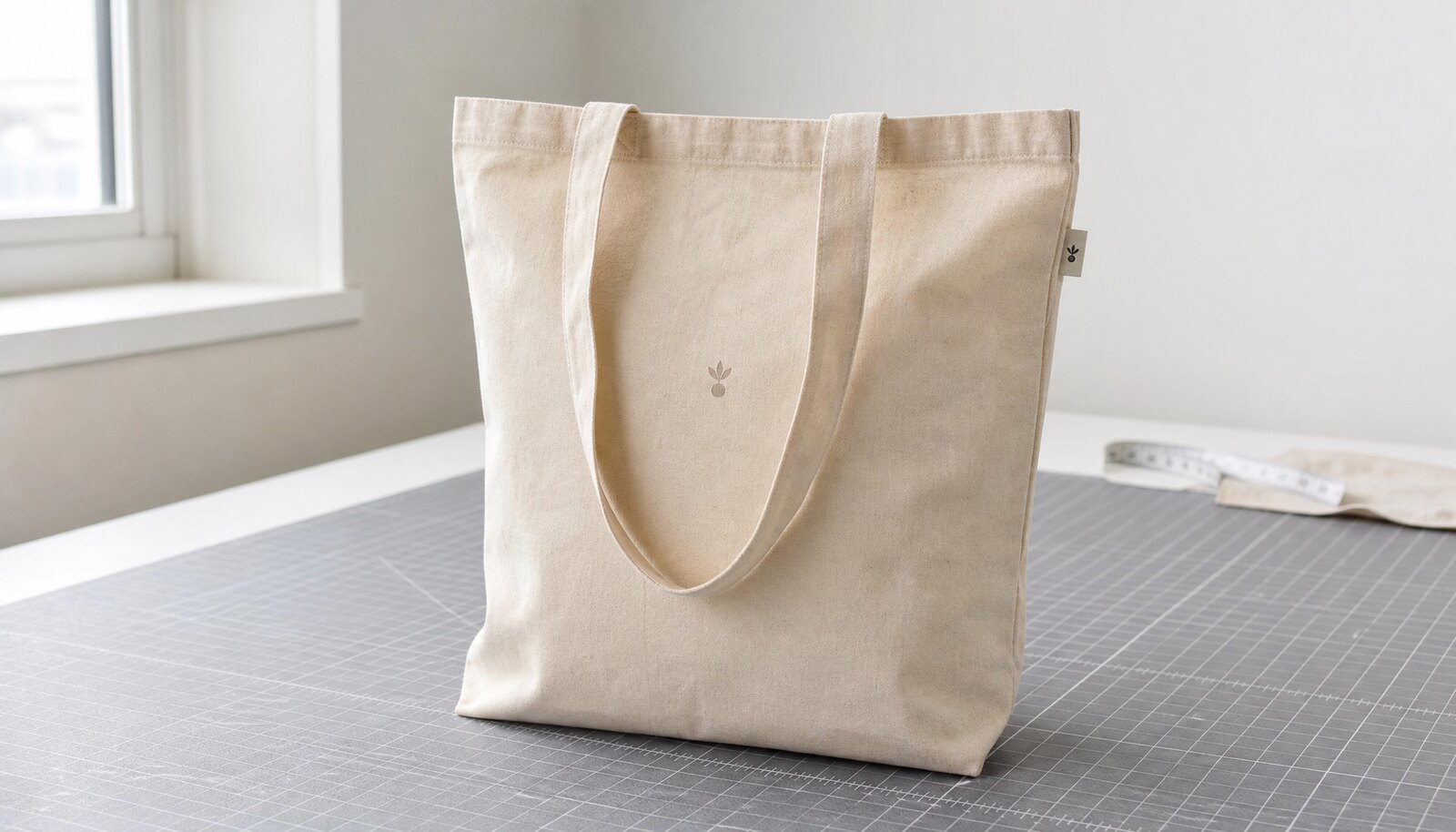
Why Gift Shops Need a Different Tote Spec
A custom organic cotton tote for a gift shop is not the same thing as a promotional tote for an event giveaway. The shopper sees it at arm's length, compares it against other souvenirs, and often touches the bag before buying. That makes print sharpness, fabric hand feel, folding quality, and seam finish part of the retail offer, not just the manufacturing detail.
Gift shops also buy against a different margin structure. A tote that works at a trade show may still fail in retail because it looks too thin, photographs poorly on a shelf, or needs too much labor to receive, refold, and ticket. Procurement should treat the tote like a shelf item with a spec, a selling position, and a reorder plan, not just a low-cost blank product with a logo.
- Define the tote as a retail SKU, a seasonal souvenir, or a repeat-order core item before asking for prices.
- Set the minimum visual standard for the front panel, handle shape, and folded presentation at receiving.
- Match the bag quality to the shelf price, not just to the cost target.
Build the Spec Sheet Before You Request Quotes
Most quote problems start with an incomplete brief. If the supplier only receives a rough size and a logo file, they will fill in the rest with standard factory assumptions. That is how a buyer ends up comparing three quotes for three different products. For custom organic cotton totes, the spec sheet should control the variables that change cost and quality: finished dimensions, fabric weight, weave, handle construction, print method, label type, fold style, carton pack, and approval steps.
The practical way to write the spec is to separate what must not change from what can flex. Size, approved artwork, fabric weight, and construction should be locked. Color nuance, slub character, or exact natural-fiber variation may be acceptable if the store is selling a more organic-looking product. If the supplier cannot quote from the same sheet, the quotes are not comparable and the cheapest number is not meaningful.
- Include a drawing with finished width, height, gusset, handle drop, and seam allowance.
- State whether the tote must stand open, fold flat, or merchandize upright on a hook.
- Identify the exact claim language you want on packaging or labels so the organic position stays compliant.
Verify the Organic Claim and the Traceability Trail
Organic cotton is not just a marketing adjective. If you want to sell the bag as organic, ask the supplier for the chain of custody that supports the claim. In practice, that means more than a verbal assurance. You should ask which entity holds the relevant scope certificate, whether the product is covered by the certificate, and whether transaction certificates will be issued for the shipment or the lot.
This matters because the same factory can sell both certified and non-certified goods. Without lot-level traceability, an organic claim can become a paperwork problem later, especially if the bag is going through a retail chain, a museum store, or a gift shop program with compliance review. If the supplier cannot produce the documentation for the actual order, treat the bag as conventional cotton and revise the claim language before purchase.
- Ask for the certificate number, issuing body, and scope covered by the certificate.
- Request lot-level traceability from yarn or fabric to finished goods, not just a generic certificate PDF.
- Check that invoices, packing lists, and carton labels can reference the same lot or shipment identity.
Compare Supplier Routes on Control, Not Just Unit Price
Gift shop buyers often compare a direct factory quote, a trading company quote, and a local decorator quote as if they were interchangeable. They are not. A direct factory can offer tighter control over cutting, sewing, and packing if those processes are actually in-house. A trading company can help when you need broader product coordination, but the buyer must know who is responsible for inspection and rework. A local decorator can shorten the lead time on small runs, yet still depend on imported blank bags, which changes both cost and traceability.
The question to ask is not which route is cheapest at first glance. It is which route gives you the best combination of quality control, documentation, and landed-cost predictability. On repeat retail programs, the lowest quote often loses once you add sample fees, screen charges, packing changes, freight by cube, or a second inspection because the first shipment did not meet the shop's receiving rules.
- Request an itemized quote with material, labor, setup, packing, inspection, and shipping-related charges separated.
- Ask who owns the defect correction cost if the first bulk output misses the approved sample.
- Do not compare a direct-factory quote against a trading-company quote until both include the same inspection scope and packing format.
Fabric Weight, Hand Feel, and the Cost of a Wrong GSM
GSM shapes both quality perception and freight cost. In most gift-shop programs, 140-180 GSM is the practical range for standard retail totes, while 180-220 GSM makes sense when the bag is meant to feel premium, hold shape, or carry heavier items like books or bottles. The key is not simply picking a heavier fabric. It is choosing a weight that matches the retail price point, shelf presentation, and expected carry load.
A fabric that is too light can look cheap, show through more easily, and feel unstable in the hand. A fabric that is too heavy can become stiff, costly to ship, and awkward to fold for receiving. Buyers should also ask for measured consistency across the roll and between panels, because a tote that measures correctly on paper can still look uneven if one panel is noticeably thinner or softer than the other.
- Request a cut swatch measurement for GSM rather than relying on a broad mill claim.
- Check whether the bag keeps its shape when empty and after a light retail load.
- Look for shade variation, pinholes, uneven slub density, or texture drift between panels.
Construction Details That Keep a Tote on the Shelf
Gift shops notice construction faster than many factories expect. The buyer sees whether the top hem lies flat, whether the handles hang evenly, and whether the seams look clean at the corners. If the tote is supposed to feel premium, the bag needs a folded top edge, balanced handle placement, and reinforcement where the stress is highest. Cosmetic stitching is not enough if the load-bearing points are weak.
This is where a procurement spec should be specific. Call out seam type, reinforcement style, handle width, handle attachment method, and whether bartacks or a stitched box are required. If you expect the bag to carry books, a travel bottle, or multiple small gifts, define that use case explicitly so the factory can build to the intended load rather than to a light promotional standard.
- Require a reinforced top hem and a defined reinforcement pattern at the handle joins.
- Inspect symmetry: handles should be centered, level, and attached at the same height on both sides.
- Reject bags with loose thread bundles, open seam ends, or visible needle damage in the display areas.
Decoration Quality: What to Lock Down Before Printing
Print quality is one of the fastest ways to lose margin on a tote order. Screen print is usually the right choice for simple logos, bold artwork, and repeat runs because it tends to give good opacity on natural cotton and predictable pricing. Digital print is useful for short runs or more complex artwork, but it depends more heavily on fabric preparation and color control. The method matters less than whether the supplier can hold the approved color and placement over the whole order.
Buyers should define the decoration as a measured spec, not a visual preference. State the print size, exact placement from the top edge or side seam, allowed registration tolerance, and whether the print can show through the inside of the bag. If the artwork has solid fills, gradients, or delicate lines, ask for a real-fabric proof and not only a screen proof on paper. That saves you from a sample that looks right on a monitor but fails on cloth.
- Approve the print on the actual fabric type, not just on digital artwork.
- Set an explicit color reference, such as a Pantone callout or a matched physical standard.
- Ask for wash and rub performance data on the decoration if the tote is meant for repeat use.
QC Limits to Put in the PO
A purchase order without measurable acceptance limits leaves too much room for interpretation. For custom organic cotton totes, the buyer should write down which defects are zero tolerance, which are major, and which are minor. That should cover size variation, print placement, seam integrity, label accuracy, stain control, odor, packing accuracy, and carton marks. If the supplier knows the limit before production begins, there is less room for argument when the final inspection happens.
The same logic applies to testing. If you need shrinkage, rubbing, or wash performance to stay within a target, name the test method and the threshold. A supplier that cannot meet the test should not discover that after a full order has been sewn. This is especially important for gift shops because the buyer is not just avoiding returns; they are protecting the visual standard of the assortment wall.
- Use AQL 2.5 major and 4.0 minor unless your internal standard is stricter.
- Write the shrinkage, colorfastness, and seam performance targets into the PO or attached spec sheet.
- Treat missing labels, wrong artwork, wrong counts, and contaminated cartons as shipment-blocking defects.
Packing, Cartons, and Receiving Labor
Packing quality affects cost even when the bags themselves are correct. Gift shops and their warehouses want bags that arrive folded the same way, packed in consistent counts, and labeled in a way that makes receiving fast. If the bags are overcompressed, the print can crease permanently. If the fold is inconsistent, staff spend time refolding before the product reaches the shelf. That hidden labor is real margin loss.
This is why packing needs to be part of the QC checklist. Confirm the fold method, inner pack count, carton quantity, carton dimensions, and carton gross weight before production starts. If barcode labels are used, verify their placement and scanability. If polybags are used, make sure they are justified by the channel, because unnecessary plastic can create both cost and merchandising objections.
- Require a packing sample that shows the exact fold and label placement.
- Check carton marks against the commercial invoice and packing list before shipment.
- Validate a representative carton drop or transit test if the shipment will move through a warehouse or cross-dock.
Lead Time, MOQ, and Reorder Planning for Seasonal Retail
Gift shop buying is driven by seasonality, not just production capacity. A tote that looks easy to produce can still miss the selling window if artwork approval slips, organic fabric is booked late, or print setup has to be repeated. A good supplier quote breaks lead time into stages: sample, material booking, production, inspection, and shipping. That lets you see where the real risk sits and whether the order can still land before the display reset or seasonal event.
MOQ should be viewed in the context of assortment planning. A core natural tote with one print may justify a bigger MOQ because you can reorder it. A seasonal design for a museum shop or tourist season may need a lower MOQ but a tighter approval schedule. The buying decision is not simply to minimize unit cost. It is to keep enough margin and flexibility so the tote sells through without overcommitting cash or warehouse space.
- Ask for a stage-by-stage schedule instead of a single total lead time number.
- Compare landed cost, not ex-works price alone, because packing and freight can change materially with bag size and carton cube.
- Use a reorderable core style for the base assortment and reserve complex graphics for smaller seasonal runs.
Specification comparison for buyers
| Decision point | Recommended option | Evidence to request | Buyer risk to check |
|---|---|---|---|
| Supplier route | Direct factory with in-house cutting, printing, sewing, and packing | Factory process map, named QC owner, sample-to-bulk approval trail | Outsourced steps that were not disclosed in the quote |
| Supplier route | Trading company with a named, audited factory | Named factory address, factory audit summary, who owns rework and inspection costs | Responsibility gaps when defects appear late |
| Organic claim | Only use the organic claim when the chain of custody is documented | Scope certificate, transaction certificate, lot-linked invoice references | Generic organic wording without traceability documents |
| Fabric weight | 140-180 GSM for standard retail totes | Cut swatch GSM, roll-end measurement, finished size tolerance | Thin hand feel, weak shelf presence, uneven roll-to-roll consistency |
| Fabric weight | 180-220 GSM for premium or repeat-use gift-shop programs | Shrinkage data after wash, hand-feel approval, freight cube estimate | Stiff bag, higher landed cost, slower folding at receiving |
| Decoration method | Screen print for simple logos and repeat orders | Ink type, cure method, registration tolerance, crocking test results | Cracking, poor opacity, off-register artwork |
| Decoration method | Digital print for short runs or complex art | Actual-fabric proof, color reference, repeatability sample, wash test | Color drift between samples and bulk production |
| Construction | Reinforced handles, bartacks, and a folded top hem | Stitch count, seam construction drawing, static-load or pull-test result | Handles that look reinforced but fail under load |
| Packing | Flat pack with a fixed fold spec and carton marks that match the PO | Fold sample, carton packing plan, barcode scan test, carton drop validation | Receiving delays, crushed prints, count mismatches |
Buyer checklist before sampling
- Write a one-page spec sheet before asking for pricing. Include finished size, fabric weight, construction, logo placement, label type, and packing format.
- Decide whether the tote is a core reorder item or a seasonal gift-shop SKU. That decision changes your acceptable lead time, MOQ, and decoration complexity.
- Require proof of organic traceability if the product will be marketed as organic. Ask for the certificate chain, not just a supplier statement.
- Set the acceptable tolerance for finished dimensions, handle length, and print position before sampling starts.
- Fix the inspection standard in the PO. If you do not write AQL, defect categories, and test methods into the order, the factory will use its own internal standard.
- Request a pre-production sample and a top-of-production sample for every new design or material change.
- Define fabric shrinkage, colorfastness, seam strength, and packing checks as pass/fail items, not as general quality preferences.
- Ask for carton size, carton gross weight, and fold method so warehouse receiving does not become a hidden labor cost.
- Compare quotes on the same basis: same GSM, same artwork method, same packaging, same certifications, same inspection scope.
- Hold back approval until the supplier can restate the spec correctly in writing. If they summarize it wrong, the bulk order will probably drift.
Factory quote questions to send
- What exact fabric composition and GSM are you quoting, and is the weight taken from the finished cloth or a greige estimate?
- Can you provide the organic traceability documents for the yarn, fabric, or finished goods, including scope certificate and transaction certificate if applicable?
- Which production steps are done in-house, and which steps are outsourced for cutting, printing, sewing, or packing?
- What is the finished size, handle length, seam allowance, and allowed tolerance you will use in sampling and bulk production?
- Which decoration method is included in the price, how many colors are covered, and what setup charges or screen charges apply?
- What AQL level or internal defect standard do you inspect to before shipment, and can you share your defect classifications?
- What are the shrinkage, colorfastness, and seam-strength test methods you use, and can you share recent results on the same fabric type?
- How are the bags folded, packed, and labeled, and how many pieces per inner pack and outer carton are included in the quote?
- Can you confirm the carton size, gross weight, and whether the packing plan passes a carton-drop or transit test before shipment?
- What is the complete timeline from artwork approval to ex-factory date, broken into sample, material booking, production, inspection, and packing?
Quality-control points to confirm
- Use a written sampling standard such as ISO 2859-1 or ANSI/ASQ Z1.4 if your company does not already have a house standard. A common procurement baseline is AQL 2.5 for major defects and 4.0 for minor defects.
- Set finished-size tolerance in the spec sheet. A practical retail starting point is within +/- 0.5 cm for smaller bags and +/- 1.0 cm for larger totes, with handle length and gusset dimensions called out separately.
- Require fabric shrinkage to stay at or below 5% in both length and width after the stated wash test method, usually ISO 6330 or AATCC 135, unless your use case needs tighter limits.
- Set colorfastness targets by method, not by opinion. For printed totes, ask for wash fastness and crocking results on the actual decoration, with dry rubbing commonly targeted at 4 or better and wet rubbing at 3 or better on the standard scale used by the lab.
- Check print registration, ink opacity, and cure quality on a real sample from the bulk fabric. Reject visible smearing, double hits, pinholes, edge breakup, or ink transfer to the inside of the bag.
- Test handle strength with a simple static-load or pull test that reflects how the tote will be used in retail. The bag should not show seam opening, bartack failure, or obvious deformation at the handle join.
- Inspect stitch quality for skipped stitches, loose thread nests, broken seams, and weak reinforcements at the top hem and handle anchor points. Stress locations deserve the strictest review.
- Reject obvious contamination: stains, oil marks, odor, needle damage, torn fibers, or shade variation that would be noticeable on a gift-shop display wall.
- Verify carton count, carton marks, and barcode labels against the packing list and commercial invoice before shipment. Piece count errors are a receiving issue, not a minor defect.
- Validate packed cartons with a drop or transit check on representative units before the order ships. If the bag structure collapses, creases permanently, or the fold shifts, the packing method needs revision.