Why MOQ pressure is different for natural grocers
Natural grocers often buy custom organic cotton totes in a pattern that does not match factory economics. One store may need 300 pieces for a local opening, another region may need 800 pieces for a member campaign, and the central team may want a reusable checkout tote that can repeat all year. The supplier, however, is planning fabric purchase, cutting efficiency, print setup, sewing flow, and packing labor. MOQ is where those two realities meet.
The useful negotiation question is not simply, "Can you lower the MOQ?" A better question is, "Which parts of the program can we standardize so lower releases still make production sense?" Organic cotton fabric may carry its own minimum. Each logo may need screens. Split packing may add labor. A gusseted grocery tote takes more sewing time than a flat promotional bag. When these cost drivers are separated, the buyer can negotiate with precision.
For natural grocers, the goal is usually not the absolute cheapest tote. The goal is a credible reusable bag with a workable release plan, clean branding, predictable documentation, and no surprise charges after the quote is approved. A low unit price is weak value if the fabric is lighter than expected, the handles feel short, or cartons arrive with mixed store designs that receiving teams cannot process.
- Break MOQ into fabric, print, sewing, and packing drivers.
- Expect logo variation to affect setup cost even when the bag body stays the same.
- Treat blanket quantity, release size, and packing rules as commercial terms, not afterthoughts.
- Do not compare MOQs until fabric weight, dimensions, print method, and packing format are normalized.
Build the RFQ around a stable tote platform
MOQ discussions move faster when the tote is already defined. A practical grocery tote specification often starts with natural or off-white organic cotton canvas in the 8 oz to 10 oz range, roughly 270-340 GSM finished weight. For carrying produce, boxed items, jars, and checkout purchases, a bottom gusset or side-and-bottom gusset is usually more useful than a flat tote. Shoulder-length handles with reinforced attachment points are also important because comfort affects whether customers actually reuse the bag.
The RFQ should state the intended use. A bag sold at checkout needs a different feel than a one-day event giveaway. A tote expected to carry glass jars needs stronger seams and handles than a light brochure tote. If the supplier does not understand the use case, they may quote a bag that looks acceptable in a spreadsheet but underperforms in store.
The strongest multi-store approach is a master tote platform: one body size, one fabric, one gusset, one handle, one print location, and controlled logo variation. This lets regional teams keep local branding while procurement protects buying leverage. It also helps the factory repeat cutting and sewing without treating each logo as a separate product development project.
- State width, height, gusset depth, handle length, and handle drop.
- Define whether the tote is for giveaway, retail sale, loyalty program, or repeated grocery use.
- Use finished GSM and oz together, not a loose phrase such as "heavy cotton."
- Keep the master body spec fixed when store logos vary.
Use fabric programs as the first MOQ lever
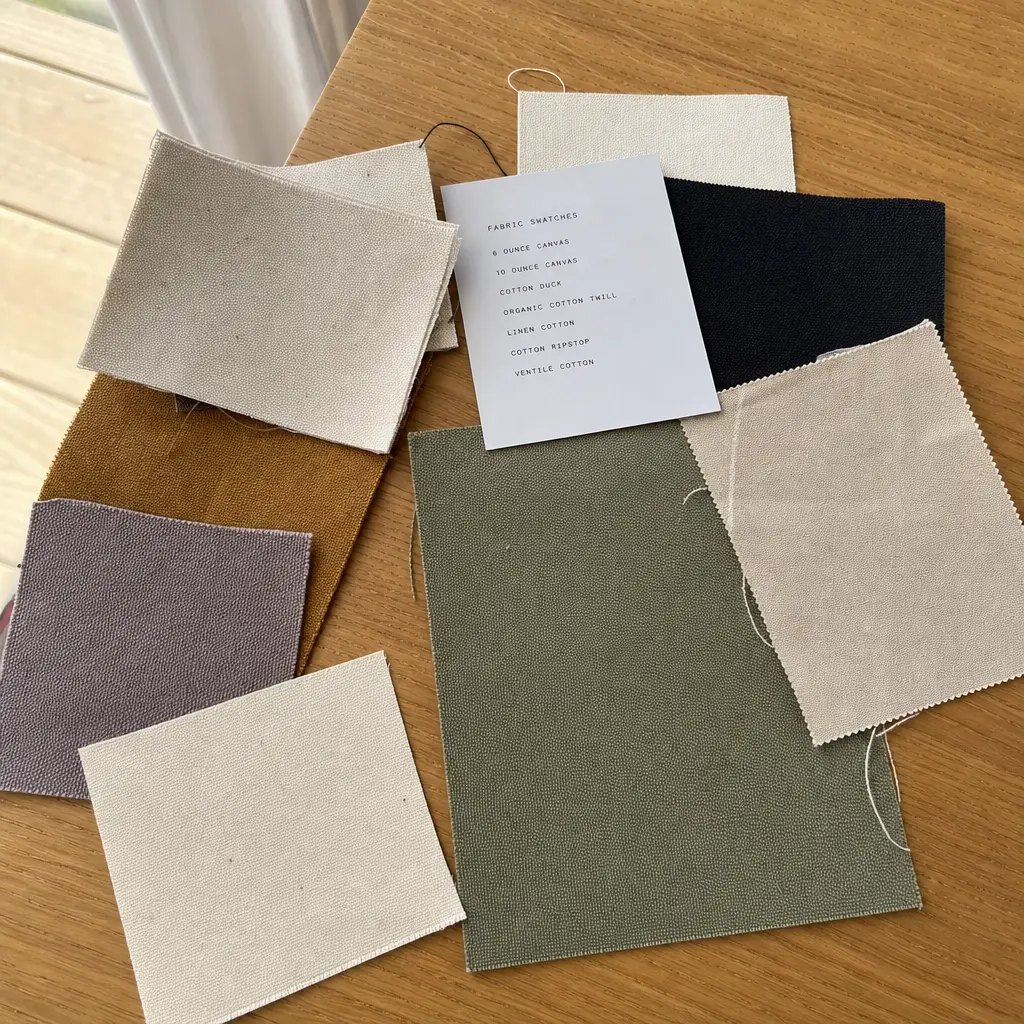
Organic cotton fabric is often the largest MOQ driver. If the supplier can use stock natural organic canvas from an existing program, the tote MOQ may be far more flexible. If the buyer asks for a custom dyed body color, unusual width, special weave, or uncommon GSM, the supplier may need to meet a mill or dye-house minimum before bag production even begins.
Natural grocers often have an advantage here because natural, unbleached, and muted stock tones usually fit the brand environment. A standard natural body with custom print can look appropriate while avoiding the cost and timing of custom dyeing. If shade consistency matters, ask how much natural variation is expected and whether production lots can be packed separately.
Organic documentation must also be clarified early. Some buyers need certification documents tied to the finished product or transaction chain. Others need organic cotton content with a credible fabric paper trail. These are different requirements, and suppliers may price them differently. Vague wording such as "organic tote" creates quote comparison problems later.
Weight basis is another common source of misunderstanding. A quoted "10 oz" fabric may refer to different measurement assumptions. Procurement should request both oz and GSM, identify the basis as finished fabric, and define tolerance. That makes it harder for a lighter promotional cloth to be quoted as if it were a medium-duty grocery canvas.
- Use stock natural organic canvas when lower MOQ matters.
- Avoid custom body dye unless brand requirements justify higher minimums and lab dip time.
- Ask what documentation covers: fiber, fabric, transaction, or finished bag.
- Specify finished fabric weight and tolerance before final price comparison.
Control print setup before it controls the budget
For most natural grocer tote programs, one- or two-color screen printing is the safest default. It is widely understood, usually cost-effective at moderate volume, and works well for simple logos on medium-weight cotton canvas. Water-based inks can support a softer hand feel, but artwork still needs to respect the texture of the fabric.
Many print disputes start with artwork that was designed for a smooth surface. Fine reverse type, delicate lines, dense halftones, and large dark ink blocks may not behave well on natural canvas. Before asking for final pricing, buyers should ask the printer for minimum line thickness, minimum readable text size, maximum recommended coverage, and whether a strike-off is needed.
Digital or transfer methods can help when artwork has many colors or quantities are very small, but they are not automatically better. They may change hand feel, durability, and cost structure. For reusable grocery totes, the print should look credible after handling, folding, and daily use.
When multiple store logos are involved, keep the print size and location the same. If only the local store name changes, ask whether any setup can be shared. Even when screens are separate, listing setup charges openly helps procurement see the true cost of design variation.
- Default to simple 1-2 color screen print unless artwork requires another method.
- Approve print on the actual canvas, not only a digital mockup.
- Separate screen charges from the bag unit price.
- Standardize print location across store versions.
Negotiate MOQ with structures factories can accept
Factories rarely reduce MOQ just because a buyer asks. They reduce it when the revised structure preserves efficiency. A blanket order is one of the strongest tools: the buyer commits to a total annual or seasonal quantity, and the supplier releases smaller quantities by schedule. This can work well for natural grocers with predictable store replenishment, regional campaigns, or phased openings.
The terms need to be specific. State the total blanket quantity, minimum release quantity, release frequency, storage responsibility, price validity, and what happens if forecasted releases change. A blanket order without these details can create new fees for holding fabric, extra packing, or repeated setup.
Another route is separating first-order MOQ from reorder MOQ. The opening order may need to cover sampling, screen setup, and pattern confirmation. Once the body spec and print process are approved, smaller repeat releases may be more realistic. Put that repeat MOQ in the quote, not only in email conversation.
Price ladders are also useful. Ask for pricing at several quantity points such as 500, 1,000, 3,000, and 5,000 pieces. If the price drops sharply after the first tier, setup is likely a major driver. If the drop is small, material and sewing may be the larger constraint. That information helps the buyer decide whether to consolidate demand or pay certain fixed costs openly.
- Use blanket quantity with scheduled call-offs for fragmented store demand.
- Document minimum release quantity, holding fees, and price validity.
- Ask for first-order and reorder MOQ separately.
- Request price ladders to reveal where the real constraint sits.
Compare quotes beyond the unit price
A low tote quote can hide a weaker specification. Before comparing suppliers, confirm that each offer uses the same finished GSM, bag size, gusset, handle drop, reinforcement, print method, and packing format. If one quote is much lower, check whether the supplier has assumed lighter cloth, shorter handles, no gusset, fewer print colors, or bulk cartons without design separation.
One-time charges should be separated from recurring unit cost. Screens, artwork setup, printed samples, revised samples, barcode labels, and special carton marks may not belong inside the unit price. If they are hidden, the quote may look simple but become hard to manage across store versions.
Freight and receiving also matter. A tote packed too tightly may arrive creased or distorted. A carton that is too heavy may be awkward for store or DC handling. A poorly marked mixed-design carton can cost more in internal labor than the factory saved by packing it quickly. Ask for carton dimensions, gross weight, pieces per carton, and labeling format before approving the program.
For B2B comparison, build a landed-use view: unit price, fixed charges, expected freight impact, receiving complexity, documentation fit, and quality risk. The quote that looks slightly higher at FOB level may be the better commercial offer if it includes the real requirements.
- Normalize fabric, construction, print, and packing before judging price.
- Separate recurring cost from screens, samples, labels, and special packing.
- Review carton cube and gross weight for freight and handling impact.
- Check whether low pricing depends on omitted requirements.
Make sample approval measurable
A pre-production sample should test production risk, not only logo appearance. For organic cotton totes, the buyer should check fabric hand feel, gusset shape, handle comfort, handle drop, seam reinforcement, print placement, print opacity, and final packing assumptions. A digital layout is useful for artwork position, but it cannot prove how ink sits on canvas or how the bag behaves when filled.
Small custom runs leave little room for error. If a 500-piece local release uses the wrong handle length or print placement, the whole order may be compromised. Sample approval should therefore include measurable notes: approved dimensions, tolerance, artwork revision, print size, print distance from top edge, handle construction, and carton plan.
If the tote is intended for repeated grocery use, fill the sample with realistic items during review. This does not need to become a marketing claim or lab test. It simply confirms whether the gusset opens well, whether the handles feel proportionate, and whether stress points look appropriate for normal retail use.
Keep the approved sample record for repeat orders. Photos, measurements, fabric notes, and the signed sample version help future store designs follow the same standard without reopening every decision.
- Approve a physical sample in final fabric and final print method.
- Measure handle drop, not only total handle length.
- Tie approval to artwork revision, PO, and packing note.
- Keep sample records for repeat releases and new store logos.
Set QC thresholds for natural fabric
Natural organic cotton canvas has character. Small slubs, tiny specks, and slight shade variation may be normal, especially in natural or minimally processed fabric. Those traits should be distinguished from defects such as oil marks, storage stains, mildew odor, open seams, skipped stitches, off-center prints, and carton shortages.
Define acceptance standards before production. For grocery totes, the most visible complaint areas are usually print placement, fabric cleanliness, handle strength, seam quality, and design assortment accuracy. If the buyer does not define tolerances, the factory will inspect against its own internal standard, which may not match a retail checkout environment.
Measurement method should also be agreed. A gusseted tote can measure differently depending on where it is laid flat and pulled. Handle drop can be interpreted more than one way. Print placement should be measured from defined reference points such as top edge and side seam. Fabric weight checks should use the finished-weight basis agreed in the RFQ.
Food-adjacent retail programs may require additional production habits, including needle control, clean packing areas, and metal contamination precautions. The required level varies by buyer, but it should be included at quotation stage if it matters to the program.
- Define acceptable natural variation separately from rejectable defects.
- Set tolerances for dimensions, handle drop, and print placement.
- Inspect handle reinforcement and gusset seams, not only the front logo.
- Verify carton quantity, label accuracy, and design separation before shipment.
Treat packing as part of the MOQ deal
Packing can determine whether a low-MOQ multi-store program actually works. If five store logos are produced under one blanket order, cartons need clear item codes, design codes, PO or release numbers, quantities, batch references where needed, and required country-of-origin markings. Without that discipline, receiving teams may spend hours sorting what the factory saved minutes packing.
Inner packing should match downstream handling. Some distribution centers prefer bundles of 50 for counting. Others may accept 100-piece bundles. Some buyers may want reduced plastic, while others need protective inner bags to keep natural fabric clean during transit. The RFQ should state the preference instead of letting the factory choose by convenience.
Compression is worth controlling. Over-packed cartons can crease print areas, deform gussets, and increase carton damage. Under-filled cartons waste freight cube. Ask for the actual carton dimensions and gross weight based on the approved tote, not generic estimates from another bag.
If barcode labels, assortment labels, routing marks, or batch separation are required, include them in the quote and sample approval. On low-volume custom programs, missing labels can consume a disproportionate amount of internal labor after arrival.
- Mark cartons by design code, release number, quantity, and origin requirement.
- Choose bundle counts around receiving workflow.
- Request carton size, gross weight, and pieces per carton before approval.
- Write batch or shade separation into the packing instructions.
Plan lead time around approval gates
Custom organic cotton tote lead time depends on fabric readiness, artwork approval, sample approval, bulk production, packing, and transit. A supplier's production estimate may start only after approved artwork, approved sample, deposit, and available fabric. Buyers should ask which event starts the clock.
Natural grocer programs are often tied to fixed dates: store openings, Earth Day, loyalty drives, holiday promotions, or local events. Work backward from the in-store date and allow time for at least one sample correction. A rushed approval may save a week at the start and create a larger problem at receiving.
For multi-logo programs, confirm whether one late artwork file will hold the entire order. Sometimes the better structure is to release approved core designs first and keep late regional logos under the same blanket commitment. That protects launch timing while preserving the commercial value of consolidated demand.
Repeat timing should also be documented. If the supplier is holding screens, patterns, or reserved fabric for call-offs, state how long those assets remain valid and whether storage fees apply. Lower release quantities are easier to manage when the repeat process is predictable.
- Ask for lead time from approved artwork, approved sample, and confirmed fabric.
- Build the calendar backward from the required in-store date.
- Protect core designs from delays caused by late local artwork.
- Confirm how long screens, patterns, and fabric reservations are held.
Specification comparison for buyers
| Spec or term | Recommended buyer position | Typical MOQ or cost impact | Negotiation leverage |
|---|---|---|---|
| Fabric weight for repeat grocery use | 8 oz to 10 oz organic cotton canvas, about 270-340 GSM finished weight | Moving from 6 oz promotional cloth to 8-10 oz can raise unit cost and sometimes minimum fabric commitment, but reduces weak-hand-feel complaints | Use a supplier's stock organic canvas program and define finished GSM tolerance so factories quote the same cloth basis |
| Entry MOQ structure | Annual blanket quantity with scheduled call-offs instead of one small standalone PO | Can make 500-1,000 pc releases more realistic when total annual demand is 2,000-5,000+ pcs, depending on fabric and print setup | Commit to forecasted volume, fixed body spec, and release calendar; confirm storage or holding charges in writing |
| Body color | Natural or stock dyed color from an existing fabric program | Custom dyeing can push MOQ materially higher and may add lab dip, dye lot, and shade-control cost | Keep the body fabric standard and use print or label details for local branding |
| Print method | 1-2 color water-based screen print for most store logos | Each artwork/color may add screen charges; many small logos can cost more through setup than through sewing | Standardize print size and location, then ask for setup charges separate from the bag price |
| Construction | Bottom gusset or side-and-bottom gusset with cross-stitched handles | Gussets and reinforced handles cost more than flat promo totes but improve grocery function and perceived value | Lock one construction across stores so cutting, sewing, and packing stay repeatable |
| Multi-store design plan | One master bag body with logo-only variation | Multiple logos may still trigger separate screen and packing fees, but avoids separate fabric and sewing minimums | Group designs under one master specification and one production window where possible |
| Packing format | Flat packed in agreed bundle counts, cartons marked by design code and release | Split packing can add labor fees; poor carton sizing can increase freight or receiving cost | Request carton dimensions, gross weight, pieces per carton, and label layout before bulk approval |
| Sample approval | Physical pre-production sample in final fabric, final print method, final handle, and final gusset | Adds time and sample cost, but prevents expensive rework on small-volume custom runs | Approve measurable tolerances, not only appearance; tie the sample to artwork revision and PO |
Buyer checklist before sampling
- Define MOQ basis: per design, per colorway, per shipment, per production run, or annual blanket quantity with releases.
- Specify finished fabric weight in GSM and oz, and state that the basis is finished fabric rather than greige or unfinished cloth.
- Clarify whether the program requires certified organic documentation, transaction paperwork, or organic cotton content only.
- Lock finished dimensions with tolerance: width, height, gusset depth, seam allowance treatment, handle length, and handle drop.
- State the intended use: checkout retail sale, loyalty giveaway, local event, store opening, or repeated grocery carrying.
- Keep body size, fabric, handle, gusset, and print location standardized when managing multiple store logos.
- Ask suppliers to separate unit price from sample charges, screen charges, artwork setup, packing fees, storage fees, and split-release fees.
- Approve a physical pre-production sample made in final fabric with final print size, placement, reinforcement, and packing notes.
- Set carton pack counts, carton weight limits, carton marks, and design-code labels to fit warehouse receiving.
- Request lead time from approved artwork, approved sample, and confirmed fabric availability, not from deposit date alone.
Factory quote questions to send
- What is your standard MOQ by bag size, fabric program, print color count, and packing format?
- Which part of the MOQ is driven by fabric sourcing, printing setup, sewing efficiency, or packing labor?
- Can you support a 6-12 month blanket order with smaller scheduled releases, and what is the minimum release quantity?
- What finished fabric GSM will be delivered, what tolerance applies, and is the weight measured after finishing?
- Is the organic cotton fabric from a stock greige program, stock finished program, or a custom weaving or dyeing run?
- What organic documentation can you provide, and does it cover fabric, finished bag production, or both?
- For natural color fabric, what shade variation is expected, and can lots be packed and labeled separately by batch?
- What print method do you recommend for our artwork, and what minimum line thickness, text size, or coverage limit should we follow?
- How many screens or setup charges apply if the same bag body uses multiple store logos?
- What is included in sampling: digital layout, blank sample, printed pre-production sample, revised sample, and shipping?
Quality-control points to confirm
- Finished fabric weight should match the approved GSM and oz range using the agreed finished-weight measurement basis.
- Bag width, height, gusset depth, handle length, and handle drop should be measured flat using the approved method and tolerance.
- Handle attachments should show consistent reinforcement with no skipped stitches, loose back-tacking, or visibly weak stress points.
- Side seams and gusset seams should have clean trimming, consistent seam allowance, and no open seams or thread nests.
- Print placement should meet the approved distance from top edge and side seam, especially on gusseted bags where panels can shift.
- Print opacity, edge clarity, and color should be checked on the actual natural fabric base, not only against paper artwork.
- Natural fabric should be free from excessive oil marks, storage stains, mildew odor, moisture damage, and large slubs beyond agreed tolerance.
- Carton count, bundle count, design code, PO mark, batch mark, and country-of-origin labeling should be verified before shipment.
- Mixed-design cartons should be avoided unless explicitly approved and labeled in a way the receiving team can process.
- Needle control and metal contamination precautions should match the buyer's compliance requirement for food-adjacent retail programs.