Why MOQ negotiation is different for organic cotton totes
Organic cotton totes do not behave like commodity giveaway items. The minimum order is usually shaped by fabric allocation, cut efficiency, print setup, and packing labor long before sewing becomes the main cost driver. If the supplier has to reserve a specific roll width, book a print line, or create a non-standard pattern, the MOQ follows that production logic. In other words, the quote is not just a bag price. It is a bundle of decisions about fabric, construction, branding, and schedule.
That is why procurement teams should separate the order into three layers before discussing price. The first layer is the fabric base: organic cotton content, weave, GSM, color, and whether the cloth is stock or specially sourced. The second layer is construction: tote size, gusset depth, handle style, seam reinforcement, lining, and whether the bag is flat or boxed. The third layer is branding and packing: print method, number of colors, label type, hangtag, fold style, and carton format. When buyers only ask for a lower quantity, the supplier may respond with a technically possible number that still comes with hidden compromises elsewhere.
For tech startups, this matters because tote bags usually support a launch moment rather than a long, slow replenishment cycle. The order may need to serve a conference, investor event, onboarding kit, or web store drop. In those cases, the buyer is not only trying to reduce units; they are trying to preserve a launch date, keep the design on brand, and avoid a second approval loop. The more clearly the production logic is defined up front, the more likely the supplier is to offer a usable minimum instead of a vague placeholder.
The right negotiation question is not, 'Can you make it cheaper?' It is, 'Which variables can we standardize so you can run this efficiently?' That reframing helps the factory quote the real constraint. It also gives the buying team a clean path to decide what matters most: exact color, lower MOQ, faster lead time, or a more retail-ready finish.
- MOQ is often driven by fabric planning more than sewing time.
- One artwork, one print color, and one size are easier to quote cleanly.
- Custom handles, lining, gussets, or pockets usually raise the order floor.
- MOQ should be discussed together with sample timing, not as a standalone number.
- A lower MOQ is more likely when the buyer accepts standard materials and standard finishing.
Lock the fabric spec before asking for pricing
The most common buyer mistake is asking for quotes before the fabric is locked. A 140 GSM tote and a 200 GSM tote can look similar in a photo, but they behave very differently in hand, in print, in carton volume, and in perceived quality. If the bag is intended for retail resale or regular carry, a light woven cloth can feel too soft unless the pattern is carefully sized and the handles are reinforced. For more premium retail, corporate gifting, or repeated daily use, 180–200 GSM usually gives better body and a more credible shelf impression.
The right weight also depends on bag geometry. A flat tote with a single logo can work at a lower GSM because it has less structural demand. A gusseted tote, however, needs enough fabric body to stand up after stitching and packing. If the tote is meant to carry a laptop, binder, or a heavier event kit, reinforcement at the handle join and bottom seam often matters more than one extra GSM tier. Fabric weight helps, but it is not a substitute for sound construction.
A practical RFQ should include at least two weight options so the cost and performance trade-off is visible. Ask the supplier to quote the same bag in two GSM bands and compare the price, the fold quality, the freight impact, and the final look in hand. That comparison is especially useful for startup teams because the first order often becomes the standard for future reorders. If the team chooses the cheapest cloth without checking structure, it can create a weak reference point for every order that follows.
If your brand needs a durable retail-grade bag, ask for the expected shrinkage after pressing or steaming and whether dimensions are measured before or after packing. That matters because some fabrics settle after finishing, and a bag that looks correct on the sample table may land smaller in the warehouse. If the supplier cannot quote the same pattern across two weights, they may not have enough control over cut efficiency or may be relying on inconsistent fabric supply. That is a warning sign for a repeatable merch program.
- 140–160 GSM: light promo use, lower cost, easier to fold and ship.
- 180–200 GSM: better body, stronger retail appeal, more premium handfeel.
- Heavier fabric can improve structure, but reinforcement still matters for load-bearing use.
- Ask for a quote at two weights before committing to a final spec.
- Weave quality and finishing can matter as much as the GSM number.
Choose a sourcing route that matches your risk tolerance
A factory-direct quote and a trading-company quote can look similar on paper, but they carry very different risk profiles. Factory direct usually gives better visibility into fabric source, print setup, sample revision, and line capacity. That makes it easier to control the details procurement cares about: what is being produced, where the material comes from, and who owns a mistake if the sample does not match the approved file. A trading partner can still be useful when the SKU mix is messy or multiple products need to ship together, but the buyer should know exactly who is responsible for fabric, printing, sewing, packing, and shipment documents.
When comparing suppliers, do not focus only on the lowest ex-works figure. Compare the full production path. Does the supplier hold fabric in stock or need to source it after order confirmation? Is printing done in-house or outsourced? Can the supplier show recent tote-bag photos, measurement records, or QA reports? Do they understand export carton labeling, palletization, and the receiving rules of your warehouse or 3PL? These are not minor details. A cheap supplier can become expensive if they miss dates, require repeated approvals, or ship cartons that do not match the receiving plan.
For startup buyers, the strongest supplier is the one that can explain the order flow in plain language. You want a vendor who can map fabric reservation, cutting, printing, sewing, inspection, and packing without changing the story every time you send an email. If the quote is cheap but the process is unclear, you are buying uncertainty. If the quote is slightly higher but the supplier can show how the job will move through production, you are usually buying better schedule control and less internal coordination work.
A useful rule is to treat quote clarity as a production capability. If a supplier can name the fabric source, print owner, and carton format before the PO is issued, they are more likely to manage the run consistently. If they cannot explain who controls each step, they may still be acceptable for a low-risk one-time order, but they are a weaker choice for a launch-critical program or a repeat merch line.
- Factory direct is stronger for spec control and change management.
- Trading route may help when you need several products in one shipment.
- Ask who owns print quality if subcontracting is involved.
- Request photos or a live sample reference from recent production.
- Clarify whether the supplier can support traceability or audit questions.
What the quote should include, line by line
A useful tote quote should show more than bag size and a total price. Procurement teams should expect the supplier to break out fabric composition, GSM, finished dimensions, handle style, print method, number of print colors, sample charge, setup charge, packing method, carton quantity, gross carton weight, and lead time after approval. If the supplier cannot separate setup charges from recurring unit cost, you may later discover that the tote is inexpensive only because the hidden costs sit in the print, sampling, or packaging line.
The quote should also state what happens when the order changes. If you adjust artwork, upgrade the handle, switch from bulk pack to retail polybag, or add a woven label, does the price change by a fixed amount or trigger a full re-quote? Buyers should not assume a small spec tweak is harmless. On low-MOQ programs, even a modest change can alter the cut plan, print setup, and carton configuration. That is why the quote should identify the exact production assumptions used, including whether the bag is made from stock fabric or specially sourced material.
Ask for a price ladder instead of a single number. You want the quote at 1,000, 3,000, and 5,000 pieces, or at whatever order bands make sense for your program. That curve tells you whether the supplier is scaling materials and labor efficiently or just giving a loose target. It also helps the buying team decide whether to simplify the SKU count or keep multiple variants. For first-run retail programs, the middle tier is often the most useful because it reflects a likely reorder path.
The most useful quote includes assumptions in plain language. For example: one artwork position, one Pantone color, standard fold, bulk carton pack, no retail insert, no wash label, no hanger, no individual polybag. That level of detail reduces back-and-forth and keeps supplier comparisons fair. If a supplier does not state assumptions, the number is incomplete. That is true even when the headline price looks attractive.
If the supplier can provide a sample cost and a production cost separately, that is even better. It shows what is one-time and what repeats on every order. That matters in startup merch programs, where initial design and sample work can make a low-quantity order appear expensive even when the recurring bag price is competitive.
- Use the same quote basis across suppliers: size, GSM, print positions, and packing.
- Separate one-time charges from recurring unit cost.
- Require carton quantity and gross weight so freight can be estimated early.
- Confirm whether sample shipping is included or billed separately.
- If a cost line is not named, assume it will show up later.
How to negotiate MOQ without weakening the spec
The best MOQ negotiation is usually not a demand for a smaller number. It is a request to simplify the build. Keep the fabric base standard, use one logo location, reduce print colors, and avoid optional trims that force the supplier to buy separate materials. If your team wants multiple tote variants, bundle them under the same fabric and sewing profile so the factory can run one cut order and split the finishing afterward. That works especially well when the bags share the same body size and only differ by print placement, a minor label change, or pack configuration.
A practical negotiation approach is to offer production simplicity in exchange for a lower minimum. You can accept a standard handle length, a factory-standard carton pack, one Pantone tone, or a stock label format if the supplier reduces the threshold. That is a cleaner trade than asking for a lower number while keeping the job just as complex. Most factories will move when the buyer removes friction from cutting, printing, or packing. They resist absorbing extra setup time while also lowering the order floor.
This is especially useful for tech startups that need branded bags for events or onboarding but are not ready to commit to a large run. In those cases, a lower MOQ can be negotiated if the program is kept operationally simple. The goal is not to weaken the brand. It is to design a tote that still fits the brand standard without turning the order into a one-off factory headache. Standardize the gusset, simplify the label, reduce packaging layers, or accept a stock thread color if that is what keeps the order moving.
A strong buyer tactic is to ask the supplier to quote two scenarios side by side: the exact spec you want and the simplified spec that would unlock a lower MOQ. That makes the trade-off visible to internal stakeholders. It also helps procurement decide whether the premium for the ideal spec is worth it or whether the leaner version is good enough for the use case. The key is to negotiate from product design, not from quantity alone.
If the supplier offers a lower MOQ only when you accept a less controlled spec, ask them to name each changed variable explicitly. That protects you from hidden scope drift and gives the approver a fair comparison. A clear spec reduction is a valid trade. An undefined downgrade is not.
- Lower MOQ is easier when fabric, size, and print are standard.
- Multiple SKUs can share one fabric roll if the cut plan is organized early.
- Avoid custom labels, wash tags, and special packaging unless they add real value.
- Offer standardization on handle length, carton pack, or print colors as a trade.
- Write down which spec items are fixed and which are negotiable before asking for the quote.
Sample approval should lock production risk, not just the look
A pre-production sample is not only for color approval. It should lock the bag structure, handle strength, print placement, seam finish, and packing logic. If the sample arrives with the logo slightly high, the handle too short, or the seam finish different from the request, those details should be corrected before bulk cutting begins. Once the factory starts mass production, small deviations become expensive to fix and difficult to reject without affecting the delivery date.
The sample review should be practical, not cosmetic only. Fold the bag the way it will be packed. Load it with a realistic weight. Check whether the fabric wrinkles too much, whether the gusset stands properly, and whether the bag collapses in a way that makes it look cheap when displayed. If the tote is intended to signal sustainability and quality at shelf level, the sample should show that the print stays sharp after handling and that the construction supports repeated use without distortion. Procurement teams should also confirm whether the sample was made on the same fabric batch or only on a visual substitute. If it is a placeholder, it cannot serve as a real production benchmark.
The approval process should end with a signed reference: artwork version, final measurements, print placement, approved sample photo, and any agreed tolerances. That document protects the buyer if the production batch starts drifting. For larger or more time-sensitive orders, it is worth asking for a production checklist from the factory so you can see which details are being checked before the bags are packed. The more the sample is treated as a lock file, the less likely the project is to slip into avoidable debate later.
If the supplier offers both a pre-production sample and a sealed master sample, ask that both be archived with the PO. The goal is not paperwork for its own sake; it is to create a measurable standard. That standard becomes the basis for inspection, dispute resolution, and reorders. Without it, every conversation about 'same as sample' turns subjective.
The best sample approval process is short, specific, and difficult to reinterpret later. That is especially important for startups, where merch ownership may move quickly between marketing, operations, and procurement. The sample record should be clear enough that the next team member can understand exactly what was approved without decoding the original email thread.
- Approve artwork, print size, and placement on a signed sample sheet.
- Check handle comfort, seam symmetry, and bag opening width.
- Confirm final packing count before sample approval closes.
- Test fold behavior and loading weight with a real use case.
- Keep the approved sample, photos, and measurement sheet together in the PO record.
Print method, artwork, and color control
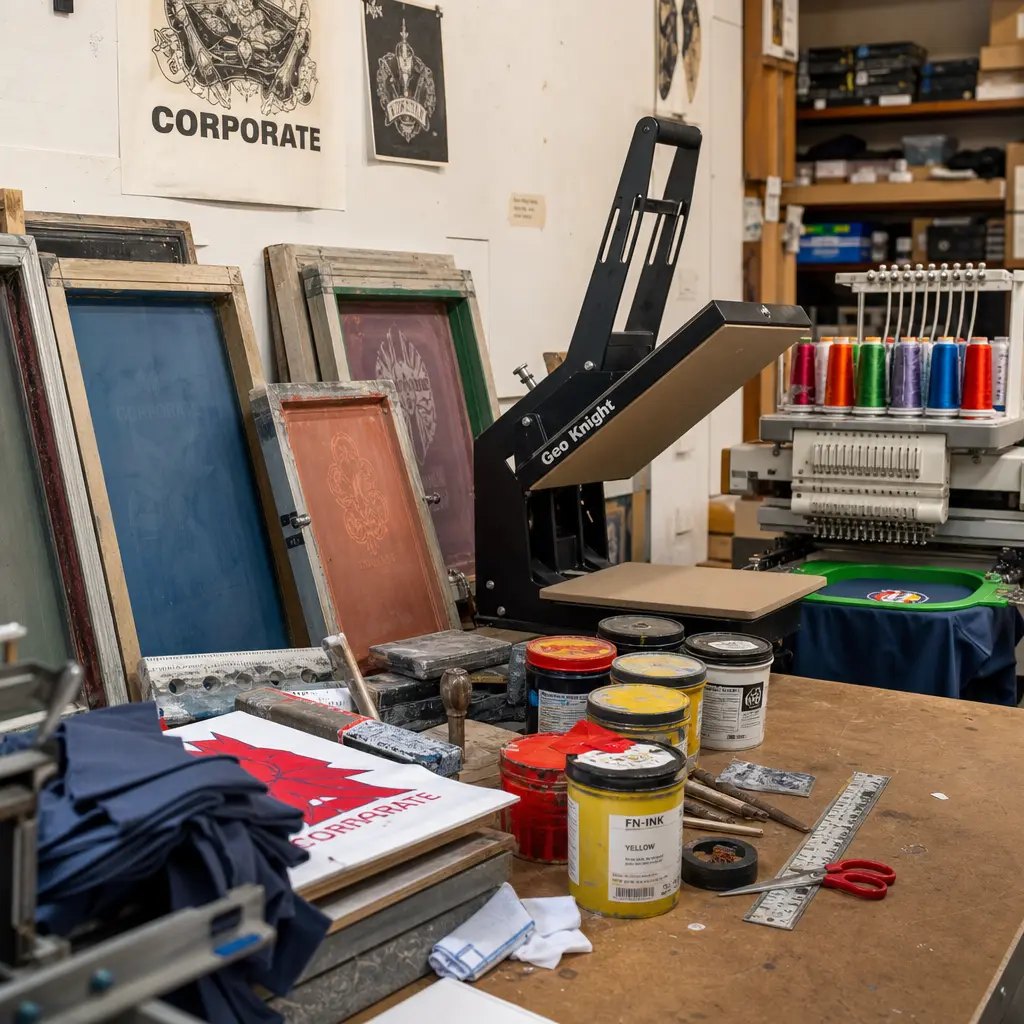
For most custom organic cotton totes, screen print is the default choice because it keeps unit cost stable and is strong enough for repeated handling. It works well for bold logos, simple graphics, and one to two colors. If the design has more detail, soft gradients, or a launch requirement that needs short-run flexibility, heat transfer or DTG may be worth discussing. Even then, buyers should test whether the method matches the cotton texture, whether the print stays legible after folding, and whether the finishing will hold up to the brand’s use case. A visually attractive print that cracks early or feels plasticky can undermine the value of the tote.
The biggest risk is not the print method itself but vague artwork approval. Buyers should send vector files, define the exact print size, and specify whether color is brand-critical or only directional. If the color matters, use Pantone references and ask whether the supplier can match against a physical swatch rather than a screen image. Also define no-print zones around seams, stitching, handles, and gussets. Without those inputs, the factory will make a production-friendly assumption, which may be technically acceptable but commercially wrong for your brand standard.
For startup teams, it helps to ask the supplier to confirm artwork preflight before sampling begins. That should include line thickness, minimum text size, negative space, and edge clarity. If the design is too fine for the selected method, the supplier should say so before production, not after the sample arrives. A good quote conversation asks not just 'Can you print this?' but 'What will this look like after the fabric is cut, pressed, and folded, and how do we keep it legible in bulk production?'
If the artwork uses small text or thin lines, ask the supplier for the minimum stroke width and minimum type height they can reproduce reliably. As a practical sourcing rule, anything below about 1.0–1.5 mm line thickness or very tiny text can become fragile on woven cotton, especially after folding and handling. The exact limit depends on the print method and fabric texture, so it should be tested rather than assumed. That is the difference between design intent and production reality.
- Use vector art for logos and line drawings whenever possible.
- Set print size in millimeters or centimeters, not verbal descriptions.
- Approve color against a physical standard whenever the shade is brand-critical.
- Ask what the minimum stroke width and minimum text height should be.
- Confirm whether the print area crosses seams or folds before approving the design.
Packing, cartonization, and warehouse receiving
Packing details can change landed cost more than buyers expect. A tote folded with a printed insert, then polybagged and carton-packed, uses more labor and more volume than a simple bulk pack. If the warehouse receives mixed sizes or unlabelled cartons, the saving on pack time at the factory may return as cost in your own fulfillment center. That is why procurement should treat packing as a supply-chain decision, not just a presentation choice. The right packing spec depends on whether the tote is being sold at retail, handed out at events, stored as inventory, or inserted into a larger kit.
Ask the supplier to quote the bag both ways if needed: one version for retail shelf presentation and one for distribution-friendly bulk packing. That comparison shows how much extra you are paying for presentation and how much carton volume the packaging adds. It also prevents a surprise when the freight forwarder recalculates charges based on carton dimensions rather than bag count. For international programs, the outer carton mark, carton count, and gross weight should be written clearly so the receiving team can reconcile the shipment without opening every box.
Warehouse alignment matters even more on first orders because there is no history to guide the receiving team. Confirm whether each carton contains one size only, whether the bags are nested or flat-folded, whether inner polybags are required, and whether moisture protection is needed during long transit. If your company uses barcodes, item stickers, or route-specific marks, make sure those details are part of the quote. Otherwise, the factory may choose a packing format that looks fine in production but slows down inbound processing and creates avoidable handling cost after receipt.
If the tote is going through retail, ask the supplier to state carton count, gross weight, and carton dimensions before final freight booking. That lets your logistics partner estimate cube and compare carriers properly. If the bags are for events or internal distribution, a simpler bulk pack can reduce cost, but only if the receiving team has a clear count and labeling plan. The best packing solution is the one that reduces total handling, not just factory labor.
- Confirm unit fold method and carton count per size.
- Request shipping marks that match your receiving system.
- Check whether polybags are required for retail or can be removed for bulk orders.
- Specify whether cartons must be single-SKU or can be mixed.
- Ask for carton dimensions before final freight booking.
Lead time risk and how to protect launch dates
Lead time for custom organic cotton totes is often presented as a single number, but the real schedule is a chain of dependencies. Fabric reservation, artwork approval, sample signoff, printing, sewing, inspection, and carton packing each consume time. If the supplier quotes a short delivery promise without naming where the time is spent, your launch date is exposed the moment one approval step slips. Buyers should therefore ask for a stage-by-stage timeline instead of relying on one total calendar figure.
The schedule should also define the production start trigger. In many cases, the order does not truly begin until the deposit, artwork approval, and sample signoff are all complete. If the buyer is still waiting on a logo decision or final packing instruction, the supplier may be holding the slot but not cutting fabric. That difference matters because it affects whether the lead time is genuinely reserved or only loosely estimated. For launch-critical programs, ask the supplier what must be frozen before bulk can start and what can still change without resetting the schedule.
To protect the timeline, buyers should lock the spec early and resist late changes in color, size, or packaging. Even a small modification can trigger a new print setup or a new carton plan. It is also worth asking whether the factory has other commitments on the same print line or whether your order will be queued behind a larger job. If the program depends on imported fabric, ask about customs clearance or inbound fabric timing, since that is often the hidden schedule risk. The best lead-time protection is not a promise from the supplier; it is a clear production calendar with the critical path already visible.
A strong supplier answer will list milestone dates for sample, bulk start, inspection, and shipment, and will also tell you what can cause those dates to move. That visibility matters more than a short headline lead time because it lets your team manage dependencies. If the factory cannot give milestone visibility, the schedule risk belongs to you.
For startups, this matters because launch dates are often tied to events, PR windows, and onboarding cycles. Missing the tote delivery may mean missing the campaign. A realistic timeline, even if slightly longer, is usually safer than an optimistic number that leaves no buffer for revision or transit.
- Treat sample approval as the real start of bulk production.
- Reserve time for print curing, packing, and carton consolidation.
- Build a buffer if your order depends on imported fabric or seasonal factory capacity.
- Ask for a written milestone plan with dates for sample, bulk start, QC, and shipment.
- Confirm what happens to lead time if artwork or packing changes after approval.
Landed-cost comparison for startup buyers
Startups often focus on unit price and miss the landed-cost structure. For custom organic cotton totes, the final number usually includes sample fees, print setup, carton charges, inland transfer, freight, and sometimes inspection or documentation costs. Two quotes with the same ex-works price can land very differently if one includes basic packing while the other prices every box and label separately. For procurement, the key is to compare the complete order lifecycle, not just the sewn bag.
The cleanest comparison method is to calculate cost per sellable unit, not cost per sewn bag. That means factoring in rejects, extra samples, the cost of rework, and the packing spec required by your distribution channel. If the tote is going into retail, a slightly higher ex-works price can still be the better option if it reduces misprints, carton damage, and warehouse repacking. If the bags are for internal events, a simpler pack may be better even if the bag itself is slightly more expensive. Different use cases need different landed-cost logic, so the quote must match the channel.
A practical internal comparison table should include bag price, setup cost, sample cost, packing cost, estimated freight per carton, expected rejection allowance, and any added handling at your warehouse. That makes the budget conversation far more accurate and avoids a false low bid. It also helps startup buyers explain why a more complete quote is safer than a bargain quote with hidden extras. When you can show the landed cost by channel, you are negotiating from a procurement position instead of shopping on headline price alone.
If you are comparing suppliers across regions, be careful about currency, duty, and carton density. A smaller carton count can look more expensive at the factory but cheaper in freight if the tote is packed more efficiently. Likewise, a supplier with a slightly higher quote may still win if their QC and packing reduce the chance of returns or rework. The right decision is not the cheapest quote; it is the quote with the lowest risk-adjusted cost for the program.
For a startup, that usually means choosing the supplier who can quote the product cleanly, explain the hidden costs, and hold the spec steady across the run. That stability is part of the product value, not an extra.
- Compare ex-works, packed carton cost, and estimated freight separately.
- Add expected sample and setup charges into first-order economics.
- Use the same delivery basis across quotes before deciding.
- Estimate cost per usable tote, not just cost per sewn unit.
- Include warehouse receiving or relabeling costs if the pack format is complex.
Specification comparison for buyers
| Spec decision | Recommended option | When it fits | Buyer risk to check |
|---|---|---|---|
| Fabric weight | 160–200 GSM organic cotton canvas or drill; 140–160 GSM only for lighter promo use | Retail launches, employee kits, conference merch, and everyday carry totes where structure and handfeel matter | Too light can feel flimsy and wrinkle easily; too heavy increases cost, carton weight, and freight volume |
| Fabric tolerance | GSM tolerance ±5% and width tolerance ±1.5 cm on incoming fabric | When you need repeatability across reorders and multiple production lots | Without a tolerance, suppliers can substitute a visibly different cloth that still passes verbally described approval |
| Bag dimensions | Specify finished width, height, gusset depth, and handle drop with tolerance of ±0.5 cm to ±1 cm | When the bag must fit a laptop, brochure kit, or specific retail shelf footprint | Loose dimensions create packing inconsistency and can cause receiving disputes |
| Print method | 1-color screen print for simple logos; 2-color screen print if artwork is separated cleanly; heat transfer or DTG only for very short runs or complex art | When the logo is bold, vector-based, and repeat orders matter | Fine detail loss, cracking, or inconsistent ink deposit if artwork is not preflighted correctly |
| MOQ route | Standard size, stock fabric color, one print position, and one packaging format | When the buyer needs lower entry quantities and faster approval without changing construction | Limited color choices and less control over custom dimensions or trim details |
| MOQ negotiation lever | Combine sizes or print variants under one fabric base and one cut plan | When several SKUs share the same body construction and trim plan | Confusion in SKU allocation if carton marks, product codes, and artwork versions are not separated |
| Sample strategy | Pre-production sample plus sealed reference sample before bulk approval | For branded launches, retail programs, or multi-market orders where visual accuracy matters | Skipping a real sample leads to print-placement disputes, handle-length surprises, and packing mismatch |
| Handle construction | Self-fabric handles for lower cost; 25–30 mm cotton webbing handles for better carry comfort | When load comfort, shoulder carry, or resale durability are important | Weak stitching at stress points if bar-tack count, seam allowance, and stitch density are not specified |
| Packing route | Bulk packed in export cartons; add individual polybags only if retail presentation or scuff protection requires it | When freight cost and warehouse handling need control | Incorrect carton count, print scuffing, or moisture risk if inner protection is underspecified |
Buyer checklist before sampling
- Confirm final bag size, gusset depth, handle drop, and target loading weight in kilograms.
- Specify fabric type, GSM, weave type, color tolerance, and shrinkage expectation after washing or pressing.
- Send vector artwork and define logo size, print position, Pantone references, minimum line thickness, and no-print zones.
- Ask for one physical pre-production sample and one sealed reference sample before bulk approval.
- Agree carton count, carton dimensions, packing method, barcode or hangtag needs, and shipment marks before production.
- Record inspection checkpoints for stitching, print adhesion, stains, odor, dimensional tolerance, and quantity count.
- Require a written measurement table for the approved sample and keep it with the purchase order.
- Confirm whether any material is subcontracted and who owns final QC before dispatch.
Factory quote questions to send
- Is your MOQ based on one style, one fabric color, one print color, one carton spec, or one total fabric order?
- What fabric weights do you offer in organic cotton, and which GSM is actually in stock today?
- What are the finished size tolerances for width, height, gusset depth, and handle drop?
- What is the unit price at 1,000, 3,000, and 5,000 pieces, and what changes the price break?
- Which print method do you recommend for this artwork, what is the minimum line thickness you can hold, and what are the setup charges by color or screen?
- What sample will you provide before bulk production, and what approval points are locked at that stage?
- What is the standard packing spec, carton size, carton quantity, gross weight per carton, and outer carton mark format?
- What is the expected shrinkage after pressing or steaming, and do you measure finished dimensions before or after packing?
- How long is production after sample approval, what are the major schedule dependencies, and what part of the plan is most likely to slip?
- Do you source the fabric in-house, or is any step subcontracted after cutting or printing?
Quality-control points to confirm
- Fabric weight must stay within the agreed GSM tolerance and should be measured against the signed sample.
- Fabric width should be checked on incoming rolls because width loss changes cut efficiency and finished bag size.
- Fabric handfeel, weave balance, and surface slub level should be compared against the approved swatch or sealed sample.
- Finished bag dimensions should be checked on width, height, gusset depth, and handle drop, not only on overall length.
- Logo placement tolerance should be stated in centimeters or millimeters, not just described as centered or approximate.
- Handle stitching should include a defined stitch count, back-tack or bar-tack reinforcement, and no loose threads.
- Seam allowance and seam strength at the handle join, bottom seam, and side seams should be checked on the first production lot and random cartons.
- Print color should match the approved Pantone reference or sealed color standard under daylight and warehouse lighting.
- Print edges should be examined for pinholes, over-inking, ghosting, or misregistration on the first approved sample and first bulk cartons.
- Print cure should be verified by rub test and tape test where appropriate, especially on bold ink coverage.