Start With The Use Case, Not The Logo
A farmers market tote fails for very ordinary reasons: the handle tears after a few heavy loads, the body stretches out of shape, the print cracks from rubbing, or the bag becomes annoying to carry and the vendor stops using it. If your tote only needs to survive a giveaway handout, the spec can be light. If it is meant to hold produce, jars, flowers, and repeat weekly use, treat it like a working bag, not a promo item.
The right durability checklist starts with the buyer's actual load profile. A bag for tomatoes and greens faces different stress than a tote filled with bottled sauce or soap. That matters because the weak point is rarely the same. Some bags fail at the top hem, some at the handle attach point, and some at the base seam when the contents shift. Write the use case into the RFQ so the factory understands what the bag must survive.
- List the heaviest normal load, not the average light load.
- State whether vendors will carry the bag by hand, on the shoulder, or both.
- Note whether the bag will be reused daily, weekly, or only for special market events.
- Tell the factory if wet items, sharp packaging corners, or glass jars are part of the load.
Choose A Fabric Weight That Matches Real Carrying Pressure
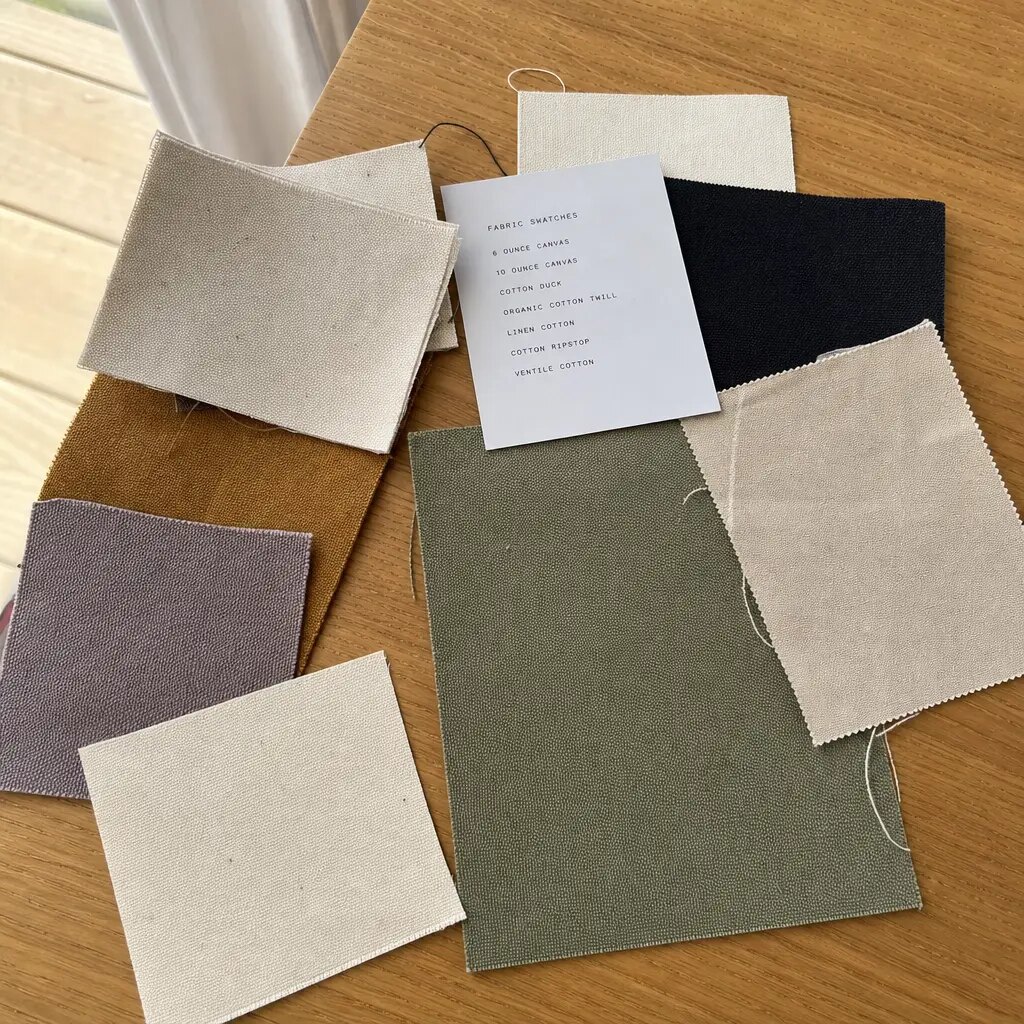
For custom organic cotton totes used by farmers market vendors, a practical starting point is 10 oz to 12 oz finished canvas, roughly 340 to 410 gsm. That range usually gives enough body for produce, bread, and small retail goods without turning the tote into a stiff promotional bag. If the bag is too light, it looks fine on a spec sheet but collapses under weight and wears faster at the seam line. If it is too heavy, the unit cost rises and the bag can feel bulky for everyday shopping.
Do not compare quotes using raw fabric only. Ask for finished weight after finishing, because washing, dyeing, and sewing can change the result. If you need a tighter size after production, pre-shrunk or pre-washed fabric is worth the extra cost. For some buyers, a controlled shrinkage tolerance of about 3% to 5% is acceptable. For others, especially if the tote carries a printed grid or a precise logo placement, the tolerance needs to be tighter.
- Confirm whether the quoted GSM is raw cloth or finished bag fabric.
- Specify weave, yarn count, and finish if the factory can control them consistently.
- Decide whether the bag must stay soft for foldability or hold a structured shape.
- If the tote will be washed, include post-wash size tolerance in the spec.
Handles, Seams, And Gussets Decide Whether The Tote Lasts
Handle design matters more than buyers often expect. A 2.5 cm handle can work for a light tote, but for market use, a wider handle around 3 to 3.8 cm usually spreads the load better and feels less harsh on the hand. If the bag is supposed to sit on the shoulder, the drop length needs to match the intended body height and user profile. A bag that is too short ends up carried in the hand, which changes how the handle and top edge wear.
Reinforcement should be visible in the spec, not left to factory habit. X-box stitching or dense bar-tacks at the handle anchor are standard for a reason. The side seam and bottom seam should use a construction method that resists opening under load. A gusset of 8 to 12 cm is often the practical zone for a market tote because it keeps the bag upright and makes room for produce cartons or jars without creating excess bulk.
- State handle width, handle drop, and reinforcement pattern in the drawing.
- Ask for stitch count or stitch density at the handle anchor if the factory can report it.
- Avoid print placement over the highest stress points unless the ink system is proven.
- Use a gusset that matches the product mix, not just a display image.
Pick Branding That Survives Repeated Rubbing
For a market tote, branding should be durable before it is decorative. Water-based screen print is usually the best value for simple logos, line art, or one to two colors. It works well on cotton, can be cost-efficient at moderate volume, and gives a clean look if the factory controls ink viscosity and curing. For buyers who want the longest wear with less risk of cracking, a woven side label or sewn label can outperform a large printed block, especially on rough canvas that gets folded and carried often.
Embroidery can be durable, but it raises cost and can make the bag less flexible. Heat transfer may be acceptable on some runs, but it is the first option I would question if the bag will be handled weekly and stored in trunks, market bins, or damp packing areas. If you want a sample logo on the product for traceability, a small CTM or CottonToMaker woven side label is more useful than a large, highly stylized mark that distracts from the bag's actual performance.
- Limit artwork complexity if you want consistent registration and better price control.
- Ask how the factory cures or fixes the print, not only which printer it uses.
- For natural cotton, test rub resistance on both the face and the folded edge.
- If multiple logos are needed, separate the functional brand mark from the decorative art.
Build A Durability Test Plan The Factory Can Actually Follow
A useful durability checklist should be simple enough for the factory to repeat and strict enough to catch weak construction. Ask for a load test that reflects the real use case, such as holding a realistic filled weight for a set period, then lifting and setting down the bag repeatedly. Also request a handle pull test, seam integrity check, and print rub test before bulk release. If the supplier cannot describe its internal test method, that is a warning sign, because you are likely comparing promises rather than measurable output.
Do not turn the test into a lab exercise that the factory cannot execute. For most buyer programs, a practical mix is enough: a static load hold, a repeated lift cycle, a dry rub or wet rub on the print, a size check before and after conditioning, and a carton compression or drop check. If you want the result to support a claim in your buying record, define pass/fail thresholds in simple terms. For example, no seam opening, no handle slippage, no visible print cracking after the agreed rub count, and no dimension shift beyond the tolerance you approved.
- Use one load target that mirrors real market contents, not a random round number.
- Request a handle pull or strap fatigue test if the tote will carry heavy produce.
- Add a print rub test for tote bodies that are handled, folded, and reused often.
- Include a post-test visual review so you can see stitch distortion or fabric biasing.
Approve Samples Against Clear Acceptance Criteria
Sampling should not be treated as a courtesy step. It is the point where you freeze the bag's build logic. Start with a preproduction sample that matches the intended fabric, handle construction, print method, and label placement. Then keep one signed golden sample on both sides if possible. Without a reference sample, production disputes usually turn into opinion instead of evidence.
Your acceptance criteria should cover more than dimensions. The tote should be measured flat and loaded, because a bag can meet width and height on paper while still feeling unstable in hand. Confirm print placement, stitch neatness, handle symmetry, gusset depth, and how the bag looks after folding. If the order is for vendor resale, place a few real product items inside the sample and see whether the tote still stands, closes, and carries comfortably. Small issues become large when multiplied by a thousand units.
- Approve artwork position before production, not after the first bulk output.
- Record allowed tolerance for size, placement, and color shade in writing.
- Treat loose threads, uneven hem folds, and twisted handles as rejectable defects if they affect retail presentation.
- Keep sample photos with measurements so purchasing, QA, and sales are aligned.
Compare Supplier Routes And MOQ Logic Before You Compare Price
A direct cut-and-sew factory is usually the best route when you want repeatability, custom construction, and a better grip on fabric and stitching. That path often gives the cleanest spec control, but the MOQ can be higher and the sample cycle slower. A trading company can be useful when you need a broader package or want to combine items, but the quote can hide margin layers and make it harder to see where the real cost sits. A local decorator working on imported blanks can be a fast launch path, especially for small programs, but it gives you less control over the base tote and traceability.
The MOQ decision should come from your reorder plan, not from the factory's favorite number. If you expect repeat demand across multiple markets, a standard base tote with one main color and one artwork version often gives the best cost balance. A first bulk order of 500 to 1000 pcs per style is a common working range for custom cotton totes with print and label work, but the right number depends on how many SKUs you are trying to launch. If you split the order into too many colors, the unit cost rises and the remaining stock becomes harder to move.
- Compare quotes only after you normalize fabric weight, print count, label type, and carton spec.
- Ask each supplier whether they are quoting direct production or a resold blank.
- Request separate pricing for sample, bulk, and repeat order so you can see the true step-down.
- If you need fast market testing, keep the first run narrow and preserve a reorder path.
Packing Choices Affect Damage, Shelf Readiness, And Freight Cost
Packing is not an afterthought when the tote will be resold or distributed by carton. Flat packing usually works best for cotton totes because it reduces carton volume and keeps the product easy to count. Ask the factory to define inner pack quantity, master carton quantity, and whether a moisture liner or desiccant is needed for your shipping lane. In humid routes, a clean bag can still arrive with odor or spotting if carton protection is poor.
Carton design also affects how the bag looks when opened. Overstuffed cartons crush the print area and leave deep fold marks that are hard to remove. Underfilled cartons can shift and rub the fabric against the box wall. For buyers shipping to distributors, a simple carton label with style, color, size, quantity, and carton number is usually enough, but the label has to be legible and consistent. If the bags will be re-shipped to vendors, ask for packing that supports fast count verification at the warehouse.
- Specify whether the tote should be folded once, twice, or clipped with a belly band.
- Ask for carton dimensions before you approve the freight plan.
- Use a moisture-protection approach that matches the route, not just a standard template.
- Do not let carton count vary without written approval, because that changes landed cost and handling.
Use Lead Time And Landed Cost To Expose Hidden Weaknesses
Lead time tells you more about supplier maturity than the quote does. A bag program with custom fabric, print, labels, and special packing can move from sample to bulk in a reasonable window, but only if the factory controls each step. For many buyers, sample approval takes 7 to 14 days, bulk production 25 to 45 days, and shipment timing depends on route and season. If the supplier is vague about when materials are booked, the delivery window is probably softer than it sounds.
Landed cost should be viewed as a stack, not a single unit price. Fabric weight, print colors, label method, handle reinforcement, packing, and freight all move the total. A cheaper quote can become expensive if it requires more revisions, more carton volume, or a second sample cycle. The best buyer habit is to request quote data in the same format from every factory, then compare line by line. When the spec is normalized, the real difference is usually in execution, not in headline price.
- Break the quote into material, sewing, printing, packing, and freight assumptions.
- Ask which part of the cost changes first when the MOQ drops.
- Budget for one revision cycle so the first sample does not become the final spec by accident.
- Keep a record of quote assumptions so future reorders do not drift.
Specification comparison for buyers
| Spec decision | Recommended option | When it fits | Buyer risk to check |
|---|---|---|---|
| Fabric weight | 10 oz to 12 oz finished cotton canvas, about 340 to 410 gsm | Weekly farmers market use with produce, jars, and repeated carry | If the factory quotes raw fabric only, the finished bag may come in lighter after washing and sewing shrinkage |
| Handle construction | Self-fabric or cotton webbing handles with X-box or bar-tack reinforcement | Heavy loads, shoulder carry, and resale programs that need low failure risk | Thin handles can feel fine in sample but cut into the shoulder or tear at the stitch line after repeated use |
| Gusset depth | 8 to 12 cm flat gusset or structured bottom panel | Vendor bags that need to hold fruit, bread, and mixed items upright | A shallow gusset can make the bag look neat but reduce usable volume and tip-over stability |
| Print method | Water-based screen print for simple logos or woven side label for the longest wear | One to two color branding with high repeat carry and frequent rubbing | Heat transfers may crack or lift on rough canvas if the artwork or curing process is not controlled |
| Supplier route | Direct cut-and-sew factory for repeat orders and tighter spec control | Brands and importers planning reorders or multiple market seasons | Factories may want higher MOQ, so confirm sample costs, tooling, and revision limits before you compare quotes |
| Lower-volume route | Trading company or local decorator on imported blanks | Launch tests, short runs, or fast in-market pilots | You may lose material traceability and pay for extra margin layers, which makes quote comparison messy |
| MOQ strategy | 500 to 1000 pcs per style and color for a balanced first bulk order | Bags that need custom print, custom label, and stable replenishment | Too many colors or size variants at low volume will raise unit cost and slow approval because setup cost gets spread too thin |
| Packing method | Flat pack with moisture protection, carton labels, and controlled count per carton | Retail DCs, distributors, and vendor programs that re-ship by carton | Over-compressed cartons can crease the bag body and damage print registration or stitch lines |
| QC level | Visual inspection plus load, seam, print rub, and carton tests | Buyers who need a defensible acceptance standard before shipment | A visual-only inspection can miss handle failure, shrinkage, or print wear that shows up after the first market weekend |
Buyer checklist before sampling
- Define the exact use case: produce, jars, dairy, dry goods, or mixed market goods.
- Lock finished fabric weight, not just raw cloth weight, and state the acceptable tolerance.
- Specify handle width, handle drop, and whether the bag must be shoulder carry or hand carry only.
- Choose one print method and one label method, then freeze artwork placement before sampling starts.
- Require a preproduction sample and keep one signed golden sample for comparison.
- Set acceptance targets for seam strength, pull resistance, print rub, shrinkage, and carton condition.
- Confirm packing count, inner pack style, carton size, and whether you need moisture protection.
- Normalize all quotes to the same GSM, same print count, same label, and the same Incoterm.
- Ask for lead time by stage: sample, bulk production, inspection, and shipment booking.
- Plan reorder logic early so the first order does not create a dead SKU in too many colors.
Factory quote questions to send
- What is the finished GSM after wash or finishing, and what tolerance do you hold on each production lot?
- Which stitch construction is used at the handle and side seam, and how many bar-tacks or X-box points are included?
- What is the exact handle width, drop length, and reinforced stitch area near the top edge?
- Which print method are you quoting, how many colors are included, and what is the curing or fixation process?
- Can you quote the same design in direct cut-and-sew and in blank-plus-decoration format for comparison?
- What MOQ applies to the fabric, print, label, and carton spec separately, and where does the cost step down?
- Can you provide a preproduction sample, production sample, and final shipment sample, and what is the cost for each?
- What shrinkage, pull, rub, and carton drop criteria do you use before release?
- How are the bags packed per inner pack and per carton, and what is the gross carton weight and dimension?
- What is your lead time for sample approval, bulk production, and cargo ready date under the quoted capacity?
Quality-control points to confirm
- Finished fabric weight matches the agreed GSM range, not just the supplier's raw cloth spec.
- Handle stitching uses the approved reinforcement pattern and does not skip or pucker at stress points.
- Measured dimensions stay within the agreed tolerance after pressing or washing.
- Print edges are aligned, cured, and resistant to light rub without cracking or powdering.
- Load testing does not open the seam, distort the gusset, or slip the handle stitching.
- Labels, side seams, and artwork placement match the golden sample and approved artwork file.
- Cartons hold the correct count and protect the product from moisture, dust, and compression.
- Finished bags have no odor, loose threads, oil marks, or contamination from sewing and packing