Start With the Trade Show Use Case
A custom jute tote bag for a trade show is not judged the same way as a retail shopping bag or a low-cost mailer insert. It may be handed out at the entrance, placed on chairs for a conference session, used as a sponsor kit, or sold at a booth. Each use changes the best size, handle comfort, print durability, and packing method. A good RFQ starts with the event workflow, not only with a product photo.
For exhibitor programs, the bag usually needs to carry catalogs, brochures, notebooks, small samples, and sometimes a water bottle. That means the buying problem is not simply finding the cheapest natural jute tote. The real target is a bag that looks presentable on the booth table, carries weight through a full show day, and arrives packed in a way that the local event team can distribute quickly.
- For booth giveaways, prioritize body stiffness, fast counting, and strong handle stitching.
- For sponsor bags, prioritize logo accuracy, clean fabric panels, and carton labeling by sponsor or hall.
- For retail resale, prioritize finishing consistency, barcode or hangtag options, and lower visible fabric variation.
- For sample kits, prioritize gusset depth, bottom strength, and handle comfort over a slightly lower unit price.
Choose Jute Weight and Structure Carefully
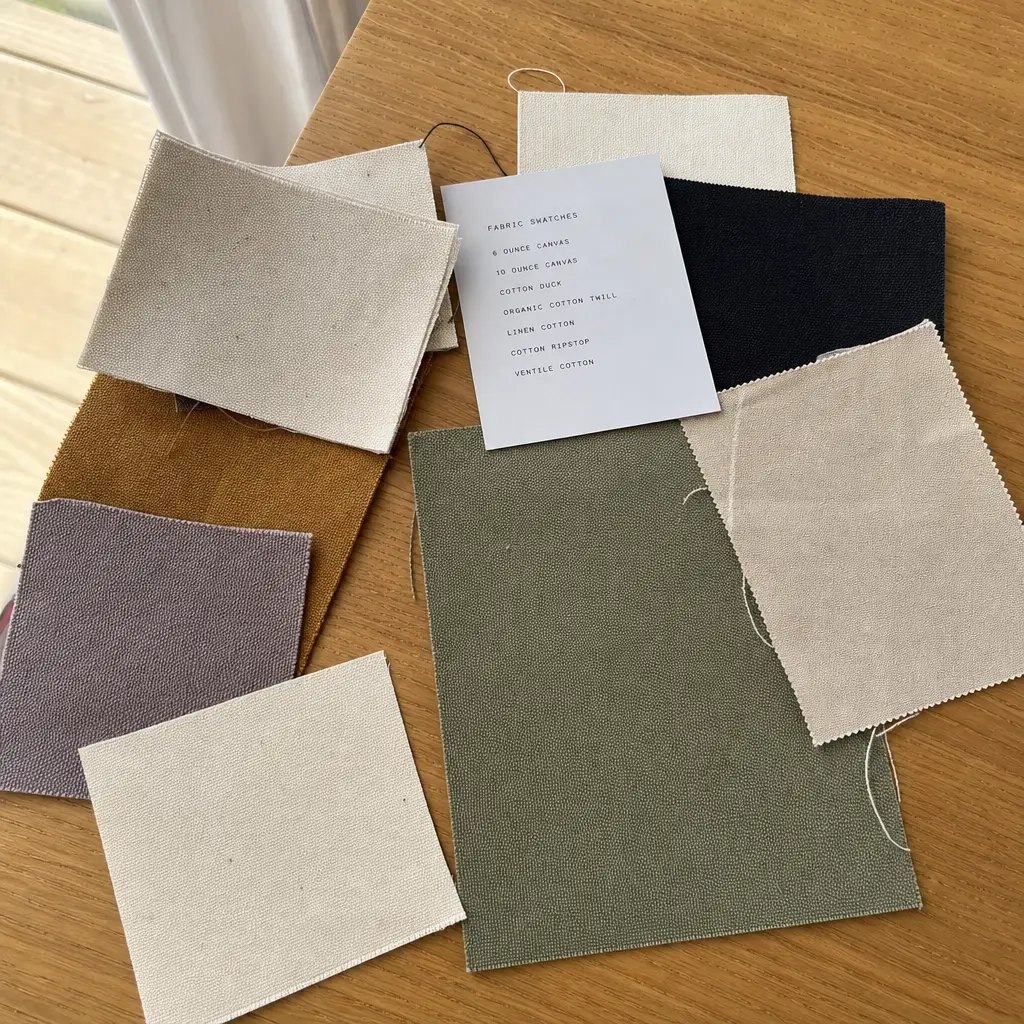
Jute fabric is often described by weave, yarn thickness, lamination, and approximate GSM. Many quotes only say “jute bag” or “burlap tote,” which is too vague for purchasing. A practical trade show tote usually needs enough body to stand or at least keep its shape when partly filled. Very loose, low-weight jute can look rustic in a sample photo but becomes unstable when printed and folded into cartons.
For most custom jute tote bags wholesale orders, buyers should discuss fabric in the approximate 280-340 GSM range before lamination, depending on the weave and final bag structure. Heavier material improves shape and perceived value, but it also increases material cost, sewing effort, carton volume, and freight. If the event is premium or the bag will be reused, the higher weight is easier to justify. If it is a mass giveaway, a medium jute with good lamination may be the better balance.
- Unlaminated jute has a softer natural feel but may shed fibers and absorb moisture.
- Inner PP lamination improves structure and helps reduce shedding inside the bag.
- Outer lamination can make the surface easier to wipe but may reduce the natural hand feel.
- Coarse weave makes small lettering difficult; keep fine text off the printed jute panel.
Size the Bag Around Real Contents
Many trade show tote problems come from copying a previous bag size without checking the new contents. A 35 cm high bag may be fine for flyers, but oversized catalogs can bend at the top. A flat tote may look economical on a quote sheet but becomes inconvenient when visitors add thick booklets, product samples, and personal items. For exhibitor use, the gusset is often the detail that makes the bag useful.
A common wholesale trade show size is around 38 x 35 x 15 cm or 40 x 35 x 15 cm. The 15 cm gusset gives the bag enough depth for catalogs and small boxes while still packing reasonably well. Buyers should define size in width x height x gusset and clarify whether measurements are taken before or after sewing. The difference matters when carton planning and print placement are tight.
- Use a 10 cm gusset for light brochures and a cleaner flat display.
- Use a 15 cm gusset when the bag must hold catalogs, samples, or boxed items.
- Keep the handle drop long enough for shoulder carry if visitors will walk several halls.
- Avoid oversized bags if booth staff must hand-carry cartons from storage to the stand.
Match Print Method to the Artwork
Jute is not a smooth cotton canvas. The surface has slubs, gaps, and yarn variation, so print expectations need to be realistic. Screen print works well for bold logos, solid shapes, and one to three spot colors. It is usually the most stable option for wholesale event bags because setup is clear, colors can be controlled with Pantone references, and the result is durable enough for typical trade show use.
Heat transfer can support more detail, gradients, and photographic artwork, but it may look less natural on jute and can add a different hand feel to the panel. Digital printing directly on jute is less common and should be sampled before approval. For brand buyers, the best rule is simple: if the logo has fine lines below 1 mm, small legal text, or tight registration between colors, the factory should test it on the actual jute quality before mass production.
- For one-color logos, screen print is usually the best balance of cost and reliability.
- For two or three spot colors, confirm registration tolerance and screen charges.
- For gradients, consider heat transfer and approve the edge feel on a physical sample.
- For metallic inks, large ink coverage, or white print on dark dyed jute, request a real print trial.
Understand MOQ and Price Drivers
MOQ is not only a factory preference. It is linked to material purchasing, cutting efficiency, printing setup, sewing line changeover, and packing requirements. A buyer ordering 5,000 pcs in one size with one logo is easier to price than a buyer ordering 5,000 pcs split across ten exhibitor logos, three handle colors, and different carton labels. The total quantity may look the same, but the production complexity is not.
When comparing quotes, separate the base bag cost from setup costs and logistics data. Some suppliers include screen charges in the unit price; others list them separately. Some quote a low unit price using thinner jute, narrower handles, or fewer stitches. A useful comparison should show fabric weight, lamination, handle spec, print area, number of print colors, sample fee, carton details, and production lead time in the same line.
- Fabric weight and lamination affect both unit cost and freight volume.
- Multiple logo versions increase setup, sampling, and inspection workload.
- Dyed handles, colored jute, and custom labels usually need higher MOQ than standard natural jute.
- Individual polybags add labor, plastic cost, carton volume, and sometimes longer packing time.
Approve Samples With Production Criteria
A sample should not be treated as a souvenir photo. It is a production control document. For trade show bags, the sample approval should cover fabric, lamination, handle width, handle drop, stitch pattern, print color, print size, print position, odor, folding method, and carton packing if possible. If the factory sends only a similar old sample, use it to judge workmanship, but do not approve bulk production from it.
The strongest approach is a pre-production sample made from actual bulk materials after artwork is finalized. This is especially important when the bag is used for a sponsor package, a paid attendee kit, or a retail brand promotion. Keep one signed or sealed sample with the buyer and one at the factory. During inspection, the finished bags can then be compared against a real approved reference instead of a PDF that cannot show fabric texture or handle strength.
- Measure finished size and gusset after the sample is sewn, not from the cutting panel.
- Load test the handles using the expected contents plus a margin.
- Rub the printed area after curing to see whether ink transfers or cracks.
- Smell the bag after it has been sealed in a polybag or carton for several hours.
- Photograph the approved sample from front, side, bottom, handle, and inside lamination.
Set Practical QC Thresholds
Jute is a natural material, so some yarn variation is normal. The inspection standard should not reject every slub or color shade difference. At the same time, buyers should not accept stains, mold marks, broken yarns across the logo, weak handles, or strong odor just because the material is rustic. The QC plan should separate natural variation from defects that damage brand presentation or usability.
For trade show orders, the most useful inspection points are visible front panel appearance, print accuracy, handle strength, seam security, odor, carton count, and packing condition. If an inspection agency is used, give them the approved sample and written defect definitions. Without those references, inspectors may count harmless jute texture while missing a weak handle reinforcement that matters more to the end user.
- Major defect: handle stitch opens, skipped reinforcement, or handle pulls loose during load test.
- Major defect: logo visibly off-center beyond agreed tolerance or wrong Pantone direction.
- Major defect: oil stains, mold spots, water marks, or dirt on the main logo panel.
- Minor defect: small natural yarn knots away from the logo area if overall appearance is acceptable.
- Critical issue: strong chemical or mildew odor after airing, especially for indoor event distribution.
Plan Packing for Event Distribution
Packing is where many trade show bag orders lose time. A carton that is efficient for ocean freight may be inconvenient for booth staff. If 100 jute bags are compressed into one heavy carton, the gussets may deform and the event team may struggle to move cartons from storage to the booth. If every bag is individually polybagged without a reason, unpacking becomes slow and waste increases at the venue.
For most exhibitor programs, flat packing 50 pcs per export carton is easier to count, move, and distribute. The carton should be strong enough for stacking and should show item number, logo version, quantity, carton number, and destination if the order is split by booth or city. If the bags must be delivered to an advance warehouse, carton marks need to match the show contractor’s receiving rules.
- Use carton quantities that booth staff can lift safely and count quickly.
- Avoid heavy compression that leaves permanent fold lines in laminated jute.
- Mark cartons by logo version when several exhibitors share one purchase order.
- Request carton dimensions, gross weight, net weight, and CBM before booking freight.
- Use inner bundles only when they help counting; avoid unnecessary packaging layers.
Control Lead Time Before the Event Date
The event date is fixed, so the production schedule has less room for correction than a normal replenishment order. A realistic timeline includes artwork review, sample making, sample shipping, buyer approval, material purchasing, bulk production, final inspection, carton correction if needed, export booking, customs, inland delivery, and possible advance warehouse receiving windows. A quote that only says “25 days production” is not enough for a trade show order.
Buyers should work backward from the required in-hand date. For standard jute tote bags with screen print, sample lead time may be around one week after artwork confirmation, while mass production often needs several weeks depending on quantity and season. These are planning examples, not promises. The important point is to lock the artwork and sample approval early enough so the factory is not forced to print before the bag construction is confirmed.
- Reserve time for one sample revision if the logo color, print edge, or handle length is important.
- Do not start bulk cutting until size, handle, and lamination are approved.
- Book inspection before cartons are sealed for export, especially for mixed-logo orders.
- Allow extra buffer before major trade show seasons and public holidays.
- Confirm whether delivery is to importer warehouse, show advance warehouse, hotel, or booth contractor.
Compare Quotes by Landed Cost
The lowest unit price can become expensive once freight, carton volume, rejection risk, and event handling are included. Jute bags are bulkier than many cotton pouches, especially with gussets and lamination. A heavier bag may cost more per piece but create a better attendee experience and lower complaint risk. A thinner bag may save a few cents but fail as soon as visitors load catalogs and samples.
A useful landed-cost comparison should combine unit price, setup fees, sample cost, export carton CBM, freight estimate, duty category review, inspection cost, and local delivery charges. Also compare supplier communication quality. If a supplier cannot state fabric weight, handle spec, carton data, or print method clearly at quote stage, the purchase order may need more management than the apparent savings justify.
- Compare quotes only after normalizing size, GSM, lamination, handle, print method, and packing.
- Calculate freight per bag using carton CBM, not only unit weight.
- Include sample freight and inspection fees for sponsor or retail-grade orders.
- Treat unclear specifications as a cost risk, not a minor paperwork issue.
- Keep a quote comparison sheet with one row per supplier and one column per production variable.
Specification comparison for buyers
| Spec decision | Recommended option | When it fits | Buyer risk to check |
|---|---|---|---|
| Jute fabric weight | 14 x 15 or 15 x 15 weave, commonly around 280-340 GSM before lamination | General trade show giveaways needing a natural look and enough body to stand on a booth table | Very light jute can collapse, show uneven yarns, and make the printed logo look broken |
| Lamination | Clear PP lamination inside, matte appearance outside if possible | Most exhibitor tote orders where bags must hold catalogs, samples, and brochures without shedding fibers | Overly stiff lamination can create creases at folded seams and may crack if packed too tightly |
| Handle material | Cotton webbing 25-35 mm wide with reinforced cross stitch | Comfortable carry for visitors walking the exhibition hall with loaded bags | Thin jute handles may scratch hands and can fail at the seam under heavier catalog loads |
| Bag size | Common range 38 x 35 x 15 cm or 40 x 35 x 15 cm with bottom gusset | Booth giveaways, sample kits, press packs, and sponsor bags | Flat bags without gusset look cheaper and hold fewer trade show materials |
| Print method | Screen print for solid logos; heat transfer only for detailed gradients or small color details | Most 1-3 color brand marks on natural jute | Fine lines can break on coarse jute; artwork should be tested on real fabric, not only paper proof |
| MOQ logic | Quote by same body size, same fabric, same print method, with colorway split clearly stated | Importers consolidating multiple exhibitors or regional distributor programs | Different logo versions may trigger separate screens, sample fees, packing labels, and production setup |
| Packing method | Flat packed 50 pcs per export carton or 100 pcs only after carton strength test | Trade show delivery where cartons need booth-by-booth allocation and easy counting | Overpacked cartons deform gussets, bend handles, and create poor first impression at the booth |
| Sample approval | Pre-production sample using actual jute, actual handle, actual print color, and proposed carton packing | Orders above basic promotional volume or any brand-sensitive campaign | A photo sample alone cannot confirm handle strength, print adhesion, odor, or folding marks |
Buyer checklist before sampling
- Define the event date, required arrival date, and latest acceptable factory ship date before discussing unit price.
- Confirm bag size as width x height x gusset, not only front panel size.
- Specify jute weight or approved swatch reference, plus whether inner lamination is required.
- State handle material, width, length, color, and reinforcement stitch style.
- Send vector artwork with Pantone references and a maximum print area, not only a JPG mockup.
- Separate one-color, two-color, and full-color logo versions in the RFQ because setup and rejection risk are different.
- Require a physical pre-production sample when the bag carries an important sponsor logo or retail brand mark.
- List packing needs by carton quantity, carton mark, booth allocation, and whether each bag needs an individual polybag.
- Request carton dimensions, gross weight, and CBM in the quote so freight can be compared accurately.
- Build inspection criteria around handle strength, seam allowance, print registration, odor, stains, and carton damage.
Factory quote questions to send
- What jute construction and approximate GSM are included in this price, and can you send a close-up fabric photo or swatch reference?
- Is the bag laminated inside, outside, both sides, or unlaminated, and will the finished bag have noticeable shedding?
- What handle material, width, length, and stitch reinforcement are included in the base quote?
- What is the maximum recommended print size on this jute quality for our artwork without losing edge clarity?
- Are screen charges, artwork setup, sample cost, and sample freight included or listed separately?
- Does the MOQ apply per logo, per print color, per bag size, or across the full purchase order?
- How many pieces are packed per export carton, and what are the carton size, gross weight, and estimated CBM?
- What is the sample lead time, mass production lead time, and latest artwork approval date for our event schedule?
- Which defects will be treated as major during final inspection, especially for handle strength, stains, and print adhesion?
- Can you produce a pre-production sample using actual bulk materials before cutting the full order?
Quality-control points to confirm
- Finished size tolerance should normally stay within plus or minus 1 cm for width and height, with gusset tolerance agreed before production.
- Handle pull strength should be tested with a practical load, such as 8-10 kg for 30-60 seconds, depending on the intended contents.
- Handle stitching should include clean box or cross reinforcement with no skipped stitches at stress points.
- Print position tolerance should be agreed in millimeters from top edge and side edge, especially for sponsor logos.
- Screen print adhesion should pass a simple tape test and rubbing test after full curing.
- Visible stains, mold marks, strong chemical odor, oil spots, and large slubs across the logo area should be treated as major defects.
- Cartons should pass basic drop and stacking sense checks if they will be handled through trade show advance warehouse channels.
- Random inspection should include opening inner bundles, not only counting sealed cartons.