Start With the Buying Job
A wholesale jute tote order should begin with the business use, not the logo file. Eco apparel brands may use the same basic bag shape for retail carry, ecommerce inserts, gift-with-purchase programs, staff stores, events, or resale merchandise. Those uses look similar in a mockup, but they need different structure, finish, packing, handle strength, and cost control.
A checkout bag for denim needs stronger handles and a gusset that holds shape. A lightweight event giveaway may prioritize low cost and fast production. A resale tote needs cleaner stitching, better inside finish, and stricter print placement because the customer is buying the bag as product, not receiving it as packaging.
Before requesting quotes, write a short internal brief. Include use case, target contents, launch market, order quantity, reorder expectation, required warehouse date, approval owner, and non-negotiables. This turns a broad request for custom jute tote bags wholesale into a product specification suppliers can actually price.
- Name the use case before choosing fabric or decoration.
- Write expected contents in measurable terms, such as one shoebox or two folded hoodies.
- Decide whether the bag must stand upright, fold flat, hang from a peg, or ship inside a parcel.
- List approval stakeholders from procurement, brand, ecommerce, sustainability, warehouse, or retail operations.
- Separate must-have requirements from nice-to-have preferences.
Write Size and Construction as Factory Specs
Terms such as standard tote, medium shopper, or large jute bag are not enough for production. The RFQ should state finished width, height, and gusset depth, plus top hem width, handle drop, handle width, and measurement tolerance. Finished measurements matter because cutting, sewing, lining, lamination, folding, and packing can all affect final size.
If the tote must fit folded apparel, a shoebox, or a specific ecommerce carton, test those contents before the RFQ goes out. A bag that looks close in a flat drawing may still fail when a warehouse team tries to pack real product. Print placement should also be measured from fixed points such as top edge, centerline, or side seam, not guessed from a mockup.
Construction needs the same clarity. State whether the bag uses side gussets, boxed bottom, flat bottom, top hem, internal binding, lining, lamination, closure, or bottom insert. If a supplier proposes a cheaper build, ask them to quote it as an alternate version, not as a quiet substitution.
- Use finished measurements: width x height x gusset on the completed sewn bag.
- Specify handle drop separately from total handle length.
- Define gusset style, bottom shape, top hem, lining, lamination, closure, and reinforcement.
- Add tolerances for dimensions, print placement, handle drop, and logo scale.
- Ask suppliers to state any deviation from the requested construction in writing.
Choose Jute by Performance, Not GSM Alone
GSM is useful, but it does not define the whole fabric. Natural jute around 350-420 gsm is often practical for retail and merchandise totes because it gives visible texture and moderate structure. Lighter material may work for low-load giveaways. Heavier, lined, or laminated constructions may be better for resale bags or premium packaging.
Jute is a natural fiber, so buyers should allow reasonable shade variation, slubs, and texture changes. The specification should still define what is unacceptable. Mildew odor, dampness, oil marks, dirt, holes, weak panels, excessive shedding, and severe shade patches are quality problems, not natural character.
Material choice also affects sustainability language. A cotton lining, lamination, dyed handle, synthetic thread, or plastic-based packing may be acceptable, but the final claim language should match the actual construction. Ask for composition details and keep approved swatches in the order file for bulk comparison.
- Request physical swatches for every material option under consideration.
- State target GSM and tolerance, then ask how the supplier verifies it.
- Confirm whether the quote is raw jute, laminated jute, jute-cotton blend, cotton-lined jute, or stock fabric.
- Define acceptable natural variation and unacceptable defects separately.
- Check whether raw jute will shed onto apparel if the tote touches garments directly.
Engineer Handles Before Styling Them
Handles are load-bearing components, not just design details. A tote can photograph well and still fail if the handle anchor is weak, the stitch box is too small, the thread is unsuitable, or the drop is wrong for the contents. The spec should define handle material, width, drop, color, attachment method, reinforcement, and comfort expectation.
Jute handles create a consistent natural look, but they may feel rough if not finished well. Cotton webbing is usually smoother to hold and easier to color-coordinate. Rope handles can feel more premium but increase carton bulk and may press into the bag during packing. The right choice depends on whether the bag is hand carry, shoulder carry, short-use promotional packaging, or reusable merchandise.
Avoid vague load language such as heavy-duty unless the test method is defined. State the expected contents or target load and ask the supplier what internal test they can support. If a load claim will be used externally, it should be backed by a consistent test and inspection standard.
- Specify handle material, width, drop, stitch pattern, thread color, and anchor position.
- Confirm whether the handle is suitable for hand carry, shoulder carry, or both.
- Ask how handle anchors are reinforced: box stitch, cross stitch, bar tack, or another method.
- Inspect handle symmetry, twisting, comfort, stitch density, and stress points.
- Tie any load expectation to a defined test method.
Match Decoration to Jute Texture
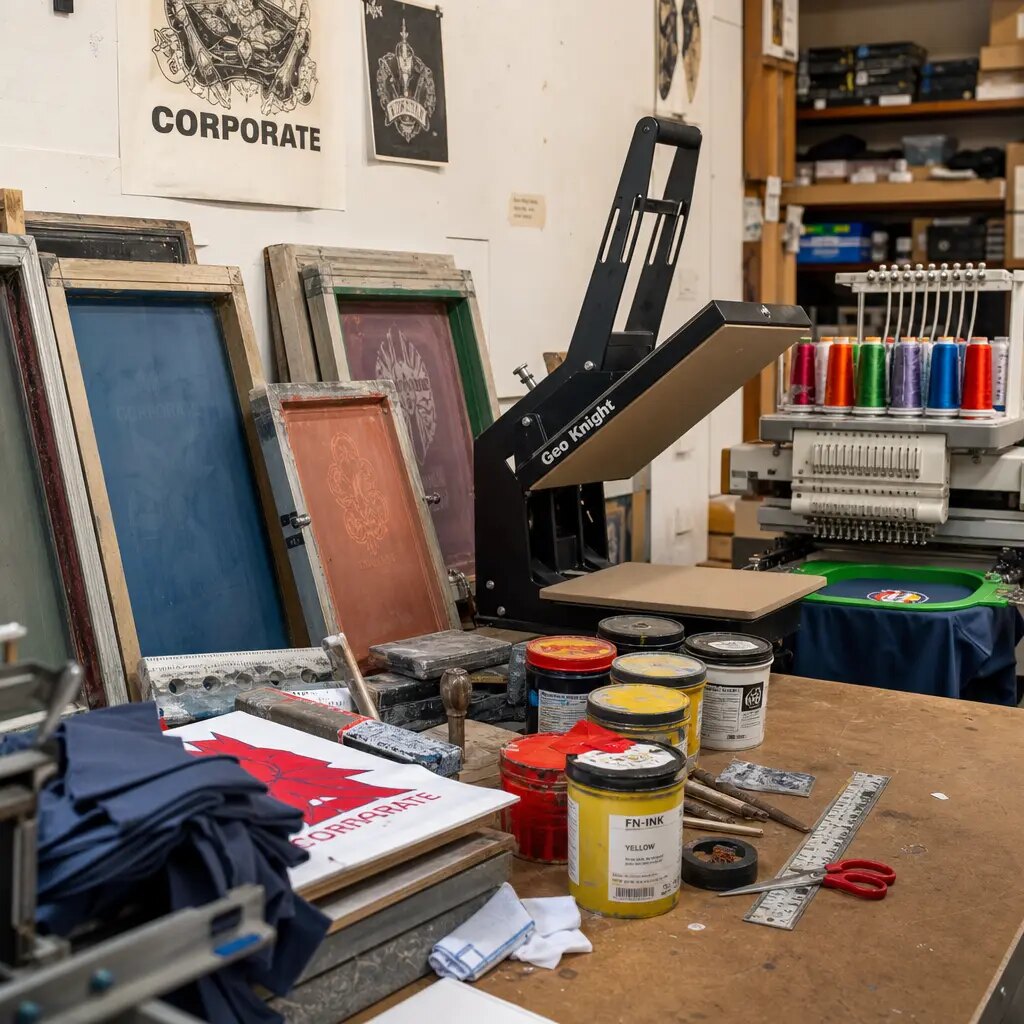
Screen printing is common for custom jute tote bags because it works well for bold logos, large lettering, and simple solid colors. Jute is coarse and uneven compared with cotton canvas, so buyers should not expect the same edge sharpness as a smooth fabric. Small type, thin lines, reversed text, and tight multi-color registration need supplier review before sampling.
A print strike-off is useful when color, opacity, or artwork clarity matters. It should be printed on the selected jute surface, not on a smoother substitute. The strike-off confirms ink behavior, but the full PP sample still needs to confirm final scale, placement, fold line, handle alignment, and packing effect.
For fine detail, a woven label, cotton patch, or sewn badge can be cleaner than direct print. Embroidery may work for simple marks, but dense stitching can pucker raw jute. Heat transfer may work on some backed or coated surfaces, but adhesion, cracking, and fold behavior should be checked before approval.
- Use screen print for bold marks and simple typography.
- Use woven labels, cotton patches, or sewn badges for fine detail and small text.
- Ask for minimum line thickness, minimum text size, and registration tolerance.
- Specify print dimensions and placement from top edge, side seam, or centerline.
- Check samples for bleed, opacity, pinholes, rub-off, curing, cracking after folding, and carton pressure marks.
Build an RFQ That Makes Quotes Comparable
A useful RFQ makes every supplier price the same product. Without that discipline, one quote may use lighter jute, another may exclude packing, and another may include a different handle or no setup charges. The unit prices then look comparable when they are not.
Attach the product spec, artwork file, placement diagram, packing instructions, target quantity, delivery market, requested Incoterm, sample requirements, and approval deadline. Ask suppliers to quote the requested spec first and list cost-saving options separately. This keeps alternatives visible and prevents the approved product from drifting.
MOQ should be broken down by bag size, material color, handle color, lining, print version, label version, and destination. A total quantity can hide problems when an order is split across many artwork versions. Quote validity and lead time should also be tied to sample approval, not only the inquiry date.
- Send spec sheet, artwork, placement drawing, packing requirement, quantity, and delivery market with every RFQ.
- Request MOQ by size, material, color, logo version, label version, and reorder.
- Require line-item pricing for blank bag, decoration, setup, labels, packing, cartons, samples, and freight assumptions.
- Ask suppliers to identify all exclusions and substitutions.
- Compare quotes only after aligning spec, MOQ, packing, Incoterm, and destination.
Use Samples as Approval Gates
Sampling is a risk-control process. A material swatch checks jute shade, GSM, hand feel, and weave. A print strike-off checks artwork behavior on the selected surface. A pre-production sample checks the complete bag: construction, handle, thread, lining, print placement, trim, fold, and packing. A sealed golden sample becomes the reference for bulk production and final inspection.
The PP sample should be made as close as possible to bulk conditions. If it uses substitute fabric, temporary handles, a different lining, or hand-applied print, label it as a development sample. It should not trigger bulk cutting or printing unless all key details match the intended production method.
Approval feedback should be measurable. Instead of saying the logo is too high, specify the approved distance from the top edge. Instead of saying the handle feels short, state the target handle drop. Clear feedback reduces revision rounds and prevents production from being guided by subjective comments.
- Use swatches for material approval and strike-offs for print approval.
- Use PP samples for full construction approval before bulk cutting or printing.
- Label samples by project code, version, date, and approval status.
- Keep one sealed golden sample with the buyer and one with the factory.
- Record approved measurements, artwork placement, materials, trim, and packing in the order file.
Define QC Before Production Starts
Quality control should be written into the purchase order or order confirmation. For jute totes, inspection should cover dimensions, GSM, shade, odor, moisture, stitching, handle anchoring, print quality, label placement, lining or lamination, packing, and carton marks. If the buyer uses AQL inspection, define inspection level, AQL values, and defect classes before production.
Defect classification should be practical. Critical defects may include mildew, damp cartons, wrong artwork, wrong barcode, or handle failure under the agreed test. Major defects may include dimensions outside tolerance, open seams, severe stains, incorrect print placement, heavy smearing, missing labels, or delamination. Minor defects may include small loose threads or natural slubs within the approved range.
Inspection should reference the approved sample, spec sheet, artwork file, and packing instruction. Natural jute should not be judged like smooth synthetic fabric, but natural variation should not excuse poor workmanship. For multi-SKU orders, inspect each size, artwork version, and packing configuration because defects can cluster in one batch.
- Define critical, major, and minor defects before bulk production.
- Check dimensions, material, shade, odor, moisture, seams, handles, print, labels, lining, and packing.
- Use neutral light for print color, opacity, registration, and placement review.
- Inspect after folding and packing because creasing, rub-off, and handle distortion may appear late.
- Require corrective action records for sorting, rework, replacement, and reinspection if the lot fails.
Treat Packing and Moisture Control as Product Specs
Packing affects how the tote arrives, opens, and presents in retail or ecommerce operations. A poor fold can crease the logo, crush the gusset, twist the handles, or make the bag look used before it reaches the store. Packing instructions should define fold direction, handle position, bundle count, inner packing, carton quantity, carton marks, and whether the logo must remain visible after unpacking.
Jute is sensitive to moisture and storage conditions. Bags should be dry before packing, cartons should be clean and dry, and finished cartons should be protected from damp floors and humid storage. For ocean freight or humid-season production, discuss desiccants, carton liners, and warehouse hold time.
If the brand prohibits individual polybags, the factory still needs an approved way to protect bags from dust, moisture, and carton abrasion. Plastic-free packing and damage prevention should be solved together. Warehouse rules also matter: carton labels may need PO number, SKU, artwork version, quantity, carton number, gross weight, barcode, and destination.
- Approve packing photos or a packing sample before bulk packing.
- Specify fold direction, handle position, bundle count, individual packing policy, and carton quantity.
- Confirm whether polybags are allowed, prohibited, or replaced by paper bands, tissue, or master bundles.
- Set carton marks and barcode requirements before production ends.
- Add moisture controls such as dry cartons, protected storage, and desiccants when appropriate.
Compare Landed Cost, Not Only Unit Price
The lowest unit price may not be the lowest total cost. A jute tote quote can exclude screen charges, label setup, sample fees, export cartons, barcode stickers, inland transport, inspection, freight, duty, brokerage, taxes, or destination delivery. If one supplier quotes EXW, another FOB, and another DDP, the numbers are not comparable until the cost model is aligned.
Line-item pricing shows where value is created. A woven label may cost more than direct print but reduce risk for fine artwork. A cotton lining may improve the customer experience but increase sewing time and carton volume. A rope handle may look premium but raise freight cost because it packs less efficiently. These tradeoffs should be visible before the buyer chooses a supplier.
Ask for carton dimensions, gross weight, pieces per carton, and estimated total cartons. Bulky totes can change freight cost quickly, especially with lining, rope handles, or retail folding. A practical landed-cost model should include product price, packing, inland charges, freight, duty, tax, customs, delivery, inspection, and the cost of delay or rework risk.
- Compare suppliers using the same spec, MOQ structure, packing, Incoterm, and delivery destination.
- Require the Incoterm with named port or place, such as FOB named port or DDP named address.
- Ask what is excluded from the quote, including setup, samples, cartons, labels, inspection, duty, taxes, and delivery.
- Use carton dimensions and gross weight to estimate freight.
- Treat cost-saving alternatives as separate decisions with visible effects on quality, schedule, and brand presentation.
Specification comparison for buyers
| Decision area | Recommended option | Best fit | Buyer risk to check |
|---|---|---|---|
| Supplier model | Direct factory managing cutting, stitching, printing, packing, and final QC under one production plan | Repeat retail programs, tight artwork control, and buyers who need a clear PP sample-to-bulk trail | Verify which processes are in-house, which are subcontracted, who approves final inspection, and whether bulk uses the same material and print setup as the approved sample |
| Supplier model | Trading company coordinating one or more nominated factories | Mixed bag shapes, multiple decoration methods, small split quantities, or buyers needing sourcing coordination | Ask for the production factory name, sample ownership, inspection responsibility, and corrective-action process |
| Construction | Unlined natural jute tote with standard hem and reinforced handles | Cost-sensitive retail carry bags, giveaways, and simple brand packaging | Check internal shedding, odor, panel stiffness, seam finish, and whether garments may touch raw jute |
| Construction | Lined, laminated, or internally bound jute bag | Resale merchandise, premium gift-with-purchase, cleaner interiors, or better structure | Check odor, fold cracking, delamination, carton volume, and whether the construction supports the brand's sustainability wording |
| Size | Finished width x height x gusset, plus handle drop, handle width, and top hem | Any tote that must fit folded apparel, shoeboxes, ecommerce parcels, or retail fixtures | Do not quote by small, medium, or large. Confirm finished sewn measurements and tolerances |
| Material | Natural jute around 350-420 gsm for many retail and merchandise totes | Visible natural texture, moderate structure, and practical retail use | Confirm target GSM, tolerance, shade range, weave quality, moisture control, and whether the quote is raw jute, laminated jute, or a blend |
| Handles | Cotton webbing or reinforced jute handles with defined drop, width, and anchor stitch | Programs where comfort, reuse, and load points matter | Check handle symmetry, stitch density, color tolerance, stress points, and hand-carry versus shoulder-carry suitability |
| Decoration | Screen print for bold artwork; woven label, cotton patch, or sewn badge for fine detail | Clean brand marking without forcing small artwork onto coarse fabric | Ask for minimum line thickness, small text limits, registration tolerance, print rub checks, and placement tolerance |
| Packing | Approved fold, bundle count, carton marks, and moisture-control plan | Retail-ready supply, ecommerce distribution, ocean freight, or humid-season production | Confirm polybag policy, desiccants if needed, dry cartons, print protection, and warehouse labeling requirements |
Buyer checklist before sampling
- Define the buying job first: retail carry bag, ecommerce insert, gift-with-purchase, event giveaway, employee store bag, or resale merchandise SKU.
- Specify expected contents in practical terms, such as one shoebox, two folded sweatshirts, a denim set, or a lightweight T-shirt order.
- Lock finished size as width x height x gusset, then add top hem, handle drop, handle width, and acceptable dimensional tolerance.
- Choose the material path: natural jute, jute-cotton blend, laminated jute, cotton-lined jute, softened jute, or stock jute construction.
- State target GSM and tolerance, for example 380 gsm +/- 5% if the supplier can support that standard, and ask how GSM is verified.
- Define handle material, width, drop, reinforcement method, stitch color, and whether the bag must be hand-carry, shoulder-carry, or both.
- Send vector artwork with color references, exact print dimensions, number of colors, print locations, and distance from edges and seams.
- Ask the supplier to confirm print feasibility on coarse jute, including minimum line thickness, small text limits, registration tolerance, and expected edge behavior.
- Separate MOQ by bag size, material color, lining, handle color, print version, label version, and shipment destination rather than using only total order quantity.
- Request material swatches, print strike-offs for important artwork, a full pre-production sample, and sealed golden samples before bulk cutting or printing.
Factory quote questions to send
- Is the quoted price for a blank bag, a decorated finished bag, or packed export-ready cartons?
- What finished size are you quoting, including width, height, gusset depth, top hem, handle drop, and handle width?
- What measurement tolerance do you recommend, and will it be measured on finished sewn bags before or after packing?
- What material is quoted: natural jute, laminated jute, jute-cotton blend, cotton-lined jute, softened jute, or stock jute?
- What is the target GSM, what tolerance is realistic, and how do you verify GSM during incoming material inspection?
- What shade variation should we expect between swatch, PP sample, bulk production, and reorder?
- How do you control odor, moisture, mildew risk, oil stains, excessive shedding, and visible contamination in jute material?
- Are cutting, stitching, printing, label attachment, packing, and final inspection performed in your facility or subcontracted?
- If any process is subcontracted, who controls the sample standard, and who owns corrective action?
- What print method do you recommend for this artwork on this jute surface, and what line thickness, small text, or registration limits should we avoid?
Quality-control points to confirm
- Finished bag dimensions are within the approved tolerance for width, height, gusset, top hem, handle drop, handle width, and print placement.
- Material GSM, weave density, shade, hand feel, stiffness, and lamination or lining finish match the approved swatch and sealed golden sample.
- Jute panels are dry and free from mildew odor, dampness, oil marks, dirt, large stains, major broken yarns, excessive slubs, and visible contamination.
- Natural fiber variation is within the agreed standard and does not create holes, weak panels, unacceptable shade patches, or poor print appearance.
- Side seams, bottom seams, gusset corners, top hems, and binding are straight, secure, and free from skipped stitches, open seams, loose threads, puckering, or fraying beyond the approved limit.
- Handle anchors match the approved reinforcement method, such as box stitch, cross stitch, or bar tack, with no weak stress points, twisting, or uneven placement.
- Handles are symmetrical in length, aligned to the bag center, comfortable to hold, and strong enough for the agreed load expectation or internal test method.
- Print color, opacity, registration, edge sharpness, artwork scale, and placement match the approved strike-off, artwork file, and golden sample under neutral inspection light.
- Printed areas show no major ink bleed, smearing, under-curing, tackiness, cracking after folding, heavy pinholes, or unacceptable dry or wet rub-off.
- Woven labels, cotton patches, hangtags, care labels, and barcodes are correct in content, orientation, placement, stitch color, and attachment method.