Compliance Starts With the Product Claim, Not the Purchase Order
For eco apparel brands, a custom jute tote bag often carries more than garments. It carries the brand’s environmental positioning, store presentation, gift-with-purchase experience, and sometimes a retailer’s compliance burden. That makes supplier selection different from buying a generic promotional carrier. The factory must be able to repeat a natural material, support the documents attached to the product claim, and pack the goods so they arrive clean, dry, correctly labeled, and ready to receive.
Jute has real sourcing advantages, but it is not automatically compliant simply because it is plant-based. Natural shade variation, fiber shedding, odor, moisture absorption, coatings, dyed handles, printed inks, labels, and cartons all affect the final product file. If a bag is laminated, blended with cotton, printed with solvent-based ink, or packed in plastic, the brand’s sustainability copy and restricted-substance review should reflect that construction.
A useful custom jute tote bags supplier compliance checklist for eco apparel brands should therefore combine four controls: product specification, supplier evidence, destination-market review, and inspection criteria. The goal is not to create paperwork for its own sake. The goal is to prevent unpriced substitutions, vague eco claims, failed receiving, and late-stage arguments when the shipment is already packed.
- Treat compliance as material accuracy, chemical review, production repeatability, labeling accuracy, and receiving readiness.
- Require order-specific evidence, not only generic certificates or marketing claims.
- Align sourcing, design, compliance, logistics, and retail requirements before sampling begins.
Build a Spec That Makes Supplier Quotes Comparable
A quote request that says “jute tote with logo” will produce prices that cannot be ranked with confidence. One supplier may quote a light natural jute body, another a laminated structure, another a cotton-jute blend, and another a stock burlap-style fabric. The buyer sees four unit prices, but not four equivalent products. A controlled RFQ starts with finished measurements, body construction, fabric weight, handle specification, decoration, labels, and packing.
Fabric GSM is a major cost and quality driver. Rather than relying on broad category language, state the target GSM and tolerance to be used during incoming inspection. If the program is for folded apparel or retail gifting, the bag may need more structure than a simple event giveaway. If the bag will ship flat to stores, excessive stiffness can increase creasing and carton volume. The right specification is tied to intended use, not to the heaviest or cheapest option.
Handles should be specified with the same precision as the body. Cotton webbing, jute self-fabric handles, rope handles, and padded handles differ in hand feel, cost, stitching behavior, and load performance. Include handle width, total length, handle drop, attachment position, reinforcement pattern, and color. If the handle is dyed, printed, or made from a different fiber, it belongs in the bill of materials and restricted-substance review.
- Include finished width, height, gusset, handle drop, handle width, GSM, material construction, decoration, label, and packing in the RFQ.
- Define how dimensions are measured: flat, after final handling, after pressing, or after unpacking.
- Quote natural jute, laminated jute, juco, cotton-jute blend, and coated jute as separate constructions.
- Ask every supplier to price the same incoterm, currency, carton pack, and document scope.
Identify the Material Before Approving Sustainability Copy
Jute is the fiber, while burlap usually describes a coarse woven fabric. Juco usually means a jute-cotton blend. Laminated jute has a film or coating, commonly on the inside, to add structure and reduce shedding. These differences matter because they change cost, hand feel, print behavior, disposal profile, and the accuracy of brand claims. A supplier description such as “eco burlap” is not enough for a compliance file.
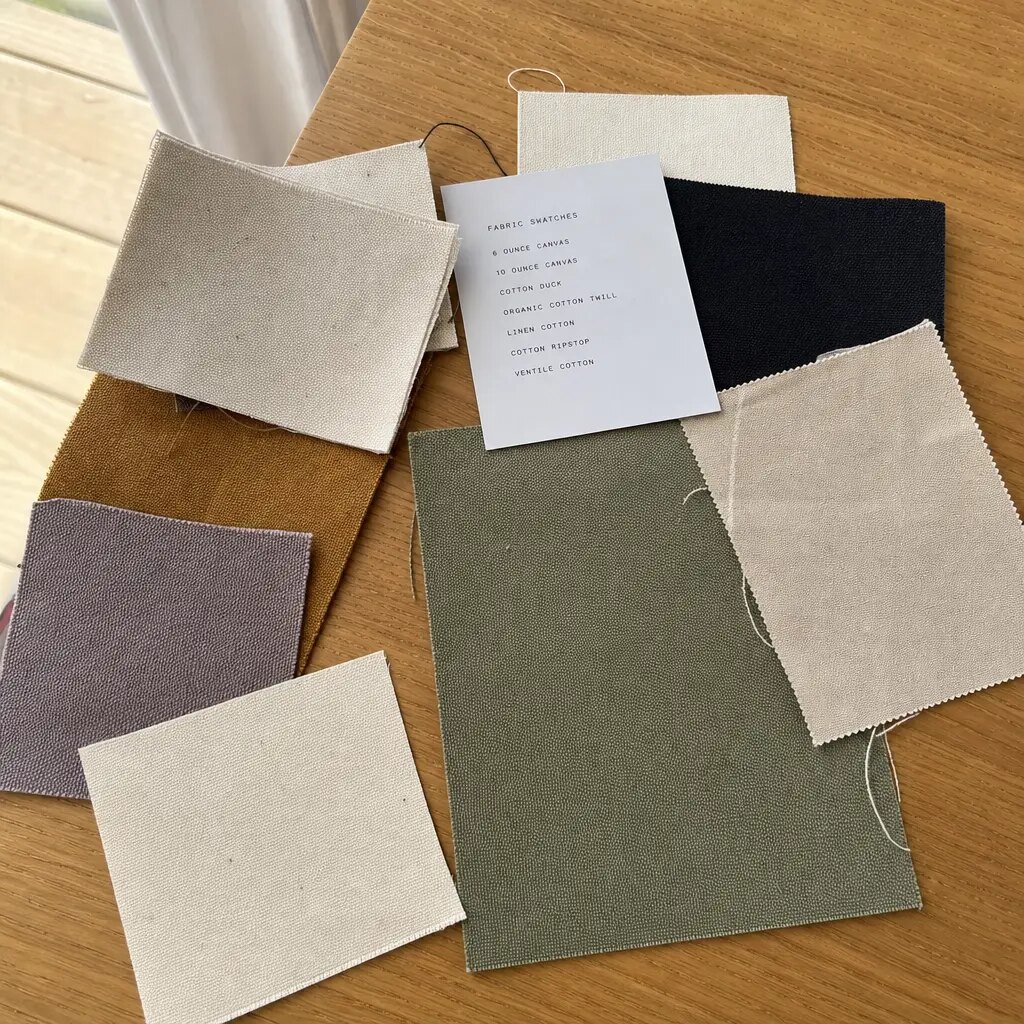
Ask for a bill of materials and labeled swatches for body fabric, handle webbing, lining or lamination, label, ink, hangtag, and any inner packaging. If the supplier cannot identify an inner film, coating, or ink type, do not approve product copy that implies a pure natural construction. The same caution applies to “plastic-free,” “biodegradable,” “recyclable,” or “natural” claims. The supplier can provide component information, but the brand should decide final claim language through its compliance process.
Moisture and odor control belong in material approval. Jute can absorb humidity and warehouse smells. A mild natural fiber odor may be acceptable; mildew, damp carton smell, fuel, solvent, or strong chemical odor should not be. Define an odor check that happens after cartons are opened indoors, because outdoor or open-warehouse checks can hide problems that become obvious in a store backroom or apparel warehouse.
- Request labeled swatches and an order-specific BOM before final sampling.
- Flag lamination, coatings, dyed handles, printed inks, and blended fibers for claim review.
- Separate normal natural fiber variation from mildew, dampness, solvent odor, and chemical odor.
- Keep approved swatches with the signed golden sample for inspection reference.
Apply Destination-Market Compliance, Not Generic Eco Language
Compliance requirements depend on where the tote is sold, who will import it, and whether a retailer manual applies. For EU programs, buyers commonly review REACH obligations, including relevant substances of very high concern and restricted substances that may apply to coatings, dyes, inks, adhesives, or trims. If packaging is included, EU packaging and waste rules may also affect labeling and material choices. For the UK, separate UK compliance review may be needed after Brexit-era regulatory changes.
For US programs, the compliance path is different. If the tote is clearly a general adult apparel accessory, CPSIA children’s product testing may not apply. If it is marketed for children, sold with children’s apparel, or designed for child use, CPSIA lead and phthalate considerations can become relevant. If goods are sold into California, Proposition 65 review may be necessary, especially for inks, coatings, dyed materials, or components that could trigger warning obligations. Country-of-origin marking must also be handled correctly for import and retail presentation.
Restricted-substance frameworks are often driven by retailers, not only law. Many apparel buyers use AFIRM RSL guidance or retailer-specific chemical manuals to screen materials, prints, coatings, and packaging. Common lab methods may include screening for lead and heavy metals in coatings or prints, phthalates in plasticized components, azo dyes where relevant, formaldehyde in treated textiles, and colorfastness to rubbing for dyed or printed areas. The exact test plan should be set by the buyer or compliance team for the destination market.
- Name the destination market and selling channel in the RFQ: EU, UK, US, California, retailer store, ecommerce, or promotional distribution.
- For EU orders, review REACH-related restricted substances and retailer RSL requirements for inks, coatings, dyes, and trims.
- For US orders, review CPSIA only when the product is intended for children, and consider Proposition 65 for California sales.
- Use retailer manuals or AFIRM-style RSL screening as a practical chemical compliance framework when applicable.
Rank Suppliers by Evidence, Lead Time, MOQ, and Risk
Supplier ranking should go beyond unit price. The strongest candidate is the one that can make the bag, document the material, control outsourced processes, and meet the receiving format within the required lead time. A direct factory may offer efficient production but need support on documents. A trading company may coordinate mixed SKUs but obscure the real production site. A specialized bag workshop may control construction better than a low-price general supplier, but capacity could be limited during peak periods.
Ask each supplier to disclose which processes are in-house and which are outsourced. Lamination, printing, embroidery, label production, barcode printing, and laboratory testing are commonly subcontracted. Outsourcing is not a disqualifier; lack of control is. The supplier should identify who approves first pieces, who pays for defects, and how changes are communicated after sample approval.
Lead time should be broken into sample making, sample revision, material booking, testing, bulk production, final inspection, packing, and shipment handoff. MOQ should also be explained by driver: fabric roll minimum, handle webbing minimum, printing setup, label MOQ, carton MOQ, or testing cost. This prevents false comparisons between a supplier quoting stock fabric and one quoting custom materials with compliance testing included.
- Score suppliers on production capability, document strength, lead-time realism, MOQ explanation, and defect ownership.
- Ask for price ladders at realistic quantities using the same spec and packing method.
- Require disclosure of subcontracted steps before production approval.
- Do not accept compliance claims unless they connect to the producing factory and the exact order materials.
Control Sampling, Golden Sample, and Change Approval
Sampling should move in clear stages. A development sample can test size, silhouette, or decoration direction, but it may use substitute materials. A pre-production sample should use the intended fabric, handle, print method, label, hangtag, and packing approach. Only the pre-production sample should become the sealed golden sample for bulk approval.
The golden sample must be supported by a tolerance sheet. Practical sewn-bag tolerances might include controlled limits for width, height, gusset depth, handle drop, handle length, handle placement, logo placement, and label position. Set the exact numbers for your program and retailer expectation. Visual standards should also be written: acceptable natural slubs, shade variation, surface hairiness, stitch appearance, print edge clarity, and carton condition.
Change control is where many tote orders fail. A supplier may run out of the approved fabric lot, switch handle webbing, adjust ink, change carton size, or use a different printing workshop without treating it as a formal deviation. The purchase order should state that any change to material, construction, decoration, label, packing, or subcontractor requires buyer approval before bulk continues.
- Label early samples as development samples when materials or decoration are not final.
- Seal a golden sample that includes the actual body, handle, logo, label, hangtag, inner pack, and carton mark format.
- Attach a tolerance and defect sheet to the sample approval record.
- Require first-piece photos for cutting, decoration, sewing, and packing on higher-risk orders.
Specify Decoration for Rough Jute, Not Smooth Mockups
Jute texture gives the tote a natural look, but it complicates branding. Fine lines, small text, gradients, halftones, and tight multi-color registration can break up on coarse weave. Digital artwork on a white background does not predict how ink will look on natural jute. The artwork should be reviewed at actual size on the approved material.
Screen printing is often practical for bold logos and simple artwork. Woven labels, cotton patches, or stitched badges may be better for small copy or detailed brand marks. Embroidery can look premium but may cause puckering or needle damage if the fabric and backing are not suitable. Heat transfer needs adhesion testing because rough fiber surfaces can lift at the edges.
Decoration QC should include color target, placement, registration, cure, rub resistance, adhesion, and packing transfer. For colorfastness to rubbing, many textile programs reference ISO 105-X12 or AATCC 8, depending on market and lab practice. For print adhesion, the lab or supplier may propose a tape or rub method suitable for the ink system. The important point is to define the method and failure rule before bulk production.
- Approve print strike-offs on the actual jute, not only digital mockups.
- Set minimum line thickness, minimum text height, print size, placement tolerance, and color-count limit.
- Use labels or patches when brand detail is too fine for direct print.
- Check cracking, rub-off, adhesion, ink transfer, and registration before approving bulk.
Test Construction Where the Bag Actually Fails
The main failure points on jute tote bags are handle attachments, top opening, side seams, bottom corners, gusset folds, and any laminated edges. A neat sample photo does not prove the bag can carry apparel, catalogs, shoes, or boxed gifts. Specify seam type, stitch density, seam allowance, thread type or color, reinforcement pattern, and handle placement.
Load testing should be written in repeatable language. Define the weight, duration, number of samples, loading method, and pass/fail criteria. A static load test may be enough for a simple apparel tote if it reflects intended use. A heavier retail or gifting bag may need more demanding pull or seam-strength checks. The supplier’s house standard can be used only if it is documented and accepted by the buyer.
Relevant physical tests can include fabric weight verification, dimensional checks, seam strength, handle pull or static load, and visual checks after loading. For textiles, labs may reference methods such as ASTM D3776 for fabric mass, ASTM D1683 for seam strength in woven fabrics, or ISO equivalents depending on the lab and market. Not every order needs every lab test, but every order needs a defined functional check.
- Define the load test by weight, duration, sample quantity, loading method, and failure rule.
- Inspect the bag after loading for handle tearing, seam opening, stitch breakage, and panel distortion.
- Check laminated bags for peeling, bubbles, edge cracking, and coating transfer.
- Check unlaminated bags for excessive shedding, weave distortion, and loose fibers beyond the approved sample.
Use a QC Plan With Defect Rules, Not Final Inspection Guesswork
Quality control should start before cartons are sealed. Incoming inspection should check fabric GSM, shade, odor, lamination condition, and major weaving defects. Cutting checks should verify panel size and grain direction. Decoration checks should confirm placement, cure, color, registration, and transfer risk. Sewing checks should focus on handle reinforcement, seams, stitch consistency, loose threads, corners, and final shape.
Final inspection should classify defects before inspection starts. Critical defects may include wrong country-of-origin marking, prohibited material substitution, sharp contamination, severe mildew, or incorrect mandatory label copy. Major defects affect function or saleability: broken handles, open seams, wrong logo, badly misaligned print, wrong barcode, mixed SKU, stains, incorrect carton count, or wet cartons. Minor defects are small appearance issues within the approved natural-material tolerance.
Many buyers use AQL sampling for consumer goods, with the inspection level and acceptance limits set by the buyer or inspection partner. For a compliance-focused retail order, do not allow the factory to define acceptance alone. Inspection reports should include actual measurements, photos, carton selection details, barcode scan checks if applicable, load-test evidence, odor comments, and carton-condition photos.
- Inspect incoming material, first decorated pieces, first sewn pieces, and final packed cartons as separate stages.
- Classify critical, major, and minor defects in the PO or inspection booking.
- Measure pieces from multiple cartons, not only top samples from one carton.
- Require photo evidence for print, label, carton mark, moisture, load-test, and packing defects.
Packing and Receiving Are Part of Compliance
Jute totes can deform, absorb odor, or arrive damp if packing is treated as an afterthought. The purchase order should define fold method, bundle count, pieces per carton, individual wrap or no-wrap, paper banding, carton liner, desiccant use, and gross weight limit. Eco apparel brands may prefer reduced plastic, but that choice must be balanced against humidity, transit time, store handling, and barcode protection.
Carton specifications affect both freight and receiving. Ask for carton dimensions, net weight, gross weight, carton ply or strength if available, shipping marks, SKU, PO number, style name, color, quantity, and country-of-origin marking where required. Oversized cartons increase volumetric cost; overloaded cartons increase handling damage and warehouse complaints. A carton mockup or packing photo before shipment can catch problems while correction is still possible.
Retail-ready programs need tighter controls. Barcode labels must scan and match the SKU. Hangtags need approved copy, fastener, and orientation. Multi-SKU orders need clear separation to avoid receiving errors. If a retailer has a routing guide, send it with the RFQ, not during packing week. Goods that are technically well sewn can still fail commercially if the warehouse must relabel, repack, dry, sort, or recount them.
- Define inner pack, carton pack, carton size, carton marks, barcode location, and gross weight before PO release.
- Balance plastic reduction with moisture, dirt, odor, and scanability risk.
- Request pre-shipment carton photos showing inner pack, carton marks, and packed condition.
- Include receiving requirements in the supplier score, not only unit price and sample appearance.
Specification comparison for buyers
| Supplier option | What to verify | Commercial advantage | Buyer risk to control |
|---|---|---|---|
| Direct sewing factory | jute roll photos, lamination sample, odor-control process, handle pull evidence, and pre-shipment carton condition photos | Better sample-to-bulk control and faster production feedback | May be weaker on export paperwork or branded packing unless checked early |
| Trading company | Factory name, production photos, trim-source proof, and who owns QC decisions | Can coordinate small mixed orders and extra services | Markup can hide real factory capability and slow defect decisions |
| Specialized bag workshop | handle stitching, side gusset, lamination edge control, inner seam cover, and fiber shedding tolerance | More practical for detailed construction, trims, and repeat programs | Capacity may be limited during peak seasons |
| Low-price general supplier | laminated or unlaminated jute, cotton-jute blend, inner coating, odor control, yarn thickness, and color shade variation | Useful for simple promotional runs with loose specs | Material downgrades, weak packing, and vague inspection scope can erase savings |
| Retail-ready supplier | airing time, moisture absorber, carton liner, bundle wrap, odor separation, and warehouse ventilation before loading | Can handle labels, SKU separation, carton marks, and receiving rules | Higher unit cost must be compared against reduced warehouse work |
| Compliance-focused supplier | Fabric records, labeling review, test plan, and production traceability | Safer for retail programs and repeat brand orders | Documentation claims need evidence, not only sales language |
| Local sample room plus bulk factory | Signed sample, bulk factory handoff, first-piece photos, and deviation owner | Good for complex branding before large production | Sample room quality may not match bulk line unless handoff is controlled |
Buyer checklist before sampling
- Lock the finished size, gusset depth, handle drop, handle width, fabric GSM, body construction, decoration method, label position, packing method, target market, and incoterm before comparing prices.
- Identify the material as natural jute, burlap-style jute, laminated jute, juco, cotton-jute blend, jute with inner coating, or another fabric; do not allow these to be quoted as interchangeable options.
- Request an order-specific bill of materials listing body fabric, coating or lamination, thread, handle, ink, label, hangtag, barcode label, carton, tape, desiccant, and any plastic or paper inner packaging.
- State destination-market requirements in the RFQ: EU REACH review where applicable, US CPSIA only if the bag is intended for children, California Proposition 65 if sold into California, country-of-origin labeling, and retailer chemical or packaging manuals.
- Set measurable tolerances before sample approval: finished width and height, gusset, handle drop, handle length, handle placement, logo placement, label position, carton count, and barcode location.
- Approve one sealed golden sample made with production-intended fabric, handle, decoration, label, hangtag, inner pack, and carton mark format; keep a duplicate at the factory.
- Separate one-time charges from recurring charges: sampling, screen or plate, embroidery digitizing, cutting die, label setup, hangtag setup, carton mockup, courier, testing, inspection, and documentation fees.
- Confirm decoration limits on actual jute: minimum line thickness, smallest readable text, Pantone target, ink type, curing method, rub resistance, adhesion, registration tolerance, and packing transfer risk.
- Map outsourced steps such as lamination, dyeing, printing, embroidery, label production, barcode printing, final packing, and laboratory testing; assign defect ownership for each.
- Write a QC plan covering incoming fabric, first printed pieces, first sewn pieces, in-line checks, load testing, odor/moisture review, final AQL inspection, and pre-shipment carton photos.
Factory quote questions to send
- What exact construction are you quoting: natural jute, burlap-style jute, laminated jute, juco, cotton-jute blend, or coated jute? Please identify any inner film or coating.
- What body fabric GSM and tolerance are included in the price, and how do you verify GSM during incoming roll inspection?
- Can you provide an order-specific BOM covering fabric, coating, thread, handle, ink, label, hangtag, barcode label, carton, tape, desiccant, and inner packaging?
- Which processes are in-house, and which are outsourced, including lamination, printing, embroidery, label production, barcode printing, packing, and laboratory testing?
- What MOQ and price ladder can you quote for the same spec at 500, 1,000, 3,000, and 5,000 pieces, if those quantities fit your production model?
- What are the sample lead time, pre-production sample lead time, bulk production lead time after approval, and shipment handoff point under the requested incoterm?
- Which destination-market documents can you support for this order, such as material declaration, country-of-origin support, REACH-related restricted-substance declaration, CPSIA support if applicable, Proposition 65 review if applicable, and retailer chemical forms?
- Which test methods do you recommend for this bag, such as fabric weight, dimensional check, seam strength, handle pull or static load, colorfastness to rubbing, print adhesion, odor/moisture review, and carton drop or compression checks?
- What finished tolerances do you propose for width, height, gusset, handle drop, handle length, handle placement, logo placement, label placement, and carton quantity?
- What decoration method are you quoting, and what are the artwork limits on this jute surface: minimum line thickness, smallest readable text, number of colors, maximum print area, Pantone tolerance, and curing process?
Quality-control points to confirm
- Finished bag dimensions are measured flat after final handling and checked against approved tolerance for width, height, gusset depth, handle drop, handle length, and handle placement.
- Fabric GSM is checked against the agreed range; panels with holes, oil stains, broken yarns, severe thin patches, unapproved slubs, or shade outside the reference limit are rejected according to defect classification.
- Body material matches the approved construction: natural jute, burlap-style jute, laminated jute, juco, blend, or coated fabric; no unapproved substitution or hidden inner coating is accepted.
- Handles are symmetrical, correctly spaced, and reinforced with the approved stitch box, cross-stitch, bar-tack, rivet, or other method; handle pull or static load results meet the written pass/fail rule.
- Stitch density, seam allowance, thread color, seam type, top edge finish, side seam, bottom corner, and gusset construction match the golden sample; skipped stitches, open seams, loose knots, and long thread tails are classified consistently.
- Print, embroidery, patch, or woven label placement matches the approved artwork; color, registration, edge clarity, cure, adhesion, rub resistance, and packing transfer are checked on actual production pieces.
- Labels, hangtags, barcode stickers, care copy, country-of-origin marking, SKU code, and retailer-required copy match the approved file and are attached in the correct orientation and position.
- Odor and moisture checks are performed after cartons are opened indoors; mildew, damp carton smell, fuel, solvent, or strong chemical odor triggers investigation rather than being treated as a normal natural-fiber variation.
- Laminated bags are checked for peeling, bubbles, cloudy film, edge cracking, stiff folds, and coating transfer; unlaminated bags are checked for excessive shedding, distortion, and loose fibers beyond the approved reference.
- Cartons are checked for count accuracy, SKU separation, carton strength, dry condition, gross weight, carton marks, barcode scanability, desiccant placement if required, and damage before shipment release.