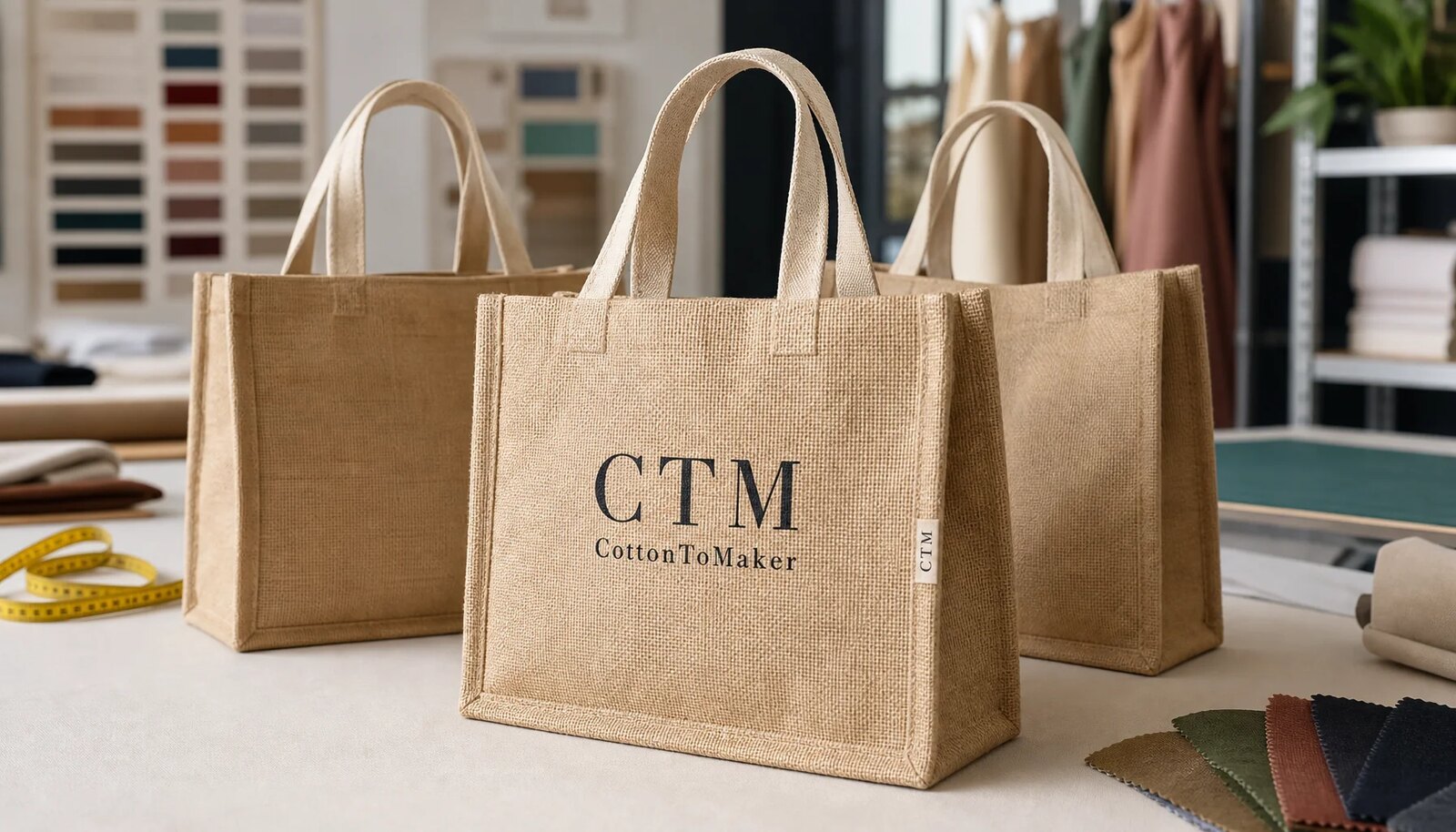
Why Craft Fair Tote Procurement Needs a Compliance Checklist
Craft fair deadlines are unforgiving. Once the event date is fixed, a late or unusable tote order can disrupt sponsor commitments, vendor kits, resale plans, and booth operations. The risk is not limited to delivery. The same request for a "natural jute tote with logo" can be quoted with different fabric weights, different lamination, narrower handles, lighter stitching, cheaper cartons, or a logo method that cannot hold detail on coarse jute. On paper, those quotes may look comparable. In production, they are not the same product.
A custom jute tote bags supplier compliance checklist gives procurement a shared language with factories, trading companies, decorators, and internal stakeholders. It turns loose preferences into measurable requirements: GSM, finished dimensions, handle drop, stitch reinforcement, print area, packing count, carton weight, inspection method, and lead-time milestones. That matters because jute is a natural bast fiber. Slubs, shade movement, and surface hairiness are expected. Open seams, weak handles, severe odor, stains, wrong labels, and damp cartons are not natural variation; they are supplier-control issues.
The strongest buying process works backward from the fair date. Start with the date bags must be physically available for counting, staging, or booth setup. Then build time for customs clearance, freight, inspection, packing, printing, sewing, cutting, material booking, sample approval, artwork changes, and supplier clarification. A supplier that promises fast production but cannot define GSM, tolerances, packing, or QC is not quoting the full requirement. They are quoting a hope.
- Use one written technical specification for every supplier so unit prices are based on the same GSM, lamination, size, handle, logo, and packing assumptions.
- Treat the craft fair date as fixed and reserve time for sample approval, bulk inspection, freight booking, customs clearance, receiving, and local delivery.
- Separate normal jute character from defects that affect function, presentation, safety, labeling, or event distribution.
- Require evidence before deposit when the order is custom size, private label, retail resale, sponsor-funded, or tied to a non-movable event date.
- Keep the approved sample, final quote, artwork proof, packing plan, inspection notes, and shipping documents together in the order file.
Define the Use Case and Supplier Route First
A jute tote used as a free attendee giveaway does not need the same construction as a resale tote, a vendor welcome kit, or a sponsor-branded merchandise item. The use case drives the specification. A tote carrying brochures may work with a simpler seam and economical bulk packing. A vendor kit carrying catalogs, jars, candles, ceramics, tools, or samples needs a deeper gusset, stronger handles, and better reinforcement. A resale item needs cleaner panels and more consistent branding because customers will inspect stitching, labels, logo clarity, and cleanliness before they pay.
Supplier route should match the risk profile. A direct sewing factory is often stronger for repeat custom production because cutting, sewing, printing, and QC decisions sit closer to the production line. A stock bag decorator may be the better option when the craft fair is near and standard dimensions are acceptable. A trading company can reduce administrative load for mixed orders, but procurement still needs to know who approves first pieces, who pays for rework, and who makes final defect decisions. Retail-ready suppliers may quote higher unit prices, yet save time by handling barcodes, hangtags, SKU separation, carton marks, and pallet rules.
Also decide whether the tote is a promotional expense, a retail product, or part of a sponsor package. That decision changes the inspection mindset. A free giveaway can tolerate broader shade variation if it is clean and functional. A retail tote needs tighter cosmetic control. Sponsor merchandise needs accurate logo placement, clean separation by design, and documented approval because more than one brand owner may review the finished goods.
- Giveaway tote: simple construction, economical bulk packing, one-color logo, and acceptance criteria focused on function, cleanliness, and on-time delivery.
- Retail resale tote: cleaner panels, tighter logo placement, hangtag or barcode option, controlled carton marks, and stricter limits for stains, skew, and print defects.
- Vendor welcome kit: deeper gusset, stronger handle reinforcement, comfortable handle drop, and carton packing that supports fast counting at the event site.
- Sponsor merchandise: pre-approved logo sample, SKU separation by sponsor or design, clear carton numbering, and documented approval from marketing.
- Packaging for handmade goods: low fiber shedding, stable shape, print that remains visible when filled, and interior finish that will not scratch or stain contents.
Specify Jute Fabric, GSM, Lamination, and Tolerances
Material language can be slippery. Suppliers may use words such as standard, heavy, rustic, natural, laminated, premium, or eco style, but those terms do not give procurement enough control. Ask for GSM and tolerance. For light craft fair giveaways carrying brochures or small purchases, a working range of roughly 250-320 GSM is often used. For retail totes, vendor welcome bags, sponsor merchandise, and wider gusseted bags, 320-420 GSM is usually safer. Larger formats or heavier contents may require more than higher GSM; they may also need wider handles, stronger seams, and better reinforcement.
GSM is still only one part of the story. A loosely woven heavy jute can distort, shed, or print poorly. A lighter laminated jute can feel stiffer than a heavier unlaminated fabric. Buyers should define weave appearance, stiffness, surface hairiness, shade range, and whether a cotton-jute blend is acceptable. If the bag will be marketed as jute, avoid vague blend language. Ask the supplier to state the composition used in the order file and, when required, in the product labeling.
Lamination should be chosen on purpose, not left to supplier habit. Laminated jute holds shape better, can reduce some interior fiber shedding, and often gives a more stable print surface. It can also crease when folded, add a plastic layer, and trap odor when packed too soon after printing or stored in humid conditions. Unlaminated jute has a more natural handfeel and suits many craft brands, but print detail can be less sharp and loose fibers more visible. Once the sample is approved, do not allow a quiet switch between laminated and unlaminated fabric.
- State target GSM and tolerance; if the supplier cannot commit to a number, require the approved sample to become the physical control standard plus a written fabric description.
- Define natural shade range, dyed or bleached status, lamination, blend allowance, panel consistency, and whether front and back panels must come from the same fabric lot.
- Ask for bulk roll photos before cutting and require reporting of stains, water marks, oil spots, shade bands, loose yarn, damp smell, or lamination defects.
- Confirm whether the bag will be folded across the logo panel; laminated jute can show stronger fold marks than unlaminated jute.
- Record fabric feel, stiffness, odor, shade, and surface hairiness in the sample approval notes so bulk variation is easier to judge.
Lock Construction Details Before Price Approval
Construction is where many quote differences hide. Finished size, gusset depth, top hem width, seam type, handle material, handle width, handle drop, stitch density, and reinforcement pattern all affect cost and performance. A quote that lists only width, height, and logo leaves too much room for supplier interpretation. The bag may look acceptable while empty, then distort, sag, or strain once filled at a busy craft fair booth.
For standard tote sizes, buyers often use tolerances around +/- 1 cm for width and height, +/- 0.5 cm for gusset, and +/- 1 cm for handle drop. These are useful starting points, not universal rules. A small retail tote with a centered logo may need tighter placement control than a large giveaway tote. Whatever tolerance is chosen, write it into the technical sheet. Inspectors cannot enforce "same as sample" unless the sample has been measured, photographed, and linked to the purchase order.
Handles deserve a separate line in the RFQ. Cotton webbing handles are common and comfortable. Jute handles fit a natural look, but they can feel rougher and may need better edge control. Rope handles, padded handles, or wider webbing can support heavier contents, but they change both appearance and cost. The joint should use the approved reinforcement pattern, such as box stitch with cross stitch, bar tack, or multiple rows of dense stitching. If the tote is expected to carry a stated weight, ask the supplier how that handle joint is verified.
- Specify finished width, height, gusset, top hem, seam type, seam finish, stitch density standard, thread color, handle drop, handle width, and handle material.
- Define raw-edge policy: exposed raw jute may be acceptable for rustic low-cost bags, while resale totes may need overlock, binding, or folded seam finishing.
- Set practical tolerances for dimensions and logo placement before sampling; do not wait until final inspection to decide what is acceptable.
- Require the same reinforcement pattern in bulk as on the approved sample, and photograph the inside and outside of the handle joint.
- Ask whether cutting is manual or die/knife guided because cutting method can affect dimensional consistency on larger orders.
Choose Artwork and Print Method for Coarse Jute
Jute is not a smooth canvas. Coarse yarns, slubs, and uneven surface texture affect ink coverage, fine lines, small text, QR codes, gradients, and tight multi-color registration. For many craft fair tote orders, screen printing is the most predictable option for one to three solid colors. It performs best with bold artwork, enough spacing, and a print area that avoids seams, gusset folds, and heavy creases.
Some artwork should not be printed directly on jute. Detailed maker illustrations, sponsor lockups, fine typography, and QR codes may need a smoother surface. Options include a sewn cotton patch, woven label, printed cotton panel, or transfer. Each option has its own checks. Transfers need adhesion, edge-lift, cracking, and stiffness review. Sewn labels need placement, stitch security, folded edges, and pull resistance. A cleaner logo is often worth more than forcing a difficult print method onto rough fabric.
Artwork approval should include a physical sample. A PDF proof confirms position, spelling, and rough scale, but it does not show how ink behaves on bulk jute. Ask for a strike-off or pre-production sample on actual material. Measure placement from fixed points: top opening, side seam, gusset edge, and handle centerline. If the supplier needs to thicken lines, simplify small text, increase spacing, or adjust color for production, approve those changes before bulk printing starts.
- Provide vector artwork, Pantone or brand color references, maximum print area, logo size, placement drawing, and minimum acceptable line thickness.
- Avoid placing critical artwork across gusset folds, bottom folds, rough seam areas, or locations likely to crease during packing.
- For screen print, inspect broken letters, ink bleeding, pinholes, heavy ink buildup, poor curing, shade deviation, registration shift, and ink transfer after light rubbing.
- For QR codes or small text, test readability on a physical sample at the intended print size; do not rely on a digital mockup.
- For labels or patches, specify label material, size, edge finish, stitch color, placement tolerance, and pull resistance during normal use.
Build a Quote That Reveals True Landed Cost
MOQ for custom jute tote bags depends on more than the number of finished bags. It can be tied to fabric purchasing, cutting yield, sewing-line setup, screen preparation, ink mixing, label production, carton sourcing, and export handling. A supplier may offer a low MOQ for stock dimensions, then require more pieces for custom size, dyed jute, heavier GSM, multi-color print, side labels, inner pockets, or retail packing. Ask for both the minimum producible quantity and the quantity where pricing becomes more efficient.
Compare quotes line by line. Two suppliers can show similar unit prices while including different services. One quote may include screen setup, pre-production sample, export cartons, carton marks, and individual packing. Another may include only the bag, with add-ons appearing later. For craft fair orders, landed cost can shift quickly because of carton volume, gross weight, palletization, Incoterm, duties, inspection fees, and local delivery. A higher factory price may still be the better buy if it prevents repacking, relabeling, damage, or urgent freight.
Use the same Incoterm and packing assumptions when collecting supplier prices. EXW, FOB, CIF, DAP, and delivered pricing are not interchangeable unless freight responsibility, export handling, insurance, customs clearance, and destination charges are understood. If the event date is close, ask for air and sea options separately. Compare the freight upgrade against the cost of missing the fair or receiving bags too late to inspect and stage. Also confirm whether the supplier ships exact quantity or allows overage or shortage, because event counts are often fixed.
- Material cost drivers: GSM, lamination, dyeing, shade control, blend composition, fabric waste, and whether bulk material is reserved after sample approval.
- Labor cost drivers: gusset depth, seam binding, lining, inner pocket, label sewing, handle reinforcement, cleaning, trimming, and extra sorting.
- Print cost drivers: color count, print area, screen setup, ink coverage, curing or airing time, artwork complexity, and rejection risk on rough jute.
- Packing cost drivers: polybags, tissue, hangtags, barcodes, carton strength, pieces per carton, palletization, moisture protection, and carton labeling.
- Landed cost drivers: Incoterm, carton volume, gross weight, freight mode, duties, customs support, inspection, destination handling, and warehouse labor.
Verify Supplier Evidence Before Deposit
Before paying a deposit, ask the supplier to prove how the order will actually be made. Catalog photos and polished showroom images are not enough. They may show a past order, a different material, or another factory. Better evidence includes photos of jute rolls, cutting tables, sewing lines, handle stitching, print strike-offs, quality sorting, packed cartons, and comparable finished bags. The goal is not to collect paperwork for its own sake. The goal is to confirm that the supplier understands the order and controls the steps that create risk.
For a new supplier, confirm business identity and production responsibility. A direct factory should explain which steps are in-house and which are subcontracted. A trading company should disclose how it controls the factory, who approves first pieces, who decides rework, and who pays for defects. A stock decorator should confirm whether the bags come from current inventory or will be newly made. When a supplier cannot explain who performs each step, procurement has limited leverage once defects appear.
Evidence also protects downstream brand, sponsor, and retail requirements. If the tote carries a private label, barcode, country-of-origin statement, or sponsor logo, the order file should connect the approved sample to the bulk shipment. Keep the supplier quote, final technical specification, artwork proof, sample approval photos, packing plan, inspection report, and shipping documents together. For resale or retailer programs, review labeling, hangtag language, barcode format, and packaging rules before production starts, not at packing time.
- Request the legal company name, invoice entity, export registration if relevant, and factory role before opening a new supplier account.
- Ask for actual production photos covering fabric rolls, cutting, sewing, handle attachment, printing, cleaning, inspection, packing, and carton marking.
- Require a written material description covering jute GSM, lamination, handle material, thread, label, ink, accessory, and any blend or recycled-content claim.
- Collect the supplier QC checklist and confirm it covers measurement, stitching, print placement, odor, stains, loose fiber, packing count, and carton condition.
- For retail or sponsor programs, approve country-of-origin wording, hangtags, barcodes, warning labels if applicable, and carton labels before packing.
Control the Pre-Production Sample and Bulk Handoff
A pre-production sample should prove the real production method, not just the look of the bag. It should use actual bulk jute, actual lamination, actual handle webbing, actual thread, actual label, the final print process, and the intended packing fold. If the supplier sends a sample made from leftover material or a different logo method, procurement has not approved the bulk order. Sampling must connect directly to the bill of materials and the purchase order.
Sample approval should be measurable. Record finished width, height, gusset, handle drop, handle width, top hem width, logo size, logo placement, sample weight, fabric feel, shade, odor, seam finish, label position, and packing fold. Notes such as "good quality" or "logo centered" are too loose for production control. A stronger approval includes measured tolerances and photos of the front, back, side, interior, handle joint, label, and folded packing condition.
The bulk handoff is a common failure point. A sample-room operator may produce a cleaner tote than the mass sewing line. Require first-piece approval or, at minimum, clear first-piece photos before full production continues. Compare the first bulk unit against the approved sample for fabric shade, stiffness, dimensions, stitch reinforcement, logo position, print clarity, label placement, and packing method. If the first piece is off-spec, production should pause before the same problem is repeated across the order.
- Approve the sample only when fabric, lamination, handles, thread, seams, logo, label, and packing fold match the intended bulk specification.
- Measure the sample and attach the measurements to the purchase order so the inspection team has objective targets.
- Load the bag with expected contents and check handle stress, seam strain, shape distortion, user comfort, and whether the bottom sits as expected.
- Rub the print with a dry white cloth and flex the printed panel lightly to identify poor adhesion, dust transfer, cracking, or loose fibers.
- Require first-piece photos or approval before full bulk production, especially for new suppliers, new artwork, custom size, or retail-ready packing.
Set Inspection Standards for Function, Branding, and Cleanliness
A useful inspection standard does not reject every natural jute characteristic. Small slubs, slight shade movement, and loose fibers can be normal when they stay within the approved sample range. The standard should separate critical, major, and minor defects before the inspector arrives. Critical defects affect safety, legal compliance, or usability. Major defects affect distribution, brand presentation, resale value, or normal use. Minor defects are small cosmetic issues that do not change the function or main display appearance.
Functional QC should start with handle attachment, seam integrity, and dimensions. Inspectors should look for open seams, skipped stitches, broken threads, loose handles, seam slippage, frayed raw edges, uneven top hems, and incorrect gusset shape. If the buyer requires a load check, the method should be defined before production. Even a simple agreed method, such as loading the bag to the stated carrying weight for a defined handling period, is better than a vague claim that the tote is "strong enough." Formal laboratory testing may be required for certain retail or regulated programs, but it should be quoted and scheduled upfront.
Brand checks matter because craft fair totes are carried in public, photographed, reused, and sometimes sold. The logo should be clean, positioned within tolerance, and free from severe bleeding, missing ink, unreadable letters, registration shift, or ink transfer. Odor and cleanliness should be checked after cartons are opened because packed jute can smell different from loose samples. Carton condition is part of QC too. Crushed, damp, mislabeled, or overloaded cartons can create receiving problems even when the bags inside are usable.
- Critical defects: unsafe handle failure, mold, sharp contamination, wrong required labeling, severe odor that makes use impossible, or wrong product/design shipped.
- Major defects: open seams, loose handles, wrong logo color, logo outside tolerance, stains on main panel, unreadable print, mixed cartons, or dimensions affecting use.
- Minor defects: small natural slubs, slight shade variation within approved range, small loose fibers, or tiny cosmetic marks outside the main display area.
- Sampling plan: open cartons from different production times, operators, and pallet positions; do not inspect only cartons staged for photos.
- Inspection report: include measured dimensions, defect photos, carton count, packing count, odor notes, print rub observations, and pass/fail decision.
Plan Packing, Carton Marks, Moisture Control, and Lead Time
Packing is not a minor afterthought. It affects freight cost, warehouse labor, event setup, and the condition of the finished tote. A carton packed with too many jute bags may reduce carton count but become too heavy for event staff. A weak carton can crush during handling. A fold across the logo panel can leave a visible crease, especially on laminated jute. Approve the packing plan before the supplier buys cartons, not after production is finished.
Choose individual polybags only when they serve a real purpose. For retail resale, individual packing can protect cleanliness, support barcode labeling, and reduce handling damage. For giveaways, bulk stacks may reduce plastic use and speed distribution. For sponsor or VIP bags, tissue, grouped cartons, or carton separation by design may matter more than the lowest packing cost. Moisture control also deserves attention. Damp material, wet cartons, insufficient airing, and humid storage can create odor or staining. For sea freight or humid seasons, ask about dry storage, carton liners, desiccant where appropriate, and ventilation before loading.
Lead time should be managed as a sequence of milestones, not a single production estimate. Include artwork review, sample making, sample transit, approval, deposit receipt, material booking, cutting, sewing, printing, ink curing or airing, trimming, final inspection, packing, freight booking, export documents, customs clearance, and local delivery. Freeze artwork, sample, packing, carton marks, Incoterm, delivery address, and defect classification before production release. If the schedule is tight, request checkpoint photos at material receipt, cutting start, first print, sewing progress, packed cartons, and inspection readiness.
- Set pieces per carton, maximum gross weight, carton dimensions, fold method, logo-facing direction, inner protection, pallet option, and carton strength expectation.
- Approve carton marks showing item number, PO number, design, quantity, carton number, gross weight, net weight, carton size, destination, and warehouse label format.
- Use moisture protection for sea freight or humid storage, including dry cartons, carton liners, desiccant where appropriate, and sufficient airing before sealing.
- Schedule inspection before shipment booking so failed goods can still be sorted, repaired, reprinted, or replaced without missing the fair date.
- Add buffer for dyed jute, custom labels, multi-color screen print, retail barcode packing, palletization, testing, and first-time supplier onboarding.
Specification comparison for buyers
| Supplier option | What to verify | Commercial advantage | Buyer risk to control |
|---|---|---|---|
| Direct sewing factory | jute roll photos, lamination sample, odor-control process, handle pull evidence, and pre-shipment carton condition photos | Better sample-to-bulk control and faster production feedback | May be weaker on export paperwork or branded packing unless checked early |
| Trading company | Factory name, production photos, trim-source proof, and who owns QC decisions | Can coordinate small mixed orders and extra services | Markup can hide real factory capability and slow defect decisions |
| Specialized bag workshop | handle stitching, side gusset, lamination edge control, inner seam cover, and fiber shedding tolerance | More practical for detailed construction, trims, and repeat programs | Capacity may be limited during peak seasons |
| Low-price general supplier | laminated or unlaminated jute, cotton-jute blend, inner coating, odor control, yarn thickness, and color shade variation | Useful for simple promotional runs with loose specs | Material downgrades, weak packing, and vague inspection scope can erase savings |
| Retail-ready supplier | airing time, moisture absorber, carton liner, bundle wrap, odor separation, and warehouse ventilation before loading | Can handle labels, SKU separation, carton marks, and receiving rules | Higher unit cost must be compared against reduced warehouse work |
| Compliance-focused supplier | Fabric records, labeling review, test plan, and production traceability | Safer for retail programs and repeat brand orders | Documentation claims need evidence, not only sales language |
| Local sample room plus bulk factory | Signed sample, bulk factory handoff, first-piece photos, and deviation owner | Good for complex branding before large production | Sample room quality may not match bulk line unless handoff is controlled |
Buyer checklist before sampling
- Define the craft fair role: free giveaway, paid retail tote, vendor welcome kit, sponsor merchandise, booth shopping bag, or packaging for handmade goods.
- State finished width, height, gusset depth, handle drop, handle width, handle material, top hem width, finished bag weight target, and intended carrying weight.
- Specify jute fabric GSM, GSM tolerance, natural or dyed shade range, laminated or unlaminated construction, and whether a cotton-jute blend is allowed.
- Confirm seam construction: side seam, bottom seam, gusset style, overlock or binding, stitch density target, thread color, raw-edge policy, and reinforcement at stress points.
- Require a pre-production sample using actual bulk jute, actual lamination, actual handles, actual stitch construction, actual artwork, labels, and intended packing fold.
- Provide vector artwork with Pantone references, logo size, placement measurements, minimum line thickness, print area boundary, and approval steps for any artwork adjustment.
- Set measurable acceptance criteria for size tolerance, logo placement, color variation, ink adhesion, handle pull, seam strength, odor, fiber shedding, stains, and carton condition.
- Request packing details: pieces per carton, fold direction, carton dimensions, gross weight, inner moisture protection, polybag policy, pallet option, and carton label format.
- Separate sample lead time, sample transit, buyer approval, material booking, bulk production, inspection window, freight booking, customs clearance, and local delivery.
- Compare quotes using the same Incoterm, currency, quantity, GSM, lamination, logo method, screen charges, packing assumptions, testing cost, inspection support, and overage policy.
Factory quote questions to send
- What exact jute GSM will be used for bulk production, what GSM tolerance do you control, and how is GSM checked before cutting?
- Is the material natural jute, dyed jute, bleached jute, laminated jute, unlaminated jute, cotton-jute blend, or another blend, and how will it be described on the order file?
- What finished size tolerance do you commit to for width, height, gusset, handle drop, handle width, top hem, and logo placement?
- Which production steps are in your facility and which are subcontracted: fabric sourcing, lamination, cutting, sewing, printing, labeling, cleaning, inspection, and packing?
- What MOQ applies to this exact size, GSM, lamination, handle type, label, packing method, and print color count, and what quantity gives the next price break?
- Can you make a pre-production sample using actual bulk material and final artwork before mass production, and how many working days are needed after artwork approval?
- Which print method do you recommend on coarse jute, and what minimum line thickness, registration tolerance, color limitation, ink curing time, or artwork adjustment must we approve?
- What handle pull or load method do you use, what expected carrying weight are you quoting against, and what reinforcement pattern will be used at the handle joint?
- How do you control jute odor, moisture, dust, loose fiber, and lamination smell before packing, especially for sea freight or humid-season storage?
- How many pieces are packed per carton, what are the carton dimensions and gross weight, and can cartons meet our warehouse label, pallet, or event distribution rules?
Quality-control points to confirm
- Finished size tolerance for standard jute totes should normally be controlled around +/- 1 cm for width and height, +/- 0.5 cm for gusset, and +/- 1 cm for handle drop unless the approved spec states otherwise.
- Jute fabric weight should match the approved sample and agreed GSM tolerance; bulk rolls should be checked before cutting for GSM drift, loose yarn, stains, oil marks, shade bands, damp smell, and lint.
- Lamination should be checked for peeling, bubbles, edge gaps, tacky smell, cracking at folds, uneven stiffness, white stress marks, and visible creases on the print panel.
- Handle attachment should use the approved reinforcement, such as box stitch with cross stitch, bar tack, or dense multi-row stitching, and should be checked against the stated carrying-weight expectation.
- Stitch density should be measured on representative seams; common production targets are often expressed as stitches per inch or centimeter, so the buyer should approve the supplier's measurable standard before bulk sewing.
- Print placement should be measured from the top opening, side seam, gusset edge, and handle centerline, not judged by eye, especially when artwork sits close to seams or the bottom fold.
- Screen print quality on coarse jute should be checked for broken letters, ink bleeding, pinholes, heavy ink buildup, shade deviation, registration shift, poor curing, and ink transfer after light rub testing.
- Needle holes, skipped stitches, broken threads, seam slippage, frayed edges, uneven hem folding, exposed raw jute, and loose labels should be classified as critical, major, or minor before inspection.
- Odor should be assessed after cartons are opened, not only on loose samples, because damp jute, trapped moisture, lamination, ink curing, and insufficient airing can change the packed smell.
- Cartons should be checked for burst strength suitability, moisture marks, crushed corners, loose tape, inaccurate carton marks, mixed designs, and safe gross weight for warehouse or event staff handling.