Start With The Carton, Not Only The Bag
For trade show exhibitors, custom jute tote bags are both a branded product and a logistics item. The buyer may approve a good-looking sample, yet still face problems if the cartons are too heavy, weak, poorly marked, or packed in a way that creases the logo panel. A tote that arrives late, damp, crushed, or hard to find at receiving has already failed part of its job, even if the sewing and printing are technically acceptable.
Carton planning belongs in the RFQ, not at the end of production. Pieces per carton affects unit handling cost, carton dimensions, gross weight, freight cube, pallet layout, warehouse receiving, inspection method, and booth setup speed. If one supplier quotes 50 pcs per carton in a 5-ply export carton and another quotes 100 pcs per carton in lighter board, the two prices are not equivalent. B2B buyers need the packed configuration before they can compare cost or risk.
This is especially true for trade show exhibitors because delivery windows are fixed. Advance warehouses and venue docks follow receiving rules. Show decorators may require carton labels, booth numbers, target move-in dates, or material handling forms. When carton planning is delayed, the buyer may have to pay for relabeling, repacking, air freight, or emergency labor at the worst possible point in the timeline.
- Treat pieces per carton, carton size, gross weight, and carton marks as part of the product specification.
- Ask for estimated packed carton data with the first serious quote, then require confirmation before freight booking.
- Set a maximum carton weight based on the people who will actually lift or open the cartons at the warehouse or booth.
- Include event receiving references early so carton labels, packing lists, and freight documents match.
- Compare supplier offers by landed cost and handling risk, not only by the printed bag unit price.
Bag Construction Drives Carton Volume
The carton plan starts with the finished bag construction. A flat jute tote for brochures can pack tightly because each piece lies nearly flat. A gusseted tote creates more air space, especially if the side gussets are folded unevenly or the bottom panel has added structure. A large laminated shopper may look more premium at the booth, but it normally reduces pieces per carton and increases freight cube.
Common exhibitor sizes include approximately 35 x 40 cm, 38 x 42 cm, and 40 x 35 x 15 cm with side and bottom gussets. Those numbers are only useful when the buyer also defines handle drop, fabric weight, lamination, seam binding, and whether the bag must stand open. A tote built for catalogs and light giveaways can use a different structure than a tote expected to hold boxed samples, drink bottles, or heavier literature kits.
Jute fabric weight changes both presentation and packing. Lighter jute may compress more easily, but it can arrive limp, wrinkled, or less consistent at the print edge. Heavier laminated jute gives the bag more body and makes the front panel sit flatter, but it increases carton weight and may show fold pressure if packed too tightly. Many trade show tote programs use 14 oz to 16 oz laminated jute, or a mill-specific GSM range near 270-320 GSM before lamination, because it balances shape, cost, and hand feel. The correct choice still depends on use, artwork, and shipping method.
- Flat brochure tote: lower carton cube, easier counting, suitable for lightweight handouts.
- Medium gusset tote: better for mixed giveaways, catalogs, and small boxed items, with more attention needed to folding.
- Large laminated shopper: stronger booth presence and better perceived value, but fewer pieces per carton.
- Heavy sample tote: needs reinforced stitching, realistic pull testing, and carton weight control more than a small GSM upgrade.
- Dyed or trimmed jute bag: may require higher MOQ, longer material approval, and more careful color lot review.
Set Carton Quantity By Handling Reality
A practical carton quantity for many medium custom jute tote bags is 50 pcs per master carton. That count often keeps weight manageable, allows bundles to sit without extreme compression, and gives warehouse teams a simple counting unit. For large gusseted bags, premium laminated styles, or bags with stiff handles, 25 pcs per carton may protect shape and presentation better. For very thin flat bags, 100 pcs can work, but only after checking gross weight, carton board strength, and dimensional freight cost.
Procurement teams sometimes chase the lowest packing cost without seeing the downstream effect. A carton that saves a small amount at the factory can become expensive if it exceeds the receiver's preferred weight, needs two people to lift, bulges on the pallet, or crushes the bottom layer of bags. Trade show shipments commonly pass through several hands: factory warehouse, truck, port or airport, forwarder warehouse, customs, domestic carrier, advance warehouse, decorator, and booth team. Each transfer is a chance for weak cartons to fail.
The best carton quantity is not a universal number. It is the point where bag presentation, carton durability, freight efficiency, and human handling all remain acceptable. Buyers should ask the supplier to explain the proposed count rather than simply accept the default. If the supplier recommends 100 pcs per carton, ask for estimated weight, carton dimensions, board type, and whether a packed trial has been done. If the supplier recommends 25 pcs, ask whether the additional carton count changes freight cube or destination receiving fees.
- Keep carton gross weight commonly below 15 kg when booth or warehouse teams will handle cartons manually.
- Use 25 pcs per carton for large gusseted bags, heavy laminated fabric, rigid handle structures, or premium presentation.
- Use 50 pcs per carton as a common starting point for medium event totes when weight and cube are acceptable.
- Avoid overfilled cartons that bulge at the sides, because they stack poorly and are more likely to arrive crushed.
- For multi-design orders, use carton quantities that make destination sorting and count verification simple.
Protect Print And Handles During Folding
Print quality does not end when the ink dries. Jute has a rough surface, and the printed face can be affected by pressure, rubbing, fold lines, and handle placement inside the carton. The safest folding method is usually a flat fold that keeps the logo panel smooth and places handles inside the bag body without crossing directly over the printed artwork. If the handles are thick cotton webbing or rope, their position matters because they can leave pressure marks on large solid logos.
Most exhibitor jute totes use screen printing because it handles bold logos, sponsor names, simple campaign graphics, and one to three solid colors well. Jute texture is not ideal for tiny reverse text, fine gradients, or delicate line work. Heat transfer can help with finer detail, but it must be tested on the actual jute and lamination combination. The buyer should not approve heat transfer only from a digital mockup; adhesion, edge lifting, and rub resistance need physical checking.
Heavy ink coverage deserves extra care. Large solid blocks can feel tacky if packed too soon, and rough jute can mark the printed surface when bundles are compressed. A kraft interleaf every 10-25 pcs, or between print-facing surfaces, may be worthwhile for high-visibility programs. That choice adds material and packing labor, but it may be cheaper than receiving bags with visible scuffing on the logo panel.
- Confirm whether handles fold inside the bag, outside the bag, tied together, or laid along the side seam.
- Avoid placing thick handles directly across the logo during carton packing.
- Require a packing photo that shows fold direction, handle position, bundle count, and logo orientation.
- For heavy print coverage, test rub resistance after stacking, not only after a single printed sample dries.
- Define artwork limits early: minimum line width, smallest readable text, print size, Pantone target, and placement tolerance.
Quote MOQ And Split Designs Clearly
MOQ for custom jute tote bags is driven by more than the total number of bags. Fabric procurement, cutting efficiency, print setup, handle materials, carton preparation, and inspection all affect the workable quantity. A factory may support a lower MOQ for a standard natural jute bag with cotton webbing handles and one screen print. The MOQ can rise quickly when the buyer requests dyed jute, custom woven handles, special lining, retail hangtags, barcode labels, or multiple sponsor versions.
Trade show programs often look simple at first and then become complicated. A buyer may say the order is 2,000 pcs, but the actual requirement is 500 pcs for each of four sponsors, packed for two destinations, with different carton marks. That is a different production job. Each design split may require screen setup, print changeover, separate QC, separated packing, and distinct carton labeling. Each destination split may require different labels and packing lists.
For procurement, the cleanest RFQ separates total quantity, per-design quantity, per-destination quantity, and per-carton requirements. This prevents a supplier from quoting a blended number that later changes. It also makes internal approval easier because setup charges, split charges, and packing costs are visible. A lower unit price is not useful if it assumes one design and one destination while the real order has six artwork versions and three booth teams.
- Ask for MOQ by bag construction, fabric color, print design, and destination split.
- Require setup charges and split-design surcharges as separate quote lines when possible.
- State whether carton marks must differ by sponsor, booth number, regional team, or receiving address.
- Keep item codes consistent across artwork approval, quote, invoice, packing list, and carton marks.
- Reduce complexity for urgent events by using one standard bag body, fewer print versions, and common packing.
Approve Samples With Packing Evidence
A printed sample confirms important details: fabric feel, color direction, logo size, print placement, stitching, handle drop, and general workmanship. It does not confirm that the order will arrive booth-ready. For trade show shipping, the buyer also needs to see how the bag folds, how the handles sit, how bundles are stacked, whether the print is protected, and whether the carton closes naturally at the proposed count.
Not every order needs a full packed sample carton. For a small rush order, packing photos and a clear packing specification may be enough. For a larger program, an important launch, or a premium sponsor giveaway, one fully packed pre-shipment carton can be worth the extra step. It allows the buyer or inspector to check carton board strength, quantity per carton, fold method, inner liner, carton marks, gross weight, and visible pressure on the top and bottom bags.
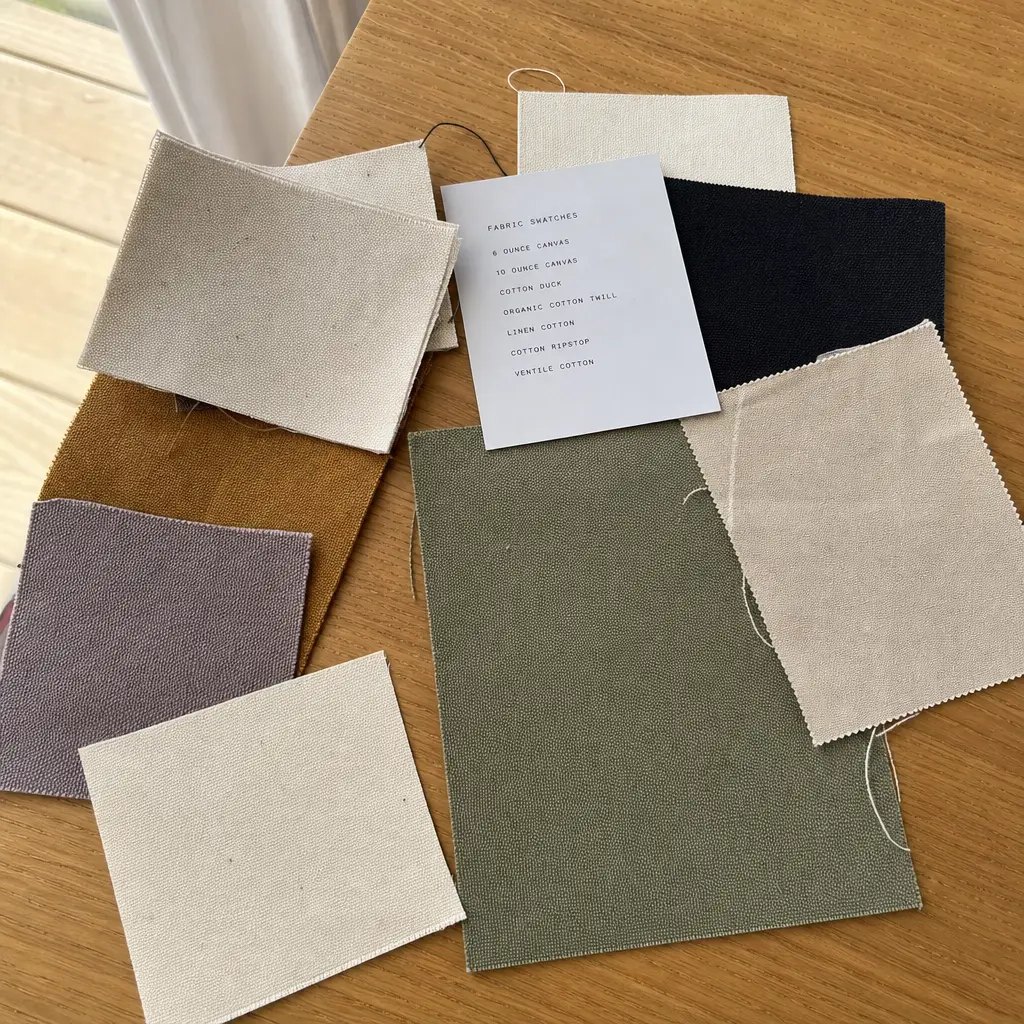
Sample approval should move in stages. First, approve fabric swatch and lamination. Second, approve artwork direction through a printed strike-off or pre-production sample. Third, approve final construction and handle details. Fourth, approve packing method before the full production run is sealed. This sequence reduces the risk of discovering a packing problem only after all cartons are closed and freight is already booked.
- Fabric swatch approval: check weight, tone, lamination, odor, stiffness, and surface texture.
- Printed strike-off approval: check print size, color direction, line clarity, ink coverage, rub resistance, and placement.
- Pre-production sample approval: check handle drop, stitching, gusset shape, seam allowance, binding, and finished dimensions.
- Packing evidence approval: check fold direction, handle placement, bundle count, liner, carton fit, carton board, and mark layout.
- Packed carton approval: weigh the carton, measure carton dimensions, open and close it, and inspect top, middle, and bottom bags.
Plan Carton Marks For Show Receiving
Carton marks are not a cosmetic afterthought. They are how the shipment is identified through warehouses, trucks, receiving docks, and booth setup. At minimum, carton marks should include PO number, item code, product description, color, quantity per carton, carton number, gross weight, net weight, carton dimensions if useful, and country of origin where required. For event shipments, that is often not enough.
Trade show receiving manuals may require show name, exhibitor name, booth number, advance warehouse address, decorator reference, target move-in date, or special material handling labels. If this information is unavailable when cartons are printed, the buyer needs a label plan. Forwarders can add labels later, but this creates another handling point and another opportunity for errors. When cartons are split by design, destination, or booth team, the mark format must make sorting obvious.
The carton mark should match commercial documents. Item codes on the quote, proforma invoice, packing list, carton marks, and receiving paperwork should use the same naming system. Inconsistent descriptions such as 'jute bag,' 'promo tote,' and 'event bag' may be understandable to the buyer but confusing to a warehouse handling thousands of cartons for multiple exhibitors.
- Print or label carton marks on two adjacent sides so cartons remain identifiable after palletizing.
- Include carton count format such as C/NO 1-20, not only total quantity.
- Use buyer SKU, event item name, or sponsor code instead of vague descriptions.
- For split shipments, mark destination, booth team, sponsor version, or receiving reference clearly.
- Check the show manual before carton printing so advance warehouse and decorator requirements are included.
- Photograph final carton marks before loading and compare them with the packing list.
Control Freight Cube And Pallet Fit
Custom jute tote bags are often bulky relative to their unit value. Ocean freight may be driven by cubic meters, while air and courier shipments may be billed by dimensional weight. A buyer who compares only EXW or FOB unit price can miss the supplier whose carton plan makes the shipment more expensive after freight. This is why estimated carton length, width, height, gross weight, and pieces per carton should be requested at quotation stage.
The useful comparison metric is cubic meters per 1,000 pcs, plus gross weight per 1,000 pcs. Once those numbers are visible, the buyer can compare freight impact between 25, 50, and 100 pcs per carton. A slightly higher packing cost may reduce damage risk. A slightly larger carton may raise dimensional weight. A few centimeters on carton height may change pallet count. These are procurement decisions, not warehouse trivia.
Pallet planning matters when shipments move through LTL carriers, domestic warehouses, or trade show advance receiving. Cartons should sit within the pallet footprint without overhang. Pallet height should follow forwarder and receiving limits. If cartons are unstable because they are too tall, too soft, or unevenly filled, the load may need repalletizing. That adds cost and may delay delivery to the show.
- Request carton dimensions and gross weight before freight quotes are finalized.
- Calculate cubic meters per 1,000 pcs to compare suppliers and packing options fairly.
- Check actual weight versus dimensional weight for air or courier shipments.
- Confirm whether cartons fit the intended pallet footprint without overhang.
- Ask whether the quote includes palletization, pallet labels, stretch wrap, corner protection, or only loose cartons.
- Budget for destination receiving, drayage, relabeling, or repacking if trade show documents are not complete before shipment.
Build The Schedule Backward From The Event
Trade show orders do not have flexible delivery windows. The correct planning date is not the show opening date; it is the must-arrive date at the advance warehouse, decorator, fulfillment center, or venue. From that date, the buyer should work backward through domestic transfer, customs clearance, international transit, export documents, final inspection, packing, production, sample approval, artwork approval, and material procurement.
Jute can introduce schedule variation because natural material needs review for color tone, smell, lamination quality, and surface consistency. Printing adds additional timing for screen making, ink matching, curing, and correction if the strike-off is not acceptable. Carton planning adds its own deadline because packed carton data is needed for freight booking and receiving paperwork. Waiting until production is complete to ask for carton dimensions can force rushed freight decisions.
When the schedule is tight, the best risk reduction is usually simplification. Use an existing bag size, natural jute, standard handles, fewer artwork versions, and a simple screen print. This can be more effective than keeping a complicated specification and hoping air freight solves the problem. Air freight may reduce transit time, but it does not fix late artwork approval, failed print testing, missing carton marks, or wet cartons.
- State the event date, must-arrive warehouse date, and latest acceptable ship date in the RFQ.
- Build buyer approval time into the calendar for artwork, swatch, strike-off, pre-production sample, and carton marks.
- Do not start mass printing until logo size, placement, print method, and color direction are approved on jute.
- Reserve time for final inspection before cartons are sealed or before the container/truck is loaded.
- For urgent programs, reduce design splits and special materials before committing to expensive expedited freight.
Define Final Inspection Acceptance Criteria
Final inspection should reflect how the bags will be used. A retail program may emphasize barcode labels, hangtags, and individual polybags. A trade show exhibitor usually cares most about logo visibility, clean presentation, handle strength, accurate counts, correct carton marks, and fast unpacking. These priorities should be written into the inspection checklist before production starts.
Natural jute is not a perfectly uniform synthetic material. Small slubs, fiber variation, and minor shade differences can be normal within the approved range. The buyer should separate acceptable natural variation from true defects. Serious defects include weak seams, broken handles, severe odor, wet cartons, wrong fabric weight, misprinted logos, poor ink adhesion, incorrect counts, missing carton marks, and cartons that collapse under normal stacking.
Inspection should open random cartons, not only review loose samples from the production table. The inspector should check top, middle, and bottom bags because pressure marks and deformation often appear where compression is highest. Carton dimensions and gross weights should be measured against the packing list. If the shipment is split by design or destination, the inspection must verify that carton marks and internal contents match the split plan.
- Dimension check: measure width, height, gusset, handle drop, and print position against agreed tolerance.
- Material check: compare jute weight, lamination, color tone, odor, and stiffness against approved swatch.
- Strength check: pull-test handles and inspect box stitching, cross stitching, seam ends, and stress points.
- Print check: inspect registration, color direction, ink coverage, rub resistance, edge clarity, and logo placement.
- Packing check: open random cartons to confirm count, fold method, bundle quantity, liner, interleaf use, and print condition.
- Carton check: verify board strength, sealing, carton marks, gross weight, net weight, dimensions, moisture, and pallet condition.
- Split-order check: confirm artwork version, item code, carton count, and destination marks before release.
Specification comparison for buyers
| Spec decision | Recommended option | When it fits | Buyer risk to check |
|---|---|---|---|
| Jute fabric weight | 14 oz to 16 oz laminated jute, or about 270-320 GSM before lamination depending on mill standard | Trade show giveaway totes carrying catalogs, samples, water bottles, and small boxed items | Low GSM may reduce carton weight but can create limp side panels, weak logo presentation, looser print edges, and more deformation during carton compression |
| Carton quantity | 50 pcs per master carton for many medium totes; 25 pcs for large gusseted bags, rigid handles, or premium laminated styles | Air shipment, advance warehouse receiving, and booth staff handling without repacking | 100 pcs cartons may look efficient but can become too heavy, hard to palletize, and more likely to crush bottom bags |
| Bag folding method | Flat fold with handles laid inside the bag body; add kraft interleaf every 10-25 pcs when print coverage is heavy | Screen printed or heat transfer jute totes where the front logo panel must look clean at handout | Handles folded across the logo can leave pressure marks, while tight rolling can crack lamination or distort gussets |
| Print method | One or two-color screen print for most jute; heat transfer only when fine detail is essential and tested on the actual laminated surface | Bold exhibitor logos, sponsor names, booth campaigns, and simple retail-style graphics | Fine reverse text, gradients, and large solid ink blocks need pre-production testing because jute texture can break ink coverage |
| Inner packing | Bundle packing in a moisture-resistant master liner for bulk booth distribution; individual polybags only when retail handling, kitting, or cleanliness requirements justify them | Trade show programs where bags are opened in cartons at a booth, advance warehouse, or kit assembly area | Individual polybags add labor, carton volume, plastic waste, and unpacking time; no liner increases moisture and odor risk in ocean transit |
| Carton board strength | 5-ply export carton with suitable edge crush strength for ocean freight; heavier board or reinforcement for cartons above 15 kg gross weight | International shipments moving through factory loading, forwarder warehouses, show decorators, and venue receiving docks | Thin cartons can pass factory packing but fail after humid storage, pallet stacking, forklift contact, or repeated transfers |
| Carton marks | PO number, item code, bag description, color, quantity, carton count, gross/net weight, country of origin if required, and event receiving reference on two sides | Multi-SKU programs, distributor orders, sponsor splits, and direct-to-venue or advance-warehouse deliveries | Missing show name, booth number, or destination reference can delay receiving even when the shipment physically arrives on time |
| Pallet plan | Cartons sized to avoid pallet overhang, with pallet height kept within forwarder, truck, and venue limits | LTL transfer, domestic drayage, advance warehouse storage, and mixed promotional shipments | Carton dimensions that ignore palletization can increase dimensional weight, create unstable loads, and trigger repalletizing charges |
| Packed sample evidence | Pre-production sample plus packing photos; full packed carton approval for larger or high-visibility programs | Orders with firm event dates, multiple handling points, heavy ink coverage, or premium presentation requirements | A perfect loose sample does not prove the handles, print, bundle pressure, carton marks, or carton strength will survive the shipment |
Buyer checklist before sampling
- Define the finished bag size as width x height x gusset, and state whether dimensions are measured flat-laid or opened.
- Specify target jute fabric weight or acceptable GSM/oz range, including whether the jute is laminated, unlaminated, dyed, or natural.
- Confirm handle material, handle width, handle drop, stitching pattern, and whether handles must sit flat inside the folded bag.
- Send print artwork with Pantone references, actual print size, minimum line width, placement from top and side edges, and any sponsor version split.
- Request the proposed fold method before mass production, especially for gusseted bags or logos printed near handle attachment points.
- Set maximum carton gross weight based on who handles the cartons: factory, forwarder, advance warehouse, venue team, or booth staff.
- Ask for estimated carton dimensions, pieces per carton, gross weight, and cubic meters per 1,000 pcs before comparing supplier quotes.
- Require carton marks that match the forwarder, show decorator, advance warehouse, or venue receiving manual.
- Decide whether inner bundle packing, master carton liner, kraft interleaves, individual polybags, barcode labels, or carton labels are required.
- Include moisture-control requirements such as dry material storage, inner liner, dry cartons, container condition, and odor review at inspection.
Factory quote questions to send
- What jute GSM or oz weight is being quoted, and is the quoted weight before or after lamination?
- Is the fabric natural, bleached, dyed, laminated, or unlaminated, and can a swatch from the production lot be approved?
- What is the finished bag size tolerance for width, height, gusset, handle drop, and print placement after sewing?
- How many pieces per carton are included in the quote, and what are the estimated carton dimensions, gross weight, and net weight?
- What folding method will be used, where will the handles sit, and has this been checked against the printed logo panel?
- Which print method is included, what is the maximum print size, how many colors are priced, and what artwork limits apply to jute texture?
- Does the price include screen setup, printed strike-off, inner bundle packing, master carton, carton marks, liner, palletization, and export documentation?
- What carton board type is included, and is it suitable for ocean freight, stacking, and multiple warehouse transfers?
- What sample type will be provided before mass production: fabric swatch, blank sample, printed strike-off, pre-production sample, or packed carton sample?
- What is the MOQ by bag size, fabric color, print design, and destination, and what surcharge applies for split artwork or split carton marks?
Quality-control points to confirm
- Finished bag dimensions should be checked on flat-laid samples with tolerance agreed before production, commonly plus or minus 5 mm to 10 mm depending on size and construction.
- Jute fabric weight should be verified against the approved swatch because lighter fabric can change stiffness, print appearance, folding thickness, and carton compression behavior.
- Lamination should be checked for adhesion, odor, cracking at folds, and consistency because poor lamination can fail when bags are compressed in cartons.
- Handle attachment should be pull-tested against intended load; reinforced box stitching or cross stitching should be even, balanced, and free of broken thread.
- Seams, gussets, bottom corners, and binding should be inspected for skipped stitches, loose threads, uneven sewing, and weak stress points.
- Print registration, ink coverage, rub resistance, color direction, and logo placement should be checked on actual jute panels, not only on paper artwork.
- Large ink areas should be reviewed after drying and stacking to check blocking, transfer marks, odor, and pressure sensitivity.
- Carton quantity must match packing list count, with random carton opening during final inspection to confirm fold method, bundle quantity, inner packing, and print condition.
- Carton board, tape sealing, carton marks, gross weight, net weight, carton dimensions, and moisture condition should be inspected before loading.
- Odor and humidity should be reviewed because natural jute can absorb warehouse moisture and carry a strong smell if stored poorly.