Why carton planning belongs in the jute tote specification
For coffee roasters, custom jute tote bags are often sold or given in visible retail settings: café shelves, cupping events, farmers markets, wholesale gifts, subscription promotions, and holiday bean bundles. The bag is not only a carrier. It is packaging, merchandise, and brand media. If cartons are planned after production, the buyer may discover too late that the bags arrive creased, musty, misshaped, or difficult to receive.
Jute is bulkier and less predictable under compression than many flat textiles. A loose approval sample can look acceptable on a desk while bulk cartons reveal different problems: flattened gussets, handle imprints, ink offset, hard logo creases, bulging cartons, or trapped odor from laminated material. Those defects are usually linked to folding, stacking, carton count, moisture control, and route conditions, not only sewing quality.
Put carton planning into the RFQ from the beginning. Ask suppliers to quote the bag and the export packing together: pieces per carton, outside carton dimensions, gross weight, net weight, total carton count, total CBM, carton grade, fold method, inner protection, and carton marks. If the supplier provides only estimated figures, mark them as provisional until confirmed by a representative packed carton.
- Treat packing method as part of the product specification, especially for laminated or gusseted jute totes.
- Define unacceptable packed defects: hard logo creases, ink transfer, bulging cartons, wrong carton marks, damp smell, and crushed gussets.
- Require fold photos or a fold diagram before bulk packing begins.
- Update freight cost if first-carton measurements differ from quoted estimates.
Start with the coffee roaster use case
A giveaway tote for a cupping event should not be specified like a paid café merchandise tote. A gift carrier holding coffee bags, a mug, filters, and a brew card needs stronger construction and more controlled packing than a flat event bag carrying brochures. If the RFQ only says “custom jute tote,” suppliers will fill in the missing details with their own assumptions.
Classify the program before comparing prices. A low-cost event bag may use lighter jute, simple handles, and efficient high-count cartons if retail presentation is not critical. A café merchandise tote may need heavier fabric, cotton webbing handles, cleaner print protection, and more conservative folding. A gift bundle carrier may need a deeper gusset, reinforced bottom area, and lower carton compression to preserve shape.
This classification makes supplier quotes easier to compare. One quote may look cheaper because it assumes lighter jute, narrow handles, minimal reinforcement, and more pieces per carton. Another may include stronger handles, better lamination, interleaving for print protection, and safer carton weight. The right option depends on the selling channel and receiving route, not unit price alone.
- Event giveaway: clear branding, acceptable stitching, efficient CBM, and practical gross weight.
- Paid café merchandise: consistent dimensions, clean front panel, comfortable handles, and controlled folding.
- Gift bundle carrier: stable gusset, bottom support, load capacity, and compression control.
- Wholesale promo: accurate split packing, durable carton labels, and cartons suitable for multiple handling points.
Define bag construction before choosing pieces per carton
Carton count starts with finished construction. A 32 × 38 cm flat tote can usually stack more efficiently than a 35 × 40 × 12 cm laminated gusseted tote. A large gift carrier with wide cotton handles may need fewer pieces per carton even when the fabric weight is similar, because side seams, bottom folds, lamination, and handles create thick zones in the stack.
Define dimensions as width × height × gusset and state whether those are outside finished dimensions or usable inside capacity. Coffee roasters often need a tote to fit two 12 oz coffee bags, four 250 g bags, a mug, filters, retail boxes, or a complete gift set. A bag that barely fits slows café packing. A bag that is too large increases CBM and may look floppy on a retail shelf.
Handle drop is a common source of carton surprises. Shoulder-carry handles improve end-user comfort but add length and bulk inside the folded stack. Rope, padded, or wide webbing handles can press into printed panels. Ask where handles will sit after folding and whether handle thickness is included in the supplier’s pcs/carton calculation.
- Specify width, height, gusset, bottom construction, handle material, handle width, handle drop, and reinforcement.
- List the real load the tote must carry, not just a generic weight target.
- Agree tolerances before cutting; critical dimensions may need tighter control than non-critical panels.
- Request fold photos showing gussets, bottom panel, handle tuck, and front logo position.
Balance GSM, lamination, and freight impact
Jute GSM affects hand feel, print appearance, carton weight, and carton cube. Lighter jute can reduce cost and may allow more pieces per carton, but it can look open-weave and less premium. Heavier jute can improve structure and shelf presence, but it adds weight, reduces carton quantity, and can hold stronger fold memory after compression.
As planning references, economical promotional totes often start around 240–280 GSM, while more structured retail or gift totes frequently sit around 280–340 GSM. These ranges are not universal specifications. The right choice depends on bag size, lamination, handle construction, artwork, intended load, and shipping route. If a supplier quotes fabric in ounces or by stock description, ask for the GSM target, tolerance, and how it will be checked.
Lamination can help a jute tote stand better and resist light surface dirt, but it reduces breathability. Laminated bags should not be sealed while warm, damp, tacky, or strongly odorous. Sharp folds may show whitening, cracking, or delamination. For retail totes, the fold should avoid a hard crease through the front logo and avoid handle pressure on decorated areas.
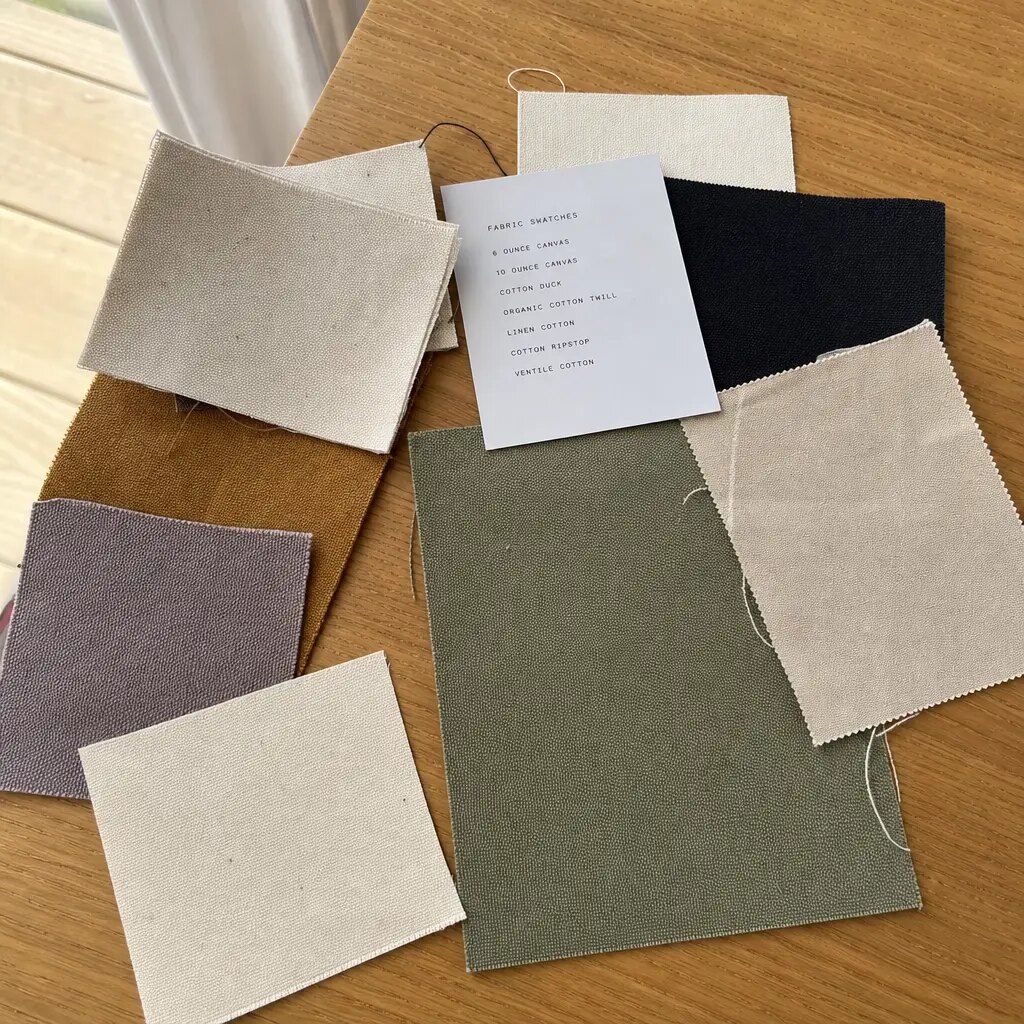
- Use swatches and finished samples; loose fabric does not show packed-carton behavior.
- Ask whether material is stock jute or custom-purchased fabric, because shade and availability may differ.
- For laminated totes, confirm airing time, odor review, and fold method before bulk packing.
- Do not compare prices unless GSM, lamination, handle construction, and packing assumptions are aligned.
Protect artwork through folding, curing, and stacking
Coffee roaster artwork often includes wordmarks, circular badges, origin names, café locations, roast icons, and one- to three-color slogans. Screen printing is practical for bold graphics on jute, but ink must cure before tight stacking. Large dark prints, laminated surfaces, warm packing rooms, and high compression increase the risk of offset, scuffing, or blocking between bags.
Heat transfer may be proposed for finer typography, gradients, or full-color artwork. It can give cleaner edges than direct print on coarse jute, but it needs adhesion checks, bending review, and folded-storage review. Embroidery, woven labels, or patches may look premium, but they add thickness and can change the safe carton count.
The fold plan is the control point. Keep the front logo panel flat where possible. Fold side gussets consistently. Tuck handles away from artwork. For large dark prints or heat transfers, consider tissue, butter paper, or release paper between printed panels. Interleaving adds cost, so it should be used to solve a defined risk rather than added automatically.
- Screen print QC: curing, dry rub, light scratch, even coverage, pinholes, bleeding, and offset review.
- Heat transfer QC: edge lifting, cracking after bending, adhesion, color shift, and folded-storage behavior.
- Patch or embroidery QC: added thickness, pressure marks, loose threads, and carton-count impact.
- Measure logo placement from fixed edges or seams, not by eye after folding.
Calculate cartons by CBM, gross weight, and route risk
There is no universal pcs/carton rule for jute totes. Many projects may be estimated around 40–100 pieces per export carton depending on tote size and construction, but those figures are only planning references. Finished dimensions, GSM, lamination, handle bulk, folding method, carton grade, and shipping route determine the safe count. Too few pieces waste freight; too many create bulging cartons, split corners, crushed lower layers, and logo pressure marks.
Set the maximum gross weight before comparing quotes. For many manually handled import cartons, 18–22 kg is a practical planning range, but your warehouse, distributor, courier, or retailer standard should override it. If cartons ship to small cafés, a lower carton weight may be easier to receive. If the order is palletized, weight may be less of a manual-handling issue, but compression and carton strength still matter.
Request outside carton dimensions, net weight, gross weight, pcs/carton, total carton count, and total CBM. CBM is calculated as carton length × width × height in meters × number of cartons. For example, 20 cartons at 0.111 CBM each equals 2.22 CBM. A quote with fewer cartons is not always better if each carton is larger, weaker, or more likely to damage the front panels.
- Confirm whether carton data is estimated or verified from a packed production carton.
- Compare unit price, total CBM, gross weight, carton grade, and damage risk together.
- Reject bulging cartons; bulge reduces pallet stability and increases compression marks.
- Update shipment booking if first-carton measurements differ materially from the estimate.
Match carton grade and inner protection to the route
A carton moving by courier faces drops, conveyors, and individual handling. Air freight is sensitive to chargeable volume. LCL cargo may be stacked with unrelated freight and handled several times. FCL shipments usually have fewer handling points, but still face container humidity and stacking pressure. Retail DC delivery adds compliance risk if labels, barcodes, dimensions, or carton marks are wrong.
For many export programs, a 5-ply corrugated carton is a common baseline, but it is not automatically sufficient. Heavy cartons, tall cartons, LCL handling, long storage, or high pallet stacking may justify stronger corrugated construction. Jute totes are soft; they do not form a rigid internal block. The carton must protect the bag shape and prevent outside compression from transferring into the printed panels.
Inner protection should solve a specific problem. A carton liner or master polybag can reduce dust and light moisture exposure, but it should not trap damp goods. Desiccant can support humid-route planning, but it cannot replace proper drying, airing, and clean storage. Tissue or release paper may be justified for dark prints, heat transfers, or high-value retail presentation.
- Sea freight: export-grade carton, moisture-aware packing, accurate carton marks, and strong closure.
- LCL: stronger carton, conservative stacking assumptions, and better edge protection if needed.
- Air freight: check dimensional weight and avoid oversized cartons with weak empty corners.
- Courier: reduce carton weight and reinforce closure because cartons are handled individually.
- Retail DC: verify barcode labels, carton marks, carton cleanliness, and packing-list accuracy.
Control moisture, odor, and storage before sealing
Jute is a natural fiber, so moisture control is a quality issue, not just a logistics preference. Coffee roaster brands operate in aroma-sensitive, food-adjacent retail spaces. The tote does not need to smell like coffee, but it should not arrive musty, sour, smoky, damp, or chemically strong. Odor problems often become worse when damp jute is sealed inside plastic for weeks.
The control plan starts before cartons are closed. Bags need adequate airing after lamination, printing, curing, and sewing. They should not be packed while warm, tacky, or damp. If a liner or master polybag is used, the goods must be dry before sealing. Desiccant supports the plan; it does not fix rushed production or wet storage.
Finished bags and packed cartons should stay off the floor and away from rain, wet walls, solvents, fuels, strong fragrances, and dirty areas. If the order supports a holiday launch or café opening, leave time for airing, QC, and repacking corrections before shipment release.
- Require airing time after lamination, printing, and final sewing.
- Do not seal damp jute inside plastic; confirm dryness and odor first.
- Include odor review for musty, sour, chemical, smoky, or unusually strong fiber smell.
- Store cartons on pallets or racks, away from wet floors and odor sources.
- For humid-season ocean freight, discuss liner, desiccant, and sealing timing together.
Approve the first packed carton, not only a loose sample
A loose approval sample can confirm material, dimensions, stitching, and artwork, but it does not show how the bag behaves after folding, stacking, compression, and storage. For paid merchandise or gift programs, approval should include fabric swatch, print strike-off if needed, finished sample, folded review, and packed-carton review.
Ask the factory to fold a representative carton using the planned bulk method. Review photos before full packing continues. Useful images include folded bag front, handle position, stack orientation, inner protection, open carton, closed carton, carton mark, measured outside dimensions, and gross weight. If the first carton is misshaped or overweight, correct the packing method before thousands of bags are sealed.
A simple packed-condition check can also be done during sampling. Fold the sample as planned, place it under weight or inside a representative carton for a short period, then reopen it. Review the front print, gussets, bottom corners, handle marks, lamination stress, and ink transfer. This does not replace formal transit testing, but it catches many common packing problems early.
- Confirm actual carton dimensions and gross weight from a packed carton, not only a spreadsheet.
- Check for hard logo creases, handle imprints, print offset, lamination cracks, and distorted gussets.
- Approve carton closure, carton marks, SKU labels, PO number, destination labels, and carton numbering.
- Keep folded-sample and packed-carton photos as inspection references.
- Update landed-cost comparison if carton CBM changes materially.
Receiving and procurement checklist for coffee roaster teams
The final carton plan should connect procurement, freight booking, inspection, and warehouse receiving. If these teams use different assumptions, problems appear late: freight quotes become inaccurate, cafés receive mixed cartons, warehouse staff reject overweight cartons, or retail stock must be reworked because the front panels are creased.
Use one approved packing data sheet for the order. It should show SKU or artwork version, bag size, material, print method, pcs/carton, carton dimensions, net weight, gross weight, carton count, total CBM, carton grade, carton marks, split-packing instructions, and whether the data is estimated or first-carton verified. Attach first-carton photos to the same record.
For split packing, lock labels by artwork, destination, purchase order, and carton number before packing starts. Mixed cartons can reduce carton count, but they create allocation risk unless packing lists and carton marks are clear. Correcting carton labels after sealing is slow and error-prone.
- Before shipment release: verify carton mark, PO, SKU, artwork version, destination, carton number, and quantity.
- At receiving: inspect outer cartons for crushing, wet marks, split seams, odor, wrong labels, and obvious bulge.
- Open the first carton per SKU and confirm pcs/carton, fold condition, print condition, handle marks, moisture, and odor.
- Check compression risk: lower-layer bags should not show permanent front-panel creases or distorted gussets.
- Record photos of acceptable first cartons and any rejected cartons for supplier feedback.
Specification comparison for buyers
| Carton planning scenario | Packed-carton data to verify | When it fits | Main buyer risk |
|---|---|---|---|
| Small flat promo tote, about 32 × 38 cm, unlaminated jute, 240–280 GSM | Example for initial planning only: supplier may propose about 80–100 pcs/carton. Require verified packed-carton length × width × height, net/gross weight, and photos before treating figures as final. | Cupping events, farmers-market giveaways, café handouts, and low-cost promotions where the tote does not need to stand upright. | Open weave, print scuffing from tight stacks, weak carton corners, and courier damage if cartons are handled individually. |
| Medium retail tote, about 35 × 40 × 12 cm gusset, laminated jute, 280–320 GSM | Example for initial planning only: supplier may propose about 60–80 pcs/carton. Verify fold diagram, handle placement, outside carton dimensions, gross weight, and total CBM from a packed sample carton. | Paid café merchandise, bean bundles, mugs, brew tools, holiday displays, and wholesale account gifts. | Gusset distortion, hard creases through the logo, handle imprints, ink offset, and odor if laminated bags are sealed too soon. |
| Large gift carrier, about 40 × 45 × 15 cm gusset, laminated jute, 300–340 GSM | Example for initial planning only: supplier may propose about 40–60 pcs/carton. Confirm packed-carton shape, bulge, compression marks, closure method, and buyer warehouse weight limit. | Premium gift sets with several coffee bags, a mug, filters, cards, or brewing accessories where presentation matters. | Higher CBM, lower pcs/carton, bottom-panel memory, carton bulging, and pressure marks on large printed panels. |
| LCL or multi-stop distribution order | Require final pcs/carton, outside dimensions, gross weight, carton count, CBM, carton grade, pallet pattern if used, carton marks, and split-packing list after first-carton packing. | Roasters shipping to distributors, regional cafés, event locations, retail stockrooms, or third-party fulfillment centers. | More handling points increase drop, compression, moisture, label, and mixed-carton allocation risk. |
| Air freight or courier replenishment order | Request dimensional weight estimate, lower practical gross weight per carton, reinforced carton closure, edge protection if needed, and carton-label photos. | Urgent seasonal launches, café opening kits, limited merch drops, or short-run replenishment. | Freight may charge by volume; oversized cartons with empty corners cost more and collapse more easily. |
| Palletized FCL or warehouse-direct order | Verify carton strength, stack height, pallet footprint, stretch-wrap plan, carton orientation, container moisture plan, and receiving-label compliance. | Larger roaster programs with centralized receiving, planned inventory storage, or national merchandise distribution. | Lower handling may reduce damage, but compression, humidity, and incorrect carton marks can still create receiving failures. |
Buyer checklist before sampling
- Define finished bag size as width × height × gusset and state whether measurements are outside finished dimensions or usable inside capacity.
- List the intended load: number and size of coffee bags, mugs, filters, brew tools, retail cartons, gift cards, inserts, or event materials.
- Specify jute GSM target, acceptable tolerance, weave expectation, shade range, lamination or lining, and whether fabric is stock or custom-purchased.
- Confirm handle material, handle width, handle drop, reinforcement patch, stitch pattern, thread color, and whether the tote is hand-carry or shoulder-carry.
- Provide artwork size, color references, print location, print method preference, and placement tolerance measured from fixed edges or seam lines.
- State the shipping route: courier, air freight, LCL, FCL, distributor warehouse, café allocation, fulfillment center, or retail DC.
- Set maximum carton gross weight based on your receiving standard; 18–22 kg is a common manual-handling planning range, not a universal rule.
- Request pieces per carton, outside carton dimensions, net weight, gross weight, total carton count, total CBM, carton grade, and whether data is estimated or verified from a packed carton.
- Require photos of the fold sequence, handle placement, inner protection, stack orientation, carton closure, and carton mark before bulk packing.
- For packed-carton approval, check carton bulge, compression risk, carton mark accuracy, moisture/odor acceptance, closure quality, and first-carton dimensions before shipment release.
Factory quote questions to send
- What finished bag size, gusset depth, usable capacity, jute GSM, lamination type, handle material, handle width, handle drop, and reinforcement method are included in the quote?
- Is the jute stock material or custom-purchased material, and what GSM tolerance, shade tolerance, and weave-defect standard will be used for acceptance?
- What are the dimensional tolerances for width, height, gusset, bottom panel, handle drop, handle width, and print placement?
- Which decoration method is quoted, what curing or cooling time is required before packing, and what standards apply for color, registration, rub resistance, edge adhesion, and placement?
- How many pieces will be packed per export carton, and what are the outside carton length, width, height, net weight, gross weight, total carton count, and total CBM?
- Are carton dimensions estimated from similar orders or measured from a representative packed carton, and will they be updated after the first production carton is packed?
- Will bags be folded flat, half-folded, nested, pre-shaped, or packed upright, and how will the front logo panel avoid creasing, handle pressure, and ink transfer?
- What corrugated carton grade will be used, and is it suitable for the gross weight, stacking height, pallet pattern, and LCL or courier handling?
- What moisture-control steps are included before packing: airing time, print curing time, odor check, moisture check, desiccant, carton liner, master polybag, or humidity-controlled storage?
- Can you provide first-carton photos showing packed layout, carton closure, carton marks, gross weight reading, and measured outside dimensions before full packing continues?
Quality-control points to confirm
- Fabric weight should be checked against the approved GSM and tolerance using a defined sampling method; do not approve bulk only by hand feel.
- Finished size inspection should cover width, height, gusset, bottom panel, handle drop, handle width, opening size, and usable capacity where the tote must fit specific coffee products.
- Jute appearance should be inspected for excessive slubs, holes, weak weave, broken yarns, shade variation, oil marks, dirt, loose fibers, and prominent defects on the front logo panel.
- Cutting and panel alignment should be reviewed so weave direction, side seams, bottom panel, and gussets do not look twisted or asymmetrical.
- Logo placement tolerance should be measured from fixed bag edges or seam lines, not estimated visually after folding or stacking.
- Screen print should pass curing review, dry rub check, light scratch check, visual inspection for pinholes or bleeding, and review for ink offset after stacked compression.
- Heat transfer artwork should be checked for edge lifting, cracking after bending, adhesion failure, color shift against natural jute, and distortion after folded storage.
- Handle reinforcement should be checked by stitch density, box-stitch size, cross-stitch position, bartack quality if used, thread trimming, and a pull/load review appropriate to the intended retail use.
- Seams and gussets should be inspected for skipped stitches, open seams, uneven side panels, distorted bottom corners, loose threads, and weak stress points at handle attachment.
- Packed-carton QC should confirm carton grade, pcs/carton, outside dimensions, gross weight, closure, carton marks, moisture or odor condition, carton bulge, compression marks, and photo approval of the first carton.